Crochet craft ideas often begin with yarn that seems too short, too mixed, or too ordinary for another full-sized project. A small ball can still become a coaster, flower, ring, bookmark, or useful cover, and the stitch texture gives even a simple shape its own character. The best results usually come from matching the yarn to the job rather than forcing every leftover into the same pattern.
I am Stella Eve Louise, and I like crochet projects that earn their place after the making is finished. Some can organise a desk, carry a bottle, soften a plant pot, or decorate a wall without requiring a large supply of new material. I know it can feel tempting to begin with the prettiest colour, but checking strength, stretch, and intended use first makes the finished piece far more enjoyable to keep.
Sort Leftover Yarn by Fibre, Weight, and Condition
Gather the yarn you may reuse and separate it by thickness, fibre type, and general stretch. Remove pieces with damp smells, insect damage, brittle sections, or knots that cannot be trusted. Short clean lengths are useful for flowers, centres, fringe, and colour changes, while longer continuous yarn is better for straps, seams, basket walls, and plant hangers.
Wind loose yarn into small balls and label uncertain fibres instead of mixing them immediately. Cotton usually suits coasters, cup sleeves, and washable accessories, while softer yarn can work for headbands and phone pouches. When two yarns look similar but behave differently, crochet a small swatch before committing them to the same project.
Match the Hook and Stitch Density to the New Purpose
The hook does more than control stitch size. A smaller hook can create a denser fabric for a phone case, pencil pouch, or basket, while a slightly more open stitch helps wall art and pot covers remain light. Use the yarn label only as a starting point, especially when the material has been stored, rewound, or combined with another strand.
Test the fabric by stretching, folding, and placing it against the object it will cover. A bottle holder needs strength without becoming rigid, earrings need very little weight, and a coaster must lie flat. Adjust the hook or stitch before making a large section; changing tension halfway through is far harder to hide than restarting a small sample.
Prepare Hardware, Linings, and Safe Finishing Tools
Set aside every non-yarn component before crocheting: zippers, buttons, magnets, jewellery hooks, keyrings, headbands, embroidery hoops, plant pots, and hanging rings. Inspect reclaimed hardware for rust, sharp edges, broken sliders, loose coatings, or gaps that could cut the yarn. Do not build the crochet around a part that already needs replacing.
Keep fabric scraps for linings, a blunt yarn needle for weaving ends, clips for positioning, and the correct wall or ceiling fixing for hanging pieces. Small magnets and jewellery parts need careful storage away from children and pets. For plant projects, use separate waterproof containers so yarn never has to act as a barrier against soil or drainage water.
Crocheted Coasters
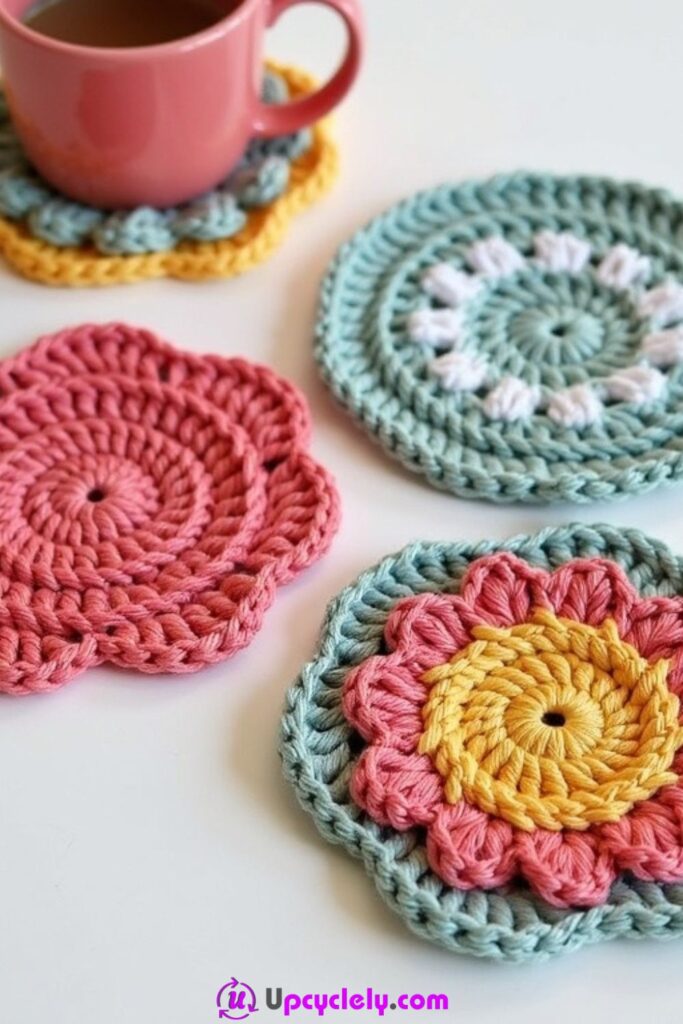
Round crochet coasters work especially well when the stitch pattern is allowed to become part of the decoration. The visible examples use layered circles, scalloped edges, and flower-like centres in soft pink, yellow, blue, white, and muted green. Each piece remains flat enough for a mug, yet the change in colour and stitch height gives the surface far more interest than a plain disc.
This is one of the most useful ways to use short lengths of cotton yarn left from larger projects. The important part is not making every coaster identical. I would keep the diameter and thickness reasonably consistent, then let the colour order or outer edge vary so the set looks related without feeling mass-produced.
Materials and Tools
· Leftover cotton yarn in two or three coordinating colours
· Crochet hook suited to the yarn thickness
· Scissors and a blunt yarn needle
· Stitch marker for working in continuous rounds
· Absorbent cloth for testing the finished coaster
· Optional blocking mat and rust-resistant pins
Steps for This Crochet Project
1. Choose a flat centre pattern. Begin with a secure adjustable ring or a small chain loop, then work an even first round into the centre. Increase at regular points so the circle expands without forming a bowl or a ruffled edge. Lay the piece down after each round; a flat coaster is much easier to correct early than after the border is finished.
2. Build colour and texture in controlled rounds. Change colour at the end of a complete round and weave the old tail into the back as you continue. Use one textured round, such as grouped stitches or small raised clusters, between flatter rows so the coaster stays stable beneath a cup. Then check that the centre hole has closed neatly.
3. Add the decorative outer edge. Create scallops, petals, or a simple firm border around the final round. Keep every repeat the same size and count the spaces before starting, because one missed stitch can leave the last section crowded. I know it can feel tempting to add another elaborate row, but the edge should not curl upward around the mug.
4. Finish and test the coaster. Fasten off securely and weave each tail through several neighbouring stitches on the back. Block the coaster lightly if the shape looks uneven, then place a cool mug on it and check that the base sits level. Wash or damp-test a spare swatch when the yarn colour might transfer onto a pale table.
For me, the floral shapes work because the mug does not cover every detail. A narrow petal border remains visible and makes the coaster feel finished even while it is being used.
A beginner version can stay in one colour with a simple single-crochet border. The same round pattern can also become jar covers, small plant-pot mats, or patches for a larger scrap-yarn project.
Crochet Basket
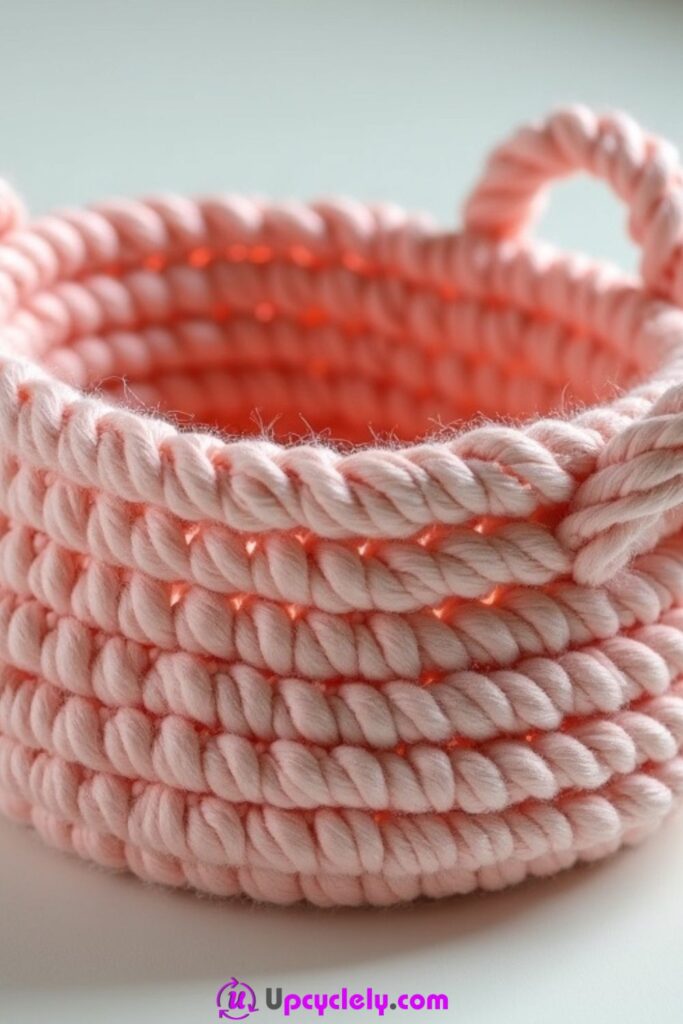
A thick, softly structured basket turns bulky yarn or cotton cord into storage that can sit openly on a shelf. The pale pink basket has a broad round base, straight sides, and two small raised handles. Those handles are visually useful, but the sturdy wall is what allows the basket to hold folded cloths, yarn balls, or lightweight household items without collapsing.
Baskets are forgiving because small changes in tension become part of the texture. Even so, the base needs to remain flat and the sides need enough density to stand. Reused cord from an unfinished project can work well, provided it has not stretched, frayed, or absorbed moisture while stored.
Materials and Tools
· Bulky yarn, cotton rope, or clean reclaimed cord
· Large crochet hook matched to the material
· Stitch marker for the beginning of each round
· Scissors and a strong yarn needle
· Flexible tape measure
· Optional removable fabric liner or stiff base insert
Steps for This Crochet Project
1. Make a flat and evenly increased base. Work a compact centre circle and expand it in rounds, spacing increases evenly rather than placing them in one vertical line. Set the base on the table frequently. If it cups, add a little more increase; if it ripples, remove an increase before the shape becomes difficult to correct.
2. Turn the work upward for the basket wall. Once the base reaches the size you need, make one transition round without widening it. Working into a selected loop can create a visible ridge between the floor and the sides, while working through both loops gives a softer curve. Continue upward with firm, consistent stitches.
3. Place and reinforce the handles. Mark two opposite handle positions before crocheting the top rounds. Create equal openings by chaining across the same number of skipped stitches on both sides, then work over those chains in the following round. The handle should fit a few fingers without becoming so large that the top edge loses support.
4. Shape, finish, and load it gradually. Weave the ends deep into the thick wall and reshape the basket by hand. A removable base insert can help a softer yarn hold flat, while a washable liner protects the crochet from dusty contents. Add items slowly and keep heavy weight low rather than hanging the basket by its handles.
The part I would watch carefully is the transition from the base to the wall. A clean turn there makes the whole basket look deliberate, even when the stitch texture remains relaxed.
Use several strands of ordinary yarn held together when bulky cord is unavailable. A shallower version can organise keys or sewing supplies, while a taller one can hide a plant pot if it remains separate from water and soil.
Crocheted Bookmarks
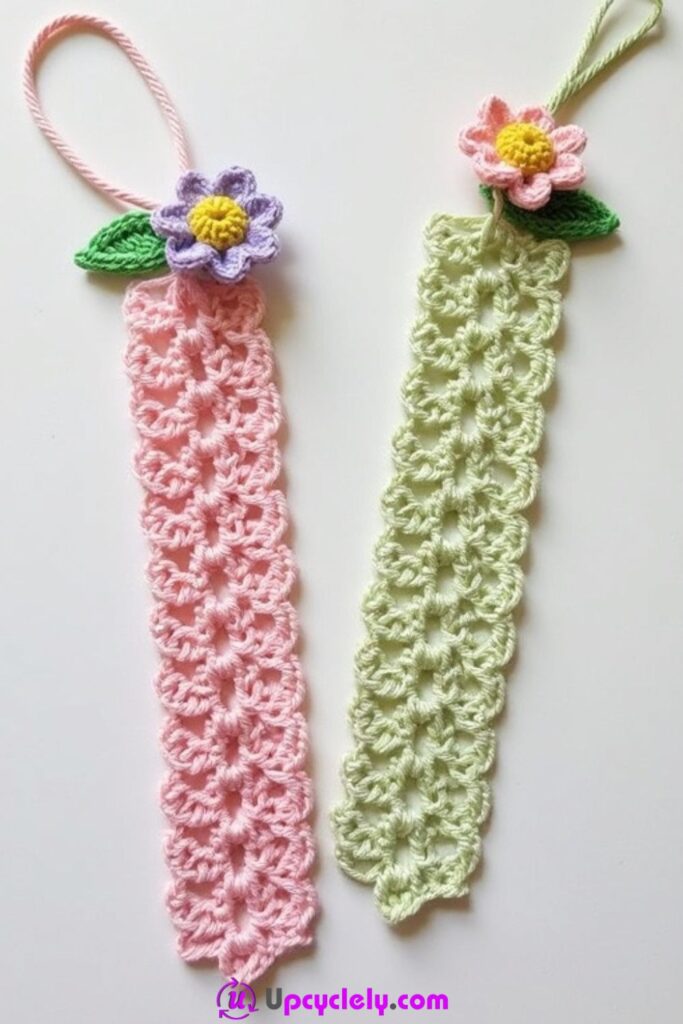
Long lacy crochet strips make bookmarks that are decorative without adding much bulk between the pages. The pink and pale green examples finish with pointed ends and small flower-and-leaf toppers, while a narrow loop extends from the top. Their open pattern keeps the strips light, and the floral detail remains visible above the closed book.
A bookmark needs more discipline than a decorative trim because it must stay flat and narrow. Soft yarn that pills heavily can leave fibres inside a book, while thick knots can mark pages. I would choose smooth cotton thread or fine yarn and keep the flower small enough to rest outside the cover.
Materials and Tools
· Fine cotton yarn or crochet thread
· Small crochet hook suited to the chosen fibre
· Scissors and blunt yarn needle
· Stitch markers or pins for keeping the strip straight
· Optional blocking mat and clean towel
· Scrap yarn for flowers, leaves, and hanging loop
Steps for This Crochet Project
1. Create a narrow foundation with stable edges. Chain or work a foundation row to the length of the intended bookmark, allowing for a small pointed end if desired. Build the body with a repeating lace pattern that has solid edge stitches on both sides. Those firm edges prevent the strip from stretching wider or catching on page corners.
2. Keep the pattern aligned as the strip grows. Count the spaces in every row and compare both sides before turning. If the bookmark begins to lean, correct the missed stitch immediately instead of trying to pull the finished piece straight. Then taper or shape the lower end while maintaining a flat centre.
3. Make and attach the floral topper. Crochet a small flower and one or two compact leaves separately, fastening their tails securely. Arrange them at the top of the strip before sewing. Attach through strong stitch centres rather than through loose outer loops, and add a light chain loop only after the flower sits firmly.
4. Block the bookmark and remove all bulk. Lightly dampen the strip and pin it straight without overstretching the lace. Let it dry completely, then weave or trim any remaining tails so the back feels smooth. Test it inside a closed book to confirm that the flower stays outside and the strip does not wrinkle the page.
I do not think the two bookmarks need matching flowers. Repeating the same body width and leaf colour is enough to make them feel like a set.
Skip the topper for a very flat reading bookmark, or replace it with a simple tassel made from leftover thread. A shorter strip can become a gift-tag tie or a decorative page marker for a journal.
Crochet Bottle Holder
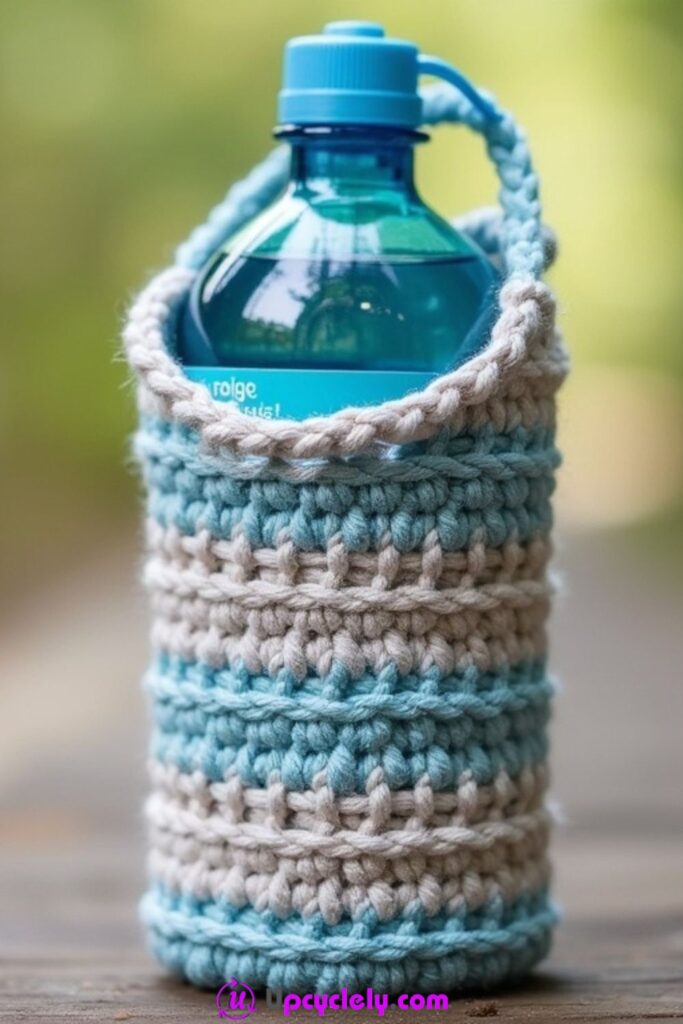
A crochet bottle holder combines a fitted cylindrical body with a carrying strap, turning leftover yarn into something useful for short walks or everyday errands. The visible holder uses alternating pale blue and cream bands around a reusable bottle. A reinforced rim keeps the opening from stretching, while the strap rises from opposite sides so the bottle hangs upright.
The holder needs to fit the specific bottle rather than a general measurement. A loose body can slide downward, and a narrow strap can stretch uncomfortably under the filled weight. Use strong, washable yarn and test the construction with water over a safe surface before relying on it outdoors.
Materials and Tools
· Strong cotton or blended yarn in one or two colours
· Crochet hook that creates a firm fabric
· Reusable bottle for measuring and fitting
· Stitch marker, scissors, and yarn needle
· Flexible tape measure
· Optional fabric or felt shoulder pad
Steps for This Crochet Project
1. Fit the base to the bottle. Crochet a flat circle that sits just beyond the bottom edge of the bottle without becoming much wider. Increase evenly and stop before the base ripples. Place the empty bottle on the circle, then work a transition round that turns the crochet upward around the base.
2. Build a close but removable body. Continue in firm rounds, changing colour at complete row boundaries for clean stripes. Try the holder on the bottle every few rounds. It should slide on without force but stay close enough that the bottle cannot drop through when lifted.
3. Create a reinforced top and strap. Finish the upper edge with a dense round, then mark two opposite attachment points. Crochet or separately make a strap wide enough to distribute weight, and secure it across several stitches at each side. Reinforce the join by sewing through the same strong areas with the yarn tail.
4. Test balance with increasing weight. Load the bottle partly, lift the holder over a sink or soft surface, and watch for stretching at the base and strap joins. Then fill it further and repeat the test. If the body sags, add support rounds or a firmer lower band before using the holder for travel.
The colour bands are useful because they make any twisting or uneven rounds easy to see. That can help a beginner correct tension while the piece is still in progress.
A short handle can turn the same shape into a bottle carrier for the hand. For a lighter project, make a narrow holder for an empty reusable cup, but never assume a decorative strap can support a heavy glass container.
Crochet Button Magnets
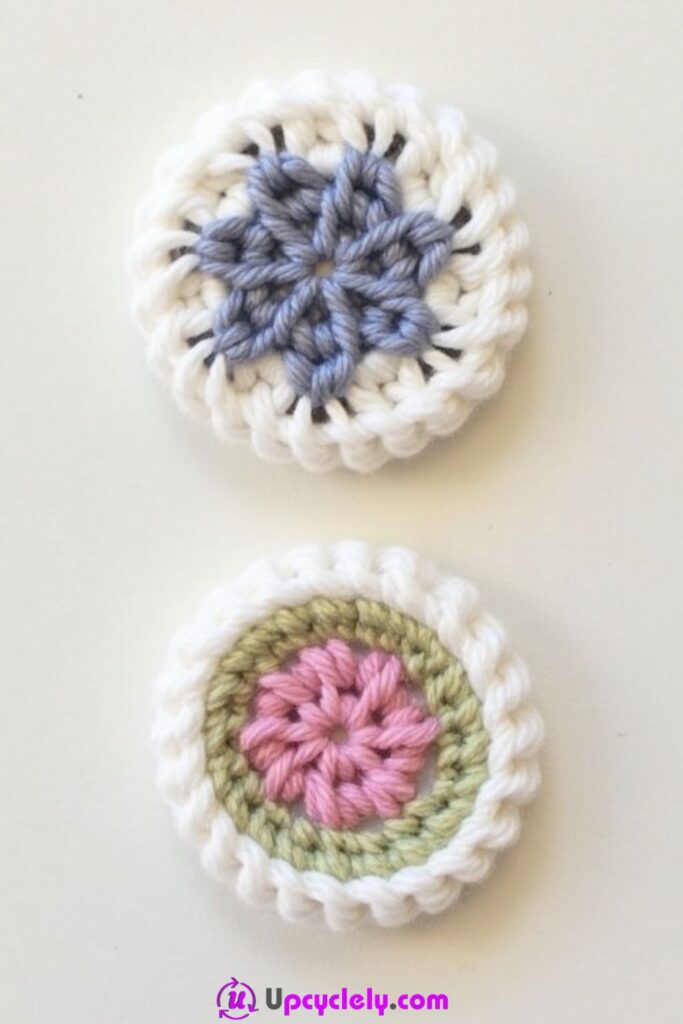
Small round crochet motifs can become soft decorative magnets for a refrigerator, noticeboard, or metal cabinet. The examples use pale centres, contrasting rings, flower-like stitches, and a raised white border. From the front they look like tiny buttons, while the magnet remains hidden on the back so the stitch pattern stays central.
This project is best for very short yarn remnants, but the backing needs careful thought. A weak magnet will slide under the weight of thick yarn, while an exposed magnet can separate from the motif. Small magnets are also hazardous around children and pets, so keep them fully enclosed and use the finished pieces only in an appropriate household.
Materials and Tools
· Small amounts of cotton yarn in coordinating colours
· Small crochet hook
· Scissors and yarn needle
· Flat magnets strong enough for the finished motif
· Firm felt or fabric backing circles
· Adhesive suitable for magnet and fabric, used as directed
Steps for This Crochet Project
1. Crochet a compact circular motif. Make a tight centre and expand it with one or two patterned rounds. Keep the piece small and flat, because a heavily ruffled edge can prevent the magnet from sitting close to the metal surface. Finish with a firm border that protects the outer loops.
2. Prepare a stable back layer. Cut a felt or dense fabric circle slightly smaller than the crochet motif. Sew or securely attach this layer to the back, enclosing all yarn tails between the two surfaces. The backing keeps the magnet from pressing through the stitches and gives the adhesive an even area to grip.
3. Attach and enclose the magnet. Centre the magnet on the backing and fix it according to the adhesive instructions. Add a second felt patch over it when the shape allows, stitching around the patch so the magnet cannot fall free. Let the assembly cure flat and away from metal objects that could pull it sideways.
4. Check holding strength before regular use. Place the finished magnet on a clean vertical metal surface and test it first without paper. Then add one lightweight note. If it slips, use it as a decorative token instead of stacking extra magnets or attaching heavy items that may fall.
I would keep the front soft and simple. The neat outer ring already gives the motif a finished button shape, so beads or heavy decorations are not necessary.
Sew the same circles onto a fabric pouch, hair clip, or gift ribbon when magnets are unsuitable. Larger versions can become appliques, while tiny ones can decorate reusable tags.
Crocheted Pencil Case
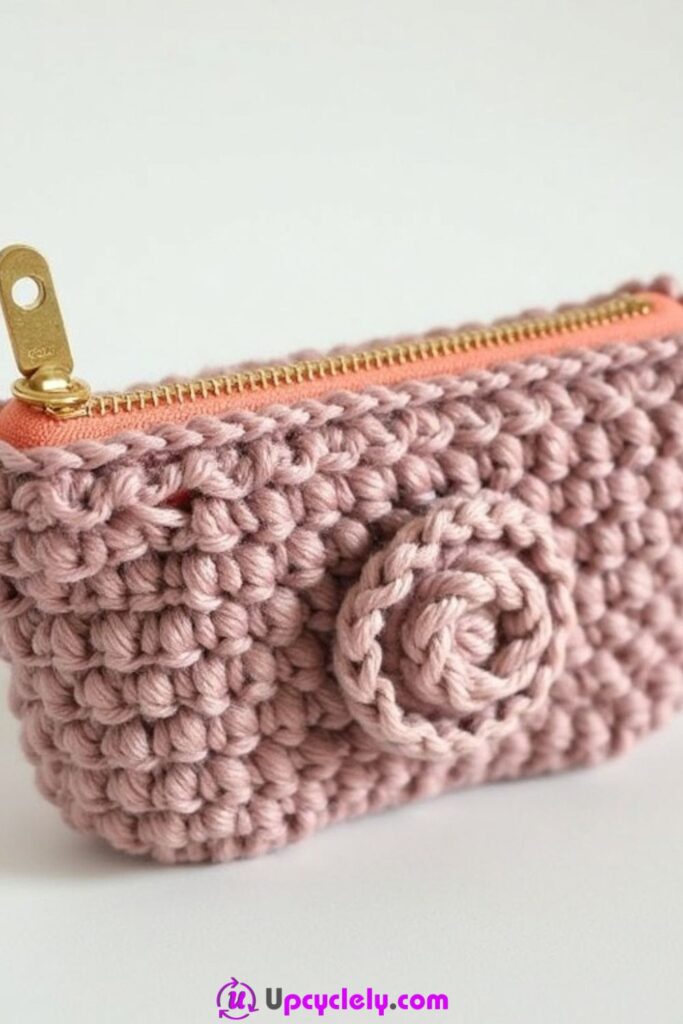
A zippered crochet pencil case works because the dense rectangular pouch contrasts with one raised spiral decoration on the front. The dusty pink example keeps the colour quiet, allowing the crochet texture and warm metal zipper to stand out. The pouch is broad enough for pens and small tools without becoming so deep that everything disappears at the bottom.
The zipper and lining determine whether the case remains practical. Crochet can stretch around pointed pencils, and small items may work through open stitches. I would treat the yarn shell as the visible outer layer and add a smooth fabric lining whenever the case will hold sharp or easily lost supplies.
Materials and Tools
· Firm washable yarn
· Crochet hook suited to a dense stitch
· Zipper slightly longer than the finished opening
· Fabric scrap for an optional lining
· Sewing needle and strong thread
· Scissors, yarn needle, pins, and clips
Steps for This Crochet Project
1. Crochet two even panels or one foldable body. Make a dense rectangle that matches the intended case size, checking the width against the pens rather than relying on a fixed number of stitches. Create a second matching panel or continue one long piece that will fold at the base. Keep the top edges straight for the zipper.
2. Add the raised spiral decoration. Crochet a narrow strip or small circular coil, then roll it into a loose spiral. Pin it to the front panel and sew through the centre and several outer points so it cannot twist or snag. Keep the decoration clear of the zipper path and lower corners.
3. Attach the zipper and lining. Baste the zipper to the top edges while the crochet lies flat, then hand-sew it with small, even stitches through strong loops. Construct a simple fabric lining separately and attach it inside without pulling the crochet inward. Open and close the zipper several times before joining the sides.
4. Close the case and check every seam. Join the side and lower edges with a flat seam, keeping the lining caught inside rather than visible from the front. Turn or shape the case gently, trim loose threads, and test it with a few blunt items first. Reinforce any corner that stretches when the case is lifted.
For me, the single spiral is enough decoration. Repeating it across the pouch would make the surface more likely to catch inside a bag.
A buttoned flap can replace the zipper for larger craft tools, and a short version can hold crochet hooks. Use a reclaimed zipper only when its teeth and slider still work smoothly.
Crochet Cup Sleeve
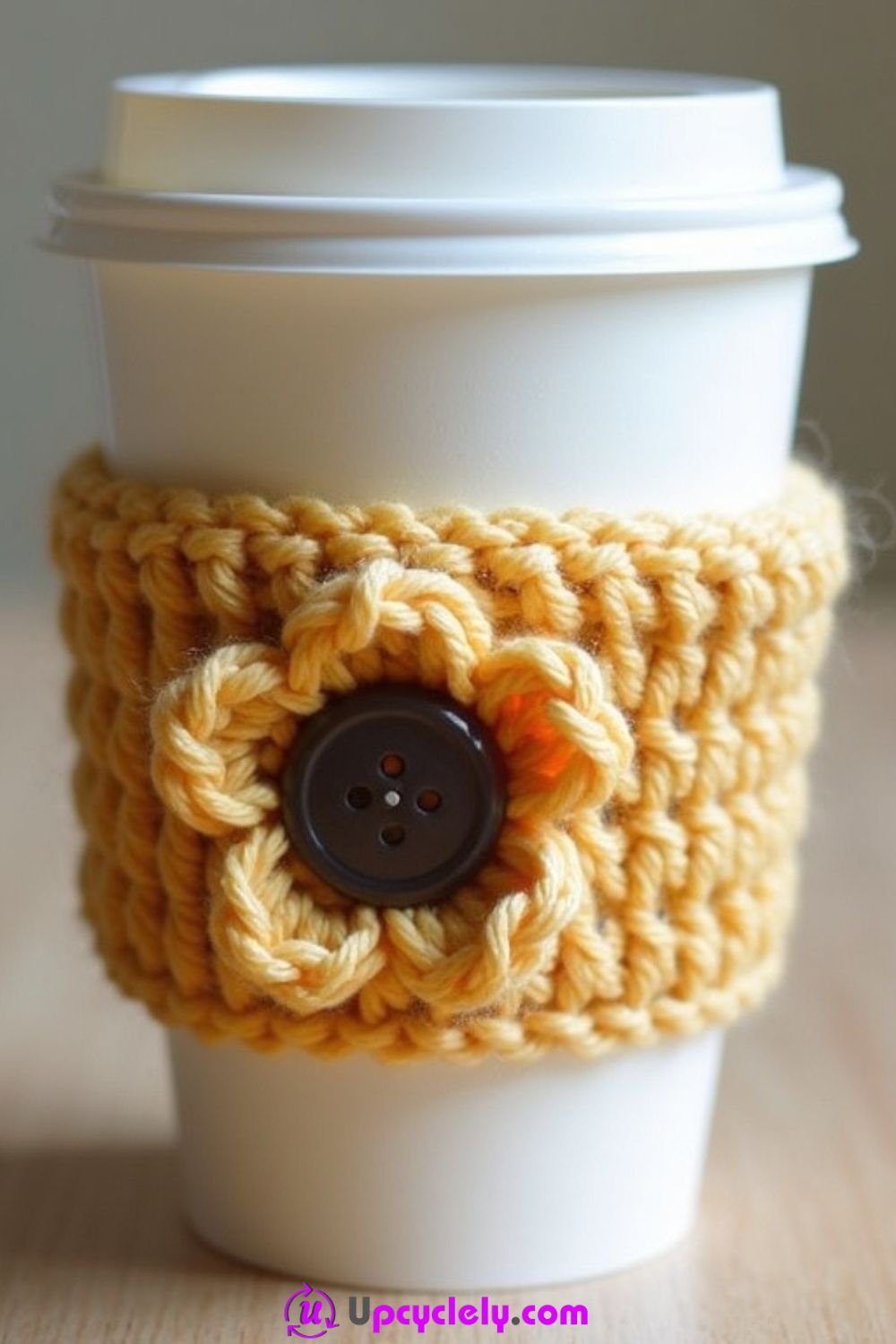
A crochet cup sleeve adds grip and a little insulation around a reusable or takeaway cup. The yellow example uses a simple fitted band with a flower and dark button at the centre. That flower gives the front a clear focal point, while the rest of the sleeve stays plain enough to stretch evenly around the cup.
A sleeve should never be treated as protection from extreme heat. It must fit securely below the drinking rim and remain dry, with no loose button or flower that interferes with the hand. Measure the actual cup and use washable yarn that can handle ordinary spills.
Materials and Tools
· Washable cotton yarn
· Crochet hook that creates a firm flexible band
· Cup used only for measuring while cool and empty
· Scissors and yarn needle
· Optional button and small flower motif
· Sewing thread for securely attaching the button
Steps for This Crochet Project
1. Measure the cup at the sleeve position. Wrap a flexible tape around the section where the hand normally rests, avoiding the rim and the narrow base. Crochet a test chain or short swatch and stretch it gently around that point. The finished band should grip without distorting the stitches or sliding downward.
2. Build the sleeve with a stable edge. Work a rectangular band in rows or crochet in joined rounds. Keep both upper and lower edges firm so the sleeve does not flare. Try it on the cool cup as the height develops, then stop before the crochet reaches the lid or any drinking opening.
3. Add the flower and button safely. Make a small flower separately and sew it to the centre of the band through several strong stitches. Attach the button through the flower and sleeve together, knotting securely on the inside without leaving a hard lump against the cup. Skip the button when the sleeve will be used by young children.
4. Join, wash, and test the sleeve. Seam the band with a flat join or complete the final round, then weave all tails away from the inside surface. Hand-wash or clean it according to the yarn needs and let it dry fully. Test the fit on a cool cup before using it with a warm drink.
The flower works best when it sits where the fingers do not naturally press. That keeps the sleeve comfortable and stops the button from twisting under the hand.
Make a plain ribbed version for an everyday cup or add a buttoned opening for a handled mug. Felt or woven fabric can create a no-crochet alternative using the same measured band shape.
Crochet Earrings
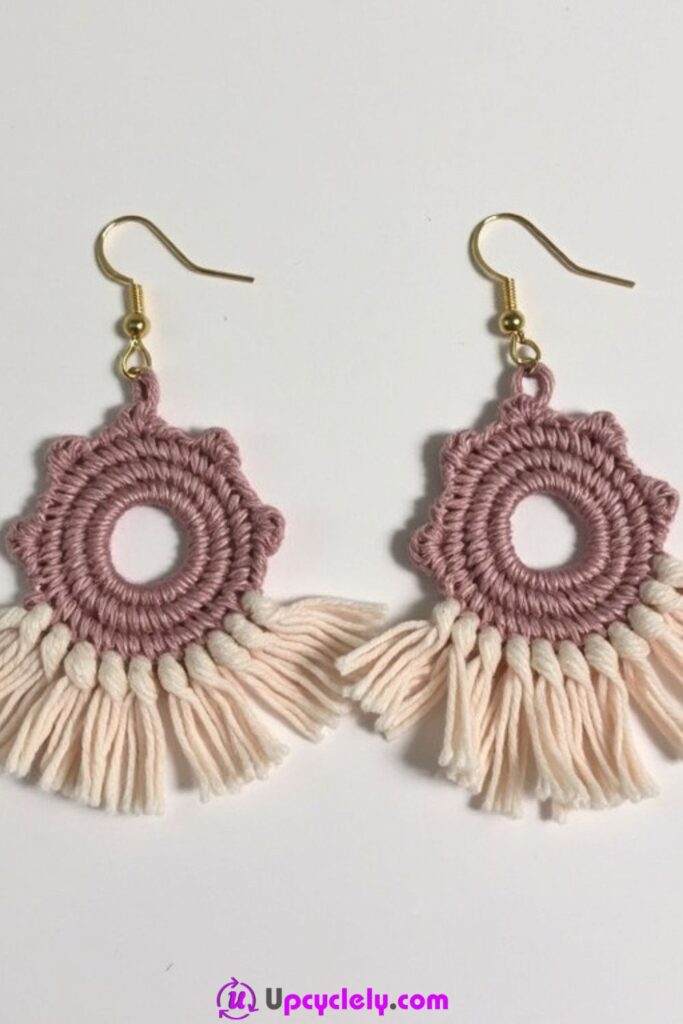
Crochet earrings can carry a large shape without feeling visually heavy because much of the motif remains open. The dusty pink pair uses round ring-like centres, a small scalloped outer edge, and a fan of cream fringe along the bottom. Fine gold-toned hooks balance the soft fibre and give the earrings a clean hanging point.
Lightness and secure hardware matter more than size. Thick yarn, wet blocking, or too much fringe can pull on the ear, while unfinished cut strands may shed. Use fine cotton thread or lightweight yarn and jewellery findings intended for earrings, and do not wear the pair if the metal causes irritation.
Materials and Tools
· Fine cotton yarn or crochet thread in two colours
· Small crochet hook
· Earring hooks and suitable jump rings
· Small jewellery pliers
· Scissors and yarn needle
· Ruler or card template for trimming fringe evenly
Steps for This Crochet Project
1. Create two matching central motifs. Crochet the first ring or round motif, counting every repeat and recording the final round. Make the second piece using the same count rather than judging only by eye. Block both shapes together so their centres and outer points dry to a similar size.
2. Add and secure the fringe. Cut equal lengths of the lighter yarn using a card template. Attach the strands through the lower half of each motif with small lark-style knots or another secure method, keeping the number and spacing the same. Comb the fibres gently with your fingers and trim only after both earrings hang side by side.
3. Attach the jewellery findings. Identify the exact top centre of each motif and add a reinforced yarn loop if needed. Open the jump ring sideways with pliers, connect the crochet to the earring hook, and close the ring fully. Avoid pulling the ring apart front-to-back, which can weaken its shape.
4. Check weight, balance, and loose fibres. Hold both earrings by the hooks and compare their angle. Remove extra fringe or reinforce a top loop if one tilts. Wear them briefly at home first, keeping them dry and away from products that may stain the yarn or irritate the skin.
I like the contrast between the firm ring and the soft fringe. The design does not need beads as well; the movement of the threads already gives it enough detail.
Skip the fringe for lighter everyday earrings, or make the same motifs as pendant charms. Clip-on findings may work for non-pierced ears when they are comfortable and properly attached.
Crochet Flower Crown
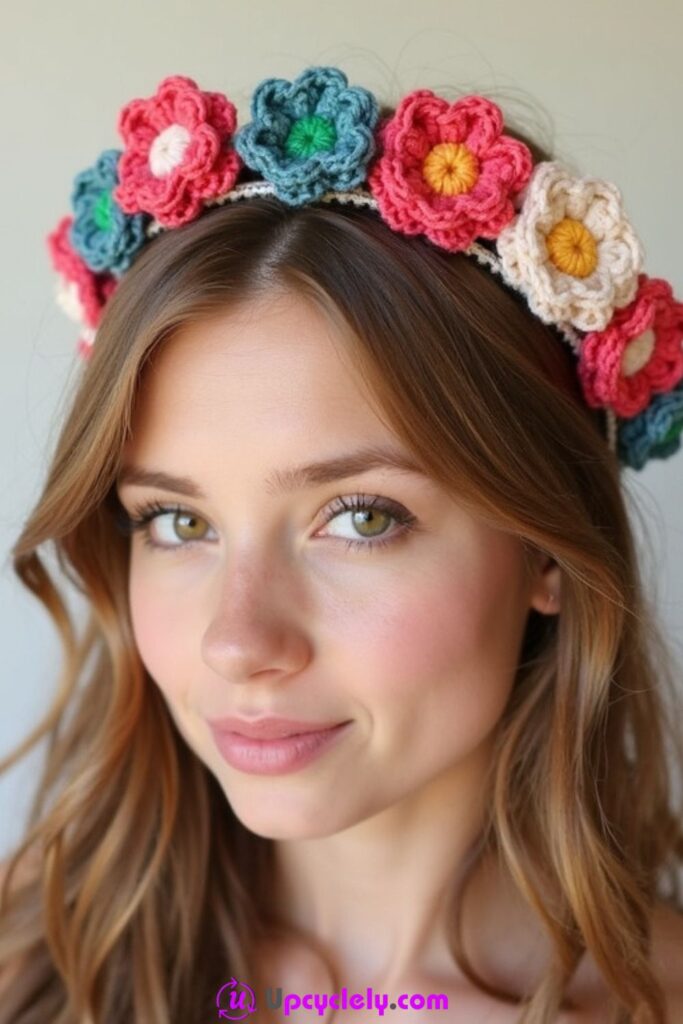
A flower crown made from crochet motifs has a fuller, softer appearance than one built from rigid artificial stems. The visible headband is covered with large layered flowers in pink, blue, cream, and white, with contrasting centres. The flowers sit close together across the top, creating a continuous band rather than several isolated decorations.
The base needs to remain flexible and comfortable against the head. Heavy flowers can pull the band forward, while rough yarn tails may catch in hair. I would arrange every motif before sewing and keep the largest flowers near the centre, then use smaller pieces to taper the design towards the sides.
Materials and Tools
· Soft yarn in several coordinating colours
· Crochet hooks suited to the flower sizes
· Plain headband, fabric band, or adjustable tie base
· Scissors and blunt yarn needle
· Matching sewing thread or strong yarn for attachment
· Optional felt strip for covering the inner band
Steps for This Crochet Project
1. Crochet flowers in a planned size range. Make a few large focal flowers and several smaller supporting motifs. Keep the centres firm and weave most tails before assembly, leaving only the strands needed for sewing. Place the flowers on the table in the approximate curve of the band to check colour balance.
2. Prepare a comfortable headband base. Wrap or cover the band with soft yarn or a narrow fabric strip, keeping the surface even. Add a felt strip on the underside when the original base feels hard or slippery. Test the undecorated band for pressure before adding weight.
3. Arrange and sew the flowers from the centre outward. Pin or loosely tie the central flowers first, then add smaller pieces towards each side. Overlap petals slightly so the base does not show, but keep the flowers able to flex. Sew through the strong centre and inner petals instead of catching only delicate outer loops.
4. Finish the back and test movement. Cover visible stitches on the inner band with felt or carefully woven yarn. Put the crown on and move the head gently to see whether any flower tips forward or catches the hair. Reinforce loose motifs and remove any decoration that makes the band uncomfortable.
I know it can feel tempting to use every flower you make, but leaving a little taper at the sides keeps the crown wearable. The centre can stay generous without wrapping bulky motifs behind the ears.
Use one large flower on a narrow band for a simpler version, or attach motifs to ribbon ties so the size remains adjustable. The same flowers can decorate a bag when a headpiece is not practical.
Crocheted Wall Pocket
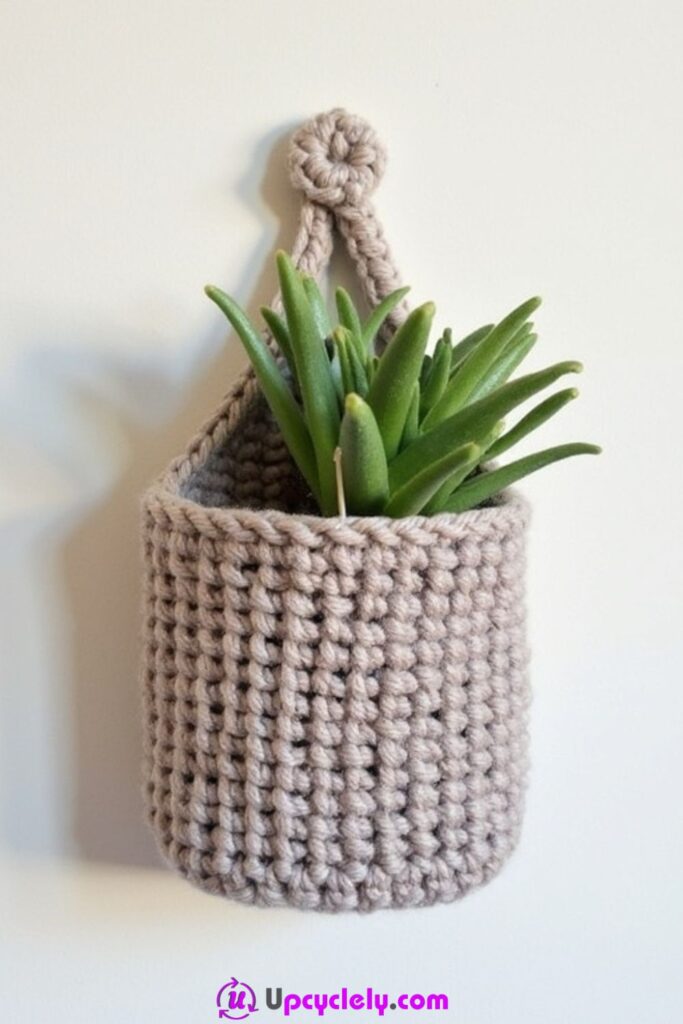
A hanging crochet pocket places a soft storage basket directly on the wall. The taupe example has a deep rounded body, a firm upper edge, and a loop rising to a small circular hanging detail. A compact plant sits inside, showing how the pocket can hold a lightweight decorative pot while keeping the floor or shelf clear.
The crochet itself should not carry wet soil or draining water. Use a separate sealed container and remove it for watering, or reserve the pocket for dry supplies such as scarves, letters, or yarn. The hanging loop and wall fixing must suit the loaded weight, because soft stitches can stretch gradually even when they look secure at first.
Materials and Tools
· Firm bulky yarn or cord
· Crochet hook matched to the material
· Stitch marker, scissors, and strong yarn needle
· Removable inner pot or lightweight container
· Wall hook and fixing appropriate to the wall and load
· Optional rigid base disc or washable liner
Steps for This Crochet Project
1. Build a stable lower pocket. Crochet a flat base or shallow oval, then turn the work upward without continuing to increase. Use dense stitches so small contents cannot push through. Check the depth against the intended inner container and keep the back slightly flatter where it will rest against the wall.
2. Shape the upper edge and back support. Continue the body to the required height, then strengthen the top with one or two firm rounds. A slightly taller back section can help the pocket sit upright. If the front sags, add a discreet inner liner or base insert rather than tightening only the top edge.
3. Create and reinforce the hanging loop. Position the loop at the centre back and work it from several body stitches so the load spreads across a wider area. Crochet over the loop or sew it back through the upper edge for reinforcement. Add a decorative round at the top only if it remains part of the strong attachment.
4. Mount and load the pocket carefully. Install a wall fixing suitable for the wall type and test it before adding the crochet. Hang the empty pocket, then add the inner container and contents gradually. Remove plants for watering and check the loop periodically for stretching, worn yarn, or movement at the hook.
The soft grey-brown colour lets the plant remain the focus, which is why I would avoid extra tassels on this version. The rounded stitch texture already makes the pocket feel warm.
A smaller pocket can hold mail near a desk, while several flat-backed pockets can form a vertical organiser. Use fabric lining when storing pens or tools with edges that may catch the yarn.
Crochet Phone Case
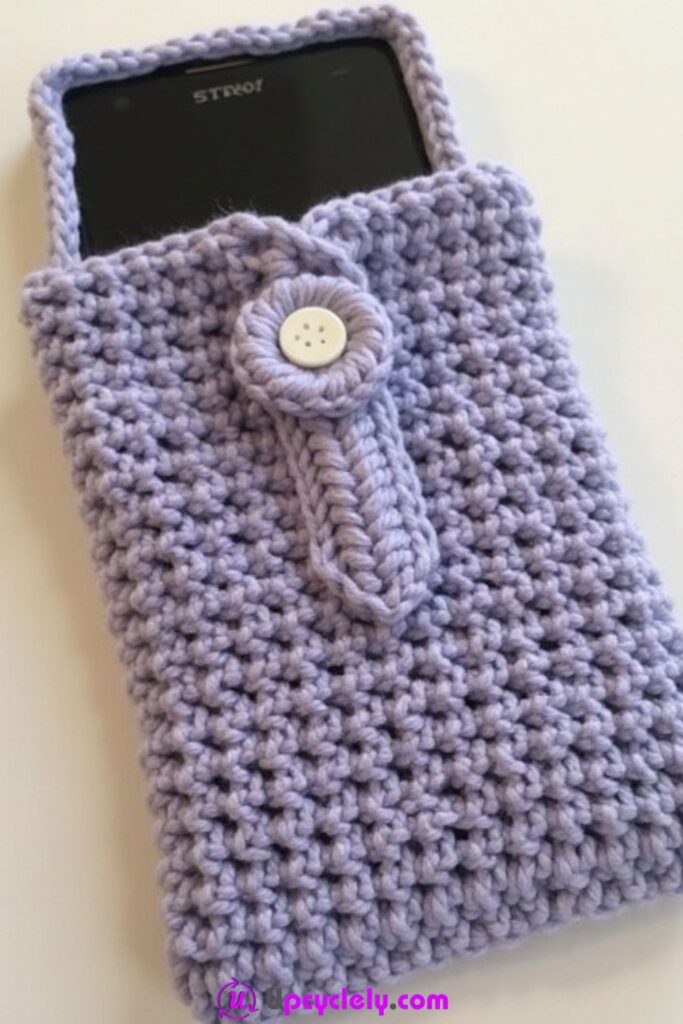
A crochet phone case can protect the surface from ordinary scratches while giving the device a softer place inside a bag. The lavender example uses a dense rectangular pouch, a narrow front flap, and a small cream button. The flap ends in a rounded tab, keeping the closure simple and visible without covering the whole front.
This is a decorative soft case rather than impact protection. The fit should be close enough that the phone does not fall out, but loose enough to remove without pulling on buttons or side controls. A smooth lining can reduce fibre transfer and stop the corners of the phone from stretching open crochet stitches.
Materials and Tools
· Soft firm yarn that does not shed heavily
· Crochet hook for a dense fabric
· Phone or cardboard template for fitting
· Small button and strong sewing thread
· Fabric scrap for optional lining
· Scissors, clips, and yarn needle
Steps for This Crochet Project
1. Measure the phone and crochet the pouch body. Use the phone dimensions or a cardboard template, adding only a small amount of ease. Crochet one long rectangle to fold or two equal panels, keeping the stitches dense and the edges straight. Check the fit with the template rather than placing the phone against pins or loose yarn ends.
2. Join the sides without creating bulky seams. Fold the body with the finished side outward or align the panels evenly. Use a flat crochet join or hand-sewn seam along both sides and the base, leaving the top open. Add a thin lining before closing the final seam if the crochet fabric has visible gaps.
3. Make the flap and button closure. Work a narrow flap from the upper back edge and taper or round the end. Add a reinforced button loop at the tip, then sew the button firmly to the front through a strong area. Test the closure with the template inside so the flap is secure without pressing on the phone.
4. Check access, fit, and everyday handling. Insert the phone only after every pin and loose end has been removed. Confirm that the device slides out easily and that the button cannot scratch the screen. Reinforce the upper corners if they stretch, and keep the case dry and away from grit that may become trapped in the yarn.
The simple button is useful because it clearly shows where the case opens. I would not add a long cord unless the entire case is designed and tested to carry the phone safely.
A flap-free sleeve is easier for beginners, while a drawstring pouch can hold earbuds or a small charger. Make a matching case for a notebook or reading glasses using the same lined rectangle method.
Crochet Plant Pot Cover
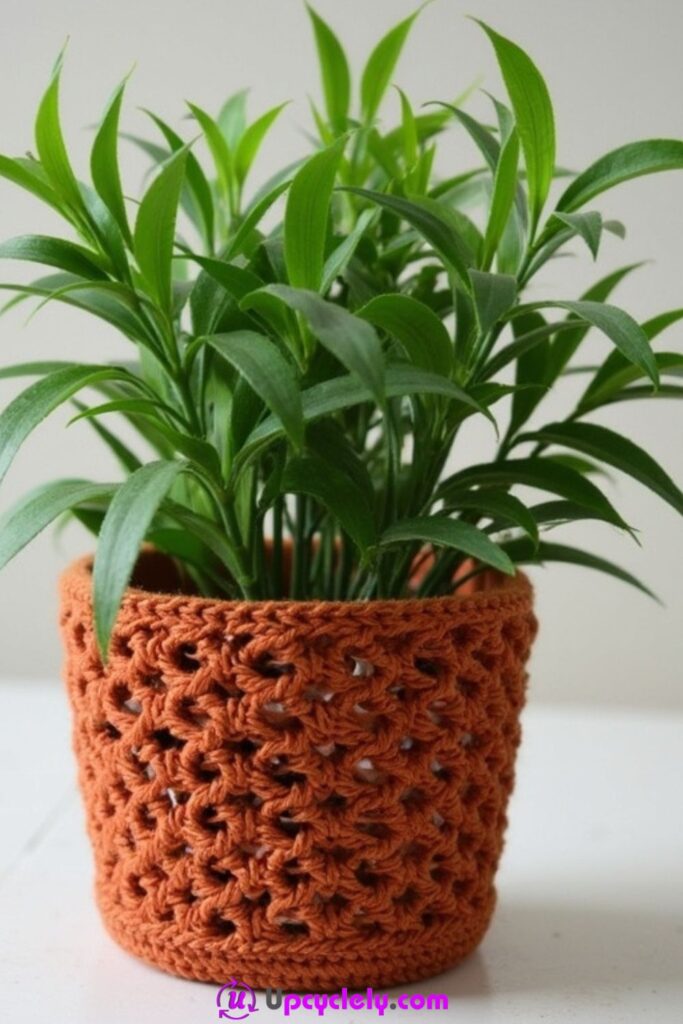
A crochet plant pot cover softens the hard outline of an ordinary container without interfering with the plant itself. The rust-orange example uses an open patterned wall over a solid lower band, allowing glimpses of the pot beneath. The warm colour sits comfortably beside green leaves, while the repeated openings keep the cover from looking heavy.
The cover must remain separate from drainage water and damp soil. Choose a clean outer pot or saucer, remove the crochet before watering when necessary, and let any moisture dry before replacing it. Openwork patterns stretch easily, so fit the lower solid band first and allow the patterned section to expand around the pot.
Materials and Tools
· Washable yarn in a colour suited to the room
· Crochet hook matched to the yarn
· Clean plant pot or outer cachepot for measuring
· Stitch marker, scissors, and yarn needle
· Waterproof saucer or separate inner pot
· Optional elastic thread for a loose upper edge
Steps for This Crochet Project
1. Fit the solid lower section to the pot. Crochet a flat base only when the cover will wrap beneath the pot; otherwise begin with a band sized to the lower circumference. Work a few dense rounds so the cover grips and supports the openwork above. Test it on a dry pot and correct looseness before continuing.
2. Build the open patterned wall. Use a repeating lace or clustered stitch with evenly spaced gaps. Count each repeat around the pot so the pattern joins cleanly at the end of the round. Then try the cover on again, allowing the open stitches to stretch naturally without pulling them out of shape.
3. Finish the top edge at the right height. Stop below the rim so the crochet does not touch soil or interfere with watering. Add a stable final round that prevents the pattern from spreading. If the edge remains loose, work a smaller final hook size or add discreet elastic rather than tightening the whole body.
4. Use the cover without trapping moisture. Place the plant in a separate inner pot with a saucer or waterproof outer container. Remove or lift the crochet during watering, wipe the pot, and replace the cover only when the outside is dry. Wash the cover whenever it collects dust or water marks.
For me, the open pattern is the strongest feature. It lets the original pot remain part of the design instead of disguising it completely.
A solid ribbed sleeve suits a plain modern room, while a striped scrap-yarn cover can brighten a small nursery pot. The same cylinder can cover a clean storage tin when plant moisture is a concern.
Crochet Ring
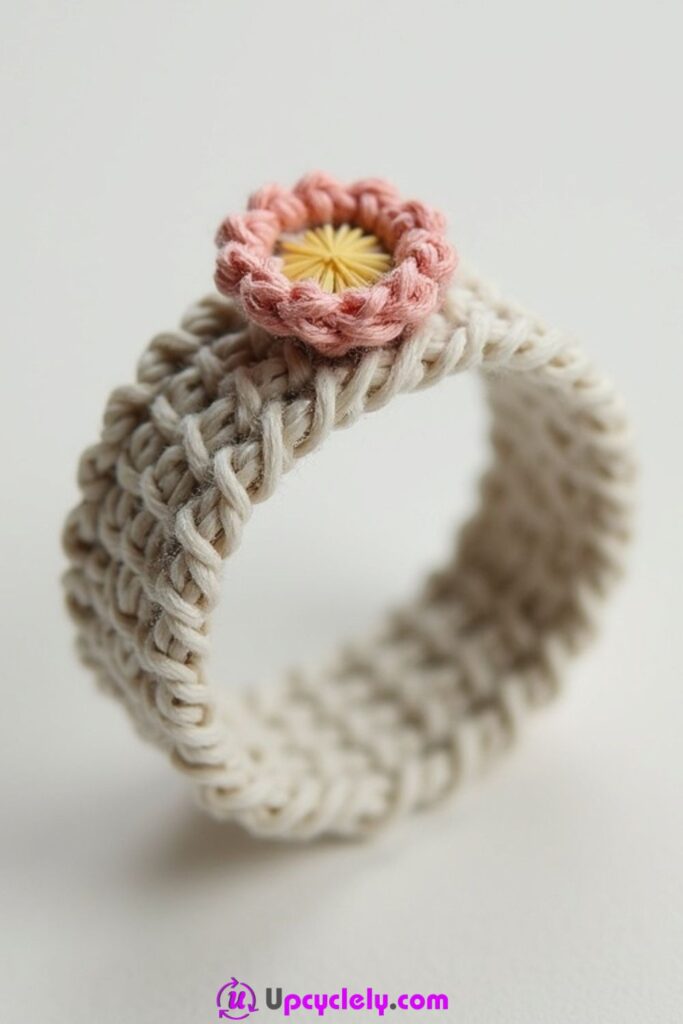
A crochet ring turns fine yarn into a soft band with a small flower at the top. The cream example has a broad stitched loop, a pink floral setting, and a pale yellow centre that resembles a tiny button or wrapped disc. Because the band itself is textured, the decoration can stay compact and still feel noticeable.
Yarn jewellery needs to remain lightweight, clean, and comfortable. A band that fits when loose may tighten after washing, while a hard centre can press against the finger. Use fine thread, make the size adjustable where possible, and treat the piece as decorative jewellery rather than something to wear during wet or heavy work.
Materials and Tools
· Fine crochet thread or smooth lightweight yarn
· Small crochet hook
· Scissors and fine blunt yarn needle
· Small crocheted or thread-wrapped flower centre
· Flexible tape measure or paper finger strip
· Optional clear elastic thread for hidden reinforcement
Steps for This Crochet Project
1. Measure and make the ring band. Wrap a paper strip comfortably around the intended finger and mark the overlap. Crochet a narrow strip or small joined loop that matches this relaxed fit, remembering that the stitches should slide over the knuckle. Build enough rows for stability without making the band bulky.
2. Join the band with a smooth inner seam. Connect the ends using small stitches and flatten the join so it does not rub the skin. Try the band on briefly before attaching the flower. If it feels tight, remake the short piece rather than stretching it until the stitches become distorted.
3. Crochet and attach the flower. Make a tiny flower with a firm centre and low petals. Position it over the band seam when possible, then sew through the flower centre, band, and several surrounding stitches. Keep all knots on the outer side beneath the flower rather than against the finger.
4. Finish and care for the ring. Weave the tails into the outer band and trim them closely. Check that no stiff thread ends touch the skin, then wear the ring for a short period to test comfort. Remove it before washing hands, cooking, gardening, or any activity that could soak, stain, or catch the yarn.
The small flower suits the soft band because neither part competes for attention. A larger decoration would make the ring turn around the finger more easily.
Make several plain bands in different colours or turn the flower into a removable charm. The same tiny motif can decorate a hair clip, card, or fabric brooch.
Crochet Wall Art
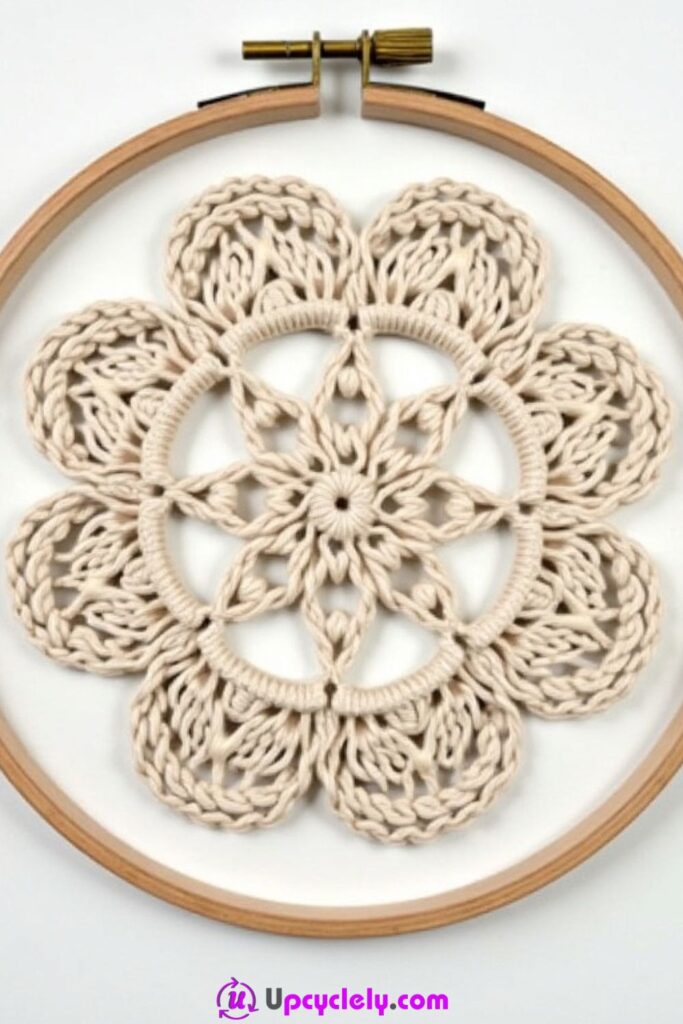
Crochet wall art gives a delicate motif enough space to be seen by stretching it inside a wooden embroidery hoop. The cream design forms a large symmetrical flower with layered loops, leaf-like petals, and an open centre pattern. The hoop frames the lace without adding a heavy backing, so shadows from the stitches become part of the display.
A wall piece does not need the wear resistance of a coaster or bag, but it does need even tension. Pulling one side too tightly can distort the flower and warp the hoop. I would block the crochet first, then attach it gradually at opposite points so the design remains centred.
Materials and Tools
· Cotton crochet thread or fine smooth yarn
· Small crochet hook
· Wooden embroidery hoop
· Scissors and yarn needle
· Blocking mat, rust-resistant pins, and clean towel
· Wall hook suitable for the finished lightweight frame
Steps for This Crochet Project
1. Crochet the central motif with clear symmetry. Work from the centre outward, placing markers at repeated points when the pattern becomes complex. Lay the motif flat after each major round and compare opposite petals. Correct a missed chain or cluster before adding another layer that depends on it.
2. Block the lace before framing. Dampen the finished motif according to the fibre needs, then pin it to the intended shape without overstretching. Measure across several directions so the outer points remain evenly spaced. Let it dry completely before removing the pins and handling the loops.
3. Attach the motif to the hoop evenly. Place the crochet over the inner hoop and centre the main flower. Secure the top, bottom, and side points first, then work around the remaining outer loops while tightening the hoop gradually. The motif should be taut enough to hold shape but not so tight that the petals narrow.
4. Finish the back and hang the piece. Trim or lace the remaining tails neatly behind the hoop and tighten the screw. Check that the frame sits flat against the wall and use a suitable hook rather than balancing it on an unstable nail. Dust the piece gently and keep it away from damp walls or cooking grease.
I especially like that the wooden hoop remains visible. It gives the soft crochet a clear boundary without hiding the open spaces that make the pattern interesting.
Display one large motif alone or group several smaller hoops with related thread colours. An old frame can also hold blocked crochet when the fabric is mounted carefully and not crushed behind glass.
Decorative Crochet Keychain
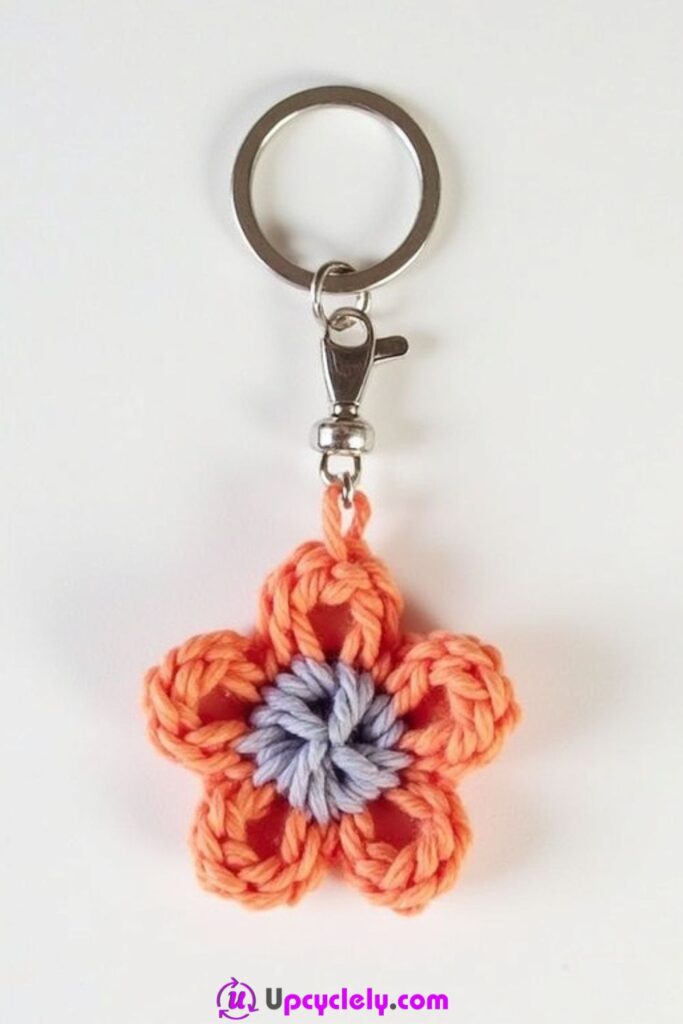
A crochet flower keychain adds a soft, easy-to-find shape to a set of keys or a bag clasp. The visible design uses five rounded orange petals, a lavender centre, and a small hanging loop attached to metal hardware. Its simple flower remains clear from both a distance and close up, which is helpful for an item that moves around inside a bag.
Everyday use places more stress on the attachment point than on the petals. The yarn loop can fray against metal, and an oversized flower may catch on a zipper. Use firm cotton, reinforce the hanging loop, and choose hardware with no sharp gap that could cut through the stitches.
Materials and Tools
· Firm cotton yarn in two colours
· Crochet hook suited to a compact motif
· Keyring, clasp, or split ring with smooth edges
· Small jewellery pliers when required
· Scissors and yarn needle
· Optional felt backing for extra stability
Steps for This Crochet Project
1. Crochet a dense flower centre. Make a small compact circle and close the centre hole firmly. Keep the yarn tails long enough to reinforce the back later. A dense centre gives each petal a strong anchor and prevents the hardware loop from pulling through the middle.
2. Build and shape the petals. Work one petal into each planned space using the same stitch sequence. Count the height and closing stitches carefully so all five petals remain balanced. Then weave the colour-change tails through the back without tightening the petals inward.
3. Create a reinforced hanging loop. Crochet a short loop from the top of the flower or sew a separate cord through several centre stitches. Pass the metal ring through the loop and reinforce the contact area with extra yarn. Add a felt backing if the flower bends excessively around the hardware.
4. Test the keychain before loading it. Pull gently on the metal ring and flower in opposite directions, checking for movement in the loop. Attach only a light set of keys at first and inspect the yarn after several uses. Replace or repair the loop if metal friction begins to thin the fibres.
The lavender centre is a small detail, but it keeps the orange petals from becoming one flat shape. That contrast does more work than extra beads would.
Turn the flower into a zipper pull, bag charm, or gift-tag decoration when it does not need to carry keys. A leaf, star, or simple circle can use the same reinforced loop method.
Mini Plant Hanger
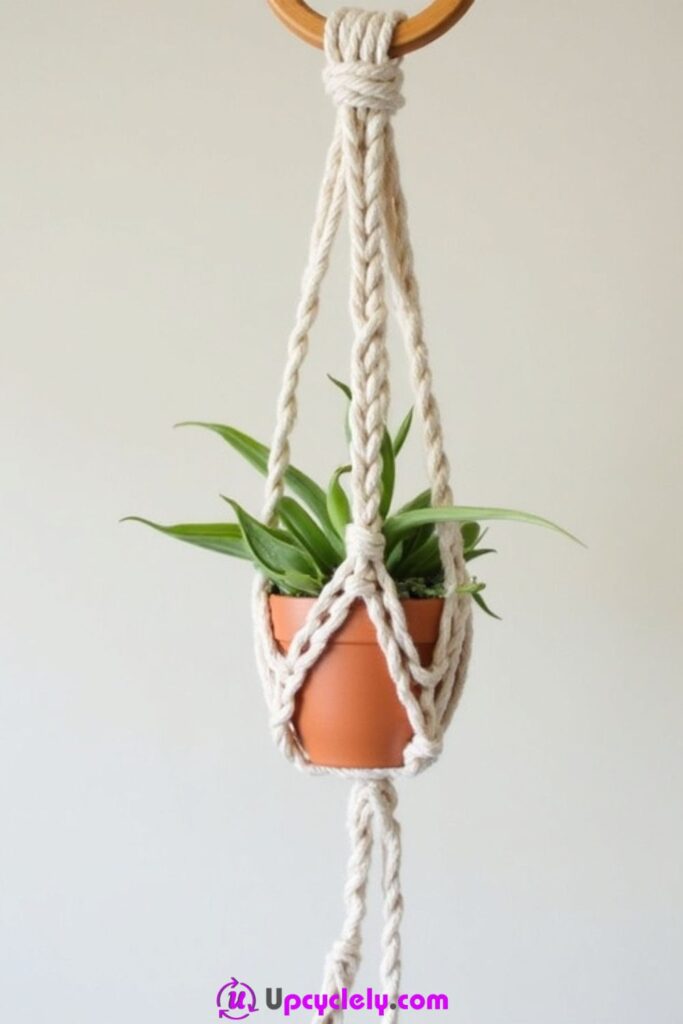
A mini plant hanger uses crocheted or chain-like cords to hold a small terracotta pot beneath a wooden ring. The cream straps form a cradle below the pot, cross around its sides, and gather above it before reaching the hanging ring. The light colour and simple structure keep the plant visible while adding texture to an otherwise empty wall or corner.
This project is decorative but still load-bearing. Yarn can stretch, knots can loosen, and a wet terracotta pot becomes heavier. Use a lightweight pot with a secure inner container, test every strap, and install the hanger only from a fixing suitable for the wall or ceiling and the complete wet weight.
Materials and Tools
· Strong cotton cord or firm bulky yarn
· Crochet hook matched to the cord
· Small wooden or metal hanging ring
· Lightweight pot and separate inner plant container
· Scissors, yarn needle, and tape measure
· Ceiling or wall fixing appropriate to the tested load
Steps for This Crochet Project
1. Make a fitted lower cradle. Crochet a small flat base or several joined cords that support the bottom of the pot. Test with the empty pot and make sure the support reaches beyond the narrow centre so the pot cannot tip. Reinforce every join before building the longer straps.
2. Create equal side straps. Mark evenly spaced points around the lower cradle and crochet or attach straps of the same length. Bring them upward around the pot, crossing or joining them where extra side support is needed. Then place the empty pot inside and confirm that it sits level.
3. Gather the straps at the hanging ring. Thread or attach the upper straps through the ring and secure them with strong crochet wraps or knots backed by stitching. Compare each strap under light tension and correct uneven lengths. Leave no loose decorative tails where they could slip through the ring.
4. Test, install, and water safely. Load the hanger with the empty pot, then add the dry inner container and plant while testing over a protected low surface. Install the correct fixing and inspect it before hanging. Remove the inner pot for watering whenever possible, and rehang it only after excess water has drained.
I would keep the first version small. A mini pot places far less strain on the cord and makes it easier to see whether the cradle and straps remain balanced.
Use the same hanger shape for a lightweight bowl holding artificial greenery or dry air plants. For a tabletop alternative, crochet a fitted pot cover and avoid overhead load entirely.
Crochet Choices That Can Make a Small Project Harder Than It Needs to Be
Using weak yarn for a load-bearing part. A soft decorative yarn may look suitable for a bottle strap, wall pocket, keychain loop, or plant hanger but stretch quickly under weight. Reserve the strongest continuous yarn for handles and hanging points, reinforce the joins, and test the finished structure gradually before regular use.
Skipping the swatch because the project looks small. A few stitches can still reveal whether the yarn is too thick, the hook is too large, or the fabric will curl. Make a small test section and compare it with the cup, phone, pot, or hardware before building the entire piece.
Hiding loose ends instead of weaving them securely. Trimming a tail close to the knot may look neat for a day, but repeated handling can pull the stitch open. Weave each end through several strong stitches, change direction, and keep important tails long enough to reinforce seams and hardware.
Adding hardware through one delicate loop. Buttons, earring hooks, keyrings, magnets, and hanging rings concentrate force in a very small area. Spread the attachment across several stitches, use a backing when useful, and check that metal edges cannot cut into the yarn.
Making fitted covers without measuring the real object. A general pattern may not match a particular bottle, phone, cup, or plant pot. Measure and test as the work grows, remembering that open crochet can stretch while dense crochet may not. Correct the fit before adding borders, flaps, or decoration.
Letting decoration interfere with function. Large flowers can catch on a zipper, heavy buttons can twist a cup sleeve, and long fringe can make earrings uncomfortable. Build and test the working form first, then add one focal detail where it will not block, scratch, or unbalance the finished object.
Ignoring moisture and heat. Yarn around plant pots, drinks, and reusable bottles can hold dampness or stains. Keep crochet away from direct flames and very hot surfaces, remove plant covers for watering, and wash accessories according to the fibre rather than leaving moisture trapped against the object.
Assuming handmade means every flaw must stay. Small variations can give crochet character, but a loose strap, missed structural stitch, sharp hardware edge, or uneven wall fixing is not merely decorative. Keep harmless differences and repair anything that affects strength, comfort, or safe use.
Frequently Asked Questions
Which crochet craft ideas are easiest for a beginner?
Coasters, simple bookmarks, cup sleeves, plant-pot covers, and small flower keychains are manageable because they use repeated shapes and limited assembly. Begin with one colour and a firm basic stitch, then add decoration after the main form lies flat and fits correctly.
Can I use leftover yarn from different projects together?
Yes, when the yarns have compatible thickness, stretch, and care needs. Use mixed colours for small decorative rounds or flowers, but avoid combining a weak soft yarn with a strong load-bearing strap unless the structural strand remains continuous.
How do I stop a crochet circle from curling or rippling?
Curling usually means the round needs more evenly spaced increases, while rippling can mean there are too many. Lay the work flat after every round and correct the count immediately rather than trying to block a strongly distorted shape at the end.
Do crochet cases and baskets need fabric linings?
A lining is optional for soft, blunt contents, but it is helpful when storing pens, small objects, plant containers, or anything that may push through the stitches. Make the lining removable when it may need washing or when the crochet item should return to another use later.
How can I make crochet straps and hanging loops stronger?
Use firm yarn, work a wider strap, and attach it across several stitches instead of one point. Reinforce the join with the yarn tail, test the item with increasing weight, and inspect it regularly for stretching or wear.
Can I wash these crochet projects?
Many can be washed, but the method depends on the fibre and attached hardware. Remove plant pots and other inserts, protect metal findings where possible, reshape the item while damp, and let it dry fully before returning it to use.
How should I store small crochet accessories?
Keep earrings, rings, keychains, and magnets in separate compartments so hooks and metal parts do not snag the yarn. Store blocked bookmarks and wall motifs flat, and avoid sealing damp crochet inside a box or bag.
Let the Smallest Yarn Ball Become Something Worth Keeping
The most useful crochet craft ideas do not depend on a large new supply of yarn. They begin by noticing what each fibre can handle: a short strand can form a flower, firm cotton can protect a table, dense stitches can make a pouch, and strong cord can support a small hanging pot. Measuring, testing, and finishing the joins carefully matter more than squeezing another decorative row into the pattern.
Choose one project that matches the yarn and hardware already available, then keep the first version manageable. A coaster, bookmark, keychain, or plant-pot cover can be enough to turn forgotten leftovers into something practical. Which of these 16 crochet craft ideas would make the best use of the yarn waiting in your basket today?