Old furniture rarely needs to look new. A mellow sheen, softened edges, tiny scratches, and the darker tone around handles can be part of what makes an antique feel honest. The problem starts when dullness, grime, dryness, or a tired finish gets mistaken for something that should be covered with a thick coat of polish. On an older piece, too much product can be harder to correct than too little.
That is why I would choose furniture polish for antiques by looking at the existing finish first, not by chasing the brightest shine. A stable shellac, varnish, lacquer, or waxed surface may respond well to careful maintenance, while a flaking, sticky, water-damaged, or lifting finish may need a conservator rather than another layer of anything.
The seven products here are not interchangeable. Some are protective waxes, some combine wax with conditioning oils, one is an aerosol wax, and others are cleaner-polish creams.
Their real value depends on what is already on the furniture, how fragile the surface is, and how much change you actually want. For antique furniture, restraint is not being overly cautious. It is part of preserving the character you are trying to keep.
Why Antique Furniture Needs a Lighter Hand
Antique furniture can look simple from the outside: wood, finish, hardware, perhaps a little carving. The surface history is often much more complicated. A table that appears to have one brown finish may have layers of shellac, old wax, later polish, touch-up color, smoke residue, and years of handling sitting on top of the wood.
That matters because furniture polish does not work directly on “wood” in many cases. It works on the finish covering the wood. If the finish is stable, the right product can improve sheen, reduce the dry look of a worn surface, or add a sacrificial protective layer. If the finish is unstable, polishing can soften it, smear it, trap grime, or make later conservation work more difficult.
The finish matters more than the species of wood
Mahogany, walnut, oak, cherry, and pine all have different grain and color, but the finish is what your cloth and polish usually touch first. Shellac can react differently from varnish. A lacquered surface behaves differently from bare wood. A piece that has already been waxed may respond differently again.
Before applying anything, look for clues. Does the surface have a soft amber glow that might suggest an older shellac finish? Is it glossy and hard, or satin and slightly worn? Does a hidden area feel waxy? Is the top sticky even when the room is cool? Those observations are more useful than choosing a bottle because its label says “for antiques.”
I don’t think a home owner needs to identify every historic coating with laboratory certainty before routine care. You do need to recognize uncertainty. If the furniture is valuable, unusually old, painted, veneered, gilded, or has a finish that is lifting or reacting, the safest decision may be to stop before polishing.
Patina is not the same thing as dirt
A well-used antique often has color variation that comes from age, light, oxidation, old finish, and touch. That is patina. It can be one of the most attractive parts of the piece and, on important furniture, one of the things worth preserving.
Dirt is different. Loose dust, sticky fingerprints, kitchen grease, residue from previous sprays, and grime caught around handles do not add historical value. The challenge is removing what does not belong without stripping away what does.
This is why aggressive cleaning and “restoring” claims deserve caution. If a product promises a dramatic before-and-after effect, ask what is changing. Is it simply adding a softer sheen? Is it wetting the surface with oil and making the wood look darker? Is it removing old buildup? Each action can be useful in the right situation, but not every antique needs the same action.
Wax, oil, and cleaner-polish creams do different jobs
A hard paste or microcrystalline wax is mainly about creating a thin protective film over a stable surface. Museum guidance from the National Park Service describes paste wax as a sacrificial barrier that can reduce abrasion from dust and handling and give limited protection against small water splashes. The same guidance also emphasizes that wax changes sheen, should be used sparingly, and belongs on stable finishes.
Wax-and-oil products behave differently. Howard Feed-N-Wax, for example, combines waxes with conditioning oils. That can make dry-looking wood or an older finish appear richer, but it can also deepen color more noticeably than a hard clear wax. That is useful when the visual change is wanted and the surface is compatible. It is less attractive when you are trying to preserve a delicate original appearance with minimal alteration.
Cleaner-polish creams are different again. Guardsman Clean & Polish is a silicone-free, wax-free cream made for sealed wood and leaves a low-luster finish rather than a built-up wax layer. Parker & Bailey Furniture Cream is positioned as a cleaner, degreaser, buildup remover, conditioner, and shine restorer. Those functions can be practical on stable household furniture, but cleaning action is not something I would assume is appropriate for a fragile historic surface without a test.
The most valuable antique may need the least product
There is a natural urge to “feed” old furniture because aged wood can look dry. Conservation guidance is more conservative. The Smithsonian Museum Conservation Institute has warned that many traditional oils and polishes can cause problems over time, and the National Park Service generally favors carefully chosen paste waxes for stable historic finishes while cautioning against routine liquid and aerosol polishes on museum objects.
That does not mean every liquid, cream, or aerosol product is automatically bad for every older chair or family sideboard. It means the importance of the object changes the level of risk you should accept. A stable, regularly used vintage dining table is not the same problem as an 18th-century veneered chest with an original surface.
If a piece has serious monetary, historic, or sentimental value, I would rather live with a little dullness than make a fast cosmetic change that complicates future repair.
| Product Image | Product Name | Features | Price |
|---|---|---|---|
 |
Renaissance Wax Polish , 200 ml | Excellent protection against fingerprints. Quick-drying properties. |
Check Price |
 |
Daddy Van’s All Natural Beeswax Furniture Polish | Zero-VOC wood polish. Non-toxic blend of beeswax. |
Check Price |
 |
Goddard’s Cabinet Makers Wax Spray | Natural power of lemon oil and beeswax Dust cleaner. |
Check Price |
 |
Howard Products Beeswax Wood Polish & Conditioner | Polishes all wood surfaces. Long-lasting shine. |
Check Price |
 |
Briwax Furniture Wax for Wood | Ideal for fine furniture and antiques. Working good on various surfaces |
Check Price |
 |
Guardsman Clean & Polish For Wood Furniture | Recommended for all sealed wood surfaces. UV Protection. |
Check Price |
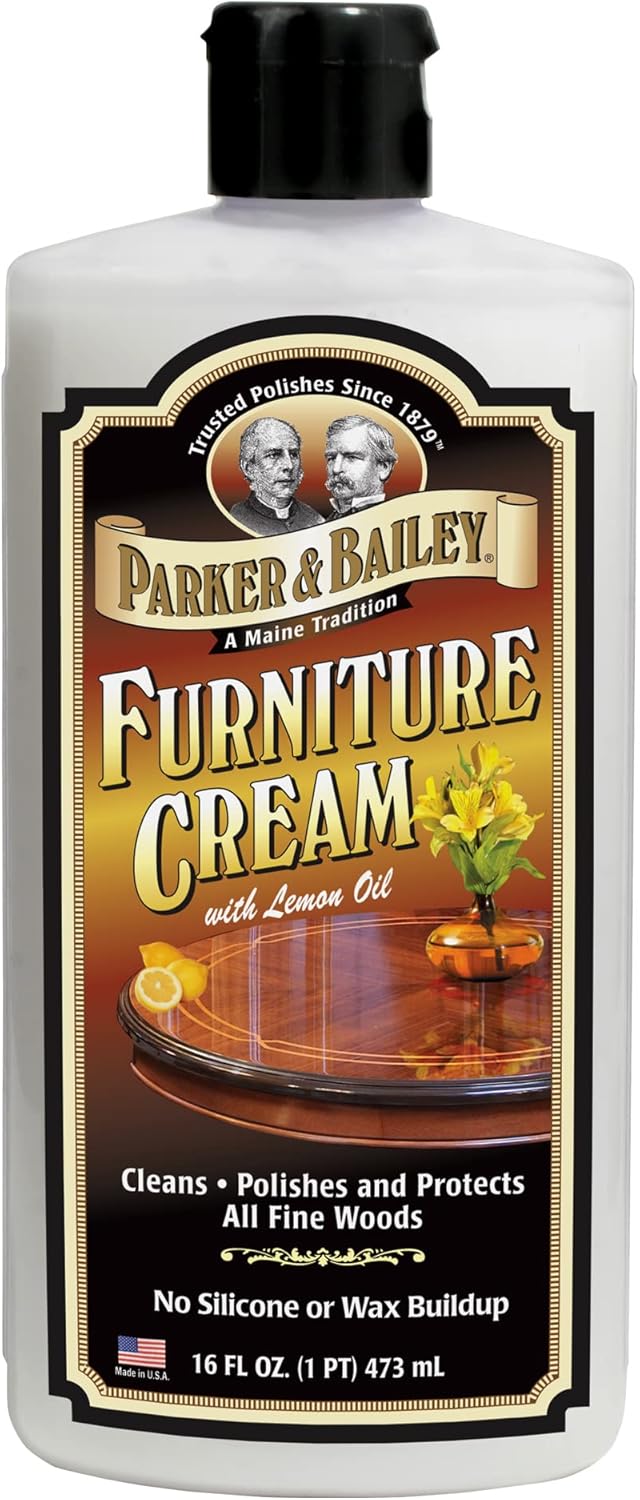 |
Parker & Bailey Furniture Cream | Great for antique furniture. Easy to use |
Check Price |
What to Check Before You Choose a Polish
Good antique care starts before the lid comes off the container. A few minutes spent examining the surface can tell you whether you need a protective wax, a gentle maintenance cream, a conditioning product, or no polish at all.
Look for a stable surface first
Run your eyes across the furniture in raking light from a nearby window or lamp. You are looking for movement or weakness in the finish: flakes, bubbles, lifting veneer, cracks with loose edges, sticky patches, powdery paint, water damage, mold, or areas where color transfers to a dry cloth.
If the surface is unstable, polishing is not maintenance anymore. Rubbing can pull up loose finish or drive material into cracks. A wax can bridge over failing areas, and an oily conditioner can alter color around losses. Those pieces deserve repair advice before appearance work.
A stable surface feels intact. It may be scratched, dull, faded, or uneven, but it is not actively lifting or dissolving. That distinction is important.
Decide whether you need protection, conditioning, or cleaning
These sound similar on product labels, but they solve different problems.
A protective wax is useful when the existing finish is sound and you want a thin barrier plus a controlled sheen. Renaissance Wax and Briwax fall most clearly into the wax-first side of this group, although their chemistry and handling are quite different.
A conditioning product such as Howard Feed-N-Wax makes more sense when a compatible wood surface looks dry or washed out and you accept some increase in richness or depth. Daddy Van’s beeswax polish also sits closer to the conditioning/protective side, with a beeswax-and-carnauba formula and an unscented profile.
A cleaner-polish cream such as Guardsman or Parker & Bailey makes more sense when stable finished furniture has fingerprints, light grime, or dull buildup and you want maintenance without laying down a traditional wax coat. Goddard’s Cabinet Makers Wax Aerosol offers quick application, light cleaning, shine, beeswax, and lemon oil in a spray format.
I know it is tempting to choose the product with the broadest list of promises. For antiques, a narrower job is often easier to control.
Think about how much visual change you want
A clear protective wax should not be chosen for the same reason as an oil-rich conditioner. If the furniture already has beautiful color and you mainly want handling protection, the best result may be almost invisible.
If the wood looks dry and flat, you may want more warmth. Howard Feed-N-Wax is specifically formulated to deepen the appearance of grain while adding wax protection. That visual richness can be satisfying on everyday antiques with stable finishes, but it is still a change. Test first and judge the piece after the product has had time to settle, not only while the surface is freshly wet.
For a very old or valuable finish, “less change” is a legitimate goal. You are caring for the surface, not auditioning it for a furniture showroom.
Aerosol convenience has a trade-off
Sprays are fast, especially across large panels and carved profiles. The difficulty is control. Overspray can land on upholstery, floors, metal, nearby objects, or areas you did not intend to treat. It is also easy to apply more product than necessary.
The National Park Service advises against routine liquid and aerosol polishes on museum objects because many products in those forms contain silicones that can complicate future conservation. That is a general conservation warning, not proof that every spray has silicone.
For Goddard’s Cabinet Makers Wax Aerosol, the maker highlights lemon oil and beeswax and does not make silicone-free status the central verified claim I would rely on here. For important antiques, I would still favor precise hand application over spraying directly across the piece.
Strong solvents deserve extra respect
Briwax Original is a traditional solvent-based furniture wax. Its published safety documentation identifies toluene as a major component and classifies the product as flammable, with health precautions that require attention. National Park Service guidance also notes that strong solvents such as toluene can damage some finishes and are less desirable for museum waxing than weaker solvents.
That does not erase Briwax’s usefulness as a traditional wax on compatible surfaces. It changes how carefully you should choose where to use it. Ventilation, protective handling, hidden-area testing, and finish compatibility are not optional details.
Always test more than the first thirty seconds
A hidden test spot is one of the cheapest forms of insurance in furniture care. Choose the back edge of a leg, the underside of a rail, or another place that has the same finish but is not visible in normal use.
Apply a very small amount using the method you plan to use on the whole piece. Watch for immediate color change, softening, streaking, stickiness, color transfer, haze, or uneven gloss. Then wait. Some reactions are clearer after the carrier or solvent has evaporated.
If the test looks good, then move to a small visible area before committing to a whole tabletop. That two-stage approach is slower, but old finishes reward patience.
When Polishing Is Better Postponed
Not every dull antique needs polish. If the finish is actively flaking, if veneer is lifting, if joints are loose enough that the piece flexes, or if you see mold or insect activity, appearance work belongs later in the repair sequence.
Painted antiques need special caution. Old paint may be historically important, friable, or contain hazardous pigments. Gilded surfaces are even more sensitive. A generic wood polish should not be rubbed across painted decoration, gilding, upholstery, leather inserts, or mixed-material inlay simply because the main structure is wood.
Sticky finishes also deserve a pause. Tackiness can come from heat, degraded coatings, incompatible previous polishes, or plasticizers and residues. Adding wax or oil may make the symptom look better briefly while making the surface harder to diagnose.
There is also a point where professional help is simply sensible. If removing the wrong surface layer could materially reduce the value of the piece, the cost of a conservator’s advice is easier to justify than the cost of reversing an enthusiastic cleaning session.
Renaissance Wax Polish, 200 ml – Controlled Protection for Stable, Valuable Pieces
Renaissance Wax is the most conservation-oriented product in this group. Picreator says the formula was developed from work in the British Museum’s research laboratories and is based on microcrystalline waxes rather than traditional beeswax or carnauba blends.
The maker describes the cured film as hard, clear, moisture resistant, and pH neutral, and Renaissance Wax is used on a wide range of materials including wood, metal, leather, marble, and other collection surfaces.
That history matters, but it should not turn the product into an automatic answer for every antique. National Park Service guidance describes Renaissance or microcrystalline wax as highly water resistant while also noting that it can be difficult to buff evenly on large wood surfaces.
It is especially logical on smaller furniture, decorative boxes, carvings, mixed wood-and-metal objects, display pieces, and stable finished surfaces where a controlled protective film matters more than conditioning dry-looking wood.
Key features translated into practical benefits
The microcrystalline wax base is the defining feature. It creates a harder, drier film than softer traditional waxes and is valued for moisture resistance. On a frequently handled drawer front, small box, writing slope, or decorative table, that means the finish gets a thin sacrificial layer that takes some of the handling instead of the historic surface taking it directly.
The film is designed to remain clear. That is useful on pale wood, marquetry, painted details that have been confirmed compatible, or furniture where you do not want the polish to add an amber cast. A clear wax is not the same as “zero visual change,” though. Any wax can alter sheen, and the act of buffing can make a dull surface look more reflective.
Renaissance Wax also works across mixed materials. That can be valuable on furniture with brass mounts, steel hardware, leather writing surfaces, or decorative metal details because one carefully tested wax can protect more than the wood alone. Mixed-material antiques are still situations where testing each material matters.
A little product is intended to be spread thinly and buffed. That makes the 200 ml tin more practical than its size first suggests, but it also means application technique matters. Thick coats do not create better protection; they make buffing harder and increase the risk of streaks or wax collecting in carving.
- Microcrystalline wax creates a hard, dry protective film rather than an oily surface.
- Clear, pH-neutral formulation is designed for conservation-style protection with minimal color change.
- Useful on mixed-material pieces that combine wood with compatible metal, leather, or stone details.
- Well suited to small or medium stable antiques where controlled application and buffing are practical.
- Can be harder to buff evenly across very large furniture surfaces.
- It protects a stable finish but does not “feed” dry-looking wood the way an oil-containing conditioner can.
Who It’s Best For
Renaissance Wax makes the most sense for a collector or careful home owner who wants a restrained protective layer on stable furniture, especially smaller valuable pieces, decorative woodwork, boxes, writing desks, or furniture with mixed materials. It is also a logical choice if avoiding a warm oily color shift matters more than making the wood look dramatically richer.
Not Ideal For
I would not use it as a shortcut for a failing finish, loose veneer, flaking paint, or bare porous wood without expert guidance. It is also less convenient for someone who wants to cover a large dining suite quickly and has no patience for thin application and careful buffing.
Daddy Van’s All Natural Beeswax Furniture Polish, Unscented – A Soft Wax Feel Without Fragrance
Daddy Van’s Unscented Beeswax Furniture Polish is a softer, more home-oriented option. The linked product is the unscented version. Its verified formula is built around beeswax and carnauba wax, and the manufacturer describes it as non-toxic, food safe, fragrance free, zero-VOC, and suitable for furniture, cabinets, antiques, butcher blocks, and other wood surfaces.
The appeal here is not museum-style hardness. It is the warm, hand-rubbed character many people expect from a beeswax furniture polish, without adding fragrance. That can suit an inherited dresser, a vintage side table, an older cabinet, or a dining piece that is used as part of normal home life rather than preserved like an exhibit.
Key features translated into practical benefits
Beeswax and carnauba wax create a different feel from microcrystalline wax. Beeswax contributes a softer, traditional hand-rubbed character, while carnauba adds hardness and polish. Together they can bring out grain and leave a satin-matte protective finish rather than a wet-looking gloss.
The unscented formula is useful indoors. Fragrance is not a performance feature, but it matters if you are polishing a chest in a bedroom, a table in a small apartment, or furniture around people who dislike strong perfumes. It also means you are evaluating the surface result rather than the smell as part of the experience.
The product is marketed as food safe, which broadens its household usefulness. That is helpful if the same container may be used on compatible butcher block or wooden serving pieces as well as furniture. On antiques, however, food-safe status does not tell you whether an old finish will react well. Finish testing is still the deciding step.
Because it is a soft wax polish, application amount makes a large difference. A thin coat buffed cleanly can look warm and natural. Too much can leave the surface feeling waxy, attract dust, or collect in carving.
- Beeswax-and-carnauba formula gives wood a warm, hand-buffed look without a high-gloss effect.
- Unscented and zero-VOC positioning suits indoor use where strong fragrance would be unwelcome.
- Silicone-free formulation avoids one of the residues conservators commonly worry about in future refinishing.
- Versatile enough for compatible furniture, cabinets, antiques, and food-contact wood surfaces.
- Softer wax can build up if it is applied too heavily or too often.
- Not the most conservative choice for a rare piece with an uncertain or fragile original finish.
Who It’s Best For
This is a sensible choice for stable, everyday antique and vintage furniture when you want a warmer waxed appearance and prefer an unscented formula. It fits people who enjoy applying a small amount by hand and buffing rather than spraying a quick shine across the surface.
Not Ideal For
Skip it on unstable finishes or pieces where even a slight change in sheen or color would be unacceptable. For museum-level furniture or an object with unknown historic coatings, a conservator-led approach is more appropriate than assuming a natural ingredient list makes the product universally safe.
Goddard’s Cabinet Makers Wax, 12 oz – Fast Aerosol Care for Stable Wood Furniture
Goddard’s Cabinet Makers Wax is the aerosol option in this seven-product group. The linked 12-ounce product uses a spray format, and Goddard’s describes the formula as combining lemon oil and beeswax while cleaning, shining, and protecting wood. The maker also says it is designed to leave no oily residue and to help protect against stains, drying, cracking, and sun-related damage.
The attraction is obvious: it is quick. You can cover a broad panel faster than you can work paste wax from a tin. On stable, regularly used wood furniture, that convenience can be useful. For fragile or museum-quality antiques, the spray format deserves more caution because direct aerosol application is harder to control and conservation guidance generally prefers carefully applied paste wax on historic finishes.
Key features translated into practical benefits
The aerosol delivery spreads product across a broad area quickly. That is useful on a large wardrobe side, cabinet door, or dining table where the finish is already stable and you are doing routine maintenance. It is less useful around upholstery, open joints, gilding, inlay, or mixed surfaces because overspray can reach places you did not intend to treat.
Goddard’s uses lemon oil and beeswax as headline ingredients. Beeswax contributes to the protective, polished surface, while the oil component helps produce the richer visual effect people often associate with furniture care. The trade-off is that an oil-containing spray is more appearance-changing than a hard clear microcrystalline wax.
The manufacturer says no rubbing or heavy buffing is needed: spray, then wipe along the grain with a soft cloth. That reduces effort for routine household furniture. On antiques, I would still spray onto the cloth for small or detailed areas rather than fogging the furniture directly, because it gives you better control over quantity.
The product is designed to clean lightly while polishing. That makes it useful when dust and minor surface soil are part of the problem. It should not be treated as a substitute for proper cleaning when the surface has heavy grime or old sticky buildup; Goddard’s own directions say heavily soiled surfaces should be cleaned first.
- Aerosol application is fast on large, stable wood surfaces.
- Beeswax and lemon oil combine shine, conditioning character, and light protection in one step.
- Manufacturer directions are simple and require wiping rather than a long paste-wax buffing process.
- Useful for regularly maintained furniture that needs a refreshed luster rather than restoration work.
- Aerosol overspray gives you less control around fragile details, upholstery, or mixed materials.
- I would be more conservative with it on highly valuable historic finishes because museum guidance generally favors paste wax over spray polishes.
Who It’s Best For
Goddard’s fits stable antique-style or vintage wood furniture that lives an ordinary household life and needs quick periodic care. It is most convincing on broad finished wood surfaces where speed matters and the piece has already passed a hidden-area compatibility test.
Not Ideal For
It is not my first choice for a rare museum-quality piece, loose or flaking finish, intricate gilded furniture, or any object where overspray would be difficult to contain. If you need precise control, a hand-applied wax or cream is easier to keep exactly where you want it.
Howard Feed-N-Wax Wood Polish & Conditioner, 16 oz – Richer Color for Dry-Looking Stable Wood
Howard Feed-N-Wax is the product in this group most clearly aimed at wood that looks dry, faded, or visually tired. Howard’s verified formula uses beeswax, carnauba wax, mineral oil, and orange oil. The company says it enhances the depth of grain in finished and unfinished wood, adds a soft luster, and leaves a protective coating of wax. The linked bottle is the 16-ounce version.
That combination can produce a more noticeable “before and after” than a hard clear wax because oils change the way light moves through and reflects from the surface. On the right piece, the result can make grain look deeper and reduce the chalky, dry appearance of an older finish. On the wrong piece, the same richness may darken the appearance more than you wanted.
Key features translated into practical benefits
The wax-and-oil blend is what separates Feed-N-Wax from a simple surface wax. Mineral oil and orange oil help wet the surface visually, which can make faded grain look fuller. Beeswax and carnauba then contribute sheen and a protective film.
That is useful for an older cabinet, table, door, or chest with a stable finish that has become flat-looking through age and cleaning. It is not a repair for missing finish, sun bleaching, or deep water damage. It changes the appearance of the intact surface rather than rebuilding damaged coating.
Howard specifically lists antiques among the intended uses. That is useful evidence of intended application, but antique suitability still depends on the actual object. Conservation guidance is cautious about oiling historic furniture because oils can migrate, darken surfaces, attract dirt, or complicate later treatment. I would therefore use this more readily on sturdy household antiques than on rare original surfaces.
The maker says Feed-N-Wax can be used when wood or finish looks dry or faded. That “as needed” approach is healthier than turning conditioning into a weekly ritual. If the furniture already has a good sheen and stable appearance, more product is not automatically better.
Howard also states that Feed-N-Wax is not intended for food-preparation surfaces. That is worth remembering if the antique is a butcher block, dough table, or other furniture that is still used directly for food preparation.
- Wax-and-oil formula can visibly enrich dry-looking or faded stable wood.
- Beeswax and carnauba provide a soft protective luster after conditioning.
- Useful on larger household antiques, cabinets, doors, trim, and furniture where a warmer look is wanted.
- Current manufacturer information clearly identifies the ingredients and intended wood uses.
- Oils can darken or change the appearance more than a clear protective wax.
- Not intended for food-preparation surfaces and not my first choice for fragile museum-level finishes.
Who It’s Best For
Choose Feed-N-Wax for a sturdy older table, cabinet, dresser, door, or other stable wood piece that looks dry and would benefit from a richer grain appearance. It is especially useful if cosmetic warmth is part of your goal rather than something you are trying to avoid.
Not Ideal For
I would avoid it on unstable finishes, very pale surfaces where darkening would be unwelcome, food-preparation areas, or valuable antiques where preserving the exact existing surface appearance matters more than adding richness.
Briwax Furniture Wax for Wood, Clear – Traditional Paste-Wax Character With Strong Solvent Cautions
Briwax is the most traditional restoration-style wax in this group, and it also deserves the clearest safety warning. The linked product is the clear version of Briwax Original. Current product information describes it as a solvent-based blend of beeswax and carnauba wax that cleans, stains, and polishes wood, leaving a soft lustrous patina rather than a very high gloss.
The phrase “solvent based” matters. Briwax’s published safety data for Original identifies toluene as a major component and classifies the material as flammable, with skin, eye, inhalation, and other health precautions. National Park Service furniture guidance specifically advises avoiding stronger solvents such as toluene for museum waxing because they can damage some finishes and present greater health hazards.
This is therefore a product I would choose only when I know the surface is compatible and I can provide proper ventilation and follow the label and safety sheet. Traditional does not mean mild.
Key features translated into practical benefits
The beeswax-and-carnauba combination gives Briwax its familiar paste-wax behavior. Applied thinly and buffed, it creates a hand-worked patina that can look particularly appropriate on darker woods, older cabinets, carved furniture, and pieces where a slightly richer traditional sheen suits the design.
The clear version avoids intentionally adding a stain color, which is useful if you want the wood tone to remain the main visual feature. “Clear” does not mean visually invisible; solvent and wax can still temporarily or permanently change how a finish looks, especially if it is porous, thin, or degraded.
The solvent system helps the wax spread and interact with surface grime and old wax, which is one reason Briwax is often associated with restoration work. That same solvent action is precisely why hidden-area testing matters. A finish that softens, smears, or transfers color should not be treated further.
Buffing controls the final sheen. A thin coat can produce a restrained luster. Too much wax creates more work and can lodge in carving or grain pores. Dark furniture may also show pale residue in recesses if clear wax is allowed to build up.
- Traditional beeswax-and-carnauba paste creates a soft, hand-buffed patina rather than a plastic-looking gloss.
- Clear version works without intentionally adding a separate stain color.
- Useful for compatible older furniture where a classic waxed finish is part of the desired look.
- Paste format gives more placement control than an aerosol spray.
- Published safety information identifies strong solvent hazards, including flammability, so ventilation and careful handling are essential.
- The strong solvent system makes it unsuitable for casual use on fragile or unidentified historic finishes.
Who It’s Best For
Briwax fits an experienced DIY restorer or careful furniture owner working on a stable, compatible finish and deliberately seeking a traditional paste-wax patina. It makes more sense in a ventilated work area than in a closed bedroom or small unventilated room.
Not Ideal For
It is not the product I would hand to someone who has never worked with solvent-based wax or who cannot identify whether the finish is stable. I would also avoid it on museum-quality pieces, fragile lacquer or shellac without professional guidance, and any setting where ventilation cannot be controlled.
Guardsman Clean & Polish for Wood Furniture, Cream, 16.9 oz – Low-Buildup Maintenance for Sealed Wood
Guardsman Clean & Polish takes a different route from traditional wax. The linked cream is made for sealed wood surfaces and the current product information states that it contains no waxes, abrasives, or silicones. It is designed to clean dirt and grime, leave a natural low-luster appearance, use UV absorbers to help protect against fading and discoloration, and reduce the visible appearance of fine surface scratches.
That makes Guardsman more of an ongoing maintenance product for sound finished furniture than a restoration wax. I would think of it for inherited dining furniture, older bedroom sets, sealed vintage cabinets, or antique wood pieces with a durable existing finish that simply need routine cleaning and a refreshed surface.
Key features translated into practical benefits
The silicone-free formula is a meaningful advantage for furniture that may need refinishing or repair in the future. Silicone contamination is a known problem in conservation and refinishing because it can cause defects in later coatings. Avoiding silicone does not guarantee universal compatibility, but it removes one common concern.
The cream is also wax free. That means you are less likely to create layers of traditional wax buildup every time you clean. For regularly used sealed furniture, that can make maintenance more straightforward: remove grime, restore a low luster, buff dry, and stop.
UV absorbers are intended to reduce fading and discoloration caused by sunlight. They are useful as an added maintenance feature, but they should not be treated as permission to place an antique in direct sun. Light damage accumulates, and the most effective protection is still controlling exposure with furniture placement, curtains, shades, or UV-filtering strategies.
Guardsman is recommended for sealed wood surfaces, including antique wood furniture, but not for wood floors. That “sealed” requirement is important. I would not put it on bare wood, a powdery painted surface, or a finish that is cracking and lifting simply because the product name includes wood furniture.
- Silicone-free, wax-free, and abrasive-free formula reduces concerns about greasy buildup and silicone contamination.
- Designed specifically for sealed wood and combines light cleaning with a low-luster polished appearance.
- UV absorbers add another layer of protection against light-related fading and discoloration.
- Useful for regularly handled antique and vintage furniture with a sound modern or older sealed finish.
- It is a maintenance cream, not a substitute for wax conservation or finish repair.
- Unsuitable for bare wood, unstable surfaces, and wood floors.
Who It’s Best For
Guardsman is a good fit for someone caring for a stable finished antique that is used regularly and needs cleaning more often than it needs traditional waxing. It is especially sensible if you want a natural luster and specifically want to avoid silicone and wax buildup.
Not Ideal For
It is less suitable for a piece where the goal is to lay down a hard protective wax barrier or create a traditional hand-waxed patina. It also should not be used to “fix” a finish that is already lifting, sticky, or structurally failing.
Parker & Bailey Furniture Cream, 16 oz – Cleaner-First Care for Grimy, Stable Furniture
Parker & Bailey Furniture Cream sits closest to the cleaning side of this group. The linked 16-ounce cream is marketed as a furniture and surface cleaner that can degrease, remove spots and buildup, condition, and restore shine on painted, laminate, white, and natural wood surfaces. Current product information also states that it contains no wax or silicone and is low odor.
That makes it useful when the first problem is not dryness but dirt. Older furniture can accumulate hand oils around drawer pulls, cooking residue on a kitchen hutch, nicotine film, or layers of incompatible maintenance products. A cleaner-polish cream can be a more logical first step than adding another wax layer over contamination.
At the same time, “cleaner” is not automatically “safe for every antique.” Cleaning is an intervention. If the old finish is water-sensitive, friable, hand-painted, gilded, or already softened, even a gentle household cream can disturb the surface.
Key features translated into practical benefits
The cream format gives you more control than a spray. You can put a small amount on a damp cloth, work a limited section, and immediately see what is being removed. That matters around edges, carvings, hardware, and patches of different finish where broad spraying would be clumsy.
Its degreasing and buildup-removal role is the real reason to choose it. If an antique feels grimy or has a cloudy layer from years of maintenance products, cleaning may improve the look more honestly than adding shine on top. Work gradually and inspect the cloth. If original color or finish begins transferring, stop.
The current listing states that the formula does not contain wax or silicone. That is useful if you want to clean a stable surface without automatically adding another wax film. Afterward, you can decide whether the furniture actually needs further protection rather than building cleaning and waxing into one unavoidable step.
Parker & Bailey’s safety data shows that the product still deserves normal chemical-handling care. “Gentle” does not mean you should ignore skin or eye contact precautions. Use it as directed and keep it away from children and pets during the work.
- Cleaner-first formula is useful for stable furniture with grime, spots, grease, or old buildup.
- Cream application gives better control than a direct aerosol on carved or detailed furniture.
- Current product information states that it contains no wax or silicone, so cleaning does not automatically add another wax layer.
- Can be used on several stable finished surfaces, which is practical for furniture that mixes natural and painted sections after compatibility testing.
- Cleaning action can disturb a fragile historic finish if you skip the hidden-area test.
- It does not create the same protective wax barrier as Renaissance Wax or a traditional paste wax.
Who It’s Best For
Parker & Bailey makes sense when a stable vintage or antique piece looks dirty before it looks dry. I would use it as a controlled cleaning-and-refresh product for household furniture where buildup, fingerprints, or grease are the main issue and the finish has been tested for compatibility.
Not Ideal For
Avoid it on flaking paint, gilding, soft or sticky finishes, exposed fragile veneer edges, or furniture whose historic surface should not be cleaned without professional advice. If the piece is already clean and simply needs a protective wax layer, another product in this group is more directly suited to that job.
Comparing the Seven Products by What They Actually Do
Putting these seven products side by side makes one point very clear: “furniture polish” is too broad a label to tell you what a product will do. The most useful comparison is the job each one performs on a stable surface.
If your priority is a controlled protective wax
Renaissance Wax is the most restrained choice here. Its microcrystalline formula is designed for conservation-style protection, stays clear, and dries to a hard film. It is especially convincing for smaller valuable pieces, decorative objects, and mixed-material antiques where an oily look would be unwelcome.
Briwax also creates a wax layer, but the experience is very different. It uses beeswax and carnauba in a strong solvent system and produces a more traditional furniture-wax patina. It can be appropriate on known compatible finishes, but it asks more from the user in ventilation, testing, and safety discipline.
If you want a softer beeswax look
Daddy Van’s Unscented Beeswax Polish is the gentler household choice among the waxes. It gives a warmer, softer hand-buffed appearance, has no fragrance, and avoids silicone. It is useful on stable everyday antiques where you want the wood to look cared for rather than museum-sealed.
Goddard’s also uses beeswax but delivers it through an aerosol with lemon oil. It is faster on large surfaces, yet that convenience reduces application control. I would reserve it for stable furniture where direct restoration sensitivity is lower.
If dry-looking wood is the main problem
Howard Feed-N-Wax is the strongest fit. Its mineral oil and orange oil components, combined with beeswax and carnauba, are meant to deepen the look of grain and reduce a faded, dry appearance. That can be very effective visually on a stable household antique.
The same strength is the caution: it changes appearance more than a hard clear wax. If you are protecting a rare finish whose exact color and sheen are part of its value, richness is not automatically an improvement.
If the furniture needs regular cleaning more than waxing
Guardsman Clean & Polish and Parker & Bailey Furniture Cream are the two maintenance-focused creams. Guardsman is particularly suited to sealed wood where you want light cleaning, a low-luster finish, UV absorbers, and no wax or silicone buildup.
Parker & Bailey is more interesting when grime or old residue is the first problem. Its role as a cleaner, degreaser, and buildup remover means it can prepare a stable piece for a later decision about protection rather than forcing you to add wax immediately.
If the piece is highly valuable or the finish is uncertain
The right comparison may be between “do something” and “do nothing yet.” Renaissance Wax has the strongest conservation credentials in this group, but even Renaissance is not a license to wax a failing finish. A hidden test and surface assessment come first.
For fragile, historically important, painted, gilded, or unusual finishes, professional advice can be the most economical choice because the value you are protecting is not the cost of the polish. It is the surface that has survived for decades or centuries.
A Careful Method for Polishing Antique Furniture
A good result depends as much on preparation as the product itself. I would rather spend twenty minutes inspecting and dusting than ten minutes applying something I later wish I had left in the container.
1. Photograph the furniture before you start
Take clear photos in natural light, including the top, front, sides, and any damaged areas. This gives you a reference for color and sheen before treatment. It also helps you notice whether a “new” dark patch was actually there all along.
For a valuable piece, photograph labels, maker’s marks, inscriptions, hardware, and repair history too. Documentation is part of careful ownership.
2. Remove loose dust without grinding it into the finish
Use a clean, soft cotton or microfiber cloth on robust flat surfaces. For carving and corners, use a soft natural-bristle or conservation-style brush while supporting loose details with your other hand.
Do not rub hard. Dust is abrasive. Pushing it around under pressure is a poor way to begin a polishing job.
3. Inspect the finish under better light
Now that loose dust is gone, look again. Check for lifted veneer, new cracks, soft finish, white bloom, sticky patches, water rings, mold, and loose paint. If anything looks unstable, stop and decide whether the piece needs repair before polishing.
This is also the point to decide what you actually want to change. If the furniture looks good after dusting, you may not need polish at all.
4. Test the product in a discreet spot
Use the same cloth, amount, and method you intend to use on the visible surface. Keep the test small. Watch for color transfer onto the cloth, tackiness, sudden darkening, cloudiness, or a finish that becomes soft under your fingertip.
Then leave it alone for a while. Solvents and carrier oils can change as they evaporate or settle. A test that looks fine while wet may look different later.
5. Apply less than feels necessary
Thin application is one of the strongest habits you can build. With paste or microcrystalline wax, put a small amount on the cloth and spread it until the film is barely visible. With cream, work a limited section and follow the product directions. With an aerosol, I prefer spraying onto the cloth in delicate areas rather than coating the furniture directly.
More product does not equal more protection. It usually means more residue to remove.
6. Work with the grain and respect edges
Move along the grain on flat wood surfaces. Around carvings, molding, veneer seams, and hardware, reduce the amount even further. Do not push wax into cracks or open joints; future glue repairs can be harder if wax contaminates the surfaces.
Keep product away from upholstery, fabric linings, paper labels, gilding, and any material not confirmed compatible.
7. Buff only as much as the finish needs
Use a separate clean cloth for buffing. Your goal is an even, dry-feeling surface, not maximum shine. Antique furniture often looks better with a soft luster because it preserves the visual depth of age.
If a wax remains smeary, do not solve the problem by adding more wax. Keep buffing with a clean cloth, allow more curing time if the directions require it, and check whether the original coat was simply too heavy.
8. Let the piece settle before judging the result
Fresh polish can temporarily make everything look richer. Give the surface time to return to room temperature and for carriers or solvents to evaporate. Then view the furniture in daylight and room light.
Once that is done, decide whether any second application is truly needed. In most antique care, the answer is less often than people expect.
Keeping the Finish Looking Good Between Treatments
Polish should not have to compensate for poor storage or rough daily use. The most effective care often happens between applications.
Control sunlight before relying on UV claims
Direct sun can fade wood, dyes, finish, upholstery, and inlay. A polish with UV absorbers may help, but furniture placement, blinds, curtains, and filtered glazing do more to reduce exposure than a maintenance cream alone.
Watch the path of sunlight across the room over the day. A chest that looks safe at breakfast may sit in a strong beam for three hours every afternoon.
Keep heat and moisture swings reasonable
Wood moves as humidity changes. Very dry air can open joints and shrink panels, while damp conditions can encourage swelling, mold, and finish problems. Avoid placing valuable antiques directly beside radiators, heat vents, fireplaces, or damp exterior walls.
You do not need a museum climate to care sensibly for household furniture. Stability matters more than chasing one exact number.
Dust gently and regularly
A soft dusting routine reduces the need for stronger cleaning later. Dust also absorbs moisture and pollutants and can act as an abrasive under hands and objects.
Use a clean cloth and change it before it becomes gritty. On carved furniture, a soft brush often works better than forcing a cloth into delicate recesses.
Use coasters, mats, and handling habits
Water rings and heat marks are easier to prevent than repair. Use coasters and trivets, lift decorative objects rather than dragging them, and avoid leaving damp plant pots directly on old wood.
Hardware deserves care too. Pull a drawer by its handle rather than the edge of a fragile veneer front. Small habits preserve more than frequent polishing does.
Reapply only when the surface tells you it needs it
A waxed piece does not need another coat because a calendar says so. If the existing wax still buffs to a clean sheen and the finish is protected, adding more may only build residue.
Museum guidance often treats waxing as an occasional intervention measured in years rather than weeks. Household pieces may need different schedules because they are touched more, but “often” should still have a reason.
Polishing Habits That Can Quietly Damage an Antique
Adding polish over dust and grit
Dust looks harmless until you rub it across a finish. Fine grit acts like an abrasive and can create tiny scratches that dull the surface over time.
Dust first with minimal pressure. If the piece is carved, lift particles out with a soft brush instead of scrubbing them deeper into corners.
Trying to erase patina with aggressive cleaning
Darkened edges, mellow color, and small handling marks are often part of the furniture’s age. Scrubbing until every surface looks uniform can remove original finish along with grime.
Clean to remove contamination, not to make an old object look factory new. If you are unsure whether a dark layer is dirt or aged finish, stop before reaching for a stronger cleaner.
Treating “natural” as a guarantee of compatibility
Beeswax, orange oil, lemon oil, and other familiar ingredients sound reassuring. They can still change color, soften certain coatings, or leave residues on an incompatible surface.
Judge the product by what it does to the tested finish, not by whether the ingredient name comes from a plant or hive.
Applying wax into cracks and open joints
Wax in a split, loose joint, or veneer seam can interfere with future adhesive repairs. It can also turn pale and become visible in deep carving.
Apply around damage rather than into it. Repair comes first; polish comes after the surface is stable.
Using one product on every material attached to the furniture
An antique desk may combine shellacked wood, leather, brass, felt, paper labels, and glue. A product that is compatible with one surface may stain or soften another.
Protect adjacent materials and apply with precision. Multi-material claims still require testing because age changes how original materials behave.
Repeating treatments because the first shine faded
Some products look very rich immediately after application because the surface is still wet with carrier or oil. Adding another coat too soon can build residue instead of improving protection.
Wait until the first treatment has fully settled, then judge in neutral light. If the surface already looks even and feels dry, stop.
Using a strong solvent wax without ventilation
Briwax is the obvious example in this group. A traditional solvent-based wax can perform well on compatible furniture, but the published safety information makes ventilation and protective handling non-negotiable.
Open windows, avoid ignition sources, follow the current label and safety sheet, and do not use solvent-heavy products casually around children or pets.
Safety and Conservation Notes
Furniture polish is easy to underestimate because it comes in a household container rather than a workshop drum. Read the current label and safety data for the exact product you own, since formulations and warnings can change.
Keep products away from children and pets while you work and while treated surfaces are curing. Provide ventilation, particularly with aerosols and solvent-based waxes. Keep flammable products away from flames, heaters, pilot lights, smoking materials, and spark sources.
Wear gloves or eye protection where the product directions or safety sheet calls for them. Briwax’s published safety information deserves particular attention because of its solvent hazards. Parker & Bailey’s safety data also includes skin and eye irritation precautions even though the product is marketed as a gentle furniture cream.
For historically important furniture, safety includes the object itself. Do not experiment on original paint, gilding, inlay, unstable veneer, shellac that softens during testing, or finishes that transfer color. If the piece has substantial value, a conservator can often tell you that the safest treatment is simpler than you expected.
Frequently Asked Questions About Furniture Polish for Antiques
What is the safest furniture polish for antiques?
There is no single polish that is safest for every antique because the existing finish and its condition control compatibility. For a stable clear historic finish, conservation guidance often favors a carefully tested paste or microcrystalline wax used sparingly. Renaissance Wax is the most conservation-oriented product in this group, but even it should be tested first.
Is beeswax good for antique furniture?
Beeswax can be appropriate on many stable finishes and can create a warm, soft sheen. Daddy Van’s, Goddard’s, Howard Feed-N-Wax, and Briwax all use beeswax in different formulas, so the presence of beeswax alone does not tell you how the product will behave. Oils, solvents, delivery method, and other waxes change the result.
Should I oil dry antique furniture?
Not automatically. A dry appearance can come from a worn finish, light damage, old wax, or genuinely porous wood, and oils can darken surfaces or complicate future treatment. Howard Feed-N-Wax is designed to enrich dry-looking wood, but I would reserve it for stable compatible pieces where a richer appearance is wanted and confirmed by testing.
Can furniture polish remove scratches?
Polish can reduce the visual contrast of very fine surface scratches by changing sheen or filling tiny marks, but it does not rebuild missing finish or wood. Guardsman specifically says its cream can help conceal the appearance of fine surface scratches. A gouge, deep scratch, veneer loss, or finish chip is a repair issue rather than a polishing issue.
How often should antique furniture be polished?
Usually less often than people think. Dust gently on a regular basis, but apply wax or polish only when the surface condition and use justify it. National Park Service guidance for museum furniture discusses rewaxing intervals that can stretch for years when the existing wax layer still buffs well, which is a useful reminder that repeated product buildup is not good maintenance.
Can I use an aerosol wax on antique furniture?
You can use a product such as Goddard’s Cabinet Makers Wax Aerosol on a stable compatible household piece, but the spray format gives you less placement control. For delicate furniture, spray onto a cloth rather than directly over mixed materials, and keep in mind that conservation guidance is generally more cautious about liquid and aerosol polishes on historic objects.
Is silicone really a problem on old furniture?
It can be. The National Park Service warns that silicone residues in polishes can migrate into finishes and cause problems during later refinishing, including defects in new coatings. Daddy Van’s, Guardsman, and Parker & Bailey currently make silicone-free claims for the linked products, which is useful if future repairability matters.
What should I use if the antique is dirty rather than dry?
Start by distinguishing loose dust from adhered grime. For a stable household finish, Parker & Bailey Furniture Cream is the strongest cleaner-first option among these seven, while Guardsman combines lighter cleaning with routine polishing on sealed wood. On a rare or fragile surface, do not assume a household cleaner is safe; test carefully or seek conservation advice.
Can I wax bare antique wood?
Be cautious. National Park Service museum guidance advises against applying paste wax to unfinished bare wood because wax penetrates the pores and is difficult to remove. Some manufacturers market their products for unfinished wood, but that is a different objective from preserving a historic unfinished surface. If the bare wood is original and important, professional guidance is the safer route.
Which product is easiest for a beginner to control?
A cream or soft hand-applied wax is often easier to place precisely than an aerosol or strong solvent wax. Daddy Van’s offers a simple unscented beeswax-and-carnauba approach for stable household pieces, while Guardsman is straightforward on sealed wood. Briwax demands more experience because finish compatibility, ventilation, and solvent safety matter more.
Choosing the Right Furniture Polish Without Erasing the Past
The best furniture polish for antiques is the one that solves the surface problem without creating a new one. If the piece is stable and you want restrained protection, Renaissance Wax gives you the most conservation-minded route.
If you prefer a softer hand-waxed feel for ordinary household antiques, Daddy Van’s offers an unscented beeswax-and-carnauba formula. Goddard’s trades some precision for fast aerosol application, while Howard Feed-N-Wax is the more deliberate choice when compatible wood looks dry and you actually want deeper color and grain.
Briwax brings a traditional paste-wax patina, but its strong solvent system makes careful testing, ventilation, and safety practice especially important. Guardsman suits regular maintenance on sealed wood without wax or silicone buildup, and Parker & Bailey makes the most sense when grime and old residue need attention before you think about adding protection.
The detail I’d pay closest attention to is not the shine shown on the label. It is the condition of the finish already on the furniture. Dust first, inspect carefully, test in a hidden place, then use less product than your first instinct suggests. An antique does not need to lose its scratches, mellow tone, or evidence of age to look cared for. The goal is to protect what survived, not polish the history out of it.