Kitchen cabinets collect a very specific kind of mess. Dust settles on the upper rails, cooking oil lands in a fine film near the stove, damp fingers leave marks around handles, and the doors still have to look presentable under bright overhead lighting. A product that makes a side table look glossy can be completely wrong for a cabinet finish if it leaves residue, softens the sheen, or simply coats over grease instead of removing it.
That is why I would never choose furniture polish for kitchen cabinets by shine alone. The first question is what the cabinet finish actually needs. Some sealed wood doors only need gentle cleaning. Others look dry and benefit from occasional conditioning. Painted cabinets can respond very differently from stained wood, and laminate has its own limits. The safest routine starts with the finish, not the fragrance on the bottle.
The eight products below cover several different jobs, from light daily cleaning to wax-and-oil conditioning. I have kept the focus on how each formula fits kitchen cabinet care, where it is useful, and where a more restrained approach makes sense. The goal is not to make every door as glossy as possible. It is to keep the surface clean, comfortable to touch, and consistent with the finish the cabinet was designed to have.
What Cabinet Finishes Actually Need From a Cleaner or Polish
A cabinet door is usually not bare wood. Even when you can see and feel the grain, there is often a protective finish between your hand and the timber. That finish may be varnish, lacquer, polyurethane, conversion varnish, paint, laminate, or another factory-applied coating. The care product is interacting with that top layer first, which is why two cabinets made from the same wood species can need different maintenance.
Cleaning, polishing, and conditioning are different jobs
A cleaner is mainly there to remove soil. On cabinets, that means dust, fingerprints, light food residue, and the thin greasy film that gradually appears around cooking areas. A good everyday cleaner should leave the surface clean without forcing you to buff away a heavy layer afterward.
A cleaner-polish blend adds appearance enhancement to the cleaning step. Depending on the formula, that may mean a light luster, a protective film, or ingredients that help the surface look less dull. These products are useful when the finish is compatible and you want one step instead of separate cleaning and polishing.
A conditioner or wax-and-oil polish is more specialized. Howard Feed-N-Wax, for example, uses conditioning oils plus beeswax and carnauba wax. That makes sense for wood that looks dry or faded, but it is not the same job as removing fresh kitchen grease. If the door is dirty, cleaning comes first.
I know it is tempting to treat the words cleaner, polish, conditioner, shine, and restorer as interchangeable. They are not. Reading what the manufacturer says the formula is meant to do is far more useful than choosing the bottle with the glossiest before-and-after photograph.
The existing finish matters more than the wood species
Oak, maple, cherry, walnut, and birch can all appear in kitchens, but the finish over the wood usually controls how you should clean it. A fully sealed factory finish is different from an older oil-finished door. Painted wood is different again, because aggressive rubbing can change the sheen even when the paint itself does not come off.
Laminate should also be treated as its own surface. A product marketed for finished wood may be acceptable on some laminates, while an oil or wax treatment intended to enrich wood grain may make little sense on a nonporous decorative surface. Rejuvenate Cabinet & Furniture Cleaner is one of the products here that explicitly lists laminate among its suitable surfaces, which is useful if your kitchen mixes materials.
The manufacturer of your cabinets should get the final word. Some cabinet makers recommend little more than warm water, mild dish soap, and immediate drying. Some specifically discourage routine waxing and polishing because buildup can turn hazy or yellowed over time. Others sell their own finish-compatible polish. If you still have the cabinet care sheet, that document matters more than a general furniture-care claim on a bottle.
Kitchen grease changes the order of operations
Grease is the reason cabinet care should not begin with a polishing step. A thin oily film can hold dust and make a door look dull. If you polish directly over that layer, the surface may become shinier while still feeling tacky.
Start by checking the high-touch and high-splatter zones: handles, drawer edges, doors beside the cooktop, the cabinet above the microwave, and the area around the trash pullout. If a clean microfiber cloth drags instead of gliding, there is probably residue to remove before you think about shine.
For that reason, Method Daily Wood Cleaner and Rejuvenate Cabinet & Furniture Cleaner fit a different need from Howard Feed-N-Wax or Old English Lemon Oil. The cleaners make more sense when soil is the main issue. The richer oil-and-wax formulas are better reserved for compatible wood finishes that look dry or faded after they are already clean.
More shine is not always a better result
Cabinet doors are designed with a particular sheen: matte, satin, semi-gloss, or gloss. A polish can change how light moves across that surface. On an intentionally low-sheen finish, adding a glossy film may make doors look uneven because heavily touched areas and lightly touched areas reflect differently.
I would aim for consistency rather than maximum shine. If the finish is supposed to look soft and natural, a low-luster product such as Guardsman Anytime Clean & Polish may make more sense than a heavy coating. If the cabinet maker says not to polish at all, a gentle cleaner and microfiber cloth are the better tools.
This is also why spot testing matters. A product can be safe in a broad sense and still produce a sheen you do not like. A hidden strip on the inside edge of a door tells you more than a product photograph ever will.
| Product Image | Product Name | Features | Price |
|---|---|---|---|
 |
Method Daily Wood Cleaner | Easy to use. Pleasant fragrance |
Check Price |
 |
Old English 0-62338-07325-5 Lemon Oil Furniture Polish | Protect against everyday stains. Polishes surfaces well |
Check Price |
 |
Howard Products Beeswax Wood Polish & Conditioner | Polishes all wood surfaces. Long-lasting shine. |
Check Price |
 |
Guardsman Anytime Clean & Polish Wood | No artificial gloss. Use on finished woo |
Check Price |
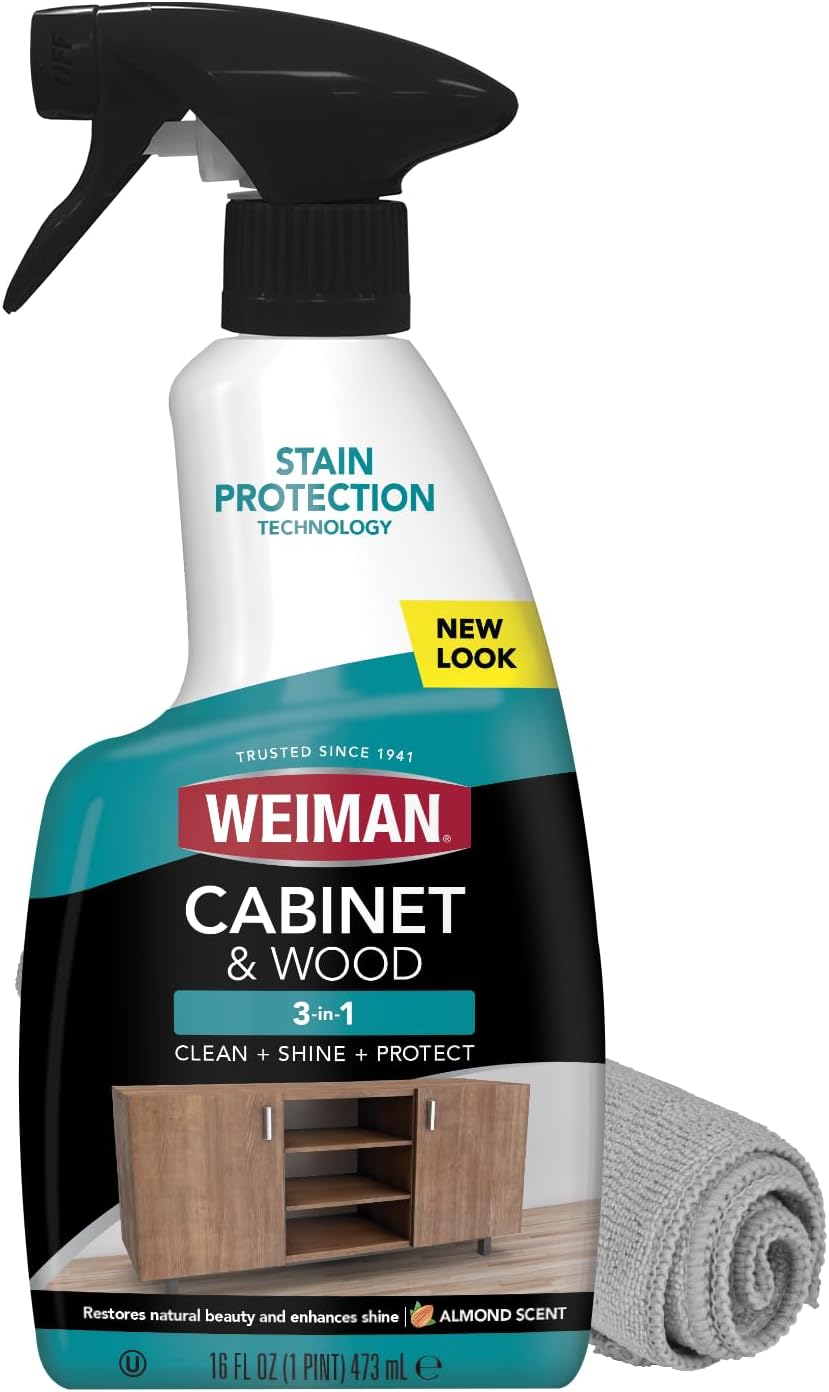 |
Weiman Cabinet & Wood Clean & Shine Spray | Restores shine to your cabinets. Removing dirt and water spots |
Check Price |
 |
Therapy Wood Polish Bundle with Microfiber | Premium Microfiber Cloth. Safe for cabinets. |
Check Price |
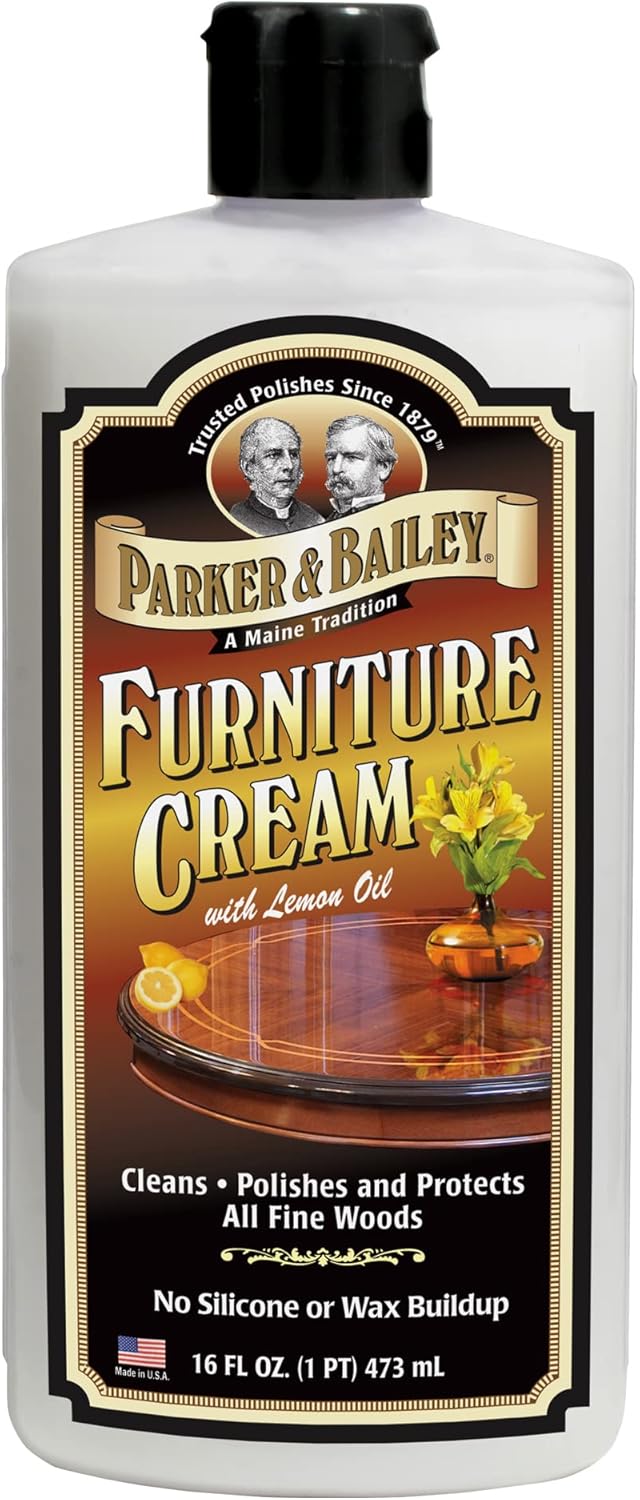 |
Parker & Bailey Furniture Cream | Great for cabinet furniture. Easy to use. |
Check Price |
 |
Rejuvenate Cabinet And Furniture Cleaner | Streak-free clean. Removes dirt, grease and oil |
Check Price |
What to Check Before You Put Anything on a Cabinet Door
Choosing the best furniture polish for kitchen cabinets starts with a few practical checks. They take less time than correcting a cloudy finish later, and they help separate the products that suit your kitchen from the ones that belong on different woodwork.
Read the cabinet maker’s care instructions first
If the cabinets are still under warranty, this step is especially important. Some manufacturers clearly state that waxes, petroleum-solvent polishes, or silicone-based products should not be used. Others recommend specific emulsion cleaners or sell their own cabinet polish.
That guidance can override a general claim such as “safe for finished wood.” Finished wood covers an enormous range of coatings. A product can be appropriate for many finished wood surfaces and still conflict with the instructions for your particular doors.
If you do not know the cabinet brand, start conservatively. Dust with a soft cloth, use a mild cleaner on a hidden area, dry the surface, and observe it after the light hits from several angles. Avoid making the first test on the center of a large upper door.
Decide whether the problem is dirt, dullness, or dryness
These three conditions can look surprisingly similar from across the room. Grease makes a surface look flat because it holds fine dust. A clean but worn-looking finish can look dull because the sheen has changed. Older natural wood can look pale or dry even when the surface is not dirty.
If the door is tacky, clean it. If it is smooth and clean but simply lacks luster, a compatible cleaner-polish may help. If a suitable wood finish looks genuinely dry or faded, an occasional conditioning treatment may make more sense.
Do not use a richer product just because it sounds more nourishing. Kitchen cabinets are handled constantly, so any residue left behind gets tested by fingers, steam, and cooking particles every day.
Look at the formula style
Method Daily Wood Cleaner is a straightforward daily cleaner made to remove dust and grime from wood surfaces. Rejuvenate is also primarily a cleaner, with a pH-balanced, residue-free formula intended for cabinets and furniture. These are logical choices when cleaning is the priority.
Weiman Cabinet & Wood Clean & Shine, Guardsman Anytime Clean & Polish, Therapy Wood & Cabinet Cleaner & Polish, and Parker & Bailey Furniture Cream sit closer to the middle. They clean while also improving the finished appearance.
Old English Lemon Oil and Howard Feed-N-Wax lean more toward conditioning and polishing. They deserve a clean surface first and a more selective application schedule.
Consider residue and buildup
Kitchen cabinets are a bad place for a thick residue because airborne cooking particles can stick to it. That is why “use a little” is more than generic advice. The smallest effective amount is usually the right starting point.
Wax-containing products deserve extra thought. Howard Feed-N-Wax intentionally leaves beeswax and carnauba wax behind as part of its protective effect, while Weiman Cabinet & Wood Clean & Shine states that its formula contains Brazilian carnauba wax. Those are real formulation choices, not automatically good or bad ones. They simply mean you should confirm that wax is acceptable for your cabinet finish and avoid unnecessary repeated coats.
Parker & Bailey Furniture Cream is useful for buyers who specifically want a cleaner-polish without wax or silicone buildup. Guardsman Anytime Clean & Polish is also silicone-free, which can matter when the finish maker warns against silicone-based polish.
Pay attention to where the product is applied
Direct spraying is convenient, but it is not always my first choice on detailed cabinetry. Liquid can run into door joints, collect around hardware, or land on neighboring surfaces. Applying the product to a clean cloth gives you more control, especially on framed doors and vertical panels.
Several manufacturers here explicitly recommend applying to a cloth or allow that method. Therapy says to apply its cleaner to a clean cloth and then wipe and buff. Guardsman directions commonly call for spraying onto a soft cloth and wiping with the grain. Parker & Bailey Furniture Cream is also designed to be placed on a cloth before application.
Controlled application helps you use less product and makes it easier to keep it away from unfinished edges, drawer slides, food-contact areas, and flooring.
Fragrance is a practical consideration in a kitchen
These products do not all smell the same. Method’s current Daily Wood Cleaner is almond scented. Weiman’s Cabinet & Wood Clean & Shine Spray also uses an almond fragrance. Therapy uses a naturally scented wood-cleaner formula. Old English Lemon Oil and many versions of Guardsman Anytime Clean & Polish have a lemon scent.
Scent preference is personal, but ventilation still matters. A kitchen is an enclosed working space, and you may be cleaning several square yards of cabinet surface at once. Open a window or run ventilation when practical, and do not assume that a pleasant fragrance means you should use more product.
Check food-prep boundaries
Cabinet doors are near food, but they are not the same as cutting boards or countertops. Howard specifically states that Feed-N-Wax is not intended for food-prep surfaces. That does not stop it from being useful on compatible cabinet doors; it simply means it belongs on the cabinetry, not on a surface where food is directly prepared.
The same boundary is sensible with the rest of these products. Keep cleaners and polishes on their intended surfaces, wipe overspray from counters, and wash hands after handling formulas whose label tells you to do so.
Method Daily Wood Cleaner – A Light-Cleaning Option for Regular Cabinet Wipe-Downs
Method Daily Wood Cleaner is the simplest product in this group in terms of its job. Method says the 28-fluid-ounce almond-scented formula removes dust and grime without harming well-loved wood surfaces and can be used daily on wood tables, counters, walls, shelves, and panels. It is a cleaner rather than a heavy conditioning polish.
That makes it especially relevant to kitchens where the cabinets are already in good condition but collect fingerprints and light residue. If your cabinet maker permits a wood cleaner, this is the sort of product that fits a routine wipe-down better than a wax or oil treatment.
Key features in practical terms
The main advantage is restraint. Because the product is designed around daily cleaning, you are not deliberately laying down a heavy wax coat every time someone leaves a fingerprint near a handle. For busy kitchens, that can be more useful than dramatic shine.
Method also lists a relatively short ingredient set built around water, denatured alcohol, cleaning agents, potassium hydroxide, and fragrance. That does not mean it belongs on every cabinet finish. It means its purpose is cleaning, and a spot test remains the right first step.
The almond fragrance is noticeable enough to matter if you prefer unscented products. On the other hand, users who dislike traditional lemon furniture-polish scents may find it a better fit.
- Its light-cleaning focus suits frequent removal of dust, fingerprints, and ordinary grime without turning every wipe-down into a polishing session.
- The trigger format is convenient for large runs of doors, and applying it to a microfiber cloth gives good control on vertical surfaces.
- Method specifically positions it for routine use on wood surfaces, making the intended job clearer than products that try to clean, wax, condition, and restore at the same time.
- It is a sensible first step when a cabinet looks dirty rather than dry, because cleaning lets you see the real condition of the finish before adding anything richer.
- It is not designed to revive a dry-looking wood finish the way a conditioning oil or wax can.
- The almond fragrance may not suit buyers who prefer fragrance-free cabinet care.
Who It’s Best For
Method Daily Wood Cleaner is best for households that wipe cabinet doors often and mainly need help with light soil, fingerprints, and dust. It makes the most sense on a finish whose manufacturer permits this kind of cleaner and when you want the surface clean without intentionally increasing gloss.
Not Ideal For
It is not the strongest match for wood that looks dry, faded, or visually starved after cleaning. In that situation, a compatible conditioner may address the appearance more directly. It is also not a substitute for a stronger degreasing process on heavy, old cooking buildup.
Old English 0-62338-07325-5 Lemon Oil Furniture Polish – For Compatible Natural Wood That Needs Conditioning
Old English Lemon Oil is a traditional oil-format wood polish. The current product information for UPC 0-62338-07325-5 identifies a 16-fluid-ounce bottle, and retailer/manufacturer information positions it as a product for natural woods such as oak, teak, and walnut. It is meant to condition, protect, and bring out the look of wood rather than function as a routine grease cleaner.
That distinction matters in a kitchen. A clean natural-wood cabinet that looks dry may benefit from an occasional oil treatment if the finish maker permits it. A sticky cabinet beside the range needs cleaning first, not another oily layer.
Key features in practical terms
The liquid oil format is easy to spread thinly with a soft cloth. Because the goal is to enhance the appearance of natural wood, it can deepen the visual richness of grain in a way a basic daily cleaner does not.
Old English also promotes the product as helping protect wood from everyday spills. That can be useful on suitable wood surfaces, but it should not be read as permission to leave water sitting on a cabinet. Kitchen splashes should still be wiped promptly.
The lemon fragrance gives it the classic furniture-care smell many people expect. More importantly, this is a product to use selectively. If your cabinet manufacturer warns against petroleum-based or oil-style polishes, follow that guidance instead.
- It is purpose-built for bringing out the appearance of natural wood rather than simply removing fingerprints.
- The wipe-on liquid format makes it easy to control how much product reaches the surface when you apply it to a cloth first.
- It can be useful for compatible oak, walnut, teak, and similar natural-wood finishes that look dry after proper cleaning.
- The formula offers a different kind of care from daily sprays, which is helpful if your problem is dull, dry-looking wood rather than surface soil.
- It can feel too rich for frequent kitchen use if you apply more than the finish can absorb or tolerate.
- It is a poor choice for any cabinet maker that specifically tells you to avoid oil or petroleum-style furniture polish.
Who It’s Best For
This Old English formula fits owners of compatible natural-wood cabinets who want occasional conditioning and a richer grain appearance. I would think of it as periodic care after cleaning, not the bottle you reach for every evening after cooking.
Not Ideal For
It is not my first choice for painted doors, laminate fronts, or cabinets with an unknown factory finish. It also does not make sense as the first response to grease; remove the grease with an approved cleaner before deciding whether the wood needs anything else.
Howard Products Beeswax Wood Polish & Conditioner – Rich Wax-and-Oil Care for Dry-Looking Wood
The product sold in this article’s original list corresponds to Howard Feed-N-Wax Wood Polish & Conditioner. Howard describes it as a blend that uses conditioning oils plus beeswax and Brazilian carnauba wax to enhance grain, add a soft luster, and help protect wood finishes. The manufacturer specifically lists kitchen cabinets among its uses and says it is suited to wood that looks dry or faded.
This is the richest treatment among the eight products here. It can make sense on the right wood finish, but its wax-and-oil nature is exactly why I would use it less often and only after confirming that wax is acceptable for the cabinetry.
Key features in practical terms
Feed-N-Wax is not pretending to disappear without a trace. The wax coating is part of the product’s purpose. On compatible wood, that can deepen color and create a soft polished appearance. On a finish that should not be waxed, it can create the very buildup you are trying to avoid.
Howard also states that the product can be used on finished and unfinished wood and that it helps with surfaces that look faded or dry. That is useful for older natural-wood cabinetry, especially when basic cleaning leaves the surface visually flat.
The manufacturer says it is not intended for food-prep surfaces. Keep it on cabinet doors, frames, and suitable woodwork rather than using it on cutting surfaces or counters.
- The beeswax and carnauba-wax coating gives compatible wood a richer, softer luster than a plain cleaner can provide.
- Conditioning oils make it particularly relevant to wood that looks dry or faded after the surface has been cleaned.
- Howard explicitly lists kitchen cabinets among the intended uses, which removes some of the guesswork around whether the product belongs only on freestanding furniture.
- It is a strong occasional-maintenance option when you want visible wood grain to look warmer and more dimensional.
- Wax buildup can become a problem on cabinetry whose manufacturer discourages waxing or frequent polishing.
- It is too heavy for everyday fingerprint removal and should not be used on food-preparation surfaces.
Who It’s Best For
Howard Feed-N-Wax is best for natural-wood cabinets with a finish that accepts wax and oil conditioning, especially older doors that remain dry-looking after cleaning. It suits someone who is comfortable with occasional hand application and buffing rather than a fast daily spray.
Not Ideal For
Skip it on cabinetry whose care guide says no wax, on nonporous laminate where wood conditioning offers little benefit, or when the real issue is sticky cooking residue. A wax-and-oil conditioner should be an intentional finish-care step, not a substitute for cleaning.
Guardsman Anytime Clean & Polish Wood – Low-Luster Maintenance Without Silicone
Guardsman Anytime Clean & Polish is designed for regular care of finished wood. Guardsman’s current product information says it cleans, shines, and protects while concealing the appearance of fine surface scratches. Just as important for cabinet owners, the formula is silicone-free and is designed to preserve the intended appearance of the finish rather than create an artificial-looking gloss.
That low-luster approach is useful on cabinets that are meant to look refined rather than mirror-shiny. It gives you more appearance enhancement than a plain daily cleaner without moving all the way to a beeswax conditioner.
Key features in practical terms
The silicone-free formula is the feature I would pay closest attention to. Some cabinet manufacturers explicitly warn against silicone-based polishes, so a silicone-free product removes one common concern. It still does not override the cabinet maker’s instructions, but it is a meaningful formulation difference.
Guardsman also says the product can conceal the appearance of fine surface scratches. Think of that as cosmetic softening, not structural repair. Deeper scratches, chipped paint, and worn-through finish need a proper touch-up process.
Directions for the product commonly call for spraying onto a soft cloth and wiping in the direction of the grain. That is a cabinet-friendly method because it reduces overspray around hinges, counters, and adjoining surfaces.
- The silicone-free formulation suits buyers who want to avoid one of the ingredients commonly restricted in cabinet-care guidance.
- Its low-luster finish is a better fit for many satin and natural-looking cabinet finishes than a product that pushes a high gloss.
- It combines light cleaning with polishing, so it can handle routine appearance maintenance without a separate wax step.
- The ability to soften the look of very fine surface scratches can help older finished wood look more even under kitchen lighting.
- It is not meant to replace a true degreaser when cabinets have thick cooking residue.
- Aerosol versions need sensible ventilation and careful application to a cloth rather than uncontrolled spraying around a kitchen.
Who It’s Best For
Guardsman Anytime Clean & Polish is a good fit for finished, sealed wood cabinets that need regular cleaning plus a restrained luster. It is especially worth considering when you want a silicone-free product and prefer the finish to look natural rather than heavily coated.
Not Ideal For
It is less suitable for unfinished wood, heavy grease removal, or cabinet makers that recommend only water and mild detergent. It also is not a scratch-repair product even though it can reduce the visual prominence of fine marks.
Weiman Cabinet & Wood Clean & Shine Spray – A Cabinet-Focused Cleaner-Polish With Carnauba Wax
Weiman Cabinet & Wood Clean & Shine Spray is one of the few products here that is marketed directly around cabinets as well as furniture. Weiman recommends it for finished wood, painted wood surfaces, cabinets, trim, doors, and similar indoor woodwork, while specifically saying not to use it on floors.
The current formula is designed to remove dirt, soil, and residue while restoring shine. Weiman also states that it contains Brazilian carnauba wax and uses an almond fragrance. That combination makes it a cleaner-polish, not a residue-free plain cleaner.
Key features in practical terms
The cabinet-specific positioning is helpful because the manufacturer gives clear directions: shake well, test first, spray lightly onto the surface or a soft clean cotton cloth, and wipe immediately. For detailed doors, I would choose the cloth method so the product stays exactly where you want it.
Carnauba wax is there to enhance shine and help protect the surface from water marks, dirt, and grime. If your cabinet finish accepts a wax-containing polish, that can be useful. If the cabinet maker says not to wax or polish, the same ingredient becomes a reason to choose something lighter.
Weiman also recommends the spray for painted wood surfaces, which gives it broader stated use than some natural-wood-focused oils. Even so, painted finishes vary, so the hidden-area test is still essential.
- It is specifically formulated and marketed for cabinets and finished wood, so its intended use matches the job directly.
- The spray cleans ordinary residue while also adding shine, which can reduce the need for separate cleaning and polishing steps.
- Its directions allow application to a cloth, giving you good control around cabinet hardware, door joints, and vertical edges.
- The product is suitable for both finished wood and painted wood surfaces according to Weiman, which makes it versatile in mixed kitchens.
- Because the formula contains carnauba wax, it is not the right choice for cabinets whose manufacturer warns against wax buildup.
- The almond fragrance may be unnecessary for users who prefer nearly scent-free cleaning products.
Who It’s Best For
Weiman Cabinet & Wood Clean & Shine Spray is best for compatible finished or painted cabinets that need routine soil removal plus a more polished appearance. It suits buyers who want one bottle for cleaning and shine and whose cabinet care instructions allow wax-containing polish.
Not Ideal For
Avoid it on floors and on cabinets that specifically prohibit wax or polishing compounds. If your doors are heavily greasy, clean that buildup thoroughly first rather than expecting a light clean-and-shine product to do all the work in one pass.
Therapy Wood Polish Bundle With Microfiber – Cleaner, Polish, and Cloth in One System
Therapy’s current equivalent is sold as the Wood & Cabinet Cleaner Kit. The manufacturer pairs its Wood & Cabinet Cleaner & Polish with a cloth, which is useful because technique matters almost as much as the formula. Therapy says the cleaner removes dirt, dust, and grime while using coconut oil and food-grade mineral oil to nourish and protect finished wood surfaces.
The product is intended for cabinets, tables, chairs, antiques, and other finished wood, and the directions are simple: shake, apply to a clean cloth, wipe, then buff. Therapy also says not to use it on floors.
Key features in practical terms
The included cloth encourages the right application method. Instead of flooding a cabinet door, you can put a controlled amount on the cloth, spread it thinly, and then buff. That is especially useful on vertical doors where excess liquid can run into corners.
The formula includes coconut-derived ingredients and food-grade mineral oil. Those ingredients help explain why the product behaves more like a cleaner-polish than a plain spray cleaner. Therapy also emphasizes a non-tacky result, which is a meaningful benefit in kitchens where dust and cooking particles quickly reveal sticky residue.
Because the formula both cleans and adds finish enhancement, use a light hand. More product does not create a better cabinet; it just gives you more material to buff away.
- The kit includes the application cloth, which makes controlled wiping and buffing easier for someone building a cabinet-care routine from scratch.
- It combines cleaning and polishing in one step and is specifically described as safe for finished wood cabinets.
- The formula is designed to leave a non-tacky finish, an important advantage in a room where airborne grease and dust can cling to residue.
- Its use of coconut oil and food-grade mineral oil gives it a conditioning element without moving into a heavy paste-wax format.
- It still contains conditioning oils, so it may be more treatment than a cabinet needs for very frequent cleaning.
- The scented formula will not appeal to everyone, and it should not be used on floors.
Who It’s Best For
Therapy is well suited to finished wood cabinets that need a cleaner-polish and to buyers who prefer applying product with a dedicated microfiber cloth. It is a practical middle ground between a simple dust-and-grime cleaner and a wax-heavy conditioner.
Not Ideal For
It is not the best fit for cabinet manufacturers that recommend only mild soap and water or specifically discourage oil-style polishing products. It also does not replace specialized repair work for worn-through finish, deep scratches, or chipped paint.
Parker & Bailey Furniture Cream – Controlled Cream Application Without Wax or Silicone Buildup
Parker & Bailey Furniture Cream is a concentrated cream cleaner and polish intended for furniture and cabinets. The manufacturer’s current product listings describe it as a wood cleaner that removes dust, fingerprints, and grime while rejuvenating the surface. Parker & Bailey also emphasizes that the Furniture Cream does not contain dulling waxes or harmful silicones.
That makes it interesting for cabinet owners who want a polish-style finish but would rather avoid wax buildup. The cream format also gives you very direct control over placement, which can be useful on older cabinet doors with molding, frames, and small problem areas.
Key features in practical terms
Cream is slower than a trigger spray, but that can be a strength. You can place a small amount on a clean cloth, work one section at a time, and buff before moving to the next door. On vertical surfaces, that is easier to control than a runny liquid.
Current Parker & Bailey information describes Furniture Cream as a furniture and cabinet cleaner and polish. Product directions generally call for testing first, shaking the bottle, applying a small amount to a clean dry cloth, then buffing to the desired luster.
The no-wax, no-silicone positioning deserves attention if your cabinet maker restricts those ingredients. It does not automatically make the product suitable for every finish, but it removes two common sources of concern.
- The cream format gives precise application control, particularly on framed doors, trim, and localized areas that need extra attention.
- Parker & Bailey positions the formula as both a cabinet cleaner and polish rather than a furniture-only treatment.
- The lack of wax and silicone buildup is useful for owners who want appearance enhancement without deliberately layering those materials over the finish.
- It can remove ordinary dust, fingerprints, and grime while leaving a natural-looking polished surface when used sparingly and buffed well.
- Cream application takes longer than a quick spray across a large kitchen because each section needs to be worked and buffed.
- It is not recommended over some previously waxed surfaces unless old wax has been addressed, so surface history matters.
Who It’s Best For
Parker & Bailey Furniture Cream fits someone who prefers controlled hand application and has compatible wood cabinets that need cleaning plus polishing. It is especially appealing if you are actively trying to avoid silicone and wax buildup.
Not Ideal For
It is less convenient for someone who wants a two-minute daily wipe-down after cooking. It is also not a reason to ignore the cabinet manufacturer’s care sheet; a finish that should not be polished still should not be polished just because the formula is wax-free.
Rejuvenate Cabinet and Furniture Cleaner – A Residue-Free Cleaner for Grease and Everyday Buildup
Rejuvenate Cabinet & Furniture Cleaner is the most cleaning-focused option in the second half of this list. The current product label describes it as a pH-balanced, residue-free cleaner for dirt, grime, grease, and oil buildup. It is labeled for hardwood, laminate, paneling, and finished wood.
That makes it especially useful for kitchen cabinets where the problem is not lack of shine but actual cooking residue. Rejuvenate also positions the cleaner as the preparation step before its separate Cabinet & Furniture Restorer, which reinforces the idea that cleaning and restoration are separate jobs.
Key features in practical terms
The pH-balanced, residue-free approach makes sense for surfaces that need to be genuinely clean before you decide whether any polish is necessary. In a busy kitchen, that can prevent the common habit of adding layer after layer to a door that simply needed grease removal.
The label says to test first, spray lightly onto the surface or a clean cloth, wipe thoroughly, and allow the surface to dry completely. I prefer the cloth method on cabinetry because it reduces overspray and helps keep moisture away from seams.
Its stated compatibility with laminate is valuable if your kitchen is not all natural wood. That does not mean every laminate manufacturer will approve it, but the intended surface range is broader than an oil polish designed to enrich wood grain.
- The formula is built around removing dirt, grease, oil, and grime rather than simply making a dirty surface shiny.
- Its residue-free positioning is useful for kitchens where sticky buildup is the main complaint.
- The label includes hardwood, laminate, paneling, and finished wood, giving it broad stated compatibility across common cabinet materials.
- It is a logical first step before any separate restorer or conditioner because it lets you judge the finish after the grime is gone.
- It does not provide the deeper conditioning effect that dry-looking natural wood may need after cleaning.
- Users seeking a richer waxed or oiled appearance will need a separate, finish-compatible treatment rather than expecting this cleaner to create it.
Who It’s Best For
Rejuvenate Cabinet & Furniture Cleaner is best for kitchens where grease, fingerprints, and residue are the real problem. It is also a practical choice when you want a cleaner that can work across several finished surfaces, including laminate, before deciding whether any polish step is necessary.
Not Ideal For
It is not designed to make dry wood look deeply conditioned. If a compatible natural-wood finish remains pale or dry after cleaning, one of the conditioning products above may be more appropriate as an occasional follow-up.
How the Eight Products Compare in Everyday Cabinet Care
The easiest way to compare these products is by the problem they are built to solve, not by which label uses the strongest words.
If your cabinets are already in good shape and mainly collect dust and fingerprints, Method Daily Wood Cleaner is the lightest routine option. It focuses on cleaning and does not ask you to turn every wipe-down into a conditioning treatment.
If cooking grease is the main issue, Rejuvenate Cabinet & Furniture Cleaner has the clearest cleaning-first identity. Its pH-balanced, residue-free positioning and stated use on hardwood, laminate, paneling, and finished wood make it particularly relevant to mixed-material kitchens.
If you want cleaning plus a restrained polished appearance, Guardsman Anytime Clean & Polish is appealing for finished wood because it is silicone-free and aims for a natural luster. Parker & Bailey Furniture Cream takes a slower, cream-based approach and is also positioned without wax or silicone buildup.
Weiman Cabinet & Wood Clean & Shine Spray is more shine-focused and contains carnauba wax. It can be a good match for compatible finished or painted cabinets when you want one product to clean and brighten, but the wax content means checking cabinet-care instructions is important.
Therapy Wood & Cabinet Cleaner & Polish sits between a light cleaner and a richer conditioner. Its oils and included cloth support wipe-and-buff care without moving all the way into a wax coating.
Old English Lemon Oil makes the most sense when compatible natural wood looks dry and you want an oil-style treatment. Howard Feed-N-Wax goes further, adding beeswax and carnauba wax as well as conditioning oils. Among these eight, Howard is the product I would reserve for the most deliberate, occasional conditioning rather than routine cleaning.
There is no reason to own all eight. A sensible cabinet-care shelf might contain one approved cleaner for regular soil and, only if the finish truly benefits from it, one occasional polish or conditioner. The more products you layer, the harder it becomes to know which one created streaks or buildup.
How to Clean and Polish Kitchen Cabinets Without Building Up Residue
The best product can still give a poor result if it is applied over dirt or used too heavily. A simple sequence protects the finish and makes it easier to tell whether polishing is even necessary.
1. Check the finish instructions before opening the bottle
Look for the cabinet brand, installation paperwork, warranty guide, or care sheet. If it says no wax, no silicone, no petroleum-based polish, or no furniture polish at all, follow that restriction. This one check can eliminate several products from consideration immediately.
If you cannot identify the finish, choose the mildest reasonable cleaning method first. A hidden-area test is not optional when the surface history is unknown.
2. Remove loose dust with a clean, soft cloth
Dust first so you are not grinding dry particles into the finish during wet cleaning. Use a fresh microfiber or soft lint-free cotton cloth rather than a dish rag that may carry grease, detergent, or food particles.
Work from upper cabinets downward. That keeps loosened dust from falling onto doors you already cleaned.
3. Deal with cooking grease before polishing
Inspect the cabinets nearest the range and the areas around knobs and pulls. If they feel tacky, use the cabinet maker’s approved cleaning method or a suitable cleaner from this list. Work in small sections and do not saturate joints or exposed edges.
Then wipe away any remaining cleaner as directed and dry the surface. Polishing a still-greasy door can lock in the very film you were trying to remove.
4. Let the surface dry completely
Moisture hides around raised panels, molding, and hardware. Give those areas time to dry before you apply a polish or conditioner. This is especially important on wood doors where water can enter an unfinished edge or small finish defect.
Once the surface is dry, look at it again under normal kitchen lighting. You may discover that cleaning alone restored the appearance enough that no polish is needed.
5. Test the chosen product inside a door
Use a small area that is not obvious from the room. Apply the product exactly as directed, including any buffing step, and then check for color change, cloudiness, unexpected gloss, tackiness, or softening.
Do not judge the test while the product is still wet. Give it time to reach its finished appearance before moving to the front of the door.
6. Put a small amount on the cloth
For most cabinet work, I prefer controlled cloth application even when the bottle can spray directly. It keeps liquid away from hinges and seams and prevents product from drifting onto counters, flooring, appliances, or food-prep areas.
Start with less than you think you need. Then add a little more only if the cloth stops moving product evenly across the surface.
7. Work one door or small section at a time
Large kitchens encourage rushing. Resist it. Apply the product evenly, follow the grain when appropriate, and finish the section before moving on.
With richer products such as Feed-N-Wax or Old English Lemon Oil, this small-section approach is even more useful because you can see how much the surface actually accepts.
8. Buff away excess instead of leaving a visible film
A cabinet should not feel oily or sticky after routine care unless the product instructions specifically require a curing period. Use a second clean cloth to remove excess and even out the sheen.
Then check the door from an angle. Side lighting reveals streaks and high-gloss patches that are hard to see when you stand directly in front of the cabinet.
9. Give the finish time before adding another product
If the result is not dramatic enough, do not immediately stack a second polish on top. Let the surface settle and assess it later. Repeated applications in one cleaning session are a quick way to create residue.
If the cabinet still looks worn after proper cleaning and a compatible light treatment, the problem may be finish damage rather than lack of polish.
Keeping Cabinets Looking Good Between Deeper Cleaning Sessions
Cabinet care is easier when residue never gets the chance to harden. The fastest habit is also the least glamorous: wipe splashes when they happen. Cooking oil and sauces become much harder to remove after they dry into a film.
Keep a clean microfiber cloth available for handles and the doors around the cooking zone. For light fingerprints, you may not need polish at all. If the cabinet maker approves a daily cleaner, use it sparingly and dry the surface afterward if the directions call for it.
Pay attention to moisture near sinks and dishwashers. Water that repeatedly sits on a cabinet edge can cause more damage than a lack of polish ever will. Dry wet areas promptly and avoid hanging damp towels over doors.
Also watch how the light changes through the year. Direct sunlight can alter natural wood and painted finishes. A polish is not a substitute for blinds or shades if one run of cabinets receives intense sun every afternoon.
Finally, clean your cloths. A microfiber cloth loaded with old polish and grease can reapply residue even when you think you are cleaning. Wash cabinet-care cloths separately from oily kitchen towels and retire any cloth that feels rough.
Habits That Leave Kitchen Cabinets Dull, Sticky, or Streaky
A lot of cabinet problems come from technique rather than the product itself. The same bottle can give a clean, even result in one kitchen and a cloudy film in another depending on how it is used.
Polishing before removing grease
This happens because dullness looks like a shine problem. Near a stove, it is often a cleaning problem instead. Putting polish over grease creates a thicker film that catches even more dust.
Clean the sticky area first, dry it, and only then decide whether the finish needs additional care.
Assuming every wood-looking door is natural wood
Laminate, veneer, painted MDF, and finished solid wood can look similar in photographs. An oil meant to enrich natural wood grain has no obvious benefit on many nonporous surfaces.
Identify the material and finish whenever possible. If you cannot, choose a mild method and test discreetly.
Using wax because the cabinet looks dull
Wax can create beautiful luster on the right finish, but some cabinet manufacturers specifically discourage it because repeated coats can build haze. A dull surface may simply be dirty, or the original topcoat may be worn.
Use wax only when the finish is compatible and when you actually want the film it leaves behind.
Spraying every door directly
Direct spraying is fast, but it puts product into hinge areas, door gaps, and neighboring surfaces. Runs are also harder to control on vertical panels.
Apply to a cloth when the manufacturer allows it. You will usually use less product and get a more even finish.
Reusing the same cloth for cleaning and buffing
A cloth that is full of dirt and product cannot remove excess effectively. It simply moves residue around.
Use one cloth for the dirty cleaning stage and a clean, dry cloth for final buffing. On a large kitchen, keep several cloths ready so you are not trying to stretch one across thirty doors.
Treating a scratch as a polish problem
Some polishes can soften the visual appearance of very fine marks, but they cannot rebuild missing finish or fill a gouge. Chipped paint, exposed wood, and deep scratches need a matching touch-up product or a proper refinishing process.
Polish around damage gently. Do not keep rubbing harder in the hope that friction will make the scratch disappear.
Applying more because the first coat did not look dramatic
Cabinet finishes often look best when they remain close to their intended sheen. A second and third coat can create shine, but it can also create streaks and buildup.
I don’t think a successful cabinet-care session should make the doors look newly varnished. Clean, even, and comfortable to touch is a better target.
Safety and Finish-Protection Notes
Keep every cleaner and polish out of reach of children and pets, and follow the product label for eye, skin, ventilation, and storage precautions. “Wood care” does not automatically mean harmless if swallowed or splashed into eyes.
Aerosol products deserve extra care around flames and heat. If you use an aerosol version of a wood polish, keep it away from burners, pilot lights, hot appliances, and other ignition sources, and ventilate the room.
Do not mix cabinet cleaners together. Combining household chemicals can create unexpected reactions, and there is rarely any benefit. Finish one product, wipe or rinse as directed, and let the surface dry before deciding whether a separate treatment is needed.
Protect countertops and floors from overspray. Howard Feed-N-Wax is not intended for food-preparation surfaces, and several of the other products specifically say not to use them on floors. Keeping each formula on its intended surface is part of using it correctly.
Most importantly, stop if the test area changes color, softens, turns cloudy, or develops a different sheen. A small hidden warning is much easier to live with than repeating the same reaction across an entire kitchen.
Frequently Asked Questions About Furniture Polish for Kitchen Cabinets
Do kitchen cabinets actually need furniture polish?
Not always. Many modern factory-finished cabinets only need gentle cleaning, and some manufacturers specifically recommend against routine wax or polish because buildup can haze the surface. Use polish only when the cabinet care instructions allow it and when the finish actually benefits from it.
Which product here is most suitable for frequent cleaning?
Method Daily Wood Cleaner is the most clearly positioned for regular light cleaning, while Rejuvenate Cabinet & Furniture Cleaner focuses on dirt, grease, and oil without being a heavy conditioner. The better choice depends on the surface your cabinet maker approves and how much cooking residue you need to remove.
What should I use if my wood cabinets look dry after cleaning?
If the finish permits conditioning, Old English Lemon Oil or Howard Feed-N-Wax are the two products in this list most directly aimed at dry-looking wood. Howard is the richer option because it combines conditioning oils with beeswax and carnauba wax. Always test first and avoid these treatments if your cabinet maker warns against oils or waxes.
Is wax bad for kitchen cabinets?
Wax is not universally bad, but it is not universally appropriate either. Some finishes accept wax and can look richer with occasional application, while some cabinet manufacturers warn that repeated wax polishing can create hazy, streaked, or yellowed buildup. The cabinet care instructions should decide the issue.
Can I use these products on painted cabinets?
Some can be used on painted wood surfaces; Weiman, for example, explicitly includes painted wood among its recommended surfaces. Still, paint sheen can change with the wrong cleaner or too much rubbing, so spot testing is essential. If your cabinet maker recommends only mild soap and water for paint, follow that advice.
What is the best way to avoid streaks?
Use less product, work in small sections, and buff with a second clean cloth. Streaks often come from excess product or from trying to polish a surface that still has grease on it. Side lighting is helpful for catching uneven areas before you move to the next door.
Should I spray cleaner directly on cabinet doors?
Only if the product and cabinet instructions allow it. Applying to a cloth gives more control and reduces the chance of liquid running into seams, hinges, or unfinished edges. It also keeps overspray off countertops and appliances.
How often should I condition or polish wood cabinets?
There is no universal schedule. Clean as needed, but reserve richer oil or wax treatments for when a compatible wood finish genuinely looks dry or faded. Reapplying because a calendar says so can create buildup even when the surface did not need more product.
Choosing the Right Furniture Polish for Kitchen Cabinets Without Overdoing It
The best furniture polish for kitchen cabinets is the one that solves the problem your finish actually has. Method Daily Wood Cleaner and Rejuvenate Cabinet & Furniture Cleaner make the most sense when soil is the issue. Guardsman, Weiman, Therapy, and Parker & Bailey combine cleaning with varying degrees of polish and finish enhancement. Old English Lemon Oil and Howard Feed-N-Wax are more deliberate conditioning choices for compatible natural wood.
I’d start with the cabinet maker’s care instructions, then clean a hidden area and see what the finish looks like when the grease is gone. If it already looks even and healthy, stop there. If approved wood still looks dry, choose the lightest treatment that addresses that problem and use it sparingly.
Good cabinet care is mostly restraint: clean cloths, small amounts, prompt spill removal, careful drying, and no unnecessary layers. Compare the eight products above against your actual finish, test before committing to the whole kitchen, and choose the option that keeps the doors looking like themselves rather than coating them into a different surface.