Clothes often stop being worn long before the fabric itself is finished. A jacket may feel too plain, a dress may have one dated detail, or several T-shirts may be too stretched for everyday wear but still contain large areas of useful cotton. I’m Stella Eve Louise, and that gap between ‘not wearing it’ and ‘not usable’ is exactly where clothing upcycling becomes interesting to me.
The most successful clothing changes do more than cover a stain or add decoration. They respect the way a garment moves, washes, hangs, and feels against the body. A bottle-cap jacket needs weight distributed carefully; painted fabric needs flexibility; patchwork needs stable seams; and jewellery made from old fasteners should feel smooth enough to wear. I don’t think every old garment deserves to become another garment either. Sometimes the strongest part of a T-shirt works better as rug material, while a jeans leg makes a far more useful book cover than it does a badly fitting repair patch.
What matters is choosing a new use that suits the material you already have. Then the finished piece feels intentional rather than rescued at any cost.
Sort Clothing by Fabric, Condition, and Best Second Use
Before cutting anything, separate garments by what is still genuinely useful. A strong denim panel can support hardware that would overwhelm thin jersey, while soft T-shirt cotton is excellent for strips, braids, and backing pieces. I know colour is usually the first thing we notice, but fabric condition should decide the project before colour decides the design.
· Check seams, underarms, knees, elbows, hems, and waistbands for thinning before deciding which sections can carry stress.
· Separate stretch knits from stable woven fabrics so pieces that behave differently are not forced into one structural seam.
· Keep sturdy denim, canvas, and tightly woven cotton for projects that need support, pockets, hardware, or repeated handling.
· Reserve soft but worn T-shirt fabric for rugs, ties, linings, appliqué, and other uses that do not depend on the original garment shape.
· Set aside stained areas only when the stain can be cut away or deliberately covered without weakening the final project.
· Wash second-hand or long-stored clothing before cutting so shrinkage, odour, and hidden damage show up before the work begins.
Test Cutting, Paint, Adhesive, and Embellishments Before Committing
Clothing is less forgiving than a flat craft board because every change has to survive bending, movement, and cleaning. A technique that looks secure while a garment lies on a table can fail once the fabric stretches around a shoulder or folds in a laundry basket. Small tests on offcuts save both the garment and the decorative materials.
· Test paint on a scrap or hidden hem to check coverage, stiffness, bleed-through, and how the fabric feels after it dries.
· Use sharp fabric scissors for cloth and separate tools for metal, zippers, shells, bottle caps, or reflective pieces.
· Smooth or cover sharp edges on metal, plastic, shell, or mirror-like embellishments before they touch fabric or skin.
· Treat glue as a positioning aid rather than the only structural attachment when an embellishment is heavy, rigid, or frequently flexed.
· Make one sample seam when joining very different fabrics so you can see whether one layer stretches, puckers, or frays more than the other.
· Keep heat tools, strong adhesives, and cutting equipment away from children and work with good ventilation when product instructions require it.
Plan Fit, Weight, Comfort, and Washability Before Finishing
An upcycled garment still has to behave like clothing. Heavy decoration can pull a neckline forward, a thick patch can rub at the knee, and a beautiful handmade surface can become impractical if it cannot be cleaned. I’d decide how the finished piece will be worn or used before making permanent attachments, because comfort problems are much harder to fix at the end.
· Try garments on during layout stages and move your arms, sit, bend, and walk before permanently attaching bulky details.
· Keep heavy embellishments away from weak fabric, very stretchy areas, and places where the garment must fold sharply.
· Place raised or rigid decorations where they are less likely to rub skin, catch a bag strap, or press against a chair.
· Reinforce the back of heavily decorated areas with stable fabric when the original cloth is too soft to carry the added weight alone.
· Choose removable, washable, or hand-cleanable finishing methods according to the new materials you add rather than the original care label alone.
· For accessories and home items made from clothing, test the final seams, edges, fasteners, and load before regular use.
Stylish Denim Jacket with Bottle Caps
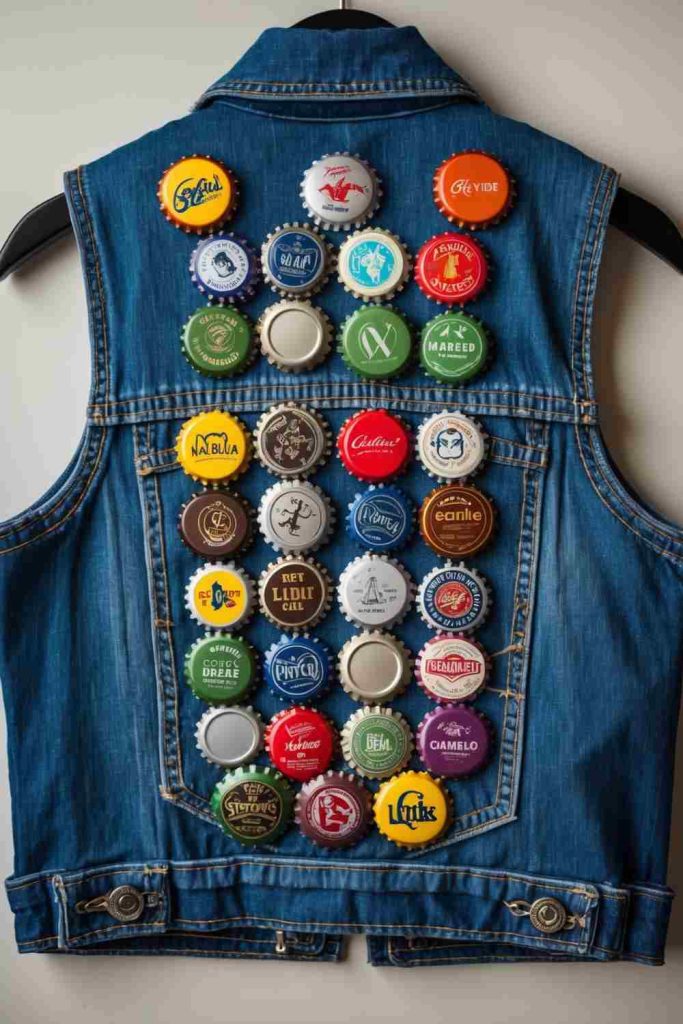
A denim jacket has enough body to support decoration that would be too heavy for a thin shirt, which makes it a sensible base for reused bottle caps. The strongest version keeps the caps in a controlled area usually the back panel, yoke, or another broad section rather than scattering them across sleeves and fold lines where they can knock together or catch on furniture.
Bottle caps introduce weight and hard edges, so the jacket needs more than surface decoration planning. I would inspect every cap for burrs, flatten anything dangerously sharp, and consider a stitched or reinforced attachment system instead of trusting flexible fabric to a large field of glue. The denim should still bend naturally, and the inside should remain smooth enough to wear over a shirt.
Materials and Tools
· Old denim jacket in sound condition
· Clean metal bottle caps with smooth edges
· Heavy hand-sewing thread or another secure attachment method
· Awl or metal punch if safe holes are needed in the caps
· Needle suited to denim
· Small fabric reinforcement patches for the inside
· Pliers, gloves, and eye protection for metal preparation
Steps for This Clothing Upcycle
1. Prepare the jacket and caps. Wash the jacket, check the decorated panel for weak denim, and remove lint or loose threads. Clean the caps and inspect every rim. If a cap has a sharp edge or corrosion that cannot be corrected safely, leave it out rather than hiding the problem against the fabric.
2. Plan the layout while the jacket is wearable. Lay the jacket flat and arrange the caps with breathing room between them, then try the jacket on carefully with the caps only temporarily positioned. Keep them away from shoulder folds, underarm movement, and places that press into a chair. Then adjust the pattern until the weight feels balanced rather than concentrated on one side.
3. Reinforce and attach the main field. Add a small backing layer inside thin denim where needed. If using punched caps, make smooth holes away from the sharp rim and stitch through them with several passes, protecting your hands and eyes during metal work. Secure each piece independently so one failed attachment does not release an entire chain of caps.
4. Check movement and the inside surface. Put the jacket on over a sturdy shirt and move your shoulders, sit, and reach forward. Feel the lining side for rough metal, knots, or stiff adhesive. Reinforce any cap that shifts, and remove pieces that make the jacket noticeably uncomfortable or excessively heavy.
The part I would resist is covering every available centimetre. A smaller, secure panel of caps reads as a deliberate design and keeps the jacket far more wearable than a full metal shell.
Variation: Use flattened pull tabs, large buttons, or lightweight metal washers instead of bottle caps when you want the industrial look with less bulk. A single shoulder panel or pocket detail is also a beginner-friendly version.
Elegant White Dress with Mosaic Design

A plain dress can become a strong base for a mosaic-style surface because the original silhouette does most of the work. The decorative pieces should behave like appliqué, not armour: small, spaced shapes around the neckline, bodice, or another stable area create the visual effect without making the whole garment stiff.
Reflective materials deserve caution. Old optical discs can crack into sharp shards, and craft mirrors or metallic plastics vary in weight and edge quality. I would favour lightweight, smooth-backed pieces made specifically for craft use, or cut flexible reflective fabric instead. If rigid pieces are used, every edge needs to be safe and the fabric behind them needs enough structure to carry them.
Materials and Tools
· Plain dress with a stable area for decoration
· Lightweight reflective fabric, smooth craft pieces, or safe reclaimed material
· Fabric scissors for cloth and the correct tool for decorative material
· Hand-sewing needle and strong thread
· Optional fabric adhesive for temporary positioning
· Stable fabric offcut for backing
· Chalk or removable fabric marker
Steps for This Clothing Upcycle
1. Choose a low-stress decoration zone. Put the dress on and identify areas that do not stretch heavily or fold into the body when you sit. A neckline panel or upper bodice usually behaves better than an elbow, waist crease, or hip. Mark the boundary lightly so the final mosaic stays contained.
2. Prepare safe, lightweight pieces. Cut or select small reflective shapes with smooth edges and similar thickness. Round sharp corners and reject anything cracked or splintered. Arrange the pieces on the dress while it is flat, leaving narrow gaps so the fabric can still flex instead of becoming one rigid sheet.
3. Stabilise and attach the design. Place a thin backing fabric behind the decorated area if the dress itself is soft. Temporarily position the shapes, then sew through holes or fabric-friendly attachment points where possible. If adhesive is suitable for the materials, use it sparingly and keep hard glue ridges away from the inside surface.
4. Test comfort before finishing every piece. Try the dress on after the first section is secure. Sit, turn, and move your arms to see whether the mosaic pulls or catches. Then complete the remaining pieces, reinforce any loose area, and inspect the inside for stiffness or edges that could rub.
I’d rather stop the mosaic sooner than let it creep into every moving seam. Negative space between reflective pieces is what allows the dress to stay a dress.
Variation: Replace rigid pieces with metallic fabric scraps, sequins sewn in small groups, or reflective ribbon. You can keep the same geometric layout while making the finished garment lighter and easier to clean.
Transform a Plain T-Shirt with Fabric Paint
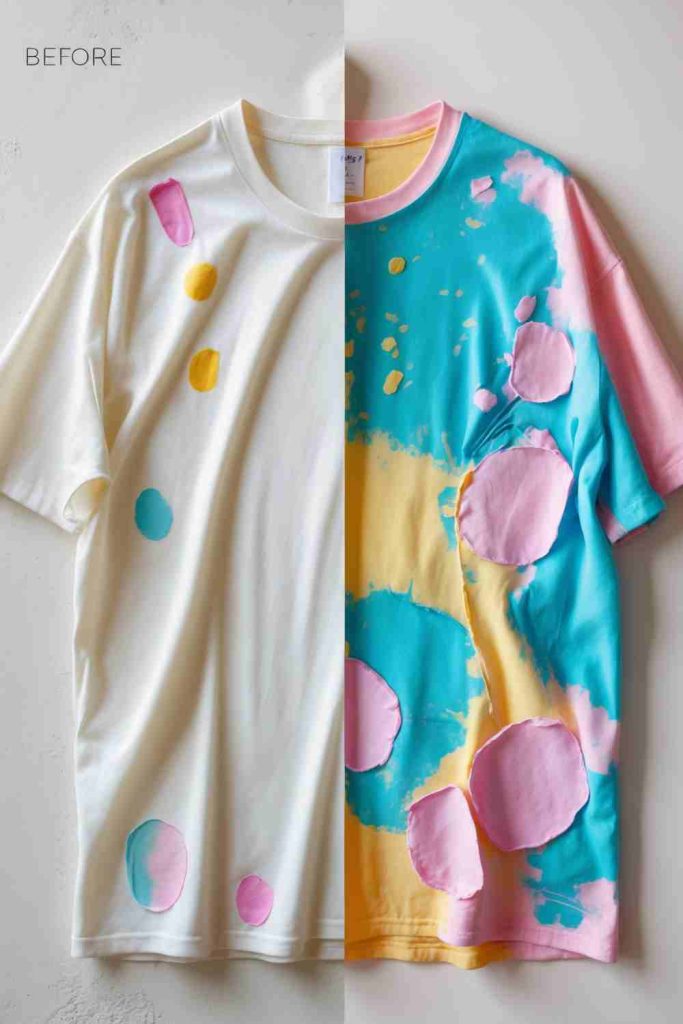
Fabric paint can give a plain T-shirt a completely different identity without changing its fit or construction. The easiest designs to wear are usually the ones that work with the shirt’s existing drape: broad brush marks, simple motifs, block shapes, or a limited pattern area that does not turn the whole front into a stiff panel.
The preparation is simple but important. Paint can bleed through thin jersey, stretch differently once dry, or feel rubbery if applied too heavily. I would test a small amount on a scrap or inside hem, then use the paint maker’s own instructions for setting and care rather than guessing at heat or drying times.
Materials and Tools
· Clean plain T-shirt
· Fabric paint suitable for the shirt fibre
· Cardboard or reusable barrier for inside the shirt
· Brushes, sponge, or simple stamping tools
· Chalk or washable fabric marker
· Scrap fabric for testing
· Protective work-surface covering
Steps for This Clothing Upcycle
1. Wash, dry, and stabilise the shirt. Clean the T-shirt without heavy fabric softener so the surface is ready for paint. Slide cardboard inside and smooth the front without stretching it. Pin or clip the fabric to the board only if that helps it stay flat without distorting the grain.
2. Test colour and flexibility. Paint a small swatch on similar fabric or a hidden area and let it dry according to the product directions. Bend and stretch the sample gently. If it cracks or becomes too stiff, use thinner layers or reduce the painted area before committing to the visible design.
3. Build the design in light layers. Sketch only the main guide marks, then apply paint from the centre of each shape outward. Let one area settle before brushing over it repeatedly, because overworking wet jersey can push pigment through the knit. Then add the next colour or layer only when the product directions allow it.
4. Set and inspect the finished shirt. Follow the paint instructions for curing or heat-setting. Remove the inner barrier and feel the back of the painted area for bleed-through or stiffness. Try the shirt on and make sure the design sits comfortably across the body before washing it according to the new finish requirements.
I don’t think a painted shirt needs to prove how many colours you own. One confident motif usually wears better than a front panel that has become almost solid paint.
Variation: Use a handmade cardboard stencil, a simple potato or foam stamp, or small repeated brush marks from leftover paint colours. A pocket-sized motif is a low-risk way to refresh a favourite shirt.
Transform Old T-Shirts into a Colorful Rug
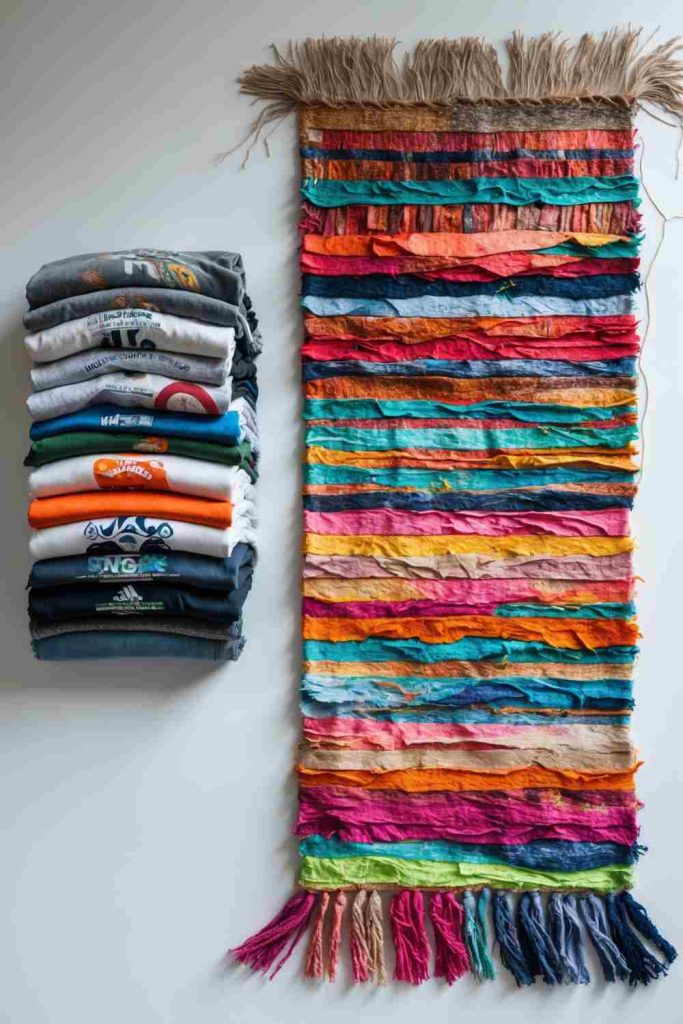
Old T-shirts that are too stretched, faded, or damaged to wear can still provide long continuous strips of soft knit. Turning them into a rug makes sense because the original fit no longer matters; what matters is whether the fabric still has enough strength to be cut, stretched slightly, braided, tied, or woven.
A rug also needs a stable underside. Jersey strips can make a surprisingly heavy mat once combined, and smooth floors can turn that handmade texture into a slipping hazard. I would keep the finished rug modest in size, secure every join, and use a suitable non-slip layer rather than relying on weight alone.
Materials and Tools
· Several clean old T-shirts
· Sharp fabric scissors or rotary cutter with safe cutting surface
· Needle and strong thread for joins
· Optional mesh, sturdy fabric, or non-slip rug backing
· Clips or safety pins for holding braids
· Ruler or cutting guide
· Large work surface
Steps for This Clothing Upcycle
1. Harvest the strongest fabric sections. Cut away collars, thick seams, damaged areas, and printed sections that feel unusually stiff. Use the broad body panels for consistent strips. Cut similar widths so the rug develops evenly, but do not chase perfect precision if the knit naturally rolls into cord-like edges.
2. Join strips without hard lumps. Overlap or stitch strip ends with a flat join rather than tying bulky knots. Build several long lengths, grouping colours before you begin if you want stripes or a planned pattern. Stretch each strip lightly so it behaves consistently, but stop if the fabric begins to tear.
3. Build the rug structure. Braid the strips and coil the braid, or attach strips evenly to a sturdy mesh depending on the look you want. Keep checking the rug on the floor as it grows. If a coil begins to bowl upward, loosen the outer curve instead of forcing it flat with extra stitching.
4. Secure the underside and edges. Stitch all structural joins thoroughly and trim loose ends only after they are locked in. Add a non-slip layer suited to the floor surface, especially on tile or wood. Test the rug by stepping on it carefully from several directions before putting it into regular use.
The colour mix can be lively, but the construction should be boringly dependable. A rug is one place where secure joins matter far more than a clever last-minute embellishment.
Variation: Make a small bedside mat from only two or three shirts, or use narrow braided strips as a seat pad instead of committing to a full floor rug.
Create a Pleated Garment with Floral Embellishments
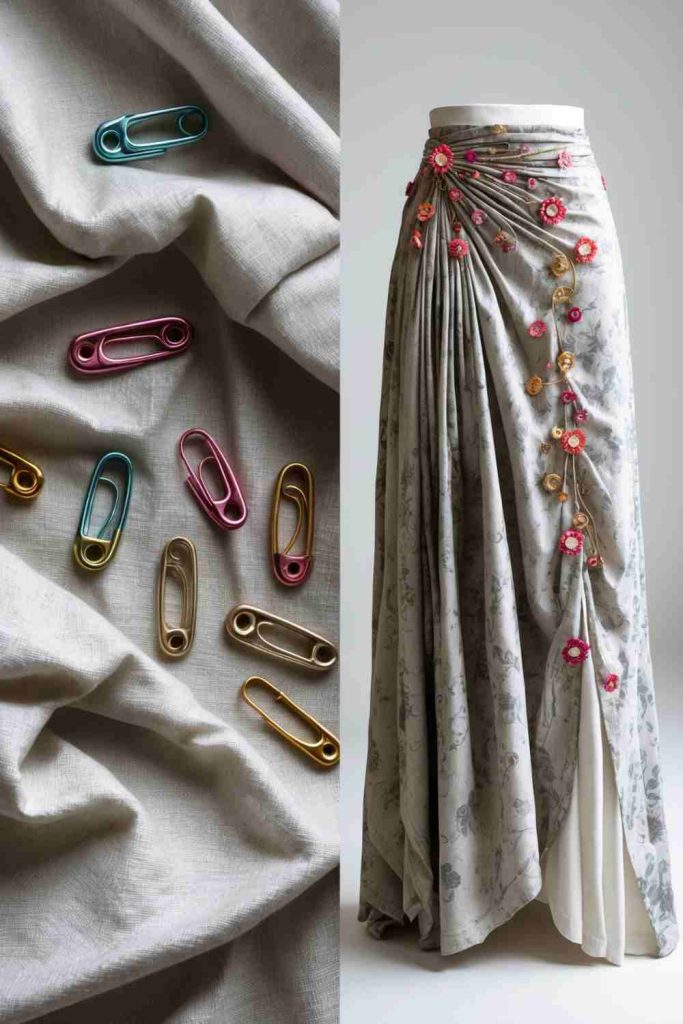
Pleats can turn a broad piece of reused cloth into a garment with controlled fullness, while small fabric flowers give leftover scraps a visible purpose. The useful part of this combination is that both techniques can be scaled: one pleated panel may refresh an existing skirt, or a larger section can become the basis of a new overskirt or dress detail.
Pleats change fit quickly, so measuring and pinning matter before sewing. Floral embellishments also add thickness, especially when layered, and should sit away from high-friction zones. I would get the pleated structure comfortable first, then use flowers as accents rather than building the garment and decoration at the same time.
Materials and Tools
· Old woven fabric or a garment with enough usable width
· Fabric scraps for flowers
· Pins or clips
· Fabric scissors
· Sewing machine or hand-sewing needle and thread
· Measuring tape
· Iron if appropriate for the fabric
· Optional stable waistband or existing garment base
Steps for This Clothing Upcycle
1. Prepare and measure the main fabric. Wash or clean the reusable cloth and identify the straight grain if possible. Decide whether it will become a full garment panel or an addition to an existing piece. Mark the usable width and remove badly weakened edges before calculating the pleat spacing.
2. Pin pleats before committing to fit. Fold a small series of pleats and pin them at the top edge, then compare the resulting width with the body or garment base. Adjust spacing until the fullness hangs evenly. Try the pinned piece on over another garment if needed, because pleats that look tidy flat can create unexpected bulk at the waist.
3. Sew and stabilise the pleated section. Secure the pleats with stitching across the top and reinforce the waistband or attachment seam. Press only if the fabric tolerates heat. Then let the garment hang for a moment so you can see whether the pleats fall consistently before adding decoration.
4. Create and attach lightweight flowers. Cut simple petal or circle shapes from scraps and build shallow flowers with a few layers. Arrange them while the garment is hanging or worn on a dress form, keeping them away from seat areas and tight folds. Sew them through stable points, then check the inside for bulky knots.
I know it can be tempting to add flowers everywhere once the first few look good, but pleats already create movement. A small cluster usually gives the eye somewhere to rest without turning every fold into decoration.
Variation: Use fabric yo-yos, flat appliqué leaves, or narrow scrap-fabric bows instead of layered flowers. You can also add one pleated panel to the side of an existing skirt rather than constructing a full new garment.
Create Metallic-Inspired Outfits with Metallic Accents

Metallic details can refresh older clothing without requiring a fully metallic fabric. A narrow panel, painted shape, piping-like strip, or small appliqué gives the same visual direction while keeping the original garment soft enough to wear. This works especially well on simple tops, jackets, and skirts with broad stable areas.
Metallic materials vary enormously. Some are washable textiles; others are craft films that crack, shed, or become uncomfortable when folded. I would treat the garment’s movement and cleaning routine as the filter: if the material cannot cope with bending or washing, it belongs on a removable accessory rather than a frequently worn garment.
Materials and Tools
· Older garment in sound condition
· Metallic fabric scraps, trim, or suitable fabric paint
· Fabric scissors
· Needle and thread or sewing machine
· Chalk or removable marker
· Optional fabric adhesive for positioning
· Scrap fabric for testing paint or trim behaviour
Steps for This Clothing Upcycle
1. Choose a stable accent area. Try the garment on and identify a panel that does not stretch heavily. Mark a stripe, cuff, pocket, shoulder, or geometric section rather than covering every moving area. Keep the design clear of zipper teeth, buttonholes, and seams that need to flex repeatedly.
2. Test the metallic material. Bend, fold, and lightly rub a scrap to see whether the finish flakes or creases badly. If using paint, test it on similar cloth and follow the manufacturer’s directions. Reject any material that creates sharp edges or transfers colour onto skin or neighbouring fabric.
3. Attach with the garment flat and relaxed. Pin fabric accents without stretching the base garment, then sew around the perimeter with a stitch that suits the fabric. For painted details, build thinner layers instead of one heavy coat. Then step back and compare both sides so the accent does not accidentally pull the garment off balance.
4. Wear-test and finish the edges. Put the garment on and move through the positions it will meet in real use. Check that metallic areas do not crack at elbows, bunch at the waist, or scratch the skin. Reinforce lifting corners and trim only after the construction is stable.
Metallic fabric is visually loud even in small amounts. For me, that makes restraint useful—you can get the effect from one deliberate panel instead of turning the whole garment into a stiff reflective surface.
Variation: Use metallic bias trim, embroidery thread, narrow ribbon, or a removable brooch made from leftover metallic fabric when the base garment cannot tolerate paint or bonded appliqué.
Transform an Old Dress with Seashell Embellishments
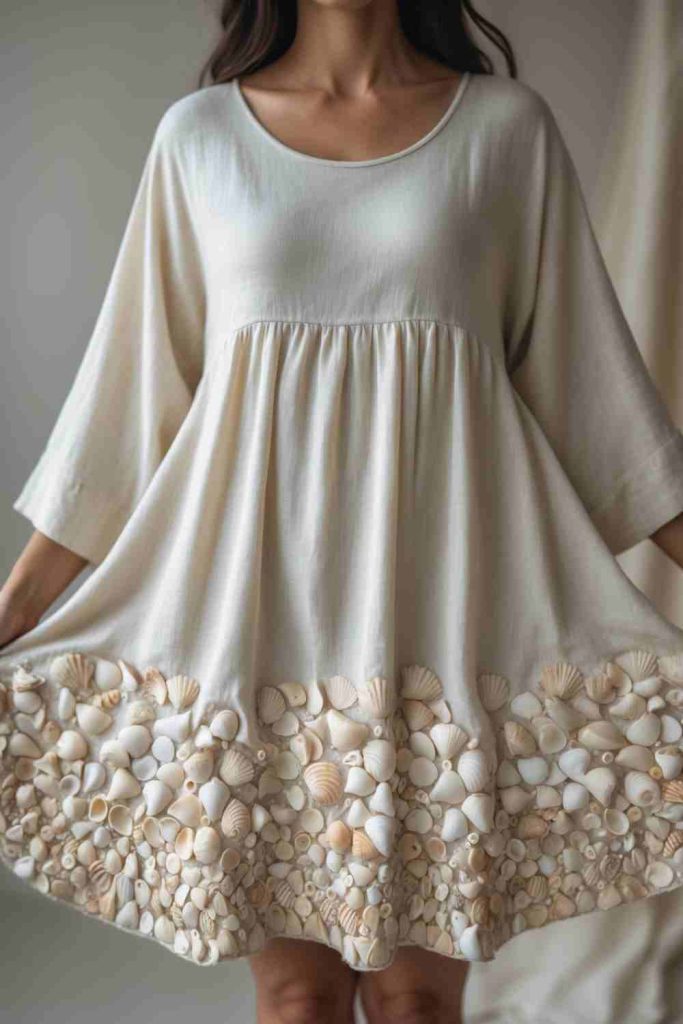
Small seashells can turn an old dress into an occasional statement piece, especially around a neckline, shoulder, or hem where the rigid shapes can be spaced rather than stacked. The shells bring texture that fabric alone cannot provide, but they also introduce weight, breakability, and edges that need to be considered before the first one is attached.
I would use only clean, intact shells with smooth surfaces and avoid heavy pieces entirely. A shell that cracks during wear can become sharp, and a field of shells can pull thin fabric out of shape. This is better as a controlled decorative accent on a sturdy dress than as a full-surface treatment.
Materials and Tools
· Old dress with stable fabric
· Small clean intact seashells with smooth edges
· Strong hand-sewing thread
· Fine drill or existing shell holes only if safe and appropriate
· Needle suited to the dress fabric
· Optional small reinforcement patches
· Pliers or protective eyewear if shell preparation requires tools
Steps for This Clothing Upcycle
1. Inspect both the dress and shells. Check the dress where you plan to decorate and avoid weakened, sheer, or highly stretchy fabric. Sort the shells by weight and condition, discarding cracked or sharp pieces. Wash and dry reusable shells thoroughly before they come into contact with clothing.
2. Arrange a light, spaced pattern. Lay the dress flat and place the shells with enough fabric visible between them. Keep them away from chair-contact areas, tight waist folds, and places where arms rub the torso. Then lift the garment gently to see whether the fabric sags under the temporary arrangement.
3. Reinforce and attach securely. Back thin areas with a small piece of stable fabric on the inside. Sew shells through safe holes or around secure natural features when possible, distributing the stitches so the shell does not pivot. Do not drill fragile shells unless you have the correct tool, eye protection, and a safe setup.
4. Check wearability and storage. Try the dress on carefully and move slowly at first. Remove any shell that presses uncomfortably or catches another part of the garment. Store the finished dress so shells cannot be crushed, and clean it according to the most delicate material now attached to it.
One shell can be charming; fifty can become a weight problem. I’d let the spaces between them do as much design work as the shells themselves.
Variation: Use flat shell buttons, shell-look beads, or small fabric appliqués shaped like shells for a lighter version that is easier to wash and less likely to chip.
Create a Stylish Denim Book Cover
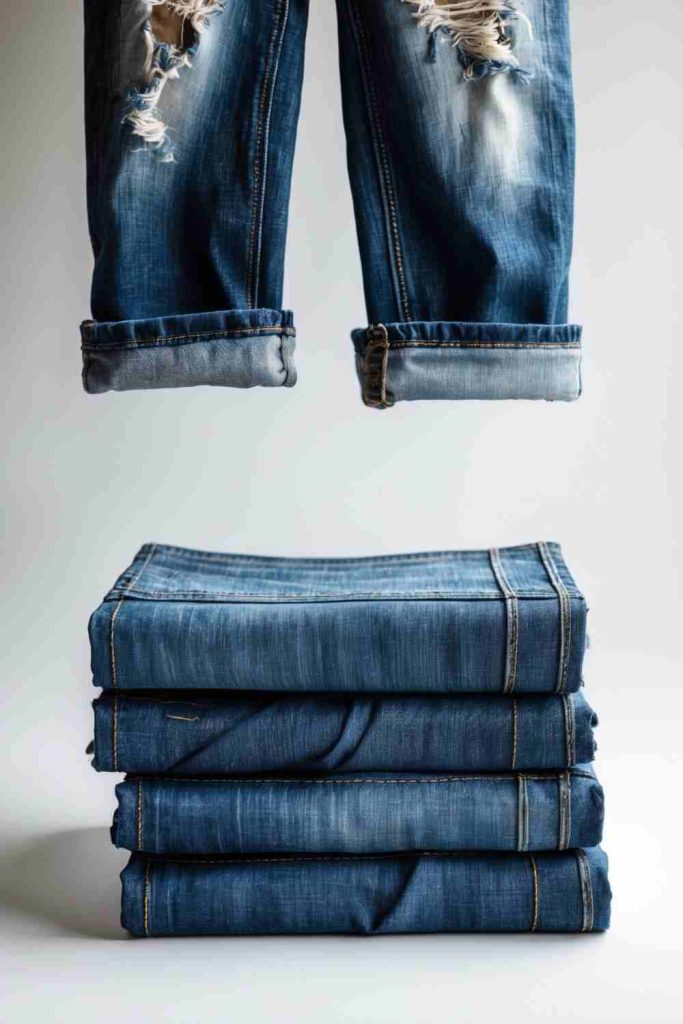
A worn pair of jeans often contains more usable denim than the garment’s fit suggests. A broad leg panel can become a durable removable book cover, and an existing pocket can be positioned on the front for a pen, bookmark, or small note. Because the project no longer needs to move like clothing, sturdy seams and thick denim become advantages rather than restrictions.
The main challenge is bulk. Jeans seams, hems, and pocket corners can become too thick to fold neatly around a book, so I would harvest flatter sections and use the original pocket only when it sits comfortably. A removable sleeve-style cover also lets the book come out for cleaning or replacement.
Materials and Tools
· Old jeans or denim garment
· Book or journal for fitting
· Fabric scissors
· Measuring tape or ruler
· Pins or clips
· Sewing machine or sturdy hand-sewing needle and thread
· Optional existing jeans pocket
· Iron if suitable for the denim
Steps for This Clothing Upcycle
1. Cut a flat denim panel. Open the jeans along a seam and identify a section large enough to wrap around the open book with extra fabric for inside flaps. Avoid stacking thick original seams at the book spine. If you want a pocket, plan its position before cutting the final rectangle.
2. Shape the inside cover flaps. Lay the book open on the wrong side of the denim and fold the left and right edges over the covers. Leave enough ease for the book to close without pulling. Pin the top and bottom of each flap, then remove the book before sewing so you do not accidentally catch the cover itself.
3. Sew and reduce bulk. Stitch the flap edges securely and trim excess seam allowance where it will not unravel dangerously. Grade thick layers around corners if necessary. Turn the cover right side out and press gently if the fabric and decorations allow it.
4. Fit the book and finish details. Slide both covers into the denim sleeves and close the book several times. The spine should not be forced and the flaps should not slip off. Add a pocket, label, embroidery, or scrap-fabric bookmark only after the basic fit works well.
I like this project because the denim gets to stay tough. There is no need to disguise every worn mark; a faded knee or old stitch line can make the cover look more interesting without affecting how it works.
Variation: Use a trouser pocket as a front pouch, combine two denim shades into one cover, or line the inside with a soft shirt offcut if the denim feels rough against a delicate journal.
Transform Old Overalls into Vibrant Patchwork Designs
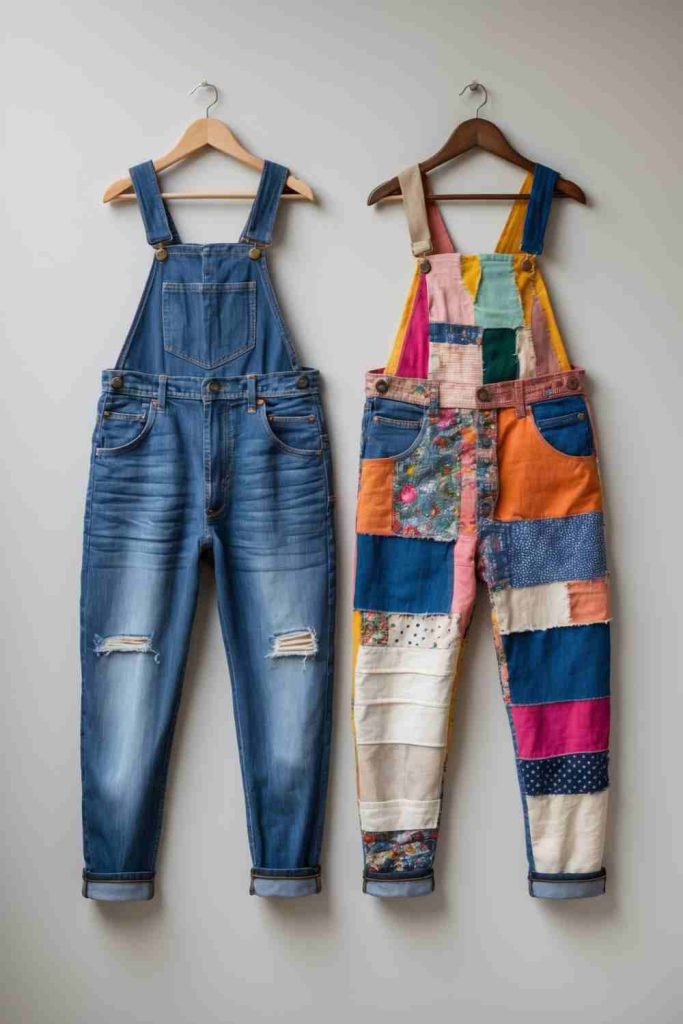
Overalls are naturally suited to patchwork because they already have strong seams, pockets, panels, and areas that take visible wear. Fabric scraps can cover worn knees, reinforce pocket corners, or create colour blocks across the bib without changing the basic garment structure.
The difference between useful patchwork and surface-only decoration is reinforcement. If a hole has weakened the surrounding denim, a tiny decorative patch placed only over the opening may tear away with the next bend. I would extend patches into sound fabric and sew around the edges with enough flexibility for the knees and hips to move.
Materials and Tools
· Old overalls in repairable condition
· Washed fabric scraps of compatible weight
· Fabric scissors
· Pins or clips
· Sewing machine or hand-sewing needle and strong thread
· Optional lightweight fusible support if suitable
· Chalk or washable marker
Steps for This Clothing Upcycle
1. Identify repair zones and stable fabric. Turn the overalls inside out and inspect knees, seat, pocket corners, straps, and side seams. Mark areas where the cloth is thinning beyond the visible hole. Cut away only loose threads, not sound fabric that can help support the repair.
2. Build patches larger than the damage. Choose scraps that can tolerate similar washing and movement. Cut each patch with enough margin to reach strong denim around the worn area. Round sharp patch corners if you want less lifting, and arrange decorative patches so they support the garment instead of simply crowding the surface.
3. Secure from the centre outward. Pin or baste patches flat without stretching the overalls. Sew around the edge and add extra lines across large patches where needed. At knees, flex the leg as you work so the repair is not so tight that it restricts bending.
4. Test fit and finish loose edges. Put the overalls on and crouch, sit, and move the straps. Watch for puckering or patches that pull across joints. Reinforce any stressed edge, then trim loose threads and press only if the fabrics tolerate the same heat.
Patchwork looks better to me when it explains the garment’s history instead of pretending the wear never happened. A strong knee patch can be both the repair and the main design feature.
Variation: Use scraps from old shirts, printed pockets, or narrow denim strips from another pair of jeans. A limited palette of three fabrics can make a busy patchwork layout feel more deliberate.
Create Fun and Colorful Zipper Earrings
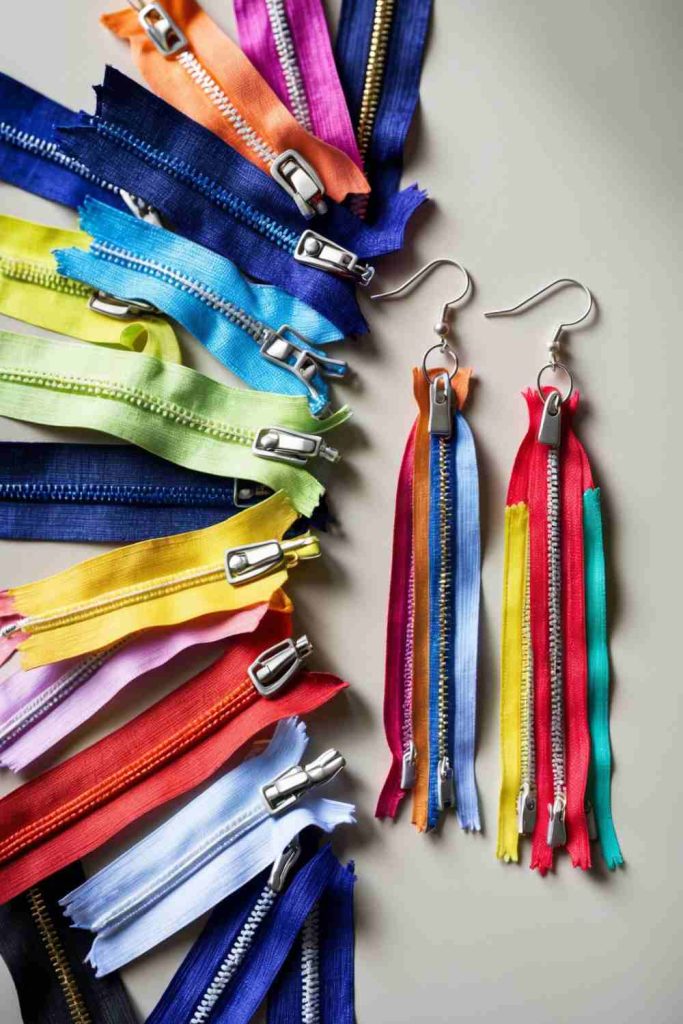
Old zippers have built-in colour, texture, and a finished edge, which makes short sections useful for lightweight jewellery. The teeth can form a graphic line while the fabric tape curls, folds, or stacks into a small earring shape. This is one of those clothing-reuse projects where the hardware matters more than the original garment.
Comfort and edge safety come first. Cut zipper tape can fray, metal teeth can be sharp at the cut end, and heavy zipper sliders are usually too bulky for earrings. I would use small clean sections without the slider, seal or stitch the fabric ends neatly, and make sure all jewellery findings are smooth and fully closed.
Materials and Tools
· Clean reclaimed zippers
· Fabric scissors for zipper tape and proper cutter for metal components if needed
· Earring hooks and jump rings in good condition
· Small jewellery pliers
· Needle and thread
· Optional fabric sealant suited to the tape
· Ruler
Steps for This Clothing Upcycle
1. Choose lightweight zipper sections. Remove damaged sections and avoid heavily corroded metal teeth. Cut equal lengths of zipper tape, keeping the slider out unless the design is deliberately built around its weight. Secure the cut fabric ends with stitching or another suitable method so they cannot unravel.
2. Form matching shapes. Fold, curve, or layer the zipper tape into two similar motifs and hold them with a few temporary stitches. Compare the pair side by side before adding metal findings. If one earring already feels noticeably heavier, simplify the design rather than trying to balance it with more pieces.
3. Attach the jewellery hardware. Create or use a secure hole in the fabric tape rather than forcing a jump ring between sharp teeth. Connect the jump ring and earring hook with pliers, closing the ring completely. Check that no cut metal end can touch skin or catch hair.
4. Inspect comfort and symmetry. Hold both earrings by the hooks and make sure they hang at similar angles. Run a fingertip around every edge, then wear them briefly to check weight and movement. Remove any rough component before regular use rather than relying on hair or clothing to keep it away from the skin.
Zippers already have plenty of visual interest, so I’d keep the shape simple. Once the hardware, teeth, folds, and colour are all visible, extra beads can easily make the pair heavier without improving it.
Variation: Use nylon-coil zippers for a lighter pair, create small zipper rosettes, or turn a single zipper section into a pendant if earrings feel too heavy.
Craft a Unique Necktie Patchwork Top
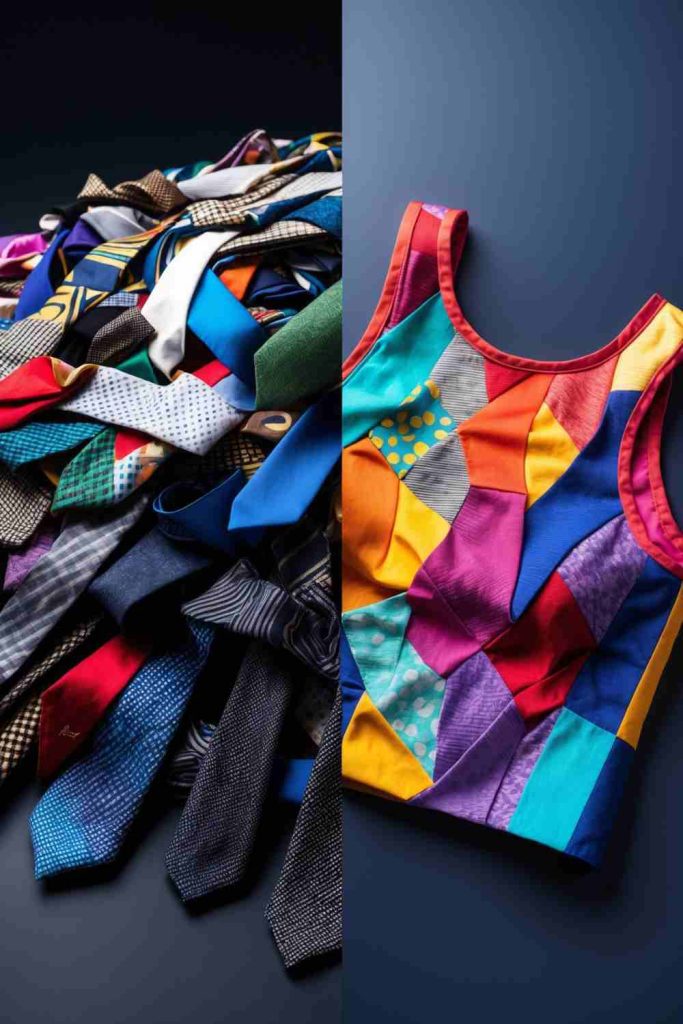
Old neckties contain small lengths of patterned fabric that were designed to look good individually, which makes them ideal for patchwork. The challenge is that ties can include bias-cut outer fabric, interfacing, lining, and different fibre types. Opening them up turns each tie into a flatter piece of usable cloth, but the patches still need stabilising before they become a wearable top.
A base garment makes this project much easier. Instead of building a fitted top entirely from irregular tie pieces, you can attach the patchwork to a simple sleeveless top or use it as one front panel. That lets the original garment handle fit and stress while the ties provide the surface design.
Materials and Tools
· Old neckties
· Simple sleeveless top or stable pattern base
· Seam ripper
· Fabric scissors
· Pins or clips
· Sewing machine or hand-sewing needle and thread
· Lightweight backing fabric if needed
· Iron with pressing cloth when suitable for unknown fibres
Steps for This Clothing Upcycle
1. Open and sort the ties. Remove stitching carefully and take out bulky linings or interfacings where practical. Press the outer fabric cautiously using a pressing cloth and a low-risk test first, because tie fibres may be unknown. Group pieces by weight and stretch rather than colour alone.
2. Build a patchwork panel. Arrange flattened tie sections on a backing fabric or directly over a stable front panel. Overlap or seam the pieces so raw edges will not unravel during wear. Keep bulky points and thick original seams away from underarms and side seams.
3. Attach the panel to a reliable base. Baste the completed patchwork onto the top while it is flat, then sew around the perimeter and through selected internal seams. Do not stretch the base while attaching a less-stretchy patchwork layer. Try the top on before trimming excess fabric so fit problems can still be corrected.
4. Finish the inside and movement areas. Cover scratchy seam allowances where necessary and reinforce the neckline or armhole if the added fabric has changed their shape. Move your arms and sit while wearing the top. Then remove any patch or thick seam that rubs instead of assuming it will soften later.
The tie patterns do not need to match. What matters more is giving the patchwork one clear shape and a stable base so all those small prints read as one garment instead of twelve competing accessories.
Variation: Use only the wide ends of ties as a yoke, peplum, or pocket panel. You can also make a removable patchwork bib that sits over a plain top without permanently altering it.
Create a Gorgeous Fabric Scrap Patchwork Dress
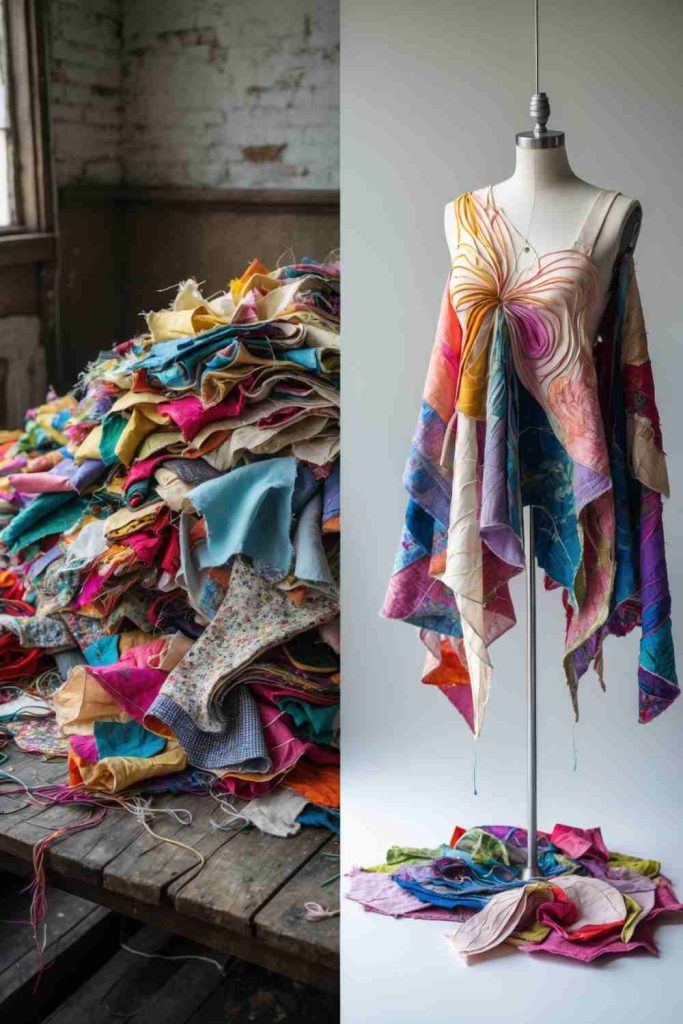
A fabric scrap patchwork dress takes the basic idea of saving offcuts and pushes it into garment construction. The strongest approach is not to stitch random pieces together until they are large enough. It is to build stable patchwork yardage first, then use that new cloth in a simple dress shape where seams, grain direction, and movement remain manageable.
Scraps from different garments can shrink and stretch differently, so I would wash them before assembly and group very stretchy pieces separately. A patchwork dress also creates many internal seams. Pressing, trimming, and finishing those seams matters because the inside should not feel like a map of hard ridges against the body.
Materials and Tools
· Washed fabric scraps with reasonably compatible behaviour
· Simple dress pattern or existing slip dress as a base
· Fabric scissors or rotary cutter with mat
· Pins or clips
· Sewing machine or hand-sewing needle and thread
· Iron and pressing cloth as appropriate
· Optional lightweight lining or backing fabric
Steps for This Clothing Upcycle
1. Sort scraps into compatible groups. Separate stretch knits, light wovens, thick denim, and delicate fabrics rather than mixing all of them in one structural panel. Choose a group that will behave predictably together. Trim damaged edges and create simple patch shapes that are large enough to sew accurately.
2. Build patchwork cloth before cutting the dress. Join scraps into rows or larger blocks, pressing seams as you go. Keep checking that the panel remains flat rather than pulling diagonally. Make each panel larger than the final pattern piece so you have room to straighten edges and place the dress shape where the patchwork is strongest.
3. Cut and assemble a simple silhouette. Lay the pattern or base-garment outline over the patchwork and avoid placing weak joins at high-stress points such as underarms or tight waist seams. Cut the main pieces, stay-stitch areas that may stretch, then assemble the dress with conventional garment seams.
4. Finish the inside and test movement. Trim and finish internal seams so loose patchwork edges cannot fray. Add a lining if the inside feels rough or if some scraps are sheer. Try the dress on, sit, walk, and raise your arms, then reinforce any seam where several patch intersections create extra bulk.
This is the project where I’d spend more time on the inside than the outside. The colours will do their job automatically; comfort depends on the seams you cannot see in the finished photo.
Variation: Use patchwork only for the skirt and keep the bodice in one stable fabric, or attach a patchwork overskirt to an existing plain dress. Both options reduce fit complexity while still using a large collection of scraps.
Clothing Upcycling Choices That Can Cause Stiffness, Weak Seams, or Uncomfortable Wear
Decorating Before Checking Fabric Strength
A worn garment can look solid until extra weight is added. Heavy caps, shells, patchwork, or metallic pieces may pull through thinning cloth. Inspect and reinforce the base first so decoration is not asked to hold fabric together.
Mixing Fabrics That Behave Very Differently
A stretchy knit sewn tightly to a stable woven fabric can ripple, twist, or restrict movement. Use compatible materials in structural areas, or stabilise the stretch fabric and keep mismatched scraps as smaller accents.
Using Glue as the Only Structural Join
Adhesive can be helpful for positioning, but repeated bending, washing, and body heat can challenge a glued connection. Sew heavy or high-stress decorations whenever the materials allow it, and follow the adhesive instructions for any bonded areas.
Ignoring the Inside of the Garment
A project may look neat from the front while knots, hard backing, cut metal, or thick seam intersections rub the wearer. Turn the garment inside out and feel every altered area before calling it finished.
Adding Weight to Stretchy or High-Movement Areas
Shoulders, elbows, waists, knees, and underarms constantly flex. Rigid or heavy decoration in these zones can distort fit or break loose. Move decorative weight toward stable panels and leave joints room to move.
Skipping a Wear Test Before Final Trimming
Cutting every tail, seam allowance, and backing piece too early removes your adjustment options. Try the piece on first, move naturally, and correct tension or placement before trimming the construction down to its final finish.
Assuming the Original Care Label Still Applies
Once you add paint, shells, metal, glue, mixed fibres, or patchwork, the cleaning requirements change. Care for the finished project according to the most delicate or least washable added material, not only the original garment label.
Turning a Repair into a Decoration-Only Patch
A small patch placed exactly over a tear may hide the hole but fail to reinforce the weakened fabric around it. Extend repair patches into sound cloth and secure them over a broad enough area to carry movement.
Using Sharp Reclaimed Hardware Without Edge Checks
Cut zipper teeth, cracked shells, bottle-cap rims, and reflective pieces can become skin or snag hazards. Smooth, cover, or reject unsafe edges before they ever reach the garment.
Frequently Asked Questions
Can beginners upcycle clothes without a sewing machine?
Yes. Fabric paint, simple hand-sewn patches, removable appliqué, small accessories, and T-shirt-strip projects can all be completed by hand. I would begin with a project that does not depend on precise fit, then move into garment construction once your seams feel reliable.
Should I wash clothes before cutting them for an upcycling project?
Usually, yes, especially for second-hand, stored, or mixed-fabric pieces. Washing reveals shrinkage, weak areas, stains, and fibre behaviour before you invest time in cutting and sewing.
What is the best way to mix different fabric scraps?
Group scraps by weight, stretch, and care needs first. Colours can vary widely, but pieces that behave similarly are easier to sew into stable patchwork without puckering or uneven stretching.
Can fabric glue replace sewing?
For lightweight decoration or temporary positioning, a suitable fabric adhesive can be useful. I would not rely on glue alone for heavy embellishments, load-bearing seams, areas that flex constantly, or pieces that will be washed often unless the product is specifically designed for that job.
How can I stop upcycled embellishments from feeling too heavy?
Use fewer pieces, choose lighter substitutes, and place decoration on broad stable panels. Backing the fabric can help distribute load, but if the garment still pulls or changes shape, removing weight is better than adding more reinforcement.
What can I make from clothes that are too damaged to wear?
Strong remaining sections can become patches, book covers, linings, small accessories, braided strips, rugs, or decorative appliqué. Cut around brittle or contaminated areas rather than trying to use every part simply because it is available.
How should I wash a garment after upcycling it?
Follow the needs of the new materials you added. Paint, mixed fibres, shells, metal pieces, adhesives, and hand-stitched decoration may require gentler cleaning than the original garment, so use the most cautious compatible method and inspect attachments after washing.
Let the Strongest Parts of Old Clothes Decide What They Become Next
The most useful clothing upcycling starts with an honest look at what is still strong. Sometimes that leads to a refreshed jacket or dress; sometimes the better answer is a rug, book cover, pair of earrings, or patchwork panel. I like that approach because it does not force every old garment back into the same role it had before.
These 12 creative ways to upcycle your clothes also show why preparation matters as much as decoration. Stable fabric, comfortable placement, secure joins, safe edges, and realistic cleaning plans are what turn an interesting idea into something you can actually wear or use. Start with one garment that has a good section left in it, choose a second use that suits that material, and let the available fabric set the scale of the project.
Which forgotten item in your wardrobe looks ready for a more useful second role?