A quilt seam can be only a few inches long, yet the wrong needle can make those few inches feel far harder than they should. A needle that is too thick can leave visible holes, one that is too blunt can push fabric ahead of the point, and one that is too long can make short, even hand stitches awkward. On the other hand, a very fine needle paired with heavy thread or dense fabric can flex, drag, or become uncomfortable to control.
That is why choosing a needle for piecing quilts is less about finding one universally “best” needle and more about matching the tool to the way you actually sew. Some quilters piece by hand, some baste by hand before later stitching, and others work on a machine. Those jobs ask very different things from a needle.
I also think it is worth separating convenience from precision. A large eye can make threading easier, but a large eye and heavier shaft are not automatically better for tiny hand-piecing stitches. A short between can feel beautifully controlled in quilting cotton but frustrating if you prefer a long running stitch. The useful choice is the one that fits your fabric, thread, hand motion, and sewing method without adding unnecessary resistance.
Why Needle Shape Changes the Way Quilt Piecing Feels
A hand-sewing needle looks simple: point, shaft, eye. In practice, small differences in those three areas change how the needle behaves in fabric.
Point shape controls how cleanly the needle enters woven fabric
Quilting cotton is a woven fabric, so a clean, sharp point generally gives better control than a blunt tip. The point needs to slip between and through fibers without forcing a large opening. A polished, fine point also reduces the amount of force your fingers need to apply, which matters during long hand-piecing sessions.
For ordinary patchwork cotton, a sharp hand needle is usually easier to place exactly on a marked seam line than a thick general-repair needle. Dense seams, folded corners, and intersections can still require a little more pressure, but the goal is controlled penetration rather than brute force.
Shaft thickness affects both strength and the size of the hole
A thicker shaft can feel sturdy and resist bending, but it also creates a larger path through the fabric. That may be acceptable for basting, heavier fabrics, or decorative stitching. It is less desirable when you are hand piecing tightly woven cotton and want small, discreet stitches.
A finer shaft makes smaller holes and usually moves through lightweight cotton with less disruption. The trade-off is that a very fine needle can flex more easily if you push it through several dense seam allowances at once. The best balance depends on the work in front of you.
Needle length changes your stitching rhythm
Short quilting betweens are designed for compact, controlled stitches. Their small length makes it easier to rock the needle through fabric and keep stitch size consistent. They can feel unfamiliar if you learned to sew with longer sharps, though, because there is less metal to hold.
Longer basting or general sewing needles give you more grip and can carry multiple running stitches before you pull the thread through. That is useful for temporary basting and some hand-piecing styles, but the extra length can feel clumsy in very small patchwork units.
Eye size affects both threading and fabric drag
A larger eye is easier to thread, especially with thicker thread or for anyone who finds small needle eyes frustrating. It can also be useful when you are working with embroidery floss, yarn-like threads, or heavier repair thread.
For fine quilt piecing, however, an oversized eye may create more drag than necessary. If your thread is fine and your fabric is lightweight, a smaller eye often follows the shaft through the fabric more smoothly. I don’t think easier threading should be dismissed, but it should be weighed against the kind of stitch you are trying to make.
Hand needles and longarm needles are not interchangeable
Six products in this article are hand-sewing needles. The Handi Quilter product is different: it is made for compatible longarm quilting machines that use the 134 needle system. It is not a substitute for a hand needle, and it is not automatically compatible with a domestic sewing machine.
That distinction matters because “quilting needle” can describe several completely different tools. A hand-piecing needle is chosen for comfort, point, eye, length, and stitch control. A machine needle must match the machine’s required needle system as well as the thread and fabric. Treating those as the same decision leads to unnecessary confusion.
| Product Image | Product Name | Features | Price |
|---|---|---|---|
 |
30 Pack Premium Hand Sewing Needles | Generous 30-Piece Set High-Quality Stainless Steel Gold-Plated Ends Large Eye Needles Perfect for All Skill Levels |
Check Price |
 |
Dritz 156 Hand Needle Compact for Quilting, Assorted Sizes (30-Count) | 30-Piece Assortment Sharp Points for Precision Versatile Size Range Precision for Small Tasks |
Check Price |
 |
Dritz 3047 Quilter’s Basting Hand Needles, Size 7 (6-Count), Nickel | Durable and corrosion-resistant for long-lasting performance Fine Point Tip Long Needle Design Nickel Finish Pack of 6 Recommended for Quilting |
Check Price |
 |
Colonial Needle Quilting | Finest Quality Ideal for clean fabric penetration and detailed hand sewing Durable, rust-resistant, and built to withstand repeated use A reliable choice for beginners and professionals alike |
Check Price |
 |
Clover Quilting Needles | Comfortable Size Smooth Fabric Penetration Ideal for Hand Quilting Beginner-Friendly Time-Saving Threading |
Check Price |
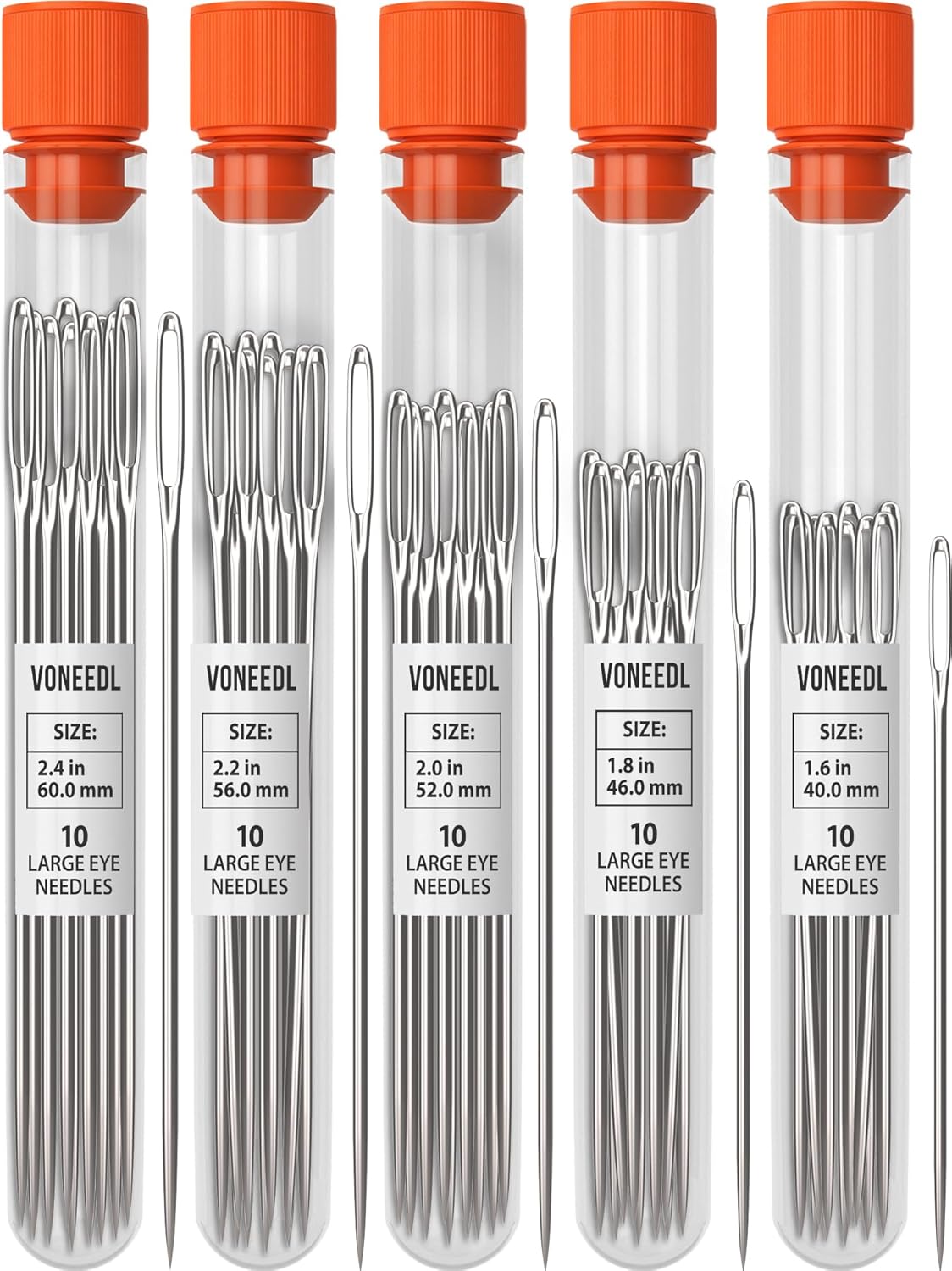 |
VONEEDL 50 PCS Large Eye Sturdy Hand Sewing Needles | Wide Project Compatibility Features 50 needles in five lengths Extra-Large Eye Design Rust-Resistant Stainless Steel Sharp & Smooth Finish |
Check Price |
 |
Handi Quilter Longarm Quilting Needles | Designed for precise stitching and clean fabric penetration Balanced thickness for smooth operation Generous quantity for extended use across multiple quilting projects |
Check Price |
What to Look for in a Needle for Piecing Quilts
The fastest way to narrow the choice is to think about the actual sewing task before looking at pack size or packaging.
Decide whether you are hand piecing, hand basting, or machine quilting
If you are joining patchwork pieces by hand, short betweens or suitable sharps make the most sense from this group. If you are temporarily securing layers or long sections before later stitching, a basting needle is more practical because its longer form is designed to travel through fabric efficiently.
If you are using a longarm machine, compatibility comes first. The Handi Quilter needles belong in that workflow. If you are piecing on a conventional domestic sewing machine, check the machine manual and needle specification rather than assuming a longarm needle will fit.
Match the needle to the fabric rather than the project name
“Quilt” can mean lightweight cotton patchwork, flannel, denim, linen, mixed reclaimed fabrics, or a stack of several different materials. A fine short needle that feels excellent in quilting cotton may struggle through a bulky repurposed denim seam. A sturdy large-eye needle may handle heavier fabric but feel oversized in delicate cotton.
I’d start with the fabric you touch most often. If your quilts are mainly made from standard quilting cotton, prioritize a smooth fine point and manageable shaft. If your projects reuse heavier household textiles, a more robust needle may be useful even if it does not make the tiniest possible stitch.
Let the thread influence eye size
The needle eye needs to accept the thread without scraping or shredding it. Very fine hand-piecing thread does not need a giant eye. Heavier cotton, decorative thread, or multiple strands need more room.
If threading is the main barrier, a large-eye design or included threader can make sewing more enjoyable. Just remember that the eye is part of the needle’s profile. For very fine patchwork, a smaller needle may still pass through the fabric with less resistance.
Think about how you hold a needle
Some people are comfortable with tiny betweens almost immediately. Others feel as though they are trying to grip a pin. There is no benefit in forcing yourself to use a short needle simply because it is traditional if your hands are more controlled with a slightly longer sharp.
Hand comfort matters even more during repetitive stitching. If your fingers tense up, your stitch length often becomes less consistent. A needle that allows a relaxed grip can be a better practical choice than one that looks ideal on paper.
Do not use pack count as a quality shortcut
A pack of fifty needles can be useful for general sewing, shared craft spaces, or frequent replacement. A smaller pack of specialized quilting needles may offer more appropriate geometry for precise handwork. Quantity tells you how many needles you receive; it does not tell you which one will feel best in your fabric.
I know it is tempting to choose the largest set because it looks like better value. For quilt piecing, though, a needle you enjoy using is worth more than forty spares that are too large for your preferred stitch.
When These Needles Make Sense – and When They Do Not
The seven products below cover several different jobs, and that is useful only if the differences stay clear.
The Dritz compact is the broadest quilting-focused hand assortment because it includes both betweens and sharps. The Dritz size 7 basting needles are longer and are better suited to temporary basting or longer running stitches than very small piecing stitches. The Colonial Needle size 10 betweens and Clover No. 9 quilting needles are more specialized for short, controlled hand quilting and hand piecing.
The JekiiNova and VONEEDL sets emphasize assortment and easy threading. They are useful if you sew many types of fabric, mend quilts, work with heavier threads, or want larger eyes. Their more general-purpose design means they are not automatically the first choice for the smallest hand-piecing stitches in fine cotton.
The Handi Quilter needles sit outside the hand-sewing group entirely. They are machine needles for compatible longarm systems. If your work is domestic-machine piecing, do not choose them simply because the word “quilting” appears in the name.
30 Pack Premium Hand Sewing Needles, 6 Sizes Assorted Sewing Needles – A Flexible General Sewing Set
This JekiiNova set is a broad hand-sewing kit rather than a purpose-built packet of quilting betweens. The current listing identifies thirty needles in six lengths, made from 304 stainless steel, with larger eyes, sharp points, gold-plated ends, a storage organizer, and two needle threaders. That makes the set appealing if quilt work is only one part of your sewing routine.
For piecing, the main advantage is choice. You can try different lengths instead of committing to one traditional quilting size. That is useful for a newer hand piecer who still does not know whether a short or medium-length needle feels more natural.
The trade-off is precision. A general large-eye needle may be easier to thread, but the larger eye and mixed lengths are not the same thing as a fine between designed around tiny quilting stitches. I would treat this set as a versatile sewing kit that can support some quilt piecing, mending, binding, and decorative work rather than as a highly specialized hand-piecing tool.
Key features translated into practical benefits
The thirty-needle assortment gives you several lengths to experiment with. The listing specifies groups of needles around 1 1/5, 1 2/5, 1 3/5, 1 4/5, and 2 inches, plus an embroidery needle. That variety matters if you are learning which length gives you the best balance of grip and stitch control.
The 304 stainless-steel construction is intended to resist rust and provide a smooth, durable body. For a sewing kit that may live in a drawer, travel pouch, or project basket, corrosion resistance is useful. It still makes sense to keep needles dry and protected because even a good needle can be damaged by moisture, bending, or contact with hard tools.
The larger eye reduces threading frustration. This is helpful with heavier thread, reduced vision, or hands that do not enjoy manipulating very small eyes. For fine hand piecing, the same large eye can be more metal than you need, so test it on a fabric scrap before committing to a long seam.
The gold-plated end makes the eye area easier to see against the silver shaft and can help you orient the needle while threading. It is a convenience feature, not a reason by itself to choose the set for patchwork accuracy.
The organizer and two threaders make this a self-contained kit. That is especially useful for portable hand sewing because the needles are less likely to disappear into a pouch. A storage system also reduces the temptation to leave a sharp needle loose in a quilt block or pin cushion where its size is hard to identify later.
- The six-length assortment lets you compare how different needle lengths feel in your hand without buying several separate packs.
- The larger eyes and included threaders make threading more accessible than it is with many very fine quilting betweens.
- The stainless-steel construction and organizer suit a general sewing kit that may move between quilting, repairs, binding, and craft projects.
- The sharp points make the set more useful for woven fabrics than a blunt tapestry-style needle would be.
- The large-eye general-purpose design can feel bulky for very small, precise hand-piecing stitches in lightweight quilting cotton.
- Because the pack mixes several lengths, only part of the set may match your preferred piecing style once you know what works for you.
Who It’s Best For
This set makes the most sense for a quilter who also mends clothing, sews binding, works with reclaimed fabrics, or wants a broad hand-sewing kit nearby. It is also practical for someone who wants easy threading and several lengths to try before settling on a dedicated quilting needle.
Not Ideal For
It is not the strongest choice if your only goal is tiny, consistent hand-piecing stitches in fine quilting cotton. A shorter, finer quilting needle can give more controlled movement and make a smaller passage through the fabric.
Dritz 156 Hand Needle Compact for Quilting, Assorted Sizes (30-Count) – A Useful Mix of Betweens and Sharps
The Dritz 156 compact is one of the most directly relevant products in this group because it is built around quilting hand needles rather than general repair sewing. The current listing confirms that the compact contains thirty assorted needles and includes both betweens and sharps. The back of the compact identifies needle size and style, which makes the assortment easier to use intentionally instead of becoming a container of anonymous silver needles.
That mix gives you two useful hand-sewing behaviors in one package. Betweens are short and controlled, making them well suited to compact quilting stitches. Sharps are longer and familiar to many people, making them more comfortable for hand piecing if a very short needle feels awkward.
For a quilter still refining technique, that combination is valuable because you can compare the two styles in the same fabric with the same thread. You may find that you prefer a short between for dense hand quilting but a longer sharp for joining patchwork pieces. The compact makes that experiment easy.
Key features translated into practical benefits
The mix of betweens and sharps is the central feature. Rather than assuming every hand-quilting job needs the same needle shape, the compact lets you select based on the stitch you are making. Short betweens favor tight control, while sharps offer more length for a conventional running-stitch motion.
The thirty-count assortment provides enough needles to keep replacements nearby. Hand needles do not need to be used until they visibly fail. If a needle becomes rough, bent, or noticeably harder to push, replacing it can protect fabric and reduce hand strain.
The dispensing compact is more than packaging. Loose hand needles are easy to mix up, especially when sizes differ only slightly. A compact that identifies style and size helps you repeat a setup that worked well on a previous block.
The assortment is also useful for mixed-material quilting. A needle that feels right in standard cotton may not be comfortable in a thicker seam intersection or a quilt made from repurposed shirts. Having more than one needle type available gives you room to adapt without changing the entire sewing method.
- The combination of betweens and sharps makes the set more useful for actual hand quilting and hand piecing than a single-style general sewing pack.
- The compact helps keep small needles organized and makes it easier to identify the style you are using.
- Thirty assorted needles provide practical replacements when a needle becomes dull, bent, or rough.
- The variety lets you compare short controlled stitching with a longer sharp before deciding what suits your hand.
- An assortment is less efficient if you already know the exact size and style you want and would rather buy only that needle.
- The small betweens in the compact may feel difficult to grip for users who strongly prefer longer needles.
Who It’s Best For
This is a strong fit for hand quilters who want one compact assortment for piecing, hand quilting, and related detail work. It also suits a newer quilter who wants to learn how betweens and sharps behave without buying several separate packets.
Not Ideal For
It is not intended for machine piecing, and it may be unnecessary for someone who has already settled on one exact quilting needle size and wants a simple refill pack of that needle only.
Dritz 3047 Quilter’s Basting Hand Needles, Size 7 (6-Count), Nickel – Long Needles for Basting and Longer Running Stitches
The Dritz 3047 is a specialized basting needle. Dritz describes it as long and fine, and specifically notes that it is designed to penetrate quilt layers without shifting them. The pack contains six size 7 basting hand needles.
That makes this product useful around quilt piecing, but not in exactly the same way as a short between. If you baste blocks, stabilize a section before hand stitching, align larger units, or temporarily hold quilt layers, the extra length lets you travel through fabric efficiently.
For tiny hand-piecing stitches, the length can be more than you need. A long needle changes the angle of your hand and can feel less nimble around small patches, tight curves, or short seam allowances. The best use is to let this needle do the job it was designed for instead of expecting it to replace every other hand needle in the sewing box.
Key features translated into practical benefits
The long form gives your fingers more needle to hold and allows several running stitches to sit on the shaft before the thread is pulled through. That can speed up basting and make long straight sections feel less fiddly.
The fine profile is important because a basting needle still needs to move through layered fabric without creating unnecessarily large holes. Dritz specifically describes these needles as able to penetrate quilt layers without shifting them, which is exactly the behavior you want when temporary stitches are supposed to preserve alignment.
Size 7 gives this product a defined role rather than an assortment of unknown options. Consistency is useful once you know the needle works for your basting method because every replacement should feel familiar in the hand.
The six-count pack is modest but sensible for a specialized tool. Basting needles can be kept in a labeled section of a needle case and replaced when a shaft bends or a point no longer feels smooth.
- The long, fine shape is well suited to basting quilt layers and holding larger patchwork sections in alignment.
- The length gives you more control when loading several running stitches before pulling the thread through.
- A defined size 7 pack makes it easy to replace a needle without changing the feel of your technique.
- The needle is purpose-built for quilting-related basting rather than being a generic craft needle with no clear role.
- The longer shaft is less agile than a short between for tiny, closely spaced hand-piecing stitches.
- A six-count pack offers less variety than an assortment if you are still learning which needle length suits your hand.
Who It’s Best For
Choose this if basting is a regular part of your quilting process, especially when you hand baste larger sections or quilt layers before final stitching. It can also suit hand sewers who naturally prefer a longer running-stitch needle.
Not Ideal For
It is not the best match for someone specifically chasing very small, controlled piecing stitches with a short rocking motion. For that, a between-style needle is generally more natural.
Colonial Needle Quilting/Betweens Hand Needles, Size 10, 20/Pkg – Short Control for Fine Handwork
The linked Colonial Needle listing resolves to a size 10 quilting/betweens pack containing twenty hand needles. This is a much more specialized option than the large-eye general sewing sets. Betweens are short needles developed for controlled quilting stitches, and size 10 places this product toward fine, compact handwork rather than long basting strokes.
If your idea of piecing is careful hand joining with quilting cotton, this shape makes sense. The short shaft stays close to your fingertips, which can make it easier to place the point exactly on the seam line and control the distance between stitches.
The learning curve is mostly about grip. Anyone accustomed to long sharps can initially feel as if there is not enough needle to hold. Once the motion becomes familiar, the short format can feel very precise. That is why I would judge this product by your hand comfort as much as by the number printed on the packet.
Key features translated into practical benefits
The size 10 format is fine enough for detailed handwork. A finer quilting needle makes a smaller path through ordinary quilting cotton and is less visually intrusive than a thick repair needle.
The short between shape helps with a rocking or controlled running-stitch technique. Your fingers stay close to the point, which can improve accuracy on short seams and small patchwork units.
The twenty-needle pack is useful for regular hand sewing because it gives you replacements without forcing you to conserve a needle that has become rough or slightly bent. A fresh smooth needle is easier on both fabric and hands.
The listing is tied specifically to quilting/betweens rather than a mixed craft assortment. That means you are buying a consistent style instead of hoping that a general needle kit happens to contain something suitable.
- The short between design gives excellent close-up control for small hand stitches and precise patchwork seams.
- Size 10 is fine enough for detailed work in standard quilting cotton without the bulk of a large general-repair needle.
- The twenty-count pack provides plenty of consistent replacements for frequent hand sewing.
- A single defined style makes it easy to build muscle memory because each new needle feels similar to the last.
- The short shaft can feel cramped if you have large hands or strongly prefer longer needles.
- A fine between is not the right tool for heavy reclaimed fabrics, thick decorative thread, or bulky seam stacks that need a sturdier needle.
Who It’s Best For
This is one of the better fits in the group for a quilter focused on fine hand piecing, short running stitches, and controlled work in quilting cotton. It also suits experienced hand quilters who already like between-style needles.
Not Ideal For
Skip it if you want easy threading above all else, use unusually thick thread, or prefer a long needle that can carry several stitches at once. A size 10 between is a precision tool, not a heavy-duty all-purpose needle.
Clover Quilting Needles, No. 9 – A Short Extra-Fine Needle With a Little More Presence
Clover’s No. 9 quilting needle is another purpose-built short quilting needle, but its verified dimensions give it a slightly different feel from simply choosing the smallest needle available. Clover lists the No. 9 at 0.56 mm in diameter and 27.3 mm long. The company describes the needle as extra fine, short, and made from steel with a hard-type elasticity.
For hand piecing, No. 9 can be a comfortable middle ground. It is short enough for controlled stitching, yet it is not as extremely small as some finer quilting sizes. That can make it easier to hold if you want the behavior of a quilting needle without moving immediately to a very tiny between.
Clover also emphasizes smooth stitching. That matters because the best hand needle should disappear into the process. If you have to force every stitch, either the needle is mismatched to the material or the point and surface are no longer working smoothly.
Key features translated into practical benefits
The 27.3 mm length keeps the needle compact. That short body places the point close to your fingertips, which can help you maintain a consistent seam allowance and stitch length on small patchwork pieces.
The 0.56 mm diameter is fine enough for ordinary quilting cotton while still giving the needle a little substance in the hand. It is a practical size for someone who finds extremely tiny needles difficult to control.
Clover describes the needle as hard type, which reflects a balance between stiffness and the small amount of flex needed during hand stitching. A needle that is too soft can bend out of shape; one that is too brittle can be uncomfortable around dense intersections. No hand needle should be forced through a seam that clearly exceeds what it can handle.
The round eye keeps the profile compact compared with a large-eye repair needle. That suits fine thread and small stitches. The eye is not designed primarily for maximum threading convenience, so a needle threader can still be useful if vision or dexterity makes small eyes difficult.
- The short 27.3 mm length supports close, controlled hand stitches on patchwork seams.
- The 0.56 mm fine shaft is appropriate for standard quilting cotton and helps keep needle holes discreet.
- The No. 9 size offers a useful compromise for quilters who want a traditional short quilting needle without going to the smallest available size.
- The steel construction and hard-type feel give the needle the stiffness needed for accurate hand control.
- The compact round eye is less convenient to thread than the oversized eyes on general hand-sewing sets.
- The short format may feel unfamiliar if your sewing rhythm depends on a longer sharp or basting needle.
Who It’s Best For
Clover No. 9 suits hand piecers who want a short, fine, purpose-built quilting needle with enough length and thickness to feel manageable. It is especially sensible for standard cotton patchwork and controlled running stitches.
Not Ideal For
It is less suitable if you need a large eye for thick thread, work mainly with heavy fabrics, or prefer a long needle for loading several stitches. It is also irrelevant for machine piecing because it is a hand needle.
VONEEDL 50 PCS Large Eye Sturdy Hand Sewing Needles – Easy Threading for Heavier Handwork
The VONEEDL set is built around ease of threading, sturdiness, and variety rather than ultra-fine quilting geometry. The manufacturer lists fifty large-eye hand sewing needles and markets the set for embroidery, cross stitch, quilting, crewel, darning, and craft work. Available product information identifies five lengths: about 1.57, 1.8, 2, 2.2, and 2.36 inches, stored by size.
That size range makes the set useful for many tasks around a quilt, especially binding, repairs, decorative work, tying, and projects involving thicker reclaimed textiles. It is less convincing as a first choice for delicate hand piecing because the needles are explicitly positioned as sturdy, larger-eye tools.
The large eyes are still a meaningful advantage for many sewers. If threading a tiny between is the reason you avoid hand stitching, a needle you can thread comfortably may lead to better, more relaxed sewing even if the stitch is not quite as fine.
Key features translated into practical benefits
Fifty needles across five lengths give you considerable choice. Longer needles suit broad running stitches and heavier work, while shorter options offer more control. The set is easier to use if you keep the lengths separated instead of letting all fifty mix together.
The oversized eyes make threading quicker and more accessible. They are useful with thicker thread and can reduce the fiddling involved in repeatedly rethreading a project. The larger opening also means the eye area is not as slim as a fine quilting between, so expect more fabric drag in delicate cotton.
VONEEDL describes its needle production around strong steel and precision-ground points. The specific product is sold as sturdy hand sewing needles, which is valuable for mixed-fabric projects where a very fine needle may flex too much.
The set is explicitly broad in use. That matters if your quilting includes mending old textiles, attaching labels, hand sewing binding, working through denim, or adding decorative stitches. It is less specialized, but specialization is not always what a multipurpose sewing box needs.
- The extra-large eyes are considerably easier to thread than the small eyes on traditional fine quilting needles.
- Five lengths let you choose a needle that better matches your grip, fabric thickness, and stitch style.
- The sturdy construction is useful for heavier quilt repairs, binding, reclaimed fabrics, and decorative sewing beyond fine patchwork cotton.
- The fifty-piece supply makes sense for shared craft spaces or sewers who want many replacements on hand.
- The sturdy large-eye profile is bulkier than a fine between and can be less comfortable for tiny hand-piecing stitches in lightweight cotton.
- The wide assortment is unnecessary if you already know that you prefer one small quilting needle size.
Who It’s Best For
This set is best for a quilter who values easy threading, works across several fabric weights, or wants one large supply for piecing-related handwork, binding, repairs, and decorative sewing. It is also useful for people who find tiny needle eyes a genuine barrier to hand stitching.
Not Ideal For
It is not the first option I would choose for highly refined hand piecing where the smallest, least intrusive needle profile matters most. Traditional short quilting needles are better suited to that specific goal.
Handi Quilter Longarm Quilting Needles – Machine-Specific Needles for Compatible Longarms
Handi Quilter Longarm Quilting Needles are the one machine product in this list. Handi Quilter states that its quilting machines use the 134 needle system, which belongs to the CANU 20:05 family. The company offers several needle sizes for its machines and explains that needle size should be matched to fabric and thread.
This is important because a longarm needle cannot be evaluated by the same criteria as a hand between. You are not choosing it for finger grip or hand-running stitches. You are choosing it for machine compatibility, thread path, point type, scarf geometry, and the relationship between needle size and thread.
If you own a compatible Handi Quilter longarm, these needles are directly relevant to machine quilting. If your “piecing” is done on a normal domestic sewing machine, they are not a universal substitute. Check the machine manual rather than assuming any needle marked for quilting will fit.
Key features translated into practical benefits
The 134 needle system is the compatibility foundation. Handi Quilter documents this system for its longarm machines and notes equivalent system names within the same CANU family. That gives owners a clear technical reference rather than relying on appearance alone.
Handi Quilter offers different sizes because thread and fabric determine how much room the needle eye and groove need. A fine thread can use a smaller needle; thicker thread generally needs a larger needle with a larger groove and eye so the thread can travel without excess friction.
The company also explains that sharp points are normally used on woven fabrics, while ball points are used on knits. For a traditional woven cotton quilt, the point choice should support clean penetration rather than pushing or damaging fibers.
The long groove along the front of the needle protects the thread during the stitch-forming cycle. That feature is machine-specific and illustrates why a longarm needle is an engineered machine component, not merely a sharper version of a hand needle.
- The 134 system gives compatible Handi Quilter owners a clearly defined machine-needle standard.
- Multiple needle sizes allow the machine setup to be matched to thread weight and fabric rather than forcing one needle to handle every job.
- Sharp-point options are appropriate for woven quilting fabrics where straight, clean penetration matters.
- Handi Quilter provides detailed compatibility and needle-system guidance, which reduces guesswork for machine owners.
- These needles are not hand-sewing needles and are not automatically compatible with ordinary domestic sewing machines.
- Choosing the correct size still requires attention to thread, fabric, and the exact longarm setup; the product name alone is not enough.
Who It’s Best For
This product is for owners of compatible Handi Quilter longarm machines who need the correct 134-system needle for quilting with a selected thread and fabric combination. It belongs in a machine-maintenance and setup kit, not in a hand-piecing needle case.
Not Ideal For
Do not choose these for hand piecing or simply because you searched for a needle for piecing quilts. They are also not a safe assumption for a domestic machine unless that machine’s documentation specifically calls for a compatible system.
Comparing the Seven Needles by the Job They Actually Do
The easiest way to compare these products is to stop treating “quilting” as one action. A quilt moves through cutting, piecing, basting, quilting, binding, repair, and finishing. Different needles earn their place at different stages.
For fine hand piecing in quilting cotton
The Colonial Needle size 10 betweens and Clover No. 9 quilting needles are the most focused options here. Both are short hand needles that prioritize control. The Colonial size 10 is the finer, more compact choice for someone comfortable with a traditional between. The Clover No. 9 gives a little more physical presence while staying short and fine.
The Dritz 156 compact is also useful because it includes both betweens and sharps. It is the better choice if you are not yet sure which hand-needle style feels right.
For a longer hand-piecing motion
The sharps in the Dritz compact are useful if you prefer more needle to hold. The JekiiNova assortment can also work here because it provides several lengths, although its large-eye general-sewing design is less specialized for delicate patchwork.
Your hand position matters. A technically “ideal” short needle does not help if you pinch it so tightly that your hand tires within ten minutes. Try to find the shortest needle you can control comfortably rather than simply choosing the shortest available.
For basting before final stitching
The Dritz 3047 size 7 basting needles have the clearest role. Their long, fine form is designed for passing through quilt layers without shifting them. If your process uses temporary hand basting, this is a more natural tool than a short between.
A basting needle can also help align long sections before hand piecing, but remove or manage basting stitches carefully so they do not become trapped in the final seam.
For easy threading and multipurpose quilt work
The JekiiNova and VONEEDL sets are the friendliest choices if eye size is a priority. They also make sense for quilts that involve repairs, thicker threads, labels, ties, binding, or reused fabrics of different weights.
Between the two, JekiiNova gives a thirty-piece mixed-length kit with an organizer and threaders, while VONEEDL provides a larger fifty-piece supply with five lengths and an emphasis on sturdy large-eye needles. Neither should be mistaken for a dedicated ultra-fine piecing needle.
For longarm machine quilting
Handi Quilter Longarm Quilting Needles stand alone. They belong to a compatible longarm machine system and should be chosen by machine requirement, thread, and fabric. They do not compete directly with the six hand-sewing products.
If you piece on a domestic sewing machine, the most important next step is to check that machine’s manual for the correct needle system and recommended size. The products in this article should not be stretched beyond the jobs they were designed to do.
A Practical Method for Choosing and Using a Needle for Quilt Piecing
1. Decide exactly what stitch you are about to make
Separate hand piecing from basting, hand quilting, binding, and machine quilting. The needle that feels excellent for one job can be awkward for another. Write the task down mentally before opening the needle case: “I am joining two cotton patches by hand” is a much better starting point than “I am quilting.”
2. Test the fabric stack, not a single loose scrap
Fold or layer the scrap so it resembles the actual seam. A needle may glide through one piece of cotton but behave differently at a pressed seam allowance or intersection. Test where the project will be most demanding rather than where it is easiest.
3. Thread the actual thread you intend to use
A needle and thread are a pair. If the eye is barely large enough, the thread may fray as it moves. If the eye is much larger than necessary, the needle may make a bigger passage through the fabric than you want. Thread the real sewing thread before deciding that the needle is comfortable.
4. Make ten to fifteen stitches and watch your hand
Do not judge only by how the stitch looks. Notice whether your thumb and index finger tense, whether you keep repositioning the needle, and whether the shaft feels too short or too long. A good hand-piecing needle should let you settle into a repeatable motion.
5. Check the fabric after pulling the thread through
Look for enlarged holes, distortion, snagged fibers, or puckering. A visible needle hole that relaxes after a gentle finger press may be harmless, but persistent distortion suggests the needle or thread is too heavy for the fabric.
6. Compare stitch consistency rather than chasing tiny stitches
Small stitches are useful only if they are even and secure. A slightly longer, consistent hand stitch is often better than tiny irregular stitches made with a needle you cannot control. Piecing accuracy comes from the seam line and consistent tension as much as from stitch length.
7. Change the needle when it stops feeling smooth
A hand needle does not have to snap before it is finished. If the point catches, the shaft develops a bend, or the needle suddenly requires more force, replace it. Then store the used needle safely rather than returning it to the same compartment as fresh ones.
8. For machine needles, confirm the system before insertion
Longarm needle systems are specific. If you are using the Handi Quilter product, follow the machine documentation for needle system, orientation, insertion depth, and size. Then match the needle to the thread and fabric rather than relying on habit from a different machine.
Keeping Needles Smooth, Sharp, and Easy to Find
Needle care is simple, but good habits prevent small annoyances from becoming damaged fabric or sore fingers.
Keep styles and sizes separated
A mixed pin cushion quickly turns into guesswork. If you use several quilting needles, label a small case by style and size. The Dritz compact already helps with this; loose packets can be stored in separate envelopes or magnetic needle cases.
Protect points from hard surfaces
Dropping a fine needle into a metal tin with scissors and seam rippers can damage the point. Use a needle book, felt page, tube, or dedicated compartment. The goal is to prevent the point from repeatedly striking hard objects.
Keep needles dry
Moisture encourages corrosion and roughness. Do not store damp fabric or a wet thimble directly against needles. If you sew outdoors or travel with projects, let the kit dry before closing it for long-term storage.
Replace bent needles instead of straightening them repeatedly
A bent hand needle has already been stressed. Straightening it may make it look usable, but the metal can remain weakened and the point may no longer align with the shaft. Replacement is inexpensive compared with tearing fabric or puncturing a finger when a stressed needle breaks.
Wipe sticky residue away
Adhesive basting products, fusible residue, or fabric treatments can leave a needle feeling sticky. If a needle no longer moves smoothly, clean it according to the product and tool guidance, or replace it. Do not keep pushing a sticky needle through fabric and assuming the drag is normal.
Habits That Make Quilt Piecing Harder Than It Needs to Be
Using a basting needle for every hand stitch
A long basting needle feels easy to hold, so it is tempting to keep using it for all hand sewing. The problem is that its length can make very small piecing stitches less controlled. Use it for basting and broad running stitches, then move to a shorter needle when close precision matters.
Choosing the largest eye simply because it is easier to thread
Large eyes are genuinely helpful, but they also increase the profile of the needle. If your thread is fine and your fabric is light, test whether a smaller eye gives smoother passage. A threader can sometimes solve the threading problem without forcing you into a much bulkier needle.
Forcing a fine needle through a bulky seam intersection
A short fine between is designed for precision, not leverage. At a thick intersection, change angle, reduce the amount of fabric taken in one pass, or use a more suitable needle for that part of the work. Forcing a fine shaft invites bending and sore fingers.
Continuing with a needle that has started to catch
People often blame the fabric when a once-smooth needle begins to drag. The point may have become damaged or the shaft may be rough. Replace the needle and compare immediately; the difference is often obvious.
Mixing hand and machine terminology
A hand quilting No. 9 and a machine 90/14 are not two ways of describing the same thing. Hand-needle numbering and machine-needle sizing refer to different systems. Keep the packaging with the needle so you do not have to reconstruct what it was later.
Assuming every product labeled for quilting is suitable for domestic-machine piecing
The Handi Quilter product is a longarm-machine needle. The Dritz, Clover, Colonial, JekiiNova, and VONEEDL products discussed here are hand needles. If you are piecing with a domestic sewing machine, use its manual to determine the correct machine needle rather than transferring recommendations from either group.
Sewing through pain because the needle is “the right size”
Hand sewing should not require a death grip. If a needle is technically appropriate but uncomfortable, try a different length or slightly different size. Accuracy improves when the hand is relaxed enough to repeat the same motion.
Safety Notes for Hand and Machine Quilting
Needles are small, sharp tools, and their size makes safe storage especially important. Keep loose needles away from children and pets, and never leave a needle buried in a quilt where someone can pick up or sit on the project without seeing it.
Use a thimble or other finger protection when repeated pressure is required. A thimble is particularly useful when pushing through seam intersections or multiple layers. Do not use the point of a needle as a substitute for an awl or pry tool.
Discard damaged needles in a rigid container rather than loose in household trash. A small lidded sharps container or another puncture-resistant container prevents a broken point from injuring someone handling the rubbish.
For longarm machine needles, turn the machine off before installing or adjusting the needle. Follow the machine instructions for orientation and insertion. An incorrectly installed longarm needle can cause skipped stitches, noise, thread problems, or contact with the hook mechanism.
Frequently Asked Questions About a Needle for Piecing Quilts
Are betweens or sharps better for hand piecing?
Both can work. Betweens are shorter and give close control for small stitches, while sharps are longer and often feel more natural to people who use a conventional running-stitch motion. The better choice is the one that lets you maintain an accurate seam line without gripping too tightly.
Is a No. 9 quilting needle a good starting point?
For hand sewing in standard quilting cotton, Clover’s No. 9 is a sensible size to try because it is short and fine without being the smallest quilting needle available. If it still feels too short, try a sharp from an assortment such as the Dritz compact.
What is the difference between a basting needle and a quilting between?
A basting needle is longer, which helps it travel through fabric and carry longer running stitches. A quilting between is short and compact, which favors small controlled stitches. The Dritz 3047 is a basting needle; the Colonial size 10 and Clover No. 9 are closer to the short quilting style.
Are large-eye needles suitable for quilt piecing?
They can be, especially if threading comfort is important or you use heavier thread. For very fine hand piecing, a large eye may create more drag and a larger passage through the fabric than necessary. Test on a scrap using the actual thread and fabric before deciding.
Why does my hand needle bend at seam intersections?
The needle may be too fine for the thickness you are forcing it through, or you may be trying to capture too many dense layers in one motion. Change the angle, take a smaller bite of fabric, or use a sturdier needle for that section rather than repeatedly straightening a bent fine needle.
Can I use Handi Quilter longarm needles in a regular sewing machine?
Do not assume so. Handi Quilter documents its machines around the 134 needle system. A domestic sewing machine may use a different system. Always check the machine manual before installing a needle that was designed for a longarm.
How often should I replace a hand quilting needle?
There is no single schedule that fits every sewer and fabric. Replace it when the point catches, the shaft bends, the surface feels rough, or you notice that stitching requires more force than it did with a fresh needle. Condition matters more than trying to reach a fixed number of hours.
Which of these seven products is most useful for a beginner?
The Dritz 156 compact is especially useful for learning because it includes both betweens and sharps, allowing you to compare styles. If threading small eyes is difficult, the JekiiNova or VONEEDL large-eye sets are easier to handle, though they are less specialized for fine piecing.
Which is most suitable for precise hand piecing?
The Colonial Needle size 10 betweens and Clover No. 9 quilting needles are the most focused choices for small controlled hand stitches. The final decision comes down to how short a needle you can hold comfortably and how fine your fabric and thread are.
Can one needle handle piecing, basting, quilting, and binding?
A general hand needle can perform several jobs, but it will rarely be the most comfortable tool for all of them. A short between excels at controlled stitches, a long basting needle works efficiently for temporary stitching, and a sturdy large-eye needle can be more practical for binding or heavier thread. Keeping two or three useful styles is often simpler than forcing one needle into every task.
Choosing a Needle That Matches the Way You Piece
The best needle for piecing quilts is the one that matches the specific stitch, fabric, thread, and sewing method in front of you. For fine hand piecing, short quilting needles such as the Colonial size 10 betweens and Clover No. 9 give the most direct control. The Dritz compact is useful if you want to compare betweens with sharps, while the Dritz basting needles serve a clearly different job where length is an advantage.
The JekiiNova and VONEEDL sets make more sense when easy threading, assorted lengths, repairs, binding, or heavier handwork matter alongside piecing. Handi Quilter Longarm Quilting Needles should be treated separately as machine-specific components for compatible longarm systems.
Before choosing, thread the needle with the thread you actually use, stitch through the real fabric stack, and pay attention to both the seam and your hand. A good needle should help you work accurately without becoming the thing you are constantly fighting. Compare the seven options above against that practical test, then choose the one whose design genuinely fits your quilting process.