A countertop can look tired long before it is actually worn out. The laminate may still be solid, the vanity may still be perfectly usable, and the worktop may have years left in it, but an old color or dated pattern can make the whole room feel harder to enjoy. That is exactly where peel-and-stick contact paper earns its place: it can change the surface you see without asking you to remove the surface that still works.
I like that kind of update because it fits the way I approach most DIY projects – use what is already there when it is sound, spend money where it matters, and make the finish look deliberate rather than temporary. The difficult part is that countertop film has to do more than look convincing in a product photo. It has to lie flat, wrap edges cleanly, tolerate regular wiping, and stay neat around the places where water and hands reach it every day.
The best contact paper for countertops is therefore not automatically the thickest roll, the widest roll, or the marble print with the most dramatic veining. Surface condition, roll width, pattern direction, adhesive behavior, finish, and the way you use the counter all matter. A careful installation can make a modest film look surprisingly polished. A rushed installation can make an expensive wrap look unfinished by the next morning.
What Makes Peel-and-Stick Countertop Film Work Well
Contact paper for a countertop is a decorative film with a pressure-sensitive adhesive on the back. You remove the release liner, position the material over a smooth surface, and press it down while pushing trapped air toward the edges. Most of the products in this article are vinyl or PVC-based films, which is useful because a wipeable plastic face makes more sense around everyday splashes than traditional paper wallpaper.
That simple description hides the part that actually determines the result: the film follows the surface underneath it. It does not level a chipped laminate edge, hide a raised seam, repair swollen particleboard, or turn a rough counter into a smooth one. If the old surface has ridges, divots, loose caulk, crumbs of adhesive, or damaged finish, the film can telegraph those flaws rather than erase them.
A well-prepared countertop gives the adhesive a flat, clean base. Official d-c-fix application guidance, for example, calls for a smooth, even surface that is free of dust, grease, silicone, and chalky residue. That is a useful rule even if you choose another brand. The adhesive needs direct contact with the counter, not a microscopic layer of cooking oil or cleaner residue.
Vinyl thickness affects feel, but it does not fix poor preparation
Thicker film can feel easier to handle because it is less prone to folding onto itself and may disguise very small visual imperfections better than a flimsy sheet. It can also feel more substantial around a counter edge. Still, thickness should not be confused with surface repair. A thick wrap over a raised chip is still a wrap over a raised chip.
The practical advantage of a more substantial film is handling. You may have a little more control while smoothing, especially over a broad surface. A very thin film can be nimble around corners but less forgiving if it creases sharply during positioning. Neither approach is automatically better; the right choice depends on the size and shape of the project.
Matte and glossy finishes behave differently under kitchen light
Glossy marble film reflects light and can create the polished-stone effect many people want from a quick counter refresh. It also makes certain installation defects easier to see. A bubble, wrinkle, seam, or slight ridge catches reflected light, especially near windows and under-cabinet LEDs.
Matte film is quieter. It usually produces less glare and can feel more forgiving on counters that are not perfectly flat. Wood-grain films often benefit from a lower-sheen surface because real timber rarely looks like mirror-polished plastic. That does not mean glossy is wrong; it simply asks for cleaner preparation and more patient smoothing.
Roll width can matter more than the pattern
A beautiful pattern loses some of its effect when the counter is crossed by avoidable seams. Before buying, measure the full front-to-back depth of the worktop, including any front lip or downturned edge you intend to wrap. Then compare that number with the actual width of the selected roll, not just the product photo.
A narrow roll can still work very well on a small vanity, shelf, desk, or short run of laminate. On a deep kitchen counter, however, it may force a join. A wider product such as the selected 39-inch Very Berry Sticker roll or the 36-inch EZ Faux Decor roll can reduce the number of joins on many common surfaces. Wider material is not automatically easier to install, though. A large sheet is harder to control alone, so an extra set of hands becomes more useful.
Pattern direction deserves planning before the backing comes off
Marble veining, wood grain, and repeated stone patterns have direction. If one strip runs left to right and the next is rotated, the seam can become obvious even when the physical join is neat. Wood-grain film is especially sensitive because the eye expects the grain to run consistently.
Unroll enough material to study the print before cutting. If the counter has an L-shape, island, waterfall edge, or backsplash return, decide where you can tolerate a pattern break. I would rather place one controlled seam in a low-attention area than discover halfway through that the pattern cannot turn the corner naturally.
Water resistance is useful, but edge protection still matters
Several linked products are described as waterproof or water-resistant, and some also claim oil resistance. Those claims are helpful for the visible face of the film. They do not make the adhesive seam, cut edge, or substrate underneath immune to water.
The sink area deserves the most attention. Water can sit against a poorly trimmed edge or lifted seam and work underneath. The film face may wipe clean while the exposed substrate swells. Keep seams out of the wettest zones where possible, trim carefully, and follow the product maker’s guidance for sealing vulnerable transitions.
Heat-resistant does not mean “put the pan here”
Some product listings use heat-resistant or temperature-stable language. I still would not treat a peel-and-stick wrap like stone, tile, or stainless steel. A trivet is cheaper than replacing a scorched or distorted section of film, and a cutting board is better than asking a decorative vinyl surface to resist knife marks.
The safest mindset is simple: use the film as a decorative worktop finish, then protect it the way you would protect a painted or laminated surface. Hot cookware gets a trivet. Knives get a board. Small appliances that run hot should have enough ventilation and should not trap heat against an edge or seam.
| Product Image | Product Name | Features | Price |
|---|---|---|---|
 |
VEELIKE Brown Marble Contact Paper | Low-cost surface refresh. Peel-and-stick installation. Removable options for rentals. Waterproof or water-resistant surfaces. Fast visual transformation. |
Check Price |
 |
Livelynine Counter Top Covers | Warm marble style. Beginner-friendly countertop refresh. A less clinical look than white marble. High quality vinyl. Unlimited surfaces. |
Check Price |
 |
COSNIGHT Wood Grain Contact Paper | Butcher-block-inspired style. Warm wood texture. A softer kitchen look. Included tools for easier installation. A less glossy finish. |
Check Price |
 |
Very Berry Sticker Marble Contact Paper | Easy-to-clean PVC. Self-adhesive. Grid lines for easy measuring. Works for clean, smooth, and flat surfaces. |
Check Price |
 |
Heroad Peel and Stick Wallpaper | Attractive wood grain design. Waterproof material. Thick textured. Easy to clean. |
Check Price |
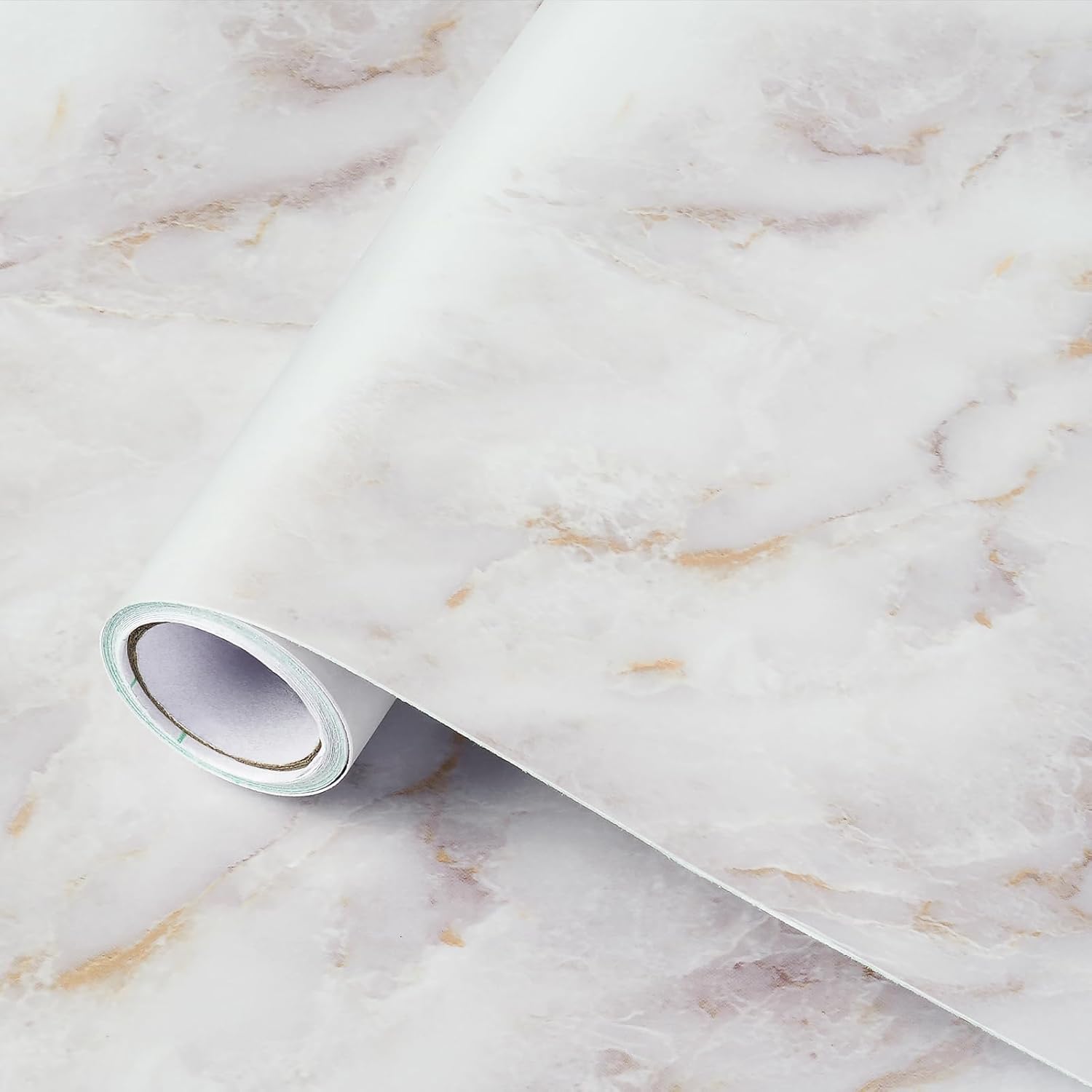 |
rabbitgoo Marble Contact Paper | Self-adhesive. Oil resistant. Budget-friendly. |
Check Price |
 |
practicalWs Glossy Marble Contact Paper | Glossy marble. Smooth surface. Thick material. PVC material. |
Check Price |
 |
d-c-fix self Adhesive Peel and Stick | Water and oil resistant. Paper material. High quality. Easy to apply on countertops. |
Check Price |
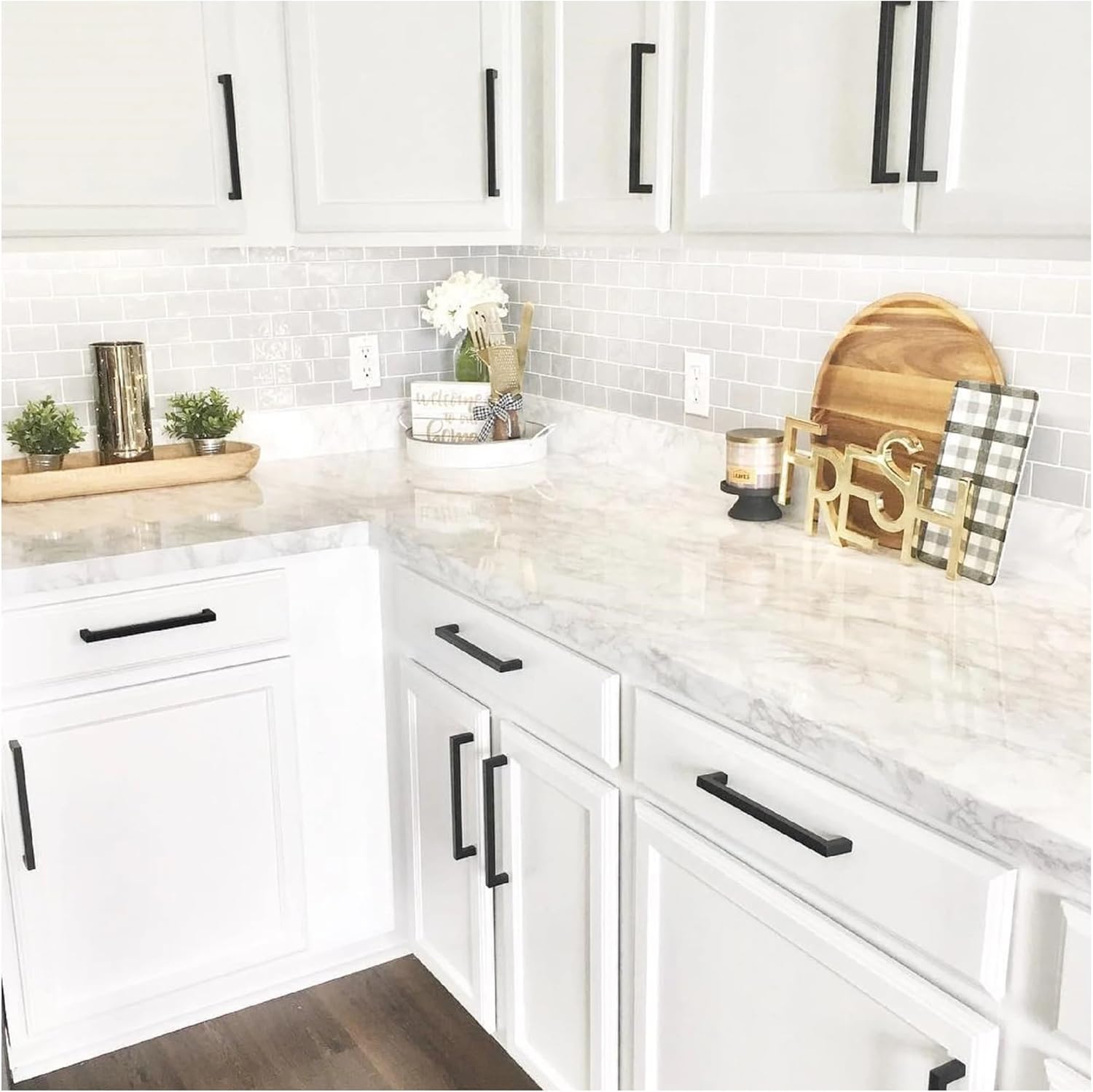 |
EZ FAUX DECOR Vinyl Countertop | Vinyl countertop. Waterproof adhesive. Heat resistant. White grey marble |
Check Price |
What to Check Before You Cover a Countertop
The buying decision gets much easier once you stop comparing only color. I would check the surface, the exact selected roll size, finish, pattern scale, removability, and the amount of handling the counter gets.
Start with the surface you already own
Contact film adheres best to smooth, stable, non-porous surfaces. Sound laminate is usually a much better starting point than raw, rough wood. If you are working over unfinished MDF, plywood, or particleboard, you may need to seal or prime it first so the adhesive does not disappear into a dusty, porous surface.
Loose laminate should be repaired before wrapping. So should damaged caulk, swollen edges, flaking paint, and any raised filler. Cleaning is not only about making the counter look clean; you want to remove grease, silicone residue, dust, and waxy products that can interfere with adhesion.
Measure depth, length, edge drops, and pattern allowance
Measure the long runs first, then the depth. Add the front edge if you plan to wrap it continuously. If the counter turns a corner, measure each leg rather than estimating from the overall footprint. The goal is to know not only how much film you need, but where seams will fall.
Pattern matching consumes extra material. So do errors. I know it is tempting to calculate the exact square footage and order almost no excess, but a little spare material can save the project if you miscut around a sink or damage a strip while repositioning it.
Check the exact selected variant before ordering
Several of these listings offer multiple widths and lengths under one product page. That is useful, but it also creates an easy shopping mistake: you read the dimensions of one variant and accidentally order another.
COSNIGHT is a good example of why I check the current selection carefully. The linked Amazon title identifies the selected roll as 15.7 inches by 118 inches, while detailed listing text also references a 17.7-inch width. That is an internal listing inconsistency, so I would confirm the current variant shown in the cart rather than building a countertop plan around either number blindly.
Think about removal before installation
If you rent, “removable” matters almost as much as “self-adhesive.” Livelynine, rabbitgoo, Very Berry Sticker, VEELIKE, COSNIGHT, d-c-fix, and EZ Faux Decor all use removable or repositionable language in their current linked information to varying degrees.
Removable does not mean every old surface is risk-free. Weak paint, already-lifting laminate, paper-faced material, and poorly bonded finish can come away with adhesive. Test a hidden area first if the underlying finish matters, and remove slowly rather than pulling the film back aggressively.
Choose the look for the room, not for the thumbnail
Brown marble can warm up cold white cabinetry. White marble can make a dark counter feel brighter. Wood grain can soften a kitchen that already has a lot of hard, glossy surfaces. Matte gold-granite or white wood-grain designs can feel less reflective and more relaxed than high-gloss marble.
Scale is just as important as color. Large veining needs enough uninterrupted surface to make visual sense. A small vanity can look better with a quieter pattern. If possible, view user photos and zoom out from the product image until you are thinking about the whole room instead of one square foot of print.
When Contact Paper Is the Wrong Fix
Peel-and-stick film is not a substitute for repairing a structurally damaged worktop. If water has swollen the substrate around the sink, if laminate is separating badly, or if the counter flexes because the support underneath has failed, covering it only hides the problem temporarily.
I would also skip it if you routinely put very hot cookware directly on the counter and know you will not change that habit. The same applies if you use the worktop itself as a cutting surface. Even products that make stronger heat- or scratch-resistance claims are decorative films, not solid-surface replacements.
Finally, think carefully before applying contact paper over fragile paint, paper-faced furniture, unsealed porous wood, or a finish you cannot afford to damage. A test patch in an inconspicuous spot is a small step that can prevent an unpleasant removal surprise later.
VEELIKE Brown Marble Contact Paper – Warm Marble for Smaller Countertop Projects
The linked VEELIKE roll is a brown marble-pattern vinyl film. The current selected size is listed at roughly 15.8 inches wide by 118 inches long, and the product information describes it as self-adhesive, removable, waterproof, and oil-proof. A printed cutting grid on the backing is also part of the installation design.
The brown marble look is the reason I would choose this over a typical bright white marble film. It creates warmth and contrast without trying to make the kitchen look icy or ultra-modern. On an older laminate counter with cream, tan, wood, or dark cabinet tones nearby, that warmer pattern can feel more intentional.
The trade-off is width. A roughly 16-inch roll is manageable in the hands, but many kitchen countertops are deeper than that. Unless you are covering a narrow ledge, vanity, desktop, or shelf, you should expect to plan a seam or select one of the wider size options currently offered under the listing.
What the verified listing tells you
VEELIKE identifies the material as vinyl and describes the face as waterproof, oil-proof, easy to clean, and resistant to everyday friction. Those traits matter because a countertop film gets touched and wiped much more often than decorative wall covering.
The self-adhesive backing and measurement grid make it practical for DIY use. The maker also uses high-temperature-resistant language for kitchen applications. I would treat that as resistance to normal warm-kitchen conditions, not permission to set down hot cookware. Use a trivet regardless.
The brown pattern is also more visually forgiving than stark white if the substrate has tiny color variations or if a seam is not absolutely invisible. That does not excuse poor prep, but it can make a first project feel less exposed.
- The warm brown marble pattern gives a dated counter a noticeable visual change without the high contrast of bright white stone prints.
- The vinyl is described as removable, waterproof, oil-proof, and easy to wipe, which suits the daily messes a decorative countertop surface is likely to encounter.
- The backing grid helps with straight cuts around long edges and simple rectangles.
- Multiple size options are currently shown under the product listing, so the same pattern can be considered for both small surfaces and larger runs.
- The selected roughly 15.8-inch-wide roll is too narrow to cover many full-depth kitchen counters in one piece.
- A dark, active marble pattern can feel heavy in a very small kitchen if the cabinets and backsplash are already visually busy.
Who It’s Best For
This is a sensible fit for a small countertop, vanity, desk, shelf, or renter-friendly refresh where a warm marble print suits the room. It also makes sense if you like stone patterns but want something less stark than white-and-gray marble.
Not Ideal For
I would not choose the selected narrow roll for a long, deep counter if avoiding seams is your highest priority. It is also not the right visual direction for a kitchen that already has several competing brown, beige, or patterned finishes.
Livelynine Counter Top Covers – Removable Brown Marble With Clear Size Information
The linked Livelynine product is a brown or coffee-marble removable vinyl film. Its selected size is clearly listed at 15.8 inches by 78.8 inches, covering about 8.65 square feet. The current information describes it as self-adhesive, waterproof, oil-proof, and fully removable, with trimming gridlines printed on the backing.
That makes it easy to understand before you buy: it is a smaller roll designed for a straightforward peel-and-stick project, not a 36-inch-wide professional-style countertop sheet. The manageable size can actually be useful for a vanity, a compact counter section, a table, or a cabinet-top project where you do not need a huge sheet hanging off both sides while you work.
For a full kitchen counter, though, calculate the joins before ordering. A narrow material means you may need multiple strips. The brown marble pattern helps soften seam visibility compared with a plain solid color, but pattern alignment still matters.
What the verified listing tells you
The listing specifies durable vinyl and says the film needs no additional glue. It also calls out waterproof and oil-proof performance, which is useful around cooking and bathroom splashes. The removable claim makes it more appealing for renters, although I would still test the underlying surface first.
The backing grid is a practical feature, not marketing decoration. Straight reference lines reduce the chance of introducing a slight angle into a long strip. On a counter edge, even a small cutting error becomes more obvious over several feet.
Livelynine also offers larger size variants under the same listing. If the design is right but the selected roll is too small, check those current options rather than assuming you need to build the counter from many short pieces.
- The linked variant has unusually clear dimensions and coverage information, which makes planning easier.
- Waterproof and oil-proof claims suit a kitchen or bathroom surface that needs regular wiping.
- The removable vinyl format is useful for renters or anyone who wants a reversible update on a sound underlying finish.
- Gridlines on the backing help with straight measuring and trimming.
- The selected 15.8-inch width will require seams on many standard kitchen worktops.
- Because the pattern is directional, careless joins can interrupt the marble flow even if the strips themselves are straight.
Who It’s Best For
Livelynine makes sense for renters, small countertops, vanities, desks, and DIYers who want a warm marble look with straightforward removable-film specifications.
Not Ideal For
It is less attractive for a large island or long uninterrupted counter if you want the fewest possible joins. In that situation, one of the wider films later in this article is easier to plan around.
COSNIGHT Wood Grain Contact Paper – A Warmer, Less Stone-Like Direction
COSNIGHT is the clear change of pace in this group. Instead of imitating marble, it uses a brown wood-grain print and a self-adhesive PVC-style film. The linked product is marketed for countertops, drawers, shelves, cabinets, and other flat, dry surfaces, and it is sold with installation tools in the paper tube.
Wood grain can work particularly well in a space where marble would feel too formal. It can soften white cabinetry, give a coffee station more warmth, or create a butcher-block-inspired look without replacing the counter itself. Because the grain already contains linear variation, small imperfections can be less obvious than they are on a high-gloss white surface.
There is one important listing issue to know before planning: the selected Amazon title says 15.7 inches by 118 inches, while detailed product text on the same listing references a 17.7-inch width. Since those figures conflict, I would confirm the exact selected roll dimensions immediately before ordering. That is safer than pretending one number is unquestionably correct.
What the verified listing tells you
The current information describes the film as self-adhesive and removable, designed for flat and dry surfaces. It also describes a surface wear layer and easy-clean performance, and the linked title identifies the product as a wood-grain contact paper supplied with tools.
The included installation tools are useful if you do not already own a smoother and cutting tool, although the exact tool bundle can change over time. Check the current package contents rather than buying solely because an older image shows a particular accessory.
Wood grain has one installation rule I would take seriously: keep the direction consistent. If a countertop turns a corner, decide whether the grain will follow the long run or the visual front edge. An accidental 90-degree change in grain direction is much more noticeable than a small color variation.
- The wood-grain design offers a softer alternative to the many marble films in the group.
- The current listing describes the material as self-adhesive and removable, with an easy-clean surface suited to flat, dry furniture and countertop applications.
- Installation tools are included with the linked product, which can reduce the number of separate items a first-time user needs to gather.
- The linear grain can visually disguise tiny seams and minor surface variation better than some plain glossy finishes.
- The listing currently shows conflicting width information, so the exact selected dimensions need to be confirmed before calculating coverage.
- Wood grain can look unconvincing if the pattern direction changes at a seam or corner without a deliberate plan.
Who It’s Best For
Choose COSNIGHT if you want a warmer, furniture-like finish rather than faux stone. It is especially useful for small kitchen islands, shelves, desks, coffee bars, and counters in rooms with white, cream, green, or natural-wood details.
Not Ideal For
It is not the strongest choice for someone trying to imitate a polished stone countertop, and the current dimension inconsistency makes it a poor product to order before double-checking the selected variant.
Very Berry Sticker Marble Contact Paper – A Wide Matte Marble Sheet
The linked Very Berry Sticker roll stands out because the selected sheet is much wider than the first three products. The current listing identifies the chosen variant as white matte marble at 39 inches by 118 inches, made from a thick laminate-style PVC or vinyl film with self-adhesive backing. It is also described as water-resistant, removable, and repositionable during installation.
That width changes the project more than it may seem. A 39-inch sheet can span the front-to-back depth of many countertops while still leaving material for wrapping the front edge. Fewer seams can make a marble print look considerably more convincing because the veining is not interrupted every foot or so.
The trade-off is handling. A wide sheet is harder to keep square and bubble-free by yourself. If you have only worked with narrow shelf liner before, I would not assume a wider roll is automatically easier simply because it reduces joins. It rewards two-person installation and careful control of the backing paper.
What the verified listing tells you
The selected product is listed as a white matte marble film rather than a high-gloss sheet. That lower-sheen finish can reduce glare and may make small surface imperfections less visible than a glossy marble face.
The product information describes heavy-duty premium PVC, a self-adhesive backing, integrated grid lines, water-resistant protection, and clean removal when the film is applied and removed correctly. It also says the adhesive allows repositioning during installation, which is useful with a large sheet because your first placement is not always perfect.
The 39-inch width is the defining benefit here. If your countertop depth fits inside that width, you may be able to run one piece from backsplash to front edge, leaving only lengthwise joins where the counter itself exceeds the roll length.
- The 39-inch selected width can reduce seams dramatically on many common countertop depths.
- The matte white-marble look produces a softer surface than high-gloss stone films and can be easier to live with under strong kitchen lighting.
- The listing describes a thick premium PVC construction with water-resistant performance for everyday wipe-downs.
- Grid lines and repositionable adhesive make a large-sheet installation more manageable than a fixed-placement film would be.
- A 39-inch sheet is more difficult for one person to align and smooth than a narrow roll.
- White matte marble can show dark substrate marks or dirty edges if the old countertop is not cleaned and prepared thoroughly.
Who It’s Best For
This is one of the more practical choices in the group for a full-depth counter where seam reduction is important. It suits someone who wants white marble without a highly reflective gloss and who can take time with a larger sheet.
Not Ideal For
It is not ideal for a tiny shelf or narrow furniture project where most of the width would be wasted. It can also be frustrating if you plan to install alone in a tight space with little room to control the unrolled film.
Heroad Peel and Stick Wallpaper – White Wood Grain for a Brighter Finish
The Heroad product linked from the original page is not a brown wood imitation. The current Amazon listing identifies it as a white faux wood-grain, thickened textured, self-adhesive vinyl film. The selected roll is 17.5 inches by 78.7 inches and covers about 9.49 square feet, with larger sizes available on the same listing.
That white wood look sits somewhere between plain white contact paper and a traditional timber print. You still get visible grain, but the overall surface is bright and low-contrast. It can work well on a counter in a small utility room, laundry area, vanity, or light kitchen where dark wood would feel too heavy.
The selected roll is small for a full kitchen counter. Heroad itself points buyers toward larger roll options for bigger projects in the current listing, which is sensible. More width or length means fewer seams and less chance of slight color variation between separate rolls.
What the verified listing tells you
The product title describes the film as waterproof, self-adhesive vinyl with a thickened textured finish. The listing also calls out the white faux wood design and gives the selected dimensions clearly.
Heroad specifically recommends larger roll sizes for tables, cabinet doors, countertops, and other projects over roughly ten square feet. That is useful guidance because it acknowledges an important limitation of the linked small roll rather than pretending one size suits everything.
The texture is the feature I would evaluate in person. A subtle grain can make the film feel less flat and printed, but a deep texture is also more likely to trap residue than a perfectly smooth face. For a food-prep zone, I would want a surface that wipes easily and does not have deep grooves.
- The white faux-wood print gives a bright finish without looking like plain solid vinyl.
- The current listing identifies the material as self-adhesive vinyl and describes it as waterproof and thickened.
- Several larger size options are available, which gives you a way to reduce joins on a bigger project.
- The lower-contrast grain can suit small rooms where dark marble or brown wood would visually shrink the surface.
- The selected 17.5-by-78.7-inch roll is better suited to small areas than a large kitchen countertop.
- Textured film needs careful cleaning because residue can collect more easily than on a completely smooth surface.
Who It’s Best For
Heroad works for light, airy spaces where you want texture but not a strong marble or brown-wood statement. It makes particular sense for vanities, utility counters, desks, shelves, and compact countertop runs.
Not Ideal For
I would not buy the selected small roll for a large island without first switching to one of the larger current variants. It is also not the right choice if you want a dark or realistic natural-oak effect.
rabbitgoo Marble Contact Paper – Matte Gold Granite With a Smaller Roll
The linked rabbitgoo film is a matte marble or gold-granite design rather than a glossy white stone print. The selected size is listed at 11.8 inches by 78.7 inches, with a self-adhesive and removable backing. The current product information also describes the film as waterproof, oil resistant, easy to clean, and intended for surfaces such as kitchen and bathroom counters.
The matte finish is useful if glare bothers you or if you know your old countertop is not perfectly smooth. Strong reflections can highlight every ridge. A matte surface is visually calmer, although it still needs proper prep because film will not hide actual damage.
At less than a foot wide, the selected roll is the narrowest of the group. That makes it easy to handle on shelves, drawer fronts, small tables, and narrow vanity areas, but it creates a lot of seam planning for a standard kitchen worktop. Check the other current size options if the pattern is what you want.
What the verified listing tells you
rabbitgoo describes this product as high-quality waterproof marble contact paper with oil resistance and easy-clean performance. The linked title identifies the selected piece as 11.8 inches by 78.7 inches and calls the design a matte gold-granite look.
The adhesive backing is designed for straightforward peel-and-stick use, and the product is marketed as removable. The matte face is a genuine practical difference from high-gloss marble because it changes how fingerprints, bubbles, and reflected light appear.
I would use the small selected roll only where its width is an advantage. On a narrow shelf or sideboard, the compact roll can mean less waste. On a kitchen counter, the same width becomes a limitation.
- The matte gold-granite design provides a warmer stone look with less glare than glossy white marble.
- The listing describes waterproof, oil-resistant, and easy-clean performance for normal household use.
- The self-adhesive removable format is useful for temporary furniture and countertop refreshes.
- The narrow roll is easy to control on small surfaces and detail work.
- The selected 11.8-inch width will create several seams on most full-depth countertops.
- The gold-granite pattern may compete with strongly patterned tile, flooring, or cabinet finishes.
Who It’s Best For
This works best for small vanities, shelves, narrow counters, desks, or accent projects where you want a warm matte stone pattern and easy handling.
Not Ideal For
It is not my first choice for a large uninterrupted kitchen surface. If the same pattern is available in a wider current variant, I would compare that before accepting several joins.
practicalWs Glossy Marble Contact Paper – Compact Glossy Film for Smooth Surfaces
The practicalWs product is a glossy white-and-gray marble vinyl wrap with a hint of brown in the print. The linked listing identifies the selected roll at 11.8 inches by 78.7 inches and describes the material as PVC, self-adhesive, thickened, and wear resistant. It is intended for smooth, dry, flat surfaces such as countertops, furniture, drawers, and similar projects.
The glossy finish creates the polished-marble look people often picture when they search for peel-and-stick counters. That shine can make a small vanity or side table look crisp and bright. It also reflects every imperfection more clearly, so prep matters more than it would with a forgiving matte or busy wood-grain pattern.
The selected width is very narrow for a kitchen worktop. I would think of this exact variant as a small-project roll first. If you are covering a full counter, check whether the current listing offers a wider size before accepting multiple seams across a glossy surface.
What the verified listing tells you
The current product information calls the material PVC and says no additional glue is required. It also describes the film as thickened and wear resistant, with a smooth surface and realistic marble effect.
The maker specifically says to use it on smooth, dry, flat countertops. That instruction matters. A rough or damp surface can weaken adhesion, and a glossy face will not disguise bumps underneath.
The listing also suggests sealing the joint between backsplash and counter after installation. I would follow the current maker instructions for your exact application and use a compatible sealant only where appropriate, because water entry at that transition is one of the fastest ways to undermine an otherwise neat wrap.
- The glossy marble print gives a polished stone-like look that works well in bright kitchens and bathrooms.
- PVC construction, self-adhesive backing, and a smooth wipeable face suit quick furniture and countertop refreshes.
- The listing clearly states that the film should go on smooth, dry, flat surfaces, which helps set realistic installation expectations.
- The compact roll is easy to manage for shelves, small vanities, tables, and other limited areas.
- The selected 11.8-inch width is impractical for a full-depth kitchen counter unless you are comfortable with several seams.
- Gloss highlights bubbles, ridges, and uneven trimming more strongly than a matte surface.
Who It’s Best For
Choose practicalWs for a small glossy-marble project where the substrate is already smooth and you want a bright, polished look. It is especially sensible for a vanity, desk, shelf, or compact counter section.
Not Ideal For
It is not the easiest choice for a beginner covering a large, imperfect countertop. The narrow roll and reflective finish together demand more seam work and cleaner preparation.
d-c-fix Self Adhesive Peel and Stick – Wide White Marble Film With Strong Application Guidance
The linked d-c-fix product is the FA3468031 white-marble self-adhesive film. The selected roll is 26.5 inches by 78.7 inches. Its current product information describes it as a vinyl/PVC film that is water resistant, washable, grid-backed for cutting, and repositionable during application on clean, flat surfaces.
At 26.5 inches wide, it sits in a useful middle ground. It is wide enough to cover many shallower counters, vanities, and work surfaces with fewer joins than the 11- to 17-inch rolls, yet it is still easier for one person to handle than a 36- or 39-inch sheet.
I also like that d-c-fix publishes detailed application guidance beyond the sales listing. The manufacturer recommends a smooth, even surface free of dust, grease, silicone, and chalky residue. It suggests exposing only a small section of adhesive at first, then gradually removing more backing while smoothing the film into place. That is exactly the kind of controlled installation that reduces bubbles and crooked starts.
What the verified listing tells you
The product title identifies the selected white-marble film as thicker than traditional contact paper and gives the 26.5-by-78.7-inch dimensions. The feature text describes vinyl/PVC construction, water resistance, easy cleaning, backing gridlines, and the ability to lift and reposition the film during application.
The official d-c-fix guidance also recommends leaving a little excess while cutting and trimming the final edge with a sharp knife. For joining multiple pieces, its FAQ advises a small overlap rather than leaving a gap. Those details matter because the neatness of the edge and seam often determines whether a countertop wrap looks temporary or finished.
For rounded edges, d-c-fix says a hairdryer on the lowest heat setting can help the film conform. That is shaping heat during application, not a reason to expose the installed counter to hot pans later.
- The 26.5-inch selected width reduces seam work compared with most of the narrower rolls in this group.
- The product is backed by unusually clear manufacturer application instructions, including surface prep, smoothing, trimming, and rounded-edge guidance.
- Water-resistant vinyl/PVC construction and a washable face make sense for everyday countertop wiping.
- The film can be repositioned during application, which is helpful when aligning marble veining and long edges.
- A 26.5-inch width may still be too narrow for deeper counters once a front-edge wrap is included.
- White marble shows dirty substrate edges and poorly aligned seams more readily than darker or busier patterns.
Who It’s Best For
This is a strong fit for someone who values clear installation guidance and wants a white-marble film wider than standard shelf-liner rolls without moving all the way to an oversized sheet.
Not Ideal For
It is less useful if your countertop is rough, porous, greasy, or structurally damaged. The product is designed around a smooth, clean base, and no amount of careful smoothing can compensate for an unstable substrate.
EZ FAUX DECOR Vinyl Countertop – The Widest, Heavier-Gauge Option Here
The linked EZ Faux Decor film is a white-and-gray marble countertop wrap measuring 36 inches by 120 inches. The current product information identifies it as a thicker PVC-based, self-adhesive film and describes the selected product as waterproof, scratch resistant, heat resistant, removable, and designed for smooth surfaces.
The 36-inch width is the main practical reason to consider it. Many countertops can be covered from backsplash to front edge with one sheet, which reduces the need for parallel seams. If you have ever spent twenty minutes smoothing a seam only to keep noticing it every morning, the value of a wider roll becomes obvious.
EZ Faux Decor also publishes a different installation method from many basic peel-and-stick films. Its guidance recommends letting the tightly rolled material acclimate and relax before installation, working in small sections, using a light water mist to aid positioning, and smoothing with a squeegee. Because that wet-assisted method is product-specific, I would follow the maker’s current instructions rather than assuming every contact paper should be installed the same way.
What the verified listing tells you
The selected wrap is 36 inches by 120 inches and is described as a five-layer upgraded vinyl cover. The current listing uses waterproof, scratch-resistant, heat-resistant, removable, and high-traffic language.
The manufacturer’s own installation page describes the film as heavier gauge than many alternatives and recommends two-person help. It also says the adhesive allows movement and adjustment during installation and recommends gentle heat at edges and rounded corners after the main sheet is positioned.
The heat-resistance claim is stronger here than on most of the group, but I still would not place hot cookware directly on a wrapped counter. A trivet keeps the adhesive, printed surface, and substrate away from concentrated heat and costs almost nothing compared with rewrapping a damaged section.
- The 36-inch width can cover many countertop depths in one piece, reducing visible joins.
- The heavier-gauge, five-layer design is intended for a more substantial countertop-wrap application than a basic narrow shelf-liner film.
- Manufacturer installation guidance covers acclimation, wet-assisted positioning, squeegee use, and shaping around edges.
- Waterproof, scratch-resistant, heat-resistant, and removable claims give the film a broader performance brief than most basic decorative rolls.
- The large, heavier sheet is harder to position alone and benefits from a second person during installation.
- Its glossy marble look still needs careful prep because a premium film cannot hide raised chips, deep texture, or damaged laminate underneath.
Who It’s Best For
EZ Faux Decor makes the most sense for a full countertop makeover where width and seam reduction matter more than buying the smallest possible roll. It suits DIYers willing to follow a more deliberate installation process and work with a larger sheet.
Not Ideal For
It is more material than you need for a small shelf, vanity strip, or cabinet-top touch-up. It is also not a shortcut around surface repair; damaged or uneven counters still need attention first.
How the Nine Contact Papers Differ in Practice
The nine products are easier to compare if you think about the job rather than the product names. The first question is not “Which marble looks nicest?” It is “How many seams will this selected roll force me to create?”
For full-depth countertops, Very Berry Sticker at 39 inches and EZ Faux Decor at 36 inches are the obvious wide-sheet choices among the linked variants. d-c-fix at 26.5 inches sits below them and may cover shallower counters in one piece depending on the front-edge wrap. VEELIKE, Livelynine, COSNIGHT, Heroad, rabbitgoo, and practicalWs are narrower in their selected linked sizes, so seam planning becomes a larger part of the project.
If you want warm marble, VEELIKE and Livelynine are the direct choices. VEELIKE’s selected roll is longer, while Livelynine gives especially clear removable, waterproof, oil-proof, and coverage information. rabbitgoo moves toward a matte gold-granite look rather than classic brown marble.
If you want wood instead of stone, COSNIGHT and Heroad are the two products to compare. COSNIGHT is a brown wood-grain design and includes tools, but its current listing contains conflicting width information that needs to be checked before ordering. Heroad is a white faux-wood design with clearly stated selected dimensions and several larger options.
For white marble, the differences are mostly finish and width. practicalWs is glossy and narrow. d-c-fix is wider and comes with detailed manufacturer application guidance. Very Berry Sticker is very wide and matte. EZ Faux Decor is wide, glossy, and positioned as a heavier-gauge countertop wrap.
I would not choose solely on a “waterproof” label. Several of these products use that language, but the vulnerable parts of an installed counter are still seams, cut edges, corners, and the substrate underneath. A waterproof face does not excuse sloppy trimming around a sink.
I also would not choose solely on thickness claims. Thicker films can be easier to control and may feel more substantial, but large sheets need more careful positioning. For a first small project, a manageable roll can be less stressful than wrestling with a three-foot-wide sheet in a narrow kitchen.
A Cleaner Way to Apply Contact Paper to a Countertop
The most reliable installations are slow at the beginning and faster once the first few inches are square. Rushing the start creates a diagonal error that becomes harder to correct as the sheet gets longer.
1. Empty the counter and inspect the old surface
Remove appliances, soap dispensers, cutting boards, and anything else that hides the worktop. Run your hand across the surface and feel for raised chips, loose laminate, old caulk, dried adhesive, or swollen areas.
Repair what can realistically be repaired before wrapping. If the substrate is soft from water damage, covering it is not a repair. If the counter is sound but has a small sharp ridge, sand or fill it appropriately so the film has a flatter base.
2. Remove grease, cleaner residue, and silicone contamination
Wash the surface thoroughly, especially around the stove and sink. A counter can look clean while still holding a thin greasy film that weakens adhesive.
Use a cleaning method that is safe for the existing surface and leaves no waxy residue. Then let the counter dry completely. d-c-fix specifically calls for a surface free of dust, grease, silicone, and chalky material, and that is a sensible standard for the other self-adhesive films too.
3. Measure the longest uninterrupted run
Do not begin cutting from a rough visual estimate. Measure the length and depth, then include the front edge and any small return you plan to wrap continuously.
If the roll is narrower than the counter depth, decide where the seam will go before cutting. I would rather put a controlled seam farther from the sink than discover later that the final narrow strip has to run through the wettest part of the worktop.
4. Lay out the pattern before peeling anything
Unroll the film and look at the marble veins or wood grain. Decide which direction makes sense with the room and how the next section will align.
For wood grain, keep the direction consistent. For marble, look for a natural place to transition the pattern. If the roll has a backing grid, use it for measurement, but still verify with a ruler because the final trim line matters more than the printed grid.
5. Cut with working allowance
Leave a little excess rather than cutting exactly to the finished edge before installation. Extra material gives you room to correct a tiny alignment shift and then trim cleanly at the end.
Official d-c-fix instructions recommend cutting with additional allowance before application. The exact amount can vary with the product and edge, so follow the maker’s current instructions rather than treating one measurement as universal.
6. Start with only a small section of adhesive exposed
Peel back a short section of release liner, square the film carefully, and anchor that first area. Do not remove the entire backing unless the maker specifically instructs a wet application process designed for that product.
For most conventional peel-and-stick films, gradual backing removal gives you more control. Smooth from the center toward the edges while another person, if available, keeps the unused sheet supported and aligned.
7. Push air out before it becomes a crease
Use a smoothing blade, squeegee, or soft-edged tool that will not scratch the printed face. Work with overlapping strokes and move trapped air toward the nearest free edge.
A small bubble is easier to handle early than after several feet of film have been bonded over it. If the maker allows repositioning, lift and reset a section rather than forcing a hard wrinkle flat.
8. Treat rounded edges as a separate step
Some films, including d-c-fix and EZ Faux Decor, provide guidance for gentle heat around rounded edges. Follow the specific instructions for the film you bought. Excessive heat can distort vinyl or affect adhesive, so more heat is not better.
Warm only enough to make the material easier to shape, then smooth it around the edge without overstretching the print. Overstretching can thin the pattern and create tension that later pulls the edge back.
9. Trim with a fresh blade
A dull blade drags the film, tears corners, and can leave a ragged white line along a dark pattern. Use a fresh utility blade and a stable straight edge where appropriate.
Trim the front lip, wall transition, sink opening, and appliance edges carefully. Keep fingers out of the cutting path and protect the underlying counter from unnecessary scoring.
10. Finish seams and wet-area edges deliberately
If your installation needs more than one sheet, use the joining method recommended by the selected manufacturer. d-c-fix, for example, recommends a small overlap when joining pieces. Other films may have different advice.
Around a sink, do not leave a rough cut edge where standing water can work underneath. If the current product instructions call for sealing a transition, use a compatible material and keep the finish neat rather than smearing sealant over the decorative face.
Keeping a Wrapped Counter Looking Neat
A peel-and-stick counter does not need complicated maintenance. It does need gentler habits than real stone or stainless steel.
Wipe spills before they dry. A soft cloth, warm water, and a small amount of mild dish soap are enough for many everyday messes. d-c-fix specifically recommends warm water with a little washing-up liquid for its adhesive films and advises drying damp areas with a soft cloth.
Avoid abrasive pads and powdered cleaners unless the film manufacturer explicitly approves them. Scrubbing can change the sheen of a glossy sheet or scuff a matte printed surface. Strong solvents can also attack adhesives, inks, or the protective top layer.
Use a trivet under hot cookware even if the product uses heat-resistant language. Use a cutting board rather than slicing food directly on the film. Wipe water from the sink edge rather than letting it sit against a seam for hours.
Check front edges and corners occasionally. Those are high-contact areas where clothing, hips, cleaning cloths, and cabinet doors can rub the film. If an edge begins lifting, address it early according to the maker’s instructions rather than letting dirt work underneath.
Small Choices That Can Ruin an Otherwise Good Countertop Wrap
Installing over an oily surface
Kitchen counters collect a film that ordinary dusting does not remove. If adhesive goes over grease, the wrap can look fine at first and then lift near the cooking zone.
Clean for adhesion, not just appearance. Pay extra attention to the strip beside the stove, the counter front where hands rest, and the area around bottles of cooking oil.
Assuming the listed roll width is the one in your cart
Many product pages contain several size options. It is easy to read the dimensions from a feature image and order a different variant from the selector.
Check the exact width and length immediately before checkout. COSNIGHT’s linked page is a good reminder because its current title and detailed width text do not fully agree.
Cutting every piece before testing the first one
Batch cutting feels efficient until you discover that your real counter depth is slightly different from the measurement you wrote down or that the front lip needs more material than expected.
Cut and install one representative section first. Once the allowance and edge wrap are proven, repeat the dimensions across similar sections.
Putting seams where water constantly sits
A seam beside a dry wall is easier to manage than a seam directly behind a faucet. Even with a water-resistant face, moisture can exploit a lifted edge.
Plan the sheet layout before you start. If a seam is unavoidable, put it where it is least likely to receive standing water and follow the selected maker’s joining guidance.
Stretching the film too aggressively around corners
Gentle heat can help some vinyl films conform, but stretching changes the material. Pull too hard and the print can distort, the film can thin, and tension can make the edge creep back later.
Warm and shape gradually only where the maker recommends it. A neat cut and carefully wrapped edge usually looks better than forcing one sheet around a shape it cannot comfortably follow.
Treating heat resistance like heat immunity
Marketing language can make a countertop wrap sound tougher than it is. A pan bottom can be far hotter than normal ambient kitchen conditions.
Keep using trivets and heat pads. The point of the wrap is to refresh the surface, not to test how much thermal abuse the adhesive can survive.
Trying to hide structural damage with pattern
Dark marble and wood grain can visually disguise stains and minor color variation, but they cannot make swollen particleboard flat or stop loose laminate from moving.
Repair the substrate first. If the counter is failing, put the project budget toward repair or replacement instead of covering the warning signs.
Using a dull knife for the final trim
A rough edge instantly makes a peel-and-stick project look temporary. Dull blades also require more pressure, which increases the chance of slipping or tearing the film.
Use a fresh blade, work slowly, and keep the cutting line supported. Final trimming is not the place to save a worn utility blade for one more job.
Safety Notes for Installation and Daily Use
Contact paper itself is straightforward, but installation often involves utility knives, hot air from a hairdryer or heat gun, stools, and work around sinks or appliances. Clear the work area before cutting and keep your free hand away from the blade path.
If you use heat to form a film around a rounded edge, follow the manufacturer’s instructions and keep the heat source moving. Do not overheat the vinyl, adhesive, old laminate, or nearby caulk. A hairdryer on a low setting is often enough where the maker specifically recommends warming the film.
Turn off and move countertop appliances before wrapping underneath or around them. Do not cover ventilation openings, electrical outlets, appliance vents, or areas that are intended to dissipate heat.
After installation, continue using cutting boards and trivets. Contact film is a decorative surface. Even an option described as scratch or heat resistant should not be treated like butcher block, stone, or a commercial workbench.
Frequently Asked Questions About Contact Paper for Countertops
Is contact paper actually suitable for a kitchen countertop?
It can be suitable for a temporary or budget-conscious cosmetic update on a smooth, stable counter. The best results come from careful preparation, controlled installation, protected seams, and sensible use afterward. It is not a repair for swollen, loose, or structurally damaged worktops.
Which of these products can reduce seams the most?
Among the linked selected variants, Very Berry Sticker is listed at 39 inches wide and EZ Faux Decor at 36 inches wide. Those widths can span many countertop depths in one piece. d-c-fix at 26.5 inches may also reduce seam count compared with the narrower rolls, depending on the depth and front-edge wrap.
Is matte or glossy contact paper easier for a beginner?
Matte film is often more visually forgiving because it reflects less light, so tiny bubbles and surface ridges are less obvious. Glossy film can look more like polished stone, but it rewards better preparation and cleaner smoothing. The physical difficulty also depends heavily on roll width and adhesive behavior.
Can I use contact paper around a sink?
Yes, but the sink zone demands careful edge work because standing water can reach seams and cut edges. Use a product suitable for wet-area household use, keep the substrate dry and stable, and follow the maker’s instructions for sealing or finishing vulnerable transitions.
Can I put hot pans directly on a wrapped countertop?
I would not. Even if a film is described as heat resistant, use a trivet or heat pad. Direct cookware heat can damage the printed surface, soften adhesive, distort vinyl, or transfer heat into the substrate underneath.
What is the best way to prevent bubbles?
Start with a smooth, grease-free surface, expose only a small section of adhesive at a time unless your specific film uses another installation method, and smooth from the center toward the edges. If the product allows repositioning, lift and reset a problem area before a small bubble turns into a hard crease.
Can contact paper be removed from a rental countertop?
Several products here are described as removable, but the condition of the underlying finish matters. Test a hidden spot first if possible. Old paint, loose laminate, paper-faced material, or damaged coating can lift even when the film itself is designed for removal.
How much extra material should I buy?
Buy enough to cover the measured area plus allowance for trimming, front edges, seams, pattern alignment, and at least one realistic cutting error. The exact amount depends on the roll width and your layout. Ordering an extra piece from the same batch can also help if you need a repair later.
Choosing the Best Contact Paper for Countertops Without Overcomplicating It
The best contact paper for countertops is the one that fits the actual dimensions and habits of your space. A wide sheet is valuable if you want fewer seams. A narrow roll is useful if you are working on a vanity, shelf, or small counter and would rather control a smaller piece. Matte finishes are forgiving; glossy marble gives more shine; wood grain creates warmth without pretending every surface needs to look like stone.
For a warm marble direction, VEELIKE and Livelynine are straightforward places to compare. COSNIGHT gives you brown wood grain, while Heroad offers a much lighter white-wood effect. rabbitgoo shifts toward matte gold granite, and practicalWs gives a compact glossy marble roll. d-c-fix stands out for its wider selected format and detailed application guidance. Very Berry Sticker and EZ Faux Decor make the most sense when seam reduction through a wide sheet is one of your main priorities.
I would choose the design only after measuring the counter and deciding where every seam will go. Then I would verify the exact selected roll size again before ordering. Clean the surface more carefully than you think you need to, install the first few inches slowly, and protect the finished wrap from direct heat and cutting.
A peel-and-stick counter is at its best when it looks like a considered surface update, not a shortcut. Give the preparation and edges the same attention you give the pattern, and compare the nine options above against the counter you actually have rather than the kitchen in the listing photo.