A small tear can turn into a much larger hole after only a few wears, especially at knees, pockets, elbows, cuffs, and other places that flex or rub. Decorative iron-on patches give you a way to cover that damage before it spreads, while also changing the look of a jacket, pair of jeans, tote, hat, or backpack.
The important part is choosing a patch that suits both the fabric and the job. A patch can look beautifully embroidered and still be the wrong choice if the garment cannot safely tolerate the heat needed to activate its adhesive.
For sturdy cotton, denim, and many canvas items, heat-backed embroidered patches are usually straightforward. Stretch knits, coated rainwear, nylon, vinyl, leather, rayon, and other heat-sensitive materials need more caution because either the textile or the adhesive may react badly to high temperatures. In those cases, sewing can be the more dependable attachment method.
I would also separate decorative use from structural repair. A small embroidered motif can hide a stain or tiny snag very well, but a widening knee tear needs enough coverage and reinforcement to stop the surrounding fabric from continuing to split.
The eight sets below differ in theme, quantity, size range, and application limits, so the best iron-on patches for clothing depend on whether your priority is variety, a specific aesthetic, coverage, or long-term attachment.
What Makes an Iron-On Patch Hold Up on Clothing
Iron-on patches look simple, but the bond depends on several things happening at the same time. The adhesive must get hot enough to soften, the garment must tolerate that heat, the patch must be pressed with enough contact and pressure, and the bonded area must cool without being disturbed. Missing any one of those conditions can leave edges that lift after washing.
Heat-activated backing needs contact, not just temperature
The back of an iron-on embroidered patch normally carries a thermoplastic or hot-melt adhesive. Heat softens that backing so it can flow into the surface of the textile. When it cools, the adhesive becomes firm again and holds the patch against the garment.
That is why pressing is different from ordinary ironing. Moving the iron rapidly back and forth can reduce steady contact. Many patch makers instead tell you to place a protective cloth over the patch and press firmly for a set period. Always use the timing and temperature supplied with the specific patch rather than assuming one setting works for every adhesive.
The garment matters as much as the patch
Prym Americas makes the same point in its current Dritz iron-on repair instructions: the first check is whether the fabric can tolerate the heat required to fuse the adhesive. That is especially important with synthetics, waterproof coatings, vinyl-like finishes, and garments that contain elastane or other stretch fibers.
Denim and medium-weight cotton are comparatively forgiving because they can usually handle a cotton-range iron setting. A thin technical shell is very different. The face fabric may soften, shine, distort, delaminate, or lose a coating before the patch adhesive reaches a useful bonding temperature.
Embroidery adds thickness and stiffness
An embroidered patch is not simply colored adhesive film. Thread, backing fabric, edge stitching, and heat-seal glue create a small layered object. A dense patch can feel noticeably stiffer than the garment beneath it, particularly on a T-shirt or lightweight knit.
That stiffness is not automatically a flaw. It can be useful over a small worn spot on denim because it adds body to the area. On highly flexible clothing, though, a rigid patch may resist the movement of the textile and put extra stress around its edge. The more a garment stretches in use, the more carefully you should think about sewing and placement rather than relying only on heat adhesive.
Decorative patches and repair patches do different jobs
A decorative embroidered motif can cover a stain, tiny snag, scuff, or small opening, but it does not automatically stabilize weak fabric around a larger tear. If the fibers around a hole are thinning, reinforce the damaged area from the inside before placing a decorative patch over the front.
This is particularly useful on jeans. A lightweight internal backing can support the worn fibers, while the visible embroidered patch provides the look you want. The result is generally more durable than asking a small decorative patch to bridge a growing hole by itself.
Sewing is still the strongest insurance for high-wear areas
Several makers represented here explicitly offer both iron-on and sew-on attachment. That flexibility matters. Prym also recommends extra stitches on high-wear areas such as knees and elbows, even with adhesive-backed repair fabric.
A few discreet stitches around the border can prevent edge lifting on garments that are washed frequently, bent constantly, or pulled through backpack straps and seat belts. Iron-on adhesive is convenient; iron-on plus a few stitches is the more sensible choice when the patch will be worked hard.
| Product Image | Product Name | Features | Price |
|---|---|---|---|
 |
Harsgs 60pcs Random Assorted Styles Embroidered Patches | Includes 60 randomly assorted patches with vintage and trendy designs for endless creativity. Durable stitching with hot melt adhesive backing for long-lasting use. Iron-on or sew-on options make attaching patches simple and secure. Set iron to “COTTON” (100–150°C) and press for 30+ seconds for firm adhesion |
Check Price |
 |
NICEVINYL Embroidered Iron-on Patches Applique | Includes 72 randomly assorted embroidered patches with diverse designs and sizes. Bright colors and detailed stitching ensure long-lasting appeal and durability. Perfect for jackets, jeans, shirts, hoodies, costumes, backpacks, school bags, hats, and more. Patches hold up well when applied correctly; sewing recommended for extra durability. |
Check Price |
 |
Meneng Embroidered Patches Iron-on Appliques | Each package may contain designs like skulls, guitars, lip prints, hearts, finger skeletons, roses, eyes, gestures, and rock music motifs. 100% embroidered with excellent workmanship, smooth edges, and vivid colors. Flexible application method ensures secure attachment to any garment or accessory. Place patch, cover with cloth, iron at 150°C for 15–30 seconds, re-iron from the back, then let cool for 1 hour. |
Check Price |
 |
24 Pcs Cute Iron On Insect Patches Applique | Includes 12 different bee-themed designs, with 24 patches total for creative freedom. Each patch measures between 1.5 to 3 inches, ideal for small accents or grouped decoration. Can be ironed on or sewn for extra durability, depending on preference. Not suitable for raincoats, waterproof, high-elasticity, rayon, nylon, or tri-acetate fabrics. |
Check Price |
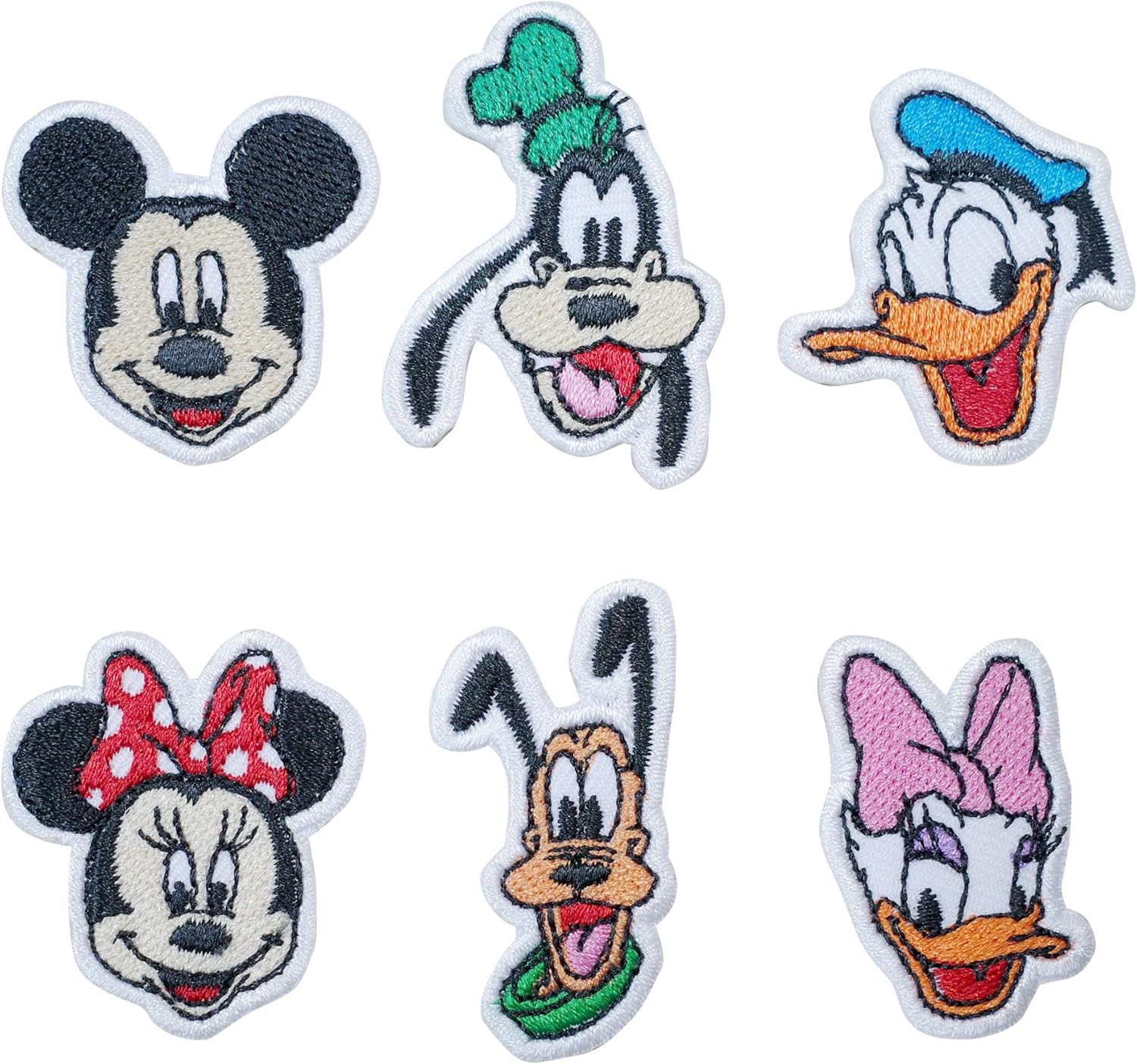 |
Octory 6 PCS Mini Set Cute Cartoon Mickey Iron On Patch for Clothing | Made with high-quality embroidered materials and super-strong heat seal glue backing. Iron-on or sew-on in just 15 seconds, perfect for fast DIY projects. Ideal for adorning jeans, jackets, shirts, backpacks, and more with fun Mickey-themed designs. |
Check Price |
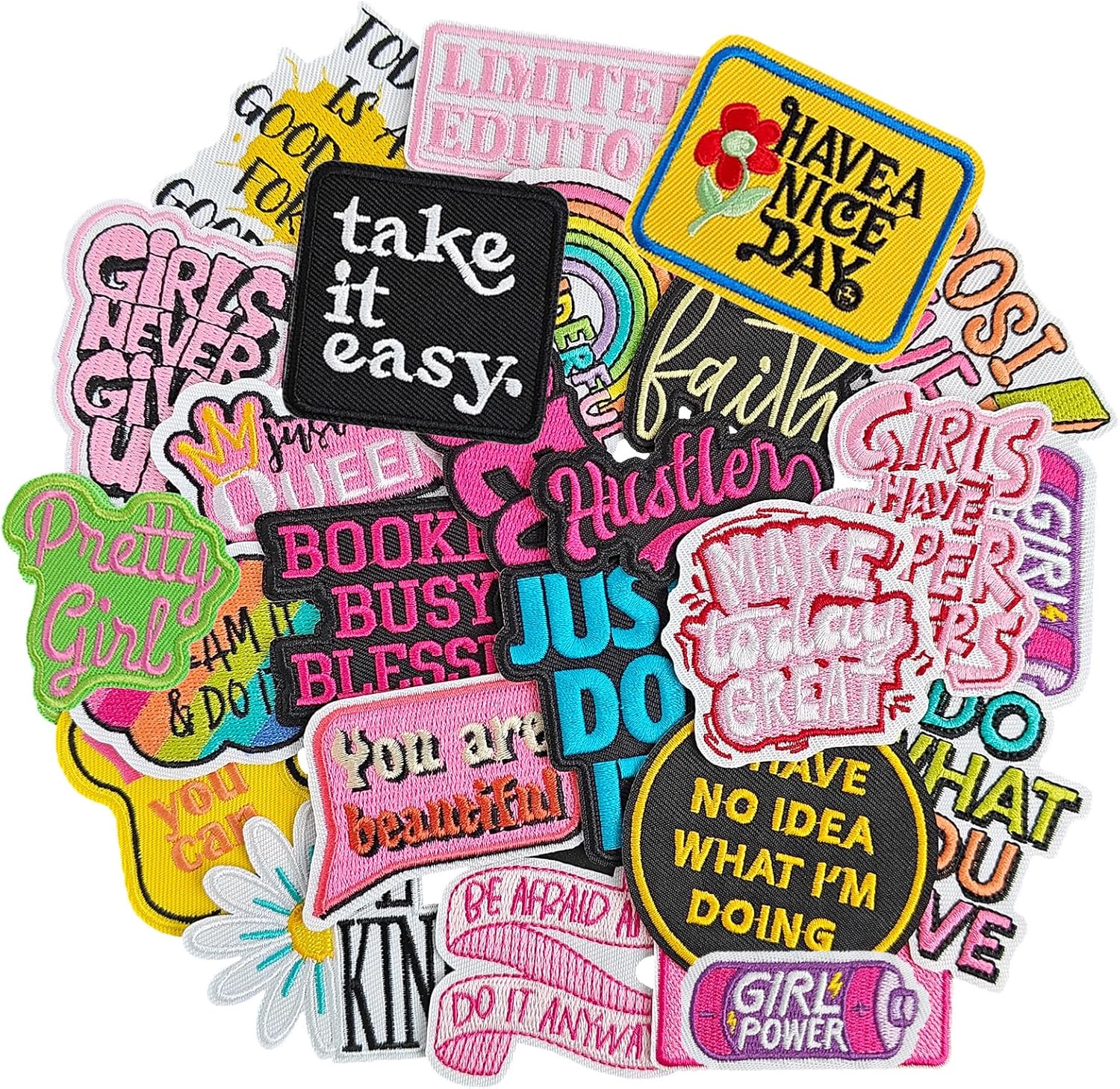 |
GYGYL 25Pcs Phrase Iron on Patches | Includes 25 embroidered patches featuring uplifting and stylish positive phrases. Hot melt glue ensures secure iron-on application, with the option to sew for extra durability. Iron at 100–150°C (without steam) for 20–30 seconds on each side, then let cool; sewing edges recommended for long-lasting hold. |
Check Price |
 |
RETON 72 Pcs Embroidered Iron On Patches for Clothing | Includes 72 patches: 36 flowers, 18 bees, 8 butterflies, 4 roses, 3 helianthus annus, and 3 daisies. Made of high-quality fabric with hot melt adhesive backing for secure iron-on or sew-on use. Heat with an iron at 100–150°C for about 20 seconds to activate adhesive. Suitable for jeans, jackets, dresses, skirts, shirts, hats, bags, shoes, and more. |
Check Price |
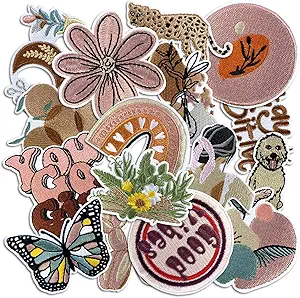 |
Boho Girly Iron On Patches | Includes 16 boho-style embroidered applique patches sized between 1.1–2.6 inches. Hot melt glue allows easy iron-on application; sewing option adds extra strength. Perfect for clothing, jeans, hats, bags, shoes, tents, curtains, quilt covers, scrapbooks, and more. Iron at high power for 30 seconds to secure patches firmly. |
Check Price |
Details Worth Checking Before You Heat the Iron
Check the care label on the garment first
The patch instructions tell you what the adhesive wants. The garment care label tells you what the fabric can survive. You need both pieces of information. If the patch asks for high heat but the clothing label limits ironing to low heat or says not to iron, do not force the two together.
For heat-sensitive clothing, sewing is usually the safer route. Fabric glue can be suitable for some craft applications, but it introduces its own compatibility and washability questions, so use a product intended for the specific textile if you choose that method.
Match patch size to the area you actually need to cover
For decoration, size is mostly visual. For repair, the patch needs to extend beyond the weakened area onto sound fabric. If the patch only covers the open hole but sits on frayed fibers all around it, the tear can continue under the embroidery.
A set with many small patches is excellent for accents, pocket details, hats, and small blemishes. It may be less useful for a broad knee tear. Before buying a themed assortment, measure the damaged area rather than judging from product photos alone.
Random assortments trade control for variety
Harsgs and NICEVINYL are large assortment packs, and the Meneng set also uses a random element within its punk theme. Random selection can be fun for group craft sessions because every person gets different choices. It can be frustrating if you need one exact motif or a particular size.
If the project depends on a precise design, color, or measurement, choose a fixed-theme pack whose contents are clearly shown rather than relying on a random assortment. The large mixed packs make more sense when variety itself is the goal.
Think about where seams and folds will sit
A patch bonded directly over a thick seam, zipper edge, waistband, pocket corner, or heavy hem may not receive even pressure from a household iron. The raised construction leaves gaps where the adhesive cannot contact the textile uniformly.
If possible, position decorative patches on flatter zones. If you must cover a damaged area near a seam, sewing is useful because stitches can secure portions that heat pressure cannot reach evenly.
Plan for washing before you apply anything
Pre-washing is sensible for clothing that can shrink, because applying a rigid patch first and shrinking the garment later can create puckering. Prym Americas also advises washing garments before attaching its iron-on repair patches.
After application, give the adhesive the cooling or curing time specified by the maker. For the Meneng patches, the current instructions explicitly say to let the bond cool for an hour before use. Washing too soon can interrupt the bond before it has fully set.
Harsgs 60pcs Random Assorted Styles Embroidered Patches – Maximum Variety for General DIY
The Harsgs set is built around quantity and variety. Current retail information identifies 60 randomly assorted embroidered patches in a mix of vintage and contemporary motifs, with hot-melt adhesive on the back and the option to iron or sew the pieces onto clothing and accessories. It is the kind of set that makes sense when you want a shared craft box rather than one tightly coordinated visual theme.
The quantity changes how you can use the pack. Instead of saving every patch for a major repair, you can experiment with clusters on denim jackets, small accents on pockets, decorative placements on tote bags, or individual patches on hats and backpacks. A large assortment also lets you test placement by laying several options on a garment before committing to heat.
The current Harsgs instructions sold through Michaels specify a cotton iron setting in the 100-150°C range for more than 30 seconds. Those numbers apply to the patch instructions, not to every garment. If your clothing label permits less heat, the garment limit wins; attach by sewing instead of pushing the fabric beyond its care instructions.
Why the 60-piece assortment is useful
A large mixed pack gives you creative flexibility. If a jacket already has one patch, you can often find another motif that visually balances it. If you are doing a group activity, each person can choose something different without needing eight separate themed packs.
There is also a practical repair advantage: different shapes can cover narrow tears, small holes, or stained areas more naturally than one repeated design. The patch itself should still extend onto sound fabric around any hole, and weak denim may need reinforcement behind the embroidered piece.
Iron-on convenience with a sew-on fallback
Harsgs explicitly markets the patches for both iron-on and sew-on use. That gives you a sensible way to adapt them to different garments. A flat cotton tote can be a straightforward heat application, while a curved cap panel, thick backpack seam, or frequently flexed jean knee may be better with stitches.
For items that will be washed often, I would consider heat application the positioning step and stitching the durability step. You do not need a heavy seam around every patch; even a careful perimeter stitch can reduce the chance that a corner catches and lifts.
- Sixty pieces give you room to experiment. You can try different layouts, share patches between projects, and keep extras for later repairs without exhausting the set quickly.
- The mixed designs work across several clothing styles. A varied assortment is easier to use across jeans, jackets, bags, hats, and casual garments than a very narrow theme.
- Iron-on and sew-on attachment keeps the set flexible. You can use heat on suitable flat fabrics and switch to stitches where heat, shape, or wear makes adhesive less dependable.
- The embroidered construction gives visible texture. These are decorative textile patches rather than flat printed stickers, so they add dimension while covering small flaws.
- Random contents reduce control. You cannot rely on receiving one exact motif, color balance, or size distribution.
Who It’s Best For
This set suits people who want a large mixed collection for clothing customization, group craft sessions, small repairs, and accessories, especially when exact motifs are less important than having plenty of choices.
Not Ideal For
It is less suitable if you need a guaranteed design, matching set, or specific patch size for one precise repair because the assortment is random.
NICEVINYL 72Pcs Random Assorted Embroidered Patches – A Bigger Mixed Pack for Shared Projects
NICEVINYL takes the mixed-assortment idea even further with a current set of 72 randomly assorted embroidered patches in varied designs and sizes. The patches are sold for either ironing or sewing onto clothing and accessories, making the pack useful for craft events, family projects, patch bars, costumes, and anyone who wants a broad visual selection without buying individual motifs one at a time.
The main advantage over a smaller themed set is choice. With seventy-two pieces, you can create a scattered composition across a jacket back, mix small designs around a pocket, or let several people decorate separate items from the same pack. The random nature makes the opening of the pack part of the experience, but it also means you should not buy it for a project that requires one exact graphic.
Current seller data is consistent on the 72-piece count, embroidered construction, assorted sizing, and iron-on/sew-on format, while some reseller descriptions disagree about the exact fiber label. Because that composition is not presented consistently, the useful buying decision is not based on an uncertain material claim. It is based on the patch count, random assortment, embroidery, and attachment method that are consistently documented.
Better for creativity than precision planning
If you are decorating multiple garments, variety can be more valuable than exact dimensions. A small motif can sit on a chest pocket or cap, while a larger one can cover a minor flaw on denim. You can also combine several patches to build a deliberately collected look.
For repair work, measure the damaged area first. A seventy-two-piece assortment does not guarantee that any one patch will be large enough for a broad tear. If the hole is bigger than the patch face, reinforce the garment and use the embroidery as the visible finish rather than the sole structural fix.
Good for patch bars and group craft tables
This set is particularly practical if several people need choices. You can lay the patches out by theme, size, or color and let each person create a combination. That avoids the repetition you get from a pack where every patch is the same.
For children or mixed-age groups, an adult should review the random contents before the activity because the exact assortment is not fixed. The application step also involves a hot iron or heat press and should be handled by an adult or appropriately supervised user.
- Seventy-two pieces provide substantial variety. The quantity is useful for events, multiple garments, or anyone who likes layering several motifs rather than applying one patch and stopping.
- Assorted sizes give more placement options. Smaller and larger pieces can be used differently across pockets, sleeves, bags, hats, and jacket panels.
- Embroidered surfaces add more texture than printed transfers. The raised thread can make a customized garment feel more intentionally embellished.
- Iron-on or sew-on application gives you a backup plan. If heat is unsuitable or a patch sits in a high-wear area, you can stitch it instead.
- The random pack cannot guarantee every design will suit your project. Some pieces may simply not match the garment or person you are decorating for.
Who It’s Best For
NICEVINYL is a strong fit for group customization, patch bars, costume work, jackets, backpacks, and people who value a very broad assortment more than a coordinated theme.
Not Ideal For
It is not the best choice for a carefully planned garment that needs one known motif, one exact color palette, or a guaranteed measurement.
Meneng 30pcs Cool Punk Embroidered Patches – Strongest Fit for an Edgier Theme
The Meneng set is more focused than the two large random packs above. It contains 30 assorted cool-punk embroidered patches, with current product information describing possible motifs such as skulls, guitars, hearts, roses, eyes, gestures, lip prints, skeletal graphics, and music-related designs. The exact mix is random, but the overall visual direction is much more predictable.
That makes the set easier to design around. A black denim jacket, canvas bag, patched jeans, or music-themed accessory can take several of these motifs without looking like unrelated leftovers. The embroidery is described as fully embroidered with heat-seal backing, and the product supports either ironing or sewing.
Meneng’s current application instructions are unusually specific: place the patch, cover it with cloth, iron at 150°C for roughly 15-30 seconds, turn the garment over and press again from the back, then allow it to cool for about an hour. Those instructions still assume the garment itself can tolerate that heat. If the care label says otherwise, do not sacrifice the clothing to satisfy the patch adhesive.
A coordinated aesthetic without identical designs
The benefit of a themed assortment is that you get variety without losing visual coherence. One patch can sit on a sleeve, another near a pocket, and a third on a bag, while the pieces still feel like they belong together.
This is also useful for repairs that you want to look deliberate rather than hidden. A punk-style motif over a small tear can turn damage into a design decision. For larger holes, reinforce first and then use the patch as the visible layer.
The one-hour cooling instruction matters
It is tempting to pull at a freshly attached patch immediately to test it. With this set, the maker specifically directs users to let the bond cool for an hour. That is worth respecting because thermoplastic adhesive develops its useful hold as it cools and firms.
If an edge is not secure after the recommended process, sewing is the better next step. Repeatedly overheating the same area can damage both thread and garment, especially on dark fabrics where scorching or shine may be less obvious until the piece is moved into brighter light.
- The 30-piece theme is visually cohesive. You get enough variety to customize several areas while staying within a recognizable punk and music-inspired look.
- Fully embroidered construction creates strong graphic impact. Dense threadwork gives the motifs texture and definition on denim and canvas.
- The instructions include front-and-back heating. Heating from both sides can help the adhesive contact the garment more evenly when the fabric allows it.
- Sewing remains an approved attachment method. That is important for high-wear jeans, backpacks, seams, and fabrics that should not be subjected to the full heat setting.
- The theme is intentionally narrow. If your style is floral, neutral, classic, or understated, much of the set may go unused.
Who It’s Best For
This set is best for denim, jackets, bags, and casual clothing where a punk, rock, graphic, or slightly rebellious look is part of the design, rather than simply a hidden repair.
Not Ideal For
It is less suitable for formal clothing, soft minimalist looks, or projects where you need a guaranteed individual motif because the exact 30-piece mix varies.
PGMJ 24 Pieces Cute Insect and Bee Patches – Best Defined Size Range for Small Decorative Repairs
The 24-piece insect set resolves to a current PGMJ bee-patch assortment with 12 different styles and two of each design. Michaels lists the patch size at approximately 1.5 to 3 inches, which is useful information because it tells you these are primarily small-to-medium decorative pieces rather than broad repair panels.
The patches are described as fabric with adhesive backing and can be ironed or sewn. The repeated designs are useful if you want symmetry: one bee on each pocket, matching patches on two sleeves, or a mirrored pair on a bag. They also work well in clusters because the shared insect theme keeps several small pieces from looking visually random.
PGMJ provides one of the clearest fabric warnings among the sets here. The patches are not recommended for raincoats or waterproof fabrics, highly elastic textiles, rayon, nylon, or tri-acetate. That limitation is important because these are precisely the kinds of materials where heat and adhesives can cause problems.
Small patches are good for accents, not every hole
A 1.5-inch patch can hide a tiny stain, pinhole, scuff, or narrow snag, while a piece closer to 3 inches can cover a somewhat larger blemish. Neither size should be expected to stabilize a wide knee blowout without reinforcement.
For decorative use, the dimensions are an advantage. The patches can fit on pockets, collars, hat panels, tote corners, or around existing embroidery without dominating the whole garment. If you want a botanical or garden-inspired cluster, the repeated bee motifs can also be combined with floral embroidery already on the clothing.
Fabric exclusions make this set easier to use safely
Some product descriptions simply say a patch works on clothing and leave the user to figure out the limits. PGMJ is more useful because it names several unsuitable materials. That gives you a clear decision: if your garment falls into one of those groups, sew the patch or choose another method instead of experimenting with heat.
A patch that cannot be safely ironed onto a particular fabric can still be useful if its edge is suitable for stitching. The adhesive backing does not prevent you from treating the patch as a sew-on applique.
- The 1.5-to-3-inch size range is clearly documented. That makes planning much easier than buying a random pack with no useful measurement reference.
- Twelve designs with two of each support balanced layouts. Matching pairs work well on pockets, sleeves, shoes, or two related accessories.
- The insect theme is cohesive without being repetitive. You can use multiple pieces together and still maintain a clear visual direction.
- The maker gives explicit fabric restrictions. Clear warnings reduce the chance of damaging nylon, waterproof materials, or highly elastic clothing with heat.
- The small size range limits serious repair coverage. These patches are better for decoration and minor flaws than broad tears.
Who It’s Best For
This set suits people who want small bee and insect accents for denim, cotton clothing, bags, hats, or craft projects, especially if repeated motifs are useful for matching placements.
Not Ideal For
It is not ideal for large repairs or for the heat-sensitive and stretch fabrics that the maker specifically excludes from iron-on use.
Octory 6 PCS Mini Mickey Embroidered Patches – A Small Character-Focused Set
Octory’s six-piece set is the smallest collection here and is built around a single cartoon character theme. Current product information identifies six mini embroidered patches in different Mickey-themed designs, with heat-seal glue backing and the option to iron or sew the patches onto garments and accessories.
The small count can actually be an advantage if you know exactly what style you want. You are not paying for dozens of unrelated patches that may sit unused. A six-piece set can decorate a jacket, backpack, cap, or pair of jeans with a consistent theme while still leaving the garment relatively uncluttered.
Octory describes the iron-on process as a fast about-15-second application, and manufacturer information surfaced by retailers says to avoid low-melting fabrics such as vinyl, nylon, and leather. That warning deserves more attention than the short application time. Fifteen seconds is only helpful when the textile is safe to heat in the first place.
Mini patches are easy to place
Smaller patches can fit where large embroidery cannot. A pocket edge, backpack strap area, cap panel, cuff-adjacent zone, or small stain can take a mini patch without making the garment feel patch-heavy.
They also work well as secondary details next to a larger graphic. If you are customizing a jacket, one small piece can sit on the chest while another appears on the sleeve, creating repetition without turning the entire piece into a collage.
Character designs are less flexible than abstract motifs
A recognizable character theme creates a clear look, but it is not neutral. These patches make sense when the wearer actively wants that design. For a generic repair box shared across a household, florals, stars, letters, or mixed motifs may be more broadly usable.
The six-piece quantity also means less room for trial and error. Place every piece carefully before heating, especially if you want the set spread across more than one garment.
- Six coordinated designs make planning simple. The set has a clear visual identity, so the patches can be distributed across one or two items without looking mismatched.
- Mini sizing suits tight placement areas. Small embroidered pieces are easier to position on caps, pockets, cuffs, and bags than oversized appliques.
- Iron-on or sew-on attachment increases fabric options. If heat is unsuitable, the patch can still be stitched onto an appropriate garment.
- The maker provides a clear low-melting-fabric warning. That helps prevent users from applying a hot iron to nylon, vinyl, or leather simply because the patch itself is heat-backed.
- Six pieces give much less variety than the larger assortments. The set works best when you already know you want this exact character theme.
Who It’s Best For
Octory is best for people who specifically want a small Mickey-themed set for jackets, jeans, hats, or bags and prefer a few coordinated patches rather than a large mixed assortment.
Not Ideal For
It is less practical as a general repair supply because the set contains only six character-focused patches and carries heat restrictions for low-melting fabrics.
GYGYL 25Pcs Phrase Iron-On Patches – Best for Message-Based Customization
The GYGYL set takes a different direction from florals, insects, and cartoon graphics. Its current product identity is 25 phrase-based embroidered patches marketed around girl-power and positive-message styling for hats, jackets, backpacks, clothing, and DIY accessories. The value here is not just decoration; words make the patch itself part of what the garment communicates.
A phrase patch can work especially well on a plain denim jacket, canvas tote, cap, or backpack because the lettering becomes the focal point. It can also cover a small blemish in a way that looks deliberately placed. Since the set contains 25 pieces, you have enough options to select messages that fit different people or projects rather than using every patch on one garment.
Current 2026 product tracking confirms the 25-piece GYGYL phrase set and its iron-on/sew-on identity, but the exact application-temperature details are not consistently surfaced across current independent sources. For this set, use the instructions supplied with the current package rather than borrowing heat settings from a different GYGYL patch design. That is the safest approach because adhesive systems can vary even within one brand.
Phrase patches need more placement planning
With a picture motif, slight rotation can look playful. With words, alignment matters more. A phrase that tilts unintentionally may look like a placement error rather than a design choice. Use a ruler, seam line, or removable fabric marker to establish a baseline before applying heat.
It is also worth reading every phrase before arranging a group. Two individually positive messages can compete visually if they are too close together. On clothing, one strong phrase usually reads more clearly than several text patches crowded into the same small area.
Good for hats and bags, but shape still matters
The product is marketed for hats as well as clothing. Curved hat surfaces can be difficult to press evenly with a flat household iron, so sewing is often a more controlled method there. A heat press with the appropriate curved attachment is a different situation, but most home users do not have one.
Backpacks can present the same problem around padding, seams, and pockets. If the patch area will not lie flat and firm, do not assume more heat will solve the issue. Uneven pressure is often the real problem.
- Twenty-five phrase patches provide meaningful variety. You can select wording to suit different people, garments, or moods rather than repeating one slogan.
- Text creates a stronger focal point than many small motifs. A single phrase can make a plain bag or jacket feel deliberately customized without requiring a cluster of patches.
- The patches are intended for both iron-on and sew-on attachment. That gives you options for curved hats, thick bags, and other surfaces where even household-iron pressure is difficult.
- The theme works well for gifts and shared projects. Different messages can be matched to different recipients instead of giving everyone the same graphic.
- Text placement is less forgiving than picture placement. Crooked or crowded lettering is more noticeable, so alignment deserves extra care.
Who It’s Best For
This set is a good fit for people who want embroidered words and positive phrases on jackets, hats, totes, backpacks, or casual clothing, especially when the message matters as much as the decorative color.
Not Ideal For
It is less suitable if you want neutral repair patches that disappear into the garment or if you need exact heating specifications before seeing the current package instructions.
RETON 72 Pcs Flower, Bee, and Butterfly Patches – Best Coordinated Large Floral Set
RETON combines the quantity of a large assortment with a much more controlled visual theme. The current 72-piece set includes 36 flower patches, 18 bee patches, 8 butterfly patches, 4 rose patches, 3 sunflower patches, and 3 daisy patches. That makes it particularly useful for botanical layouts, spring and summer clothing, garden-themed bags, or anyone who wants a coordinated collection rather than completely random graphics.
The patches are made from fabric with hot-melt adhesive backing and are designed for either ironing or sewing. Current instructions specify approximately 100-150°C for about 20 seconds to activate the adhesive, while also suggesting sewing when you want better long-term security.
RETON’s own guidance is useful because it notes that ironing may work poorly on some backpacks, hats, thick fabrics, sweaters, mesh, and smooth fabrics. That is exactly the kind of practical limitation that matters in daily use. The existence of adhesive on the back does not guarantee every textile will bond equally well.
A predictable composition helps with layout
Because the pack count is broken down by motif, you can plan repetition. Bees can be distributed around flowers, butterflies can be used as larger focal accents, and the higher number of flowers makes it possible to create borders or clusters without using up the whole set immediately.
This also makes the set more useful for coordinated group projects. Several people can decorate separate tote bags or jackets while still working from the same botanical theme. Compared with a fully random pack, the final pieces are more likely to feel related.
Good choice for covering multiple small flaws
The mix of flowers and insects can disguise small stains, snags, and worn areas in a way that looks decorative. If a garment has several tiny flaws rather than one huge tear, a cluster of patches can be more visually natural than one oversized rectangle.
For an actual hole, remember that a decorative patch needs sound fabric around it. If the tear continues underneath the embroidery, add reinforcement on the back first. Then the visible floral patch can do what it does best: provide the finished appearance.
- The exact 72-piece motif breakdown is clearly documented. You know the balance of flowers, bees, butterflies, roses, sunflowers, and daisies before planning a project.
- The theme is coordinated enough for multi-patch layouts. Several pieces can be used together without the visual randomness of a mixed novelty pack.
- Iron-on and sew-on use is explicitly supported. Sewing provides a sensible route for thick fabrics, mesh, smooth surfaces, or areas that see heavy wear.
- The maker acknowledges surfaces where ironing may be unreliable. That practical guidance helps users avoid endlessly reheating a patch when the real issue is fabric or pressure.
- The floral theme limits styling range. It is a strong look, but not a neutral repair set for every wardrobe.
Who It’s Best For
RETON is ideal for people who want a large, coordinated flower-and-insect collection for jackets, jeans, dresses, bags, hats, craft projects, or multiple small repairs.
Not Ideal For
It is less suitable if you want graphic, punk, phrase, or character designs because the entire pack stays within a floral and insect look.
Boho Girly Iron-On Patches 16-Piece Set – A Smaller Coordinated Fashion Pack
The Boho Girly set sits between the tiny Octory pack and the very large assortments. Current retail information for the Boho1 version identifies 16 embroidered applique patches measuring roughly 1.1 to 2.6 inches, with hot-melt adhesive on the back and the option to sew the patches for added security.
That size range keeps the patches in the small-to-medium decorative zone. They can work on pockets, sleeves, jeans, bags, hats, shoes, and other craft items without covering huge areas. The coordinated boho-girly theme also makes it easier to use multiple motifs on the same garment than it would be with a fully random novelty pack.
The current instructions call for a high-power iron application for about 30 seconds. Treat that as the patch maker’s adhesive direction, not permission to ignore the garment care label. If the textile does not allow that level of heat, sew the patch instead.
Sixteen pieces is a practical middle ground
A 60- or 72-piece pack can be excessive if you only want to decorate one jacket. Sixteen gives you enough choice to test arrangements, create a small cluster, and keep a few pieces for later without creating a large leftover collection.
The smaller format is also useful if you want details rather than coverage. A 1.1-inch motif can fill a small blank space, while a piece closer to 2.6 inches can become a more visible accent. For a large repair, though, you may need backing reinforcement or a different patch size.
Better for deliberate styling than utility-only mending
These designs are intended to be seen. If you are trying to make a repair disappear, a color-matched fabric patch from the inside would be more discreet. If you want the repair to become part of the garment’s style, embroidered boho motifs are much better suited to that goal.
For shoes, tents, curtains, and other items sometimes mentioned in retail descriptions, check the actual material before applying heat. A product being shown for many DIY uses does not mean every surface can withstand a household iron.
- Pro – Sixteen pieces provide useful choice without overwhelming leftovers. The pack is large enough for one substantial customization project but much smaller than bulk random assortments.
- The 1.1-to-2.6-inch size range suits detailed placement. Small motifs can fit around pockets, seams, cuffs, bags, and hats more easily than broad appliques.
- The coordinated theme helps several patches work together. You can build a cluster without the visual clash that sometimes comes from random packs.
- Sewing is available as a durability upgrade. That is helpful for footwear, bags, frequently washed clothing, and any area where adhesive edges may catch.
- The pieces are primarily decorative rather than large repair panels. Broad tears need more coverage and reinforcement than this size range offers.
Who It’s Best For
This set fits people who want a coordinated boho-style collection for visible clothing customization, small decorative repairs, hats, bags, or craft accessories without buying dozens of patches.
Not Ideal For
It is not the strongest fit for large holes or anyone who wants plain repair patches that blend into the base fabric.
Comparing the Eight Patch Sets
These sets make more sense when you compare them by project need instead of simply counting patches. The largest pack is not automatically the best buy, and the fastest application time does not make a patch suitable for heat-sensitive fabric.
For the widest assortment
Harsgs gives you 60 random embroidered patches, while NICEVINYL increases that to 72. Both are strong choices for group activities and general craft supplies because variety is the main feature.
Harsgs has a clearly documented cotton-setting application direction and a 60-piece mixed pack. NICEVINYL offers even more pieces and assorted sizes, but the random nature of both sets means you should not expect a particular motif.
For a coherent visual theme
Meneng, PGMJ, RETON, Octory, GYGYL, and Boho Girly all give you more predictable styling. Meneng stays in a punk and rock direction. PGMJ focuses on bees and insects. RETON builds a floral garden mix. Octory stays with a Mickey theme. GYGYL uses phrases and positive messages. Boho Girly uses a coordinated fashion aesthetic.
A coordinated pack is easier to use on one garment because several patches can share the same visual language. A random pack is better when several people need unrelated choices.
For small repairs and precise placement
The PGMJ patches are particularly easy to plan around because the documented size range is about 1.5 to 3 inches. The Boho Girly pieces are slightly smaller at roughly 1.1 to 2.6 inches. Octory’s mini set is also well suited to small placement areas.
For any real tear, the patch should sit on strong fabric beyond the damaged edge. If the motif is smaller than the weakened area, do not try to make it work simply because the design is attractive.
For quantity without total randomness
RETON is the standout here. You still get 72 pieces, but the pack composition is documented and stays within flowers, bees, butterflies, roses, sunflowers, and daisies. That makes it easier to plan repeated layouts than with a fully random 72-piece pack.
Meneng offers the same middle ground on a smaller scale: 30 pieces, random individual motifs, but all within a punk-oriented style.
For hats, bags, and awkward shapes
All of these patches can potentially be sewn, and that is especially valuable on curved or padded surfaces. Household irons work best when you can press against a firm, flat base. A cap crown, thick backpack pocket, shoe, or padded bag often prevents the even contact the adhesive needs.
On those surfaces, sewing should be treated as a normal attachment method, not as a sign that the patch failed. In some cases it is the more professional-looking choice from the beginning.
For garments that are washed frequently
Choose first by fabric compatibility, then consider stitching. Even a well-bonded edge can eventually catch during repeated washing, especially on jeans, workwear, children’s clothing, or uniforms.
Prym’s repair guidance supports this principle by recommending stitches at high-wear points such as knees and elbows. Turning patched garments inside out for washing and avoiding unnecessary high dryer heat can also reduce stress on the patch edge, provided those care steps are compatible with the garment and patch instructions.
How to Apply an Embroidered Iron-On Patch More Reliably
The exact temperature and time always come from the patch maker, but the preparation sequence is broadly similar. The steps below are designed to help the adhesive make even contact while protecting the garment.
1. Read both the garment label and the patch instructions
Confirm that the clothing can tolerate the temperature the patch requires. If the garment says low iron or do not iron, do not use a high cotton setting simply because the patch backing calls for it.
If the heat requirements conflict, sew the patch instead. That decision can save an otherwise wearable garment from shine, distortion, melted fibers, or damaged coatings.
2. Wash and completely dry the garment if appropriate
Remove finishes, dirt, oils, and shrinkage before bonding the patch. Prym Americas specifically advises washing before applying its iron-on repair products.
Do not apply a heat patch to damp fabric unless the patch’s own instructions explicitly call for moisture. Most adhesive systems need predictable heat transfer, and excess water can change how the area heats.
3. Test the iron on an inconspicuous spot
Use the garment’s permitted setting and test a hidden area such as an inside hem. Look for shine, color change, flattening, distortion, or coating damage.
A successful hidden test does not guarantee every decorated surface will behave identically, but it gives you a useful warning before the patch is sitting in the middle of the garment.
4. Position the patch carefully
Lay the garment on a hard, heat-safe pressing surface. Avoid a deeply padded ironing board if it prevents firm contact. Smooth the fabric and place the patch exactly where you want it.
For word patches, use a ruler or seam line to keep the text straight. For repair, make sure the patch extends beyond the damaged fibers onto sound cloth.
5. Cover the embroidery with a pressing cloth
A clean cotton pressing cloth helps protect embroidery thread and garment surface from direct contact with the iron. It also reduces the chance of scorching or creating a shiny mark on dark fabric.
Do not use a thick towel unless the maker tells you to. Too much insulation can prevent enough heat from reaching the adhesive.
6. Press for the maker’s specified time
Press firmly rather than sliding the iron around as though you were removing wrinkles. Different sets here call for different heat and time combinations, which is exactly why one universal number would be misleading.
Keep steam off unless the specific patch instructions tell you otherwise. Steam can introduce moisture and reduce control over surface temperature.
7. Heat from the back when instructed
Meneng explicitly instructs users to turn the garment over and iron the patch from the back. Other patch makers may use a similar method. Heating from the reverse side can help the adhesive layer reach temperature without exposing embroidery directly to the full iron surface.
Only do this if you can reach the back safely and the garment construction allows it. Thick linings, waterproof membranes, or padding can change the heat path.
8. Let the patch cool without pulling at the edges
Cooling is part of bonding. Do not immediately bend the garment or peel at the corners. Give the adhesive the full cooling time specified by the maker.
After cooling, check the perimeter gently. If one section has not bonded, re-press only according to the instructions. If repeated pressing does not solve it, sew the loose area instead of continually adding heat.
9. Add stitches where wear will be high
Knees, elbows, bag corners, pocket edges, and frequently washed workwear are all good candidates for perimeter stitching. A few stitches can prevent an edge from catching and peeling back.
If the patch is mainly decorative on a low-wear jacket panel, ironing alone may be adequate. The amount of reinforcement should match the stress the area will experience.
Keeping Embroidered Patches Looking Neat After Application
Let the bond finish cooling before wearing
Some adhesives feel attached while still warm but have not reached their final hold. Follow the maker’s cooling instructions rather than flexing or wearing the garment immediately.
Meneng is especially clear about this, calling for roughly an hour of cooling. That may feel cautious, but it costs nothing and reduces the temptation to disturb the fresh bond.
Wash with the patch protected from abrasion
If the care instructions allow machine washing, turn the garment inside out. That places the patch face away from direct rubbing against the washer drum and other garments.
Use the wash temperature permitted by both garment and patch. A patch that tolerates a certain wash temperature does not raise the temperature limit of the underlying clothing.
Watch edges before they become major failures
A tiny lifted corner is easier to fix than a patch that has peeled halfway off. If you notice an edge rising, clean and dry the garment, then follow the maker’s re-pressing instructions or add stitches.
Do not keep adding random heat cycles without checking the fabric. Repeated high-temperature pressing can damage the garment even if the patch survives it.
Store unused patches flat and dry
Heat-activated adhesive should be kept away from high temperatures before use. A sunny car, radiator shelf, or humid bathroom is not a good storage place.
Keep spare patches flat in a dry craft container. That also protects the embroidery from snagging and makes it easier to see what you have when the next repair appears.
Where Patch Projects Usually Go Wrong
Choosing the motif before checking fabric heat tolerance
A design can be exactly right aesthetically and still be incompatible with the garment. This is especially common with nylon bags, waterproof jackets, coated fabrics, and stretch activewear.
Check the care label first. PGMJ and Octory both publish clear exclusions for several heat-sensitive materials, and those warnings should be treated as practical limits rather than optional suggestions.
Trying to repair a large tear with a tiny decorative patch
A motif that only covers the visible opening may sit on weak, fraying fabric. The tear can continue underneath until the patch pulls away with a larger damaged area attached.
Reinforce large or thinning tears from behind, then add the decorative patch. Decoration works best after the structure of the repair has been addressed.
Using a soft ironing board for a patch that needs firm pressure
A household ironing board is designed for clothing care, not necessarily for heat bonding. Thick padding can reduce how firmly the patch and garment press together.
Use a hard, protected, heat-safe surface when the patch instructions allow it. The goal is even contact across the whole adhesive layer, especially around edges.
Sliding the iron instead of pressing
Fast movement can reduce the amount of time each area receives effective heat and pressure. It can also move the patch out of alignment before the glue begins to grip.
Press according to the manufacturer’s direction, lift, and reposition if needed. For phrase patches, this matters even more because a slight shift makes text look crooked.
Washing before the adhesive has cooled or cured
A fresh bond should not be rushed into the laundry. Let it cool fully and follow any waiting period supplied with the patch.
If you plan to stitch the border, wait until the patch is cool and stable. Sewing through hot adhesive can be messy and unnecessary.
Reheating endlessly when sewing would solve the problem
If a patch keeps lifting because the surface is curved, padded, thick, smooth, or heavily textured, more heat may not fix it. The problem can be poor contact rather than insufficient temperature.
Switch to stitching. RETON specifically notes that some thick, mesh, smooth, backpack, and hat applications may not iron well, and sewing is the straightforward response.
Heat and Fabric Safety Notes
An iron is a high-temperature tool, and embroidered patches can be small enough that fingers naturally end up close to the pressing area. Keep hands clear, use a stable heat-safe surface, and allow the patch and garment to cool before handling the bonded area closely.
Never apply a high-temperature patch setting to a fabric whose care label prohibits that heat. Dritz/Prym explicitly tells users to check fiber content and heat tolerance before using iron-on repair patches, and several patch makers here exclude low-melting or sensitive fabrics.
Do not assume a coated bag, rain jacket, synthetic sneaker, or faux-leather item is safe just because it is described broadly as fabric. Coatings and adhesives can melt or distort before woven fibers visibly scorch.
For children’s garments, an adult should handle the iron. Small unused patches should also be stored away from very young children because they can be small enough to create a choking risk depending on size and construction.
If a garment is valuable, irreplaceable, technical, or made from an unfamiliar textile, sewing is the lower-risk attachment method. A decorative patch is never worth ruining the base item.
Frequently Asked Questions
Are iron-on patches permanent?
They can be long-lasting, but permanence depends on adhesive quality, correct temperature, pressure, fabric compatibility, placement, and washing. High-wear areas are more secure when the patch is also stitched around the edge.
Can I iron patches onto polyester clothing?
Sometimes, but polyester fabrics vary widely in heat tolerance and finish. Check the garment’s care label and the patch instructions together. If the patch requires more heat than the clothing allows, sew it instead.
Can I put an iron-on patch on nylon?
Do not assume you can. PGMJ explicitly excludes nylon from its iron-on recommendations, and Octory warns against low-melting nylon. Sewing is usually the safer route for nylon garments and bags.
Should I sew an iron-on patch after pressing it?
You do not always need to, but stitches are valuable on knees, elbows, bags, frequently washed clothing, and any patch edge that may catch. Sewing is also useful when the surface is curved or thick and even iron pressure is difficult.
Can embroidered patches cover holes in jeans?
Yes, if the patch is large enough to extend onto sound denim. For a wide or fraying tear, reinforce the inside first so the surrounding fabric is not relying only on the decorative patch.
Why is my patch lifting at the corners?
Common causes include uneven pressure, insufficient compatible heat, a curved or textured surface, contamination on the garment, or flexing before the adhesive cooled. Re-press only according to the maker’s instructions; if the corner still lifts, secure it with stitches.
Do I need a heat press instead of an iron?
No for many household patch projects. A heat press can provide more consistent pressure and temperature, but a household iron works when the patch instructions support it and the garment can lie flat on a firm surface.
Can I use these patches on backpacks and hats?
Many of the sets are marketed for bags and hats, but the shape can make ironing difficult. Padded backpacks, seams, and curved cap panels often bond more reliably when sewn, and RETON specifically notes that some hat and backpack applications may not iron well.
Choose by Fabric First, Then by Design
The best iron-on patches for clothing are the ones that fit the garment before they fit the aesthetic. Start with heat tolerance, repair size, and placement; then choose the design you want to see every time you wear the item. That order prevents a cute patch from becoming an expensive fabric mistake.
For maximum variety, Harsgs and NICEVINYL give you large mixed assortments. Meneng is the clearer choice for punk-style graphics, while GYGYL focuses on phrase-based personalization. PGMJ, RETON, and Boho Girly offer more coordinated decorative themes, and Octory is a compact option for a specific character look.
Whatever you choose, treat sewing as a normal companion to heat adhesive rather than a last resort. A few stitches can extend the life of a patch on areas that flex, rub, or go through frequent washing. Check the current package directions, compare them with the garment care label, and use the attachment method that protects the clothing you are trying to save.