A jersey can look easy to personalize until heat, stretch, mesh, and synthetic fibers all start working against the design. A film that behaves well on a cotton T-shirt can feel rigid on athletic fabric, leave a shiny press mark on polyester, or lift along open mesh where pressure was uneven. That is why the best iron-on vinyl for jerseys is not simply the roll with the strongest adhesive or the brightest finish. It has to suit the garment that will actually be worn.
Most sports jerseys are made from polyester, polyester blends, mesh, or stretch fabrics. Some are also sublimated, which creates a separate risk: heat can reactivate dye in the garment and push that color into a light transfer. Large names and numbers add another challenge because they cover more moving fabric than a small chest logo. A transfer can be firmly bonded yet still feel wrong if it cannot flex with the jersey.
I would start with the jersey label, the size of the planned graphic, and the current application instructions for the exact vinyl. I know it is tempting to choose by roll length or color first, but those details matter only after heat tolerance and movement have been considered. The five products below take different approaches to roll size, color choice, cutting workflow, and garment compatibility, so the best fit depends on the job rather than on one universal winner.
Why Jersey Fabric Demands More Care Than a Cotton T-Shirt
Polyester can react to heat before the adhesive does
Polyester is common in jerseys because it is lightweight, dries quickly, and holds printed color well. The drawback is that some polyester fabrics are sensitive to the heat and pressure used for heat-transfer vinyl. A garment may become shiny, flatten under a platen, show a visible press box, or change color even when the vinyl itself is being applied within its stated instructions.
That means the transfer material and the garment have to be evaluated as a pair. A successful press is not only a design that sticks; the jersey itself should come out without gloss, scorching, distortion, or unwanted color movement. If you have a scrap from the same fabric, use it for the first test. If you do not, test an inconspicuous area before placing a full back number.
Heat-press temperature readings are also not infallible. A press that is set to one temperature can have hotter or cooler zones across the platen. For a heat-sensitive jersey, a small test helps you see how the real machine and real fabric behave together instead of assuming the display tells the whole story.
Stretch recovery changes what “durable” really means
Jerseys do not stretch once and stay stretched. They expand over shoulders, flex through the torso, bend near seams, and then return toward their original shape. A transfer that adheres strongly but resists that movement can wrinkle, form tension lines, or eventually crack around areas that are repeatedly extended.
Large graphics reveal this quickly. A small crest might sit on a part of the garment that barely moves, while an oversized number spans a broad section of the back. The larger the film area, the more noticeable its stiffness becomes. For fitted athletic garments, flexibility deserves as much attention as adhesion.
The five products in this article are all standard cuttable iron-on materials rather than dedicated dye-blocking athletic systems. Some current listings mention polyester, athletic mesh, or stretch textiles, while others are positioned more broadly for apparel and craft use. That distinction should guide expectations. A listing that says a material can adhere to polyester does not automatically mean it will be the most comfortable choice for a highly elastic competition jersey.
Mesh creates a pressure problem
Open mesh reduces the amount of solid surface available for the adhesive to contact. It also makes it easier for the front and back of a jersey to interact during pressing if softened adhesive reaches through the openings. Raised seams, piping, shoulder yokes, and collars can create additional pressure gaps.
A pressing pillow, small platen, or firm heat-resistant pad inside the garment can lift the decoration area above surrounding seams. This helps create more even pressure and separates layers on open mesh. Do not allow the opposite side of a mesh jersey to sit directly against softened adhesive during pressing. A barrier inside the garment is a simple precaution that can prevent accidental bonding.
Pressure is easy to underestimate because temperature receives most of the attention. If one edge of a number is sitting over a seam while the other is on flat fabric, the same temperature can produce two different bonds. Solving the pressure problem often does more than adding more heat.
Sublimated jerseys can show dye migration
Sublimation uses heat to place dye into polyester fibers. Reheating that fabric can make the dye mobile again. On a dark red, royal blue, or black sublimated jersey, a white heat-transfer design can slowly pick up the garment color after pressing. The problem may appear immediately or become more visible after the transfer cools.
Polyester compatibility and dye-blocking ability are not the same thing. None of the five products below should automatically be treated as a dedicated dye-blocking solution unless the exact current product documentation says so. If you are working on a sublimated jersey, test a small light-colored piece, allow it to cool fully, and inspect it again later before producing a complete set of names and numbers.
More heat is not a reliable fix for dye migration. In fact, extra heat can make the underlying dye more active. If a test transfer changes color, stop and reassess the transfer system rather than extending the press time.
Design size affects comfort and durability
A narrow name, small sleeve mark, or chest logo uses much less film than a solid back number. That changes how the jersey bends and breathes. A large rectangle of standard HTV can make lightweight fabric feel noticeably less flexible even when the transfer looks clean.
I do not think every jersey design needs the thinnest possible material. Bold fan jerseys, warm-up tops, and occasional-use shirts can tolerate more surface presence than fitted performance garments. The useful question is whether the film area is proportionate to the jersey’s stretch and intended use.
Negative space can help. Instead of creating one large solid block, a number can use an outline or internal cutouts where the design allows it. That reduces film coverage and often makes the garment feel more natural during movement.
| Product Image | Product Name | Features | Price |
|---|---|---|---|
 |
RENLITONG White HTV Iron on Vinyl 12Inch | Made of high-grade polyurethane that is strong, durable, soft, and vibrant. Holds up well after repeated washes without cracking, fading, or peeling. Works with all die-cutting machines, whether professional or hobby-grade. Suitable for household flat irons or any type of heat press machine. |
Check Price |
 |
VinylRus Heat Transfer Vinyl-12” x 20ft | Pressure and temperature-sensitive backing makes it simple to apply designs onto t-shirts and other fabrics. Works on cotton, polyester, and cotton blends. Each roll measures 12″ x 20ft, offering plenty of material for multiple projects. |
Check Price |
 |
Black Cricut Everyday Iron-On Vinyl 12X24 | Designed for smooth, easy application with crisp shapes, letters, and designs. Adheres securely to fabrics, ensuring long-lasting wear without peeling or fading. Simple process makes it suitable for beginners and experienced crafters alike. |
Check Price |
 |
HTVRONT HTV Heat Transfer Vinyl Bundle | Made with non-toxic materials, safe for children’s clothing and everyday wear. Works on cotton, cotton blends, athletic mesh, polyester, textiles, lycra/spandex, and more. Adheres seamlessly to fabric surfaces, holding strong through repeated washes without fading, peeling, or cracking. |
Check Price |
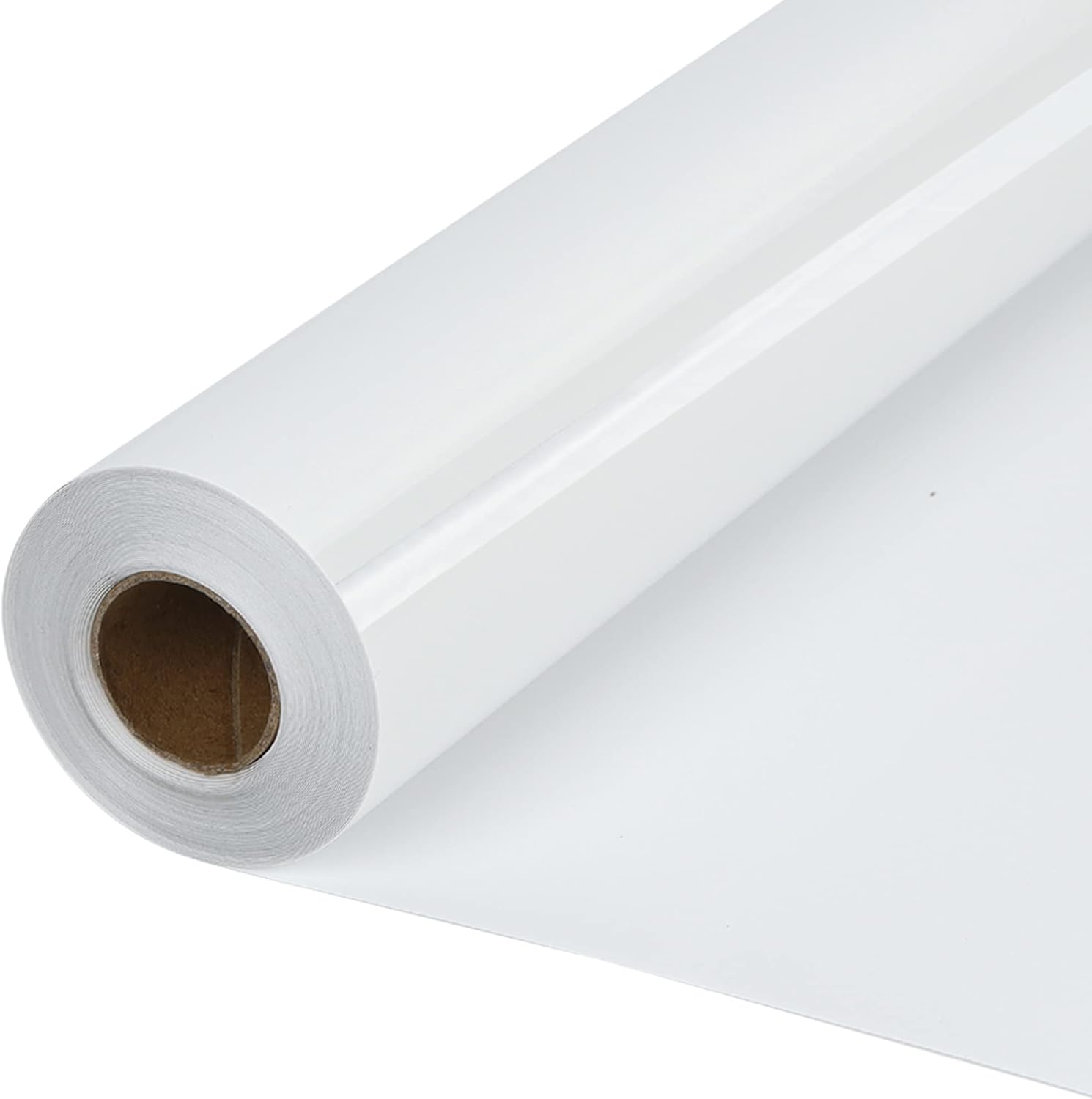 |
HTVVETUR White HTV Iron on Vinyl 12Inch | Made from high-grade PU material that is strong, durable, soft, and vibrant. Sticky backing makes the weeding process quick and easy, saving time on detailed designs. Extended roll length ideal for large projects, reducing waste and maximizing cost efficiency. |
Check Price |
What to Check Before Cutting the First Number
Read the fiber label and inspect the existing decoration
Start by identifying polyester, nylon, cotton blends, elastane, spandex, or any other fibers listed on the care label. Do not assume two jerseys from different teams are made from the same fabric because both feel smooth. Coatings, printed finishes, mesh structures, and stretch content can change heat response dramatically.
Also inspect existing sponsor graphics, badges, reflective strips, printed logos, and numbers. Those elements may have been applied using a completely different process and may not tolerate being placed under a hot platen again. Position the new design so the press can contact only the intended area whenever possible.
If the label is missing, take the conservative route. Test a hidden area at the lowest appropriate setting supported by the vinyl instructions and increase only when needed. A destroyed test spot is far cheaper than a visible platen mark across the back of a finished jersey.
Match roll size to the actual layout
Large jersey graphics consume material differently from small craft logos. A 12-inch-wide roll is convenient because many desktop cutters and mats are built around that width, but length becomes important once you are producing repeated names or two-digit numbers.
The source list ranges from a short 12-by-24-inch Cricut roll to much longer white rolls and a multi-color bundle made of separate three-foot rolls. A short roll can be ideal for one or two jerseys because storage is simple and waste stays low. A long roll makes more sense when several players need the same color and you want consistent material across the whole set.
Before buying based on length alone, lay out the design digitally. A 10-inch digit may still fit comfortably on a 12-inch-wide roll, but a long surname can consume surprising length once spacing and test cuts are included.
Treat manufacturer heat settings as product-specific
Heat-transfer vinyl is not one universal material with one universal press setting. Adhesives, carrier films, thickness, and peel behavior vary. Current listings for RENLITONG and HTVVETUR both point to application around the low 300-degree Fahrenheit range, while Cricut directs users to its Heat Guide because the recommended setting depends on the base material and press type.
Never copy the temperature from one brand and assume it applies to the others. Keep the package instructions or current maker guidance beside the press. If the roll has been stored for a long time or the packaging has changed, check the latest instructions before starting a large batch.
Pressure matters just as much. A home iron, handheld craft press, clamshell press, and swing-away press can all deliver different pressure patterns even when the temperature is identical.
Decide how much stretch the graphic needs
Gently stretch the jersey across the area where the design will sit. A loose basketball-style mesh top may barely extend across the back, while a fitted training jersey can stretch substantially. The design needs to survive that movement without turning into a rigid panel.
Some of the source-listed materials are currently marketed for athletic mesh or lycra/spandex, while others are described more generally for apparel. Use those claims as a starting point, not as permission to skip testing. Apply a small sample, let it cool, then flex the fabric gently and see whether the transfer moves cleanly with the material.
The larger the design, the stricter this test should be. A small logo can succeed on a film that feels too stiff for a full back number.
Plan color and opacity before committing to white vinyl
White is common for names and numbers because it contrasts strongly with dark jerseys. It also makes dye migration easy to see. A transfer can look opaque the moment it is pressed and still pick up underlying sublimation dye later.
Test white material on the exact garment color before cutting a full team set. Check the sample again after it has cooled. On a non-sublimated dark jersey, the more basic question is opacity: does the film look truly white, or does the garment color visually influence it?
Black vinyl creates fewer visible dye-migration problems, but heat sensitivity still matters. A black design on a pale polyester jersey can leave a press mark around the graphic even if the film itself looks fine.
Think about weeding before you choose an intricate font
Jersey names are usually easier to weed than delicate craft lettering because block fonts use broad strokes and large counters. Sponsor marks, small initials, narrow outlines, and script can be less forgiving. A tacky carrier can help small pieces stay positioned, but excessive stick can make delicate shapes harder to release cleanly.
Always make a test cut. Blade wear, cutting pressure, mat condition, and material thickness all affect the result. A one-inch test shape can reveal whether the cutter is barely scoring the vinyl or cutting too deeply into the carrier before you waste a full section of a long roll.
Do not assume a “washable” claim fixes poor application
Several current listings emphasize wash durability, and Cricut publishes a specific care routine for Everyday Iron-On. Those claims assume correct application. A transfer with weak edge pressure, a contaminated fabric surface, or the wrong peel timing can fail early regardless of what the package says.
The practical approach is to treat care instructions as part of the installation. Wait the recommended time before the first wash, turn the garment inside out when instructed, avoid bleach where prohibited, and do not directly iron the decorated face unless the maker allows it.
RENLITONG White HTV Iron on Vinyl 12Inch – A Manageable White Roll for Jersey Names and Numbers
The source-linked RENLITONG product is the white variant under ASIN B08BWQDPT2. Current matching listings identify it as a 12-inch-wide roll commonly sold in a 10-foot length. The listing describes the film as polyurethane-based, thin and soft, with a pressure- and temperature-sensitive adhesive designed for cut-and-weed heat-transfer work.
For jersey projects, the main attraction is simple: white is one of the most common colors for player names, back numbers, and small logos, and a 12-inch width fits the layout of many desktop cutting machines. Ten feet is enough material to make more than a single practice design without turning the purchase into a large production roll.
The current product information gives a heat-press reference of about 305°F/150°C for roughly 10 to 15 seconds. That is a product instruction, not a promise that every jersey will tolerate it. Test the garment first, especially if the jersey is lightweight polyester or sublimated.
What the film construction means in practice
A thin polyurethane-style HTV is useful for bold lettering because it can create a smooth surface without the obvious texture of glitter or flock. The listing also describes a sticky backing intended to help during weeding. That can be valuable on names with small counters inside letters such as A, B, D, O, P, and R because the cut pieces need to stay aligned on the carrier until pressing.
White film is also unforgiving in one important way: it makes underlying color problems visible. On a dark non-sublimated jersey, the question is whether the film has enough visual coverage. On a sublimated jersey, the separate concern is whether dye migrates into the transfer after heat is applied. The listing does not identify this product as a dedicated dye blocker, so a white test letter is essential on strongly colored sublimated uniforms.
Where it fits best on jerseys
This RENLITONG roll makes the most sense for straightforward white block names, medium-to-large numbers, and simple logos on jerseys that have already passed a heat test. The 10-foot format gives a hobby crafter more planning freedom than a single short sheet while remaining easier to store than very long shop rolls.
It is less convincing for a highly elastic compression-style jersey if you need exceptional stretch recovery. The listing describes the material as soft, but “soft” and “high-stretch activewear film” are not the same claim. Test a finished sample by gently stretching the fabric after the transfer has cooled.
- Useful 12-inch working width. The roll aligns naturally with common desktop-cutter workflows and gives enough width for many jersey numbers without joining pieces.
- White is practical for high-contrast team graphics. Names and numbers can stand out clearly on dark jerseys, provided opacity and dye migration are checked on the exact garment.
- Current matching listings identify a 10-foot roll. That gives room for test cuts, alignment errors, and several finished graphics without committing to a bulk-length roll.
- The product information describes a thin polyurethane construction. A thinner smooth film can feel less intrusive on lightweight fabric than a heavy decorative surface.
- The sticky carrier is intended to support clean weeding. That helps when jersey lettering includes small internal shapes that need to remain aligned before pressing.
- The listed press temperature may be too aggressive for some jerseys. A heat-sensitive polyester garment can show shine or platen marks even if the vinyl itself is being applied correctly.
- The product is not specifically documented as a high-stretch athletic film. Large graphics on fitted jerseys should be tested for flex and recovery before a full set is produced.
Who It’s Best For
This is a practical choice for a crafter making white names and numbers on standard polyester jerseys, fan jerseys, warm-up tops, or other garments with modest stretch. It also suits someone who wants more working length than a short sheet without buying a very large roll.
Not Ideal For
It is not the first choice for strongly sublimated uniforms where dye migration has already appeared in testing, or for very elastic jerseys that demand a transfer specifically engineered around aggressive stretch and rebound.
VinylRus Heat Transfer Vinyl 12 x 20ft – A Longer White Roll for Repeated Team Graphics
The source-linked VinylRus product resolves to the white 12-inch by 20-foot roll under ASIN B09BKSKX74. The current listing describes it as a cuttable heat-transfer vinyl for garment decoration, compatible with cotton, polyester, and cotton blends. It also states that the backing is sensitive to pressure and heat and recommends waiting 24 hours before the first wash.
Twenty feet changes how you plan a jersey project. Instead of treating every large number as a precious use of a short sheet, you have enough continuous length to arrange several names or digits with less concern about running out halfway through the job. For a small team, reunion group, school project, or repeated fan-jersey design, that continuity can be more useful than a large color assortment.
The listing also says the roll works with common cutter machines and fits 12-by-12-inch and 12-by-24-inch cutting-mat workflows. The width is standard; the real advantage is length.
What the longer roll changes in a home workshop
Long rolls are efficient only if the material is stored well. A 20-foot roll that becomes crushed, dusty, or loosely unwound can be more frustrating than several short sheets. Keep it rolled evenly with the carrier protected, and cut off only the length needed for the current design.
For jersey numbers, the extra length makes test cuts easier to justify. You can test blade depth, weed a small shape, and apply a trial patch without feeling as though the practice piece used a large percentage of the entire package. That is useful because jerseys are one of the places where test application matters most.
The current VinylRus description includes an extension-rate claim, but I would not use that number as a substitute for testing your actual jersey. The practical question is whether the finished graphic flexes cleanly with the garment, not what the unused roll does in your hands.
Where it fits best on jerseys
VinylRus is a sensible source-list option for a crafter producing repeated white graphics on polyester jerseys that are not extremely heat-sensitive. The long roll also works well for oversized names, two-digit numbers, and projects where several jerseys need the same white film.
- Twenty feet of continuous material supports repeated layouts. You can nest multiple names and numbers on one roll instead of working around short sheet boundaries.
- The current listing includes polyester among the supported fabrics. That makes the product relevant to many standard sports jerseys once the garment itself passes a heat test.
- The 12-inch width suits common desktop cutters and mats. It works naturally with widely used 12-inch cutting workflows and keeps large jersey graphics easy to position digitally.
- The listing emphasizes easy cutting and weeding. Clean weeding is useful for long names because a distorted letter can ruin the alignment of an otherwise well-spaced design.
- A 24-hour wait before washing is clearly stated. That gives you a straightforward care instruction to pass along when jerseys are being made for other people.
- Polyester compatibility does not guarantee dye blocking. Light transfers on sublimated jerseys still need a separate migration test after pressing and cooling.
- The listing’s broad use claims should not replace stretch testing. A fitted jersey can demand more recovery than a general-purpose garment transfer provides comfortably.
It is less attractive if you only need one small chest logo. In that situation, the extra length becomes storage rather than immediate value. It also does not carry a verified dye-blocking claim, so the same sublimation test applies as with the other white products here.
Who It’s Best For
Choose this option if the project involves several white names or numbers and you want a single continuous roll that can cover repeated designs. It is particularly useful for standard polyester jerseys with limited-to-moderate stretch and for crafters who already know they use white HTV often.
Not Ideal For
It is less efficient for a single tiny design, for a garment that reacts badly to normal HTV heat, or for sublimated uniforms where a white test patch shows color migration.
Black Cricut Everyday Iron-On Vinyl 12X24 – A Short Roll With a Highly Documented Workflow
Cricut’s current Everyday Iron-On page lists the black roll at 12 inches by 24 inches. The company says the material cuts and weeds easily, can be layered in compatible designs, is optimized for Cricut cutting machines and heat presses, and is designed to last through more than 30 washes when applied and cared for correctly. Cricut also tells users to allow 24 hours after application before washing, then wash and tumble dry the garment inside out and avoid bleach.
This is the shortest material format among the five source products, but that is not automatically a disadvantage. If you are making one jersey, two sleeve marks, or a small set of black numbers, a compact roll is easy to store and creates less leftover material. It also gives Cricut users a particularly well-documented path from Design Space cut settings to the company’s current heat instructions.
The important limitation is that Everyday Iron-On is a broad apparel and craft material. The current product page does not position this black 12-by-24-inch roll specifically as a dedicated high-stretch jersey film or a dye-blocking solution. That makes fabric testing just as important here as it is with the private-label rolls.
Why documentation matters as much as roll size
Cricut’s current instructions are unusually explicit about preparation. The company recommends pre-washing fabric without fabric softener, performing a test cut, performing a test application in an inconspicuous area, mirroring the design before cutting, and using the current Heat Guide for the exact base material and press combination.
That reduces guesswork. Rather than using a single temperature copied from a generic tutorial, you can check the current guidance for the specific setup. This is especially helpful on polyester because the garment’s tolerance may be narrower than the adhesive’s tolerance.
Black also behaves differently visually from white. Dye migration into a black transfer is less obvious, but a pale jersey can still show shine or a platen outline if heat and pressure are excessive. Dark film is not a shield against fabric damage.
Where it fits best on jerseys
Cricut Everyday Iron-On is a good fit for one-off black names, small numbers, logos, and fan-jersey decoration where the garment has modest stretch and the crafter values a clearly documented cutting and pressing workflow. It is particularly convenient if the project is already being designed and cut inside the Cricut ecosystem.
For a full team order with large black numbers, the 24-inch length becomes the obvious restriction. You may need several rolls, which adds more material changes and increases the chance of mixing lots.
- The current roll size is exactly 12 by 24 inches. That is straightforward for one-off work and easy to store without dedicating space to a long bulk roll.
- Cricut publishes detailed preparation and care guidance. Test cuts, test applications, mirroring, heat-guide use, and a 24-hour wash wait are all clearly documented.
- The material is optimized for Cricut cutting machines. Automatic material settings can reduce setup friction when names and numbers are being created in Design Space.
- The carrier supports clean cutting and weeding. Large block letters are already manageable, and a predictable film helps keep internal letter shapes in place during preparation.
- The black finish is useful on pale jerseys. It gives strong contrast without relying on a special textured or reflective surface.
- Everyday Iron-On is not documented as a dedicated dye-blocking film. It should not be assumed to solve migration problems on sublimated polyester.
- The current product page does not present it as a specialized high-stretch jersey film. Very elastic uniforms need a finished stretch test rather than a simple adhesion check.
Who It’s Best For
This roll suits Cricut users making one or a few black jersey graphics and anyone who values strong manufacturer documentation more than bulk material length. It is also a clean option for pale fan jerseys, warm-up shirts, and standard polyester tops with modest movement.
Not Ideal For
It is less practical for a large team set because of the short roll length, and it should not be treated as the automatic answer for highly elastic or dye-migration-prone uniforms.
HTVRONT HTV Heat Transfer Vinyl Bundle – Multiple Colors for Mixed Jersey Projects
The source-linked HTVRONT bundle resolves to ASIN B09XK4PGB2. The current listing describes a 20-color set in which each roll measures 12 inches by 3 feet. That is a very different buying format from a single long white roll. Instead of maximizing one color, it gives you multiple colors for names, numbers, accents, and small logos.
The listing states that the material is suitable for fabrics that include athletic mesh, polyester, textiles, and lycra/spandex. HTVRONT’s current roll guidance also places its standard HTV around 305-320°F for roughly 10-15 seconds, with the carrier removed after cooling. Because this is a multi-roll bundle and HTVRONT sells several HTV constructions, use the instructions included with the exact rolls rather than assuming every HTVRONT product shares identical settings.
For jersey work, the assortment is most useful when the designs genuinely need color variety. A family tournament, school spirit project, fan jerseys, or a mixed set of logos can use several shades. A team that needs twenty identical white numbers has the opposite requirement and benefits more from continuous material in one color.
Why the multi-color format changes planning
Three feet per color is generous for accents but not unlimited for large repeated numbers. Before choosing a shade for a team-wide design, calculate the full job. You may discover that the bundle has plenty of total material yet not enough of the one color required for every jersey.
On the other hand, separate rolls reduce waste for multicolor designs because you do not need to buy a long full-size roll of every accent shade. This is practical for hobby use, gifts, costume jerseys, and mixed-number projects where color variety matters more than production consistency.
HTVRONT’s listing explicitly mentions athletic mesh and lycra/spandex, which is more jersey-relevant wording than a generic “T-shirt” claim. Still, the safest approach is to test both adhesion and stretch recovery. A material can be sold for stretch fabrics and still feel different on a thin, fitted jersey than on a heavier blended garment.
Where it fits best on jerseys
This bundle is best used for mixed-color projects, small team accents, sleeve graphics, short names, youth jerseys, or custom fan apparel. It is also useful when you want to experiment with several colors before committing to long rolls later.
It is less efficient for a large uniform batch in one color. Multiple short rolls can also create more storage pieces and more opportunities to misplace an instruction card or mix material variants if you own other HTVRONT products.
- Twenty colors create genuine design flexibility. A single bundle can cover contrasting names, accent stripes, initials, and small logos without buying a long roll of every shade.
- Each roll is 12 inches wide. That width fits common desktop cutting workflows and supports many jersey-number layouts without piecing material side by side.
- The current listing includes athletic mesh, polyester, and lycra/spandex among intended fabrics. That makes the product directly relevant to several common jersey constructions, subject to testing.
- Short separate rolls are easy to portion. You can pull only the color needed for a design instead of unrolling a large bulk roll across the worktable.
- HTVRONT publishes clear general cutting and pressing guidance for its standard HTV line. Mirroring, glossy-side-down cutting, test cuts, pressing, cooling, and peeling are all part of the documented workflow.
- Different HTVRONT lines can use different instructions. Owning multiple rolls from the brand makes it important to keep the bundle’s exact packaging and settings with the material.
- The bundle is not documented as a dedicated dye-blocking system. Light colors on sublimated jerseys still need migration testing before production.
Who It’s Best For
This is the most flexible source-list option for a crafter making several different jersey designs, mixed-color fan apparel, or small runs that need more than one shade. It also suits someone who wants to test color combinations before buying longer rolls.
Not Ideal For
It is not the efficient choice for a full team that needs the same large name and number color on every garment. It also does not remove the need for careful polyester and sublimation testing.
HTVVETUR White HTV Iron on Vinyl 12Inch – A Long White Roll for High-Volume Cutting
The source-linked HTVVETUR ASIN B0B3TKV5ZF currently resolves to the white 35-foot variant in the brand’s 12-inch HTV family. The active listing describes a polyurethane-based glossy heat-transfer vinyl with a sticky backing and a thin, soft construction. It gives a home-iron range of about 302-320°F for 10-15 seconds and a heat-press reference of 305°F with medium pressure for 10-15 seconds.
Thirty-five feet is a serious amount of white material for a home crafter. It becomes attractive when you are producing repeated back numbers, names, school-team shirts, league gifts, or multiple jersey sizes from the same design. The long roll also lets you keep one material lot across many garments, which can help color and surface appearance remain consistent.
The trade-off is commitment. A long roll takes storage space, and a poor match with the jersey leaves you with a lot of material you may need to use elsewhere. Do a heat and adhesion test before cutting a batch, not after the full team layout has already been weeded.
What the 35-foot format means for batch work
Long rolls make nesting and workflow more efficient. You can line up repeated names and numbers in the cutter software, send longer sections to a compatible machine, and reduce the number of times you need to load a fresh sheet. This can be especially useful for two-digit numbers where material use adds up quickly.
A large roll also makes test cuts less psychologically expensive. It is easier to sacrifice a few inches to test blade pressure, jersey heat tolerance, and peel behavior when that test is a tiny fraction of the total roll.
The current instructions mention both hot and cold peeling language after a brief cooling period, so keep the exact package guidance with the roll. Carrier behavior can be confusing if you own several brands at once. The safest habit is to label each opened roll with its application notes rather than relying on memory.
Where it fits best on jerseys
HTVVETUR makes sense for repeated white jersey graphics, especially when the project scale is large enough to justify a 35-foot roll. Its current listing gives detailed pressing guidance and describes a soft polyurethane construction, which is useful information for planning.
As with the other white materials, the main caution is sublimation. The listing does not make this product a dedicated dye blocker. A white transfer over a dark sublimated uniform should be tested and allowed to cool before the rest of the team set is cut.
- The current source-linked variant provides 35 feet of white HTV. That is the strongest material-volume advantage among the five source products for repeated names and numbers.
- The 12-inch width suits common cutter workflows. Large numbers can be laid out efficiently without moving to unusually wide equipment.
- The current listing describes a thin polyurethane film. A smoother, lighter construction is preferable to unnecessary bulk on lightweight sportswear.
- Application guidance is clearly stated. The listing provides both home-iron and heat-press ranges, which reduces the temptation to copy settings from another brand.
- The long roll supports consistent batch work. A team set can be cut from the same material family rather than mixing several short packs midway through production.
- White remains vulnerable to visible dye migration. Sublimated polyester can discolor the transfer if the garment dye becomes mobile under heat.
- The listed temperature still has to be safe for the jersey. A garment can show shine or distortion before the adhesive reaches its ideal application behavior, so testing is essential.
Who It’s Best For
This is the strongest fit for someone producing many white jersey names and numbers and who wants one long roll rather than repeated small purchases. It is especially practical for school, club, or family projects where several garments use the same color.
Not Ideal For
It is unnecessary for one small graphic, risky to buy in bulk before confirming garment compatibility, and not a substitute for a dye-blocking system when a sublimated jersey fails a white test patch.
How the Five Vinyl Options Differ on Jerseys
For one or two simple jerseys
Cricut Everyday Iron-On is the easiest source-list option to justify when the project is small and black is the needed color. Its 12-by-24-inch roll is compact, and Cricut’s current instructions are detailed enough to guide cutting, testing, pressing, peeling, and washing. You are not paying for a large amount of unused material that must be stored afterward.
RENLITONG’s white roll offers more working length while staying manageable. If the project needs white rather than black, it gives room for mistakes and test pieces without jumping immediately to a very long roll.
For repeated white names and numbers
VinylRus and HTVVETUR are the two source-list products that make the most sense for repeated white graphics. VinylRus provides a verified 20-foot roll, while the source-linked HTVVETUR variant currently resolves to 35 feet. The decision is less about one being universally better and more about how much material the job will actually consume.
For a few jerseys, 20 feet may already be generous. For a larger batch, 35 feet reduces the chance of running out midway through the set. In either case, cut one test graphic and press one representative jersey before producing the full batch. A long roll only saves time if the material and garment are compatible.
For projects that need several colors
HTVRONT’s 20-color bundle clearly serves a different purpose. Each 12-inch by 3-foot roll gives enough material for small-to-medium graphics in that shade, but no individual color has the length of the single-color rolls. That makes the bundle better for variety than for uniform production.
A mixed set of fan jerseys, birthday jerseys, school-spirit designs, or small logos can benefit from the assortment. A single-color team order usually cannot.
For fitted or stretchy jerseys
The current HTVRONT bundle listing is the most explicit among these five about athletic mesh and lycra/spandex use. VinylRus also presents a stretch-related product description. Those statements make them reasonable materials to test first on a flexible jersey, but they still do not eliminate the need for a finished stretch check.
Apply a small design, allow it to cool completely, then stretch the jersey gently through the same direction it will move during wear. Watch both the film and its edges. If the graphic tents, wrinkles sharply, or resists the garment, a large back number will make the problem more obvious.
For sublimated polyester
Treat all five cautiously. None of the source-linked product pages gives me enough verified evidence to call the material a dedicated dye blocker. That matters because a transfer can adhere perfectly and still become tinted by reactivated garment dye.
Use a small white sample when possible because light film reveals migration clearly. Press at the product’s correct setting only after confirming the jersey can tolerate it, then inspect the sample after cooling. If color moves into the film, do not try to solve it with more heat.
For the cleanest documented workflow
Cricut provides the most structured manufacturer guidance among the five. The company tells users to pre-wash without fabric softener, test cut, test apply, mirror the design, use current heat guidance, wait 24 hours before washing, and wash inside out. That documentation is valuable for someone who wants repeatable steps more than bulk roll length.
HTVVETUR also gives unusually specific heat-press and home-iron ranges on its current listing, while HTVRONT publishes clear general cut-and-press instructions across its standard HTV line. RENLITONG and VinylRus provide usable current listing information, but I would keep their packaging close because private-label variants can change over time.
Applying Iron-On Vinyl to a Jersey Without Ruining the Fabric
1. Identify the fabric before designing around it
Read the care label and note polyester percentage, stretch fibers, mesh construction, and any warning about heat. Inspect existing logos and printed panels. If the garment is sublimated, assume dye migration is possible until a test proves otherwise.
Choose the vinyl only after this step. Then confirm that its current documentation supports the garment fiber you plan to decorate.
2. Measure the usable press area
Lay the jersey flat and identify seams, piping, zippers, collars, shoulder panels, and mesh transitions. A large design that crosses a thick seam will not receive uniform pressure unless the garment is supported carefully.
Measure from visual garment reference points rather than trusting one seam to be perfectly centered. Jerseys can shift slightly during sewing, and a mathematically centered graphic can still look crooked if the garment construction itself is asymmetrical.
3. Test the jersey’s heat tolerance
Before cutting the final design, expose a hidden area or scrap to the planned temperature and approximate pressure using the correct protective layer. Check for shine, flattening, color change, shrinkage, distortion, and visible press edges.
If the fabric changes, stop. Lowering the heat is only appropriate if the vinyl maker allows a lower application range. Do not reduce temperature arbitrarily and then compensate with excessive time.
4. Make a small test cut
Cut a one-inch shape that includes an outside edge and a small internal detail. Weed it completely. The blade should cut the colored film cleanly without slicing deeply through the clear carrier.
If the cut is poor, adjust the cutter before loading a long section of material. A blade that is slightly dull can turn a simple team name into a slow, frustrating weeding job.
5. Mirror the design before the full cut
Most cuttable HTV is cut from the adhesive side with the carrier facing down on the mat, which means text and directional graphics normally need to be mirrored. Confirm the orientation for the exact product, then mirror the design in the cutter software.
This is one of the easiest errors to prevent and one of the most expensive to discover after a large back name has been cut.
6. Weed with the carrier supported
Keep the carrier flat while removing waste material. Pull excess vinyl at a controlled angle rather than stretching the design. Large numbers are straightforward, but long narrow letters can distort if waste is ripped away aggressively.
Use a weeding tool for small counters and corners. If a letter starts to lift from the carrier, press it back into position before continuing.
7. Prepare a flat pressing zone
Thread the jersey onto the heat-press platen when possible so only one fabric layer is under the design. If seams or mesh prevent that, insert a pressing pillow or firm heat-resistant pad to raise the target area.
On open mesh, keep a barrier between the front and back. Do not let softened adhesive press through the holes and bond the garment layers together.
8. Press using the exact product instructions
Use the temperature, pressure, time, and peel method supplied for the specific vinyl. RENLITONG, VinylRus, Cricut, HTVRONT, and HTVVETUR are not interchangeable simply because they are all iron-on products.
Apply only the heat needed for a proper bond. If you are layering a compatible design, use brief tack presses for early layers only when the maker allows it, then complete the final application without repeatedly cooking the jersey.
9. Check the bond after the carrier is removed
Follow the correct hot, warm, or cool peel behavior. Once the carrier is off, inspect the edges of every letter and number. A properly bonded edge should not curl when the fabric is flexed gently after cooling.
If one small area lifts, repress only according to the product’s guidance. More heat is not automatically better, especially on polyester.
10. Let the garment rest before washing
Several of the source products specify a 24-hour wait before the first wash, including Cricut and VinylRus. Follow the exact care period for the material you used. Then wash the jersey in the manner recommended by the vinyl maker.
If the jersey is a gift or team item, include a short care note. The person wearing it should not have to guess whether bleach, high dryer heat, or direct ironing is safe for the decoration.
Keeping Jersey Graphics Smooth Through Washing and Wear
Wait before the first wash
Heat activates the adhesive, but several makers still require a waiting period before washing. Respect that interval even if the design feels firmly attached after cooling. The bond is part of the product system, and rushing the first wash can create edge failure that would otherwise have been avoided.
If a jersey has to be worn the same day it is decorated, that is usually fine as long as the transfer has cooled and the maker does not say otherwise. The important point is to delay washing for the required time.
Turn the garment inside out when the maker recommends it
Inside-out washing reduces direct rubbing against the transfer face. This matters on jerseys because athletic garments are often washed frequently and can rub against zippers, hooks, or rougher fabrics in a mixed load.
Do not overload the washer. A tightly packed drum can create more friction than a normal load, especially when heavy wet garments press against lightweight jersey fabric.
Keep direct heat away from the finished face
If the jersey needs ironing later, follow the vinyl maker’s directions. Cricut specifically says to iron only from the backside when ironing is necessary. Direct heat on the face of a transfer can soften, gloss, distort, or lift the material.
The same caution applies to tumble drying. Use only the drying conditions permitted by the transfer instructions and the jersey care label.
Store unused film clean and protected
Keep rolls dry, dust-free, and away from excessive heat and direct sunlight. Return long rolls to a neat coil instead of allowing them to flatten under heavy supplies. Protect the carrier face from scratches, and label rolls if the original packaging is discarded.
A simple note with the brand, color, size, and application guidance can prevent a later mix-up. This is especially useful if several white HTV rolls look nearly identical once they are outside their packaging.
Problems That Usually Start at the Press
Using one temperature for every brand
A familiar press setting becomes a habit quickly. That is dangerous on jerseys because the garment is heat-sensitive and the films have different instructions. A temperature that works well with one roll can be unnecessary or incorrect for another.
Keep product settings beside the press. Record successful combinations of jersey fabric and vinyl after testing instead of relying on memory.
Treating all polyester jerseys as identical
A thick fan jersey, thin soccer top, stretch training shirt, and sublimated mesh uniform can all contain polyester and still respond very differently to heat. The fiber name alone does not tell you how a particular garment will press.
Test each garment type before production. If several jerseys are from the same manufacturing batch, one representative test is useful, but inspect individual garments for unusual panels or existing decoration.
Ignoring dye migration because the transfer looks fine immediately
A white number can look clean as soon as the carrier is removed and then develop a tint after cooling. That delay is why a rushed test is incomplete.
Allow the sample to cool and inspect it again before cutting the rest of the white material. If you see migration, stop rather than increasing temperature or pressure.
Pressing across a seam without support
Raised stitching keeps the platen from contacting nearby fabric evenly. That can create a weakly bonded strip along one edge of a name or number while the rest appears secure.
Lift the design area with a pillow or pad, or use a smaller platen that fits between seams. Even pressure often solves an edge problem more effectively than more heat.
Cutting the full team set before the first garment test
Long rolls make it easy to queue every jersey number at once. Resist that efficiency until one representative design has been cut, weeded, positioned, pressed, cooled, and inspected.
A single failed test wastes inches. A failed batch can waste yards.
Making every layer a full press
Multi-color graphics can expose the jersey to heat repeatedly. The first layer may receive the equivalent of several full application cycles, and some films can shrink slightly with repeated heat.
Use side-by-side color placement where possible. If the product supports layering, follow its exact multi-layer guidance and keep early presses as short as permitted.
Stretching the jersey while the adhesive is still hot
Freshly heated film is not the time to test maximum flexibility. Let the transfer cool according to its peel instructions and settle before stretching the garment.
Once cool, test gently. If the film visibly resists the fabric, reconsider the design size or material before applying it to more jerseys.
Washing too soon
The design can feel solid and still be inside the maker’s no-wash window. Waiting the specified period is a simple step, but it is easy to forget when a jersey is made for an event or gift.
Add the wash date or time to the care note. That removes uncertainty for the wearer.
Heat, Polyester, and Pressing Safety
Protect hands and keep the press area clear
Heat presses and household irons can cause serious burns. Keep fingers out of the closing path, use the equipment on a stable surface, and place hot carriers or protective sheets where they cannot be touched accidentally. Do not reach under a press while it is moving or rely on a garment to protect your hand from the platen.
Long jersey sleeves, loose cords, and tools can also drift into the press area. Keep only the items needed for the current step on the work surface.
Stop if the garment reacts badly
If polyester begins to melt, shrink, become glossy, distort, or produce an unusual odor, stop applying heat. Do not increase pressure or extend the press time to force the adhesive to bond.
Let the garment cool and reassess. The correct response to heat damage is a different application approach, not a hotter second attempt.
Use ventilation and follow material instructions
Work in a ventilated area and follow safety guidance from both the heat equipment maker and the vinyl maker. Keep unknown coatings, plastic badges, reflective trims, and existing transfers away from direct heat unless their compatibility is known.
If children are involved in design or weeding, keep the heat-application step under responsible adult control. Weeding tools are sharp, and a press remains hot well after the graphic is finished.
Frequently Asked Questions About Iron-On Vinyl for Jerseys
Can I use regular iron-on vinyl on a polyester jersey?
Often yes, if the vinyl maker lists polyester as a supported fabric and the jersey passes a heat test. RENLITONG, VinylRus, HTVRONT, and the other source products all need to be judged against the exact garment rather than against polyester in the abstract. Heat sensitivity, mesh, stretch, coatings, and sublimation can change the result.
Which of these products makes the most sense for many white jersey numbers?
The longer single-color rolls are the natural fits. The source-linked HTVVETUR white variant currently resolves to 35 feet, while VinylRus is 20 feet and the matching RENLITONG white listing is commonly documented at 10 feet. Choose based on the amount of material you actually need after laying out the names and numbers digitally.
Which source product is easiest for a small black design?
Black Cricut Everyday Iron-On is convenient for a small job because the current roll is 12 by 24 inches and Cricut publishes detailed cutting, pressing, and care guidance. Its short length is a drawback for production but can be an advantage when you only need one or two graphics.
Can I use HTV on a mesh jersey?
Yes, but mesh needs careful pressure support. Insert a pressing pillow or firm heat-resistant pad so the decoration area is flat and separated from the opposite garment layer. Test the material first because open mesh can also be made from heat-sensitive polyester.
Why did my white number turn pink or blue after pressing?
The likely cause is dye migration from sublimated polyester. Heat can reactivate garment dye, allowing it to move into a light transfer. More heat can make the problem worse, so stop and use a transfer approach specifically intended to control migration rather than repeatedly pressing the same standard film.
Do I need a heat press, or can I use a household iron?
Some of these products provide home-iron instructions, and Cricut also documents household-iron use for Everyday Iron-On. A heat press is usually easier for large jersey numbers because it delivers more uniform temperature and pressure over a broad area. With an iron, use a firm flat surface and press rather than sliding across the design.
How long should I wait before washing the jersey?
Follow the exact product instructions. Cricut and VinylRus both currently specify waiting 24 hours before the first wash, and other brands may provide similar or different guidance. Keep the packaging until the project is complete so the care routine does not become guesswork.
Can I layer several colors of HTV on a jersey?
Only if the exact material supports layering and the jersey can tolerate the total heat exposure. Multiple full press cycles can overheat polyester and add noticeable stiffness. Use side-by-side colors or negative space where possible, and follow the maker’s layering instructions when stacked film is necessary.
Choose Vinyl That Matches the Jersey, Not Just the Design
The best iron-on vinyl for jerseys is the one that fits the garment’s heat tolerance, stretch, mesh structure, color process, and design size before roll length or color becomes the deciding factor. A long white roll can be efficient for repeated numbers, a compact black roll can be ideal for one-off work, and a multi-color bundle can make more sense for mixed designs. None of those advantages matters if the jersey is scorched, the transfer resists movement, or sublimation dye bleeds into a light graphic.
Among these five source products, RENLITONG offers a manageable white-roll format, VinylRus provides more continuous white material, Cricut Everyday Iron-On offers the most tightly documented workflow, HTVRONT supplies broad color variety, and the source-linked HTVVETUR variant provides the largest amount of white material. Those are practical differences you can use without pretending that one film is right for every uniform.
Test the jersey first, make a small cut, follow the exact application instructions, and inspect the transfer after it cools. Then scale the process to the rest of the project. That sequence takes a little longer at the beginning, but it is far more efficient than discovering a heat mark or dye-migration problem after every jersey has already been pressed.