Cotton is forgiving enough to make fabric painting approachable, but it is also absorbent enough to expose a weak paint choice very quickly. A thin formula can disappear into the fibers, a heavy one can leave a board-like patch, and a design that looks finished on the worktable can still crack or fade if the paint was never cured the way its maker intended. The paint itself matters, but preparation, layer thickness, and curing matter just as much.
For clothing and washable home textiles, I would start by deciding what the finished surface should feel like. A soft brush-on paint suits shirts, tote bags, pillow covers, and larger color blocks. Dimensional or puff paint is better for lettering, outlines, dots, and raised decoration. A large color set is useful only if its application style fits the project; thirty squeeze bottles do not replace eight dependable brush-on colors when you need a smooth painted panel.
Cotton is one of the friendliest fabrics for this work because it accepts water-based fabric paints well, and major fabric-paint makers routinely recommend cotton for their products.
Still, do not assume that every paint in a fabric-paint set uses the same curing method. Some products are designed to air-cure, while others are meant to be heat-set. The safest habit is to follow the instructions on the exact bottle you are using, especially before the first wash.
Why Cotton Responds So Well to Fabric Paint
Absorbent fibers help paint grip, but they can also drink up color
Cotton fibers have a naturally absorbent surface, which is one reason fabric paint can bond so effectively to a cotton T-shirt, tote, apron, or cushion cover. The paint has more opportunity to settle into the weave than it would on a very slick synthetic surface. That usually makes cotton a comfortable material for beginners because the paint does not simply sit on top and skate around under the brush.
The same absorbency can work against you when the paint is very thin or the fabric is loosely woven. A first coat may look less opaque than expected because some color settles into the fibers instead of remaining at the surface. That is why two light coats are often more controllable than one overloaded coat. The first coat establishes the shape; the second strengthens color without making the fabric unnecessarily stiff.
Flat paint and dimensional paint create very different results
Brush-on fabric paint is usually the better fit when you want a painted illustration, stencil, filled lettering, shaded motif, or broad patch of color. It spreads across the fabric and can be feathered, blended, stippled, stamped, or applied through a stencil. On clothing, the best brush-on formulas are designed to remain more flexible than ordinary craft acrylic after drying.
Dimensional paint behaves differently. It is delivered through a precision tip and is meant to build a raised line or dot. ARTEZA, Novarbee, and KINGART all appear here because their squeeze-bottle formats can add texture and outline work to cotton, but they are not direct substitutes for a soft flat paint. If your design needs a smooth six-inch block of color, choose a brush-on formula rather than trying to spread a puff-paint bottle across the fabric.
Opacity matters more on dark cotton
White cotton is easy because almost every color has a bright base beneath it. Black, navy, forest green, and deep red cotton are less forgiving. Semi-transparent or lightly pigmented paints can look muted unless the formula is specifically built to show on dark fabric or you build the color gradually.
Tulip states that its Rainbow Soft Fabric Paint works on both light and dark fabrics, while the colozoo set is marketed for strong coverage on dark as well as light textile surfaces. KINGART includes light, metallic, fluorescent, and specialty colors, but its 3D format is still better for raised accents than for flattening a large dark area. For dark cotton, test a single stroke on a hidden scrap before committing to the whole design.
Flexibility determines whether clothing still feels wearable
A cotton canvas tote can tolerate more surface stiffness than a T-shirt. A denim jacket can handle thicker details that might feel awkward across the chest of a soft jersey-knit shirt. This is why “permanent” is not the only word that matters on a paint label. A permanent paint that leaves a hard plate on the fabric may be durable but unpleasant to wear.
Tulip and FolkArt are especially relevant for clothing because both emphasize a flexible or soft finish. That does not mean thick application is harmless. Any fabric paint can become noticeably stiffer when too much is loaded into a small area. Keep paint layers thin enough that the fabric can still bend naturally unless you are intentionally building dimensional decoration.
Curing is part of the paint system, not an optional extra
Fabric paint can be dry to the touch without being ready for laundry. Tulip’s project guidance commonly gives the paint 72 hours before washing. FolkArt project instructions direct users to heat-set according to the bottle. KINGART also directs users to let the design dry and then iron it to set the paint. The Colorful set is sold as an air-curing formula that does not require heat, while colozoo says ironing improves water resistance.
Those differences matter. Do not copy one brand’s curing routine onto another brand’s paint. If a bottle says air cure, give it the full cure time. If it says heat set, use the temperature and method specified for that formula and make sure the cotton item itself can safely tolerate the required heat.
| Product Image | Product Name | Features | Price |
|---|---|---|---|
 |
ARTEZA Fabric Paint, Set of 30 | Works on textiles, canvas, wood, ceramics, and more for multi-surface creativity. Paint dries flexible and resists cracking, peeling, or fading, even after wear and washing. Designed by artists to support easy outlining, filling, and dimensional effects. Perfect for customizing t-shirts, tote bags, shoes, and accessories. |
Check Price |
 |
Tulip Soft Fabric Paint | Includes 10 one-ounce bottles in a rainbow palette. Perfect for jeans, t-shirts, and a variety of textiles, ensuring bold visibility on any background. Designs remain intact after 72 hours, withstanding repeated washes without fading. Dries in 4 hours and works well for stenciling, stamping, and freehand painting. |
Check Price |
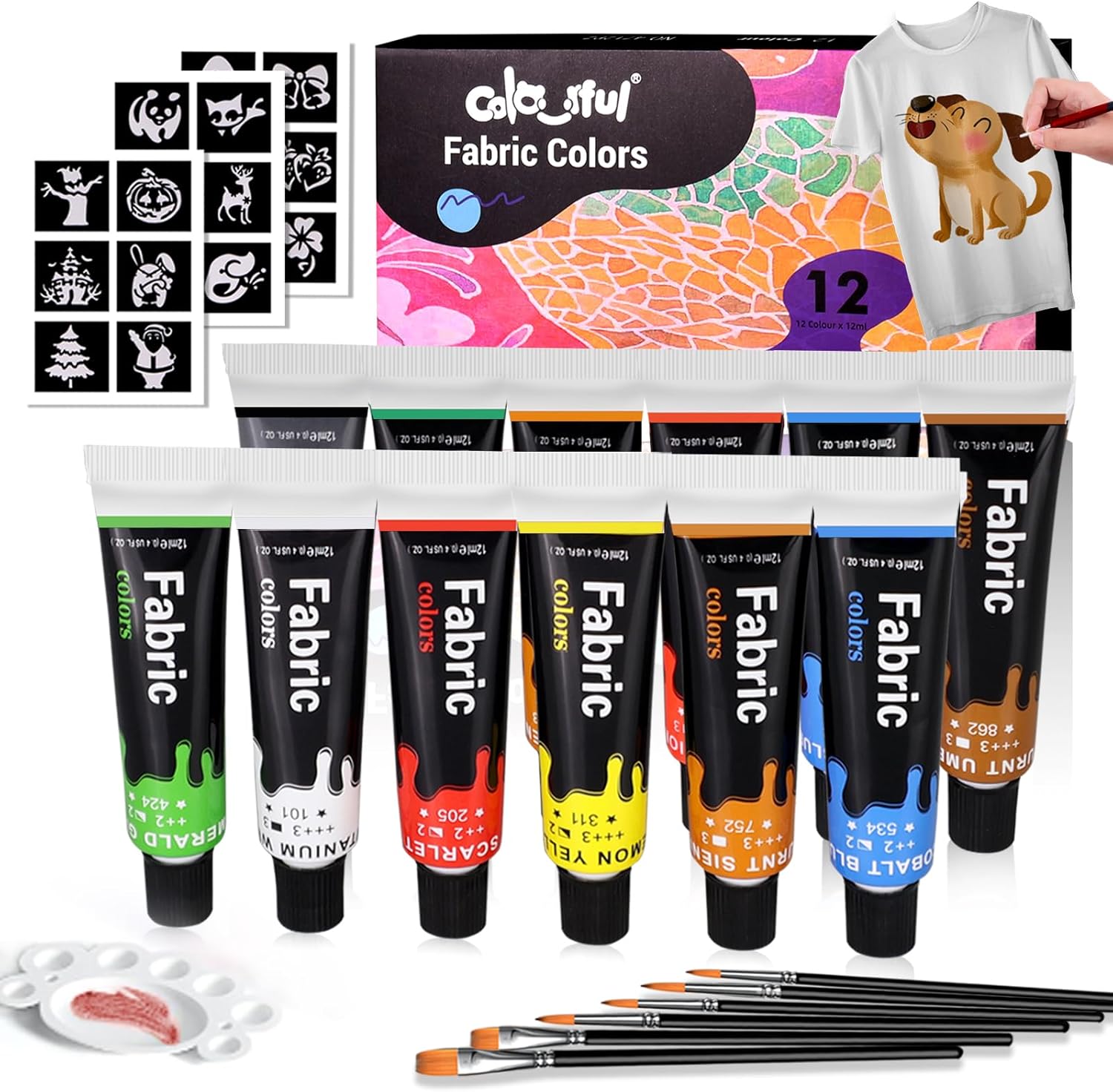 |
Colorful Fabric Paint Set for Clothes 12 Colors | Includes 12 highly pigmented acrylic fabric paints with creamy consistency for smooth blending. Works on fabrics, textiles, shoes, paper, wood, and walls, perfect for both fine details and large areas Paint dries fast and stays bright after curing; additional coats can be layered for desired effects. Once dry, designs become waterproof and withstand repeated washes without fading or peeling. |
Check Price |
 |
FolkArt Brush on Fabric Acrylic Paint Beginner Set | Once dry, paint is permanent on textiles and remains flexible without cracking. Painted fabrics can be safely washed in cold water, ensuring long-lasting designs. Glides easily onto cotton, linen, denim, polyester, and more for effortless creativity. Washes away with soap and water while wet, making crafting stress-free. |
Check Price |
 |
Novarbee- Fabric Paint, 12 Colors Puff Paint | Includes 20 bright puff paints, perfect for clothes, doodling, and custom DIY designs. Easy-squeeze design ensures smooth application; unclog easily with a paper clip if needed. Dries fast to a flexible finish that resists cracking, peeling, or fading. Permanent results withstand extensive wear and repeated washing. |
Check Price |
 |
colozoo Textile Paint Machine Washable 14x20ml | Strong opacity works on both dark and light fabrics, delivering bold, vibrant results. Machine washable and even more water-resistant when heat-set with an iron. Suitable for cotton, canvas, denim, polyester, and more ideal for T-shirts, jeans, jackets, shoes, and accessories. |
Check Price |
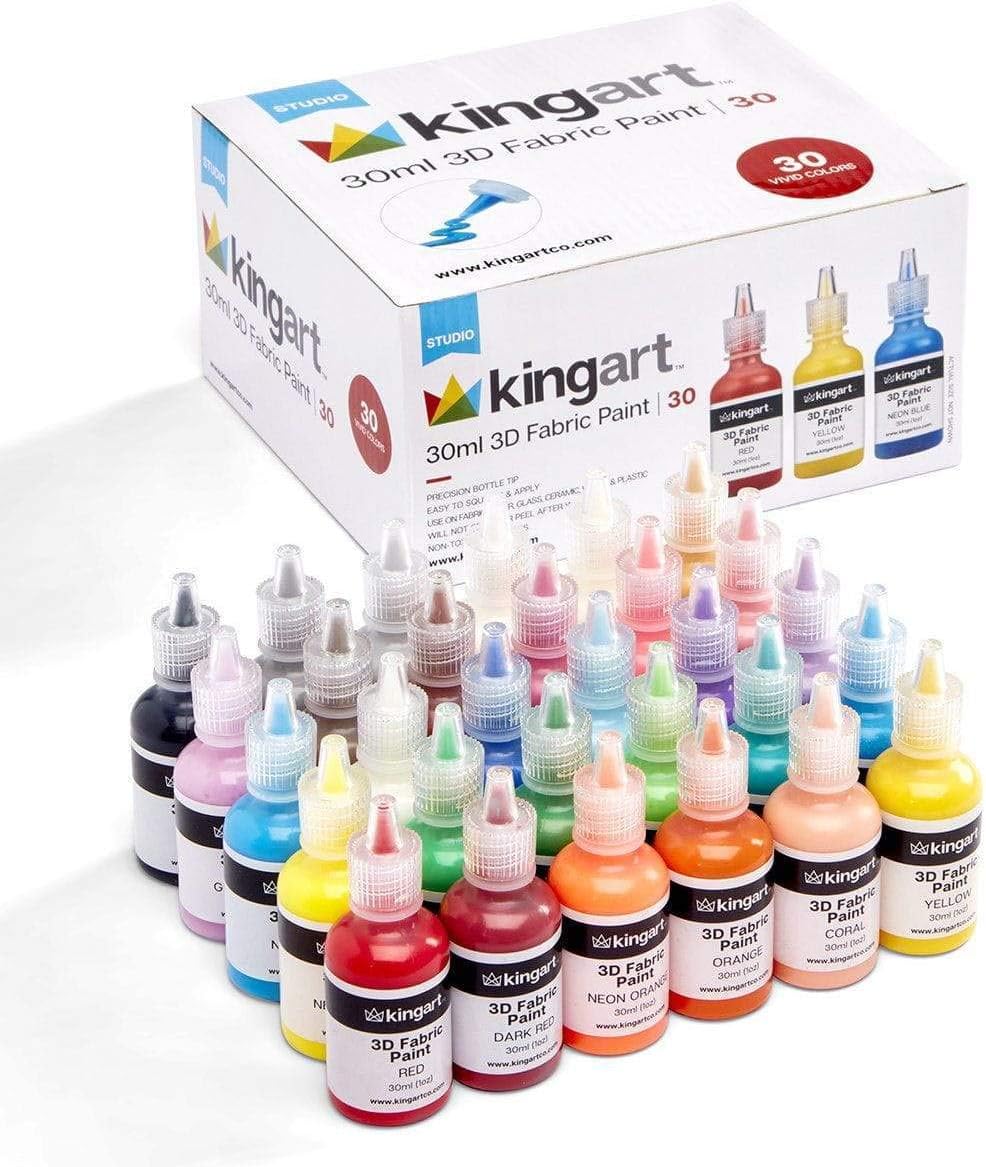 |
KINGART Permanent Fabric Paint | Semi-transparent formula keeps fabrics flexible and soft to the touch after painting. Works on leather, cotton, linen, denim, canvas, and more; quick-drying for efficient projects. Withstands extensive wear and laundering, keeping colors vibrant over time. |
Check Price |
Details Worth Checking Before You Choose a Paint
Decide whether you want brush marks, smooth fill, or raised lines
The quickest way to narrow these seven options is to decide how the paint should leave the bottle. Tulip and FolkArt are traditional brush-on choices. Colorful is also a brushable acrylic fabric-paint kit and includes tools. ARTEZA, Novarbee, and KINGART are built around squeeze-bottle dimensional application. colozoo is a conventional textile-paint set with brushes included.
This decision is more important than the number of colors. A huge dimensional set will frustrate you if the plan is a soft watercolor-style floral panel. A small brush-on set will feel limiting if the goal is raised dots, outlined lettering, and textured embellishment.
Check the amount of paint per color
Color count can make a set look generous while individual bottles remain small. FolkArt’s beginner set includes eight 2-ounce bottles, which gives you substantially more paint in each color than a small squeeze-bottle assortment. Tulip’s Rainbow set uses ten 1-ounce bottles. Colorful uses twelve 0.4-ounce tubes, while Novarbee uses twelve 0.67-ounce bottles. KINGART uses 30ml bottles, roughly one fluid ounce each.
For large stenciled tote bags or repeated classroom projects, bottle volume matters. For lettering, small motifs, and accents, color variety may matter more. Estimate how much area you actually plan to cover before deciding that the set with the most colors offers the best value for your project.
Look at the color mix, not just the total count
A balanced set of primary and secondary colors can be more useful than a larger set dominated by effects you rarely use. FolkArt’s eight-color beginner palette is straightforward: white, black, red, yellow, green, magenta, blue, and orange. Tulip’s ten-color Rainbow pack adds brown and a broad basic rainbow range.
ARTEZA and KINGART become more interesting if you specifically want metallic, glitter, fluorescent, or glow-style effects. colozoo adds gold, silver, and two neon colors to its 14-color kit. Those special finishes can save you from buying separate accent bottles later, but they make less sense if the goal is naturalistic flat painting.
Consider the cotton item, not only the fabric fiber
A heavy cotton canvas apron behaves differently from a lightweight cotton tee even though both are cotton. Canvas can support thicker coats, rougher stippling, and dimensional lines. A thin knit shirt moves more, so soft brush-on paint usually feels better over large areas. Pillow covers, table runners, and tote bags sit somewhere between those extremes.
If a design will bend repeatedly at an elbow, waistband, or bag fold, avoid building a thick ridge across the stress point. Raised paint is better placed where it can flex less aggressively. For wearable cotton, keep broad fills thin and reserve puff paint for limited details.
Read the wash instructions before painting, not afterward
Some products in this guide are sold as machine washable after curing, but the curing step differs. Tulip requires patience before exposure to moisture. FolkArt’s fabric system uses heat setting according to the bottle. KINGART also calls for drying followed by ironing. Colorful is marketed as no-heat-needed. colozoo says heat setting increases water resistance.
Novarbee deserves extra caution because current reseller descriptions are not fully consistent about wash or water resistance. The safest way to treat it is as a dimensional decorative paint and check the current bottle instructions before using it on a frequently washed cotton garment.
Included brushes can be useful, but they do not replace good technique
Colorful and colozoo are convenient because they include brushes. That can make either set easier for a first project, especially if you do not already own textile-friendly brushes. Still, the quality and shape of an included brush may not suit every technique. A broad flat brush is better for filling; a small round brush is better for outlines and details; a stencil brush or sponge gives better control for repeated motifs.
If you already have brushes you like, do not overvalue bundled tools. If you are buying everything from scratch, a set that includes a palette and several brushes can reduce the amount of setup you need before the first project.
Treat cure time as part of the project schedule
Fabric painting is not a good last-minute craft when the garment needs to be washed or worn immediately. Even fast-drying paint may need a much longer cure period before laundering. Tulip guidance, for example, allows the surface to dry in hours but delays washing for 72 hours.
Plan backward from when the item is needed. Paint first, let it dry undisturbed, heat-set only if required, and then respect the waiting period before washing. A design that is rushed into the laundry can fail even when the paint itself was a good choice.
ARTEZA 3D Fabric Paint Set of 30 – Best for Raised Details and Special Finishes
ARTEZA’s 30-color fabric-paint set is a dimensional squeeze-bottle system rather than a conventional flat brush-on paint kit. The current ARTEZA collection identifies the product as a 3D fabric paint set with fluorescent, metallic, glitter, and glow-in-the-dark finishes, and current listings show one-ounce bottles with assorted special-effect colors. That makes it more useful for texture, outlines, dots, lettering, and decorative accents than for painting broad soft panels on cotton.
The assortment is a major part of the appeal. Current product information describes a mix of vibrant standard colors, metallics, fluorescents, a glitter shade, and a glow-in-the-dark shade. Some listings also include interchangeable precision tips for creating different line widths. For cotton craft projects, that means you can move from fine outlines to chunkier raised details without changing to a separate paint system.
The 3D format rewards controlled squeeze pressure
Dimensional paint looks simple because the bottle is also the applicator, but clean lines still require practice. Hold the tip close to the fabric and keep pressure steady. If you squeeze too hard at the beginning of a stroke, the line develops a large bead; if you drag the tip through wet paint, the ridge collapses.
On cotton, I would test the bottle on scrap fabric before touching the final piece. The weave of the cotton affects how the line sits, especially on soft knit versus firm canvas. Raised paint works particularly well for names, borders, dots, stars, simple icons, and decorative outlines around a flatter painted area.
Special finishes make the set more decorative than utilitarian
Metallic, fluorescent, glitter, and glow effects can give a project more visual variety than a basic eight- or ten-color brush-on set. That is useful for party shirts, costumes, tote bags, holiday crafts, and decorative cotton accessories. The trade-off is that specialty colors are not always the shades you reach for when painting realistic subjects or large color fields.
Choose this set because you want dimensional variety, not simply because the color count is high. If most of your project is flat painted cotton, Tulip, FolkArt, Colorful, or colozoo will usually be easier to spread and blend.
- Thirty colors create a large visual range. The assortment includes conventional shades plus metallic, fluorescent, glitter, and glow-style effects, so one set can handle many decorative themes.
- Precision-tip application is useful for lettering and outlines. You can place the paint directly without loading a separate brush, which helps with dots, names, borders, and raised motifs.
- Dimensional paint adds texture that flat fabric paint cannot. The raised surface can become part of the design rather than simply a layer of color.
- The set works beyond cotton. Current product information also positions it for other fabric and craft surfaces, which can be useful if you switch between clothing, accessories, and hard-surface projects.
- Raised paint can feel bulky on soft clothing when used over large areas, so it is better as a detail paint than a full-surface cotton coating.
Who It’s Best For
This set suits crafters who want raised lettering, outlines, dots, and special-effect accents on cotton T-shirts, totes, canvas accessories, and decorative pieces. It also makes sense for mixed craft work where the paint may be used on more than fabric.
Not Ideal For
It is not the most efficient choice for broad, soft, flat coverage or for someone who wants to blend shaded brushwork over a large area of a cotton garment.
Tulip Brush-On Fabric Paint Rainbow 10 Pack – Best for Soft Flat Painting on Clothing
Tulip’s Rainbow pack is a much more traditional choice for cotton clothing. It includes ten one-ounce bottles in Pink, True Red, Orange, Yellow, Leaf Green, Royal Blue, Purple, Brown, Black, and White. Tulip describes the paint as a fabric-only formula that dries with a soft, flexible bond and a permanent matte finish. It is designed for both light and dark fabrics and can be applied with a brush, sponge, stamp, or stencil.
That combination makes it one of the easier options here to understand. If you want to paint a cotton T-shirt, tote, apron, or pillow cover with flat color, you do not need to adapt a 3D squeeze paint to behave like conventional paint. The formula is already intended for brush-on fabric work.
Softness is the main reason to choose it for wearable cotton
Tulip specifically emphasizes flexibility and resistance to cracking or crumbling with movement. That matters most on shirts and other cotton pieces that bend, fold, and move against the body. A thin layer still feels better than an overloaded one, but the formula is designed around wearable fabric rather than rigid craft surfaces.
The matte finish also looks familiar on cotton. It avoids the raised glossy appearance of many puff paints and lets the weave of the fabric remain visible. For stencil work, painted lettering, simple illustrations, and block motifs, that can look cleaner and more integrated with the garment.
The 72-hour waiting period should be treated seriously
Tulip’s own project guidance repeatedly advises allowing 72 hours before washing or exposing finished fabric paint to moisture. That is a longer schedule than “dry to the touch,” and it is easy to overlook if the project seems finished after a few hours.
If the cotton item needs to be worn or washed for an event, paint it several days early. Giving the paint time to cure is one of the simplest ways to improve durability without adding any extra product.
- The paint is formulated specifically for fabric. You are not adapting ordinary craft acrylic to cotton; the formula is designed to stay softer and more flexible on textiles.
- It works on both light and dark fabric. High opacity makes the set easier to use on black, navy, and other deep cotton colors than a very transparent paint.
- The ten-color palette is practical rather than gimmicky. It gives you the core colors needed for mixing and general illustration without making you sort through dozens of specialty shades.
- Application is flexible. Tulip supports brushes, sponges, stamps, and stencils, which makes one paint set useful for several cotton-painting techniques.
- The one-ounce bottles are convenient for hobby projects but can run down quickly if you are covering large fabric panels or repeating the same design many times.
Who It’s Best For
Tulip suits people painting cotton shirts, tote bags, fabric panels, aprons, pillow covers, and other washable projects where a soft flat finish matters more than raised texture.
Not Ideal For
It is less suitable if the design depends on thick 3D lines, very raised dots, or a large selection of metallic and glow effects in one box.
Colorful Fabric Paint Set for Clothes 12 Colors – A Compact All-in-One Brush Kit
The Colorful set is built around twelve acrylic fabric-medium colors in 0.4-ounce tubes. Current retail listings also show six brushes and a palette in the package. The paint is marketed as a permanent textile formula that can be used on fabric as well as shoes, canvas, paper, wood, and other craft surfaces.
What separates this set from Tulip and FolkArt is convenience. It is not only a box of paint; it gives a beginner brushes and a mixing surface too. The smaller tubes make the kit compact, while the twelve-color range gives enough variety for decorative shirts, bags, canvas shoes, and cotton craft pieces.
Air curing changes how you plan the finishing step
Current product listings state that the Colorful paint can cure under ambient conditions without heat and becomes machine washable after drying. That can be helpful if you are painting an item that is awkward to iron or if you simply prefer not to add a heat-setting step.
Because this information is coming from current retail listings rather than a detailed manufacturer instruction page, I would still treat the instructions included with the purchased set as the final authority. Do not heat-set it automatically just because another fabric paint in your craft drawer requires an iron.
Smaller tubes favor variety over repeated large coverage
Twelve colors give more ready-made shade choices than an eight-color starter set, but 0.4-ounce tubes are relatively small. That is fine for motifs, lettering, outlines, small stencils, and multi-color illustrations. It is less ideal for a repeated production run of large tote-bag designs in one dominant color.
For a one-off shirt or mixed-color craft session, the smaller format can actually be efficient because you are not buying large bottles that may sit unused. The included brushes also make the kit approachable for someone who wants a ready-to-start package.
- The package includes brushes and a palette. That lowers the amount of separate equipment a beginner needs to buy before starting.
- Twelve colors give useful mixing freedom. The palette is broad enough for multi-color illustrations and decorative projects without becoming overwhelming.
- The paint is marketed for fabric and multiple craft surfaces. That makes leftover colors easier to use on future DIY projects instead of limiting them to clothing.
- No-heat curing can simplify the process. If the current package instructions confirm the same method, you can finish the project without an ironing stage.
- The 0.4-ounce tubes are small, so a large cotton design can use up favorite colors much faster than a two-ounce bottle set.
Who It’s Best For
This set suits beginners and occasional crafters who want a compact brush-on paint kit with a broad color range, brushes, and a palette already included.
Not Ideal For
It is not the strongest fit for large monochrome projects or repeated batch work where you need a lot of one or two colors.
FolkArt Brush-On Fabric Acrylic Paint Beginner Set – Best Starter Set for Traditional Brushwork
FolkArt’s beginner set contains eight two-ounce bottles: Wicker White, Licorice, Engine Red, Lemon Custard, Fresh Foliage, Magenta, Brilliant Blue, and Pure Orange. FolkArt describes the formula as a fabric acrylic paint that absorbs into textiles, stays soft and wearable, flexes without flaking, and is permanent when dry. It is listed for cotton, linen, denim, polyester, and other textiles.
The two-ounce bottle size is a practical advantage. You get fewer ready-made colors than in some competing sets, but you receive more paint per shade. That matters when a design includes a large white background, repeated black lettering, or broad blocks of one color.
The palette is small enough to teach color mixing
Eight colors may sound limited next to a 30-color box, but the set covers the essentials. You can mix greens, violets, warmer oranges, muted browns, skin-like tones, and other secondary colors rather than relying on a separate bottle for every shade.
For someone learning fabric painting, that can be a strength. You spend more time understanding paint consistency and mixing and less time sorting through novelty finishes. The creamy brush-on format also feels familiar if you have painted with craft acrylic before.
Heat setting should follow the bottle instructions
Plaid’s current FolkArt Fabric project instructions tell users to heat-set the paint according to the bottle. That means the curing process is different from Tulip’s air-cure waiting routine and the no-heat claims attached to the Colorful set.
Use a pressing cloth if the bottle directs it, keep the iron moving, and make sure the cotton care label allows the required heat. Never guess the setting from another fabric-paint brand. The paint and the garment both need to tolerate the finishing method.
- Two-ounce bottles provide more usable paint per color. That is especially helpful for larger cotton designs and repeated projects.
- The formula is designed to stay soft and flexible on textiles. That makes it more appropriate for shirts and other wearable cotton than ordinary craft acrylic.
- The eight-color palette covers the core mixing colors. You can learn to mix custom shades rather than depending on a huge pre-mixed assortment.
- FolkArt explicitly lists cotton among the suitable textiles. The product’s intended use aligns directly with the material in this guide.
- The smaller color selection means you will need to mix more often if you want subtle intermediate shades or specialty finishes.
Who It’s Best For
FolkArt is a strong fit for beginners who want classic brush painting, generous bottle sizes, a soft wearable finish, and a manageable set of colors for cotton clothing and craft textiles.
Not Ideal For
It is not ideal for someone whose main goal is dimensional lettering or a ready-made assortment of glitter, neon, metallic, and glow finishes.
Novarbee Fabric Paint 12 Colors Puff Paint – Best for Squeeze-Bottle Lines and Puffy Accents
Novarbee’s set is a twelve-color puff-paint collection in 0.67-ounce, or 20ml, squeeze bottles. Current listings describe an acrylic dimensional paint with precision tips for drawing raised lines and details directly on fabric, along with use on several hard craft surfaces. This is another product that should be evaluated as a texture tool first and a general paint second.
The precision-tip bottle can be easier than a brush for names, outlines, dots, simple cartoons, borders, and decorative lettering. The raised paint creates an intentionally tactile surface, which can look especially effective on tote bags, sweatshirt panels, costume pieces, and cotton craft decorations.
Current wash information is not consistent enough to overpromise
Some current reseller descriptions say the paint resists cracking, peeling, and washing, while other current product data lists the paint as not water resistant. That conflict is important. Rather than pretending the strongest marketing claim is automatically correct, treat the purchased bottle instructions as the deciding source before using Novarbee on a frequently laundered cotton garment.
For a decorative item that is washed rarely, the uncertainty matters less. For a child’s everyday shirt or a tote that regularly goes into the washing machine, test a painted scrap, cure it exactly as directed, and wash the scrap before committing to a large design.
The squeeze format is friendly to simple graphic work
A precision-tip bottle removes the need to load and clean a brush for every line. That can be easier for beginners who want bold graphic shapes rather than painterly shading. Keep the tip slightly above the surface instead of scraping it through wet paint, and work slowly enough that the line thickness remains consistent.
Raised paint takes longer to dry through its full thickness than a very thin brush-on coat. Give dimensional sections plenty of undisturbed drying time even if the surface appears dry.
- Precision tips make direct drawing straightforward. Lettering and outlines can be created without transferring paint to a separate applicator.
- Twelve colors provide enough variety for graphic designs. The set is broad enough for multi-color craft work without the storage footprint of a 30-color box.
- The 3D finish adds tactile interest. Raised dots and lines can make simple cotton designs look more deliberate than a flat single-color print.
- The paint is useful on multiple craft surfaces. Leftover bottles can be used beyond clothing if your projects move between fabric and hard surfaces.
- Current reseller information is inconsistent about water resistance, so wash durability should be verified on the actual bottle before using it on frequently laundered clothing.
Who It’s Best For
Novarbee suits crafters making raised lettering, decorative dots, borders, cartoon outlines, and other dimensional details on cotton items that do not require broad flat coverage.
Not Ideal For
It is not the best choice for a cotton garment that will be washed very frequently unless you have confirmed the current curing and wash instructions on the exact set you receive.
colozoo Textile Paint Machine Washable 14 x 20ml – Good for Dark Cotton and Metallic or Neon Accents
The colozoo set includes fourteen 20ml textile paints, three brushes, and specialty colors that include gold, silver, and two neon shades. Current listings emphasize high covering power on both dark and light fabric, machine washability, and increased water resistance after ironing. That combination gives the set a useful middle position between basic brush-on palettes and all-special-effect 3D kits.
For cotton, the dark-fabric coverage claim is the most interesting feature. If you plan to paint black or navy shirts, dark tote bags, or deep-color canvas, a paint that is designed to remain visible over a dark base can save repeated undercoating. The metallic and neon colors also give you accent options without forcing you into a fully dimensional squeeze-paint set.
Heat setting can improve durability on washable projects
Current product descriptions say the paint is machine washable and becomes even more water resistant when ironed onto the fabric. That suggests heat setting is an important finishing step when the cotton item will be laundered.
Follow the current package instructions for temperature and time rather than improvising. Use a pressing cloth if directed and respect the garment’s care label. The goal is to set the paint without scorching the cotton, melting any trim, or damaging printed graphics already on the item.
The included brushes make this a practical starter package
Three brushes will not cover every technique, but they are enough to begin. For a first painted shirt or tote, that can be more useful than a paint-only box. You can add a larger flat brush or stencil sponge later if the project calls for broader coverage.
The 20ml containers are moderate in size: larger than tiny sample pots, smaller than FolkArt’s two-ounce bottles. This set therefore fits mixed-color projects particularly well, where you want many shades but do not need a large volume of each one.
- The set is designed for dark as well as light textiles. That makes it a practical option for black, navy, and other deep cotton colors.
- Gold, silver, and neon shades expand the design range. You can add specialty accents without buying separate bottles.
- Three brushes are included. A beginner can start painting without immediately purchasing a separate brush set.
- Heat setting is positioned as a way to improve water resistance. That gives washable cotton projects a clear durability step when the package instructions are followed.
- The 20ml paint containers are better for varied designs than for covering large areas repeatedly in the same color.
Who It’s Best For
colozoo suits crafters painting both light and dark cotton who want brush-on textile paint plus metallic and neon accent colors in the same package.
Not Ideal For
It is less suitable for very large repeated projects where a few high-use colors need to cover a lot of fabric.
KINGART Studio 30ml 3D Fabric Paint Set of 30 – Best Large Dimensional Color Assortment
KINGART’s current fabric-paint set contains thirty 30ml bottles of 3D fabric paint. The manufacturer describes a mix of classic, glitter, metallic, fluorescent, and glow-in-the-dark shades, along with precision-tip easy-squeeze bottles. It is designed for fabric and several other craft surfaces, and KINGART specifically lists cotton among the compatible textiles.
Like ARTEZA, this is a dimensional system. The best reason to choose it is the range of raised decorative effects, not the idea that thirty colors automatically make it the best paint for every cotton project. It is very good for line art, names, decorative borders, dots, simple icons, and accents over a broader fabric design.
Heat setting is part of KINGART’s permanence instructions
KINGART says the design should be completely dry and then ironed to set it. The company also describes the paint as permanent and washable after setting, with resistance to cracking or peeling. That makes curing straightforward, but it still requires attention to the garment’s heat tolerance.
Do not iron directly over a thick wet ridge. Let the design dry fully first and follow the product’s current heat-setting directions. If the cotton garment includes synthetic trim, elastic, a printed logo, or heat-sensitive decoration, protect those areas and follow the garment care label as well.
A 30-color set is useful when special effects are genuinely part of the plan
Standard, metallic, glitter, fluorescent, and glow colors give you many ways to build a decorative piece without purchasing multiple smaller specialty packs. For kids’ craft sessions, costumes, school spirit shirts, tote bags, and themed cotton accessories, that variety can be convenient.
For a simple two-color stencil, however, most of those bottles may sit unused. Choose the large set when the variety itself is useful to your projects, not because a bigger number always means a better result.
- Thirty colors give exceptional decorative variety. Standard shades sit alongside metallic, glitter, fluorescent, and glow options.
- Precision-tip bottles make detailed placement easier. You can draw directly onto cotton for lines, dots, lettering, and borders.
- KINGART explicitly lists cotton as a suitable textile. The product is designed for the fabric rather than merely being a general craft paint used experimentally.
- The manufacturer provides a clear heat-setting route to permanence. Drying followed by ironing gives the user a defined finishing step for washable projects.
- The dimensional formula can become too stiff or bulky if it is spread over large wearable areas instead of being used as a raised accent paint.
Who It’s Best For
KINGART suits crafters who want a large dimensional color assortment for raised cotton decoration and who expect to use metallic, glitter, fluorescent, or glow effects regularly.
Not Ideal For
It is not the best fit for broad soft brushwork across large areas of a T-shirt, because the 3D formula is built for raised detail rather than flat flexible coverage.
Comparing the Seven Fabric Paint Options
For the softest flat coverage on T-shirts
Tulip and FolkArt are the strongest matches when the cotton item needs to remain comfortable and flexible. Tulip has ten one-ounce colors and emphasizes a soft matte finish on light and dark fabric. FolkArt gives eight larger two-ounce bottles and a similarly wearable fabric-specific formula. Choose Tulip if you value the ready-made ten-color rainbow range; choose FolkArt if bottle volume and traditional paint mixing matter more.
For a compact starter kit with tools included
Colorful and colozoo both reduce setup because brushes are included. Colorful adds a palette and uses twelve small tubes, making it convenient for one-off mixed-color projects. colozoo offers fourteen 20ml colors, three brushes, and metallic/neon options, with a stronger emphasis on coverage over both dark and light textiles.
For raised lettering and outlines
ARTEZA, Novarbee, and KINGART are the dimensional choices. Novarbee is the smallest of the three at twelve colors and is easy to understand as a straightforward puff-paint set. ARTEZA and KINGART each move into large 30-color assortments with more specialty finishes.
If you need only names, borders, dots, and a few graphic accents, twelve colors may be enough. If you expect to make many themed craft projects, the larger ARTEZA or KINGART assortments give more ready-made effects.
For dark cotton
Tulip is explicitly designed to work on both light and dark fabric, while colozoo is marketed for strong coverage on both. Those are the options I would look at first for flat painted designs on black or navy cotton.
Dimensional metallic, fluorescent, and light colors from ARTEZA or KINGART can also stand out on dark cotton, but remember that they create raised lines rather than a conventional smooth painted surface.
For the largest amount of everyday brush-on paint per color
FolkArt stands out because each of its eight bottles holds two ounces. That is useful when a project relies heavily on a few colors or when you are painting multiple cotton items. Tulip’s one-ounce bottles are still generous enough for many hobby projects, but they offer half as much paint per shade.
Colorful’s 0.4-ounce tubes favor variety and compactness. colozoo’s 20ml bottles sit between the small Colorful tubes and the larger one- or two-ounce brush-on bottles.
For projects that will be washed often
Start with a formula that clearly supports washable fabric, then follow its exact cure instructions. Tulip, FolkArt, colozoo, and KINGART all provide a defined path to washable use, though the methods differ. Colorful is currently marketed as machine washable after air curing.
Novarbee is the one I would treat more cautiously because current reseller information conflicts on water resistance. For everyday clothing, test before committing to a large design. Durability comes from the combination of the right paint, the right cure, and gentle laundering habits.
How to Paint Cotton So the Design Lasts
1. Prewash the cotton without fabric softener
Fabric-paint manufacturers commonly recommend prewashing to remove sizing and manufacturing residue. Tulip specifically advises prewashing without liquid softener or dryer sheets, and Plaid gives similar guidance for fabric preparation. These additives can leave a surface treatment that works against paint adhesion.
Dry the cotton fully before painting. If it is wrinkled, press it flat so folds do not become part of the painted design.
2. Place a barrier between fabric layers
Slide cardboard, plastic-coated board, or another protective insert inside a shirt or tote. This prevents wet paint from bleeding through to the back layer and gives the fabric a firmer surface to work against.
Make sure the barrier is smooth. A corrugated board with deep ridges can leave unwanted texture in a broad painted area if you press hard with the brush.
3. Test the paint on scrap or a hidden area
Cotton weave, fabric color, and paint thickness all affect the final result. A quick test tells you whether the color is opaque enough, whether the fabric becomes too stiff, and whether a dimensional line holds its shape.
For dark cotton, let the test dry fully before judging opacity. Wet paint can look brighter than the cured result.
4. Transfer the design lightly
Use a fabric-safe removable marking method, stencil, or very light pencil line where appropriate. Heavy graphite can muddy pale paint, while thick chalk lines can interfere with fine details.
For stencils, secure the fabric and stencil so neither shifts as the paint is applied. Use less paint than you think you need around stencil edges to reduce bleed.
5. Build flat paint in thin layers
With Tulip, FolkArt, Colorful, or colozoo, start with a controlled first coat. Let it settle or dry as directed before adding more. Several thin layers usually feel better on clothing and are easier to control than one thick deposit.
Do not scrub the same wet area repeatedly. Cotton can become fuzzy and the paint can begin to pill on the surface if the brush is overworked.
6. Let dimensional paint sit above the fabric
For ARTEZA, Novarbee, or KINGART, keep the nozzle close but avoid dragging it through the paint. Squeeze with steady pressure and guide the line at an even speed.
If the line is too thick, practice on scrap rather than trying to wipe a wet ridge off the final garment. Dimensional paint can smear into the weave quickly once disturbed.
7. Let the design dry undisturbed
Flat paint may feel dry relatively quickly, while thick 3D paint needs more time through the full depth of the line. Lay the cotton item flat in a clean area where pets, dust, sleeves, and other fabric cannot touch it.
Do not fold painted sections together during this stage. Even paint that feels dry on top can stick if the underside is still curing.
8. Cure or heat-set exactly as the product directs
This is the step where the seven paints diverge. Tulip emphasizes waiting before washing. FolkArt and KINGART use heat-setting instructions. colozoo says ironing increases water resistance. Colorful is marketed as no-heat curing. Novarbee should be checked on the current bottle because wash information is inconsistent across listings.
Follow the instructions for the exact paint you used, not a generic fabric-paint routine. Also check the cotton item’s care label before applying heat.
9. Delay the first wash until the full cure period has passed
If the brand gives a 72-hour period, respect the full 72 hours. Do not count only until the surface feels dry. Polymer-based fabric paint gains durability as it cures, and early moisture can weaken the finish.
When the first wash is finally due, turn the item inside out if practical and use a gentler cycle rather than treating the painted surface like an undecorated work shirt.
Caring for Painted Cotton After the Project Is Finished
Painted cotton lasts longer when the laundry routine is not unnecessarily harsh. Turn garments inside out so the painted face rubs against less clothing and less of the washing-machine drum. Use the wash temperature and detergent type recommended by the paint maker and the garment label; if those instructions conflict, choose a safer item or a different decoration method rather than guessing.
Avoid aggressive scrubbing directly over the design. For tote bags and decorative cotton pieces, spot cleaning may reduce wear when a full machine wash is unnecessary. If a raised design begins to lift at one edge, do not pull at it. Check whether the paint maker provides a repair method, because tugging can turn a small defect into a larger tear in the coating.
Store unused paint tightly closed. Wipe squeeze-bottle tips before replacing caps so dried paint does not block the nozzle. Brushes used with water-based fabric paint should be cleaned promptly while the paint is still wet. Once acrylic-based paint cures in the bristles, restoring the brush is much harder.
Keep a note of which paint was used on each important project. If you need to touch up a design months later, knowing the original formula and color is far more useful than trying to match an unknown paint by appearance alone.
Where Cotton Painting Projects Commonly Go Wrong
Painting straight onto unwashed fabric
New cotton may contain sizing or finishing residue. That can make paint bead, sit unevenly, or adhere less reliably. The fix is simple: prewash without softener, dry completely, and press out wrinkles before painting.
Using puff paint for a large flat image
Dimensional paint is tempting because the bottle is convenient, but spreading a thick 3D formula over a broad shirt graphic can create a heavy patch. Use ARTEZA, Novarbee, and KINGART for raised details; use a brush-on paint when you want smooth filled areas.
Loading too much paint into a stencil
A wet brush or sponge forces paint under the stencil edge. The result is a fuzzy outline even when the stencil itself was perfectly positioned. Offload excess paint first and build opacity gradually.
Judging dark-fabric coverage while the paint is still wet
Paint color changes as water evaporates and the binder cures. A bright wet stroke may settle into a duller finish. Let a test swatch dry fully before deciding whether the paint has enough opacity for black or navy cotton.
Heat-setting every fabric paint by habit
Some formulas need heat; others are designed around air curing. Automatically ironing every painted item can be unnecessary or even harmful. Read the exact instructions for the paint you used and the care label for the cotton item.
Washing as soon as the surface feels dry
Dry-to-touch is not the same as fully cured. Tulip’s guidance to wait 72 hours before washing is a good reminder that fabric paint needs time. Rushing the first wash is one of the easiest ways to shorten the life of an otherwise good design.
Forgetting that thick paint changes how clothing bends
Even soft fabric paint adds material to the surface. Thick coats across elbows, waistbands, chest folds, and other high-movement zones can feel stiff and may experience more stress. Keep large wearable areas thin and place raised detail where the fabric does not fold constantly.
Heat and Workspace Safety
Fabric painting is low-risk compared with many workshop projects, but heat setting deserves care. Use an iron or heat press only when the paint instructions call for it and only at a setting the cotton item can tolerate. Keep the hot appliance on a stable heat-resistant surface, keep cords away from wet paint and water containers, and never leave the iron face-down on the garment.
Protect the worktable from paint bleed and spills. Water-based fabric paint is much easier to remove while wet than after it cures. If a product is labeled nontoxic, that does not make it food-safe or suitable for skin painting; use it for the surfaces the maker identifies.
If children are participating, supervise squeeze bottles, heat-setting steps, and cleanup. Children should not handle the iron or heat press. Let the painting be the child-friendly part and keep the curing equipment under adult control.
Frequently Asked Questions
Can regular acrylic paint be used on cotton instead of fabric paint?
Regular acrylic will color cotton, but it can dry noticeably stiffer and may not tolerate flexing or laundering as well as a formula designed for textiles. Fabric-specific paint is usually the safer choice for clothing because the binder is engineered with flexibility and wash use in mind.
Do I always have to heat-set fabric paint on cotton?
No. Curing requirements differ by product. FolkArt and KINGART use heat-setting directions, while Tulip’s Soft Fabric Paint focuses on drying and a waiting period before washing, and Colorful is currently marketed as a no-heat formula. Follow the instructions on the exact paint you purchase.
Which paint here is easiest for a basic cotton T-shirt design?
Tulip and FolkArt are the most straightforward for a conventional painted T-shirt because both are brush-on fabric formulas built around softness and flexibility. Tulip gives ten one-ounce colors; FolkArt gives eight larger two-ounce bottles. Your choice mainly depends on whether you want more ready-made shades or more paint per shade.
Which options are better for black cotton?
Tulip specifically states that the Rainbow Soft Fabric Paint works on light and dark fabric, while colozoo is marketed for high covering power on both dark and light textiles. Specialty metallic and fluorescent dimensional colors from ARTEZA or KINGART can also show well on dark cotton, but they create raised accents rather than smooth broad coverage.
What is the difference between puff paint and brush-on fabric paint?
Puff or 3D paint is squeezed directly from a precision nozzle and creates a raised line or dot. Brush-on fabric paint spreads into a flatter layer and is better for filling, blending, stenciling, and broad images. For many projects, the two types can be used together: brush-on paint for the main design and puff paint for outlines or accents.
How can I keep painted cotton from becoming too stiff?
Use fabric-specific paint, keep broad coats thin, and avoid repeatedly loading wet paint into the same area. Let one layer dry before deciding whether a second is needed. Reserve heavy dimensional paint for smaller details rather than coating a large wearable section.
Should I wash cotton before painting it?
Yes, prewashing is strongly recommended by major fabric-paint makers. Tulip advises washing without liquid softener or dryer sheets, and Plaid gives similar preparation guidance. Prewashing removes sizing and residues that can interfere with paint adhesion.
How long should I wait before washing painted cotton?
Use the cure time specified for your paint. Tulip repeatedly recommends waiting 72 hours before washing its fabric-paint projects. Other products may require heat setting, air curing, or a different waiting period, so do not use one universal number for every brand.
Choosing Fabric Paint That Fits the Cotton Project
The best fabric paint for cotton is not automatically the set with the most colors. The important match is between the paint’s finish and the way the cotton item will actually be used. Soft brush-on formulas such as Tulip and FolkArt make the most sense for large wearable areas. Colorful and colozoo add convenient tools and broader ready-made palettes. ARTEZA, Novarbee, and KINGART are better treated as dimensional systems for raised lettering, outlines, and decorative texture.
Think about the cotton itself too. A canvas tote tolerates heavier paint than a thin T-shirt. Dark cotton needs stronger opacity. Frequently washed clothing deserves a formula with clear curing and laundry guidance. And every project benefits from the same basic discipline: prewash without softener, test the paint, build color in controlled layers, cure it exactly as directed, and give it enough time before the first wash.
If I were narrowing these seven options for a new project, I would choose the application style first, then bottle size, opacity, cure method, and color range. That approach keeps the decision practical and helps you buy paint you will actually use instead of simply collecting the largest box.