A concrete patio usually starts looking worn in small ways before it looks truly bad. The color turns patchy, old stains become harder to ignore, the surface feels dusty after sweeping, and hairline cracks catch every bit of dirt. Paint can refresh that slab, but only if the coating matches the condition of the concrete and the way the patio is actually used.
That last part matters more than the color on the can. A quiet covered seating area does not need the same finish as a poolside walkway that stays wet. A weathered slab with shallow cracking asks something different from clean, sound concrete. And a coating that tolerates parked vehicles may be built very differently from a porch paint designed only for foot traffic.
I’d treat the best concrete paint for patio use as a fit problem, not a popularity contest. Start with the slab, then think about moisture, sun, traffic, texture, and how much preparation you’re willing to do. A careful match gives you a better chance of getting an even finish that stays attached instead of becoming another scraping project next season.
What Patio Concrete Paint Has to Deal With
Concrete looks solid, but it behaves differently from wood, metal, or drywall. It is porous, it can hold moisture, it can move slightly with temperature changes, and older surfaces may contain sealers or previous coatings that block adhesion. That is why a patio coating has to do more than add color.
Adhesion starts below the paint film
Paint can only hold as well as the surface beneath it. Dusting concrete, loose old paint, oil, algae, and curing compounds can all create a weak layer between the new coating and the slab. If that weak layer lets go, the new paint may peel even though the paint itself is still intact.
A simple water-drop check is useful before you buy anything. If clean bare concrete absorbs water, the surface is at least open enough to accept moisture. If water beads strongly, a sealer or dense finish may still be present. That does not automatically make the patio unpaintable, but it does mean surface preparation deserves more attention.
New concrete also needs time before coating. Several of the products in this guide instruct users to let new concrete cure before painting. I know it’s tempting to finish a new patio as soon as the forms come off, but trapped moisture and uncured alkalinity are poor foundations for a coating.
Outdoor exposure changes what durability means
Patio paint deals with ultraviolet light, rain, temperature swings, standing water, dirt, furniture legs, pet traffic, and repeated cleaning. A paint that looks fine on a basement floor may not be intended for full outdoor weather. Likewise, a garage coating may handle hot tires but still have a finish that is not ideal for a wet seating area.
The products here cover several different jobs. Some are conventional acrylic porch-and-floor paints. Some add epoxy-modified or epoxy-acrylic chemistry for tougher floor use. One is a textured decorative coating. One uses built-in anti-slip aggregate. Another is a thick resurfacing coating made to hide wear and bridge small surface cracks.
Those differences are more useful than labels such as “heavy duty.” A thick resurfacer is not automatically better than a thinner floor enamel. It is simply built for a different surface condition.
Texture changes both appearance and grip
Smooth satin and low-lustre finishes are easy to sweep and often give a patio a cleaner, more finished look. They also reveal preparation problems more clearly because a uniform sheen makes peeling, patch repairs, and uneven film thickness easier to see.
Textured finishes can soften the look of rough concrete and improve footing, but texture also traps more dirt. Around a pool, outdoor shower, or frequently wet step, that trade-off can be worthwhile. Under a dining table on a covered patio, a smoother coating may be easier to live with.
No painted surface should be treated as impossible to slip on. Even products described as slip-resistant can become slick with algae, soap, wet leaves, grease, or standing water. Good drainage and cleaning still matter.
Coverage numbers depend on the slab
Coverage figures are useful for planning, but porous or rough concrete usually consumes more paint than a smooth surface. Textured products and resurfacers cover dramatically less area per gallon because they are intentionally applied at a much heavier film thickness.
That is why the KILZ Decorative Concrete Coating and KILZ Over Armor need much more product for the same patio area than a conventional porch-and-floor paint. Their lower spread rate is not necessarily inefficiency. It is part of how they build texture or fill surface imperfections.
Before ordering, measure the patio length and width, calculate the area, then account for the number of required coats and the surface texture. If the patio has deep control joints, rough broom texture, steps, or vertical edges, allow extra material rather than planning to finish on the last drop.
| Product Image | Product Name | Features | Price |
|---|---|---|---|
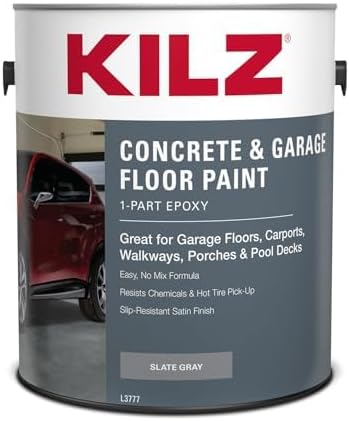 |
KILZ 1-Part Epoxy Acrylic Concrete & Garage Floor Paint | Long-lasting protection. Covers 300–400 sq. ft. per gallon. Best for concrete surfaces. Resists peeling |
Check Price |
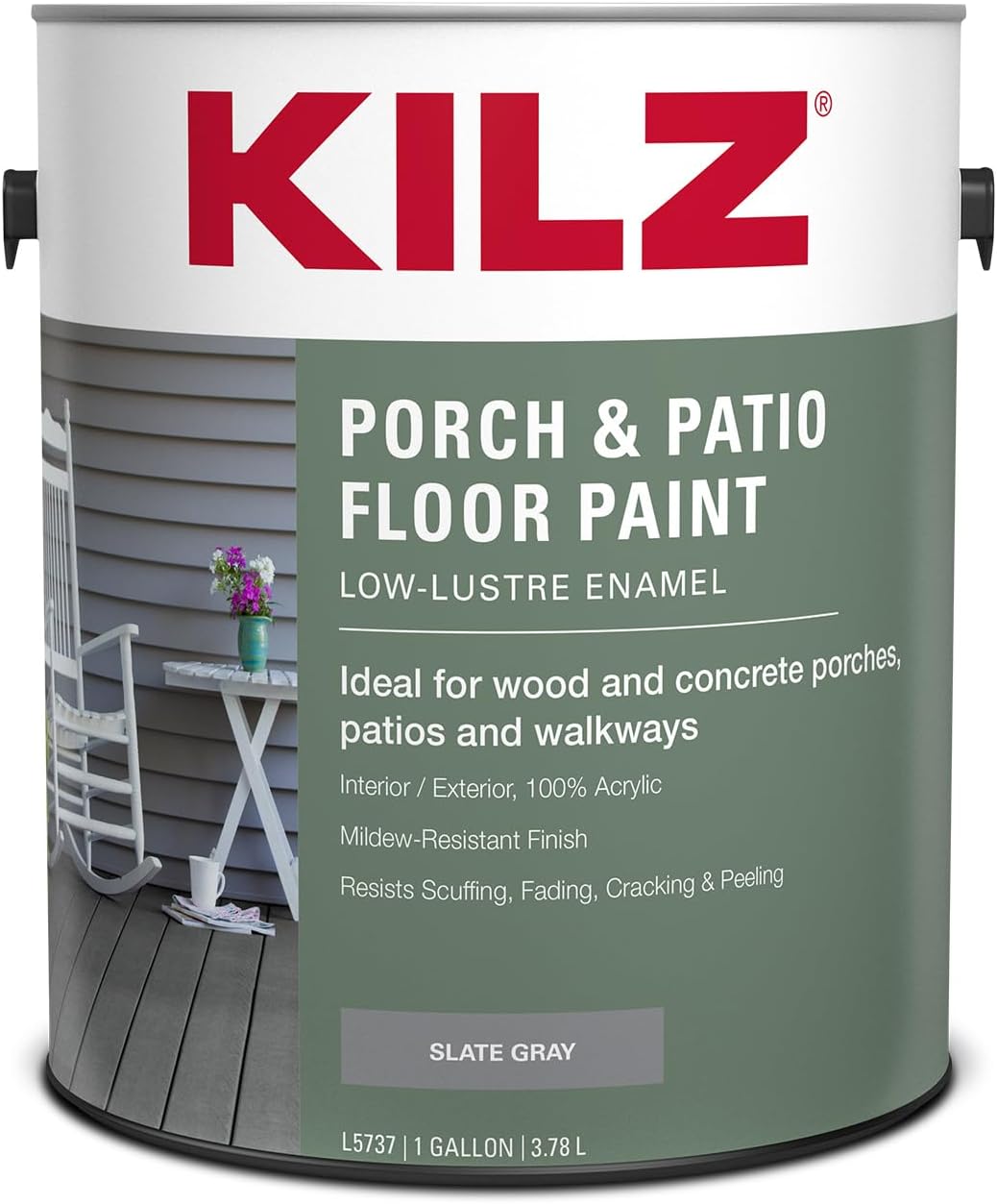 |
KILZ Low-Lustre Enamel Porch & Patio Latex Floor Paint | Good for concrete and wood. Low-lustre finish looks clean. Good choice for general patio makeovers. Easy to clean |
Check Price |
 |
CALIFORNIA PAINTS ALLFLOR Porch, Patio & Floor Enamel | Patios with regular foot traffic. Pool decks. Porches. Basement floors. |
Check Price |
 |
INSL-X Tough Shield Floor and Patio Paint | Residential patios. Porches Concrete walkways. Light commercial floors. Satin finish lovers. |
Check Price |
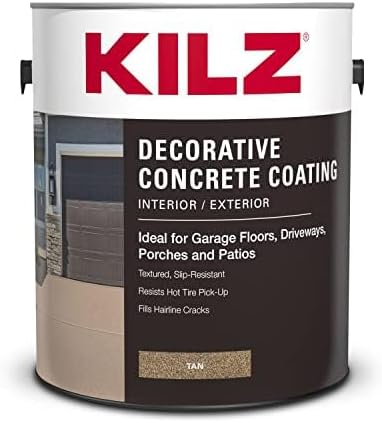 |
KILZ Decorative Concrete Coating | Crack resistant. Protective finish. Adds depth. Washable. |
Check Price |
 |
Rust-Oleum Concrete & Garage Floor Paint and Primer | UV resistant. Satin finish. Good quality |
Check Price |
 |
INSL-X Sure Step Acrylic Anti-Slip Paint | Wet patios. Pool decks. Outdoor stairs. Walkways. Safety-focused buyers. |
Check Price |
 |
KILZ Over Armor Smooth Exterior Resurfacer | Old patios. Weathered concrete. Small cracks. Pool deck edges. Sidewalk-style concrete areas. |
Check Price |
What to Check Before You Buy
The useful questions are practical: what is already on the concrete, how wet does the area get, what type of traffic crosses it, and what finish can you maintain without frustration?
Confirm that the coating actually allows patio use
Every product in this guide can be used on patios or exterior walking surfaces, but their limitations differ. KILZ 1-Part Epoxy and the Rust-Oleum concrete floor paint are built to tolerate tougher floor conditions, including vehicle-related exposure when their instructions are followed. INSL-X Tough Shield specifically says not to use it on garage floors or car parking surfaces.
For a normal backyard patio, vehicle compatibility may be irrelevant. Still, those restrictions reveal how the coating is designed. Never assume two floor paints are interchangeable because both cans show concrete.
Decide whether you want smooth, low-lustre, satin, or textured
A low-lustre finish tends to hide minor surface variation better than a high-gloss floor. Satin gives a little more reflected light and can make a gray patio feel cleaner, but it may show abrasion and dust differently depending on the color.
Textured coatings trade some cleaning ease for grip and visual depth. KILZ Decorative Concrete Coating is intentionally textured and decorative. INSL-X Sure Step uses anti-slip aggregate. If the patio sits near a pool or regularly gets wet, those features deserve more weight than a perfectly smooth appearance.
Match the product to the condition of the concrete
Sound concrete with only cosmetic discoloration can usually be handled by a conventional floor paint after correct preparation. A slab with small surface cracks and weathering may benefit from a heavier coating.
KILZ Decorative Concrete Coating can be used to fill hairline cracks up to 1/8 inch as part of its system. KILZ Over Armor Smooth is much thicker and is designed to conceal weathering and cracks up to 1/4 inch when the underlying concrete is stable and properly prepared.
Neither product is a structural repair. A widening crack, slab settlement, heaving, drainage failure, or water pressure from below should be fixed before coating. Paint can hide appearance problems; it cannot stabilize moving concrete.
Look at the required preparation, not just the application
The roller work is usually the easy part. Cleaning, removing loose coatings, degreasing, etching where required, repairing cracks, and allowing the slab to dry are what determine whether the paint has a sound surface to grip.
Some products call for a bonding primer on bare or etched concrete. Others are sold as self-priming systems. Even a self-priming paint still needs a clean, properly profiled surface. “Paint and primer” does not mean “paint over dust and hope.”
Think about downtime
Dry-to-touch, recoat time, light foot traffic, full cure, and vehicle service are different milestones. A coating may feel dry in an hour and still be too soft for patio furniture.
Plan the project so the slab can stay empty through the manufacturer’s service window. Then add extra time if temperatures are cool or humidity is high. If you have only one exit to the yard, think through how people and pets will get around the painted area while it cures.
Be realistic about wet areas
If the patio slopes toward the house, holds puddles, or grows algae quickly, paint alone is not the first problem to solve. Water management comes first. Standing moisture can undermine adhesion, create slippery growth, and shorten the useful life of any coating.
For areas where wet footing is unavoidable, INSL-X Sure Step is the clearest safety-focused option among these eight because the coating itself contains anti-slip aggregate. KILZ Decorative also adds texture, but its manufacturer still warns that surfaces may become slippery when wet.
When Painting the Slab May Not Be the Right First Move
A coating makes sense when the concrete is basically sound and the goal is color, surface protection, easier cleaning, or modest visual repair. It makes less sense when the slab has active structural movement, serious spalling, water pressure from below, or drainage that repeatedly keeps the surface saturated.
You should also think twice before painting a previously sealed patio if you are unwilling to remove or mechanically prepare the old sealer. The new finish may look good for a short time and then release in sheets because it never bonded to the concrete itself.
If you rent, check whether permanent floor coatings are allowed. And if the patio is made from decorative stamped concrete that already has a special sealer system, confirm compatibility before applying opaque paint over it. A reversible cleaning and resealing job may preserve more of the original surface.
KILZ 1-Part Epoxy Acrylic Concrete & Garage Floor Paint – Tougher Floor Use With Vehicle Compatibility
KILZ 1-Part Epoxy Acrylic Concrete & Garage Floor Paint is a single-component, water-based epoxy-acrylic floor coating designed for properly prepared horizontal surfaces. KILZ lists interior and exterior use on porous concrete, masonry, stone, and brick, including porches, pool decks, driveways, garages, and basement floors.
For a patio, the main reason to choose it is not the word “epoxy” on the label. It is the combination of a floor-focused formula, resistance to scuffing and hot-tire pickup, and a satin finish that can handle spaces used more aggressively than a quiet covered porch.
Key features translated into practical benefits
The current KILZ specification describes a slip-resistant satin finish and an acrylic/epoxy resin system. That makes it more floor-oriented than a general exterior wall paint. A patio that connects to a driveway, workshop, or heavily used side yard can benefit from that tougher design.
Coverage is listed at about 300 to 500 square feet per gallon depending on surface roughness. Smooth concrete stretches the gallon farther; rough or porous concrete pulls more material into the surface. For planning, I’d use the lower end of the range if the slab has a strong broom texture.
KILZ says the first coat should be allowed to dry before deciding whether a second coat is needed, and it does not recommend applying more than two coats. The coating reaches full cure after the initial drying period, while automotive tire contact requires a longer wait. That separation is important if the painted concrete is connected to parking or a driveway edge.
The product also has clear limits. It is for horizontal residential surfaces and is not intended for hydrostatic pressure, industrial forklift traffic, or vertical walls. Those limits help define where it belongs.
- It handles both ordinary foot traffic and tougher floor exposure, including areas where hot-tire resistance matters.
- Its 300-500 square-foot coverage range is efficient compared with thick textured coatings and resurfacers.
- The water-based system cleans up with soap and water, which makes the application process less cumbersome than solvent-heavy floor coatings.
- The satin finish gives concrete a more finished appearance without the mirror-like look of a high-gloss coating.
- It requires careful concrete preparation, and KILZ specifically recommends cleaning, etching, and bonding-primer steps for new or uncoated concrete.
- A patio that is frequently wet may still need more texture than this finish provides.
Who It’s Best For
This is a sensible fit for sound concrete patios that see hard use, connect to garage or driveway areas, or need a floor coating with stronger resistance to scuffing and tire-related exposure than a basic porch paint.
Not Ideal For
It is not the right choice for badly cracked or weathered concrete that needs a thick resurfacing layer. It also is not designed for walls, hydrostatic pressure, or industrial traffic.
KILZ Low-Lustre Enamel Porch & Patio Latex Floor Paint – A Straightforward Choice for Sound Patio Concrete
KILZ Porch & Patio Floor Paint is a 100% acrylic latex floor coating intended for interior and exterior residential surfaces. It can be used on concrete as well as wood, which makes it useful for patios that visually connect to porch steps, wood trim, or a small deck area.
Its low-lustre finish is the defining feature. Rather than trying to mimic polished stone, it leaves a quieter surface that suits everyday seating areas and covered patios. KILZ also describes the cured finish as resistant to scuffing, fading, cracking, and peeling when the surface has been prepared correctly.
Key features translated into practical benefits
Coverage is listed at roughly 200 to 400 square feet per gallon. That is a broad range, so surface porosity matters. A smooth previously painted slab in good condition will behave differently from bare, thirsty concrete.
The 100% acrylic latex formula is easier to approach for a normal residential project than a two-part coating system. It works with common roller and brush methods and cleans up with water. For someone refreshing a patio rather than rebuilding a failing floor, that simplicity has real value.
KILZ specifically says this product is not for areas subject to automotive tires. That is not a flaw for a backyard patio, but it is an important boundary if the same slab extends into a carport or parking strip.
The finish is mildew resistant, but the manufacturer also warns that sealed surfaces may become slippery when wet. If the patio surrounds a pool or receives frequent water, I would give grip more priority than the low-lustre appearance.
- The low-lustre finish is easy to live with on ordinary patios because it avoids an overly shiny floor appearance.
- It works on both concrete and wood, which can simplify a porch-and-patio project with mixed surfaces.
- The acrylic latex formula is water-cleanup friendly and suited to standard brush and roller application.
- It offers a practical coverage range for a conventional floor paint, especially on sound, properly prepared concrete.
- It is not intended for automotive tire contact, so it should not be carried into a parking area just for color continuity.
- Wet areas may need a more deliberately textured anti-slip coating.
Who It’s Best For
This is a strong fit for residential patios, porches, and covered outdoor seating areas where the concrete is in decent condition and the goal is a clean low-lustre color rather than heavy resurfacing.
Not Ideal For
Skip it for vehicle areas, badly worn slabs with wider cracks, or poolside surfaces where maximum built-in texture is more important than a smooth low-lustre finish.
California Paints ALLFLOR Porch, Patio & Floor Enamel – Low-Gloss Acrylic Enamel With Epoxy Fortification
California Paints ALLFLOR is a water-based, low-gloss acrylic enamel fortified with emulsified epoxy. The manufacturer recommends it for floors, patios, porches, steps, decks, basements, wood, concrete, and masonry.
That broad surface list makes ALLFLOR useful when a patio project includes more than one material. It is still a floor enamel, though, and the value comes from its abrasion resistance, adhesion, color retention, and resistance to water- and blister-related problems when applied over a properly prepared surface.
Key features translated into practical benefits
The low-lustre finish keeps reflected light modest. On a large outdoor slab, that can make the color feel more natural and reduce the “painted showroom floor” look that a high-gloss finish may create.
The acrylic enamel is fortified with emulsified epoxy rather than being a two-part epoxy kit. That means the product is designed to combine straightforward waterborne application with added floor performance. It is especially relevant for patios that see regular foot traffic but do not need a thick resurfacing film.
ALLFLOR is offered in several ready colors such as grays, black, tile red, and brown, with additional tinting options depending on the retailer. For a patio, neutral gray or brown tones usually make maintenance easier because they disguise normal outdoor dust better than very dark or very light colors.
The manufacturer emphasizes surface preparation: dirt, dust, grease, oils, and wax must be removed. That is not unusual, but it matters on patios where barbecue grease or old furniture protectants may have migrated onto the slab.
- The epoxy-fortified acrylic enamel is built specifically for floor and trim performance rather than general decorative wall use.
- Its low-gloss appearance suits patios where you want a finished surface without a bright shine.
- It can be used on concrete, masonry, and wood, which is useful around steps and mixed-material outdoor spaces.
- The formula is designed around abrasion resistance, adhesion, color retention, and outdoor floor durability.
- It will not hide significant cracking or spalling the way a heavy resurfacing coating can.
- The quality of the final result still depends heavily on degreasing and preparing old concrete properly.
Who It’s Best For
ALLFLOR makes sense for a sound patio that needs a durable low-gloss floor enamel and for projects where concrete sits next to painted wood or masonry that needs a coordinated finish.
Not Ideal For
It is less appropriate for patios where traction in frequent standing water is the main concern or where the slab needs substantial crack-hiding thickness.
INSL-X Tough Shield Floor and Patio Paint – Satin Durability for Foot-Traffic Areas
INSL-X Tough Shield is a waterborne acrylic porch and floor coating designed for residential and light commercial use. Benjamin Moore lists it for properly prepared concrete, masonry, metal, and wood on floors, steps, porches, patios, and walkways.
The important limitation is equally clear: Tough Shield is not for garage floors or car parking surfaces. That makes it a patio-and-walkway coating rather than a universal floor paint, and that distinction is useful because it keeps expectations realistic.
Key features translated into practical benefits
The satin finish is built for abrasion resistance and outdoor weather exposure. INSL-X also describes the cured coating as resistant to ponding water and able to withstand detergents, oils, grease, and scrubbing. For a patio near an outdoor kitchen or grill, that cleaning resistance is more meaningful than a vague promise of toughness.
Coverage is listed around 400 to 500 square feet per gallon depending on surface texture and porosity. That makes it one of the higher-spread coatings in this group. A higher spread rate can reduce the number of gallons required, but only if the slab is smooth enough to achieve that range.
The current technical information lists one to two hours to touch, four to six hours to recoat, light foot traffic at about 24 hours, and heavier service after several days. Those windows help you schedule a patio project without putting furniture back too early.
Because the product is a conventional satin floor coating rather than a resurfacer, cracks and failed concrete should be repaired separately. The paint can finish a sound slab; it should not be asked to become patching compound.
- It offers strong coverage compared with thick textured products, which can make it efficient on large, sound patios.
- The satin acrylic finish is designed for weather, abrasion, ponding water, and routine scrubbing.
- It can be used across concrete, masonry, metal, and wood in the same outdoor area after proper preparation.
- Light foot traffic is allowed relatively early, which helps with residential access planning.
- It is specifically not for garage floors or vehicle parking surfaces.
- The smooth satin film does not provide the same built-in texture as a dedicated anti-slip coating.
Who It’s Best For
Choose Tough Shield for a patio, porch, walkway, or step system that gets regular foot traffic and cleaning but does not need vehicle resistance or a heavy crack-hiding film.
Not Ideal For
It is not suitable for areas where cars park, and it is not the strongest match for poolside concrete where anti-slip texture is the first priority.
KILZ Decorative Concrete Coating – Textured Stone-Like Coverage for Patios That Need Visual Depth
KILZ Decorative Concrete Coating is very different from a normal thin floor enamel. It is a textured coating for porous concrete, masonry, stone pavers, and brick, and KILZ lists patios, porches, walkways, pool decks, driveways, and garages among its intended horizontal uses.
Its appeal on a patio is visual as much as protective. The textured finish breaks up the flat look of a slab and can help disguise minor cosmetic variation that a smooth satin paint would highlight.
Key features translated into practical benefits
KILZ describes the finish as textured and slip-resistant. The texture gives shoes more surface variation to engage with, which can be useful around patios that get wet. Even so, the manufacturer warns that coated surfaces may become slippery when wet, so drainage and housekeeping still matter.
Coverage is much lower than conventional floor paint at about 40 to 60 square feet per gallon. That sounds inefficient until you consider how thick the material is being applied. This is a build coating, not a thin color wash.
The product is designed to fill hairline cracks up to about 1/8 inch as part of the application process. That can make an older patio look more uniform, but it should not be used to disguise structural cracks or moving joints.
KILZ requires two coats. The first coat acts as a base and is not supposed to produce complete visual coverage by itself. That is useful to know before starting because a first coat that looks patchy is not necessarily a failed application.
- The textured finish gives plain concrete more visual depth than a standard smooth floor paint.
- Its heavy build can fill small hairline cracks up to the manufacturer’s stated limit and soften minor surface imperfections.
- It is intended for patios, pool decks, walkways, porches, and other horizontal masonry surfaces.
- The texture can improve footing compared with a completely smooth decorative film.
- Coverage is only about 40-60 square feet per gallon, so large patios require considerably more material.
- The textured surface is harder to sweep and scrub than a smooth satin or low-lustre floor paint.
Who It’s Best For
This coating suits patios where appearance matters as much as color, especially older but stable slabs that would benefit from a textured stone-like finish and some hairline-crack filling.
Not Ideal For
It is not the most efficient choice for a large, smooth patio that only needs a color refresh. It also should not be used as a substitute for structural concrete repair.
Rust-Oleum Concrete & Garage Floor Paint and Primer – Self-Priming Satin Paint for Multi-Use Concrete
Rust-Oleum Concrete & Garage Floor Paint + Primer is a ready-to-use interior/exterior concrete floor coating designed for garages, carports, driveways, basements, porches, patios, walkways, and pool decks. Current Rust-Oleum product information describes it as self-priming and built to resist weather, UV exposure, hot tires, stains, and common automotive chemicals.
For patio use, the self-priming one-coat design is the practical attraction. It can reduce application steps on properly prepared concrete, though “one coat” does not remove the need for surface cleaning and profiling.
Key features translated into practical benefits
Rust-Oleum lists a satin finish and one-coat coverage. Product labeling places coverage around 300 to 400 square feet per gallon, which is a useful middle ground for a normal concrete floor coating.
Hot-tire and chemical resistance are more than a garage feature. On patios near grills, lawn equipment, or workshop doors, resistance to oils and chemicals can make cleanup easier. Still, use the product according to the label rather than assuming every chemical spill is harmless.
The paint is suitable for indoor and outdoor concrete and cleans up with soap and water. That makes it easier to work with than a two-component floor system that requires mixing and has a limited pot life.
Rust-Oleum also warns that painted floors may be slippery when wet and suggests an anti-skid additive when extra traction is needed. That is a useful option for patio zones where the smooth satin film would otherwise be too slick.
- The self-priming one-coat design can simplify a patio project on correctly prepared concrete.
- It is intended for a wide range of exterior concrete surfaces, including patios, walkways, driveways, and pool decks.
- The formula is designed to resist UV exposure, weather, hot tires, and common automotive chemicals.
- Soap-and-water cleanup keeps the application process relatively straightforward.
- A smooth satin finish can still be slippery when wet unless additional texture is used.
- One-coat capability does not compensate for poor cleaning, existing sealers, or weak concrete beneath the paint.
Who It’s Best For
This is a useful option for homeowners who want one concrete floor paint across patios and tougher adjacent surfaces and who value self-priming application on a properly prepared slab.
Not Ideal For
It is less attractive for someone who wants a deliberately textured decorative surface or a thick coating that hides wider surface cracking.
INSL-X Sure Step Acrylic Anti-Slip Paint – Built-In Texture for Wet and High-Traffic Walking Surfaces
INSL-X Sure Step is the most traction-focused coating in this group. Benjamin Moore describes it as a 100% acrylic resin floor coating made with a special anti-slip aggregate for walking surfaces such as patios, walkways, steps, pool decks, and recreation areas.
That built-in aggregate makes the product especially relevant for patios where wet shoes are common. Instead of asking you to add texture separately, Sure Step is designed around a skid-resistant finish from the beginning.
Key features translated into practical benefits
The current product page lists concrete and asphalt among its surfaces and identifies the finish as flat and textured. For a pool deck or exposed patio, the lack of gloss can also make water spotting and surface scuffs less visually obvious than on a shinier coating.
Coverage is about 80 to 120 square feet per gallon, and two coats are recommended. That is much lower coverage than Tough Shield because texture and film build consume more material. Plan quantity based on the full two-coat system rather than a single-pass estimate.
Benjamin Moore lists light foot traffic at about 24 hours and full return to service after several days. Recoat time is longer than some conventional floor enamels, so this is not a product I’d rush through in one afternoon.
Sure Step is also described as resistant to abrasion and ponding water. That makes sense for outdoor walking surfaces, but the coating is not intended for constant immersion. A patio with serious drainage problems still needs drainage repair.
- The built-in anti-slip aggregate directly addresses traction on patios, steps, walkways, and poolside concrete.
- The flat textured finish is useful where safety matters more than a polished floor appearance.
- It is formulated for interior and exterior walking surfaces and has good resistance to abrasion and ponding water.
- The coating can fill and seal minor cracks as part of normal surface finishing.
- The 80-120 square-foot coverage and two-coat recommendation mean it uses more material than smooth floor paint.
- Texture requires more effort to keep free of embedded dirt, algae, and fine debris.
Who It’s Best For
Sure Step is the clearest fit among these eight for wet patios, pool decks, exterior steps, and walking surfaces where skid resistance deserves to be near the top of the decision.
Not Ideal For
It is not the best choice if you want a smooth, easy-to-mop satin surface or if the patio rarely gets wet and maximum coverage per gallon matters more than texture.
KILZ Over Armor Smooth Exterior Resurfacer – Heavy Build for Weathered Concrete and Small Surface Cracks
KILZ Over Armor Smooth is a resurfacing coating rather than ordinary patio paint. It uses a 100% acrylic resin and is intended for weathered or surface-cracked exterior wood, composite, and concrete. On concrete, KILZ lists patios, pool decks, and sidewalks among the intended uses.
The key reason to consider it is surface condition. If the patio is stable but looks tired, rough, and lightly cracked, Over Armor builds a much heavier film than normal floor paint and is designed to create a more uniform surface.
Key features translated into practical benefits
KILZ states that Over Armor can conceal cracks up to 1/4 inch when they are filled and treated according to the application instructions. That gives it more visual repair capability than the other products here. It still cannot correct structural movement, active settlement, or deep spalling.
Coverage is about 75 square feet per gallon with two coats required. The low spread rate reflects the heavy film build. A medium-size patio can therefore require a surprising amount of product, so measure carefully before buying.
The smooth version creates a durable, mildew-resistant finish rather than the rougher appearance of a heavily textured coating. You can vary the surface slightly with roller nap, but the product remains much thicker than a conventional porch paint.
KILZ lists a four-hour touch-dry time, four to six hours before recoating, light foot traffic after roughly one to two days, and full cure after about three days under standard conditions. Weather can extend those times. The manufacturer also warns against application when rain is expected soon or humidity is very high.
- The heavy 100% acrylic film is designed specifically to refresh old, weathered, surface-cracked concrete.
- It can conceal small cracks up to the manufacturer’s stated limit and visually unify rough areas better than thin floor paint.
- The smooth finish gives worn concrete a cleaner appearance without requiring a deliberately gritty texture.
- It is intended for exterior patios, pool decks, sidewalks, and similar weathered surfaces.
- Coverage is only about 75 square feet per gallon and two coats are required, so material use is high.
- It is not for driveable surfaces and should not be used to hide structural concrete problems.
Who It’s Best For
Over Armor suits an older patio that is structurally sound but visibly weathered, lightly cracked, or uneven enough that a normal floor enamel would simply highlight the defects.
Not Ideal For
It is unnecessary for a clean, smooth slab that only needs color. It also should not be used on driveways, garage floors, or concrete with active structural movement.
How the Eight Options Compare
The easiest way to narrow the list is to stop comparing brand names and start comparing the job each coating is built to do.
For a normal seating patio with sound concrete
KILZ Low-Lustre Porch & Patio Floor Paint is the simplest fit. It is a straightforward acrylic latex floor coating with a restrained finish and no need for the heavy film build of a resurfacer.
California Paints ALLFLOR plays a similar role but uses an acrylic enamel fortified with emulsified epoxy. It is worth considering when you want a traditional low-gloss floor enamel with strong abrasion and adhesion characteristics across concrete, masonry, and wood.
For heavier use or concrete that connects to vehicle areas
KILZ 1-Part Epoxy is more floor-focused and is designed to resist hot-tire pickup as well as scuffing and fading. Rust-Oleum Concrete & Garage Floor Paint + Primer is another multi-use concrete option with vehicle and chemical resistance plus self-priming one-coat positioning.
These features are valuable only if you need them. On a quiet backyard slab, vehicle resistance does not automatically improve comfort, grip, or appearance.
For a patio that gets wet often
INSL-X Sure Step is the most direct answer because anti-slip aggregate is part of the coating. It gives up some coverage and cleaning ease in exchange for texture.
KILZ Decorative Concrete Coating is another textured choice, with more emphasis on a decorative stone-like effect and hairline-crack filling. It can work around pools and patios, though no wet coating should be treated as completely slip-proof.
For regular foot traffic with a smooth satin finish
INSL-X Tough Shield is a strong match for patios, porches, walkways, and steps. It offers high coverage, abrasion resistance, weather resistance, and ponding-water resistance. Its main boundary is automotive use: the manufacturer says not to use it on garage floors or parking surfaces.
For old concrete that needs more than color
KILZ Over Armor Smooth is the standout. The heavy build and crack-bridging design are useful when a thin paint film would simply trace every worn area. The trade-off is cost in material and more deliberate application.
KILZ Decorative also handles minor surface variation, but it leaves a textured decorative finish rather than the smoother resurfaced look of Over Armor.
How to Paint a Concrete Patio Properly
The best product can still fail if it is applied over dirt, trapped moisture, or loose old coating. I don’t think there is a shortcut around preparation. There are faster products, but there is no paint that benefits from a weak surface.
1. Inspect the slab before cleaning it
Look for peeling paint, dark moisture areas, efflorescence, algae, oil spots, cracks, and sections that sound hollow or crumble at the edges. Mark structural-looking cracks before washing so you do not forget where they are after the slab changes color when wet.
Check where water drains after rain. If the patio holds standing water against the house or over a crack, solve that issue before coating. A paint film is not a drainage system.
2. Remove loose coating and contamination
Scrape or grind away paint that is no longer firmly attached. Degrease barbecue spots, equipment stains, and oily areas. Sweep thoroughly, then use the cleaning method required by the coating manufacturer.
If the surface has mildew or algae, remove it with a cleaner intended for that problem and rinse thoroughly. Do not paint over biological growth; you will only trap a weak layer under the new film.
Older painted surfaces may contain lead. If sanding, scraping, or removing an old coating could release lead dust, follow current lead-safe guidance rather than creating airborne dust around the home.
3. Test whether an old sealer is blocking absorption
Once the concrete is clean and dry, place water on several areas. If it beads strongly everywhere, a sealer may still be present. Follow the coating instructions for stripping, scuffing, or profiling rather than applying new paint over an incompatible barrier.
Concrete should have enough profile for the coating to grip. Some manufacturers compare the desired texture to fine sandpaper after etching. The exact preparation method depends on the product and the existing slab.
4. Repair cracks according to what they are
Small stable cracks can be filled with compatible concrete repair material. For KILZ Decorative and Over Armor, the coating instructions include specific crack-filling limits, but those limits apply to stable surface cracks, not active structural movement.
If a crack changes width, one side of the slab sits higher than the other, or the patio is settling, repair the concrete before worrying about paint color. Hiding a moving crack under a thick coating usually delays the visible problem rather than solving it.
5. Let the patio dry completely
Concrete can look dry on top while still holding moisture. After washing or etching, give the slab the drying time required by the product and by the weather. Shaded areas, cool temperatures, and high humidity slow evaporation.
If the patio has persistent moisture coming from below, painting may not be appropriate. Several floor-coating manufacturers exclude surfaces subject to hydrostatic pressure for exactly this reason.
6. Prime or etch when the product requires it
Follow the selected product’s instructions rather than applying one generic rule to every coating. KILZ specifies cleaner, etcher, and bonding-primer steps for some bare-concrete applications. Rust-Oleum sells its floor paint as self-priming but still requires correct concrete preparation.
This is where reading the current label matters. Formulas and instructions can change, so verify the can you actually buy before starting.
7. Mix enough material for color consistency
If you need multiple cans of the same color, intermix them in a larger clean container when the manufacturer recommends it. Small batch-to-batch differences are far easier to notice across one continuous patio than they are on separate walls.
Stir thoroughly before and during use, especially with textured coatings where aggregate or heavy solids can settle. Do not thin the product unless the instructions specifically permit it.
8. Cut edges before rolling the open area
Use the recommended brush around walls, posts, drains, step edges, and corners. Keep the cut line reasonably narrow so it does not dry far ahead of the rolled area and create a visible band.
Then roll the main slab in manageable sections while maintaining a wet edge. Textured products often have their own rolling pattern, so follow the directions rather than forcing them into the same straight back-and-forth technique as smooth floor paint.
9. Apply the specified number of coats
A thick first coat is not a substitute for the required system. If the manufacturer calls for two coats, apply two controlled coats at the recommended spread rate.
KILZ Decorative specifically treats its first coat as a base layer that may not fully cover. Sure Step recommends two coats. Over Armor also requires two coats for durability. Trying to save time by applying one overly thick coat can slow drying and create uneven film formation.
10. Then leave the patio alone long enough to cure
This is the step people sabotage because the surface looks dry. Keep furniture, rugs, grills, planters, and heavy foot traffic off until the coating reaches the service time listed for your conditions.
Light-foot-traffic time is not the same as full cure. If the coating allows vehicle traffic, that usually requires an even longer wait. Patience here costs less than touching up chair-leg marks across a half-cured floor.
Keeping a Painted Patio Looking Better for Longer
A floor coating is easier to maintain when dirt never gets enough time to become embedded in the film. Sweeping is the simplest protection. Sand and grit act like abrasive powder under shoes and furniture feet.
Wash with mild detergent and water when needed, but follow the product’s cleaning wait period after application. Some coatings need weeks before routine washing. Avoid starting with the most aggressive pressure-washer setting because high pressure can lift edges where adhesion is already weak.
Use furniture glides under metal chair and table legs. Dragging a loaded planter across painted concrete can cut through a finish that handles ordinary walking without difficulty.
Around grills, wipe grease promptly. Around pools, keep algae and sunscreen residue from building up in textured surfaces. For Sure Step and KILZ Decorative, a stiff nylon brush may reach texture better than a flat mop, but do not use wire brushes that can damage the film.
Inspect edges and high-traffic lanes each season. A small worn area is easier to clean, feather, and touch up than a large section that has started peeling because water got under a damaged edge.
Patio Painting Habits That Lead to Peeling, Patchy Color, and Slippery Floors
Painting before the concrete is truly ready
The slab may look clean after one quick rinse while still holding grease, dust, old sealer, or loose coating. Those contaminants prevent the new film from bonding to the concrete. Clean and profile the surface according to the product directions, then let it dry fully before opening the paint.
Treating every crack as cosmetic
Small stable hairline cracks are one thing. Moving cracks and settlement are another. Thick products such as Over Armor can conceal limited surface cracking, but they cannot stop a slab from moving. Repair the cause first if the concrete is structurally changing.
Choosing sheen before traction
It is easy to focus on whether satin or low-lustre looks better and forget how the patio behaves after rain. If the area stays wet, a built-in textured coating such as Sure Step may be a more sensible decision than a smoother product that photographs beautifully when dry.
Assuming self-priming means prep-free
Rust-Oleum’s concrete floor paint can simplify the coating system because it is self-priming, but it still needs clean, sound concrete with the right surface profile. Primer and preparation are not the same thing.
Spreading thick products too far
Resurfacers and textured coatings have low coverage for a reason. Stretching Over Armor or KILZ Decorative beyond the stated spread rate reduces the film thickness they depend on to do their job. Calculate quantity from the manufacturer’s coverage instead of from what you wish the gallon could cover.
Replacing two coats with one heavy coat
Heavy coats can trap moisture, extend curing, and leave uneven texture. Apply the system the manufacturer designed. If it calls for two coats, let the first coat dry and then apply the second at the correct rate.
Putting furniture back when the surface is only touch-dry
Touch-dry paint can still dent under chair legs and stick to rubber feet. Wait for the appropriate traffic and cure window. Then set furniture down rather than dragging it into position.
Ignoring weather during application
Full sun can heat concrete far above the air temperature. Rain can wash or spot a fresh coating. High humidity slows drying. Choose a stable weather window that fits the product’s temperature and rain restrictions, and work around direct sun when the manufacturer tells you to avoid it.
Safety Notes for Concrete Patio Painting
Concrete coatings are normal home-improvement products, but preparation can create real hazards. Wear eye protection when scraping, grinding, pressure washing, or using cleaners. Gloves help protect skin from degreasers, etchers, and prolonged contact with paint.
If etching or using stronger surface chemicals, follow the label for protective equipment and ventilation. Never mix cleaning chemicals casually; combinations involving bleach, acids, or ammonia can create dangerous gases.
Grinding dry concrete can release respirable silica dust. Use dust-control methods and appropriate respiratory protection rather than creating a visible dust cloud around the patio. If you are not equipped to grind safely, mechanical preparation is a reasonable job to hire out.
Old paint can contain lead. Treat unknown older coatings carefully, especially if the home predates modern lead restrictions. Follow current EPA guidance for testing and lead-safe removal before sanding or scraping large areas.
Keep children and pets away from cleaners, wet coatings, and curing surfaces. A curious paw can damage the finish and expose the animal to material that should not be ingested or tracked indoors.
Finally, remember that “anti-slip” does not mean “cannot become slippery.” Water, algae, soap, leaves, and grease can reduce traction on any floor. Maintain drainage and keep the painted surface clean.
Frequently Asked Questions About the Best Concrete Paint for Patio Use
What type of paint is best for an outdoor concrete patio?
Use a coating that specifically lists exterior concrete floors, patios, porches, or walkways. A standard wall paint is not built for foot traffic. The best choice depends on whether you need a smooth finish, extra traction, vehicle resistance, or a thicker layer for weathered concrete.
Do I need to prime a concrete patio before painting?
Sometimes. Bare or etched concrete may require a bonding primer depending on the selected coating. Other products are self-priming. Follow the current label and technical sheet for the exact product rather than assuming one rule applies to all eight.
How long should new concrete cure before painting?
Several manufacturers in this guide specify about 30 days for new concrete before coating. Concrete continues releasing moisture as it cures, so rushing the finish can hurt adhesion. Confirm the current instructions for the product you choose.
Is anti-slip paint necessary for a patio?
Not for every patio, but it becomes more valuable on pool decks, exterior steps, slopes, and uncovered slabs that stay wet. INSL-X Sure Step contains anti-slip aggregate, while other smooth coatings may need an approved traction additive if extra grip is required.
Can I paint over an existing painted concrete patio?
Yes, if the old coating is firmly bonded and compatible with the new system. Remove loose or peeling areas, clean and degrease the floor, scuff or profile glossy surfaces as required, and prime exposed concrete when the manufacturer calls for it. Painting over loose film simply transfers the failure to the new coat.
Which option is better for cracks: KILZ Decorative or KILZ Over Armor?
They address different levels of cosmetic wear. KILZ Decorative can fill hairline cracks up to about 1/8 inch as part of the coating process, while Over Armor is a heavier resurfacer designed to conceal cracks up to about 1/4 inch on stable surfaces. Neither should be used to hide active structural movement.
Can patio paint be used on a driveway too?
Only if the product specifically allows vehicle use. KILZ 1-Part Epoxy and Rust-Oleum Concrete & Garage Floor Paint are designed for vehicle-related floor exposure when cured according to their instructions. KILZ Porch & Patio and INSL-X Tough Shield specifically exclude automotive tire or parking use.
How do I keep painted concrete from peeling?
The biggest controls are surface preparation, moisture management, correct film thickness, and adequate cure time. Clean thoroughly, remove weak coatings, repair the slab, profile or prime as required, apply the specified coats, and do not put the patio back into service too early.
Choosing the Best Concrete Paint for Patio Use Without Overcomplicating It
The right coating is the one that matches the slab you actually have. For sound concrete and ordinary seating areas, a straightforward floor paint such as KILZ Low-Lustre, ALLFLOR, or INSL-X Tough Shield keeps the project relatively simple. For tougher mixed-use concrete, KILZ 1-Part Epoxy or Rust-Oleum Concrete & Garage Floor Paint offers more floor-focused resistance.
If wet traction matters, INSL-X Sure Step deserves the closest look. If you want decorative texture and minor hairline-crack filling, KILZ Decorative moves in that direction. And if the patio is weathered enough that thin paint would only emphasize every flaw, KILZ Over Armor Smooth is the heavier resurfacing option among these eight.
That is how I’d narrow down the best concrete paint for patio projects: decide what the slab needs before deciding what finish you like. Check the current product instructions, measure for the required coats, prepare the concrete properly, and give the coating enough time to cure. A careful match is far more useful than choosing a can simply because the front label sounds tougher.