Enamel paint has a way of exposing every weakness in a brush. A bristle that feels harmless while spreading craft paint can leave a visible track in a glossy enamel coat, while a loose ferrule or splayed tip can turn a small touch-up into a patch that needs sanding and repainting. The problem becomes more obvious on models, hardware, decorative objects, trim, and other surfaces where light catches the finish from several angles.
A useful brush for enamel therefore needs more than a familiar shape. It should suit the size of the work, keep its point or edge under repeated strokes, release paint predictably, and tolerate the cleaning method required by the enamel you are using. The paint formula matters just as much as the brush itself: water-based enamel and solvent-based enamel do not place the same demands on bristles or cleanup.
That variety is useful if you choose by task rather than by the number of brushes in the package. A model painter touching a thin raised edge needs something very different from a person coating a cabinet door or repainting a metal chair.
Why Brush Choice Matters More With Enamel
Enamel is valued because it can dry to a hard, durable surface, but that finish also makes application errors easy to see. A matte craft coating can disguise slight texture. A glossy or semi-gloss enamel tends to reflect light across the surface, so ridges, dragged bristles, dust, and uneven film thickness become much more obvious.
The Brush Controls Film Thickness
A brush does two jobs at once: it transfers paint and then levels it. If the bristles hold too much paint for the area, the coating can pool around edges and details. If they hold too little, you may keep returning to the same spot and overwork paint that has already started to set.
This is why a small pointed brush can be excellent for a model hinge but frustrating on a broad panel. It can place enamel accurately, yet it requires so many overlapping strokes that the surface may show texture. A larger flat brush can level a wider strip with fewer passes, but it may be clumsy around recesses and narrow trim.
Match the width of the brush to the width of the area you can coat comfortably in a few controlled strokes. That simple rule does more for a smooth finish than buying the largest brush set on the shelf.
Bristle Spring Affects Control
A brush needs enough spring to return to shape after you press it against the work. If the bristles are too limp, the tip can fan out unpredictably and push paint into corners you did not intend to cover. If the bristles are excessively stiff for a small job, they can leave deeper tracks in wet enamel.
Synthetic detail brushes often work well for small enamel applications because their points are consistent and they can be made in very fine sizes. The trade-off is that not every synthetic fiber is designed for every solvent. If the enamel requires mineral spirits or another cleaner, check the paint and brush instructions before assuming a fine art brush will tolerate repeated solvent cleaning.
A Pointed Tip and a Flat Edge Solve Different Problems
Round and pointed brushes are useful for narrow lines, corners, small hardware, model parts, lettering, and tiny touch-ups. Their strength is directional control. They let you place a small amount of paint exactly where it belongs.
Flat brushes spread a wider ribbon of paint. They are better suited to small panels, broad model surfaces, and general coverage because the edge can help level the coating. An angle brush gives some of that width while making it easier to follow a corner or boundary.
Several sets in this article lean heavily toward fine detail. That is not a weakness if your project is miniature work, but it matters if you are planning to coat a large surface. A detail-brush set should not be treated as a substitute for a properly sized finishing brush on doors, furniture panels, or large metalwork.
Enamel Type Changes the Cleaning Routine
The word enamel is used for more than one paint chemistry. Some modern enamels are water-based, while traditional hobby and household enamels may be solvent-based. The label on the paint container should tell you what to use for thinning and cleanup.
Water-based enamel generally allows cleanup with water and the cleaner recommended by the maker. Solvent-based enamel may require mineral spirits or another specified solvent. A brush that is easy to maintain with water can deteriorate quickly if it is repeatedly soaked in a harsh solvent that the maker never intended it to encounter.
I know it is tempting to think that a brush is just a brush, especially when the bristles look similar. In practice, the safest approach is to match three things: paint chemistry, brush material, and cleaning method. If any one of those is uncertain, test on a spare brush or scrap surface before committing to a finish that matters.
| Product Image | Product Name | Features | Price |
|---|---|---|---|
 |
YIMART 20PCS | 15 white-handle brushes and 5 dotting pens Brush length: 12.5–17.5 cm (4.9–6.8 inches) Designed for fine lines, shading, detailing, and floral patterns |
Check Price |
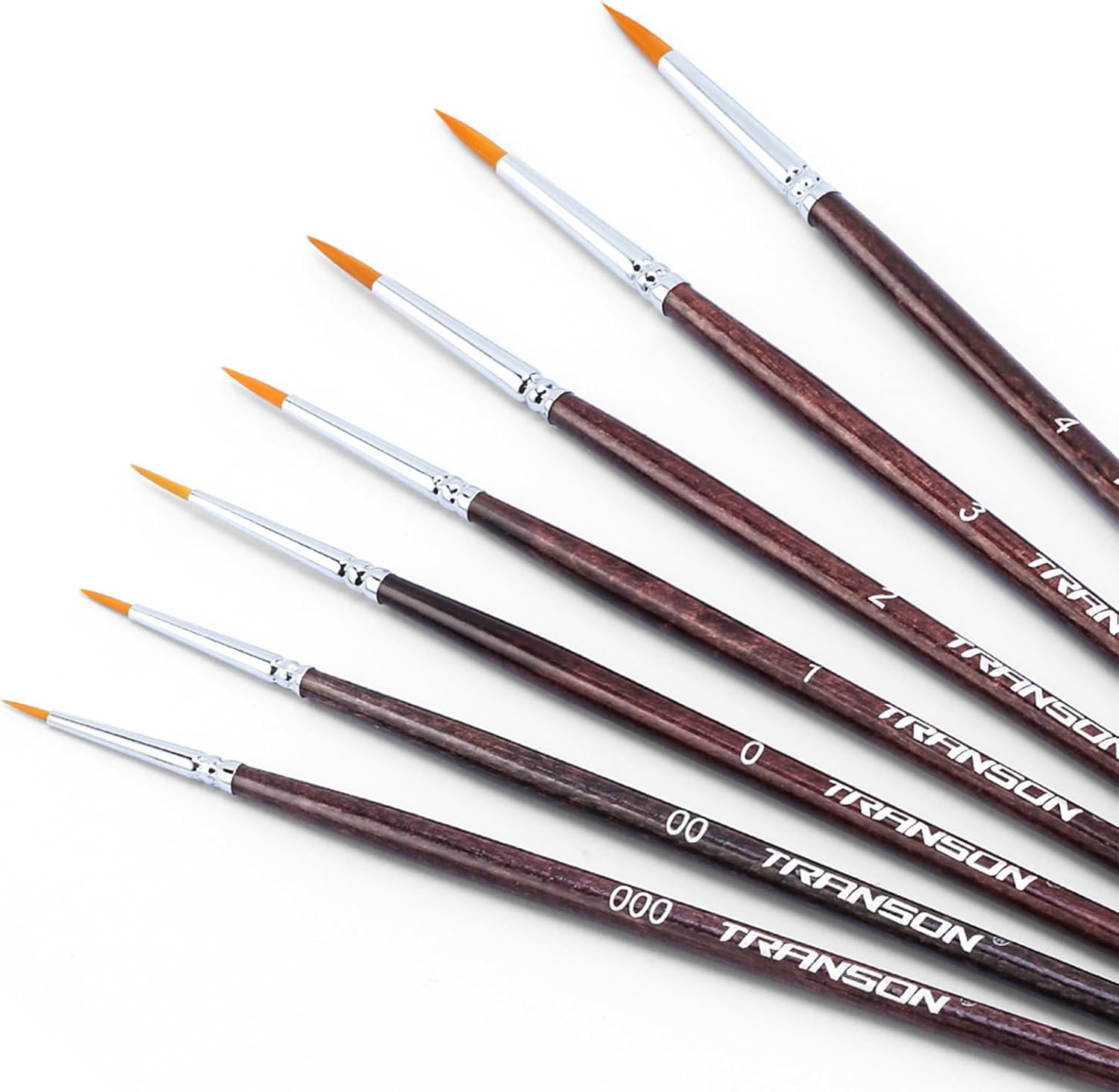 |
Transon Small Detail Paint Brushes | Multi-Medium Compatibility High-Grade Synthetic Bristles Made from solid birch wood with a UV-coated finish Short handle design offers sturdy grip and precision |
Check Price |
 |
GOTIDEAL Paint Brush Set | 10 Assorted Sizes Brush lengths range from 17.1 cm to 19.7 cm (6.7″ to 7.7″) Works on Multiple Surfaces High-Quality Wooden Handles |
Check Price |
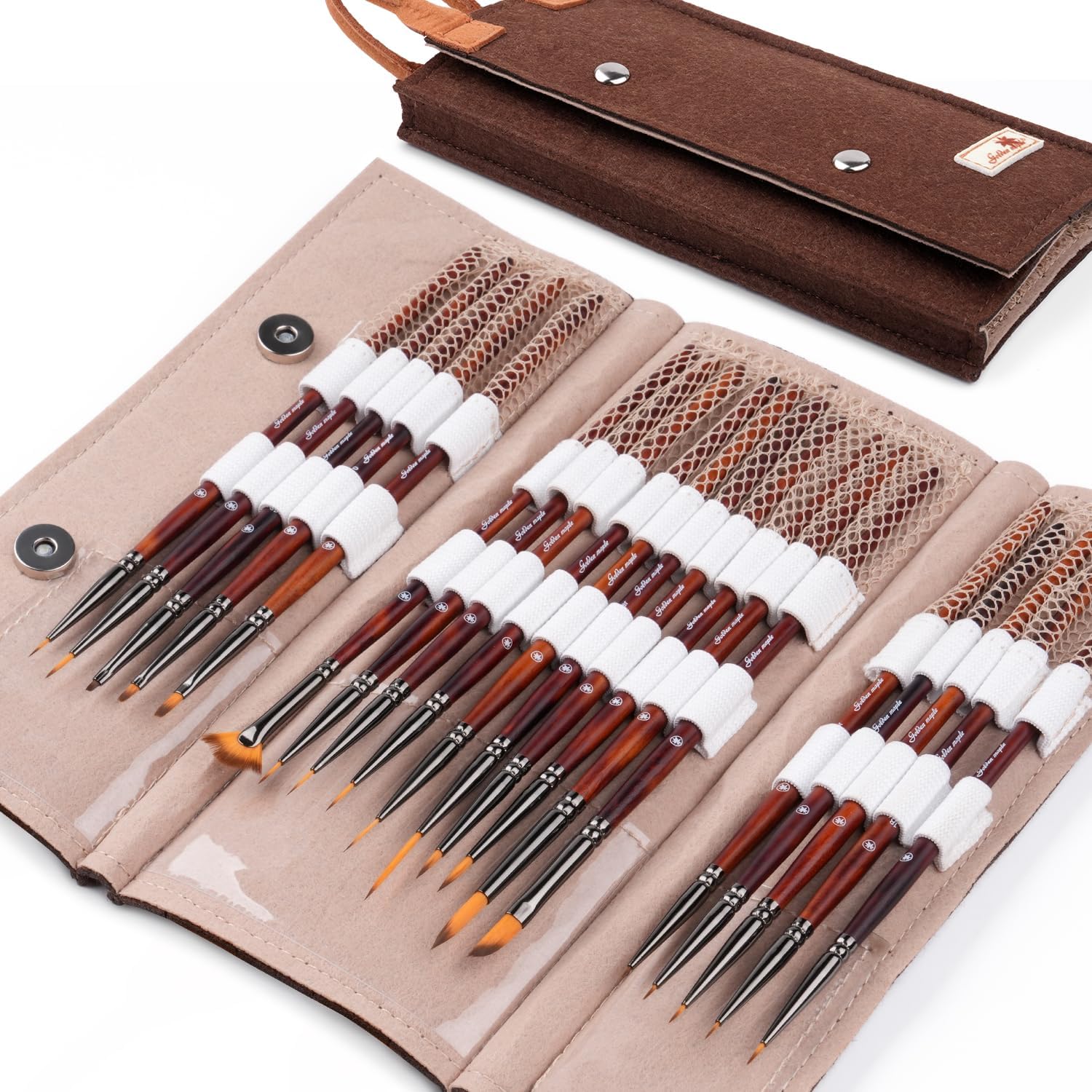 |
Golden Maple Fine Miniature Paint Brushes | Designed for Intricate Work Excellent paint holding capacity Durable and long-lasting performance Easy to Clean & Maintain |
Check Price |
 |
Miniature Paint Brushes | Extreme Detail Brush Variety Premium Synthetic Bristles Rust-Resistant Copper Ferrules Matte-textured triangular grip |
Check Price |
 |
Testor 8707 Economy Pointed Round | Includes 10 pointed round brushes for fine detail and 10 flat round brushes Designed for artists who want to try a variety of colors Lightweight yet strong, easy to grip Works well on paper, canvas, wood, ceramics, and more |
Check Price |
What Matters Before You Choose a Brush
The best purchase starts with the project, not the package count. A 20-piece set can be useful, but twenty brushes do not help if none of them has the shape you need or if the bristles are poorly suited to the paint.
Start With the Size of the Painted Area
For a scale model, ornament, small metal fitting, or painted detail on a craft project, a small round or liner can be exactly right. The short bristle length and narrow point make it easier to stop paint at an edge and keep enamel out of recesses.
For broader work, look for a flat brush wide enough to reduce the number of overlaps. Every overlap is another chance to disturb partially setting paint. The Testors economy pack at least includes pointed and flat brushes, which gives it more range than a set made entirely of very small rounds.
The products here are mainly craft and detail sets. If your goal is a glass-smooth enamel finish across a large cabinet door or a wide piece of trim, you may need a larger dedicated finishing brush in addition to one of these sets for corners and detail work.
Look at Bristle Shape Before Bristle Count
A brush assortment becomes more useful when the shapes are genuinely different. A liner carries a narrow line farther than a short round. A filbert softens edges. A flat brush fills small rectangular areas efficiently. An angled spotter can reach a recess that a straight ferrule cannot approach comfortably.
Fuumuui is especially varied in this respect, with round, spotter, liner, filbert, flat, angle, and angled-spotter shapes in its current 11-piece set. Golden Maple also emphasizes multiple fine-detail shapes rather than repeating one round tip in many sizes. YIMART adds dotting tools, which are not brushes at all but can be useful for decorative points and circular accents.
Check What the Maker Actually Says About Enamel
A listing that says a brush is suitable for acrylic or watercolor does not automatically prove it is intended for solvent-based enamel. Transon explicitly lists enamel among its supported paint types, GOTIDEAL names enamel in its multi-purpose description, and Fuumuui does the same. Those are useful signals for someone who wants documented compatibility.
Golden Maple’s current page for the fine miniature set emphasizes watercolor, acrylic, oil, models, and detailed art. YIMART is primarily sold as a nail-art brush and dotting set. Those products may still be useful for certain enamel-detail jobs, but I would not turn an absence of compatibility information into a guarantee. Check the enamel label and keep the first cleaning cycle conservative.
Handle Shape Matters During Fine Work
Long traditional artist handles can be comfortable at an easel, but very small enamel work often benefits from a shorter grip because your fingers can sit closer to the ferrule. That reduces the distance between your hand and the tip and can make tiny movements easier to control.
Transon specifically uses short birch handles for precision. Fuumuui uses a matte, triangular short handle designed to resist rolling and provide a more stable grip. Golden Maple’s fine-detail designs also focus on close control. For miniature parts and narrow lines, those ergonomic differences can matter more than decorative handle finishes.
Ferrule Construction Deserves Attention
The ferrule joins the bristles to the handle. On an inexpensive brush, a loose ferrule or poorly crimped bundle can become the weak point. A bristle that drops into wet enamel is not only annoying; removing it can disturb the surface and create a ridge.
Transon describes nickel-plated copper ferrules, while Fuumuui describes a rust-resistant copper ferrule with a double-crimped connection. GOTIDEAL lists rust-resistant nickel ferrules and double-crimped construction. Those details are useful because they relate directly to how the brush holds together through use and cleaning.
Decide Whether You Need Precision or Finish Quality Most
Tiny pointed brushes are built for placement. Broad finishing brushes are built for leveling. The distinction matters because no set in this article should be judged only by how many fine tips it contains.
If you paint scale models, miniatures, signs, ornaments, or small metal components, precision may be the priority. If you coat larger furniture parts, smooth trim, or wide metal surfaces, the detail brush is only one part of the toolkit. Choose for the surface in front of you, not for the most impressive number on the package.
When a Small Brush Is Not the Whole Solution
A brush cannot compensate for poor surface preparation or paint that is too thick to level. If enamel is dragging immediately, check the product instructions for temperature, stirring, thinning, and recoat guidance before pressing harder on the brush.
A contaminated surface can create fisheyes, weak adhesion, and roughness no matter how good the bristles are. Sanding dust, wax, grease, silicone residue, and loose old coating all interfere with the finish. The same is true of a brush that still contains dried paint from a previous session.
Large flat surfaces may also be better served by a larger finishing brush, foam applicator, spray system, or another method specifically recommended for that enamel. The six products below make the most sense for small-to-medium craft work, detail painting, models, touch-ups, decorative patterns, and other controlled applications.
YIMART 20PCS Detail Brush and Dotting Set – A Mixed Set for Tiny Decorative Work
The YIMART set is unusual in this group because it was designed primarily for nail art rather than for household painting. The current product information identifies a 20-piece bundle with 15 white-handled brushes and five dotting pens. The brushes use synthetic hair and plastic handles, while the dotting tools combine plastic and metal.
That origin matters. These are small tools for lines, patterns, petals, dots, and other controlled marks. They are not broad enamel finishing brushes. On a miniature, ornament, decorative metal object, or a tiny painted accent, that specialization can be useful because several tip styles let you vary the mark without trying to force one round brush to do everything.
For enamel work, I would treat this as a specialty detail set rather than a universally compatible paint system. The product information focuses on nail art and does not give a broad solvent-resistance claim for hobby or household enamels. If you plan to use solvent-based enamel, test one brush with the required cleaner before sacrificing the whole set.
Features
The set contains 15 brushes plus five double-ended dotting tools. That mix expands what you can do beyond ordinary brush strokes. A striping or liner-style brush can pull a narrow line, a flat or angled tip can fill a tiny shape, and the dotting tools can create repeated circles without loading a bristle point every time.
The synthetic brush heads are mounted on lightweight plastic handles. For close decorative work, low weight can be comfortable because the tool does not fight small finger movements. The trade-off is that these handles and brush heads are built more like craft accessories than heavy-duty professional finishing tools.
YIMART lists several brush functions, including flat fan, pattern, striping liner, flat, oblique angle, drawing, and petal work. On enamel projects, those shapes can translate well to small motifs, narrow borders, model accents, and tiny touch-ups. The variety is more valuable than the raw piece count because each shape changes how paint leaves the tip.
The five dotting pens are the distinctive extra. They can place enamel dots or small circular accents without the fuzzy edge that a worn brush sometimes leaves. Use them only where the paint can level at that thickness, because a large bead of enamel can skin over on top while remaining soft underneath.
- Fifteen brush tips give you several ways to handle lines, petals, narrow fills, and tiny corrections without repeatedly reshaping one brush.
- Five dotting tools add a type of mark that ordinary paintbrush sets usually do not provide, which is useful for decorative enamel details and repeated circular accents.
- Synthetic hair and lightweight handles make the set easy to manipulate during close work where fingertip control matters more than long-handle leverage.
- The set is especially useful for experimenting with brush shapes before buying more specialized individual detail brushes.
- The product is primarily designed for nail art, so its documentation does not provide the same clear enamel-and-solvent compatibility guidance as a brush set that specifically lists enamel paint.
Who It’s Best For
This set makes the most sense for crafters painting very small decorative details, dots, patterns, ornaments, model accents, or other enamel work where a wide finishing brush would be too large. It is also useful if you want many tip styles in one compact kit.
Not Ideal For
It is not a sensible choice for coating broad furniture, trim, doors, or large metal panels. It is also a weaker fit if you need documented compatibility with a strong solvent cleaner and do not want to test the bristles first.
Transon Small Detail Paint Brushes – Seven Short-Handled Rounds for Precise Enamel Work
The Transon set is a more direct match for detail enamel work because current product information explicitly lists enamel among the supported media. The seven-piece round set covers sizes 000, 00, 0, 1, 2, 3, and 4, giving you a gradual progression from very fine points to slightly larger detail coverage.
These are still small brushes. Their job is not to level enamel across a broad surface. They are better for model parts, lettering, narrow trim, tiny hardware, recesses, and corrections where a larger brush would touch areas you want to leave unpainted.
The short handle is one of the most practical design choices. When your fingers sit closer to the brush head, small movements at the hand translate into smaller movements at the tip. That helps when you are tracing an edge or trying to stop enamel at a molded boundary.
Features
Transon describes the bristles as high-grade synthetic filaments with an anti-shedding process and enough resilience to spring back after a stroke. For enamel detail work, point recovery matters because a brush that stays splayed after one pass quickly becomes difficult to aim.
The handles are made from solid FSC-certified birch wood with a UV-coated finish. More important than the finish is their short format, which gives you a compact grip for work close to the surface. That can be especially helpful when painting small scale-model parts under strong task lighting.
The ferrules are described as nickel-plated copper. Transon specifically presents them as durable even with corrosive paint. A secure ferrule reduces the chance of wobble at the brush head and helps keep stray bristles from releasing into wet enamel.
The seven round sizes cover a useful detail range without overwhelming the user with near-duplicate brushes. The smallest sizes can handle pin lines and tiny edges, while sizes 2 through 4 give you a little more paint capacity for small filled areas.
- The current product description explicitly includes enamel, so there is clearer support for this use than with a general craft brush that only lists acrylic or watercolor.
- Seven graduated round sizes make it easy to move from ultra-fine detail to small-area coverage while keeping a similar brush feel in the hand.
- Short birch handles place your fingers close to the ferrule, which improves control for model parts, narrow edges, lettering, and touch-up work.
- Nickel-plated copper ferrules and an anti-shedding synthetic bristle design address two common frustrations: loose heads and stray hairs in the finish.
- The all-round, small-size selection is too specialized for anyone who needs a wider flat edge to level enamel across larger surfaces.
Who It’s Best For
Transon is a strong fit for model makers, miniature painters, craft restorers, and anyone applying enamel to small components where precise placement matters more than fast coverage.
Not Ideal For
It is not ideal for cabinet faces, wide trim, doors, or large flat metal pieces. Those jobs need a broader brush that can maintain a wet edge with fewer overlapping strokes.
GOTIDEAL 10-Piece Paint Brush Set – A General-Purpose Round Set With Enamel Listed
The GOTIDEAL set takes a broader general-craft approach. Current listings describe ten round-pointed brushes in different sizes, synthetic nylon bristles, wooden handles, and nickel ferrules. The maker’s multi-purpose description includes enamel along with acrylic, oil, gouache, watercolor, model painting, wood, glass, ceramic, and other surfaces.
That broad compatibility claim makes it a practical starter set for someone who moves between several types of craft work. It is still dominated by round-pointed brushes, so think of it as a versatile small-project set rather than a substitute for a two- or three-inch finishing brush.
The variety in size is useful for enamel because you can choose a larger round for filling a small object and a smaller point for the edges. The transition feels more natural than switching between completely different handle designs in the middle of the job.
Features
GOTIDEAL lists ten different brush sizes, with overall lengths in the range of about 17.1 to 19.7 cm. The set includes larger and smaller round-pointed options, which gives it more range than a micro-detail-only kit. For enamel work on ornaments, signs, crafts, models, and small wood or metal pieces, that can cover many everyday tasks.
The bristles are synthetic nylon. Nylon is common in craft brushes because it can provide good spring and a predictable point. GOTIDEAL specifically includes enamel in the intended uses, but the cleaning method should still follow the enamel manufacturer’s instructions rather than a generic assumption about solvent strength.
The wooden handles have a UV-coated finish, and the ferrules are described as rust-resistant nickel. The brush heads are double crimped. Those construction details matter because repeated washing can loosen a poorly made ferrule or swell unfinished wood near the metal joint.
The pointed profile makes the set useful for edges and detail, but the larger rounds also carry enough paint for small filled areas. You can turn a round slightly on its side for more coverage, though a true flat brush will still level a rectangular area more efficiently.
- Ten graduated round-pointed brushes provide a useful spread for craft enamel work, from small fills to narrow edges and detail.
- The product listing explicitly names enamel among the supported paint types, which gives buyers a clearer basis for choosing it for this purpose.
- Synthetic nylon bristles, double-crimped construction, and rust-resistant nickel ferrules are sensible features for a set that may be cleaned frequently.
- The same set can move between models, small wood projects, ceramics, glass crafts, rock painting, and similar detailed work, reducing the need to keep a separate brush kit for every project.
- Because the set is centered on round-pointed brushes, it lacks the broad flat profiles that make it easier to level enamel smoothly over wider panels.
Who It’s Best For
This set suits crafters who want one inexpensive-style assortment for many small enamel jobs rather than a highly specialized miniature set. It is particularly practical for mixed projects that include both filling and fine edge work.
Not Ideal For
It is not ideal if most of your work is broad, glossy finishing where flat or angled brushes are more efficient. A dedicated larger finishing brush will reduce overlap and leave fewer opportunities for visible stroke texture.
Golden Maple Fine Miniature Paint Brushes – Precision Shapes for Models and Intricate Work
Golden Maple’s current fine miniature set is clearly built around precision. The manufacturer describes premium synthetic bristles, a selection of fine-detail shapes, FSC-certified wood handles, and a protective carrying case. The stated uses focus on miniatures, models, watercolor, acrylic, oil, and detailed art.
That makes it attractive for tiny enamel work, but there is an important distinction: the current official page for this exact fine-detail set does not specifically advertise enamel. I would therefore choose it for its shape and control, then confirm compatibility with the exact enamel and cleaner you plan to use.
For water-based enamel, that may be straightforward if the maker’s cleaning guidance and the paint label agree. For a strong solvent-based enamel, I would test a less critical brush first. A beautiful fine point is not useful if the cleaning solvent softens the bristles, loosens the adhesive, or damages the handle finish.
Features
The set includes multiple shapes rather than a row of identical rounds. Golden Maple’s current fine-detail range uses round, liner, flat, and angle styles, which is useful because enamel detail work often changes direction within one project. A liner can carry a narrow stroke, a flat can fill a tiny rectangular area, and an angle can approach a corner with more control.
The bristles are synthetic nylon and are described as flexible while retaining shape. For miniature work, the practical benefit is that the tip can return to a point after contact instead of remaining flattened. That makes repeated details more consistent.
FSC-certified wood handles give the brushes a traditional feel while keeping the grip rigid. On small models and decorative objects, the balance of the handle can make precise strokes less tiring than a flimsy plastic shaft.
A protective case is useful for fine brushes because bent tips often happen in storage rather than during painting. If the set is kept in a drawer with tools pressing across the bristles, even a good point can be ruined before the next project begins.
- Multiple round, liner, flat, and angle shapes give you more control over different kinds of miniature enamel details than an all-round set can provide.
- Synthetic bristles are designed to retain a fine point, which helps with narrow edges, recesses, model trim, and small decorative lines.
- The wood handles and compact detail-oriented design provide a stable grip for work where tiny hand movements matter.
- A protective case helps prevent bent tips during storage and transport, which is especially valuable for very fine brushes.
- The current manufacturer page for this exact set does not specifically list enamel, so solvent-based enamel users should verify compatibility rather than assuming it from the brush shape alone.
Who It’s Best For
Golden Maple is best suited to model painters, miniature artists, ornament painters, and crafters who need several fine shapes and are willing to match the brush carefully to their enamel formula.
Not Ideal For
It is not ideal for buyers who want explicit manufacturer confirmation for a particular solvent-based enamel or for anyone trying to coat a large flat surface quickly.
Fuumuui 11-Piece Professional Nylon Detail Brushes – Seven Shapes With Enamel Compatibility Listed
The generic “Miniature Paint Brushes” entry in the original article links to Fuumuui’s 11-piece professional nylon detail set. Fuumuui’s current product page is unusually specific about the shape mix: round, spotter, liner, filbert, flat, angle, and angled spotter. It also explicitly lists enamel among the paints the brushes can handle.
That combination makes this one of the more flexible detail sets in the group. You are not limited to changing size; you can change the geometry of the tip to suit the mark. This matters on models and small crafts, where a filbert may soften a curved fill, a liner may follow a narrow seam, and an angled spotter may reach behind a raised edge.
The set remains focused on micro detail. If your enamel project is a chair, door, or large sheet-metal panel, these brushes belong in the corner-and-touch-up role rather than the main coverage role.
Features
Fuumuui uses synthetic nylon bristles and describes them as soft, flexible, neatly trimmed, and resistant to splitting under pressure. The company also states that the brushes retain their shape. For enamel, that point retention makes it easier to maintain a clean line without trimming stray hairs mid-project.
The ferrules are described as rust-resistant copper with a double-crimped connection. Fuumuui also says the construction is designed to reduce paint seepage into the bristle base. Keeping paint away from the hidden part of the bundle is important because dried residue there causes stiffness and gradual splaying.
The short hardwood handles have a matte triangular profile. That shape is more than styling: it gives your fingers flat reference surfaces and helps keep the brush from rolling off the workbench. During long miniature sessions, the wider contact area can also feel steadier than a very thin round handle.
The 11-piece set includes seven tip families, including an angled spotter with a bent ferrule for tight spaces. That is particularly useful on models, small mechanical parts, figurines, and decorative work where straight access is blocked by another feature.
- Fuumuui explicitly lists enamel among the supported paint types, giving this set a clear use case for detailed enamel work.
- Seven brush shapes let you choose by stroke type as well as size, which is valuable for recesses, narrow lines, small fills, softened edges, and hard-to-reach spots.
- The matte triangular short handles provide a stable close grip and are less likely to roll across the table when you set a brush down.
- Double-crimped rust-resistant copper ferrules and shape-retaining nylon bristles are practical construction features for brushes that will see repeated use and cleaning.
- The set is optimized for detail rather than broad coverage, so even its flat and filbert shapes are not replacements for a larger finishing brush on wide enamel surfaces.
Who It’s Best For
This is a strong choice for model makers and detail-focused crafters who use enamel and want more tip variety than a simple set of round brushes provides.
Not Ideal For
It is not ideal for large furniture panels, doors, wide trim, or any job where maintaining a broad wet edge matters more than reaching tiny recesses.
Testors 8707 Economy Brushes – A 20-Piece Hobby Pack With Round and Flat Tips
The Testors 8707 is different from the fine-detail sets because it is an economy 20-pack aimed at hobby and craft use. Testors’ current brush information describes economy packs with pointed rounds and flat brushes, while catalog information identifies 8707 as the 20-pack economy brush set. Retail product information describes ten pointed rounds and ten quarter-inch flat tips.
That simple split gives the pack a useful advantage: it includes both fine-detail and small general-purpose shapes. You can keep pointed brushes for trim and lines while reserving flat brushes for broader fills. For a project that uses several enamel colors, having many inexpensive brushes can also reduce the temptation to rush cleanup just so one brush can be reused immediately.
These are economy brushes, not premium finish brushes. That is important to say plainly. Their value lies in quantity, convenience, and the presence of two useful profiles. If the surface is highly visible and you want the smoothest possible gloss, a higher-grade finishing brush may give more predictable bristle alignment and paint release.
Features
The 8707 pack contains 20 brushes. Testors’ documentation for the economy format describes pointed round brushes for fine detail and flat brushes for general-purpose painting. That pairing covers more types of small enamel work than a detail-only round set.
The brushes use synthetic bristles and plastic handles. The current Testors brush page says its paint brushes are geared toward hobby and craft projects and describes them as shed-proof. Keeping bristles out of wet enamel is particularly important because removing a hair from a glossy coat often leaves a visible disturbance.
The lightweight construction makes the brushes easy to keep as dedicated color tools. You can assign a few to dark enamel, a few to light colors, and several to primer or less critical work. This can be useful when a project involves many small parts and repeated color changes.
The flat tips are about a quarter inch wide according to current retail information for the 8707 format. That is still small, but it gives you enough edge to paint a narrow panel or model surface more efficiently than a tiny round.
- Twenty brushes provide enough quantity to dedicate different brushes to colors, primers, touch-ups, or separate stages of a hobby project.
- A split between pointed round and small flat tips gives the pack both fine-detail ability and modest general-purpose coverage.
- Testors positions its brushes specifically for hobby and craft projects, making the set a natural companion to small models, kits, ornaments, and similar enamel work.
- Synthetic shed-resistant bristles reduce the chance of loose hairs becoming trapped in a wet enamel finish.
- The economy construction is better suited to casual and utility work than to someone chasing the most refined brush-laid gloss on a highly visible surface.
Who It’s Best For
The 8707 makes sense for casual modelers, classrooms, shared craft spaces, multi-color projects, and painters who value having many serviceable brushes available at once.
Not Ideal For
It is not ideal if you want a small number of premium brushes with carefully shaped points for demanding miniature detail or a broad finishing brush for furniture-grade enamel work.
Comparing the Six Brush Sets
The six products share one purpose—putting paint where you want it—but they approach that job very differently. The most useful comparison is not which box contains the most pieces. It is which set gives you the right brush geometry and documented paint compatibility for the work you actually do.
For the Clearest Enamel Compatibility
Transon, GOTIDEAL, and Fuumuui are the easiest options to evaluate because current product information explicitly names enamel among their supported media. That does not remove the need to follow the paint manufacturer’s cleaning instructions, but it gives you a stronger starting point than a brush whose maker never mentions enamel.
Transon is the simplest of the three. It gives you seven round sizes and a short precision handle. If most of your work is lines, edges, small model parts, and tiny fills, that consistency is useful.
GOTIDEAL offers more general craft range through ten round-pointed sizes. It is less specialized than Transon and easier to treat as an everyday small-project brush kit.
Fuumuui provides the broadest shape variety. The angled spotter, liner, filbert, flat, and other profiles make it the strongest fit when one model or craft project contains several different kinds of detail.
For the Smallest Decorative Marks
YIMART stands apart because of its dotting tools. If the job includes repeated dots, tiny flowers, circular accents, or nail-art-style decoration on an enamel-painted object, those tools can do something the other sets cannot.
The limitation is documentation. YIMART is sold primarily as a nail-art set, so it does not provide the same confidence for repeated solvent-based enamel cleaning. I would use it for a carefully tested decorative role rather than as the default set for every enamel formula.
For Miniatures and Model Detail
Golden Maple and Fuumuui are both oriented toward miniature work, but they differ in how directly they document enamel use. Golden Maple’s fine set emphasizes synthetic detail bristles, multiple shapes, models, acrylic, oil, and other fine art media. Fuumuui explicitly includes enamel and offers seven tip families.
If enamel compatibility is the deciding factor, Fuumuui is the more clearly documented choice. If your project uses several paint types and you mainly care about a refined miniature brush assortment with a protective case, Golden Maple remains attractive—provided you verify the exact enamel and cleaner you intend to use.
Transon is also excellent for miniature work when you prefer a consistent family of round brushes rather than a mix of shapes.
For Many Colors or Shared Craft Use
Testors 8707 is the practical quantity option. Twenty brushes let you keep colors separated, hand brushes to several people, or replace a utility brush without stopping the entire project. The inclusion of both pointed rounds and flat tips makes it more versatile than a 20-pack of one identical shape.
The trade-off is refinement. If one tiny figure or high-gloss ornament needs a precise line, a carefully shaped Transon, Golden Maple, or Fuumuui detail brush may feel more controlled. If you are painting a batch of parts in many colors, the economy pack can be easier to manage.
For Small Filled Areas
GOTIDEAL’s larger rounds can handle small fills reasonably well, while the flat brushes in the Testors pack can spread a wider ribbon of paint. Fuumuui includes flat and filbert shapes, though they remain miniature-scale.
For anything much wider than a craft object or model panel, none of these sets should be forced into the job. A brush that is too small makes you create unnecessary overlaps, and unnecessary overlaps are one of the easiest ways to leave visible texture in enamel.
If You Want One Set to Learn With
GOTIDEAL is straightforward if you want a progression of round sizes and documented enamel use. Fuumuui is better if you want to learn what different tip shapes do. Testors is useful if quantity and experimentation matter more than premium feel.
I don’t think the choice needs to be complicated. Decide whether your first priority is precise rounds, multiple shapes, decorative dotting, or a large supply of utility brushes. Then pick from the set that actually serves that purpose.
How to Use a Brush With Enamel Without Fighting the Finish
Enamel rewards a slower setup and a lighter touch. The basic sequence is simple, but each step affects the next one. A clean brush cannot rescue a greasy surface, and a perfectly prepared surface can still look rough if you keep brushing after the coating begins to set.
1. Confirm the Paint Type and Cleanup Method
Read the enamel label before choosing a brush or opening a solvent. Determine whether the product is water-based or solvent-based and note the recommended cleaner, thinner, temperature range, recoat interval, and ventilation guidance.
Do not assume mineral spirits are correct just because the can says enamel. Modern enamel formulas vary, and the manufacturer’s instructions should control the cleanup routine.
2. Prepare the Surface Until It Feels Boring
Remove grease, dust, loose coating, rust, and anything else that could interfere with adhesion. Sand where the coating system requires it, then remove sanding residue completely.
The smoother the surface, the less work the brush has to do. If your fingers can feel a raised edge under the old paint, a glossy enamel coat may make that edge even more visible.
3. Choose the Brush by the Area, Not the Whole Project
A single object may need more than one brush. Use a flat or larger round for the broadest small areas, then switch to a pointed brush for edges, corners, lettering, or recesses.
This is where mixed sets are useful. You do not have to ask one tiny point to fill everything. The brush should be just large enough to cover the area efficiently without touching neighboring surfaces.
4. Condition or Prepare the Brush as Directed
For water-based coatings, some painters lightly dampen compatible synthetic bristles before loading; for solvent-based systems, the correct preparation can be different. Follow the brush and paint instructions rather than applying one ritual to every formula.
Whichever system you use, remove loose hairs and dust from a new brush before it touches the finish. Gently flex the bristles and inspect the tip under good light.
5. Stir the Enamel Thoroughly
Pigment and resins can settle in storage. Stir according to the label, scraping the bottom and sides if instructed. Avoid whipping air into the paint.
Never use your good detail brush as a stirring stick. Dried paint pushed deep into the ferrule is one of the fastest ways to ruin the shape.
6. Load Only Part of the Bristle Length
Dip enough of the brush to carry paint, but do not bury the ferrule in enamel. Loading paint all the way to the metal joint makes cleanup harder and allows residue to dry where the bristles are packed tightly.
For a small detail brush, a surprisingly small amount of enamel is enough. Rotate a round point lightly as you load it so the bristles form a controlled tip.
7. Lay Down the Paint and Then Leave It Alone
Move the enamel into place with smooth strokes. Once the paint is distributed, use the lightest practical finishing pass to level it and then stop.
The moment enamel begins to tack, extra brushing can create ridges that no longer flow out. If a spot is imperfect, it is often better to let the coat cure, sand lightly if the system allows, and correct it with the next coat.
8. Keep a Wet Edge on Larger Small Areas
On a model panel or craft surface, work from one side toward the other so the fresh paint meets paint that is still open. Avoid painting isolated patches and then trying to blend them after several minutes.
If the area is too large to maintain a wet edge with your current brush, that is a sign to move up to a wider tool rather than working faster with a tiny one.
9. Watch Corners and Recesses for Pools
Enamel collects around raised details, inside corners, and at the lower edge of a vertical object. Use a clean or lightly loaded brush to pull excess paint away before it begins to skin over.
Fine brushes are particularly useful here. A pointed Transon or Fuumuui brush can wick a small pool from a recess without disturbing the whole surface.
10. Clean the Brush Before the Paint Hardens
Follow the paint maker’s cleanup instructions immediately after the session. Work cleaner through the bristles gently and avoid crushing the tip against the bottom of a jar.
Rinse or repeat until residue is gone, then reshape the bristles and allow the brush to dry in a position that does not bend the point. With fine brushes, storage is part of maintenance; a perfectly cleaned tip can still be ruined if it dries pressed sideways against a container.
Keeping Enamel Brushes in Good Condition
A brush often fails gradually. The point becomes slightly wider, then a few hairs refuse to align, then the bristles stay stiff near the ferrule. Most of that damage comes from paint residue and poor storage rather than ordinary brushing.
Keep Paint Out of the Ferrule
The hidden base of the bristle bundle is difficult to clean. If enamel repeatedly dries there, the hairs are forced apart and the point starts to flare. Load only the working portion of the bristles and wipe excess paint before it creeps toward the ferrule.
Use the Correct Cleaner, Not the Strongest Cleaner
A stronger solvent is not automatically better. It can attack handle coatings, adhesives, or synthetic fibers. Use exactly what the enamel manufacturer recommends, and check the brush maker’s guidance when available.
If a fine brush is not documented for that cleaner, test compatibility on one brush before using the entire set. This is especially relevant to YIMART and Golden Maple in this roundup because their current product descriptions do not provide the same explicit enamel-use statement as Transon, GOTIDEAL, and Fuumuui.
Reshape Fine Points Before Drying
After cleaning, gently bring a round or liner back to its point with your fingers or according to the maker’s care instructions. Do not leave a tiny brush spread open and expect it to return perfectly after drying.
Golden Maple provides protective tubes with some fine brush sets, and that kind of tip protection is helpful once the brush is fully dry. Never trap moisture in a sealed cover.
Store Brushes Without Pressure on the Bristles
Fine tips should not rest against the bottom of a cup. Store dry brushes horizontally in a case or upright with the bristles free, depending on the design and maker’s instructions.
Testors specifically advises storing brushes with bristles facing up. The same principle applies broadly: do not let storage bend the shape you worked to preserve during cleaning.
Separate Utility Brushes From Finish Brushes
Once a brush becomes slightly worn, it can still be useful for primer, hidden areas, texture, or cleanup work. Retire it from final glossy coats before it begins leaving visible stray tracks.
This is where a large economy pack has value. You can preserve a few cleaner, straighter brushes for visible surfaces and use worn ones for less critical tasks.
Habits That Leave Brush Marks or Ruin the Brush
Using a Micro Brush on an Area That Is Too Large
A tiny brush forces you to make many overlapping passes. By the time you reach the far side, the first passes may already be setting. The result is a patchwork of ridges rather than one leveled film.
Use the largest brush that still gives you control. Save micro brushes for borders, corners, and detail.
Going Back Into Enamel That Has Started to Tack
Fresh enamel may look uneven for a moment and then level as it sits. Repeatedly touching it because you are nervous can make the finish worse.
Once the paint begins resisting the brush, stop. Let the coat cure according to the instructions and correct the surface later if necessary.
Scrubbing the Bristles During Cleanup
Pressing a fine point hard against the bottom of a solvent jar bends the bristles and drives paint deeper into the ferrule. Swirl and work cleaner through the hairs gently instead.
A brush can be chemically clean and still mechanically ruined. Protect the point while you clean it.
Leaving the Brush Standing in Solvent
Soaking seems convenient, but long immersion can bend bristles and expose the ferrule, adhesive, and handle finish to solvent longer than necessary. Clean actively and remove the brush when the residue is gone.
Mixing Paint With the Brush
Testors specifically warns against stirring or mixing paint with brush bristles. The advice is sensible for every fine brush. Stirring pushes pigment and resin deep into the bristle base and splays the point against the container.
Use a proper stir stick or mixing tool, then load the brush only after the enamel is ready.
Ignoring the Difference Between Water-Based and Solvent-Based Enamel
This is one of the most expensive errors because it can ruin both brush and finish. Water alone will not clean a solvent-based enamel that requires mineral spirits, and an unnecessarily aggressive solvent can damage a brush that was intended for gentler cleaning.
Read both labels before the first stroke, not after the bristles have started to harden.
Safety Notes for Enamel Painting
Enamel paint can involve solvents, pigments, and fumes that require more care than ordinary water-based craft paint. The correct precautions depend on the exact product, so the paint label and safety data sheet take priority over generic advice.
Work with adequate ventilation as directed by the manufacturer. Keep solvent-based products away from flames, sparks, heaters, and other ignition sources. Wear the protective equipment specified on the label, especially when sanding old coatings or using strong cleaners.
Do not use food containers for solvents or paint cleanup. Label cleaning jars clearly and keep them away from children and pets. Dispose of paint, solvent, and contaminated materials according to local rules and the manufacturer’s instructions.
A fine brush also has a physical hazard that is easy to overlook: the ferrule and handle can become slippery with solvent or paint. Wipe spills promptly so the tool does not slide from your hand onto skin, clothing, or finished surfaces.
Frequently Asked Questions
Are synthetic brushes good for enamel paint?
They can be. Transon, GOTIDEAL, and Fuumuui all sell synthetic detail brushes whose current product information includes enamel among intended uses. The exact paint formula still matters, especially for solvent-based enamel, so follow the enamel maker’s cleaning instructions and verify that the brush tolerates the required cleaner.
Do I need natural bristles for oil-based enamel?
Not necessarily. Natural bristles have traditionally been used with oil-based coatings, but many synthetic brushes are designed for a wide range of paints. The safer rule is to use a brush whose maker supports your paint type and whose bristles can tolerate the required solvent.
Which brush shape leaves the smoothest enamel finish?
On a flat area, a properly sized flat finishing brush generally reduces the number of overlapping strokes. On a tiny surface, a larger round or small flat may be sufficient. Smoothness also depends on paint viscosity, surface preparation, temperature, and how little you disturb the enamel once it begins to level.
Can I use these brushes on large furniture?
Most of the sets here are small craft or detail brushes, so they are better for corners, trim details, touch-ups, hardware, ornaments, and small decorative areas. A large furniture panel usually needs a wider finishing brush or another application method recommended for the enamel.
Which set is best for model painting?
Transon is a straightforward choice if you prefer graduated round sizes. Fuumuui offers the widest tip-shape variety and explicitly lists enamel. Golden Maple is also strongly oriented toward miniatures and models, but its current fine-detail product page does not specifically list enamel, so confirm compatibility with your formula and cleaner.
Why does my enamel show brush marks after drying?
Common causes include using a brush that is too small, applying paint too thickly, overworking enamel after it starts to set, painting under unsuitable temperature or airflow conditions, and using a coating that was not prepared according to the label. A good brush helps, but it cannot correct all of those variables by itself.
How far should I dip the brush into enamel?
Load enough of the bristles to carry paint without immersing the ferrule. Keeping enamel away from the bristle base makes cleanup easier and helps preserve the point. Very small detail brushes need far less paint than most beginners expect.
Can I leave an enamel brush in solvent between coats?
That is generally poor brush care unless the manufacturer specifically instructs otherwise. Long soaking can deform bristles and expose ferrule adhesives or handle finishes to solvent. Clean the brush properly and reshape it instead.
Are cheap brushes always bad for enamel?
No. An economy brush can be perfectly useful for primer, small craft projects, classrooms, hidden areas, or multi-color model work. The question is whether its bristles stay aligned well enough for the finish you want. For a highly visible gloss surface, a better-shaped brush may justify the extra care or cost.
Choosing a Brush That Matches the Enamel Job
The best paint brushes for enamel paint are not necessarily the most expensive or the sets with the highest piece count. A useful brush is the one that fits the scale of the work, keeps a controlled shape, and can be cleaned with the method your enamel requires.
For straightforward round-detail work, Transon gives you seven compact sizes with enamel specifically named in the product information. GOTIDEAL offers a wider progression of round-pointed brushes for general craft use, while Fuumuui is the most varied in tip shape and also lists enamel compatibility.
YIMART is a specialty decorative set with useful dotting tools, Golden Maple is a precision miniature option that deserves a compatibility check with the exact enamel, and Testors 8707 is the practical quantity choice for hobby and shared-use work.
The most important decision is still brush size. If you are forcing a micro brush to coat a wide panel, move to a larger finishing brush. If a broad brush is flooding a tiny model detail, step down to a point that gives you control. That balance between coverage and precision is what keeps enamel from becoming a fight.
Compare the six options against the surfaces you actually paint, check the current product details, and choose the set whose shapes and documented uses match your own projects rather than buying on piece count alone.