Glass is one of those surfaces that makes a craft finish reveal every weakness. A ridge that disappears on wood can catch the light on a jar. A slightly cloudy coat can look obvious against a clear vase. And because glass is smooth and nonporous, adhesion depends more heavily on cleaning, thin application, and patient curing than it does on paper or raw wood.
That is why choosing the best Mod Podge for glass is less about finding the strongest-sounding bottle and more about matching the finish to the project. A decorative frame that will stay dry has different needs from a handled jar.
A glass coaster covered with diamond art is a different job again. Some products in the original roundup are true Mod Podge formulas, while others are specialized clear sealers meant mainly for diamond paintings, puzzles, or mixed-media crafts.
That distinction matters. A product can be a useful clear sealer without being the right adhesive for bare-glass decoupage. I’d rather make that difference obvious than pretend every bottle here does the same job. The eight products below are therefore best judged by what they are actually designed to do, how they finish, how they apply, and how much contact with water the finished project is likely to see.
Why Glass Makes a Clear Finish Less Forgiving
Smooth Glass Gives Adhesive Less to Grip
Wood, unglazed ceramic, and paper have texture and pores that help a water-based adhesive settle into the surface. Glass does not. Its smooth face can hold fingerprints, silicone residue, soap film, and oils that are nearly invisible until a coating starts pulling away from them.
For that reason, preparation is not optional. Plaid’s own glass-decoupage guidance recommends cleaning glass thoroughly and using rubbing alcohol to remove residual grease before applying a coating. That small step usually matters more than adding a heavy layer of sealer later.
If a glass piece still feels slick or carries fingerprints, do not coat it yet. A clean, dry surface gives the finish its best chance to bond evenly.
Clear Does Not Always Mean Invisible
Many white craft sealers dry clear, but “clear” can describe several different looks. A gloss finish reflects light and can make colors look deeper. A matte finish removes most shine and can soften contrast. A heavy clear coat can also show brush marks, ridges, or trapped bubbles even though the film itself is transparent.
This matters more on glass because the substrate is already reflective. If you put a glossy finish on a clear jar, the coating can almost disappear when it is smooth, yet every thick edge becomes easier to see. Matte finishes do the opposite: they can make the coated area look intentionally frosted or subdued rather than glass-like.
There is no universally better finish. The right one is the finish that suits the design. Paper napkin decoupage on a decorative bottle may look softer with matte, while bright printed artwork can benefit from gloss.
Decorative Glass and Washable Glass Are Different Jobs
A display-only vase, frame, lantern, ornament, or jar can often use a standard craft finish as long as it is kept reasonably dry. A mug, drinking glass, serving piece, or frequently washed container is harder. Plaid specifically warns that standard Mod Podge Gloss and Matte are not waterproof and should not be submerged or repeatedly exposed to water.
That means a finish described as “durable” should not automatically be treated as dishwasher safe. The word durable can refer to scratch resistance, adhesion, or general handling without saying anything about repeated soaking.
For any glass item that will be washed, the care instructions on the exact product matter more than the general reputation of the brand. If the listing does not clearly cover repeated water exposure, treat the project as decorative.
A Glue-Sealer and a Topcoat Are Not Always Interchangeable
Traditional Mod Podge Gloss and Matte are designed to act as glue, sealer, and finish. You can use the same material under a paper design and over it. Several of the other products in this roundup were designed mainly to lock diamond drills onto a canvas or coaster. They work more like a protective clear sealer than a classic decoupage medium.
That difference changes how useful they are on glass. If you need to attach thin paper to a bottle, a true decoupage adhesive is the more natural fit. If you already have a finished diamond-art coaster with a glass or acrylic face, a specialized sealer may make more sense because its job is to flow around the drills and help hold them in place.
Dry Time Is Only the First Clock
A coating can feel dry long before it has reached its final hardness. Plaid says its standard Mod Podge formulas commonly dry to the touch in roughly 15 to 20 minutes but require about 28 days to fully cure. Other sealers in this roundup advertise much faster complete drying for their intended diamond-art use.
The practical lesson is simple: do not confuse “dry enough for another coat” with “ready for heavy handling or water.” A glass project may look finished while the film is still gaining strength underneath.
| Product Image | Product Name | Features | Price |
|---|---|---|---|
 |
Mod Podge Gloss Sealer | Dries clear with a durable & high-shine coating Quick-Drying & Surface-Friendly Easy Cleanup Non-toxic |
Check Price |
 |
Mod Podge Matte Sealer | Combines glue, sealer, and finish in one convenient formula Versatile Surface Compatibility Durable Matte Finish Quick-Drying & Buildable |
Check Price |
 |
Faburo 2pcs Diamond Painting Sealer | Ready-to-use 120ml bottle Non-Toxic Formula Waterproof & Dust-Proof Protection Prevents diamond paste from falling off |
Check Price |
 |
Diamond Painting Sealer 250ML with Silicone Brush | Dries fully in just 2 hours Safe & Non-Toxic Formula Large 250ml bottle covers multiple projects Permanent Hold & Gloss Finish |
Check Price |
 |
ARTDOT 16 oz Diamond Art Sealer Kits for Adults | Quick-Drying for Fast Results Silicone brush ensures smooth, bubble-free coverage Lint roller compacts beads and removes impurities |
Check Price |
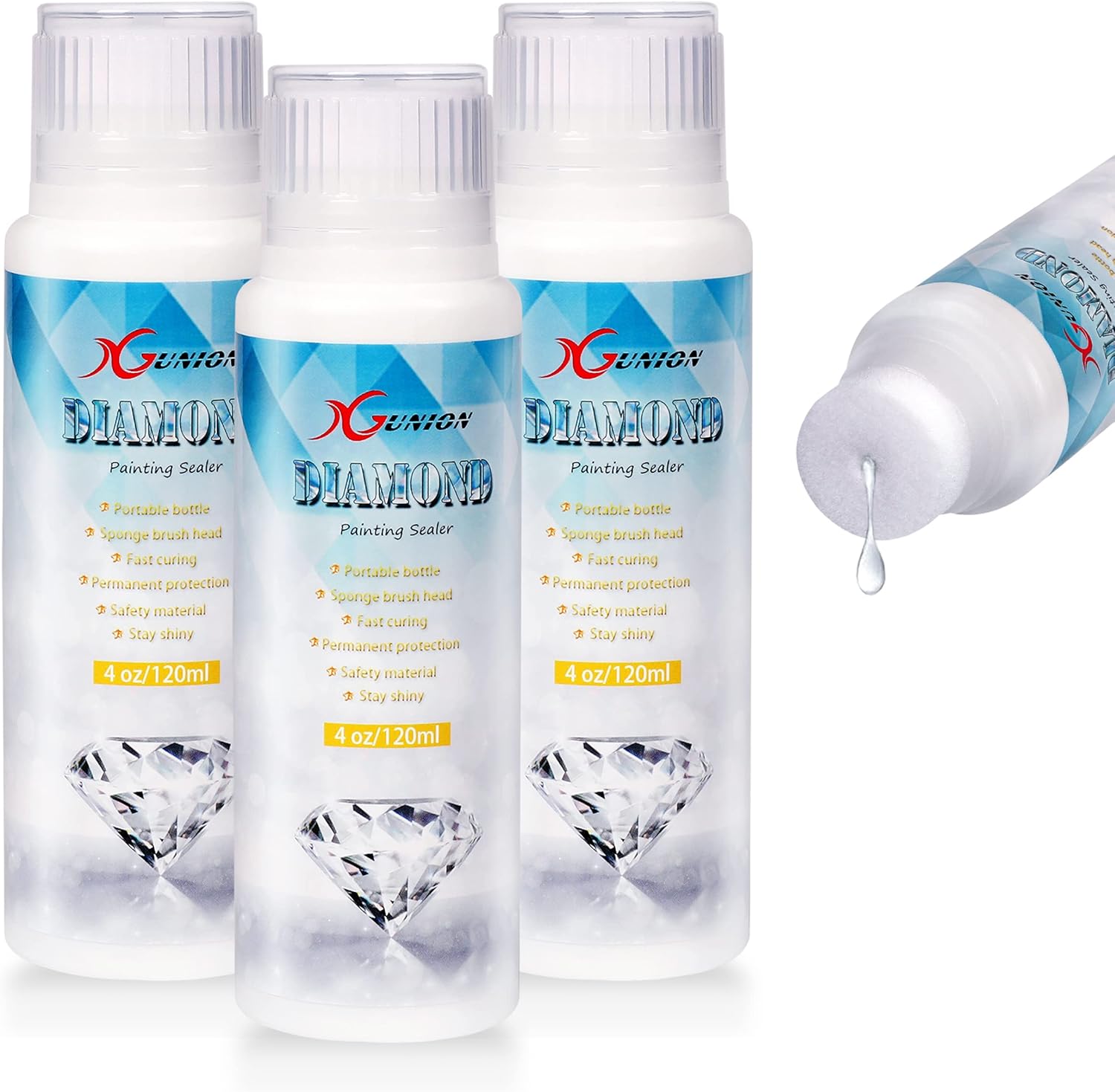 |
Diamond Painting Sealer 3-Pack 360ML | Long-Lasting Shine Safe & Non-Toxic Formula Rapid Curing Time urface cures in just 15 minutes, fully cured in about 30 minutes Adds a high-gloss finish |
Check Price |
 |
SCORCH MARKER – Maker’s Magic Sealer | Crystal-clear gloss finish with mirror-like shine Flexible & waterproof Leaves no clumps or residue Fast-Drying & Easy Cleanup |
Check Price |
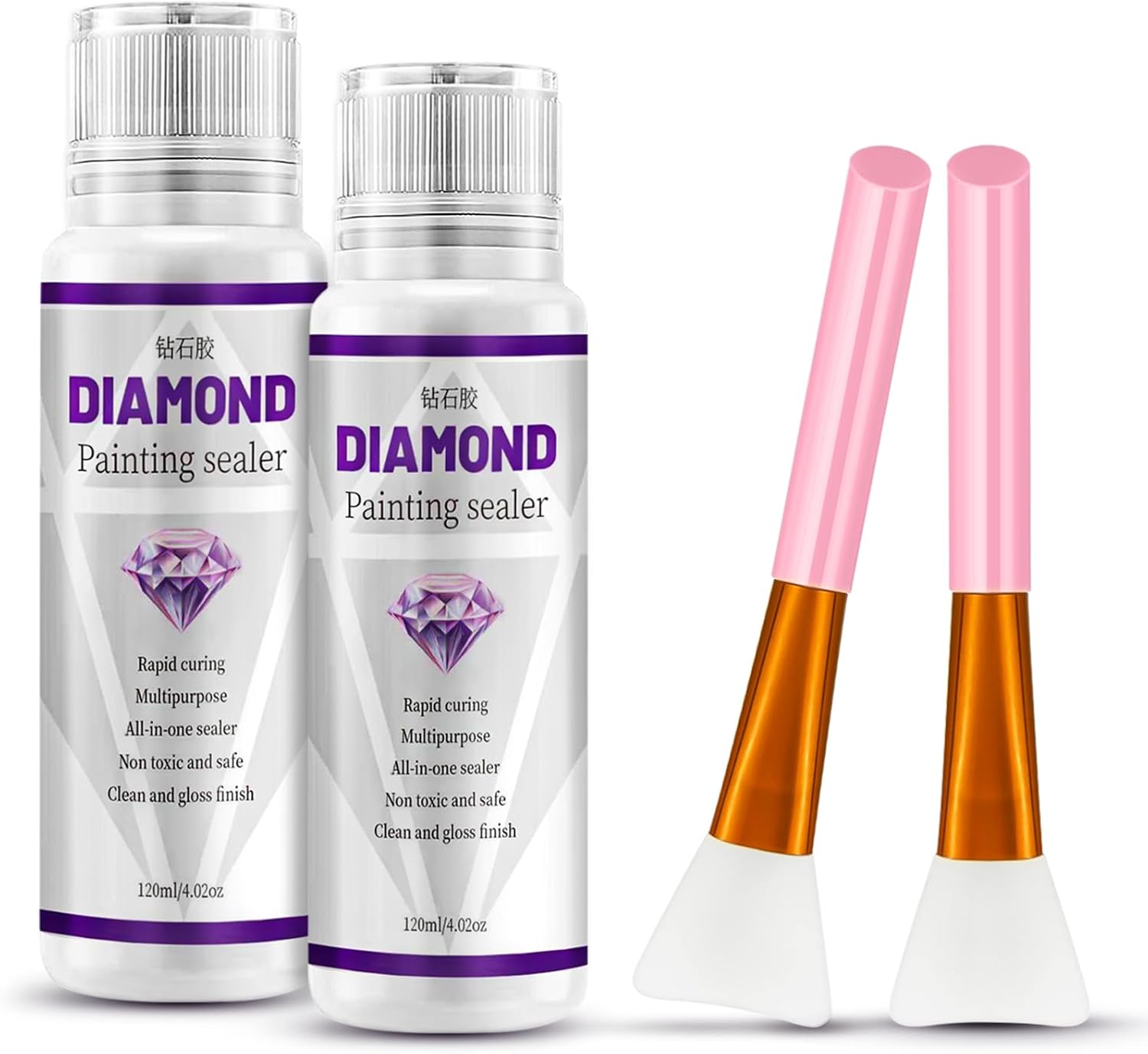 |
Yunnuo Diamond Painting Sealer Kits 240ML with 2 Silicone Brushes | Permanent Hold & Gloss Finish Safe & Non-Toxic Formula Fully cures in about 2 hours Large 240ml (8 oz) bottle |
Check Price |
What to Check Before You Coat a Glass Project
Start With the Job, Not the Finish Name
Before choosing between gloss, matte, or a specialty clear sealer, decide what the object must do after it is finished. Will it sit on a shelf? Will it be picked up often? Is the coating holding paper to the glass, protecting paint, or locking diamond drills in place? Will the piece get damp?
Those questions narrow the choices quickly. A decorative glass panel with paper motifs needs reliable adhesion and a clean topcoat. A finished diamond-art coaster needs a sealer that can settle around raised drills. A glass vase that may be wiped occasionally needs a clear protective film, but a drinking vessel raises additional care concerns.
Decide How Much Shine You Actually Want
Gloss can make colors look richer and preserve the visual depth of glass. Matte can calm a busy design and reduce glare. Neither is automatically more professional.
I know it is tempting to choose gloss because “glass should look shiny,” but a glossy coat is also less forgiving of brush marks. A matte surface can hide minor texture more easily, although it changes the look of the glass more noticeably.
If the object already has a polished, reflective appearance, think about whether you want the coating to blend into that shine or deliberately soften it.
Look at the Application Tool
Wide-mouth bottles pair naturally with a separate brush. Some diamond-art sealers use silicone brushes, sponge heads, or applicators that spread the product across raised drills. These tools can be convenient, but they are not automatically ideal for every glass shape.
A silicone applicator is useful on a flat coaster because it moves product without shedding bristles. On a narrow-neck bottle or around detailed paper edges, a small bristle brush gives more control. An integrated sponge head saves cleanup but limits the shape and size of the stroke.
Think About Film Thickness
Thicker is not safer. On glass, a heavy coat can sag down a vertical surface, pool at the bottom edge, trap bubbles, and dry unevenly. Thin coats are easier to control and usually look cleaner.
This is especially important with products intended for diamond art. Those sealers are formulated to fill tiny spaces around drills. Used on flat bare glass, the same amount may feel excessive. If you are adapting a sealer beyond its main intended use, test a very thin coat on scrap glass first.
Do Not Assume “Water-Based” Means Waterproof
Water-based describes the carrier or cleanup system, not the finished level of water resistance. Standard Mod Podge Gloss and Matte are water-based and easy to clean while wet, yet Plaid says they are not waterproof. Maker’s Magic, by contrast, is marketed by its manufacturer as a water-based craft glue and sealer that becomes waterproof after curing.
Those are different performance claims. Read them literally rather than turning them into a broad rule.
Capacity Matters Only if the Formula Fits the Work
A large bottle looks economical, but it is only useful if you have enough projects to use it. ARTDOT’s 16-ounce kit is made for people sealing many diamond paintings and includes several application tools. A pair of smaller Faburo bottles may be easier to split between projects or store.
For occasional glass decoupage, the real issue is not total volume. It is whether the formula gives the finish and adhesion you want without forcing you to store a large open container for months.
Check the Cure Requirement Before Planning a Gift
Craft schedules often fail at the curing stage. If you are making wedding décor, holiday jars, or a handmade gift, the object may need days or weeks before it reaches its final durability. Plan backward from the date you need the finished piece.
A fast-drying diamond-art sealer can be convenient for a display piece, while standard Mod Podge needs much more time before you should treat the surface as fully cured. A project finished the night before an event may be dry, but it may not be ready for rough handling.
When a Clear Craft Sealer Is Not the Whole Solution
A sealer cannot compensate for poor surface preparation. If grease, dust, release agents, or label adhesive remain on the glass, even a strong product can peel or lift. Cleaning and drying come first.
It also cannot turn every glass object into functional tableware. A coating on the outside of a decorative mug is one thing; a finish that touches food, a drinking rim, or the inside of a vessel is another. Follow the manufacturer’s instructions for contact and washing rather than extending a craft claim beyond what it actually says.
Raised textures create another limitation. Diamond-art sealers are useful because they flow around drills, but they can also fill some of the tiny facets that create sparkle if applied too heavily. On the other hand, a very thin decoupage coat may not lock raised pieces firmly enough.
Finally, no clear finish can hide every application mark. If a perfectly glass-like surface is the goal, technique matters as much as the bottle. Work in thin coats, keep the object level when possible, and stop brushing once the film starts to set.
Mod Podge Gloss CS11202 16 oz – A Classic Glossy Decoupage Medium for Decorative Glass
The linked first product in the original roundup resolves to the 16-ounce Mod Podge Gloss formula, SKU CS11202. This is a true three-in-one decoupage product: it works as an adhesive under decorative paper, a sealer over the finished design, and a clear glossy finish.
For glass, that traditional role is its biggest advantage. If you want to attach napkin pieces, scrapbook paper, tissue motifs, or similar lightweight decorations to a jar, frame, vase, or other display piece, the same product can handle both bonding and topcoating. Plaid also includes glass among the surfaces used with its Mod Podge starter formulas.
The limitation is water. Plaid explicitly says standard Gloss and Matte formulas are not waterproof and should not be submerged. That makes this a better fit for decorative glass than for glassware that will be washed often.
Features
Mod Podge Gloss dries clear with a shiny finish that increases color depth. That can be attractive on transparent or colored glass because the coating works with the reflective surface rather than deliberately dulling it. On printed paper, the gloss also helps darker colors look richer after the white wet film disappears.
The formula is quick-drying between coats. Plaid says standard Mod Podge commonly dries to the touch in roughly 15 to 20 minutes, although full cure is much longer at about 28 days. That distinction is useful for planning: you can build thin layers in a single crafting session, but the finished object should still be handled gently while it cures.
Because it acts as glue, sealer, and finish, you do not need separate adhesive and clear coat for a straightforward decoupage project. That simplicity is especially useful around curved glass, where extra layers of incompatible products can create visible edges.
Cleanup is water-based while the product is wet, which makes brushes and small spills easier to manage. Once the finish dries and cures, however, it should not be treated as a washable waterproof coating.
- Works as adhesive, sealer, and glossy topcoat in one bottle, which keeps a basic glass-decoupage process simple.
- Dries clear and glossy, helping printed colors stay vivid against a transparent surface.
- Fast between-coat drying makes it practical for layered decorative work without waiting all day between thin applications.
- The long-established formula is easy to brush into corners, over paper edges, and around curved jars or vases.
- The standard Gloss formula is not waterproof, so it is a weak choice for glass that will be washed or soaked.
- Gloss shows ridges and brush marks more readily than a low-sheen finish if the coat is applied too thickly.
- The roughly 28-day full-cure period is much longer than the drying time, so newly finished pieces need patience before heavy handling.
Who It’s Best For
This is best for decorative glass decoupage where you want a traditional shiny finish and need one product to bond paper and seal it. It makes particular sense for jars, frames, ornaments, display bottles, and similar pieces that will stay mostly dry.
Not Ideal For
It is not ideal for glass that must tolerate repeated washing, soaking, or dishwasher use. It is also less forgiving if you dislike visible shine or know that brush texture will bother you on a large, flat pane.
Mod Podge Matte CS11302 16 oz – A Low-Sheen Choice When Gloss Would Be Too Reflective
The second linked product is the 16-ounce Mod Podge Matte formula, SKU CS11302. It performs the same basic glue-seal-finish job as Gloss but dries with a flat, low-sheen appearance.
That changes the look of a glass project more than many buyers expect. Instead of preserving the natural reflectivity of the glass, a matte coating visually softens it. On a jar with vintage paper, botanical cutouts, book pages, or muted tissue designs, that can be exactly the effect you want.
The practical limitations remain similar to Gloss. It is a decorative decoupage medium rather than a waterproof coating, and Plaid advises caution around water with standard formulas.
Features
The matte finish is the defining feature. It dries clear but reduces surface shine, which can make paper designs look more integrated and less like a glossy label sitting on top of the glass. It is particularly useful where overhead lights would otherwise reflect strongly from a coated jar or frame.
Like Gloss, it is an all-in-one glue, sealer, and finish. You can brush it onto clean glass, place the decorative material, smooth it, and then use additional thin coats over the top after the first layer dries.
Plaid’s current guidance gives the same general drying and curing pattern as its other standard formulas: fast touch-dry time, but approximately 28 days for full cure. That means the matte appearance arrives quickly even though the film continues hardening much longer.
The water-based formula is easy to work with while wet, but the finished film is not waterproof. That matters on glass because people often assume a sealed jar can automatically be washed like bare glass. It cannot.
- The low-sheen finish hides glare and can make vintage, paper, or botanical designs look softer on glass.
- One formula handles bonding and topcoating, so you do not need a separate decoupage adhesive.
- Matte is often more forgiving of small surface texture than a high-gloss coating because reflections do not emphasize every ridge.
- The formula dries clear, allowing the design beneath it to remain visible even though the surface sheen changes.
- It intentionally reduces the natural shine of glass, which is a poor match if you want the finished surface to look almost uncoated.
- Like standard Gloss, it is not waterproof and should not be treated as a washable glassware finish.
- A matte patch on otherwise bare glass can be visually obvious, so uneven coverage is harder to hide on transparent pieces.
Who It’s Best For
This is best for decorative glass with a softer, more understated look: vintage-style jars, lanterns, frames, collage panels, and designs where paper should appear visually blended rather than glossy.
Not Ideal For
It is not ideal for projects where the natural sparkle of glass is part of the design or where the object will be exposed to regular water. If you want a deep, reflective finish, the matte effect works against that goal.
Faburo 2pcs Diamond Painting Sealer 8 oz Total – A Two-Bottle Sealer for Raised Diamond-Art Surfaces
Faburo’s linked product is not Mod Podge. It is a two-bottle diamond-painting sealer with a total listed volume of 8 ounces, commonly presented as two 120 ml bottles. The product is designed to flow over diamond drills, help hold them in place, and leave a clear protective layer.
That makes it relevant to glass mainly when the glass project already carries raised diamond art, puzzle pieces, or similar decorative material. It is not the natural first choice for attaching napkin paper directly to bare glass because the listing describes it as a sealer rather than a conventional decoupage glue.
The split-bottle format is practical for storage and small projects. You can keep one bottle sealed while using the other, or reserve one for a later piece.
Features
Faburo describes the sealer as forming a transparent protective layer that helps stabilize diamond drills and maintain shine. A clear film matters on faceted pieces because an opaque or hazy finish would quickly reduce the visual effect.
The listing also presents the product as ready to use, without mixing. That simplicity is helpful on flat glass coasters or decorative panels where you want to spread a controlled film around raised pieces rather than measure separate components.
Faburo markets the sealer for diamond paintings and puzzles and describes protection against water and dust. I would still treat that claim within the product’s intended craft use rather than assume it converts ordinary glassware into something dishwasher safe.
The two-bottle pack gives you 240 ml in total. For someone sealing several small coasters or gem-decorated ornaments, that can be easier to manage than one very large open container.
- Two smaller bottles are convenient for storage and let you keep part of the supply unopened until needed.
- The clear protective film is designed to preserve the visible sparkle of diamond-art surfaces rather than cover them with an opaque finish.
- Ready-to-use consistency avoids mixing and measuring before sealing a small craft project.
- Its main purpose locking raised drills in place fits gem-covered glass coasters or panels better than a standard flat decoupage topcoat.
- It is primarily a diamond-art sealer, not a traditional glue-sealer for bonding paper directly to bare glass.
- Water-resistance claims should not be confused with dishwasher-safe performance on functional glassware.
- A heavy coat can settle around raised drills and reduce some facet definition, so thin application still matters.
Who It’s Best For
This suits people sealing diamond-art designs on coasters, small glass panels, ornaments, or other rigid craft surfaces where the main goal is keeping raised pieces secure and bright.
Not Ideal For
It is not ideal as the first purchase for ordinary napkin or paper decoupage on glass. A true decoupage medium is easier to reason about when you need both adhesion underneath and a finish over the top.
VansyLife Updated Diamond Painting Sealer 250 ml – A Silicone-Brush Sealer for Smooth Coverage Over Diamond Art
The fourth original listing resolves to VansyLife’s updated 250 ml diamond-painting sealer with a silicone brush. The brand’s Amazon listing describes it as a PVA, water-soluble sealer for diamond paintings, jigsaw puzzles, and similar crafts, with a glossy clear result.
The standout part is the included silicone brush. Raised diamond surfaces are awkward for ordinary bristles because the brush has to move product between the drills without snagging or shedding hairs. Silicone gives a broad, flexible edge that can push sealer across the surface and into small gaps.
Again, this is better understood as a specialty craft sealer than a direct replacement for classic Mod Podge on bare glass.
Features
The 250 ml bottle is larger than many compact diamond-art sealers in the roundup, making it practical for several coasters, panels, or larger finished diamond paintings. VansyLife lists the product as PVA-based and water-soluble before curing.
The silicone brush is intended to distribute the glue evenly and reduce bubbles. On a flat glass-backed project, that gives you a simple way to push product across a broad area without introducing loose bristles.
The listing says the sealer takes about two hours to dry fully for its intended use. That is much faster than the full cure time of standard Mod Podge, although the two products are doing somewhat different jobs.
VansyLife also positions the product for jigsaw puzzles and other crafts. That versatility is useful if your craft table includes several rigid display pieces rather than only glass.
- The included silicone brush is well suited to spreading sealer around raised diamond drills without shedding bristles.
- A 250 ml bottle gives more working volume than the smaller single-bottle sealers in the roundup.
- The listing’s roughly two-hour full-dry guidance is convenient for display crafts that need a faster turnaround.
- PVA-based, water-soluble construction keeps application straightforward and supports cleanup before the sealer dries.
- It is designed first for diamond art and puzzles, so it is less natural than Mod Podge for bonding paper directly to glass.
- The silicone brush is useful on flat work but less precise around tiny paper edges, narrow necks, or intricate curved glass.
- A glossy sealer can show uneven application on clear glass if it is spread too thickly.
Who It’s Best For
This is a good fit for crafters sealing diamond-art coasters, gem-covered panels, or puzzle-style projects where an included silicone applicator and moderate bottle size are useful.
Not Ideal For
It is not ideal for delicate paper decoupage that needs a controlled adhesive layer underneath the paper. It is also less convenient on very small curved glass where a narrow artist brush gives better control.
ARTDOT 16 oz / 480 ml Diamond Art Sealer Kit – A Large-Capacity Kit With Multiple Application Tools
ARTDOT’s 16-ounce sealer kit is the most tool-heavy option in the original list. The current manufacturer page includes a 480 ml bottle along with a fixing tool, lint roller, silicone brush, and paint brush.
That bundle makes sense for repeated diamond-art work because sealing is only one part of the process. Before adding the liquid, you can press drills down, remove loose debris, and correct alignment. The two brush styles then handle different parts of the coating job.
For glass, this is most relevant to diamond-art coasters, glass-backed decorative panels, or other rigid gem projects. It is not a traditional all-purpose glass decoupage adhesive.
Features
ARTDOT says the PVA-based sealer forms a clear protective film that helps keep drills from shifting or falling away. It is designed to preserve sparkle rather than bury the surface under a cloudy layer.
The included lint roller and fixing tool address preparation before sealing. This is more important than it sounds: a crooked drill is harder to correct once it is locked under a clear film, and trapped lint becomes part of the finished surface.
The kit includes both a silicone brush and a paint brush. The silicone tool can spread a broad film across raised drills, while the bristle brush can reach edges or areas that need more controlled coverage.
ARTDOT’s current product page describes a drying time of around two hours and a 16-ounce capacity. For someone finishing many pieces, that combination reduces the need to ration product or buy separate applicators.
- The 16-ounce bottle is well suited to frequent sealing rather than one small project.
- A lint roller and drill-fixing tool help prepare the surface before the clear film locks everything in place.
- Both silicone and bristle brushes are included, giving better control over broad areas and edges.
- The manufacturer specifically designs the sealer to hold diamond drills while preserving visible sparkle.
- The large kit is more than an occasional glass-decoupage crafter needs if only one or two small pieces are planned.
- Its tools and formula are optimized for diamond art, not for attaching thin paper to bare glass.
- More included tools also means more items to clean, store, and keep together between projects.
Who It’s Best For
This is best for someone who seals diamond-art projects regularly and wants preparation tools and applicators in the same kit. It is especially sensible for multiple coasters, large canvases, or repeated gift-making.
Not Ideal For
It is not ideal if your main task is occasional paper decoupage on a single jar or vase. In that situation the large bottle and drill-specific tools add bulk without solving the central adhesion job.
Xgunion Diamond Painting Sealer 3-Pack 360 ml – A Sponge-Head Pack Built for Fast, Direct Application
The sixth linked listing resolves to Xgunion’s 3-pack diamond-painting sealer, totaling 360 ml as three 120 ml bottles. Unlike the separate-brush kits, these bottles use an integrated sponge-head applicator.
That design reduces setup. You open the bottle, remove the inner seal the first time, and use the sponge head to spread product directly over the work. For flat coasters or gem-covered panels, that can be very convenient.
The trade-off is precision. An attached sponge is less flexible than choosing your own brush size, so the tool works best on broad, accessible surfaces.
Features
Xgunion lists the formula as PVA, water-based, and intended to keep diamond paintings glossy while holding drills in place. It can also be used on puzzles and other rigid craft work.
The integrated sponge head is the key practical feature. It eliminates a separate brush and means there is no applicator to wash after each coat. Tightening the cap after use keeps the applicator with the bottle.
The listing describes especially fast curing for its intended use, with the surface setting in about 15 minutes and full cure around 30 minutes depending on thickness. That is one of the fastest claimed timelines in this roundup.
Three separate 120 ml bottles also make sharing or staged storage easier. You can keep unopened bottles fresh while working through one at a time.
- The built-in sponge head makes application quick and reduces cleanup because there is no separate brush to wash.
- Three 120 ml bottles are easy to divide between projects or keep sealed until needed.
- The listing’s short cure claim suits crafters who want to finish display pieces without a long waiting period.
- PVA-based clear sealer is designed to maintain shine while helping secure diamond drills.
- The sponge head is less precise than a small brush on curved glass, narrow borders, or detailed paper edges.
- It remains a diamond-art sealer rather than a purpose-built paper-decoupage adhesive for bare glass.
- Fast-curing material gives you less time to correct uneven spreading, so overworking the surface can become visible.
Who It’s Best For
This suits people sealing several flat diamond-art coasters, gem projects, or puzzles who value fast direct application and do not want to clean separate brushes.
Not Ideal For
It is not ideal for intricate glass shapes or careful edge work. A built-in sponge is convenient on broad surfaces but cannot match the control of a small brush around delicate motifs.
SCORCH MARKER Maker’s Magic Gloss 8 oz – A Multipurpose Waterproof Sealer That Explicitly Includes Glass
Maker’s Magic Gloss is the most broadly positioned non-Mod-Podge product in the original list. Scorch Marker sells it as an all-in-one craft glue, sealer, and finish rather than a diamond-art-only product, and the manufacturer explicitly lists glass vases, jars, and glassware among suitable projects.
The brand also markets the cured finish as waterproof, clear, flexible, and resistant to common problems such as peeling and cracking. Those claims make it more directly relevant to general glass crafts than the diamond-art sealers above.
It is still not the same formula as Mod Podge, and “waterproof” should not be stretched into claims the maker does not make about dishwashers, heat, or every food-use situation. But within the fixed original list, this is one of the more versatile clear finishes for mixed craft materials.
Features
Maker’s Magic Gloss is designed to function as glue, sealer, and finish. That means it can cover a wider range of craft tasks than a sealer intended only to flow around diamond drills.
Scorch Marker emphasizes a crystal-clear glossy finish and markets the product as minimizing brush strokes, bubbles, clumping, peeling, and cracking. On glass, those visual qualities matter because a clear surface makes defects easy to see.
The manufacturer describes the formula as water-based, solvent-free, low-odor, and waterproof once cured. It also lists indoor and outdoor use and specifically shows glass vases, jars, and glassware among project examples.
Dry-time statements on the brand’s current pages vary slightly by page, so I would follow the label on the bottle you receive rather than relying on one web headline. The consistent message is that it dries much sooner than standard Mod Podge reaches full cure.
- The manufacturer explicitly includes glass vases, jars, and glassware among the intended craft surfaces.
- It works as glue, sealer, and glossy finish, giving it a broader role than the diamond-art-specific products.
- The cured coating is marketed as waterproof, flexible, and clear, which is useful for handled decorative glass.
- A low-odor, water-based formula is easier to use indoors than strong solvent-based clear coats.
- It is a different product system from Mod Podge, so familiar Mod Podge drying habits and techniques do not automatically transfer.
- The manufacturer’s current pages show inconsistent exact cure-time wording, so the bottle instructions should be treated as the final authority.
- Waterproof does not automatically mean dishwasher safe or appropriate on a drinking rim, so functional glassware still needs careful placement and care.
Who It’s Best For
This is best for mixed glass crafts where you want one clear glossy material that can glue, seal, and finish, especially decorative jars, vases, ornaments, and projects that may see occasional moisture.
Not Ideal For
It is not ideal if you specifically want the familiar behavior and long-established decoupage workflow of Mod Podge Gloss or Matte. It also should not be assumed suitable for dishwasher use or direct food-contact zones without checking the exact manufacturer instructions.
Yunnuo Diamond Painting Sealer Kit 240 ml – A Two-Pack With Silicone Brushes for Coasters and Gem Art
Yunnuo’s linked product is a 240 ml diamond-painting sealer kit supplied as two bottles with two silicone brushes. The listing describes a glossy PVA-based clear finish for diamond paintings, puzzles, and coasters.
That coaster emphasis is the main reason it belongs in a glass-focused conversation. Many diamond-art coasters use rigid acrylic, glass-like, or sealed surfaces, and the applicator is designed to push sealer around raised drills without leaving bristles behind.
As with the other diamond-art formulas, it is better treated as a sealer for an already assembled decorative surface than as the first choice for bonding paper directly to plain glass.
Features
The kit contains 240 ml total and two silicone brushes. Separate applicators are useful if you want to keep one clean for detail work or divide the set between two work areas.
Yunnuo lists the formula as PVA and water-based. The product may look white while wet, then dry clear and glossy. That visual change is normal for many water-based clear craft sealers, but it is still wise to test on a small piece if the glass must remain optically clear.
The current listing says to spread the sealer with the silicone brush and allow at least about two hours for full cure, depending on application thickness and temperature. Thicker layers take longer and are more likely to show texture.
The brand lists diamond paintings, puzzles, and coasters among intended uses. That makes it practical for rigid decorative pieces where the main concern is securing surface elements rather than adhering paper beneath them.
- Two bottles and two silicone brushes make the kit easy to split between projects or keep as a backup set.
- The glossy clear finish is designed to preserve the appearance of diamond drills instead of hiding their sparkle.
- PVA-based, water-based construction keeps application straightforward for ordinary indoor craft work.
- Coasters and puzzles are explicitly included among the intended uses, making the kit a reasonable fit for rigid decorative pieces.
- It is not designed primarily for classic paper decoupage on bare glass.
- Silicone brushes are less precise than small bristle brushes around tiny cut-paper details or narrow curved surfaces.
- The wet white film can look alarming on transparent glass until it clears, so testing first is sensible on highly visible pieces.
Who It’s Best For
This is best for diamond-art coasters and other gem-decorated rigid crafts where separate silicone brushes and a two-bottle supply are more useful than a built-in sponge head.
Not Ideal For
It is not ideal for someone looking specifically for a paper adhesive and topcoat in one traditional decoupage formula. For that job, the two genuine Mod Podge products in this list are easier to match to the technique.
Comparing the Eight Options for Different Glass Projects
The original roundup puts eight bottles under one title, but their strengths become much clearer once you separate classic decoupage from specialty sealing.
For Traditional Paper Decoupage on Decorative Glass
Mod Podge Gloss and Mod Podge Matte are the most straightforward choices because they are true glue-sealer-finish formulas. They are designed to sit under paper as the adhesive and over it as the protective coat. The decision between them is mainly visual: Gloss keeps a shiny reflective surface, while Matte deliberately softens it.
If the glass is a dry display piece, either can work well with careful cleaning and thin coats. If the object will be washed or soaked, their lack of waterproof performance becomes the deciding limitation.
For a Clear Glossy Finish With Broader Surface Claims
Maker’s Magic Gloss is the strongest general-purpose non-Mod-Podge option in the fixed list. Its manufacturer explicitly shows glass vases, jars, and glassware and markets the cured finish as waterproof. It is therefore easier to justify on mixed glass crafts than the diamond-art sealers, which are primarily designed around holding drills.
That does not make it automatically dishwasher safe. It simply means the product’s stated use is broader and more directly connected to glass.
For Diamond-Art Coasters and Gem-Covered Glass
Faburo, VansyLife, ARTDOT, Xgunion, and Yunnuo all make more sense when the glass or rigid surface already has raised decorative pieces. Their formulations and applicators are built around flowing between diamond drills and keeping them in place.
VansyLife and Yunnuo use separate silicone brushes. Xgunion uses an integrated sponge head. ARTDOT includes the largest tool kit, adding a lint roller, fixing tool, silicone brush, and paint brush. Faburo keeps the setup simpler with two small bottles.
For the Largest Amount of Sealer
ARTDOT’s 16-ounce bottle is the largest single-container option here. It suits repeated sealing work, especially if you finish many diamond paintings or coaster sets. If you craft only occasionally, that capacity may be more than you need.
Xgunion provides 360 ml in three separate bottles, which is useful if you prefer smaller containers that stay sealed until needed. Faburo and Yunnuo also divide the supply across two bottles.
For Fast Turnaround
Xgunion advertises the fastest cure in the group, with a surface set around 15 minutes and a full cure around 30 minutes depending on thickness. VansyLife and Yunnuo list roughly two hours for full drying in their intended craft use, while ARTDOT also describes around two hours.
Standard Mod Podge behaves differently. It dries quickly enough to recoat, but Plaid gives a much longer full cure period of about 28 days. If the project must reach final hardness quickly, that difference matters.
For a Matte Look
Only Mod Podge Matte in this fixed list is designed specifically to give the glass project a low-sheen surface. The diamond-art sealers and Maker’s Magic Gloss are intended to preserve or add shine.
If glare is the problem rather than adhesion, Matte has a clear visual advantage. Just remember that it changes the appearance of the glass itself, especially where coated and uncoated areas meet.
How to Apply a Clear Craft Finish to Glass Without Making It Look Cloudy
1. Remove Labels, Grease, and Invisible Residue
Wash the glass if necessary, remove adhesive from old labels, and let the surface dry. Then wipe the coating area with rubbing alcohol on a lint-free cloth. This final degreasing step removes fingerprints and soap residue that ordinary washing can leave behind.
Do not touch the cleaned area with bare fingers afterward. Hold the piece by an uncoated rim or use clean gloves if the object is small.
2. Test the Finish on Scrap Glass
A spare jar, broken tile with safe edges, or inexpensive glass coaster is useful for testing. Apply a small amount and let it dry fully enough to judge clarity and sheen.
This is especially important with the specialty diamond-art sealers because their main intended surface is not bare glass. A test tells you whether the film looks too thick, too glossy, or too visible for your project.
3. Use a Thin Adhesive Layer for Decoupage
For Mod Podge Gloss or Matte, brush a thin coat onto the clean glass where the paper will sit. Add the paper, then smooth it from the center outward to move trapped air toward the edges.
Too much adhesive makes thin paper float and wrinkle. The goal is complete contact, not a puddle underneath the design.
4. Let the Attached Design Set Before Topcoating
Give the underlying adhesive time to become stable before brushing over the top. If you topcoat while the paper is still sliding, the brush can shift edges or create wrinkles.
On very thin tissue, use light strokes and resist the urge to keep correcting one area. Repeated brushing can tear damp paper.
5. Spread Sealer Across Raised Diamond Art Gently
For diamond-art sealers, first press the drills into place and remove dust. Then use the silicone brush, sponge head, or included brush to distribute a thin layer across the surface and into the gaps.
Do not bury the drills. Their facets create the sparkle, and a heavy film can soften that definition. You need enough product to secure them without turning the surface into a flat clear slab.
6. Keep Vertical Glass From Dripping
On jars and vases, rotate the piece as you work rather than loading one side with too much liquid. Inspect the bottom edge for runs before leaving it to dry.
A thin drip is easy to wipe while wet and much harder to hide once cured.
7. Respect Both Drying and Curing Time
Follow the exact label for the product you use. A surface can feel dry while still being soft underneath. Do not stack finished coasters, tie ribbons tightly around freshly coated jars, or expose the piece to water before the coating has reached the maker’s stated cure.
Then, once that is done, handle the object according to the weakest limitation in the system. A waterproof topcoat does not make a paper layer waterproof if moisture can enter from an unsealed edge.
Keeping Brushes, Bottles, and Finished Glass in Good Condition
Water-based products are easiest to clean before they dry. Rinse bristle brushes promptly with the cleanup method recommended by the maker, reshape the bristles, and let them dry flat or hanging so water does not sit inside the ferrule.
Silicone brushes are simpler. Wipe away excess product before it hardens, then wash according to the sealer instructions. Do not leave a thick skin of dried PVA around the edge because it can create ridges during the next application.
Integrated sponge-head bottles such as Xgunion need a different habit: keep the applicator clean around the cap and close it promptly. Dried sealer around the opening can interfere with the seal and make the next coat uneven.
Store bottles upright and away from freezing or excessive heat. If a water-based finish develops an unusual smell, permanent lumps, or a consistency that no longer spreads normally, replacing it is safer than risking a visible glass project.
Finished decorative glass should be dusted gently. For standard Mod Podge Gloss or Matte, avoid soaking and prolonged water exposure. Where a manufacturer makes stronger water-resistance claims, still follow the care instructions rather than scrubbing the surface like bare glass.
Small Habits That Can Spoil an Otherwise Good Glass Finish
Coating Over Fingerprints
The glass looks clean, so it is easy to skip the final degreasing step. That invisible oil can become the exact place where the finish later separates. Clean first, then avoid touching the coated zone.
Trying to Fix Brush Marks After the Film Starts Setting
A water-based finish often begins leveling quickly. Once it starts to tack, dragging the brush through it can create permanent ridges. Lay down the coat, correct obvious gaps immediately, and then leave it alone.
Applying One Heavy Coat Instead of Several Thin Ones
A thick coat looks faster but dries unevenly, sags on vertical glass, and can trap a milky interior. Thin coats take more patience but give you much more control over clarity.
Treating Every Clear Sealer as a Decoupage Glue
The diamond-art products in this list are designed mainly to seal finished raised surfaces. They are not automatically the best choice for attaching paper to bare glass. Use the job the manufacturer actually describes as your starting point.
Assuming Water Resistance Means Dishwasher Safety
These terms are not interchangeable. Standard Mod Podge Gloss and Matte are not waterproof. Maker’s Magic is marketed as waterproof, but that still does not automatically establish dishwasher performance for every glass object.
Forgetting That Edges Are Failure Points
Paper edges, drill borders, and the bottom rim of a coated section are where moisture and lifting often begin. Make sure edges are fully adhered and sealed without leaving a thick visible ridge.
Using a Specialty Applicator Where a Small Brush Would Be Better
Silicone paddles and sponge heads are excellent on broad, flat diamond-art surfaces. They are clumsy around a narrow bottle neck or a tiny cut-paper corner. Match the applicator to the shape instead of forcing the included tool to do everything.
Safety and Handling Notes for Glass Craft Projects
Glass brings its own hazards before the sealer is even opened. Work only with intact pieces. A chipped rim or cracked coaster can cut the hand during cleaning or coating, and a clear finish does not repair structural damage.
Use products in a ventilated work area and follow the exact label, even when a listing describes the formula as non-toxic or low-odor. Keep sealers away from children and pets while wet and while curing.
Do not coat drinking rims, food-contact interiors, or serving surfaces unless the manufacturer specifically permits that exact use. A craft sealer may be suitable for decorating the outside of an object without being appropriate where food or lips touch it.
When using rubbing alcohol to prepare glass, keep it away from flame and allow it to evaporate fully before applying the craft product. Clean spills promptly so the work surface does not become sticky or slippery.
Frequently Asked Questions About Mod Podge and Clear Sealers on Glass
Does Mod Podge really stick to glass?
Yes, Mod Podge can be used on glass, but preparation matters because glass is smooth and nonporous. Clean the surface thoroughly and remove grease with rubbing alcohol before coating. A dirty surface is much more likely to lift than a properly prepared one.
Which of these eight products are actually Mod Podge?
Only Mod Podge Gloss CS11202 and Mod Podge Matte CS11302 are Mod Podge formulas. Faburo, VansyLife, ARTDOT, Xgunion, Maker’s Magic, and Yunnuo are other craft sealers that appeared in the original roundup and are kept here to preserve its fixed product list.
Is Gloss or Matte better on glass?
Gloss is better if you want the coating to work with the natural shine of glass and make colors look deeper. Matte is better if you want lower glare and a softer, more subdued surface. The decision is visual rather than a simple quality ranking.
Can I wash a glass jar coated with standard Mod Podge Gloss or Matte?
Plaid says standard Gloss and Matte are not waterproof and should not be submerged or repeatedly exposed to water. Treat those projects as decorative and clean them gently rather than washing them like bare glass.
Can a diamond-painting sealer be used on a glass coaster?
It can make sense when the coaster has diamond drills or another raised craft design that needs to be locked in place. If the coaster is plain glass and you are attaching paper, a traditional decoupage medium is a more natural fit.
Why does a clear sealer look white when I first apply it?
Many water-based clear finishes are milky while wet and become transparent as water leaves the film. That is normal, but a very thick coat can stay cloudy longer. Thin, even application helps the film clear more predictably.
How do I avoid bubbles on glass?
Start with a clean surface, use thin coats, and avoid whipping or aggressively brushing the product. On diamond art, silicone applicators can help push sealer around raised drills without introducing loose bristles. Stop brushing once the coating starts to tack.
How long should I wait before using the finished glass piece?
Follow the exact product label. Standard Mod Podge may feel dry quickly but Plaid gives about 28 days for full cure. Several diamond-art sealers in this list advertise much shorter drying or curing times for their intended use. Dry and fully cured are not the same thing.
Choose the Finish by What the Glass Has to Do
The most useful way to choose among these eight products is to stop treating them as interchangeable bottles of clear glue. The surface may be glass, but the actual job could be paper decoupage, a glossy topcoat, a matte decorative finish, or sealing raised diamond art.
For classic paper decoupage on dry decorative glass, Mod Podge Gloss and Matte are the easiest to understand because they are true adhesive-sealer-finishes. Gloss keeps the shine; Matte softens it. For broader mixed-material crafts where a waterproof clear finish is important, Maker’s Magic has the strongest manufacturer support for glass among the non-Mod-Podge options here.
The remaining sealers earn their place mainly on diamond-art coasters, puzzles, and raised decorative work. ARTDOT offers the largest and most complete tool kit, VansyLife and Yunnuo give you silicone-brush application, Xgunion favors a fast sponge-head workflow, and Faburo keeps the setup simple with two smaller bottles.
Before choosing the best Mod Podge for glass for your own project, decide what must be glued, what must be sealed, how much shine you want, and how the finished piece will be cleaned. That one-minute check prevents most of the disappointment that comes from choosing by bottle size or marketing language alone.