A beginner can tie the correct knot and still end up with a piece that looks uneven if the cord fights back. A strand that is too slippery can loosen before the next knot is set; a very soft single strand can untwist while you are still learning hand placement; a bulky rope can make a small pattern look crowded. That is why the best macrame cord for beginners is not simply the softest or thickest roll on the shelf. It should make the structure of each knot easy to see, easy to tighten, and easy to correct.
For most first projects, a cord around 3mm to 5mm gives enough substance to make square knots, half-square knots, lark’s head knots, and spiral patterns readable without requiring oversized hardware. Cotton remains especially approachable because it has useful grip and usually feels comfortable during repetitive knotting, while braided and synthetic constructions can be helpful when you want extra structure or easier cleaning.
I would start by matching the cord to the project rather than choosing by color alone. A plant hanger asks for strength and tidy knot definition. A wall hanging may benefit from a cord that combs into fringe. A small keychain or sampler is easier with a narrower rope. The eight options below cover those different needs without assuming that one construction is automatically right for every beginner.
Why Cord Construction Changes the Way Your Knots Behave
Macrame looks simple from a distance because the finished piece is built from repeated knots. Up close, though, every cord has its own balance of grip, twist, softness, and resistance to flattening. Those traits affect how quickly a beginner can recognize a mistake and how cleanly a pattern develops.
Single-strand cord is soft and fringe-friendly
Single-strand cotton is made from many fibers twisted together into one main strand. It tends to feel soft, and it can be brushed or combed into a full fringe at the end of a wall hanging. The trade-off is that it can untwist or fuzz more readily if you repeatedly undo tight knots.
For a beginner who wants decorative wall art, that softness can be a real advantage. For someone who expects to tie, untie, and retie the same practice knot many times, a more structured twisted or braided cord may stay neater through the learning process.
Multi-ply twisted rope gives clearer structure
Three-ply and four-strand twisted ropes have separate groups of fibers twisted together. That construction tends to make the cord feel more defined in the hand and gives knots a crisp, traditional look. It also makes it easier to see whether two working cords have crossed correctly.
A twisted rope can be a smart first purchase when the goal is to learn technique rather than create brushed fringe. The visible twist acts almost like a guide line, helping you notice when tension changes from one knot to the next.
Braided cord resists opening up
Braided cord locks multiple strands into a stable tube or braid. It usually keeps a consistent round profile and does not unravel into fluffy fringe as easily as single-strand cotton. That makes it useful for bags, plant hangers, handles, baskets, and projects where a firm edge matters more than a feathered finish.
Braided cord also tolerates repeated handling well. The limitation is aesthetic: if your design depends on dramatic combed-out ends, braid construction is not the easiest route.
Diameter changes scale more than beginners expect
A 3mm cord produces smaller knots and leaves more room for detail. A 4mm cord gives a little more visual weight while remaining easy to control. A 5mm cord creates substantial knots quickly and can make a simple design feel finished with fewer rows.
The important point is not that one size is superior. Cord diameter should match the scale of the project and the size of the dowel, ring, bead, or pot you are working around. Very thick cord on a tiny ring becomes crowded; very thin cord on a large wall hanging can require many more knots than a beginner expects.
Fiber content affects feel, finish, and care
Cotton has a matte, familiar hand and enough friction to help many knots stay where they are placed. Recycled cotton behaves similarly, although shade and texture can vary slightly between production batches. Polypropylene cord has a smoother, more resilient surface and can be easier to wipe clean, but it does not create the same soft fringe as cotton.
If you are buying for a first practice board, I would prioritize a cord that is easy to see and manipulate. You can explore unusual fibers after your hands have learned how much tension a square knot actually needs.
| Product Image | Product Name | Features | Price |
|---|---|---|---|
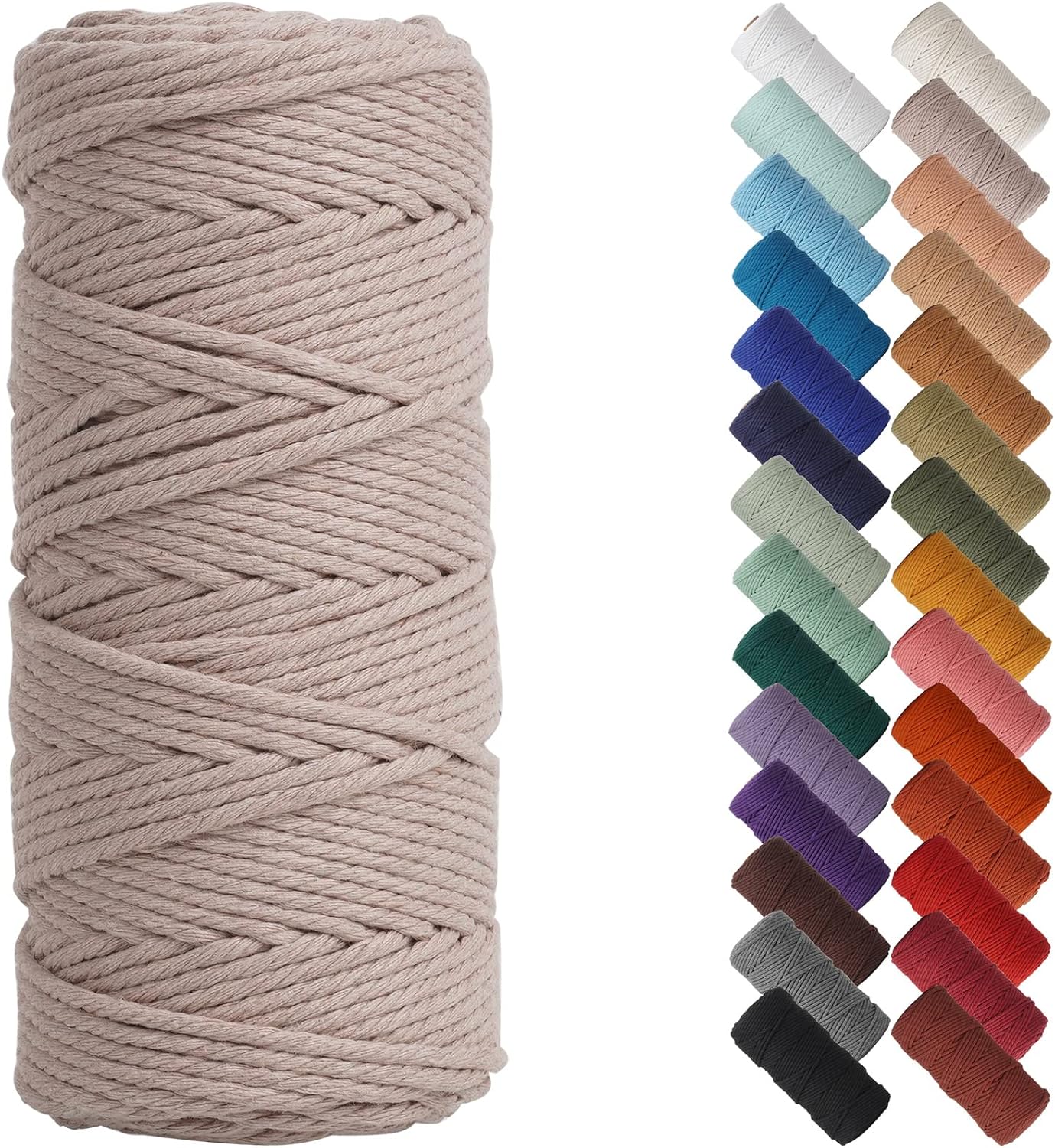 |
NOANTA Pink Gray Macrame Cord | Made from carefully sourced cotton for softness, durability, and strength. Smooth and super soft to the touch, protecting hands during long crafting sessions. Perfect for macrame wall hangings, plant hangers, dreamcatchers, jewelry, and more. Smooth handling makes knotting, weaving, and braiding effortless. |
Check Price |
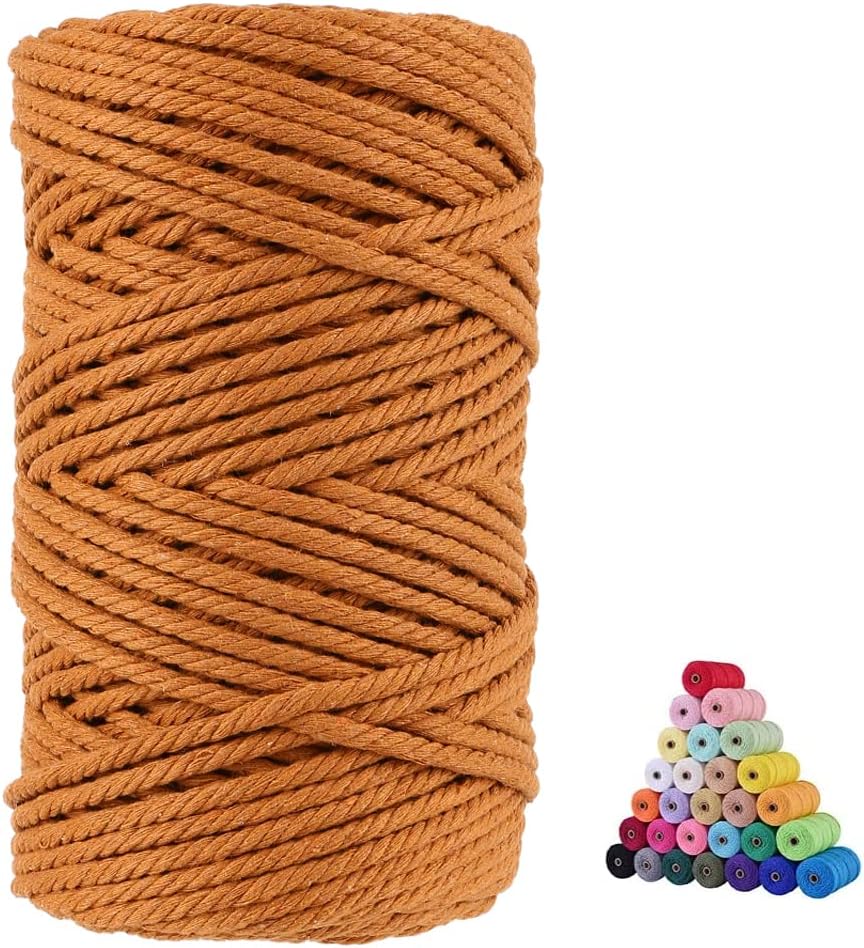 |
FLIPPED 100% Natural Cotton Macrame Cord | Made from 100% high-quality cotton fiber, soft, durable, biodegradable, and odor-free. 5mm thickness with 4 twisted strands ensures sturdiness for all craft projects. 110 yards per roll provides plenty of material for large or multiple projects. Ideal for beginners and advanced artisans to create gorgeous, personalized projects. |
Check Price |
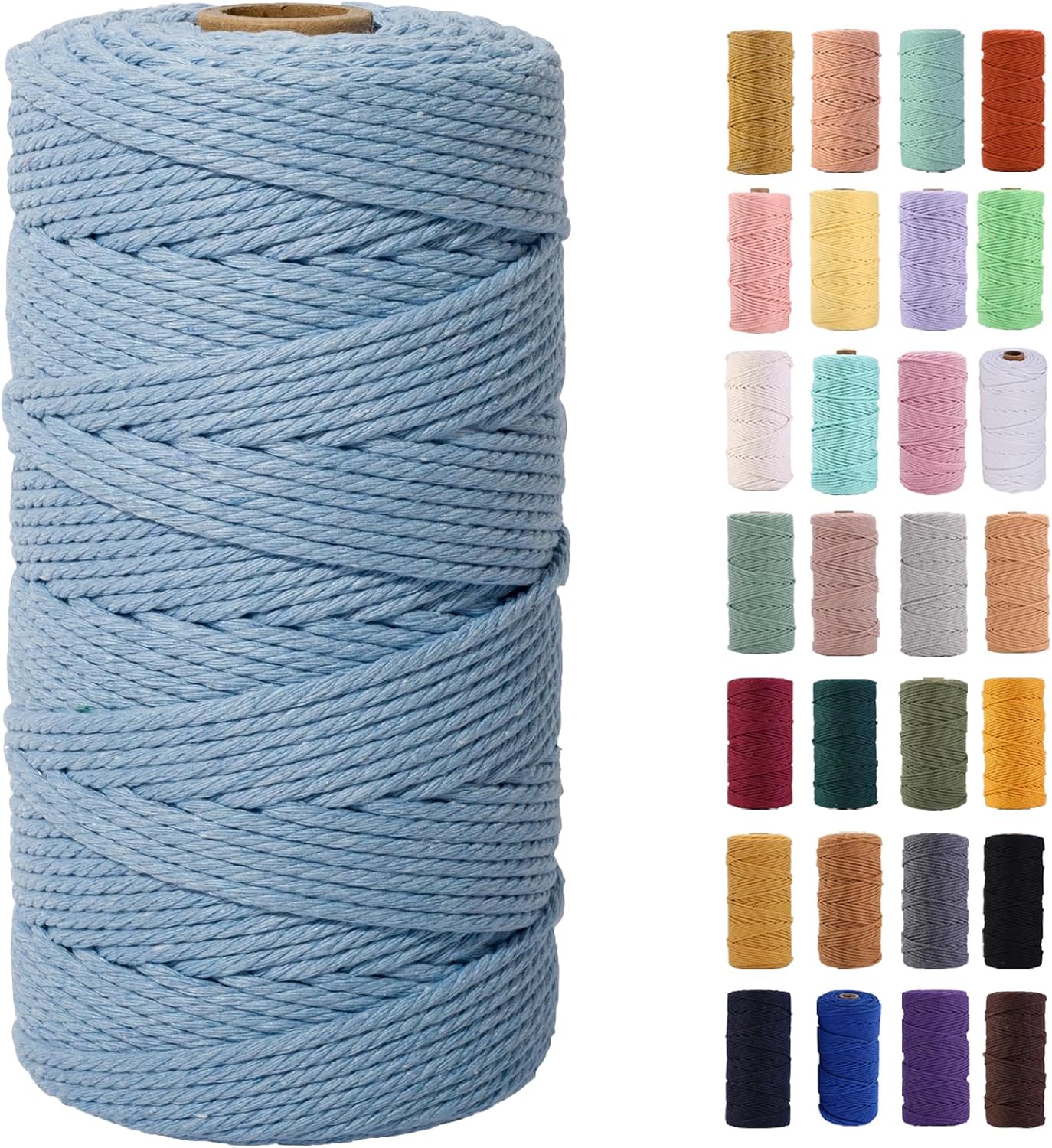 |
MAOQIAN Baby Blue Macrame Cord 3mm x 109Yards | Made from pure, high-quality cotton with uniform color, safe, eco-friendly, and odor-free. 3mm (1/8 inch) diameter and approx. 109 yards (100m / 328ft) length, ideal for multiple projects. Strong yet gentle on hands, easy to knot, weave, and braid for smooth crafting. Suitable for dreamcatchers, gardening, gift wrapping, jewelry-making, pet toys, and more. |
Check Price |
 |
LECZIVOEN Macrame Kit | 100% natural cotton cord, non-toxic wooden rings and beads (no oil or wax), safe and sustainable. Perfect for plant hangers, wall hangings, tapestries, bohemian lace crafts, and home décor. Strong yet gentle cotton rope, easy to knot, weave, and braid for smooth crafting. Suitable for knitting, DIY décor, and creative projects for adults and beginners alike. |
Check Price |
 |
Likeecords Braided Macrame Cotton Cord | Gentle on hands, easy to knot, and strong enough for detailed macrame projects. Braided design ensures knots hold their shape beautifully in wall hangings and planters. Easy to work with, making it ideal for artisans of all skill levels. |
Check Price |
 |
Makromecity, Premium Polyester Macrame Cord | 3mm diameter cord, ideal for detailed knotwork and versatile crafting. Made from 100% polypropylene, soft yet strong, with a natural look and pleasant texture. Designed for long-lasting use; easy to clean and maintain without losing quality. Polyester cord is environmentally friendly and safe for crafting. |
Check Price |
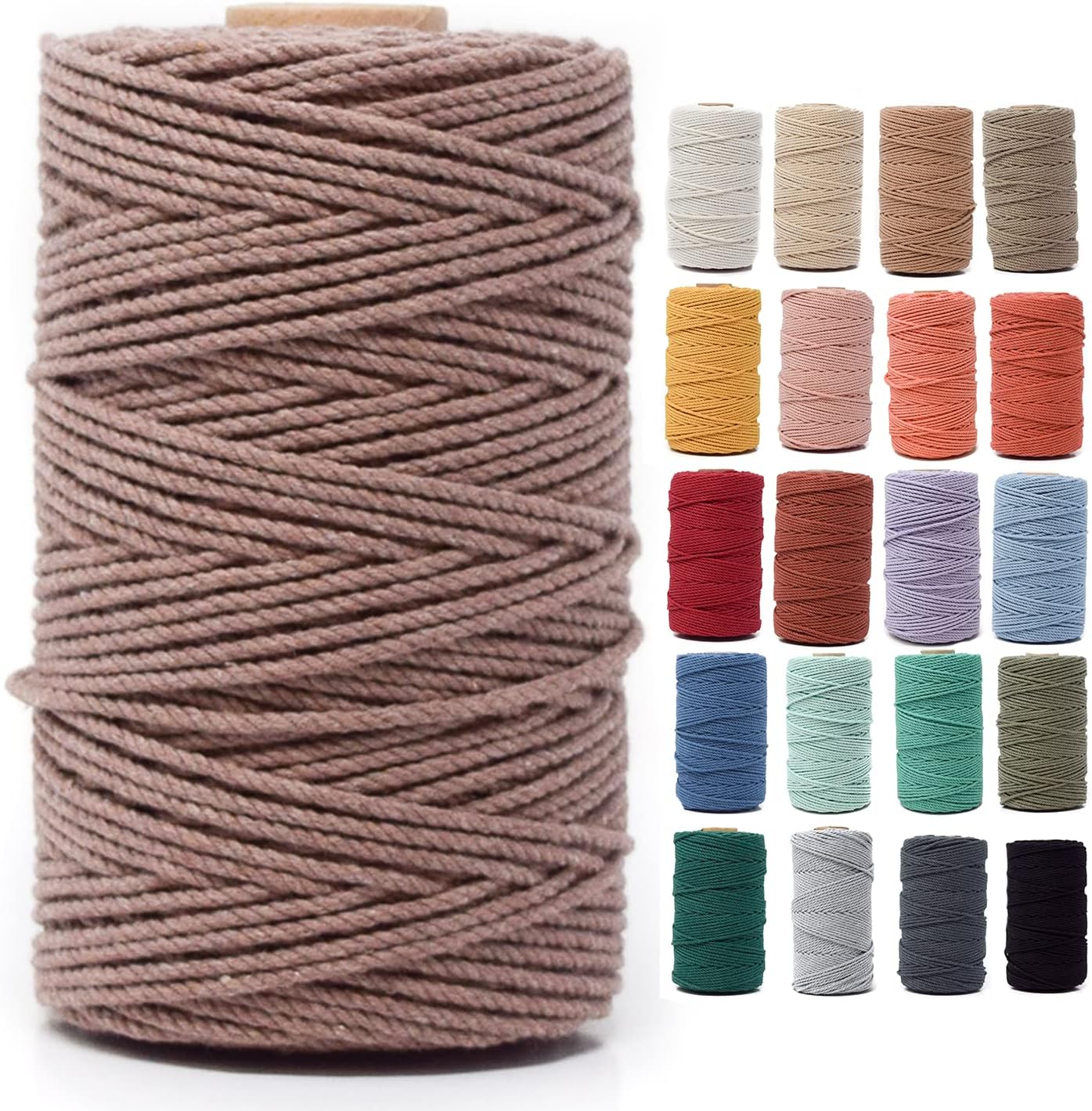 |
GANXXET Mink Color Macrame Cotton Cord | Made from recycled cotton sourced from the garment industry, supporting sustainable crafting. Strong, soft, and easy to work with, ideal for macrame and other fiber crafts. Provides a clean, modern aesthetic that enhances handmade projects. |
Check Price |
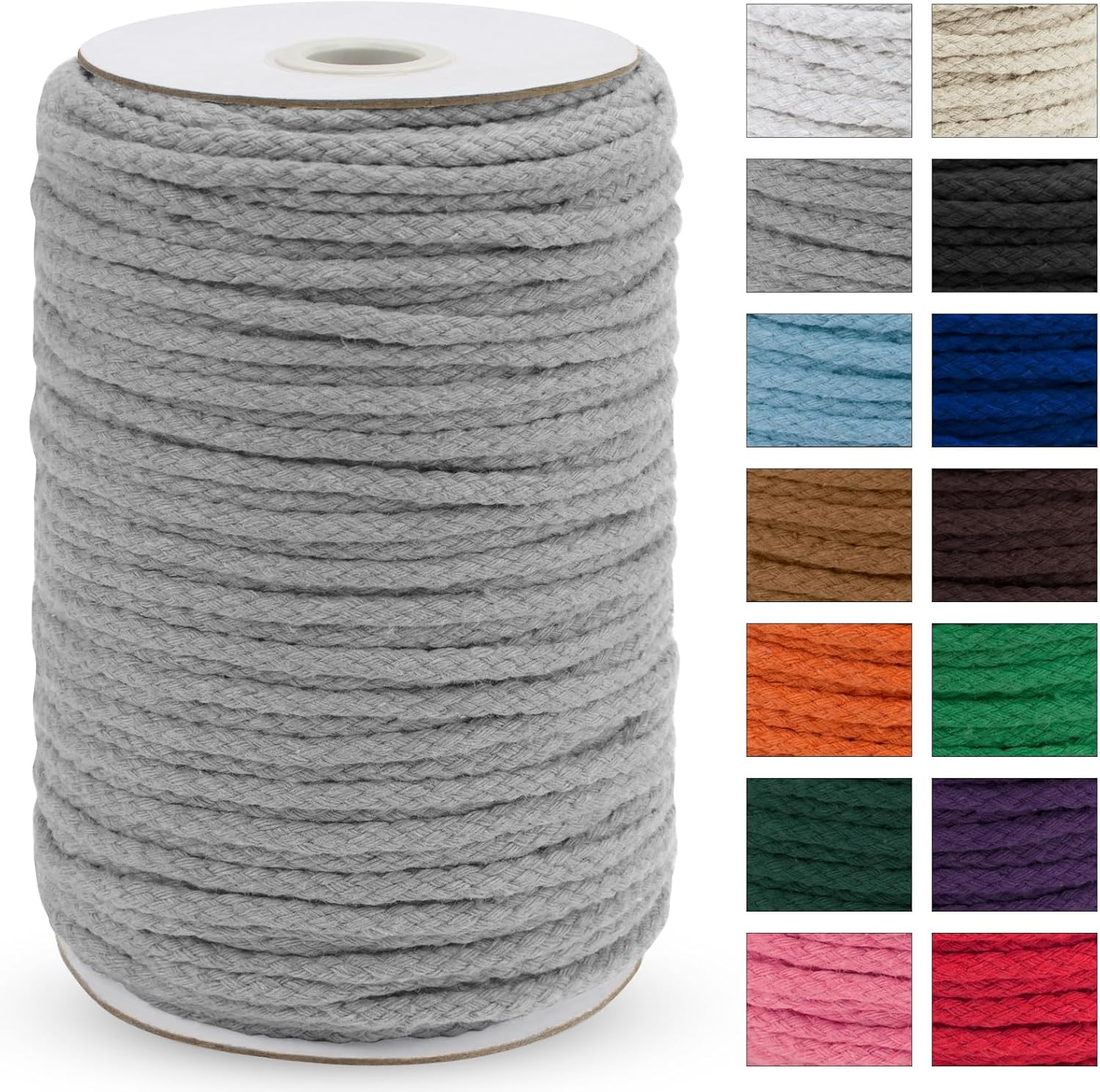 |
JeogYong Braided Macrame Cord | Made from eco-friendly, biodegradable cotton that is soft, odor-free, and safe to use. 295ft (90m) roll provides plenty of rope for multiple projects; can be cut to any desired length. 5mm thickness braided with 8 strands, durable enough to hold heavy plant pots and large décor pieces. Knots stay neat and uniform throughout projects; easy to untie if mistakes are made. |
Check Price |
Details Worth Checking Before You Buy a Roll
Start with a project length estimate, not the spool size
Macrame consumes more cord than the finished dimensions suggest because every knot bends the working strands back and forth. A strand used as a filler cord may stay relatively straight, while a working cord can shrink dramatically as it forms repeated half hitches or square knots.
Patterns often provide cut lengths, and those lengths are more useful than simply knowing the roll contains 100 meters. If you are designing without a pattern, make a short sample first and measure how much cord the knot sequence consumes. Buying a little extra from the same color lot is safer than trying to match a shade after the project is already half finished.
Think about how often you expect to undo knots
Beginners redo knots. That is normal, and it changes what “easy to use” means. A structured twisted or braided cord usually handles repeated untying more neatly than a very loose single strand. A soft single strand may still be the better choice if fringe is central to the finished design.
This is why the cord that feels prettiest in the package is not always the easiest practice material. The first roll should help you learn tension and knot direction without punishing every correction.
Match color contrast to your learning environment
Very dark cord can make the path of individual strands harder to see under weak lighting. Very pale cord against a white table can create the same problem. A medium or contrasting color can make practice knots easier to inspect.
Two-tone or colored cord can be especially useful because the shape of the knot is visible at a glance. Once the motion becomes automatic, color becomes a more purely decorative decision.
Check whether you want fringe or a clean cut end
Single-strand and twisted cotton can be separated and combed. Braided cord is designed to stay together. Polypropylene can often be cut very cleanly, and some synthetic cords can be carefully heat-sealed according to the maker’s instructions, but heat should never be improvised around cotton, finished decor, or flammable surfaces.
If the project ends in tassels, feathers, or brushed arcs, choose cotton that can be opened up. If it ends in compact knots, handles, or structural loops, a braid may be easier to keep tidy.
Do not treat decorative craft cord as safety rope
Plant hangers, shelves, and hanging decor place real loads on knots and hardware. Test the finished piece gradually with a safe load before placing a plant or breakable object in it, and inspect the supporting hook as carefully as the cord.
Macrame cord is craft material, not climbing, fall-arrest, child-suspension, or life-safety rope. A product can be strong enough for decorative use without having the ratings required for safety-critical applications.
NOANTA Pink Gray Macrame Cord – A Balanced 4mm Cotton Option for Visible Knots
NOANTA’s Pink Gray macrame cord is currently listed as a 4mm twisted cotton cord supplied in a 109-yard length. That combination sits in a comfortable middle ground for a first wall hanging, plant hanger, or practice sampler. Four millimeters is thick enough for a beginner to follow the route of each working cord, but it does not create the oversized knots you would get from a very chunky rope.
The pink-gray color is more than a decorative detail for a learner. A colored rope can stand out against a pale work surface, which makes it easier to inspect the shape of a square knot or the diagonal line of a clove hitch. If you have been practicing with natural-white cord on a white table, the extra contrast can make the structure easier to read.
The cotton construction gives the cord a softer, more traditional macrame feel than the polypropylene option later in this guide. Cotton also gives you more finishing flexibility: depending on how tightly the rope is twisted, ends can be separated for tassels or softer decorative details. The trade-off is that cotton can show handling and fuzz more readily than a stable braid if you repeatedly undo the same section.
What the 4mm size means in practice
At 4mm, the cord works naturally with medium wall hangings and plant-hanger patterns. It has enough bulk to make basic knots look intentional without forcing you to manage a very stiff rope. For a first project, that can reduce the temptation to over-tighten every knot just to make it visible.
A 109-yard roll can cover a useful practice project or smaller finished piece, but the exact amount you need depends heavily on the knot pattern. Dense alternating square knots use much more material than long straight filler sections. Measure against your pattern before cutting every strand.
- Beginner-friendly scale. The 4mm diameter gives knots enough body to see clearly while remaining manageable around common dowels and rings.
- yard continuous length. The roll provides a practical amount for learning without requiring a very large bulk purchase.
- Colored finish helps visibility. The pink-gray appearance can make strand placement easier to follow on a light work surface and gives a finished piece personality without dyeing cord yourself.
- Twisted cotton can show wear after repeated untying. If you expect to practice the same knot many times, a braided cord may remain tidier longer.
Who It’s Best For
This is a sensible fit for beginners who want one medium-diameter cotton cord for general practice, plant hangers, or small-to-medium wall decor, especially if they prefer a colored rope instead of natural white.
Not Ideal For
It is less suitable for projects that specifically require a braided, non-fringing edge or for very fine jewelry-scale knotting where 4mm would feel oversized.
FLIPPED 100% Natural Cotton Macrame Cord – A Chunkier 5mm Four-Strand Rope
The FLIPPED cord is listed as 5mm, 110 yards, 100% cotton, with a four-strand twisted construction. Those specifications make it one of the more substantial cotton ropes in this group. A 5mm rope produces large, visible knots quickly, which can be reassuring for someone learning square knots because the shape is easy to inspect from several feet away.
The four-strand twist is also useful for learning tension. The rope has more internal structure than a very loose single strand, so it tends to keep a rounder profile while you form and tighten a knot. That does not mean it is immune to distortion; any cotton rope can flatten under very hard tension. Still, the construction provides a clear tactile reference in the hand.
Because it is thicker, this cord is best paired with appropriately scaled projects. A simple plant hanger, chunky wall piece, or decorative loop works well. A small micro-macrame pattern or a design with tiny beads may not. With 5mm cord, hardware openings matter: check that beads, rings, and other components can actually accommodate the rope before cutting your lengths.
Why beginners may appreciate the four-strand twist
During early practice, a cord that keeps its structure can make untying easier. You can usually identify the working cord and filler cord without the whole strand collapsing into loose fibers. It also gives classic macrame knots a defined rope texture rather than the cloud-like finish of combed single strand.
The 110-yard roll is generous enough for practice and many medium projects, although large wall hangings can consume several rolls. If a project is color-sensitive, calculate first and buy enough from the same shade batch.
- Large, readable knots. Five-millimeter cord makes the anatomy of basic macrame knots easy to see while you learn.
- Four-strand twisted construction. The structured rope supports crisp knot definition and gives beginners a clear feel for even tension.
- Cotton composition. The natural-fiber surface offers useful grip and a familiar matte finish.
- yard roll. The length is practical for a first substantial project or a combination of samplers and smaller pieces.
- Too bulky for fine work. The same thickness that helps on large knots can overwhelm small rings, beads, and detailed patterns.
Who It’s Best For
This option suits beginners who prefer bold, easy-to-see knots and a structured cotton rope, particularly for plant hangers, simple wall hangings, and larger practice pieces.
Not Ideal For
It is not the easiest choice for delicate patterns, small jewelry, narrow bead holes, or designs where a lighter 2mm to 3mm cord would create better proportions.
MAOQIAN Baby Blue Macrame Cord 3mm x 109Yards – A Lighter Cord for Detail Practice
MAOQIAN’s Baby Blue cord is listed as a 3mm cotton macrame cord with approximately 109 yards (100 meters) on the roll. Three millimeters is one of the most flexible sizes for a beginner because it can handle wall-hanging patterns, dreamcatchers, small plant hangers, keychains, and decorative wrapping without becoming visually heavy.
Compared with the 5mm FLIPPED rope, the MAOQIAN cord creates smaller knots and gives you more room for repetition. That is useful when you want to practice diagonal double half hitches, alternating square knots, or compact motifs where the pattern itself is the focus. The cost is that smaller knots demand slightly more attention to tension; inconsistencies are not hidden by bulk.
The baby-blue color also makes a friendly practice choice on neutral backgrounds. It is light enough to show the rope’s shape but distinct enough from natural wood and white paper to keep individual strands visible.
Why 3mm is such a practical learning size
Three-millimeter cord sits between micro-macrame string and chunky decorative rope. You can fold it around a dowel without creating a huge lark’s head knot, yet it is still thick enough to separate with your fingers without relying on tweezers or special tools.
It also works with a wider range of small accessories than 5mm cord. If a beginner wants to experiment with rings, small wooden beads, or keychain hardware, 3mm is generally easier to integrate, provided the hardware openings are large enough.
- Versatile 3mm diameter. It is substantial enough for learning but narrow enough for more detailed patterns.
- Approximately 109 yards of cord. The length supports practice and smaller finished projects without requiring a bulk spool.
- Cotton construction. The surface provides grip that helps a new knotter set tension without the cord sliding freely.
- Useful for mixed craft work. The diameter adapts well to dreamcatchers, hanging decor, gift details, and other knot-based projects in addition to traditional wall pieces.
- Smaller knots expose tension differences. Beginners who pull one side harder than the other may notice uneven rows more quickly than they would with a chunkier rope.
Who It’s Best For
This is a strong fit for beginners who want a versatile 3mm cotton cord for learning detailed knot sequences, small decor, and medium-scale wall pieces.
Not Ideal For
It is less efficient for oversized, chunky installations where a 4mm or 5mm rope would build visual mass with fewer knots.
LECZIVOEN Macrame Kit – A Cord-and-Hardware Starter Set
The LECZIVOEN option is different from the other entries because it is sold as a starter kit rather than only a roll of cord. Current versions are built around a 3mm, roughly 109-yard natural cotton cord and add assorted wooden beads, rings, sticks or dowels, hooks, and beginner instruction material. Bundle counts have varied between listings, so the exact accessory quantity should be checked on the current package before purchase.
For a first-time maker, the value of a kit is convenience. You can learn how a lark’s head knot sits on a wooden support, how cord passes through a bead, and how a hanging project is assembled without sourcing every small component separately. That matters most if you do not already have a craft drawer full of rings and dowels.
The 3mm cotton cord is also a practical learning diameter. It is narrow enough for small projects and gives enough definition for the basic knots typically taught in starter tutorials. If you later decide that you prefer a different construction, the kit still gives you reusable hardware for future pieces.
The accessory bundle is the real differentiator
A plain cord roll assumes you already know what you want to make. A kit removes some early decisions. For a beginner who becomes stuck choosing ring sizes, bead holes, or a support stick, having compatible-looking pieces in one package can make the first project easier to start.
That convenience does not replace checking the instructions. If the included guide is brief, use the knot diagrams as a reference and work slowly through one knot family at a time. The goal of the first piece is not to use every accessory in the box; it is to learn how cord tension changes the finished shape.
- More than just cord. The kit includes a practical collection of hardware and components that can reduce setup friction for a first project.
- Beginner-friendly 3mm cotton base. The included rope size works for many common starter knots and decorative pieces.
- Encourages immediate practice. Having rings and supports available makes it easier to move from a knot sampler to a finished hanging item.
- Reusable accessories. Wooden pieces and hooks can remain useful even after the original cord has been used.
- Bundle contents can vary. Check the current listing carefully if a particular number of beads, rings, or hooks is important to your planned design.
Who It’s Best For
This kit suits complete beginners who want cord plus basic macrame hardware in one purchase, especially for a first plant hanger or small wall piece.
Not Ideal For
It is less appealing if you already own rings, dowels, hooks, and beads and would rather spend the entire budget on a larger quantity of one specific cord.
Likeecords Braided Macrame Cotton Cord – A Neater Choice for Firm Edges
Likeecords sells braided cotton macrame cord in multiple variants; a current commonly listed version is 3mm x 100 meters (about 109 yards) in cotton. The key feature is not the precise color or pack variation but the braided construction. A braid behaves differently from a twisted rope: the strands are interlocked, so the cord tends to keep a stable round profile and resist opening up while you handle it.
That stability can be reassuring for beginners who dislike fuzzy ends or who repeatedly untie practice knots. A braided cord is also useful in functional decorative pieces such as plant hangers, small bags, handles, and baskets where the edges should stay tidy rather than brush out into fringe.
The limitation is equally important. Braided cord is not the natural choice for a macrame feather or dramatic combed tassel. You can cut it cleanly, but the whole point of the braid is to stay together. If your inspiration photo shows large brushed arcs, a single-strand cotton cord will get you there more naturally.
Why braid structure changes the learning experience
With braid, the diameter stays comparatively consistent as you pull the working ends through a knot. That makes it easier to judge whether one knot is tighter than the next. It can also survive handling better when a beginner has to back out several rows.
At around 3mm, the commonly listed variant provides enough definition for pattern work without feeling bulky. Since Likeecords offers multiple versions, verify the exact diameter and length on the product box you are buying rather than assuming every color uses identical specifications.
- Braided construction stays together. The rope keeps a clean profile through repeated handling and knotting.
- Good for correcting practice work. The stable braid generally tolerates untying more neatly than loose single-strand cord.
- Useful for functional decorative pieces. Plant hangers, bags, and handles benefit from the controlled edge and consistent diameter.
- Cotton feel with added structure. It combines a natural-fiber hand with a more contained construction than loose twist.
- Limited fringe potential. The braided structure is designed to remain intact, so it does not brush out like single-strand cotton.
Who It’s Best For
This cord fits beginners who want a stable braided cotton rope for structured plant hangers, bags, handles, and neat-edged wall work.
Not Ideal For
It is not ideal for projects whose main visual effect comes from combing the cord into soft, wide fringe.
Makromecity Premium 3mm Macrame Cord – A Washable Polypropylene Option
Makromecity currently lists its 3mm product under the name “Polypropylene Polyester Macrame Cord,” while the technical specification identifies the fiber composition as 100% polypropylene. The current 3mm version is listed at 120 meters, or about 131 yards, and the brand emphasizes washability, stain resistance, shape retention, and a subtle sheen.
For beginners, the biggest difference from cotton is the surface. Polypropylene feels smoother and more synthetic, and it does not produce the same soft brushed fringe. In return, it can be a practical choice for pieces that will be handled frequently or used where easy cleaning matters.
The 3mm diameter supports detailed knot work without becoming too bulky. Because the cord has a resilient, defined body, knots can look crisp and geometric. That makes it attractive for small bags, purses, structured decor, and projects where you want the cord itself to maintain a polished line.
A note about synthetic cord and heat
Makromecity describes this cord as heat-fusible, meaning the ends can be melted together under controlled conditions. Do not treat that as an invitation to experiment casually with an open flame. Synthetic fibers can melt, drip, smoke, and cause burns. If you use heat to finish an end, follow the manufacturer’s instructions, work with ventilation, use a suitable heat source, and keep the material away from skin and flammable surfaces.
For many beginner projects, a neat mechanical finish or hidden cut end is simpler than heat sealing.
- Stable 3mm construction. The cord supports detailed, defined knotting without the loose fibers of single-strand cotton.
- Long current roll length. The 3mm version is listed at about 131 yards, giving room for a larger project or several smaller ones.
- Easy-care synthetic surface. Polypropylene is well suited to projects where wipe-clean practicality matters.
- Strong shape definition. The cord’s body works well for bags, geometric knots, and structured decorative forms.
- It does not create traditional cotton fringe. The smooth synthetic construction gives a different finish from the soft, brushable look many people associate with macrame wall art.
Who It’s Best For
This option suits beginners who want a 3mm synthetic cord with a smooth, structured finish for bags, compact decor, or projects that benefit from easier cleaning.
Not Ideal For
It is not the best choice if your main goal is soft natural fringe, a matte cotton look, or maximum fiber separation for feathers and tassels.
GANXXET Mink Macrame Cotton Cord – Recycled Cotton with Two Useful Beginner Constructions
GANXXET’s Mink color is currently available in more than one recycled-cotton construction, including a 4mm single-strand soft cotton cord and a 3mm three-ply rope. That is important because the name “Mink” identifies the color family, not one universal rope structure. A beginner should choose the construction based on the desired finish rather than assuming every Mink roll behaves the same way.
The 4mm single-strand version is designed for soft detailing and can be unraveled into fringe. GANXXET states that it is made from recycled cotton fabric waste from the garment industry, which is broken back into fibers and respun. The 3mm three-ply Mink rope is also made primarily from recycled cotton and is aimed at projects where knot precision and definition matter.
This gives beginners a useful lesson in macrame buying: two cords can share a brand and color and still produce very different work. The single-strand cord is better for flowing wall hangings, tassels, and feathered ends. The three-ply rope is better if you want visible rope texture and more controlled knot edges.
Choosing between the 4mm single strand and 3mm three-ply
Pick the 4mm single strand when fringe is part of the design and you enjoy a soft, full look. Pick the 3mm three-ply if you are primarily learning knot geometry or making a plant hanger where a structured rope is helpful.
GANXXET also notes that recycled cotton can produce shade variation between batches. If a large piece must remain one consistent Mink tone, buy enough cord for the full project at the same time.
- Recycled cotton construction. The cord is made from reclaimed cotton textile material rather than relying only on newly produced fiber.
- Choice of knot personality. GANXXET offers soft 4mm single-strand cord as well as structured 3mm three-ply rope, so you can choose between a softer finish and more defined knot structure.
- Strong fringe potential in the 4mm version. The single-strand construction can be unraveled and combed into soft fringe for feathers, tassels, and decorative wall-hanging details.
- Defined knots in the 3mm three-ply version. GANXXET describes the 3mm three-ply rope as suitable for projects where precision and definition in the knots matter, including plant hangers and wall hangings.
- You must check the selected construction carefully. Diameter, ply, length, and handling differ between GANXXET cord variants, even when the color family is similar.
Who It’s Best For
GANXXET Mink is a good match for beginners who value recycled cotton and want to choose between soft single-strand fringe or more defined three-ply knot structure.
Not Ideal For
It is less convenient for a buyer who wants one fixed specification without checking which Mink construction is selected on the current product page.
JeogYong Braided Macrame Cord – A 5mm Eight-Strand Braid for Substantial Projects
JeogYong’s braided option is currently listed as 5mm thick, about 295 feet (90 meters), and made as an eight-strand braided cotton rope. Among the cords here, it combines two features that immediately change the finished look: a relatively chunky 5mm diameter and a tightly contained braid.
For a beginner, that means knots look substantial and the cord stays visually neat. The braid does not want to separate into individual plies, so it is easier to keep cut sections under control during assembly. It also makes the cord a practical candidate for plant hangers, larger wall details, and decor that benefits from a firm outline.
The manufacturer and current sellers describe the rope as natural cotton and emphasize that knots can be untied without the cord instantly falling apart. That is useful during the learning stage. Still, any cord can become marked or compressed after repeated tightening, so practice on scrap lengths before committing the final cut pieces.
Why 5mm braided cord feels different from 5mm twisted rope
A braid distributes the fibers around a stable structure. Instead of seeing a visible spiral of plies, you get a more uniform surface. This produces clean, modern-looking knots but gives less of the classic rope texture seen in multi-ply cotton.
The 90-meter roll is a little shorter than many 100-meter cotton options, so calculate large projects carefully. A chunky 5mm design can consume length quickly even though it requires fewer knot rows.
- Eight-strand braided structure. The cord stays contained and gives knots a clean, consistent shape.
- Substantial 5mm diameter. Basic knots are easy to see, which can make first projects feel less fiddly.
- Cotton-based feel. The natural-cotton construction provides a softer, more familiar hand than many slick synthetic cords while retaining the stability of a braid.
- Useful for substantial decorative forms. The 5mm eight-strand braid is suitable for plant hangers, wall hangings, and other larger decorative projects when the finished piece and its hardware are tested appropriately.
- Bulky for fine patterns. Five-millimeter braided cord can quickly crowd small rings, narrow hardware, and compact motifs.
Who It’s Best For
This is a strong option for beginners who want chunky, stable cord for plant hangers, bold wall pieces, and projects where a neat braided edge matters more than fringe.
Not Ideal For
It is not the right construction for combed feathers, soft tassels, or small detailed patterns that need a thinner rope.
Comparing the Eight Cords Without Reducing Them to a Score
The easiest way to choose is to decide which behavior you want while knotting. A beginner practicing technique needs something different from a beginner whose main goal is a brushed wall hanging or a washable bag.
For the easiest all-purpose cotton practice
NOANTA’s 4mm twisted cotton sits close to the middle of the size range and gives knots enough visual weight without becoming too chunky. MAOQIAN’s 3mm cotton gives more room for detail and smaller hardware. FLIPPED’s 5mm four-strand rope is the better fit when large, unmistakable knots are more important than delicate scale.
If you have no project yet and simply want to learn square knots, half hitches, and spirals, 3mm to 4mm structured cotton is usually the least complicated place to begin. It is thick enough to see, grippy enough to control, and flexible enough for a wide range of practice patterns.
For plant hangers and structured pieces
JeogYong’s 5mm braid and Likeecords’ braided cotton favor clean edges and resistance to unraveling. FLIPPED’s 5mm twisted rope gives a more traditional cotton-rope look with visible twist. Any of these can work for plant hangers when the dimensions and project pattern match.
The more important point is testing. A plant hanger should be assembled carefully, hung from appropriate hardware, and gradually loaded in a safe place before it carries a valuable pot. Decorative craft cord is only one part of that system; the hook, ring, knot design, and installation surface all matter.
For fringe, tassels, and soft wall art
GANXXET’s 4mm single-strand Mink cord is the clearest fit among these options when brushing and combing are central to the design. A single-strand construction opens readily into fibers, allowing full fringe and feather shapes.
Twisted cotton can also be separated, but the finish will reflect its ply construction. Braided cord is the least convenient choice if the entire design depends on fraying the ends.
For a first project with hardware included
LECZIVOEN stands apart because it is a kit. If the reason you have not started macrame is that you are unsure which rings, beads, sticks, or hooks to buy, the bundled approach removes several decisions. It is less compelling if you already have a pattern and only need a high-volume cord roll.
For washable, structured craft projects
Makromecity’s 3mm polypropylene cord offers a different feel and care profile from cotton. Its smooth, shape-retaining construction makes sense for bags and high-handling decor. If your mental picture of macrame is soft, matte, brushed cotton, it will look and behave differently.
For a sustainability-focused cotton choice
GANXXET is the most clearly documented recycled-cotton option here, with the brand explaining how discarded garment-industry cotton is respun into cord. The main buying task is selecting the correct Mink construction: single strand for softness and fringe, or three-ply for defined knots.
A Beginner-Friendly Way to Set Up and Practice
1. Choose one knot family for the first session
Start with lark’s head knots to attach the cord, then practice square knots. Do not try to learn every decorative hitch in one sitting. Repeating one motion lets your hands learn where the working cords should travel.
Use a cord color that contrasts with your work surface and secure the dowel or ring so it cannot slide. A moving support makes tension harder to judge and teaches you to pull harder than necessary.
2. Cut a practice length before cutting the whole project
Use scrap or a short test piece to learn how the cord responds. Tie five to ten knots, untie a few, and check whether the cord fuzzes, flattens, or changes twist. This tells you more about handling than squeezing the roll in the package.
If you are following a pattern, do not shorten its recommended cut lengths just because the finished piece looks small. Working cords consume length rapidly.
3. Separate working cords from filler cords mentally
In a square knot, two working cords travel around the center filler cords. Keep that distinction clear. Beginners often create uneven rows because one side works harder than the other or because the center cords are accidentally pulled sideways.
After each knot, look at the center line. If the row is drifting, correct it immediately rather than hoping later knots will hide the problem.
4. Tighten to consistency, not maximum force
Macrame is not a contest to see how hard you can pull. Tighten each knot enough to seat it, then stop. Over-tightening can distort the rope, shorten the work more than expected, and make corrections painful.
A useful exercise is to tie five square knots and compare their width. If the first is wide and the fifth is narrow, your tension is increasing as you work. Repeat until the row looks consistent.
5. Measure from fixed reference points
For a plant hanger or symmetrical wall piece, measure from the support ring or dowel rather than from the previous knot alone. Small spacing errors multiply over a long piece.
Marking the target position with removable clips can help you keep several cords aligned while you learn. Avoid permanent ink on visible cord unless you have tested that it can be hidden.
6. Finish ends according to the cord construction
Single-strand cotton can be brushed. Twisted rope can be separated into plies and then combed if the pattern calls for it. Braided cord usually looks best with a clean cut or hidden end. Synthetic polypropylene requires the maker’s recommended finishing method; do not casually expose it to flame.
Trim only after the piece has been hung and allowed to settle. Gravity can change the visual line of fringe and reveal uneven sections that were not obvious on the worktable.
Keeping Macrame Cord Clean and Easy to Use
Store unused cord somewhere dry, away from dust, direct sun, and anything that can snag the fibers. A roll that is allowed to unwind loosely in a craft bin can develop tangles before the next project even begins.
For cotton, avoid soaking the entire roll unless the manufacturer specifically recommends it. Moisture can change twist, encourage dye transfer, or leave a roll damp inside. Spot-clean finished pieces carefully and support their weight while drying so the knots do not stretch out of shape.
Braided cotton is less prone to loose fringe but can still collect dust in the braid texture. A soft brush or low-suction vacuum through a protective screen can help with wall decor. Synthetic cord may be easier to wipe clean, but follow the product’s care directions rather than assuming every synthetic fiber tolerates the same cleaner.
Keep leftover labeled samples. A short piece marked with brand, diameter, construction, and color becomes a useful reference when you start planning a second project.
Where Beginner Macrame Projects Commonly Go Off Track
Choosing a beautiful cord that does not suit the pattern
A photo can make a 6mm rope look similar to a 3mm rope because there is no scale. If the pattern calls for 3mm cord, switching to 5mm changes knot size, finished dimensions, hardware fit, and required length.
Check the diameter before ordering, then compare the pattern’s sample photo with the actual scale of your support ring or dowel.
Cutting every strand before making a sample knot
If you have never used that cord before, a small sample can reveal unexpected stretch, bulk, or length consumption. Cutting all strands first removes your ability to adjust.
Tie a short section, measure it, and confirm the pattern scale. Then cut the project lengths.
Pulling every knot as tight as possible
Very tight knots are not automatically neat knots. Excess force can flatten cotton, distort the support cords, and make rows inconsistent as your hands tire.
Aim for repeatable pressure. A row of evenly seated knots looks cleaner than a row where each one has been pulled to its mechanical limit.
Ignoring twist direction
Twisted rope can partially open if you constantly rotate it against the original twist while knotting. If one working cord starts looking fuzzier than the others, check how you are handling and turning it.
Let the cord hang naturally before forming the next knot instead of spinning it between your fingers.
Using braided cord for a design built around brushed fringe
Braided rope is excellent at staying together, which is exactly why it is frustrating to comb apart. Choose a single-strand or suitable twisted cotton cord if the finished design relies on feathers, tassels, or a wide brushed hem.
Forgetting that color lots can differ
Natural and recycled fibers can vary subtly between batches, and dyed colors can also shift. If the project needs multiple rolls, buy them together when possible and compare them before cutting.
A small mismatch is much easier to manage at the planning stage than halfway through a symmetrical wall hanging.
Treating the cord as the only structural component
A plant hanger can fail at the hook, ring, ceiling anchor, or knot even if the cord itself looks strong. Use hardware appropriate to the load and mounting surface, inspect every connection, and test gradually.
Never use decorative macrame cord where failure could cause a person to fall or become suspended.
Safety Notes for Macrame Crafting
Scissors, cutters, hooks, suspended pots, long cords, and heat-finishing methods all deserve basic care. Cut away from your body and keep sharp tools closed or sheathed when not in use. Long loose strands can become tripping or entanglement hazards, especially around children and pets.
If you make plant hangers, inspect the hanging point and the finished knots before adding weight. Test over a protected floor with an unbreakable load first. Do not hang a heavy pot above a bed, crib, frequently occupied chair, or walkway unless the entire installation is designed and anchored appropriately.
Synthetic cord deserves extra caution if the maker describes heat sealing. Melted polymer can cause serious burns and can stick to skin. Work only with the manufacturer’s recommended method, good ventilation, and a clear nonflammable area.
Cotton cord is combustible. Keep finished hangings away from candles, open flames, hot light fixtures, heaters, and cooking surfaces.
Frequently Asked Questions
Is 3mm or 4mm cord better for a complete beginner?
Both are manageable. Three millimeters is better for detail and smaller hardware, while 4mm gives knots more visual presence and can be slightly easier to inspect. If you are undecided, either size in a structured cotton cord is a sensible starting point.
Is 5mm macrame cord too thick for beginners?
No. In fact, a 5mm rope can make basic knots easier to see. It becomes inconvenient only when the project is small, uses narrow beads or rings, or depends on fine detail.
Is braided cord easier to learn with than twisted cord?
Braided cord is stable and resists unraveling, so it can be forgiving when you untie knots. Twisted cord gives a more traditional rope texture and can be easier to open for decorative ends. The better learning choice depends on whether you value structure or fringe.
How much cord should I buy for a first project?
Follow the pattern’s cut list whenever possible because knot density changes cord consumption dramatically. If you are designing the piece yourself, make a measured sample and calculate from that rather than guessing from the finished height.
Can I use macrame cord outdoors?
Some synthetic cords tolerate moisture and handling better than cotton, but outdoor durability depends on the exact fiber, color, construction, and exposure. Check the current manufacturer’s guidance, and remember that sun, rain, wind, and temperature changes can age both cord and hardware.
Can I wash a finished macrame piece?
Care depends on the fiber and construction. Some synthetic cords are marketed as washable, while cotton wall hangings may distort or tangle if machine washed. Spot cleaning is often safer for decorative cotton pieces unless the manufacturer provides a specific washing method.
Which cord is easiest to make fringe with?
Single-strand cotton is usually the easiest because its fibers can be opened and combed directly. Multi-ply twisted rope can also create fringe after the plies are separated. Braided cord is designed to remain together and is the least convenient for a brushed finish.
Does recycled cotton behave differently from new cotton?
It can. Recycled cotton may show small shade or texture variations because the source fibers come from reclaimed textile material. For macrame, it can still be soft and highly workable; the main practical step is buying enough matching cord for a color-sensitive project.
Choosing a First Cord You Will Actually Enjoy Knotting
The best macrame cord for beginners is the one that makes your first few knots understandable rather than frustrating. If you want a straightforward cotton practice rope, the 3mm to 4mm options give a very adaptable scale. If you want bold knots, 5mm is easier to see. If your project needs soft fringe, choose a single strand; if it needs clean structure, braided or multi-ply cord is the better fit.
The eight products above cover those different approaches without requiring the same material for every project. Choose by construction first, diameter second, and color after those two decisions are settled. That order keeps the cord aligned with the way you actually plan to knot, finish, and use the piece.
A first macrame project does not need to be ambitious. A short sampler, small plant hanger, or simple wall piece will teach you more about cord tension than a complicated pattern bought before you know what your hands prefer. Pick the option that suits that first project, cut carefully, and give yourself enough spare length to retie a few knots along the way.