Outdoor wood rarely fails because one rainy afternoon got it wet. The bigger problem is repetition: sunlight dries and breaks down the surface, rain pushes moisture into joints and end grain, temperature changes make boards move, and dirt holds moisture where a finish is already getting thin. A clear coating has to cope with all of that while still letting the grain show through.
That is why I would not choose an outdoor finish by gloss level or a promise such as “tough” alone. The first question is whether the exact product is actually made for exterior exposure. The second is what kind of protection it creates: a film on top of the wood, a penetrating oil within the fibers, or something in between. Those differences affect UV resistance, appearance, maintenance, and how difficult the next refinishing job will be.
The four products below do not behave the same way. One is a traditional marine spar varnish, one is a fast-drying water-based exterior varnish, one is pure tung oil rather than varnish, and one is an interior polyurethane that should not be used on exposed outdoor wood. Understanding those distinctions matters far more than treating every clear finish as interchangeable.
What Outdoor Wood Needs From a Clear Finish
A clear finish has a difficult job outdoors because it protects without hiding the wood. Paint can use opaque pigment to block sunlight very effectively. A clear finish has to remain transparent, so UV protection is harder to achieve and usually requires specialized resins, UV absorbers, stabilizers, or a maintenance schedule that replaces protection before the film breaks down.
The U.S. Forest Products Laboratory has long emphasized that water and sunlight are the main forces that weather exterior wood. A clear finish can look beautiful outdoors, but it is usually a higher-maintenance choice than an opaque paint or a well-pigmented exterior stain. That is not a reason to avoid clear finishes. It is a reason to choose them with realistic expectations.
Sunlight attacks both the coating and the wood beneath it
UV radiation does more than fade color. It can degrade the wood fibers directly under a transparent film. Once that weakened surface no longer holds the coating well, the finish can crack, flake, or peel with bits of wood fiber attached to it.
This explains why “water-resistant” and “outdoor-ready” are not the same claim. A finish may handle spills or moisture while offering little help against prolonged sunlight. For a garden bench, exterior door, brightwork, or outdoor table that receives direct sun, I would look specifically for exterior labeling and stated UV protection rather than assuming any clear polyurethane will work.
Wood movement rewards flexibility
Wood gains and loses moisture as humidity changes. Boards also heat in the sun and cool at night. Those cycles make the substrate expand and contract, especially across the grain.
Traditional spar varnishes were developed for wooden boat spars and brightwork, where flexibility matters. Modern exterior varnishes and spar urethanes use different chemistry, but the design goal is similar: the cured coating has to tolerate movement better than a brittle interior finish. This is one reason an interior polyurethane can be durable on a table inside the house yet be a poor choice on a gate or outdoor chair.
Film-forming finishes and penetrating oils age differently
Marine varnish and exterior clear varnish build a visible film. That film can give excellent depth, gloss, smoothness, and cleanability. It also means maintenance has to happen before the film deteriorates too far. Once cracking and peeling become widespread, the repair can involve substantial scraping and sanding.
Pure tung oil works differently. It penetrates absorbent wood and cures within the fibers rather than building the same kind of thick surface film. That gives a more natural, hand-rubbed look and can make later maintenance simpler. The trade-off is that pure oil is not a substitute for a purpose-built UV-protective marine varnish when maximum clear-film protection in intense sun is the priority.
Choose the finish based on the exposure and the appearance you want, not on the assumption that every clear product creates the same barrier.
End grain and joints deserve extra attention
Water enters wood most readily through exposed end grain, open joints, checks, fastener holes, and surfaces that stay wet. A beautiful finish on the broad face of a board will not compensate for neglected cut ends or a chair joint that traps rainwater.
Before coating, inspect the piece as a construction project rather than just a painting project. Tighten loose joints, replace failed filler with an exterior-suitable repair material, smooth splinters, and make sure drainage paths are open. If water can sit in a pocket day after day, even a good clear finish is being asked to do more than it should.
Gloss changes appearance, but preparation controls the result
Gloss finishes reflect more light and can make grain look deeper. Satin and matt finishes reduce reflections and can be easier to live with on large surfaces where every small imperfection would otherwise catch the eye.
The sheen does not rescue poor preparation. Dust under a clear finish remains visible. Old gray fibers weaken adhesion. Wax, silicone polish, grease, or a failing previous coating can interfere with the new layer. Clear finishes reward patient surface preparation because they reveal rather than hide what is underneath.
What to Check Before You Choose
The label on the front of a can is only the start. Before committing to a whole project, check the technical information for where the product may be used, how many coats are required, how it should be applied, and what the manufacturer expects for maintenance.
Confirm exterior approval first
This is the simplest filter and the one most likely to prevent an expensive redo. Look for wording such as exterior, outdoor, marine, exterior doors, outdoor furniture, or external wood. If a product is described only for interior furniture, trim, cabinets, or doors, do not assume it becomes suitable outside because it is polyurethane.
This Varathane Triple Thick Polyurethane is a good example. It is thick, self-leveling, scratch resistant, and useful on indoor wood, but Rust-Oleum states that it is for interior surfaces and is not recommended for outdoor surfaces. That one sentence matters more than the attractive one-coat claim when the project lives in the weather.
Look for UV protection, not just moisture resistance
Moisture resistance helps rain bead and slows water movement, but sunlight often determines how long a transparent exterior finish stays attractive. A marine spar varnish that states UV stability or UV inhibitors gives you more relevant information for direct exposure than a generic claim about toughness.
TotalBoat Gleam is designed around this issue and is listed as UV stable. Rustins Quick Dry Outdoor Clear Varnish is sold specifically for external wood and current retail information describes UV protection for the finish. HOPE’S pure tung oil provides moisture resistance and a penetrating oil finish, but it should not be treated as though it contains the same dedicated UV package as a marine spar varnish.
Think about how much film you want to build
A high-build varnish can create that deep, almost wet-looking grain people associate with classic brightwork. The effect is beautiful on an exterior door, a sheltered table, or detailed woodwork where the finish itself is part of the design.
It also takes commitment. Multiple coats consume time, and exterior film finishes need inspection and maintenance. TotalBoat specifies a minimum build of several coats for Gleam, while Rustins is positioned as a quicker water-based exterior option. Pure tung oil creates a quieter, more natural surface rather than the same thick film.
Match the finish to the wood’s condition
Bare, freshly sanded wood is the easiest starting point because you know what the finish is bonding to. Previously finished wood needs more investigation. Is the old finish sound? Is it varnish, paint, stain, wax, oil, or an unknown combination applied over many years?
Do not put a new clear film over loose or chalking material. If the existing coating is failing, remove the unstable layer first. If the coating is sound, follow the new product manufacturer’s compatibility and preparation instructions. A small test area can reveal adhesion problems, unexpected color shifts, or a sheen you do not like before the whole piece is coated.
Decide whether ambering is a feature or a problem
Traditional oil-based spar varnishes often add a warm amber tone. On cedar, mahogany, teak, or darker woods, that warmth can look rich and intentional. On pale maple, ash, or a whitewashed surface, the same shift may be unwanted.
Water-based clear finishes generally change the wood less, although every product should still be tested. HOPE’S tung oil deepens the grain with an oil-finished look. TotalBoat Gleam is explicitly a clear amber varnish. Rustins states that its outdoor clear varnish has very little effect on timber color. Varathane Triple Thick has a soft amber hue, but again, that product belongs indoors.
Do not treat drying time as full cure time
“Touch dry” means you can touch the surface without leaving an obvious mark. “Recoat” means the manufacturer considers it ready for another layer under stated conditions. Neither necessarily means the finish is fully cured and ready for rain, stacking, heavy use, or placing cushions on top.
Weather changes all of these timings. Cool air, high humidity, a damp substrate, or a heavy coat can slow drying. Plan the job around the forecast and the product instructions, not around the most optimistic number on the label.
Maintenance is part of the purchase decision
Outdoor clear finishes work best when you renew them before widespread failure. TotalBoat, for example, recommends maintenance coats on exterior varnished areas, particularly those receiving direct sunlight. The Forest Products Laboratory also notes that transparent film finishes exposed outdoors require more maintenance than more opaque systems.
I know it is tempting to think of varnishing as a one-time restoration, but the better mindset is periodic preservation. A small maintenance coat applied at the right time is easier than stripping a peeling finish back to bare wood.
| Product Image | Product Name | Features | Price |
|---|---|---|---|
 |
HOPE’S 100% Pure Tung Oil | Simply wipe on and let cure at room temperature for a hand-rubbed finish. Works on unfinished, weathered, or stripped wood, plus concrete, brick, stone, and cast iron. Non-toxic finish makes it ideal for cutting boards, butcher blocks, countertops, bowls, and utensils. Enhances wood grain with a rich, warm glow for timeless appeal. |
Check Price |
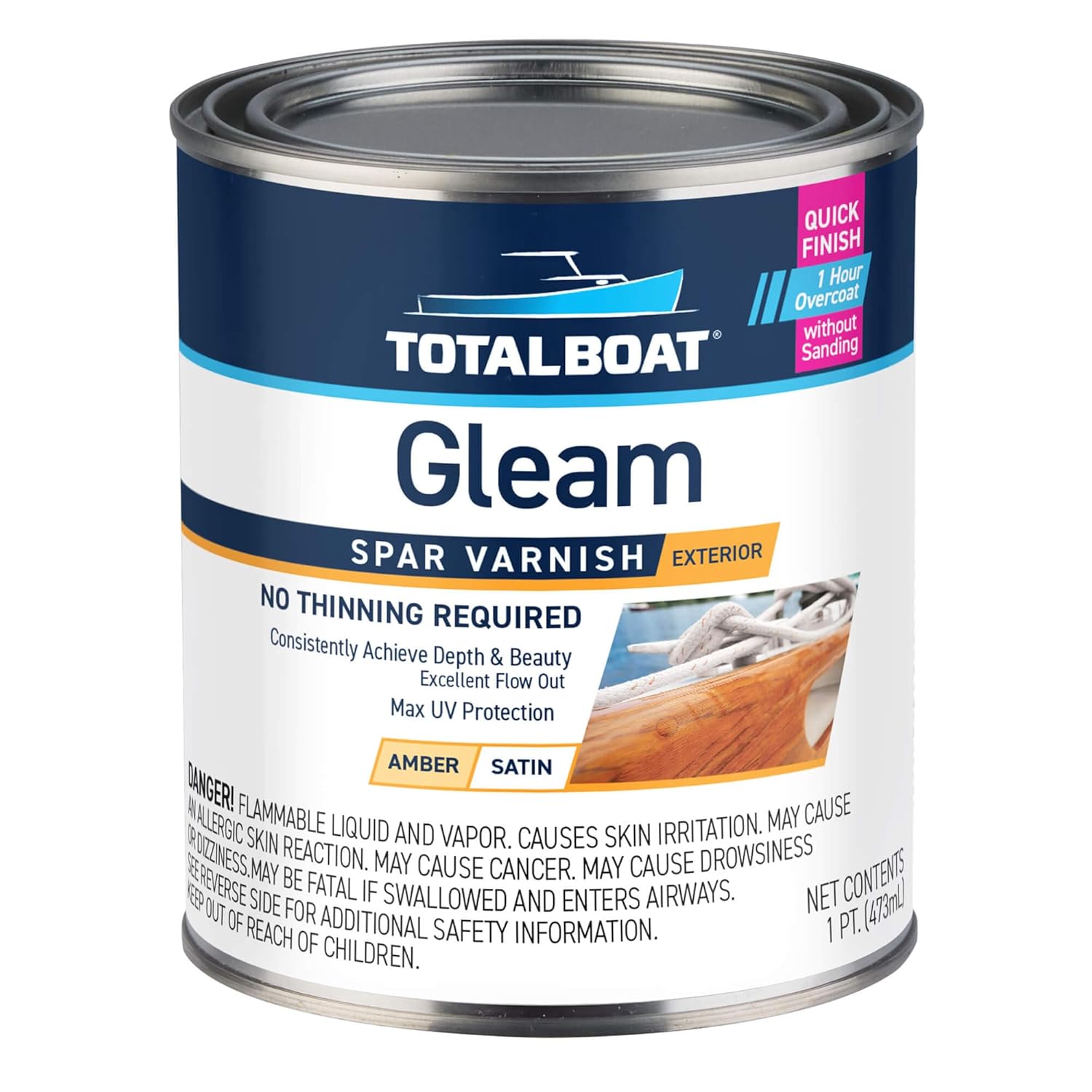 |
TotalBoat Gleam Marine Spar Varnish | Ideal for interior and exterior wood on boats, canoes, kayaks, outdoor bar tops, garage doors, and furniture. Can be brushed, rolled, or sprayed; suitable for both gloss and satin finishes. Provides 360–400 sq. ft. per gallon, ensuring efficient use across large surfaces. |
Check Price |
 |
Varathane Triple Thick Polyurethane Clear Wood | Dries to the touch in just 2 hours, speeding up project completion. Provides excellent scratch and stain resistance for long-lasting durability. Ensures smooth, even application without brush marks or uneven finish. |
Check Price |
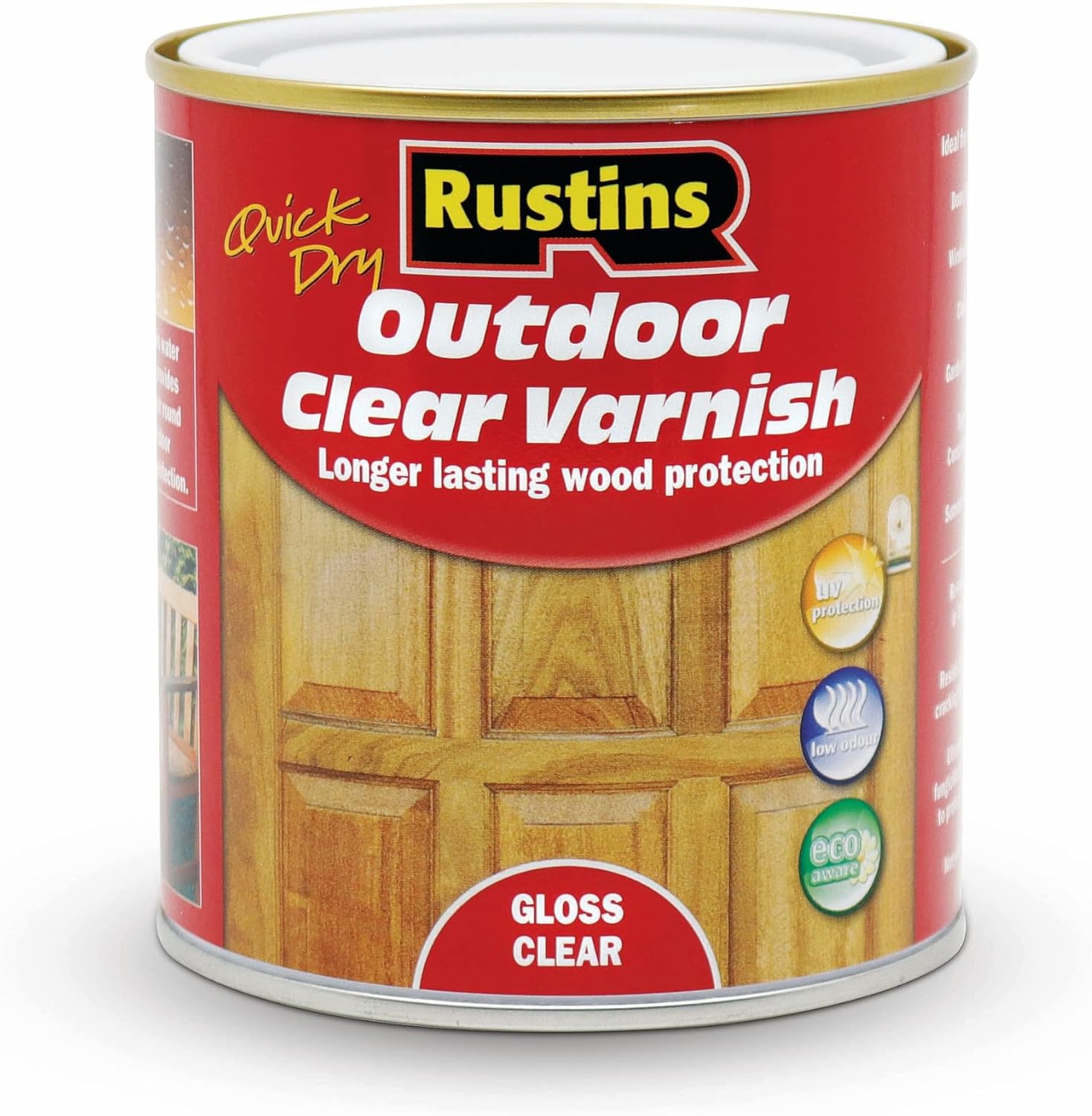 |
Rustins Quick Dry Outdoor Clear Varnish 500 ml Gloss | Shields outdoor wood surfaces from rain, sun, and seasonal changes for year-round durability. Advanced quick-dry technology allows multiple coats in a single day, saving time and effort. Prevents fading and discoloration, preserving the natural beauty of wood surfaces. |
Check Price |
Match the Finish to the Outdoor Project
The same clear finish can behave very differently on an upright front door and on a horizontal garden table. Exposure angle, shelter, wood species, joint design, and daily use all change what the coating has to survive. Before deciding between these four products, look at the project itself as closely as you look at the label.
Exterior doors need UV protection and edge protection
An exterior door often has one face in strong sun while the other lives in conditioned indoor air. That uneven heating and moisture exposure can make the slab move. A clear finish on the outside therefore needs weather resistance, but the top, bottom, and side edges also deserve attention because moisture can enter there and stress the visible face.
A marine spar varnish is a logical fit for a clear-finished exterior door when the manufacturer allows the use and you are prepared for maintenance. Rustins can suit exterior doors and frames where a quicker water-based system is preferred. The interior Varathane product should not be used as the weather-facing clear coat simply because doors appear in its indoor use list. Interior doors and exterior doors live in very different conditions.
Garden furniture combines sunlight, abrasion, and trapped water
Outdoor chairs and tables get handled, dragged, wiped, rained on, and sometimes left beneath wet cushions. Chair joints and table end grain can remain damp long after the broad surfaces look dry. Horizontal tabletops also receive more direct UV and standing water than vertical trim.
For a glossy furniture-like finish, a maintained exterior varnish can look excellent. If you prefer a more tactile surface and can keep the furniture under cover when not in use, penetrating tung oil may be appealing. The Forest Products Laboratory notes that clear varnish can give outdoor furniture years of service when the furniture is protected from direct weather when not in use. That is a practical reminder that a cover can be part of the finishing system rather than an afterthought.
Window frames and trim reward fast maintenance
Windows have corners, glazing lines, end grain, and joints where water can collect. Small cracks in a clear film around these details can admit moisture quickly. A water-based exterior varnish such as Rustins can be convenient because maintenance coats are easier to fit into a dry-weather window, particularly on smaller trim sections.
Do not let fast drying encourage rushed preparation. Old sealant, chalked paint at adjoining surfaces, mildew, and dirt around glazing can interfere with a neat edge. Mask carefully where needed and keep the coating off surfaces the manufacturer does not approve.
Fully exposed horizontal surfaces are the hardest job
A horizontal top receives direct sun, rain impact, bird droppings, pollen, abrasion, and standing moisture. Clear coatings generally have a more difficult life there than on vertical surfaces. If you choose a transparent finish for an exposed tabletop or rail cap, inspect it more often than sheltered vertical wood.
Deck walking surfaces add foot traffic and slip considerations. Do not automatically extend a furniture or brightwork recommendation to a walking deck. Use only a product and sheen that the manufacturer explicitly allows for that use, and remember that glossy films can become slippery when wet.
Sheltered wood gives you more freedom
Wood under a deep porch, roof overhang, gazebo, or covered patio receives less direct rain and often less UV. That can make a clear finish more practical and extend the maintenance interval. It is also where a natural penetrating oil can be especially attractive because the weather is not attacking the surface as aggressively.
Shelter does not mean zero exposure. Wind-driven rain, humidity, condensation, and reflected sunlight still matter. Keep inspecting the finish, but recognize that reducing exposure physically is often more effective than asking a coating to resist unlimited weather.
Plan the Work Around Weather, Not Just Drying Times
Exterior finishing is unusually dependent on conditions. A product can perform beautifully in the temperature and humidity range on its technical sheet and poorly when applied to hot wood in direct sun, a damp board after morning dew, or a surface that gets rained on before it has developed enough film strength.
Avoid coating wood that is hot from direct sun
A dark or sun-facing board can become much hotter than the surrounding air. Finish may flow poorly, skin over too quickly, or develop brush marks before you can maintain a wet edge. Moving the project into shade or working during a cooler part of the day can make application much more controlled.
Do not confuse shade with dampness. Early morning can bring dew, and evening work can leave a fresh surface vulnerable to overnight condensation. Choose a period that gives the coating both suitable application conditions and enough protected drying time afterward.
Humidity can change the schedule
Water-based products depend on water leaving the film. Solvent-based varnishes depend on solvent evaporation plus cure chemistry. Pure tung oil cures by oxidation. High humidity, low temperature, and poor airflow can slow these processes in different ways.
Use manufacturer recoat times as conditional instructions, not promises that override the weather. If the surface still feels soft, cool, tacky, or otherwise outside the stated readiness criteria, do not force the next coat simply because the clock says four hours have passed.
Wind creates its own problems
A breezy day feels ideal for ventilation, but strong wind carries dust, pollen, grit, and insects into wet finish. It can also accelerate surface drying unevenly. A sheltered outdoor workspace with good airflow is often better than a completely exposed driveway.
If you must work outside, clean the surrounding area first and avoid mowing, sanding, or blowing dust nearby while the finish is wet. Clear coatings make contamination especially visible because every speck becomes part of the final surface.
Give the final coat a protected window
The last coat is the one you will see, so it deserves the cleanest conditions. Plan enough time for it to become resistant to dew and unexpected moisture according to the product directions. If the forecast is uncertain, delaying the final coat is usually less frustrating than sanding out rain marks later.
The safest schedule is built backward from the weather window: final cure protection first, then recoat intervals, then surface preparation. That approach keeps the project from being rushed at the point where appearance matters most.
HOPE’S 100% Pure Tung Oil — A Penetrating Finish Rather Than a Varnish
HOPE’S 100% Pure Tung Oil is the outlier in this group, and that distinction should be clear before anyone buys it for an outdoor project. It is a natural drying oil made from tung oil, not a conventional film-forming varnish. The manufacturer describes it as penetrating into the wood fibers, curing to a flexible non-oily solid, and resisting moisture, alcohol, oil, and everyday wear.
That behavior can be very useful on wood when the goal is a hand-rubbed, natural appearance. Instead of laying a thick glossy shell on top, the oil soaks into absorbent wood and makes the grain look richer. Weathered, stripped, and unfinished wood are all among the surfaces the manufacturer says it can penetrate.
The important limitation is sunlight. The current HOPE’S product information focuses on penetration and moisture resistance rather than a dedicated UV-inhibiting exterior film. For a piece that sits in strong direct sun and rain year-round, I would not treat pure tung oil as equivalent to a marine spar varnish with stated UV protection.
It makes more sense when you value a penetrating finish, easier renewal, and a natural look, especially on wood that is somewhat sheltered or that you are willing to maintain regularly.
Key features translated into practical benefits
It is genuinely 100% tung oil. HOPE’S ingredient information lists tung oil as the ingredient, which matters because many products sold with “tung oil finish” in the name are blended wiping finishes rather than pure oil. If you specifically want a simple drying-oil finish without a conventional varnish resin, this product fits that goal.
The finish penetrates rather than building a heavy surface film. That helps the wood retain a more natural texture and avoids the plastic-like feel some people dislike in thick clear coats. It also means the project will not develop the same deep high-gloss build you get from several coats of marine varnish.
The cured oil is moisture resistant. That can help reduce water uptake and everyday staining on appropriately prepared wood. It does not mean the wood becomes maintenance-free or that every joint is suddenly waterproof; construction details and end-grain protection still matter.
Application is wipe-on and cure-based. The manufacturer’s basic direction is to wipe the oil on and allow it to cure at room temperature. Pure tung oil does not contain the same fast-drying package as many modified finishes, so patience is part of the process. Apply only as much as the wood can absorb and follow the current label for coat timing and cleanup.
- The natural look stays close to the wood. Because the oil penetrates, grain and texture remain visually important rather than sitting beneath a thick clear film.
- Pure composition is easy to understand. The current ingredient disclosure identifies tung oil rather than a complex mixture of resins and solvents.
- Moisture resistance is useful for frequently handled wood. Once properly cured, the oil helps the surface resist everyday moisture and wear.
- Maintenance can be less destructive than repairing a peeling film. Penetrating finishes generally avoid the same large sheets of cracked varnish that can make later refinishing laborious.
- It is not the strongest choice here for direct UV exposure. If intense sun is the main threat, a purpose-built exterior varnish with stated UV protection is the more defensible option.
Who It’s Best For
HOPE’S Tung Oil suits woodworkers who want a natural, low-build finish on absorbent wood and are comfortable with periodic inspection and renewal. It can make sense for sheltered outdoor furniture, decorative pieces, handles, planters kept under cover, or projects where the tactile feel of the wood matters as much as the shine.
Not Ideal For
It is not the choice I would make for someone expecting a thick, glossy marine-style film or maximum UV screening on a fully exposed south-facing surface. If the goal is a polished brightwork appearance with explicit UV protection, TotalBoat Gleam is much closer to that requirement.
TotalBoat Gleam Marine Spar Varnish — Built for Sun, Moisture, and a Deep Clear Film
TotalBoat Gleam is the product in this group that most clearly matches the phrase “exterior varnish.” It is a one-part marine spar varnish designed for brightwork on boats, strip canoes, kayaks, and other wood exposed to moisture and sunlight. TotalBoat describes the finish as water resistant and UV stable, with gloss and satin options.
Marine use is a demanding test for a clear wood coating. Boat trim sees strong sun, spray, humidity, temperature changes, and frequent cleaning. That does not mean a marine varnish never needs maintenance—TotalBoat specifically recommends maintenance coats on exterior work—but it does mean the formula is designed around conditions that are directly relevant to outdoor furniture, exterior doors, wood trim, and decorative garden structures.
Gleam also delivers the classic look many people have in mind when they say varnish: a clear amber film with depth and sheen. That warm tone enriches dark and medium woods especially well. If you want the coating itself to become part of the visual finish, this is the strongest match among the four products.
Key features translated into practical benefits
The varnish is UV stable. This is one of the most valuable specifications for transparent exterior wood because sunlight attacks both the coating and the wood surface. UV stability does not eliminate maintenance, but it makes the product appropriate for exterior exposure in a way an interior polyurethane is not.
It is a high-build one-part spar varnish. Each coat adds film depth, so the finish can develop the rich clarity associated with traditional brightwork. TotalBoat specifies a minimum multi-coat system rather than promising that one thick coat is enough.
Gloss and satin finishes serve different looks. Gloss gives maximum shine and depth. TotalBoat recommends building with gloss and using satin at the end when a lower sheen is wanted, rather than building all layers with satin. That is useful because it preserves clarity while allowing the final surface to look softer.
Application can be brushed, rolled, or sprayed. That flexibility helps with different project sizes, although spraying varnish introduces additional ventilation, overspray, and respiratory concerns. For most DIY outdoor furniture and doors, brushing is the more controllable method.
The formula can be recoated relatively quickly under suitable conditions. TotalBoat publishes temperature-dependent overcoat times, which can make a multi-coat schedule manageable. The practical lesson is to use the current technical data for your actual temperature rather than assuming one universal waiting period.
- Purpose-built exterior UV protection makes it suitable for serious exposure. It is designed for marine brightwork, where sun and moisture are constant concerns.
- The high-build film creates exceptional visual depth. Several coats can make attractive grain look richer and more dimensional.
- Water resistance and flexibility suit moving outdoor wood. A spar-style formula is a better match for seasonal expansion and contraction than a typical hard interior clear coat.
- Multiple application methods give project flexibility. Brush, roll, or spray application allows the finish to be adapted to trim, furniture, doors, or larger flat surfaces.
- The finish asks for real maintenance commitment. Exterior varnished areas need inspection and periodic maintenance coats, and neglected film eventually becomes much more work to repair.
Who It’s Best For
Gleam is the strongest fit here for someone protecting an exterior door, boat-style brightwork, outdoor bar top, decorative hardwood furniture, or another visible piece where grain clarity and UV protection both matter. It suits people willing to build a multi-coat film and maintain that film before it deteriorates.
Not Ideal For
It is less appealing if you want the fastest possible water cleanup, a nearly invisible low-build finish, or a product you can apply once and ignore for years. A deep spar-varnish finish is beautiful precisely because it is a maintained finish.
Varathane Triple Thick Polyurethane Clear Wood — Strong Indoors, Not Recommended Outdoors
This product changes the buying advice completely once its intended use is checked. Rust-Oleum describes Varathane Triple Thick Polyurethane as a water-based, self-leveling finish that is three times thicker than traditional polyurethane and designed to complete many interior projects in one coat. It offers scratch and stain resistance, fast drying, and soap-and-water cleanup.
Those are useful features—but Rust-Oleum also states that this product is suitable for interior wood surfaces and is not recommended for outdoor surfaces. For exterior wood, that limitation cannot be treated as a minor footnote. A hard clear film that works well on an indoor table does not automatically have the UV stability and weather flexibility required outside.
If you already own this product, keep it for interior furniture, doors, trim, cabinets, or other indoor wood where its thick self-leveling film makes sense. For an outdoor bench, gate, exterior tabletop, or exposed door face, use an exterior-rated finish instead.
Key features translated into practical benefits
The self-leveling water-based formula builds quickly indoors. A thicker coat can reduce the number of application cycles on suitable indoor projects. That saves time when the project is within the product’s intended use.
Scratch and stain resistance are useful on interior furniture. Tabletops, trim, shelves, and doors can benefit from a hard protective clear coat. These durability claims should not be stretched into a claim of exterior weather resistance.
Soap-and-water cleanup is convenient. For brushes used according to the label, water cleanup is simpler than solvent cleanup and reduces the amount of strong cleaner needed after application.
Several sheen choices are available. Gloss, semi-gloss, satin, and matte versions let an indoor project be tailored visually without changing the basic protective role of the coating.
- One-coat build can speed suitable indoor projects. The thick formula is designed to provide substantial film build without three separate traditional polyurethane coats.
- Self-leveling helps reduce application texture. Used correctly on a prepared indoor surface, the finish is designed to flow out more evenly.
- Scratch and stain resistance suit furniture and trim. These are meaningful benefits where the coating is protected from weather.
- Water cleanup is practical for DIY work. Brushes can be cleaned without the same solvent routine required by many oil-based varnishes.
- It is not recommended for outdoor surfaces. That single limitation outweighs its indoor conveniences for exposed exterior wood.
Who It’s Best For
Within the context of an outdoor renovation, this product is useful only if the same project also includes interior wood pieces that need a durable clear polyurethane. For example, it could be reserved for indoor shelves or trim while a separate exterior-rated product is used outside.
Not Ideal For
Do not use this version as the protective clear coat on exposed outdoor furniture, gates, railings, exterior trim, or other wood that receives weather. Rust-Oleum sells separate exterior spar-urethane products for that purpose, so the product name must be checked carefully before use.
Rustins Quick Dry Outdoor Clear Varnish 500 ml Gloss — Fast Water-Based Protection for Exterior Wood
Rustins Quick Dry Outdoor Clear Varnish is a water-based exterior coating made specifically for external wood. Rustins describes it as a durable clear coating for outdoor use, available in gloss, satin, and matt finishes. The product is touch dry in about 30 minutes under stated conditions and can be recoated in about four hours.
That speed changes the rhythm of a project. Traditional oil-based varnish can make a small chair or door a multi-day exercise simply because each layer needs a long window. A water-based exterior varnish that becomes ready for another coat within the same day can be more convenient for DIY work, particularly when the weather forecast gives you a limited dry period.
The 500 ml gloss version makes the most sense for smaller projects such as a chair, small table, window frame, decorative panel, or touch-up work. The gloss reflects more light and gives a cleaner, more polished appearance, while the water-based formula has less amber effect than a traditional spar varnish.
Key features translated into practical benefits
It is explicitly intended for external wood. That sounds obvious, but it is the most important qualification. Rustins lists the product for long-lasting protection on exterior timber rather than relying on generic durability language.
The water-based formula dries quickly. A stated touch-dry time of around 30 minutes and recoat time of around four hours can let several stages happen in one day when temperature, humidity, and film thickness are suitable.
Brushes clean in water. That makes cleanup simpler than with solvent-heavy traditional varnishes and can be a deciding factor for occasional DIY users who do not want to store or dispose of large amounts of thinner.
Gloss, satin, and matt are available. This 500 ml version is gloss, but the product line offers lower-sheen versions. That means the protection system can be chosen without forcing every project into a high-shine look.
Current retailer information describes UV and fungicidal protection for the film. Those features are relevant to exterior exposure because sunlight and persistent dampness are both common reasons clear coatings fail prematurely.
- Exterior labeling removes guesswork. The product is made for external wood rather than adapted from an interior clear coat.
- Fast recoating suits small weekend projects. Under suitable drying conditions, the next layer can be applied within hours rather than waiting overnight for every coat.
- Water cleanup is straightforward. Brushes can be cleaned without the same solvent routine used for traditional oil-based spar varnish.
- The clear finish preserves the timber’s natural appearance. Rustins describes very little effect on the wood color, useful when you want protection without a strong amber cast.
- A clear exterior film still needs inspection and maintenance. Fast drying does not change the basic reality that transparent finishes weather under UV and moisture and should be renewed before widespread failure.
Who It’s Best For
This varnish suits someone who wants a straightforward exterior-rated clear coating with faster drying and water cleanup, especially for doors, window frames, garden furniture, cladding, summer-house trim, or other manageable woodwork where preserving a relatively natural color matters.
Not Ideal For
It is less suited to someone chasing the deep amber build and classic marine-brightwork appearance of multiple coats of traditional spar varnish. For that aesthetic, TotalBoat Gleam is the more natural fit among these four products.
Comparing the Four Finishes
The products separate quickly once you stop comparing them by the word “clear” and start comparing them by what they actually do. Two are reasonable exterior clear-film choices, one is a penetrating oil with a different maintenance style, and one should stay indoors.
For strong sun and exposed weather
TotalBoat Gleam is the most purpose-built choice in this group for demanding exposure because it is a marine spar varnish with stated UV stability and water resistance. It is the option I would look at first for an exterior door, brightwork-style trim, or high-value outdoor hardwood where a deep clear film is part of the goal.
Rustins Quick Dry Outdoor Clear Varnish is also designed for exterior timber and is easier to schedule when fast drying and water cleanup matter. It is particularly attractive for household exterior woodwork where you want a clear coating without the more traditional amber marine-varnish appearance.
Varathane Triple Thick Polyurethane should be removed from consideration for exposed exterior use because the manufacturer specifically says it is not recommended outdoors.
For the most natural wood feel
HOPE’S Tung Oil changes the surface least in terms of film build. It penetrates rather than creating the same thick varnish layer, so the grain and texture stay more tactile. That is appealing for people who dislike a glossy “coated” feel.
The compromise is exterior UV performance. On a sheltered piece that can be maintained regularly, a penetrating oil can be a satisfying finish. On full-sun exterior wood where clear-film UV protection is the priority, the marine varnish or dedicated exterior varnish is the stronger choice.
For faster application and simpler cleanup
Rustins has the clearest advantage here. Its water-based formula is touch dry quickly and can be recoated within hours under suitable conditions, with water cleanup for brushes.
Varathane is also water based and easy to clean up, but that convenience applies to its intended interior use. TotalBoat is a more traditional varnishing process, and HOPE’S pure tung oil depends on curing rather than a fast hard-film build.
For a deep, glossy furniture-like surface
TotalBoat Gleam is the most convincing option. Multiple gloss build coats create the depth and grain clarity associated with classic varnished wood. The amber tone can be especially attractive on darker or warm-toned species.
Rustins gloss can also produce a clean reflective finish, but its water-based character is better suited to someone who wants less color change and a more practical household application schedule.
For easier future renewal
Penetrating oil usually has an advantage because it does not create the same thick film that eventually has to be scraped when neglected. HOPE’S therefore suits people who accept more frequent attention in exchange for avoiding a heavy coating.
Film finishes reward preventive maintenance. If you renew them while the existing surface is still sound, the job can be manageable. If you wait until broad peeling and cracking appear, the next refinish becomes far more labor intensive.
How to Apply a Clear Finish to Outdoor Wood
A good product cannot compensate for wet, dirty, damaged, or unstable wood. Preparation is where most of the durability is won. The exact sanding grit, thinner, number of coats, and recoat timing should always come from the current product instructions, but the workflow below applies broadly to outdoor wood finishing.
1. Inspect the wood before sanding anything
Look for soft spots, rot, loose joints, protruding fasteners, deep checks, trapped water, and failed glue. A clear finish is not structural repair. Fix the wood first so the coating is not being asked to bridge movement or decay.
Pay particular attention to horizontal surfaces and cut ends. If a chair arm cups water or a table leg sits directly on a wet patio, change the detail if possible before refinishing. Keeping water from lingering is one of the most effective ways to extend any finish.
2. Decide whether the existing finish is sound
A previous finish that is firmly bonded and compatible may only need cleaning and preparation. A peeling, chalking, or cracked film should not be buried under a fresh clear coat.
Scrape loose material and sand failed edges until the transition is stable. If the old finish is unknown, test the new product on a small inconspicuous area. Do not assume that clear means universally compatible. Oils, waxes, silicones, stains, and old varnishes can all affect adhesion.
3. Clean the wood and let it dry thoroughly
Dirt and mildew can become permanently visible under a clear coating. Use a cleaning method appropriate for the wood and the existing finish, rinse when required, and let the piece dry fully before moving on.
Avoid coating damp wood simply because the surface feels dry. Moisture trapped within the wood can interfere with adhesion and can later contribute to clouding, blistering, or peeling in some film finishes.
4. Sand for adhesion and appearance
Sand bare or prepared wood evenly enough to remove raised fibers, old finish residue, and visible defects. Always follow the product maker’s recommended surface preparation because an extremely polished surface can sometimes reduce mechanical adhesion while overly coarse sanding leaves scratches visible beneath clear coats.
After sanding, remove dust carefully. Vacuuming followed by the manufacturer-recommended wipe method is safer than improvising with oily tack products that may leave contamination behind.
5. Test color and sheen on the actual wood
Clear does not mean colorless. TotalBoat Gleam adds amber warmth; tung oil deepens the grain; water-based varnish can look more neutral. The wood species, stain underneath, and number of coats all affect the result.
Apply a test area where it will not be prominent. Let it dry to the stage specified by the manufacturer before judging. Wet finish often looks darker or glossier than the cured surface.
6. Apply controlled coats instead of flooding the surface
For film finishes, an overloaded brush creates runs, sags, bubbles, and slow curing. Work methodically, maintain a wet edge, and follow the stated film-build guidance. If the product requires several coats, build them as designed rather than trying to turn three thin layers into one puddled layer.
For pure tung oil, the goal is penetration. Apply according to the label, allow the wood to absorb the oil, and remove excess rather than leaving a sticky surface film. Pure oil needs oxygen and time to cure.
7. Respect recoat windows and sanding instructions
Some products allow recoating without sanding within a defined period; others depend on light sanding to create a mechanical key. TotalBoat Gleam publishes a maximum overcoat window without sanding. Rustins publishes a recoat interval. Those instructions are part of the coating system, not optional fine print.
If you miss the stated window, follow the manufacturer’s preparation steps before the next coat. Skipping a required sanding step can create weak intercoat adhesion that may not become obvious until months later.
8. Protect the project during curing
Fresh clear finish attracts dust, pollen, insects, and curious fingers. Outdoor work also risks dew, sudden rain, and falling leaves. Create a clean, ventilated, sheltered curing area whenever possible.
Do not wrap fresh finish tightly in plastic. Air circulation is important, particularly for oxidative oils and solvent-containing varnishes. Wait for the manufacturer’s stated cure before exposing the piece to hard use or persistent weather.
Keeping Outdoor Clear Finishes Looking Good
Maintenance is less glamorous than the first coat, but it is the difference between a manageable refresh and a complete stripping job. The best time to maintain a clear finish is before the wood underneath becomes exposed.
Inspect high-exposure faces more often
South- and west-facing surfaces often receive stronger sun. Horizontal rails and tabletops collect more water than vertical boards. Bottom edges and end grain can stay damp longer. Inspect these areas first rather than assuming the entire piece will weather evenly.
Look for loss of gloss, fine surface crazing, whitening, small cracks, dry-looking patches, and edges where the film has started to lift. Those are early signals that maintenance is approaching.
Clean gently before deciding the finish has failed
Dust, algae, pollution, and mildew can make a coating look much older than it is. Clean with methods approved for the finish before deciding to sand everything off.
Avoid aggressive pressure washing on furniture and detailed woodwork. High pressure can erode soft fibers, force water into joints, and create a rough surface that requires more repair than the original dirt did.
Renew film finishes before they peel
A sound varnish surface can often be cleaned, lightly prepared, and recoated according to the manufacturer’s instructions. Once the film has detached broadly from the wood, maintenance turns into restoration.
TotalBoat explicitly recommends maintenance coats for exterior use. That is a useful mindset for any clear outdoor film: do not wait for obvious failure if the goal is to preserve the finish efficiently.
Refresh penetrating oil when the wood begins to look dry
A penetrating oil does not fail in exactly the same way as varnish. Instead of broad peeling, the surface may lose richness, look dry, or absorb water more readily.
Clean the wood, let it dry, and follow the oil manufacturer’s renewal instructions. Avoid blindly adding oil over dirt or a surface that has been contaminated with another coating.
Where Outdoor Wood Finishing Projects Go Off Track
The most expensive problems are usually not caused by buying a product with slightly less gloss. They come from using the wrong type of finish, coating an unstable surface, or delaying maintenance until the film has already failed.
Using an interior polyurethane because it feels tough
Scratch resistance is not the same as weather resistance. Indoor furniture coatings are designed for spills, abrasion, cleaning, and indoor temperature changes. Outdoor wood needs UV stability, moisture tolerance, and a film that can survive larger environmental movement.
This Varathane Triple Thick product is a perfect example. Its interior durability is real, but it should not be converted into an outdoor recommendation by assumption. Read the use limitations before the performance claims.
Believing clear finishes block the sun as well as paint
They do not. Pigment is extremely effective at blocking UV radiation, which is why opaque exterior systems often last longer. Clear finishes preserve the grain precisely because they allow light through.
Choose clear varnish because you value visible wood enough to accept the maintenance, not because it is automatically the longest-lasting exterior system.
Coating gray, weathered fibers without removing the weak surface
Sunlight degrades exposed wood. If a board has weathered gray, the outer fibers may be weak even after the dirt is washed away. A clear film bonds only as well as the surface beneath it.
Prepare weathered wood back to a sound surface before varnishing. Otherwise a coating can remain intact while the damaged wood fibers underneath release.
Applying too much product at once
Heavy coats can sag, skin over, trap solvent or water, and cure unevenly. Thick application also creates more dust and insect problems because the surface stays vulnerable longer.
Follow the product’s intended film build. “More” is not automatically “more protective” when the coating is being applied outside its designed thickness.
Ignoring cut ends and hidden faces
A beautifully varnished tabletop can still split at an unprotected end. Chair legs can wick water from the ground. Door bottom edges can absorb moisture that later stresses the visible face.
Inspect the whole piece before finishing and protect vulnerable areas as the product system allows. Moisture management is part of finish durability.
Waiting for large flakes before maintaining varnish
Once large areas peel, the new coating cannot simply bridge over the damage. Loose material has to come off, and exposed wood often needs additional preparation.
A periodic inspection takes minutes. A full strip can take days. The maintenance schedule is therefore part of the finish choice, not an afterthought.
Safety Notes for Oils and Varnishes
Clear finishes deserve the same safety attention as paint. The exact hazards vary by formula, so read the current label and safety data sheet for the product in your hand.
Ventilate the work area
OSHA notes that many wood-finishing chemicals can enter the body through inhalation and skin contact, and that solvent-containing coatings can create health and fire hazards in poorly ventilated areas. Outdoor application helps, but a garage with the door barely open is not the same as good cross-ventilation.
Keep ignition sources away from flammable or combustible products, and use respiratory, eye, and skin protection when the manufacturer calls for it. Spraying creates airborne material and deserves substantially more control than brushing.
Treat oil-soaked rags as a fire risk
This matters especially with tung oil and other drying oils. As drying oils oxidize, they release heat. A crumpled pile of oily rags can trap that heat and ignite without an external flame.
Never leave tung-oil rags wadded in a pile, trash bin, or closed cardboard box. Follow the product label and local fire-safety guidance for drying, storing, and disposing of oily applicators. The National Fire Protection Association recommends spreading or hanging oily rags to dry away from buildings and then using an appropriate covered metal container and local disposal procedure.
Keep products in their original containers
Labels carry hazard, first-aid, storage, and disposal information. Transferring finish into an unmarked food jar or drink bottle creates an unnecessary poisoning and fire risk.
Close containers promptly, store them as directed, and keep them away from children, pets, heat, sparks, and direct flame.
Frequently Asked Questions
Is spar varnish better than polyurethane for outdoor wood?
A purpose-built exterior spar varnish is generally a better match for exposed wood than an interior polyurethane because exterior formulas are designed around UV exposure, moisture, and wood movement. Do not compare only the resin name—the exact product’s exterior rating matters more than whether the label says polyurethane somewhere in the description.
Can I use HOPE’S Tung Oil on outdoor furniture?
HOPE’S pure tung oil is a penetrating drying-oil finish that resists moisture and can be used on absorbent unfinished or weathered wood. For furniture in strong direct sun, however, it should not be treated as equivalent to a marine varnish with stated UV stability. It is better suited to someone who values a natural finish and is willing to inspect and renew it as needed.
Is Varathane Triple Thick Polyurethane suitable for an outdoor table?
Not this Triple Thick Polyurethane product. Rust-Oleum states that this formula is intended for interior wood surfaces and is not recommended outdoors. Use an exterior-rated finish for an outdoor tabletop.
Does outdoor varnish make wood waterproof?
A good exterior finish reduces water uptake and helps protect the surface, but no brush-on coating can correct bad drainage, open joints, deep cracks, or unsealed end grain forever. Think in terms of moisture resistance plus good wood construction and maintenance rather than an absolute waterproof guarantee.
How many coats of varnish should I apply outside?
Follow the exact manufacturer instructions rather than using one number for every product. TotalBoat Gleam, for example, specifies a multi-coat build with a minimum number of coats, while other exterior varnishes have different film-build requirements. Applying fewer coats than the system specifies can reduce protection; applying excessively heavy coats can create curing and adhesion problems.
Do I have to sand between every coat?
Not always. Some finishes provide a recoat window during which sanding is not required, while others need sanding for smoothness or intercoat adhesion. Check the label and technical data for the exact product, and if you miss a no-sand window, follow the maker’s preparation instructions before recoating.
What is the best sheen for outdoor wood?
Sheen is mostly an appearance decision, although high gloss can make surface defects more visible. Gloss emphasizes grain depth and is traditional for brightwork. Satin and matt reduce reflection. The bigger performance questions are exterior approval, UV protection, correct film build, and timely maintenance.
How do I know when outdoor varnish needs another coat?
Inspect for loss of gloss, fine cracking, whitening, dry patches, edge lifting, or areas where water no longer behaves consistently on the surface. The goal is to renew the coating before broad peeling exposes the wood. High-sun and horizontal areas usually deserve the closest attention.
Choosing a Clear Finish You Can Maintain
The best varnish for outdoor wood is not simply the thickest coating or the one that dries fastest. It is the finish whose chemistry, exterior rating, appearance, and maintenance demands match the piece of wood you are actually protecting.
For demanding sunlight and moisture where a deep clear film is wanted, TotalBoat Gleam Marine Spar Varnish is the strongest exterior-focused option among these four products. Rustins Quick Dry Outdoor Clear Varnish makes a practical case for household exterior work when faster water-based application and cleanup matter. HOPE’S 100% Pure Tung Oil belongs in a different lane: it is a penetrating oil for a more natural look, not a conventional varnish. Varathane Triple Thick Polyurethane is useful indoors, but the manufacturer does not recommend this version for outdoor surfaces.
I would make the final decision by looking at the actual exposure. Is the wood under a porch roof or sitting in full afternoon sun? Will it be covered in winter? Do you want a deep glossy film or a surface that still feels like wood? How willing are you to apply maintenance coats before failure begins?
A finish you are prepared to maintain is usually a better choice than a theoretically tougher finish you will ignore until it peels. Prepare the wood carefully, follow the exact product instructions, and inspect the surface before each harsh season. That routine gives outdoor wood a much better chance of staying attractive without turning every future refresh into a full restoration.