A glass jar can become a candle holder or return to a processing stream. An old T-shirt can become a tote bag or be sent for textile recycling. Both choices can keep material away from ordinary rubbish, but they do not do the same job.
Upcycling keeps an object or its material in direct use, usually by changing its purpose. Recycling breaks material down so it can be processed into something else.
I find the difference matters most when I’m standing in front of an unwanted object and deciding what should happen next. I don’t think upcycling is automatically better, and recycling is not a failed second choice. A useful decision depends on condition, safety, local collection options, the amount of work involved, and whether the finished upcycle will genuinely be used.
That practical distinction is what makes upcycle vs. recycle worth understanding. A thoughtful choice can extend the life of a useful item, recover material that has reached the end of its practical life, or prevent a well-meant craft from becoming another object that needs disposing of later.
Understand What Upcycling Keeps Intact
Upcycling works with an item largely as it already exists. You may clean it, cut it, paint it, sew it, join it to another material, or give it a different function, but the original object remains recognisable. A jar remains a jar-shaped container. Denim remains a strong woven fabric. Cardboard remains a lightweight sheet material.
The strongest upcycles preserve qualities that are still useful. They take advantage of structure, colour, durability, shape, or a detail such as a pocket or lid. Upcycling makes the most sense when the material is still sound and the new use solves a real need.
· The item is clean, safe, and strong enough for another purpose.
· Its existing shape saves work or replaces something you would otherwise buy.
· The upcycle can be maintained, repaired, and eventually separated for disposal.
· The finished object has a clear place and purpose in the home.
· The work required is reasonable for the value of the result.
Understand What Recycling Changes
Recycling treats an item mainly as a source of material. Glass may be collected, sorted, cleaned, crushed, and remade. Metal may be separated and reprocessed. Paper fibres may be pulped. Textiles may be sorted for reuse, converted into lower-grade material, or handled through specialist systems, depending on what is available locally.
This route becomes important when the original object is damaged, unsuitable for reuse, difficult to clean, or no longer safe. Recycling can also be the more realistic choice when an upcycle would need many new materials, create awkward offcuts, or result in an object nobody actually wants.
· The item has reached the end of its safe practical use.
· A suitable local recycling stream accepts the material.
· The object can be emptied, cleaned, and separated as required.
· Mixed materials, coatings, or attachments have been removed where possible.
· Recycling will recover more value than an unnecessary decorative remake.
Check the Object Before Choosing Either Route
Before making anything, look at the object as honestly as possible. I know it can feel tempting to save every jar, box, and scrap because it might become useful one day, but indefinite storage is not the same as upcycling. A good decision begins with condition and ends with a realistic purpose.
· Condition: Is it cracked, contaminated, mouldy, badly weakened, or difficult to clean?
· Function: Is there a specific item you need that this object could replace?
· Safety: Will the new use involve food, heat, children, pets, weight, or sharp edges?
· Materials: Can different components be separated now or at the end of the upcycle?
· Local options: Does your area actually accept this material for recycling?
· Usefulness: Will the finished result be used often enough to justify the work and added supplies?
Glass Jar: Reuse the Shape or Recover the Glass
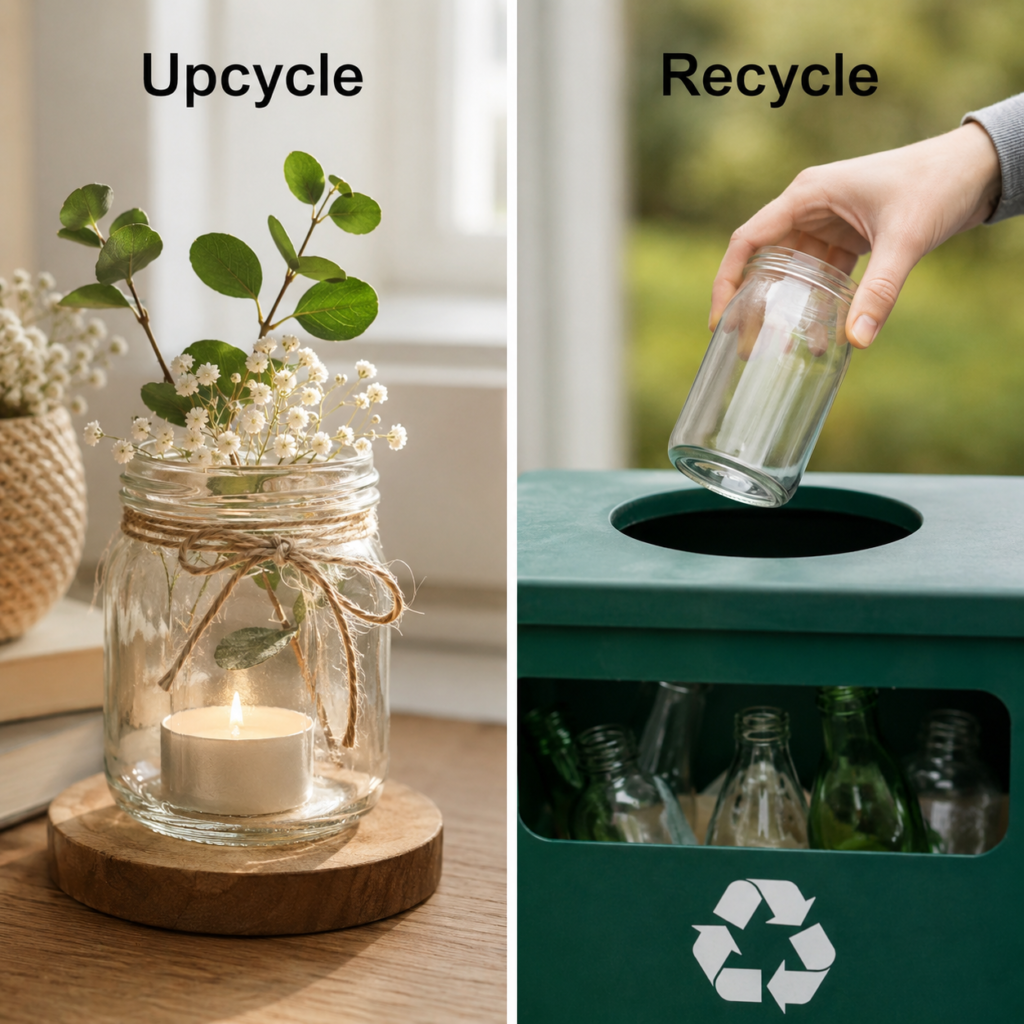
A clean glass jar is one of the clearest examples of the difference between upcycling and recycling. On the upcycle side, the jar keeps its original form and becomes a candle holder or a small decorative container. On the recycle side, it enters a glass collection system so the material can be processed rather than the object being used as it stands.
What the Upcycled Jar Preserves
The jar already provides a heat-resistant-looking enclosure, a stable base, and a transparent surface, although any use involving flame still needs careful judgement. The twine and simple plant material change its appearance without hiding the fact that it started as packaging. This is a useful upcycle when the jar is undamaged and you genuinely need a small holder, vase, or storage container.
What Recycling the Jar Does Differently
Recycling gives up the jar’s existing shape in order to recover the glass itself. That may be the better route when the jar has no lid, does not fit your storage needs, has stubborn residue, or would only sit unused on a shelf. Local rules matter because some systems separate glass by colour or accept containers but not other glass objects.
Which Choice Makes More Sense?
Keep one or two jars for specific uses rather than building a cupboard full of them. Upcycle a sound jar when its size and shape directly solve a problem. Recycle the surplus after removing non-glass parts and following local preparation rules. The practical balance is more useful than treating every jar as craft material.
Questions to Ask Before Deciding
· Is the rim smooth and free from chips?
· Will the jar be used regularly rather than stored indefinitely?
· Does the intended use involve heat or food that requires extra caution?
· Can the decoration be removed later so the jar remains recyclable?
Plastic Bottle: Turn It Into a Planter or Send It Through Plastic Recycling
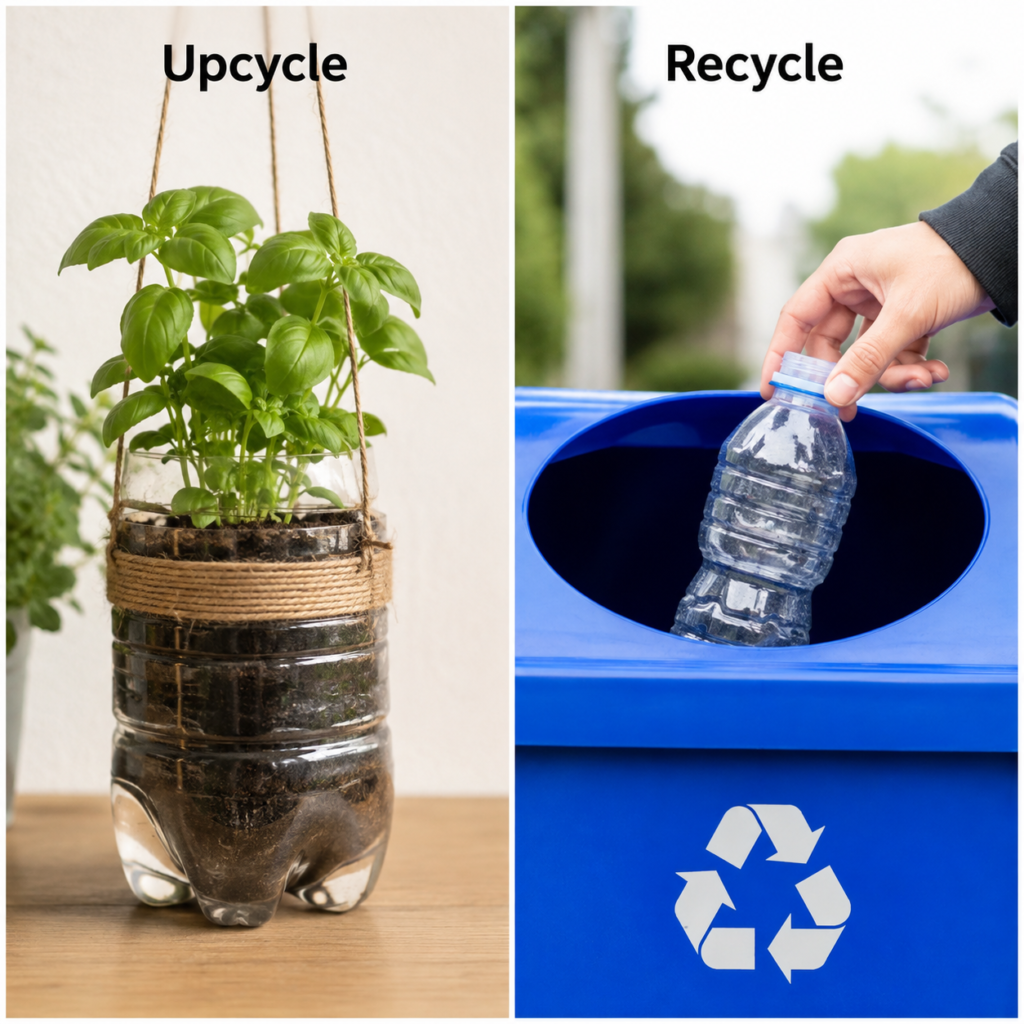
A plastic bottle can provide a lightweight container for a small plant, especially when its shape is easy to cut and hang. That is upcycling because the bottle stays physically present and performs a new function. Placing the bottle in an accepted recycling stream takes a different approach: the container is discarded as an object so its plastic can be sorted and processed.
Why the Bottle Planter Can Be Useful
The bottle’s light weight and water-resistant surface make it suitable for a temporary planter or propagation container. A clear section can also make moisture and root growth visible. Even so, the project works best when drainage, secure hanging, sunlight, and the plant’s eventual size have been considered. A bottle planter that leaks, overheats, or tears away from its cord is not a successful upcycle.
Why Recycling May Be the Better Long-Term Route
Plastic bottles are common household packaging, and many collection systems are designed around particular bottle types. Recycling is usually more sensible when the bottle is crushed, heavily scratched, difficult to clean, or no longer needed for a direct reuse. Labels, caps, and preparation requirements vary locally, so the correct route should be checked rather than assumed.
Use Upcycling as a Limited Reuse, Not Permanent Storage
A few bottle planters can be practical for seedlings, herbs, or a small balcony, but dozens of empty bottles saved without a plan quickly become clutter. I’d upcycle only the containers that match a real planting need, then recycle the rest through the appropriate local system.
Questions to Ask Before Deciding
· Is the plastic strong enough to hold wet soil without splitting?
· Can you create safe drainage without leaving sharp edges?
· Will the plant outgrow the container quickly?
· Is this bottle type accepted in local recycling?
Old T-Shirt: Make a Tote Bag or Use a Textile Collection
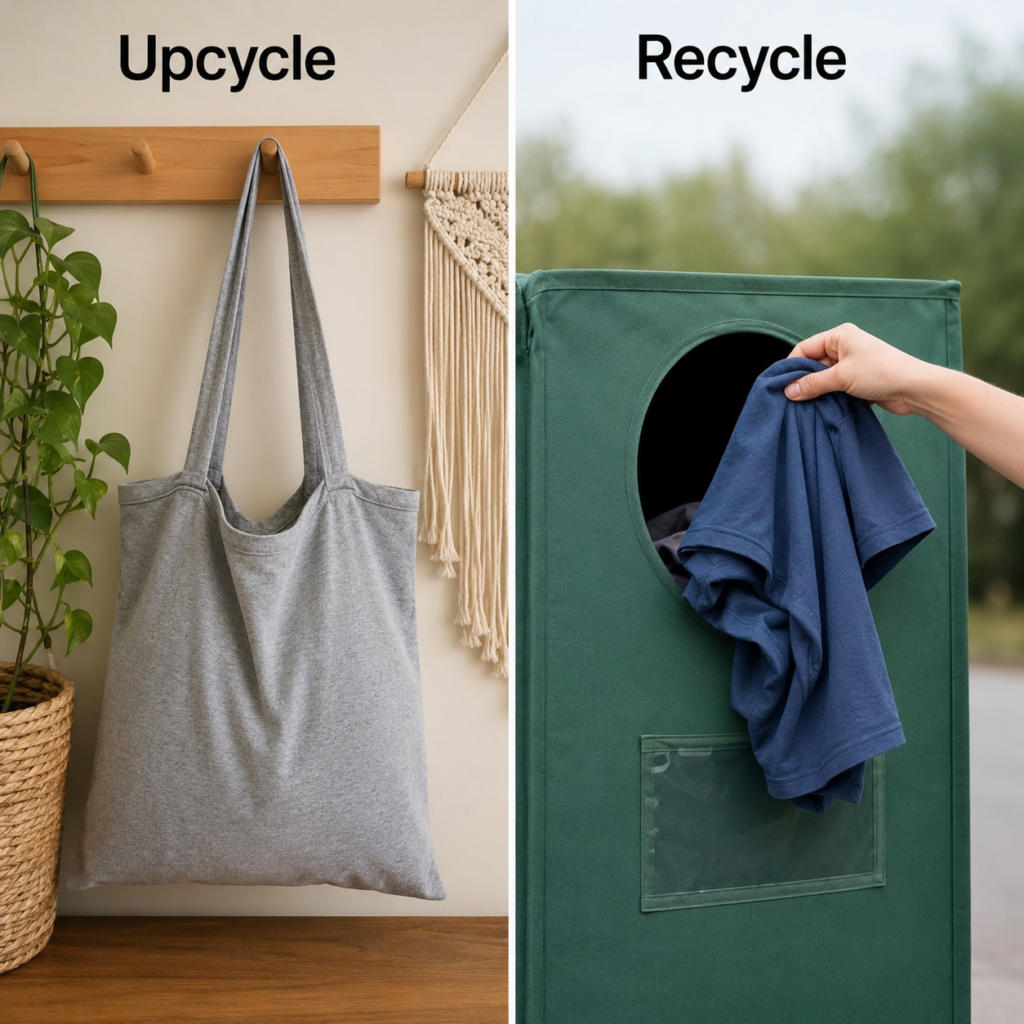
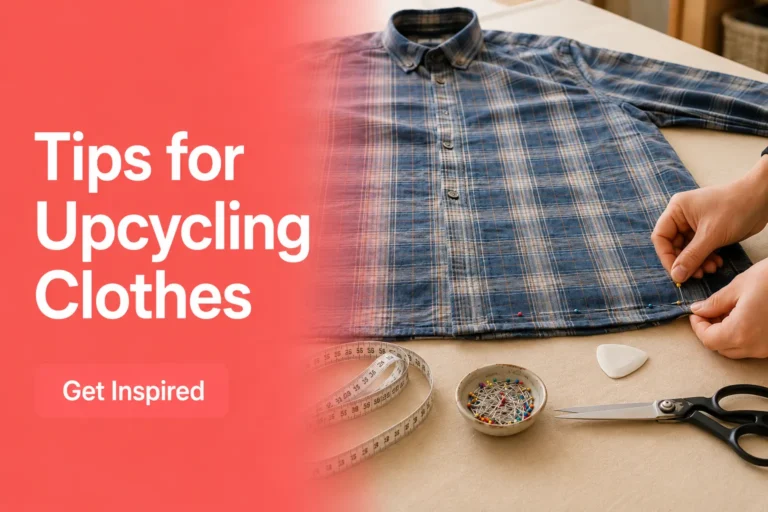
A soft T-shirt can become a reusable tote because the body already provides a broad fabric panel and the shoulder area can help form handles. The upcycle keeps the fabric visible and turns a garment that may no longer be wearable into a lightweight carrying bag.
Textile recycling or collection treats the shirt differently by sorting it for reuse, fibre recovery, wiping cloths, or another downstream route, depending on the programme.
What Makes the T-Shirt Tote a Sensible Upcycle
This idea works best with a shirt that is clean and reasonably strong but no longer suitable to wear because of fit, style, or damage in a removable area. The tote can replace a light shopping or storage bag, although stretchy jersey is not ideal for heavy loads. Reinforced seams and a clear intended use matter more than decorative extras.
When Textile Collection Is More Appropriate
A shirt with widespread thinning, oil contamination, mould, or badly weakened seams may not make a reliable bag. It may be better suited to a textile collection that accepts worn material. Not every clothing donation point is a recycling point, and not every programme accepts damaged textiles, so the destination should be confirmed before dropping items off.
Judge the Fabric, Not Just the Garment
The fact that a T-shirt is no longer wearable does not mean its fabric is useless. Check the body panels and shoulder area separately. If the cloth still has strength, an upcycle can extend its direct use. If the fibres are breaking down throughout the garment, a specialist route is the more honest choice.
Questions to Ask Before Deciding
· Does the fabric recover after being stretched?
· Are the future handle areas strong enough to carry a light load?
· Would the bag replace something you currently use?
· Does a nearby textile programme accept worn or damaged items?
Tin Can: Keep It as a Desk Holder or Recycle the Metal
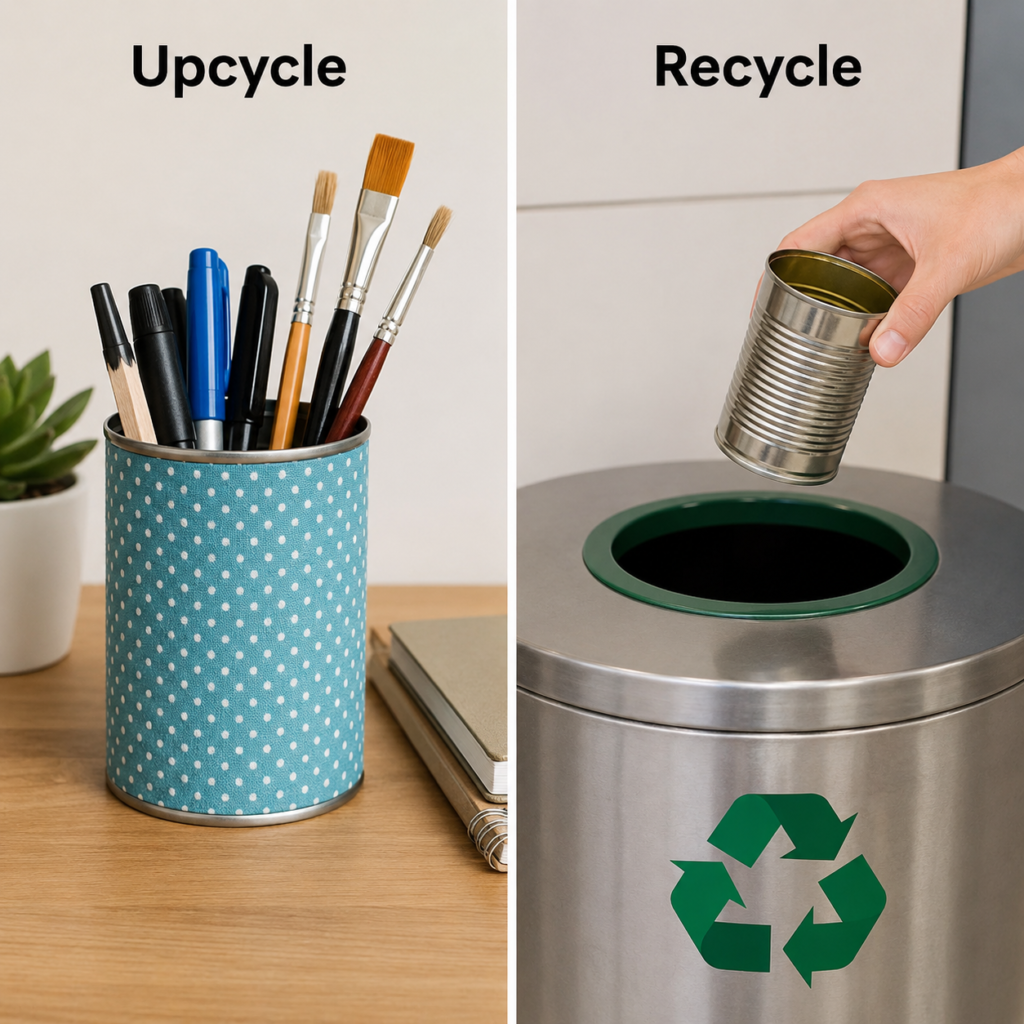
A food can has a ready-made cylindrical shape that suits pencils, brushes, small tools, or craft supplies. Covering it with fabric changes its appearance while keeping the can’s structure intact. Recycling gives up that convenient shape so the metal can be recovered through an appropriate collection stream.
Why the Can Works Well as a Holder
The rigid sides prevent pens and brushes from collapsing into a soft container, and the small footprint suits a desk. The main issue is the cut rim. It must be completely smooth, covered, or safely finished before the can is handled. The fabric covering should also be kept away from wet uses unless it can be removed and cleaned.
What Metal Recycling Offers
Recycling is a strong option for cans because the object may be common, easy to replace, and unnecessary to store in large numbers. A can with rust, sharp damage, food residue that cannot be removed, or no planned reuse should not be turned into a craft simply to avoid the recycling bin.
Upcycle Only the Number You Can Actually Use
One can may organise brushes. A second may hold tools. The tenth can probably needs a different destination. Keep the best examples for specific storage jobs, remove unsafe edges, and recycle the rest according to local guidance.
Questions to Ask Before Deciding
· Is the rim completely safe to touch?
· Is the can dry and free from rust?
· Will the covering prevent the material from being recycled later?
· Do you need another holder, or are you only avoiding a decision?
Old Denim: Make a Cushion Cover or Choose a Textile Recovery Route
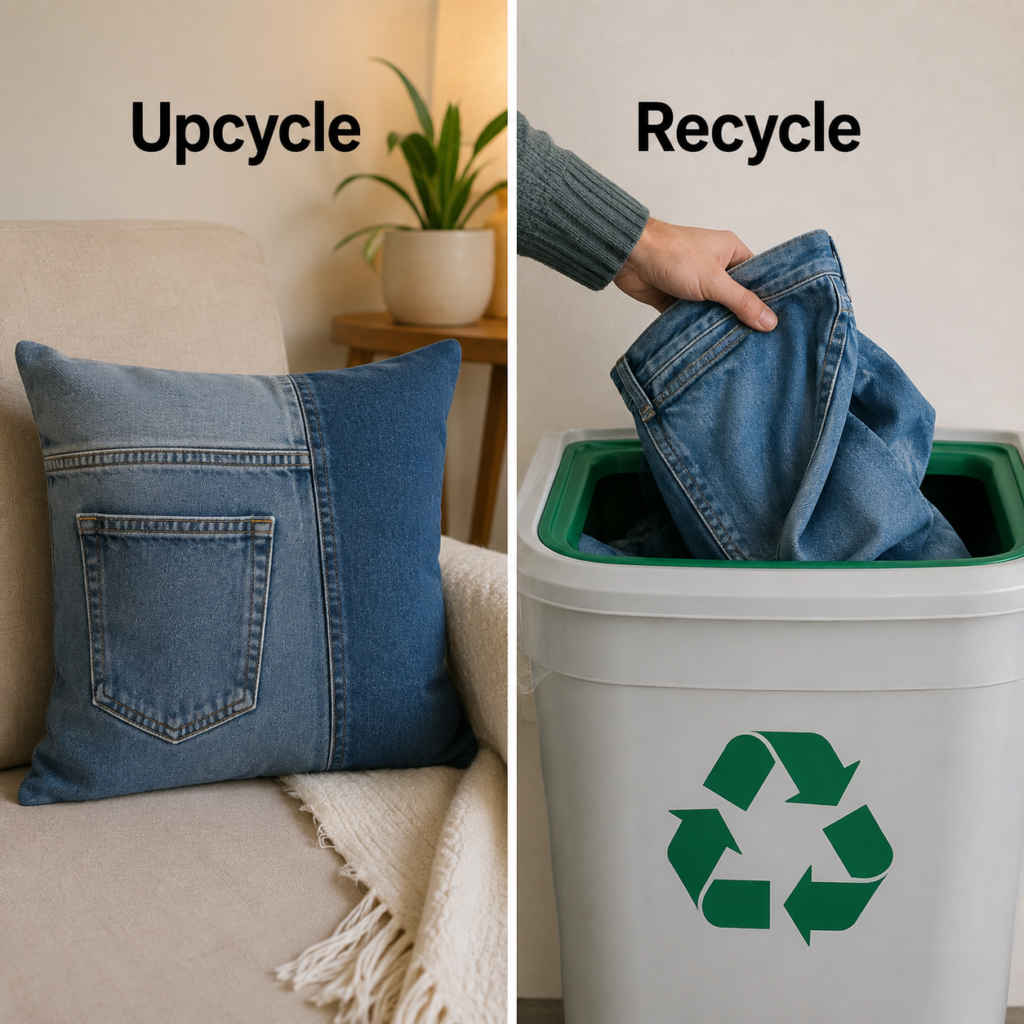
Denim often remains useful long after a pair of jeans stops fitting. A cushion cover can preserve the strong fabric, seams, and pocket as visible features. Textile recycling takes the opposite route by treating the jeans as material to be sorted, shredded, or processed rather than preserving their familiar construction.
What the Denim Cushion Gains From the Original Jeans
The pocket becomes a small functional detail, while the seams create structure and show the garment’s history. This kind of upcycle makes sense when large denim panels are still strong, clean, and pleasant enough for indoor use. A removable inner cushion and a closable back make the cover easier to wash and maintain.
When the Denim Has Reached the End of Direct Reuse
Jeans that are thin across most of the fabric, contaminated with substances that cannot be cleaned, or broken into pieces too small for a planned project may be better suited to a textile recovery service. Because textile systems differ widely, it is worth checking whether a programme accepts denim for reuse, fibre recovery, or only wearable clothing.
Save the Strong Panels and Release the Rest
You do not have to choose one route for the entire pair of jeans. Strong panels and pockets can be upcycled, while unusable sections may go to an accepted textile route. This mixed decision often uses the garment more intelligently than either saving every scrap or discarding everything at once.
Questions to Ask Before Deciding
· Are the panels large enough for the intended cushion size?
· Will bulky seams make the cover uncomfortable?
· Can the zip, buttons, and labels be reused separately?
· Is there a reliable local route for the remaining textile waste?
Cardboard Box: Build Drawer Dividers or Recycle the Board
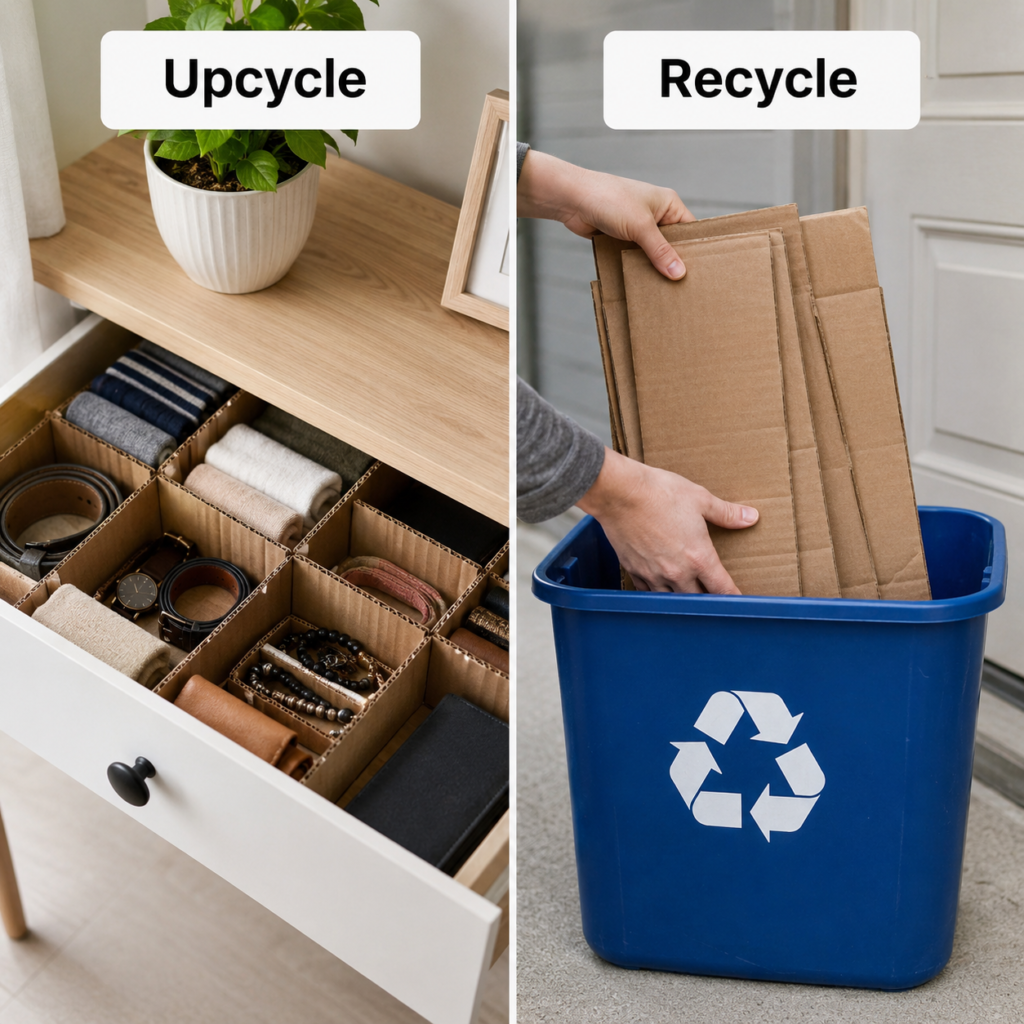
Clean corrugated cardboard can become custom drawer dividers with very little extra material. The upcycle uses the board’s stiffness and lets you create compartments that match a particular drawer. Recycling breaks the cardboard down through a paper and board stream so its fibres can be recovered rather than the box being kept in its current form.
Why Cardboard Dividers Are a Practical Reuse
Drawer organisers do not need to carry heavy weight or survive outdoor weather, which suits cardboard well. The material is easy to measure, cut, slot together, and replace. This is a particularly sensible upcycle when the box is clean, dry, and already close to the thickness you need.
When Cardboard Should Go Straight to Recycling
Cardboard that is wet, greasy, mouldy, heavily coated, or too damaged to hold its shape is a poor choice for indoor storage. Clean surplus boxes also do not need to accumulate in the hope of a future project. Flattening and recycling them may be the tidier and more useful decision.
Match the Material to a Low-Stress Job
Cardboard dividers work because the job is light and replaceable. I wouldn’t use the same material for a damp bathroom, a food-contact surface, or a container carrying heavy tools. Upcycle the strongest pieces for suitable indoor organisation and recycle the clean offcuts.
Questions to Ask Before Deciding
· Is the board clean, dry, and odour-free?
· Will the drawer contents place only light pressure on the dividers?
· Can tape, labels, and plastic windows be removed?
· Are the remaining pieces clean enough for paper recycling?
Newspaper: Make Paper Crafts or Return the Fibre to Recycling
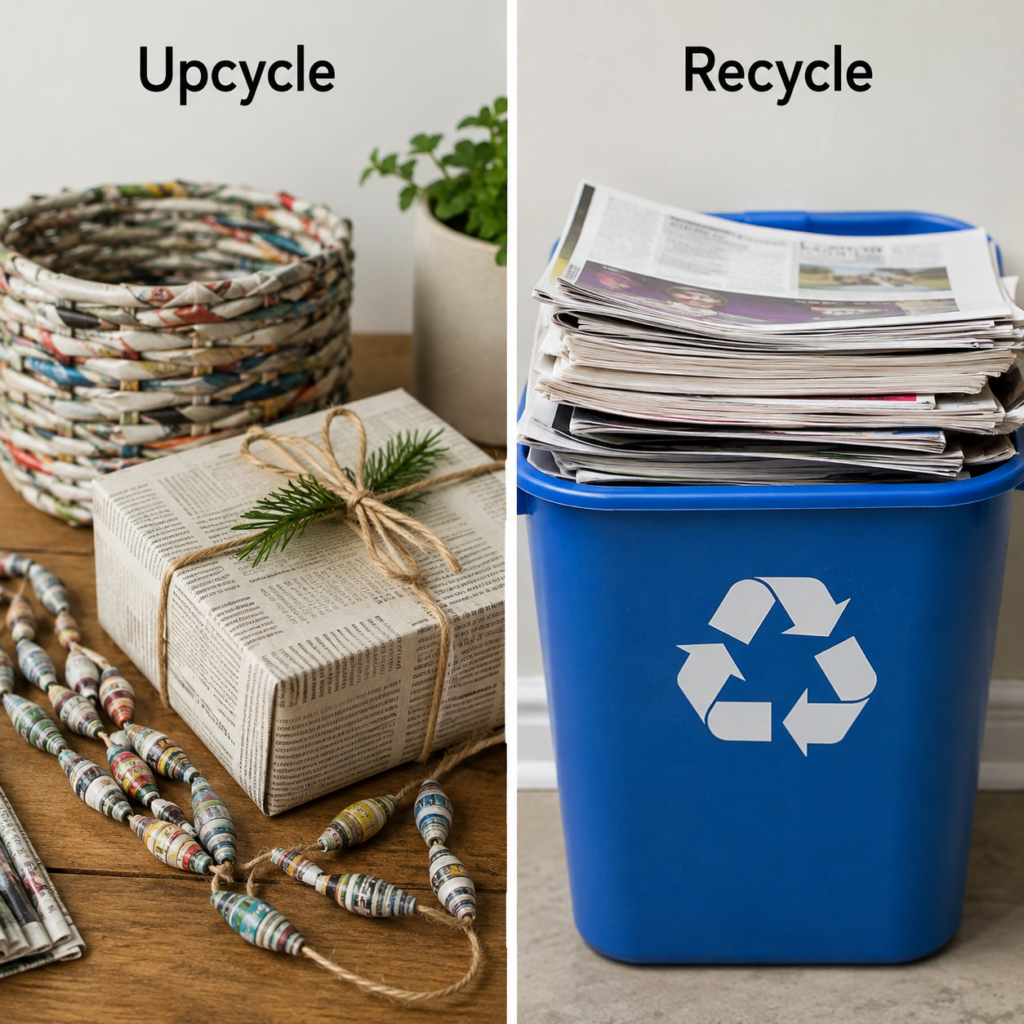
Newspaper can be rolled into paper tubes, woven into baskets, folded into beads, or used as gift wrap. These upcycles preserve the printed paper and use its flexibility directly. Recycling turns the paper back into a fibre source, which is often the more practical destination for the large volume of newspaper a household can collect.
What Paper Upcycling Does Well
Paper crafts can replace decorative wrapping, lightweight baskets, tags, or small ornaments. They are most successful when they use limited supplies and have a clear use. The visible print gives the result texture, and the material is easy to fold, roll, and shape without specialist equipment.
Why Paper Recycling Still Matters
Most households produce more paper than they could sensibly turn into craft projects. Recycling prevents a creative hobby from becoming an excuse to store every newspaper. Clean, dry paper can usually enter a paper stream, while wet, greasy, laminated, or heavily decorated paper may need different handling according to local rules.
Use a Small Amount Creatively and Recycle the Surplus
This is a good example of both routes working together. Keep a manageable stack for planned wrapping or paper crafts, then recycle the rest. If a project uses layers of permanent plastic coating or mixed decorations, remember that the finished object may no longer be easy to recycle later.
Questions to Ask Before Deciding
· Is there a specific paper project planned now?
· Will added glue, paint, glitter, or plastic affect later disposal?
· Is the paper clean and dry?
· Would recycling the surplus prevent unnecessary storage?
Upcycle-or-Recycle Decisions That Can Create More Waste
The first mistake is assuming that any craft is automatically an upcycle. If an unwanted object is covered with newly purchased materials, used once, and then becomes difficult to recycle, the project may have added more material without adding much value. The new purpose should be clear before decoration begins.
Another problem is keeping unsafe or contaminated items because throwing them away feels wasteful. Cracked glass, rusty cans, mouldy cardboard, and weakened textiles may not be suitable for direct reuse. Upcycling should extend useful life, not disguise a condition that makes the item unsafe or unhygienic.
Over-collecting is just as common. A shelf of saved jars, a bag of bottle planters, and a cupboard of cardboard can become delayed waste rather than a useful supply. Keep quantities connected to real projects and realistic storage space.
Recycling mistakes usually begin with assumptions. An item that carries a recycling symbol is not necessarily accepted by every local system. Mixed materials, attached fabric, food residue, lids, coatings, and size can all affect collection rules. Checking local guidance is more reliable than relying on the material name alone.
The final mistake is treating upcycling and recycling as competing moral labels. Sometimes direct reuse is the sensible choice. Sometimes material recovery is better. Sometimes an item should be repaired, donated, returned, composted, or disposed of through a specialist service instead. The useful question is not which word sounds greener; it is which route fits the actual object.
Frequently Asked Questions
What is the simplest difference between upcycling and recycling?
Upcycling keeps an item or its material in direct use by changing its purpose or improving it. Recycling sends the material through a collection and processing system so it can become raw material for another product.
Is upcycling always better than recycling?
No. Upcycling is useful when the item is safe, sound, needed, and likely to remain in use. Recycling may be better when the item is damaged, surplus, unsuitable for reuse, or accepted by an effective local material stream.
Can one object be partly upcycled and partly recycled?
Yes. You might save denim pockets and strong panels while sending unusable textile sections to an accepted collection. You can also reuse a jar and recycle its metal lid separately if local rules allow it.
How do I know whether an item is recyclable where I live?
Check the guidance from your local authority, collector, building, or recycling provider. Acceptance depends on local equipment and markets, so a general symbol or internet list cannot confirm what your specific service takes.
Does adding paint or fabric make an upcycled item harder to recycle later?
It can. Permanent coatings, strong adhesives, mixed materials, and decorations may make separation difficult. I’d favour removable or minimal additions when the original material may need recycling at the end of the upcycle.
Should I upcycle damaged items instead of throwing them away?
Only when the damage can be safely repaired or removed. Cracks, rust, contamination, mould, severe fibre weakness, or sharp edges can make direct reuse unsuitable. Safety comes before saving the object.
What should I do when neither upcycling nor recycling is suitable?
Consider repair, donation, return schemes, specialist collection, composting for suitable untreated natural material, or responsible disposal. Upcycle vs. recycle is an important comparison, but it is not the only possible decision.
Choose the Route That Keeps Real Value in Use
The clearest lesson in upcycle vs. recycle is that the object should guide the decision. A sound jar may serve your home for years. A surplus jar may be more useful as recovered glass.
A strong denim panel can become a cushion cover, while worn sections may need a textile route. Clean cardboard can organise a drawer today and still be recycled later if it remains separable.
For me, the best choice is the one that avoids wishful thinking. I don’t need to turn every package into décor, and I don’t need to send every reusable object away for processing. I can keep what has a real purpose, recycle what has reached the end of direct use, and avoid adding materials that make the next decision harder.
Start with one object and ask a simple question: does its greatest remaining value lie in the object itself or in the material it contains? That answer will usually point you toward the more practical route.