Acrylic paint can go from buttery and thick to almost watercolor-thin, and that flexibility is exactly why one brush rarely feels right for every job. A flat brush that moves a clean block of color can feel awkward around a small eye or leaf edge, while a tiny round that is wonderful for detail becomes painfully slow when you are trying to cover a background. The paint also begins drying as soon as it leaves the palette, so a brush that holds its shape and releases color predictably makes the whole process calmer.
I know it is tempting to judge a brush set by the number printed on the package, but a large set is only useful if its shapes actually match the way you paint. A smaller assortment with a dependable flat, round, filbert, and detail brush can be more useful than dozens of nearly identical tools. Bristle stiffness matters too. Softer synthetic fibers are helpful for glazing and smooth blends, while firmer synthetic or hog bristles are better at moving heavier acrylic and leaving deliberate texture.
The best paint brushes for acrylic painting are therefore the ones that give you useful shapes, controlled spring, secure ferrules, and a handle length that suits your working distance. The 13 products below cover very different needs, from broad mixed assortments and flat-brush sets to miniature detail brushes and long-handled hog bristles.
Why Brush Choice Changes the Way Acrylic Paint Behaves
A brush is not just a carrier that moves paint from palette to surface. The stiffness, width, tip shape, hair density, and handle length all influence how much color is picked up, how quickly it leaves the brush, and how much pressure reaches the painting surface.
Acrylic Paint Rewards Good Shape Retention
Acrylic dries faster than oil paint, and that changes how a brush feels during a session. Paint can begin building near the ferrule or between bristles if the brush is left loaded too long. A brush that already has weak shape retention can start splaying even more once partially dried paint stiffens the fibers.
Synthetic filament is common in acrylic brushes because it can provide a dependable combination of spring, smooth release, and easier cleanup. Winsor & Newton also notes that synthetic brushes can maintain a good point and carry color effectively, while firm hog bristles remain useful when an artist wants stiffness and visible texture.
For most everyday acrylic painting, shape retention matters more than softness alone. A brush should flex under pressure, then return close to its working shape when you lift it from the surface.
Stiff and Soft Brushes Leave Different Evidence
A soft brush tends to smooth paint and reduce obvious marks. That is useful for thin layers, soft transitions, glazing, and areas where you do not want every stroke to announce itself. It can also be a better fit for fluid acrylic or paint that has been thinned with medium.
A firmer brush behaves differently. It pushes thicker paint, works it into textured canvas, and can leave intentional ridges or broken edges. A stiff flat or hog filbert can be helpful for expressive painting, foliage, dry-brushing, and heavy-body acrylic. The trade-off is that a stiff brush is not the easiest tool for a glassy, brush-mark-free finish.
Brush Shape Decides the Kind of Mark You Can Make Easily
Flat brushes create broad, squared strokes and crisp edges. They are efficient for backgrounds, block-ins, straight architectural shapes, and larger geometric work. Bright brushes are similar but have shorter bristles, so they usually feel firmer and give more direct control.
Round brushes narrow toward a point and are useful for lines, contours, small shapes, and general detail. A good round can make both a thin line and a wider stroke simply by changing pressure. That makes it one of the most useful shapes in a small kit.
Filberts have a flattened body with a rounded end. They are excellent for softer edges, petal shapes, curved forms, and blending because the corners do not cut into the paint as sharply as a square flat. Fan brushes spread into a semicircle and are useful for texture, softening, foliage, and some dry-brush effects.
Angular, dagger, liner, grainer, and comb brushes are more specialized. They can be very useful, but only if you actually use the marks they are designed to make. A large mixed set often earns its keep when it gives you room to experiment with those less familiar shapes.
Handle Length Changes Your Painting Distance
Short handles suit painters who work close to the surface. They are common for detail, craft painting, tabletop work, watercolor-style acrylic, miniatures, and smaller canvases. The hand sits closer to the brush head, which can feel precise.
Long handles are intended for a more distant grip and are common in easel painting. They let the arm and shoulder contribute more to the stroke instead of making the fingers do everything. That can be useful for larger canvases and looser marks.
A long handle is not automatically more professional, and a short handle is not automatically easier. The right length depends on how far you naturally work from the surface.
Ferrules Matter More Than They Look
The metal ferrule holds the bristles and connects the working end of the brush to the handle. If that connection loosens, the brush can wobble, shed, or eventually separate. Double crimping, secure adhesive, and corrosion-resistant metal are useful construction details, especially for acrylic brushes that are washed frequently.
Even a well-made ferrule can be damaged by poor cleaning habits. Soaking a brush deep enough that water sits around the ferrule and handle joint can weaken adhesive over time. Cleaning quickly is good; leaving brushes standing in water is not.
| Product Image | Product Name | Features | Price |
|---|---|---|---|
 |
Professional Artist Paint Brush Set of 12 | Includes 12 brushes in assorted shapes and sizes Multi-Medium Compatibility Soft Yet Durable Bristles Easy-Grip Handles Works on Multiple Surfaces |
Check Price |
 |
CONDA Paint Brushes Set of 24 Different Shapes | Complete 24-Brush Assortment Roll-Up Nylon Storage Pouch Multi-Medium Compatibility Comfortable Grip Handles |
Check Price |
 |
18 Piece Paint Brush Set | Premium Nylon Bristles Water-Resistant Design 15 Brush Shapes & Sizes No Hair Loss Comfortable Grip |
Check Price |
 |
FENORKEY Artist Watercolor Paint Brushes | Anti-Shedding Construction Waterproof Wooden Handles Flexible Nylon Brush Tips 12 Assorted Sizes |
Check Price |
 |
Nicpro 10 PCS Flat Paint Brush Set | Includes 10 flat brushes High-Quality Synthetic Bristles Birch Wood Handles Double-Crimped Aluminum Ferrules |
Check Price |
 |
Transon Art Painting Brush Assorted Set of 12 | Assorted Brush Types Full-Length Brushes Soft & Absorbent Taklon Bristles Multi-Medium Compatibility |
Check Price |
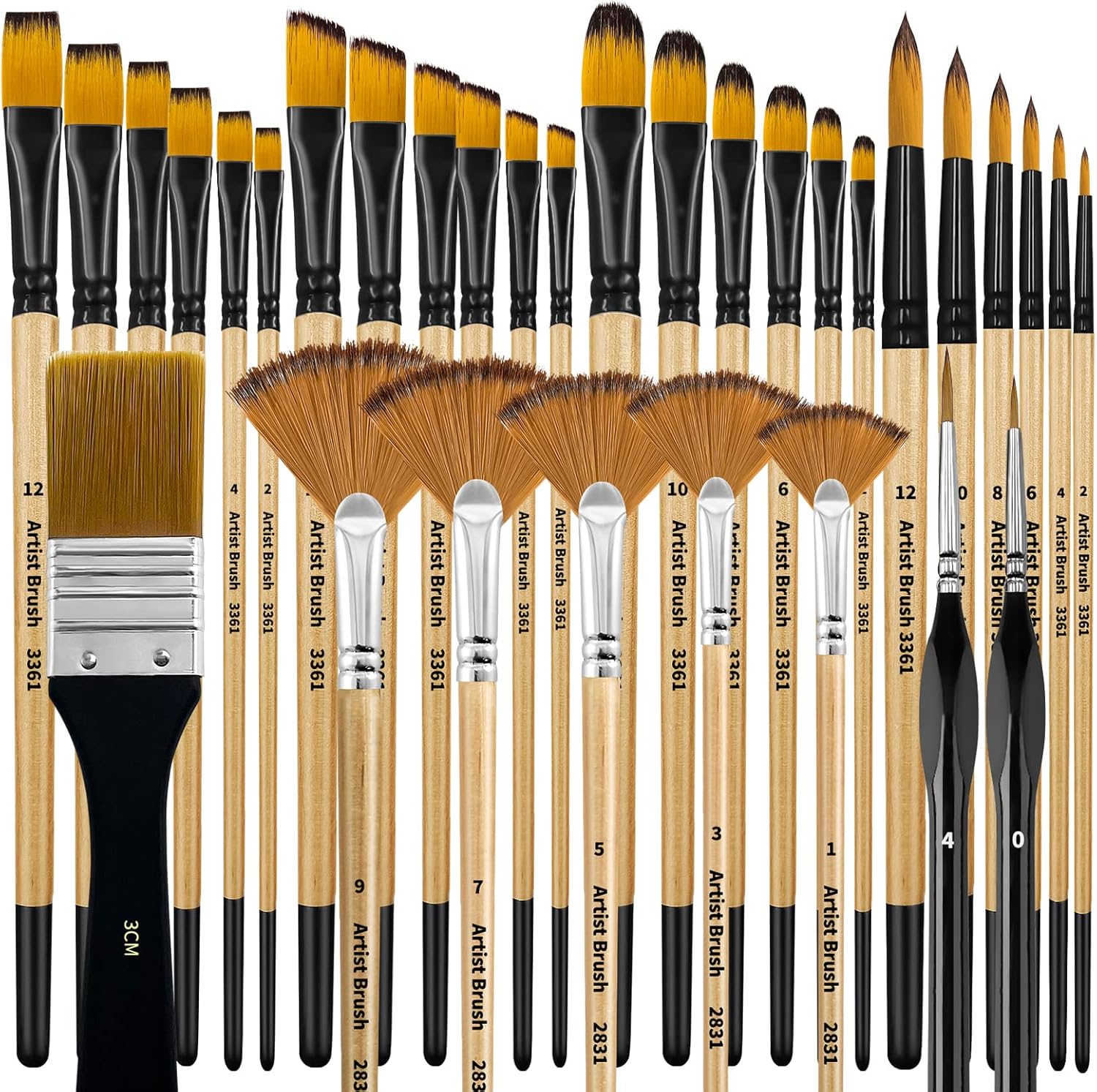 |
Bougimal 32 Pieces Paint Brush Set | Includes 32 brushes in assorted shapes Soft, elastic, and highly absorbent bristles Treated with non-toxic waterproof varnish Anti-Shedding Design |
Check Price |
 |
Grabie Paint Brush Set | Includes brushes from ultra-fine 5/0 to size 7 Universal Paint Compatibility Precision Synthetic Bristle Chrome-Plated Ferrules Easy to Clean & Maintain |
Check Price |
 |
ARTIFY 15-Piece Professional Oil Paint Brush Set | Includes six essential brush shapes Natural Wooden Handles White Copper Ferrules Comfortable Grip for Long Sessions |
Check Price |
 |
Acrylic Paint Brushes Set | 12 Assorted Sizes Comfortable Length Range All-Purpose Compatibility Durable Nickel Ferrules Lacquered Wooden Handles |
Check Price |
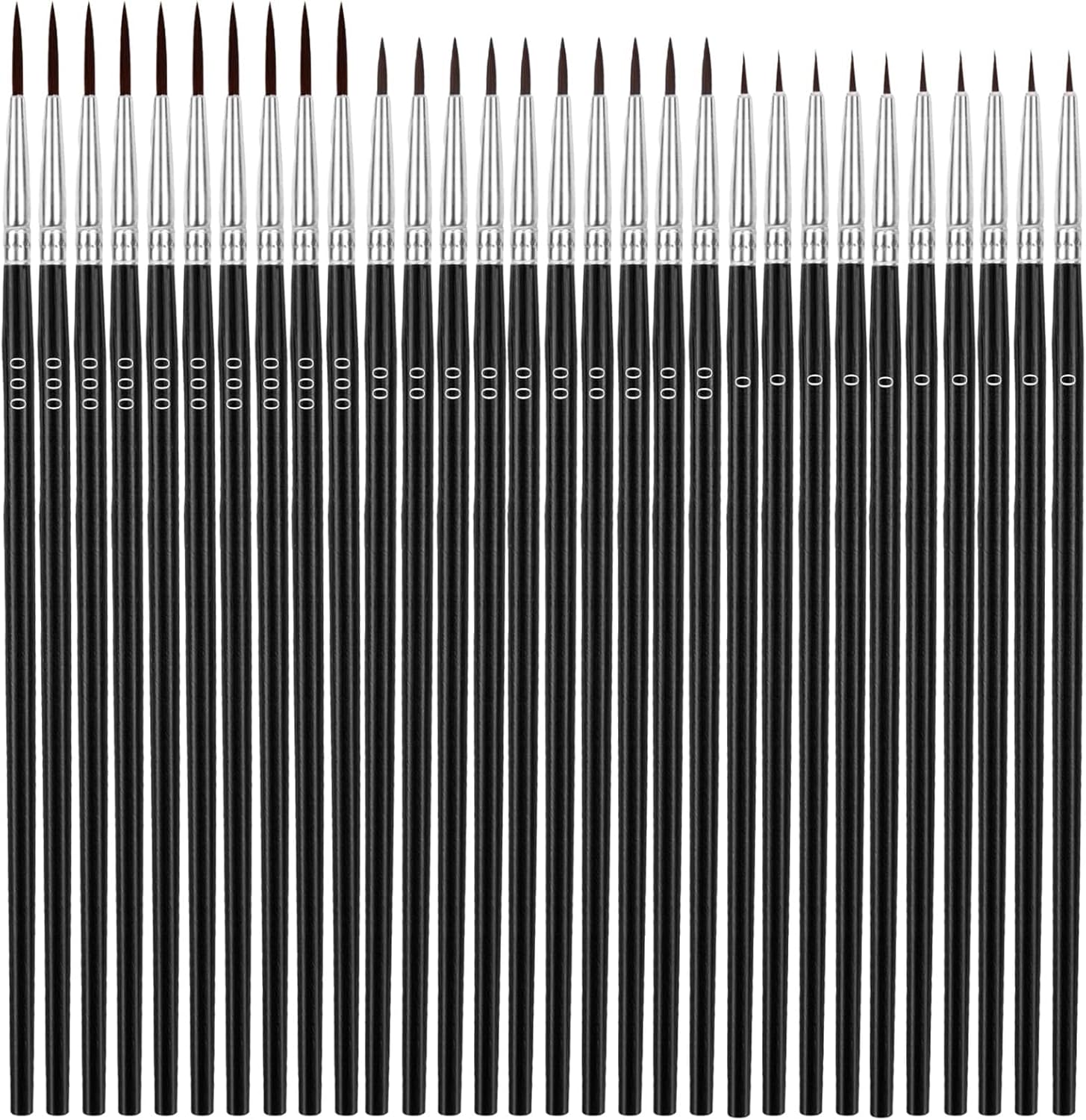 |
Anezus Tiny Detail Paint Brushes | Assorted Hair Lengths Premium Synthetic Bristles Anti-Rust Nickel Ferrules Multi-Medium Compatibility |
Check Price |
 |
Winsor & Newton Winton Long Handle Brush | Corrosion-Resistant Ferrules Resilient Shape Memory Easy to Clean & Maintain Classic Wooden Handle |
Check Price |
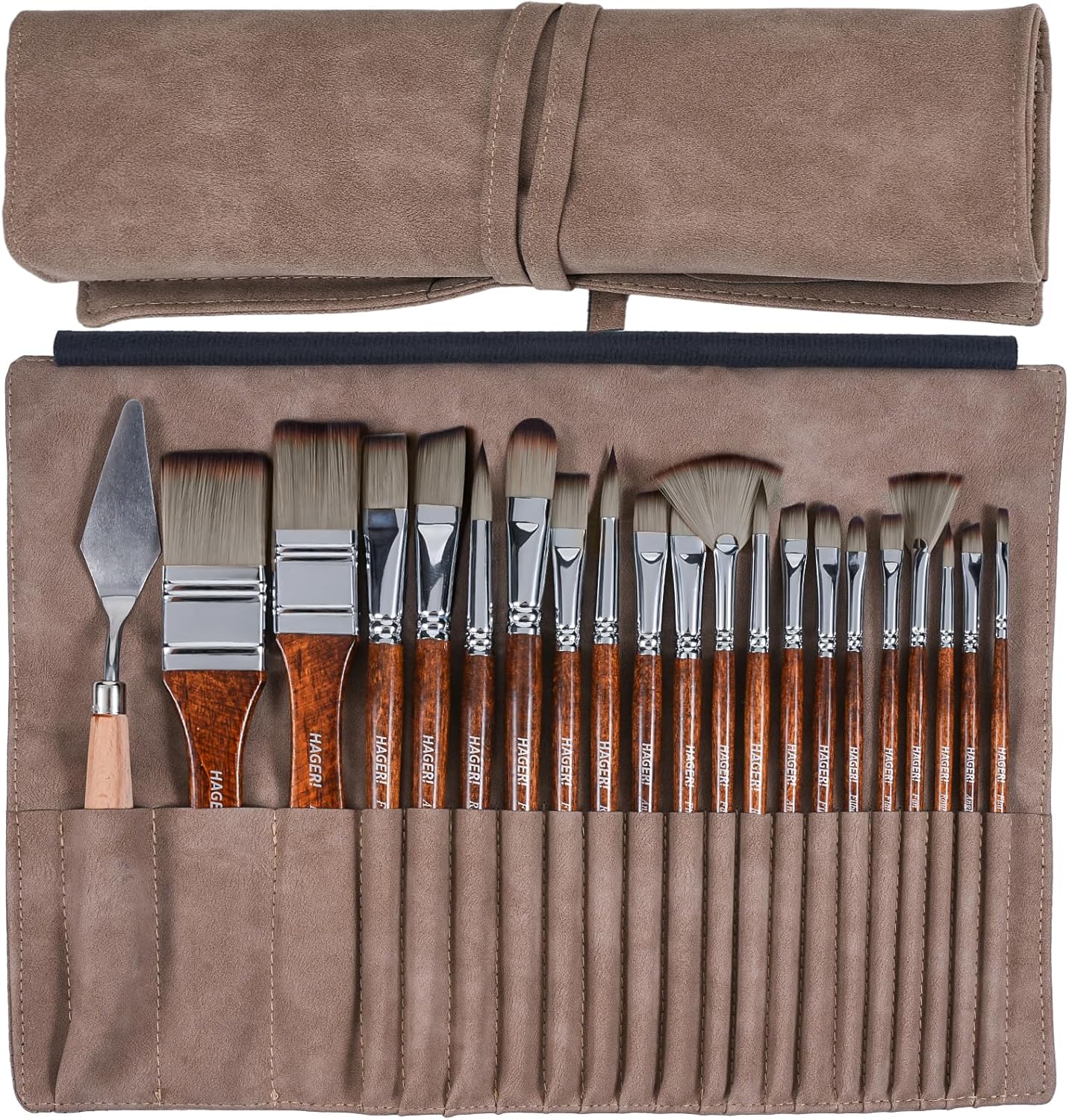 |
HAGERI 20 Pieces Paint Brushes | Includes 20 frequently used brush shapes Crafted from polyester and nylon Double-crimped and glued for extra strength |
Check Price |
What Matters Before You Choose Acrylic Paint Brushes
A large product page can make every brush sound essential. It helps to reduce the decision to a few practical questions: what size do you paint, how thick is your paint, how much detail do you add, and do you want a broad assortment or a focused set?
Start With the Marks You Make Most Often
If you paint landscapes with broad skies and blocked-in fields, prioritize flats and filberts before tiny liners. If you paint miniatures, portraits, botanical details, or decorative crafts, pointed rounds and detail brushes deserve more attention.
A mixed set is useful when you are still learning what you like. It lets you try several brush shapes without buying each one separately. Once your habits are established, a focused set can make more sense because you are paying for tools you know you will use.
Match Bristle Stiffness to Paint Consistency
Heavy-body acrylic needs a brush with enough backbone to move it. A very soft watercolor-style brush can buckle and leave you pressing harder than necessary. Fluid acrylic and glazing mixtures need less force, so softer synthetic fibers can feel more controlled.
Natural hog bristle is a valid acrylic option when you want stiffness and texture. It is especially useful with thicker paint. Synthetic nylon and polyester are easier all-purpose choices because they tolerate water-based cleanup well and are available in many stiffness levels.
Look at Variety, Not Just Quantity
Twenty-four brushes can mean 24 genuinely different working tools, or it can mean many small variations of the same few shapes. Read the shape list. A set with flats, rounds, filberts, fan, angle, liner, and specialty shapes gives you more experimentation than a set containing 20 round brushes.
The opposite can also be true. A focused flat-brush set such as the Nicpro option is intentionally repetitive in shape but varied in width. That makes sense if your work relies on blocking, edging, base coating, or broad strokes.
Think About the Size of Your Surface
Miniature brushes are wonderful for tiny forms and controlled lines, but they will frustrate you on a large canvas. Likewise, a large flat is quick on a background but cumbersome on facial features or miniature models.
I would rather have a few sizes that clearly cover small, medium, and broad work than a drawer full of brushes that all feel almost the same. Coverage and detail are separate jobs, and the brush should match the job.
Decide Whether Storage Is Actually Useful
A roll, case, or pop-up stand can be genuinely practical if you paint away from a permanent studio. It protects bristles from being crushed in a drawer and makes it easier to see the available shapes while working.
Still, a case should not become the reason you buy a weak brush set. Brush quality, useful shapes, and comfortable handling come first. Storage is a bonus once those basics are right.
Consider Whether You Want One General Set or Several Focused Tools
Acrylic painting often becomes easier when brushes are assigned jobs. You might keep one set for broad painting, another for fine detail, and a few older brushes for dry-brushing or rough texture. This prevents your best pointed rounds from being destroyed by scrubbing and heavy stippling.
For a new painter, one mixed set can be enough. For someone who already knows their style, combining a broad general set with a dedicated detail pack is often more useful than buying one enormous assortment.
When a New Brush Will Not Fix the Problem
A brush cannot compensate for every issue. If acrylic paint is dragging, the paint may be too dry or the surface may be absorbing moisture quickly. A small amount of appropriate acrylic medium can change flow more effectively than switching brushes repeatedly.
If every brush begins to fray, check how you are using it. Scrubbing a delicate round against rough canvas will destroy the point regardless of price. Reserve sturdier old brushes or purpose-built firm brushes for aggressive texture work.
If paint keeps drying in the bristles, the answer is usually faster rinsing rather than a more expensive set. Acrylic that dries inside the brush can form a plastic-like mass that is difficult to reverse. Keep active brushes damp during the session, rinse them before switching colors for long periods, and clean them properly when you stop painting.
The painting surface matters too. Very rough canvas, raw wood, textured board, and abrasive craft surfaces wear brushes faster than smooth primed canvas or paper. A brush that feels excellent on one surface may look worn quickly on another.
Benicci Professional Artist Paint Brush Set of 12 – A Balanced Starter Assortment
Benicci’s 12-piece set is one of the more straightforward mixed assortments in this group. The manufacturer lists four round brushes, six flats, one filbert, and one fan, so the set leans toward practical shapes rather than filling space with many unusual profiles.
That balance makes sense for someone learning acrylic painting. Flats handle backgrounds and blocked shapes, rounds cover lines and smaller forms, the filbert gives a softer edge, and the fan can be used for texture or soft blending. You are not getting every specialty shape, but you are getting tools that are easy to understand.
Benicci states that the brushes use synthetic nylon hair, aluminum ferrules, and wooden handles. The set is intended for acrylic, watercolor, and oil paint, and the brand also lists surfaces such as canvas, fabric, wood, and board.
Features
The nylon bristles are the most relevant feature for acrylic work. Synthetic fibers do not need the same careful solvent-focused routine as traditional oil-only natural hair, and they can be cleaned with water and mild soap after acrylic use. They also give the set a fairly predictable all-purpose feel for beginners.
The brush distribution is useful rather than random. Round sizes 1, 3, 5, and 7 provide a progression from detail to medium strokes. The six flat brushes extend the range into edges, backgrounds, and shape blocking, while the filbert and fan give two noticeably different mark-making options.
Aluminum ferrules help keep the set light, and Benicci describes them as rust-resistant. That matters because acrylic brushes are washed frequently. The wooden handles provide a familiar grip without adding complicated ergonomic shaping that may or may not suit every hand.
The set is also compact enough that a new painter can learn which brushes they actually use. There is less decision fatigue than with a 30-piece assortment, and replacing a favorite shape later is simple once your preferences are clear.
- The 12-piece selection covers the most useful everyday shapes without overwhelming a beginner with too many near-duplicates.
- Synthetic nylon bristles make the set practical for acrylic cleanup and general mixed-media use.
- Six flat brushes give unusually good coverage options for a small starter set, which is helpful for backgrounds and block-in work.
- The combination of rounds, a filbert, and a fan gives enough variety to practice detail, soft edges, and texture.
- The set does not include angular, dagger, liner, or other specialty shapes, so painters who already know they use those marks may find it too basic.
Who It’s Best For
This set is a sensible fit for beginners, casual painters, students, and craft artists who want a compact assortment for acrylic without buying a very large kit. It is especially useful if you want several flat sizes alongside dependable rounds.
Not Ideal For
It is less suitable for a painter who already owns the basic shapes and wants specialized detail tools, large studio brushes, or a broad experimental assortment.
CONDA 24-Piece Paint Brush Set – More Shapes for Experimenting
The CONDA set moves in the opposite direction from the compact Benicci assortment. Its current listing describes 24 brushes in different shapes, organized in a nylon roll-up storage pouch. The aim is variety: a new painter can try more forms before deciding which shapes deserve better individual replacements later.
CONDA’s broader brush range is helpful for acrylic painters who do not want to build a collection one piece at a time. It also makes sense for mixed craft work where the same person may switch between canvas, decorative painting, watercolor-style acrylic, and more opaque applications.
The main question is whether you will use the extra shapes. A 24-piece set is not automatically better than a 12-piece set, but it can be a more economical way to learn what a dagger, fan, angle, or different round profile actually does in your hand.
Features
The 24-piece count gives this set its main advantage. Instead of focusing on one type, the assortment is built around multiple shapes and sizes. That gives you more ways to compare edge quality, stroke width, spring, and paint release during practice.
The roll-up nylon pouch is more than decoration if you store brushes in a shared craft cabinet or carry supplies to a class. It separates the brush heads and keeps them from being crushed under heavier tools. When rolled out, it also makes the collection easier to scan.
The current listing identifies the set for oil, acrylic, canvas, and watercolor painting. That mixed-medium positioning suggests a general-purpose brush feel rather than an extremely soft watercolor-only or extremely stiff oil-only design.
CONDA is an established art-material manufacturer with a broad brush line, which adds some reassurance that this is not simply an anonymous assortment. Even so, the value of this set comes from range and experimentation more than from owning 24 brushes for its own sake.
- Twenty-four brushes provide a wider opportunity to test shapes and sizes before investing in individual favorites.
- The roll-up pouch helps protect the brush heads and keeps a large assortment organized between sessions.
- The set is intended for acrylic as well as other common painting media, making it useful in a mixed-media workspace.
- A broad assortment can be economical for classes, hobby rooms, and beginners who still do not know which brush profiles suit their style.
- Artists who already know they mainly use only a few shapes may find that a large part of the set stays unused.
Who It’s Best For
The CONDA set suits beginners who want to explore brush shapes, hobby painters who work across several media, and households or classrooms where a larger shared assortment is useful.
Not Ideal For
It is not the strongest fit for a minimalist painter who would rather own four or five carefully chosen brushes, or for someone shopping specifically for high-end detail or large-format tools.
ARTIFY 18-Piece Nylon Paint Brush Set – A General Set With a Working Case
This is the first of two different ARTIFY products in the article. The current 18-piece configuration includes 15 nylon brushes, a palette knife, and two sponges. ARTIFY also supplies a carrying case that folds into a pop-up stand, so the kit is built around both brush variety and portable organization.
The manufacturer lists multiple brush shapes, including round, pointed round, flat, bright, filbert, angular flat, fan, and detail round. That gives the set a more rounded working range than a pack built around only one profile.
For acrylic painters, the nylon construction is the biggest practical point. ARTIFY positions the set for acrylic and oil painting as well as other media, and the variety makes it suitable for learning how different brush heads behave with the same paint consistency.
Features
The 15 brushes cover several distinct jobs. Flats and brights move paint across larger areas, rounds and detail rounds handle smaller forms, filberts soften edges, and fan or angular shapes open up texture and controlled corners.
ARTIFY says it uses heavier adhesive at the ferrule connection to reduce loosening. The current product page also emphasizes nylon fibers selected to reduce shedding. Those are useful construction details because a loose ferrule or stray bristle is especially annoying in wet acrylic where removing debris can disturb the surface.
The case doubles as a stand. That is genuinely convenient for a painter who works at a kitchen table, class, studio group, or temporary workspace. Instead of laying wet brushes across the table, you can keep clean options visible and separated.
The palette knife and sponges are useful extras rather than replacements for brushes. The knife is handy for mixing or applying thicker passages, while the sponges can create texture. They make the kit feel more complete for someone building a basic acrylic setup.
- The set combines 15 brush shapes and sizes with a palette knife and two sponges, giving a beginner several ways to apply acrylic paint.
- Nylon bristles are practical for water-based cleanup and suit a wide range of acrylic techniques.
- The pop-up carrying case keeps brushes organized and makes them easier to reach while painting.
- The mix of flat, round, filbert, angular, fan, and detail shapes covers both broad and controlled work.
- The accessory-heavy format is less appealing if you already own a palette knife, sponges, and storage and only want to pay for brushes.
Who It’s Best For
This ARTIFY set is a good choice for beginners and intermediate hobby painters who want one organized kit for acrylic practice, classes, or travel between workspaces.
Not Ideal For
It is less suitable for painters who already have general-purpose brushes and are specifically trying to upgrade one specialized area such as miniature detail, large flats, or premium natural bristle.
FENORKEY 12-Piece Round Paint Brush Set – Focused on Pointed Round Control
FENORKEY’s set is more focused than the mixed assortments above. The current listing describes 12 round brushes for watercolor, acrylic, and gouache. That means the set is aimed at painters who value pointed control and a progression of round sizes rather than a mix of flat, fan, and angular shapes.
A round brush is one of the most flexible profiles for acrylic. With light pressure, a pointed round can draw a narrow line; with more pressure, the belly creates a wider stroke. A range of sizes therefore gives you detail, contouring, smaller fills, and loose curved marks without changing brush family.
This can be a smart second set for someone who already owns flats. It can also work as a first set for illustration-style acrylic or small-format painting where detail and line quality matter more than rapid coverage.
Features
The current listing highlights aluminum crimped ferrules intended to hold the bristles securely and reduce shedding. Frequent washing puts stress on that connection, so a well-secured ferrule is important for any acrylic brush.
The brush tips are flexible nylon. For acrylic, that gives a softer feel than stiff hog and makes the set better suited to controlled lines, small blended areas, fluid acrylic, and thinner applications rather than forceful impasto work.
Because all 12 brushes are round, the learning curve is simple. You can compare how a smaller or larger version changes the stroke without also changing the head geometry. That is useful when practicing pressure control.
The trade-off is equally clear: rounds are not efficient for every job. A dedicated flat still makes more sense for large rectangular areas, sharp straight edges, and quick blocking.
- A full range of round brushes gives strong control for lines, contours, small shapes, and detailed acrylic work.
- Flexible nylon tips suit fluid acrylic, glazing, illustration-style painting, and controlled color placement.
- Crimped aluminum ferrules are designed to hold the brush heads securely during repeated use and cleaning.
- Using one brush shape in many sizes makes it easier to learn how pressure and brush diameter change the mark.
- The all-round format lacks flats, filberts, fans, and angles, so it cannot replace a complete general-purpose set for most painters.
Who It’s Best For
The FENORKEY set suits detail-oriented acrylic painters, illustrators, decorative painters, and anyone who already owns broader brushes but wants more round sizes.
Not Ideal For
It is not ideal as the only brush set for a painter working on large canvases or broad backgrounds, where flats and larger wash-style brushes save significant time.
Nicpro 10-Piece Flat Paint Brush Set – A Focused Choice for Blocking and Edges
Nicpro’s 10-piece set is intentionally narrow in purpose: every brush has a flat tip, with the current listing describing sizes #1 through #10. That makes it very different from a mixed beginner assortment. You are not buying variety of shape; you are buying a progression of widths for the same basic stroke family.
That focus is useful in acrylic painting because flat brushes do a lot of work. They can block in color, paint backgrounds, cut straight edges, shape architectural forms, lay down rectangular strokes, and create broad bands. Smaller flats can also handle controlled details that need a crisp edge rather than a pointed line.
For painters who already have rounds and filberts, this is an easy way to fill a gap. For someone buying a first and only brush set, it is more limiting because there is no pointed detail brush or soft-edged filbert included.
Features
The ten flat sizes give you a predictable ladder from narrow strokes to broader coverage. That means you can choose the width that matches the area instead of trying to force one medium flat to do every job.
The listing identifies the set for acrylic, watercolor, oil, gouache, craft painting, detail work, face and body painting, and base coating. For acrylic specifically, the flat profile is most useful for controlled coverage and hard-edged shapes.
Nicpro describes the brushes as synthetic. Synthetic flat bristles are practical for acrylic because they can keep a crisp edge when properly cleaned and are less vulnerable to repeated water exposure than many natural-hair options.
A flat set is also useful for color studies and graphic work. You can turn the brush to use the narrow edge for thinner lines, then rotate it flat again for a wider stroke. That gives more flexibility than the simple rectangular shape suggests.
- Ten widths of the same flat shape make it easy to match brush size to the area you are covering.
- Flat tips are efficient for backgrounds, base coats, geometric forms, straight edges, and block-in painting.
- Synthetic bristles are practical for regular acrylic cleanup and repeated water-based use.
- The focused design makes a useful companion set if you already own rounds or detail brushes.
- Because every brush is flat, this set does not provide the pointed control or softer curved edges that rounds and filberts offer.
Who It’s Best For
This Nicpro set is best for painters who use a lot of flat strokes, base coating, backgrounds, signs, geometric work, or decorative painting. It also suits someone who wants to add more flat widths to an existing brush collection.
Not Ideal For
It is not ideal as a one-box solution for a beginner who needs several head shapes for detail, blending, texture, and broad coverage.
Transon 12-Piece Assorted Paint Brush Set – Useful Shape Variety Without a Huge Count
Transon’s current 12-piece assortment includes liner, round, flat, angle, filbert, dagger, fan, and comb shapes. That is a surprisingly broad shape range for a set that is still small enough to understand at a glance.
This is the kind of assortment that can teach technique rather than simply add quantity. A liner behaves very differently from a flat; a dagger can produce tapered marks; a comb can break a stroke into multiple fine tracks; and a fan handles texture that would be awkward with a round.
For acrylic painters who want to experiment but do not want a 30-piece case, that balance is appealing. The set gives several specialty forms while keeping the total number manageable.
Features
The shape selection is the central feature. Standard rounds, flats, and filberts cover familiar work, while angle, dagger, fan, liner, and comb brushes let you explore marks that are difficult to imitate with a single general-purpose round.
The current listing describes the set for acrylic, watercolor, gouache, and hobby painting. That makes it a general mixed-media assortment rather than a set built solely around thick impasto acrylic.
Transon is known for soft synthetic brush lines, and the linked set is positioned for paint absorption and smooth flow rather than aggressive stiffness. That can work well for fluid acrylic, controlled layering, glazing, and moderate body paint.
A smaller specialty set can also help you learn which unusual shapes deserve replacement later. If the dagger becomes indispensable, for example, you can eventually buy a higher-grade dagger rather than upgrading an entire assortment.
- The 12-brush assortment includes both standard and specialty shapes, giving more technique variety than many sets of a similar size.
- Liner, dagger, fan, angle, and comb brushes provide mark-making options that a basic flat-and-round kit cannot easily copy.
- The set is compact enough that beginners can learn what each brush does without sorting through dozens of similar pieces.
- Its mixed-media positioning makes it practical for acrylic painters who also use gouache or watercolor-style techniques.
- Painters who prefer very stiff brushes for heavy-body acrylic may find a softer assorted set less forceful than hog bristle or firm synthetic alternatives.
Who It’s Best For
The Transon assortment suits curious beginners, mixed-media painters, decorative artists, and intermediate acrylic painters who want to explore specialty shapes without buying a very large kit.
Not Ideal For
It is not ideal for someone who wants only one specific brush family, such as a complete flat set or a dedicated miniature detail collection.
Bougimal Paint Brush Set – A Large Assortment With Broad and Fine Options
The linked Bougimal product has changed since the old article was written. The current listing for the same ASIN describes a 33-piece set, not 32. That is the count I would use now because it reflects the live product rather than an outdated page description.
Bougimal’s current assortment includes flat, filbert, fan, round, angular, liner, detail brushes, and a larger flat brush. This is one of the widest all-in-one collections in the article, which makes it more about coverage and variety than about specialization.
A large set can be useful if you paint frequently and like keeping several brushes active at once. You can dedicate one to a dark color, another to light blending, another to detail, and still have clean tools available without stopping to wash every few minutes.
Features
The 33-piece count gives the set a broad working range. You get small brushes for controlled areas, medium shapes for everyday painting, and a larger flat for faster coverage. That is more useful than a large count made entirely from tiny rounds.
The listing describes a mix of flat, filbert, fan, round, angular, liner, and detail profiles. Those shapes support blocking, soft edges, texture, line work, and controlled finishing in one package.
Bougimal markets the set as no-shedding and suitable for acrylic, oil, and watercolor. While no brush can be guaranteed never to shed, a secure head and neatly assembled bristles are important because stray hairs are especially visible in smooth acrylic passages.
A large mixed set also works well for shared spaces or teaching. Several people can use different brushes without exhausting the available sizes immediately, and worn brushes can later be reassigned to texture or rough craft surfaces.
- The current 33-piece assortment provides one of the broadest selections of brush sizes and shapes in this comparison.
- Including a larger flat alongside small detail tools makes the set more useful across both broad coverage and controlled finishing.
- Multiple brush families support blocking, blending, texture, edges, and line work without requiring separate purchases.
- The large count is practical for painters who like keeping several colors active on different brushes during one session.
- A 33-piece assortment takes more storage space and may include many brushes that a minimalist painter rarely reaches for.
Who It’s Best For
The Bougimal set suits beginners who want a large exploratory assortment, frequent hobby painters, shared craft spaces, and artists who like having many clean brushes available during a session.
Not Ideal For
It is less suitable for someone who prefers a small number of premium individual brushes or already knows exactly which shapes they use.
Grabie 11-Piece Miniature Paint Brush Set – Better for Fine Control Than Broad Coverage
Grabie’s 11-piece set is a detail collection rather than a general acrylic kit. The current listing runs from ultra-fine 5/0 through size 7 and is intended for fine detail painting with acrylic, watercolor, oil, models, crafts, and other small-format work.
That range makes sense for miniature painters, portrait artists, illustrators, and anyone who regularly reaches the stage where a normal round feels too blunt. Instead of giving you several head shapes, Grabie focuses on pointed control across a useful run of sizes.
This is not the set to buy for a large canvas background. It is the set to add when you already have broad brushes and want cleaner edges, tiny highlights, facial details, lettering-like marks, model work, or precise decorative strokes.
Features
The size progression from 5/0 to 7 gives more range than the word miniature might suggest. The smallest brushes handle pinpoint marks, while the larger rounds can paint modest shapes and controlled contours.
Grabie describes the bristles as premium nylon filaments designed to maintain a point and release paint smoothly. Point retention is especially important with acrylic because a fuzzy tip makes tiny lines look wider and less predictable.
The triangular handles are a practical design choice. A faceted grip can reduce rolling on a table and give the fingers a clear resting position during detailed work. That matters more during slow precision painting than during broad arm-length strokes.
Chrome-plated ferrules and protective storage tubes are also useful for a detail set. Fine points are easily bent in a drawer, so physical protection during storage helps preserve the very feature you bought the brushes for.
- The 5/0-to-7 size range covers very fine details while still including larger rounds for controlled general work.
- Pointed nylon bristles are well suited to acrylic lines, miniature details, highlights, and small shapes.
- Triangular handles provide a stable grip and are less likely to roll off a work surface.
- Protective storage tubes help keep fine brush points from being crushed between sessions.
- The set is too detail-focused to handle backgrounds, large block-ins, or broad acrylic coverage efficiently.
Who It’s Best For
Grabie’s set is best for miniature painters, model makers, portrait detail, botanical work, craft decoration, and acrylic artists who already own larger flats and filberts.
Not Ideal For
It is not ideal as a first and only brush set for someone learning on medium or large canvases.
ARTIFY 15-Piece Professional Hog Bristle Brush Set – Firmer Texture for Heavy Acrylic
This is the second ARTIFY product in the article, and it is not a duplicate of the 18-piece nylon set above. The current listing identifies this one as a 15-piece professional brush set made with natural hog bristle and intended for oil, acrylic, gouache, and watercolor painting.
The feel is fundamentally different from soft nylon. Hog bristles are stiffer and naturally flagged at the ends, so they can carry and push thicker paint while leaving more visible brush texture. That makes this set more interesting for expressive acrylic than for ultra-smooth glazing.
ARTIFY says the set includes six commonly used brush shapes in different sizes and comes with a carrying case. For acrylic painters, I would view it as a specialty option for heavier paint, dry-brushing, texture, and energetic marks rather than a universal replacement for synthetic brushes.
Features
Natural hog bristle gives the set its distinctive working feel. The fibers are firmer than many nylon brushes, so they can move heavy-body acrylic with less collapse. They also create more pronounced marks, which can be desirable in expressive work.
The 15 brushes span six commonly used shapes. That gives you a reasonable working range while keeping the set focused on a consistent bristle character.
ARTIFY emphasizes handcrafted construction and no-shedding assembly. The practical point is that natural bristle needs a secure ferrule and careful shaping, because uneven or loose hairs can make controlled edges difficult.
The carrying case protects the bristle heads during storage. Natural hog can become misshapen if crushed, so organized storage matters more than it might with inexpensive craft brushes that are treated as disposable.
Natural hog is useful with acrylic, but it should not be left soaking in water. Clean promptly, reshape the head, and avoid using a premium hog brush as a permanent rinse-cup brush.
- Firm natural hog bristles are effective for heavy-body acrylic, visible texture, dry-brushing, and more assertive strokes.
- Fifteen brushes across multiple shapes give a useful range without mixing several unrelated bristle types.
- The stiffer feel provides more pushing power on textured canvas than very soft synthetic brushes.
- A carrying case helps protect natural bristles from being bent or flattened in storage.
- Hog bristle is less suitable for painters who mainly want smooth glazing, delicate fine lines, or very soft blended finishes.
Who It’s Best For
This ARTIFY set suits acrylic painters who enjoy thick paint, textured canvas, expressive marks, dry-brushing, and a more traditional bristle feel.
Not Ideal For
It is not ideal for miniature detail, fluid glazing, or artists who want an all-synthetic set for the easiest water-based care routine.
Auhoahsil 12-Piece Round-Pointed Paint Brush Set – Straightforward Rounds in Multiple Sizes
The old article labels this item generically as an acrylic paint brush set, but the current linked listing identifies the brand as Auhoahsil. The set contains 12 round-pointed brushes in different sizes and is listed for acrylic, watercolor, oil, crafts, miniature work, and fine detail.
Like FENORKEY, this is a single-shape collection. The difference is that Auhoahsil’s listing is positioned very broadly across craft and detail uses. That makes it useful for painters who like the versatility of a pointed round and want several sizes without extra specialty shapes.
A pointed round can be one of the hardest-working brushes in an acrylic kit. It can outline, fill a small area, add a highlight, paint a stem, or create a curved stroke depending on size and pressure.
Features
Twelve sizes give the set a useful progression from fine work to larger controlled strokes. You can scale the same hand movement up or down without changing brush geometry.
The current listing identifies synthetic nylon bristles and natural hardwood handles. Synthetic round brushes are practical for acrylic because they can retain a point when properly cleaned and tolerate frequent water-based washing.
The set is specifically sold for multiple surfaces and fine-detail applications, so it fits craft painting as well as canvas work. That can be useful if your acrylic projects move between rocks, models, small boards, decorative objects, and traditional painting surfaces.
The simplicity is also a strength. There is no need to remember what a dagger or comb is for. You choose a round size that matches the mark and adjust pressure.
- Twelve round-pointed sizes give a broad progression for detail, contours, lines, and small fills.
- Synthetic nylon bristles are practical for acrylic cleanup and repeated water-based use.
- The set works well for both canvas detail and smaller craft or model projects.
- Using one consistent brush shape makes size selection easy for painters who prefer rounds.
- The set offers no flat, fan, angle, or filbert brushes, so broad coverage and specialized texture require additional tools.
Who It’s Best For
The Auhoahsil set suits painters who rely heavily on pointed rounds, including decorative artists, crafters, miniature painters, and acrylic users who want a simple size-based progression.
Not Ideal For
It is not ideal as a complete studio set for larger paintings where broad flats, filberts, and texture brushes are regularly needed.
Anezus 30-Piece Tiny Detail Paint Brush Set – Repeated Fine Sizes for High-Use Detail Work
Anezus takes a very different approach to quantity. The current 30-piece set is not a broad mix of 30 shapes. It contains three fine sizes – #0, #00, and #000 – repeated across the pack. That makes it a high-use detail supply rather than an exploratory assortment.
This structure can be surprisingly practical if you paint miniatures, models, nail-sized craft details, fine line art, or repetitive decorative work. Fine brushes wear faster than larger ones because the tips are delicate, so having multiples means one damaged point does not stop the project.
For traditional canvas acrylic, this set works best as a companion to general-purpose brushes. It does not replace flats, filberts, or medium rounds, but it gives you plenty of fine tools when the painting reaches the finishing stage.
Features
The repeated #0, #00, and #000 sizes are the defining feature. Instead of buying one precious detail brush and trying to preserve it forever, you have multiple fine brushes available for different colors, materials, or projects.
Anezus lists the set for miniature models, crafts, watercolor, acrylic, and oil. That mixed use suits hobby work where one table may hold painted figures, ornaments, model parts, or small canvas panels.
Fine liner-style brushes are particularly useful for eyelashes, whiskers, tiny branches, lettering-like marks, highlights, miniature edges, and narrow corrections. They are not fast tools; they are control tools.
A bulk pack also makes it easier to separate brushes by task. You can keep one group for metallic paint, one for ordinary colors, and one clean for light highlights, reducing accidental contamination.
- Thirty brushes provide generous backup for detail work where fine tips can wear or become contaminated quickly.
- Three very small sizes cover controlled lines, miniature features, highlights, and precise craft painting.
- The repeated sizes make it easy to dedicate separate brushes to dark, light, metallic, or specialty acrylic colors.
- The set is useful for model makers and decorative painters who consume fine brushes more quickly than broad brushes.
- The narrow #0, #00, and #000 focus makes the set unsuitable for general coverage or medium-scale acrylic painting by itself.
Who It’s Best For
Anezus is best for miniature painters, model hobbyists, fine decorative work, nail-sized details, and artists who want many backup fine brushes rather than one premium point.
Not Ideal For
It is not ideal for a beginner who still needs basic flats, filberts, medium rounds, and broader brushes for complete paintings.
Winsor & Newton Winton Long Handle Brush 5-Pack – Traditional Hog Bristle for Easel Work
The linked Winsor & Newton product is a five-brush Winton long-handle pack containing Round 6, Filbert 6, Flat 6, Bright 8, and Fan 3. Unlike most of the multi-piece synthetic sets above, these are natural hog-bristle brushes with long handles.
Winsor & Newton developed the Winton Hog range for oil color, but the manufacturer explicitly states that the brushes can provide control and accuracy with acrylics as well. The bristles are interlock constructed and hand-set into seamless corrosion-resistant ferrules.
This is a more traditional studio option. Five brushes may sound modest beside a 24- or 33-piece set, but the five shapes are genuinely different and cover a useful set of expressive tasks.
Features
Hog bristles give the brushes firmness and resilience. Their natural curve and flagged ends help carry paint and retain a working shape, which is useful when pushing heavier acrylic across canvas.
The five included shapes are well chosen for expressive painting. The round handles controlled forms, the filbert softens broad edges, the flat covers and cuts, the bright gives a shorter firmer stroke, and the fan handles texture and softening.
Long handles encourage painting from farther back. That can help on an easel because the stroke can come from the wrist, elbow, or shoulder rather than from a tight pencil-like grip.
The corrosion-resistant ferrules are important for a brush pack that may be used with water-based acrylic as well as oil. Even so, natural hog should be cleaned promptly and should not be left soaking.
- The five-brush selection covers round, filbert, flat, bright, and fan shapes without unnecessary duplication.
- Natural hog bristles provide stiffness and spring for heavy-body acrylic, texture, and visible brushwork.
- Long handles suit easel painting and encourage looser arm-driven strokes on medium and larger canvases.
- Winsor & Newton’s Winton construction uses hand-set bristles and seamless corrosion-resistant ferrules for a more traditional studio feel.
- The pack is less comfortable for painters who work very close to small surfaces or prefer soft synthetic brushes for smooth glazing.
Who It’s Best For
This Winton pack suits easel painters, expressive acrylic artists, students moving into more traditional studio brushes, and anyone who likes the stiffness of natural hog.
Not Ideal For
It is not ideal for miniature work, delicate watercolor-style acrylic, or artists who want a large number of brush sizes in one purchase.
HAGERI Expert Synthetic Nylon Paint Brush Set – A Large Current Listing With Studio Storage
The linked HAGERI product has also changed since the old article was published. The current ASIN is now listed as a 25-piece expert synthetic nylon brush set with a suede leather roll and palette knife, rather than the older 20-piece wording.
That current configuration makes HAGERI one of the larger organized sets in this article. The appeal is not only brush count but the combination of synthetic nylon, varied shapes, a roll-style case, and a palette knife.
For acrylic painters who want an all-in-one studio or travel set, this approach is practical. You have enough brushes to separate colors and techniques while the roll protects the heads when the set is stored.
Features
The current 25-piece configuration provides a broad working selection rather than a small starter assortment. HAGERI describes the bristles as synthetic nylon, which is a sensible general material for acrylic because it handles repeated water-based cleanup and can offer good shape retention.
The listing emphasizes secure construction designed to reduce shedding. That matters most in smooth passages, where a stray bristle embedded in drying acrylic can leave a visible groove when removed.
The suede leather roll organizes the set and protects brush heads in transit. A roll also takes up less rigid space than a box and can be opened flat so the brushes are visible during a session.
The included palette knife adds a second way to move acrylic. It is useful for mixing, scraping, and applying thicker paint, especially when you want texture that a brush would soften.
- The current 25-piece set provides a large selection for painters who want many synthetic brushes available at once.
- Synthetic nylon is practical for acrylic painting and frequent water-based cleanup.
- The roll-style case protects brush heads and keeps a large collection organized without a bulky hard box.
- An included palette knife adds useful mixing and impasto capability without taking the place of the brushes themselves.
- A large 25-piece kit can be excessive for painters who already know they use only a few favorite shapes and sizes.
Who It’s Best For
The HAGERI set suits frequent hobby painters, students, shared studios, and acrylic artists who prefer a large organized synthetic collection with room to keep several brushes active during one session.
Not Ideal For
It is less suitable for minimalists, painters seeking only premium individual brushes, or artists who want a small focused detail set.
Comparing the 13 Brushes by the Way You Paint
The most useful comparison is not which set contains the largest number. It is which set removes friction from the kind of painting you actually do. A beginner making small canvases needs something different from a miniature painter, and a heavy-body acrylic painter needs a different bristle feel from someone building transparent glazes.
For a First General-Purpose Acrylic Set
The Benicci 12-piece set is the easiest small assortment to understand. It covers rounds, several flats, a filbert, and a fan without asking a beginner to learn a dozen specialty shapes at once. If you want more variety immediately, the ARTIFY 18-piece nylon set adds more head shapes plus a case, palette knife, and sponges.
Transon’s 12-piece assortment is another good learning set, but it makes more sense for someone who actively wants to try specialty shapes. Its dagger, comb, liner, fan, and angle options create marks that the simpler Benicci set does not emphasize.
For the Largest Range of Brushes in One Purchase
Bougimal and HAGERI are the broadest current assortments here. Bougimal’s linked listing now shows 33 pieces, while HAGERI’s linked listing now shows 25 pieces plus a roll and palette knife. Both are better choices for someone who values quantity, multiple active brushes, and experimentation.
The difference is organization. HAGERI’s roll gives the set a more travel-oriented studio feel, while Bougimal’s appeal is the sheer spread of shapes and sizes. If you already know you use only four or five brushes repeatedly, neither large set is automatically the smarter buy.
For Backgrounds, Base Coats, and Clean Edges
Nicpro is the clearest choice if your main frustration is not having enough flat widths. Ten flat sizes let you choose a brush that matches the area instead of forcing one medium flat to cover everything.
Benicci also deserves attention because six of its 12 brushes are flats. That is unusually practical for a compact mixed set. If you still need rounds and a filbert alongside your flats, Benicci is the more balanced option; if you already own those shapes, Nicpro is more focused.
For Fine Detail and Small Acrylic Work
Grabie and Anezus are the two strongest detail-focused options, but they solve different problems. Grabie gives you 11 progressively sized miniature rounds from 5/0 through 7, so it works as a complete fine-detail range. Anezus repeats three very small sizes across a 30-brush pack, which is more useful when you go through detail brushes quickly or want many dedicated brushes for separate colors.
FENORKEY and Auhoahsil sit between detail and general painting. Their 12-piece round sets give more size progression than a miniature-only pack and can handle controlled small fills as well as line work. They are better for someone who likes round brushes as a primary tool rather than as a final-detail accessory.
For Thick Paint and Visible Brush Texture
The ARTIFY 15-piece natural hog set and the Winsor & Newton Winton five-pack are the most obvious choices for a firmer traditional bristle feel. Both can push heavier acrylic more confidently than a very soft synthetic wash brush.
ARTIFY gives you more brushes and a carrying case. Winsor & Newton gives you a smaller five-shape studio pack with long handles and a long-established hog-bristle construction. If you paint at an easel and like fewer, more distinct tools, the Winton set is the cleaner choice. If you want more hog-bristle variety in one package, ARTIFY gives you more options.
For Softer Synthetic Control
The nylon and synthetic sets are generally easier choices for fluid acrylic, controlled layering, crafts, and painters who like a smoother release. Benicci, the ARTIFY 18-piece set, FENORKEY, Nicpro, Transon, Grabie, Auhoahsil, Anezus, and HAGERI all fall somewhere in this broad synthetic group, though their stiffness and head shapes differ.
Do not assume all synthetic brushes feel identical. A flat synthetic designed for base coating behaves differently from a fine round, and a soft mixed-media brush behaves differently from a firmer acrylic-focused filament. Shape and stiffness still matter after you have chosen the fiber type.
For Portable or Shared Workspaces
ARTIFY’s pop-up case is useful if you paint at classes or move between rooms because it becomes a stand while you work. CONDA’s roll-up pouch is simple and compact. HAGERI’s suede roll is better suited to a larger organized collection. Grabie’s protective tubes are particularly useful for preserving fine points.
If you paint in a permanent studio, storage should have less influence on the decision. In that case, buy for brush performance first and put the tools into whatever holder already works for you.
How to Use Acrylic Brushes Without Fighting the Paint
Acrylic is forgiving in many ways, but it punishes slow brush care. The following routine keeps the painting process smoother and helps the brushes last longer.
1. Choose the Brush Before Loading Paint
Decide whether the next passage needs coverage, a hard edge, a soft edge, texture, or fine control. A flat is efficient for coverage, a filbert softens the edge naturally, and a pointed round makes detail easier. Reaching for the right shape first reduces the temptation to overwork the paint with an unsuitable brush.
For heavy-body acrylic, choose a brush with enough stiffness to move the paint. For fluid acrylic or glazing, a softer synthetic brush usually feels more controlled.
2. Wet Synthetic Brushes Lightly, Then Remove Excess Water
For ordinary water-based acrylic painting, a clean synthetic brush can be lightly dampened before use. That helps prevent the first load of paint from disappearing into completely dry fibers. Do not begin with a dripping brush unless you intentionally want to thin the paint.
Blot the brush so it is damp rather than saturated. Too much water changes acrylic consistency and can weaken coverage.
3. Load the Working Part of the Brush, Not the Entire Ferrule
Work paint into the lower portion of the bristles without repeatedly forcing thick color all the way to the metal ferrule. Paint packed deep into the brush head is harder to rinse out and is more likely to dry where the bristles cannot flex freely.
With a flat, load both sides and shape the edge on the palette. With a round, rotate the brush lightly while loading so the point remains organized.
4. Use the Brush Shape Instead of Fighting It
Let a flat create a flat mark. Let a filbert create a curved edge. Let a round narrow naturally as pressure decreases. The brush works best when you use the geometry already built into it.
Pressing a fine round sideways and scrubbing it like a flat is a fast way to ruin the point. Likewise, forcing a delicate soft brush through heavy paste can make it splay.
5. Rinse Before Acrylic Starts Drying in the Head
You do not need to wash a brush with soap every time you switch colors, but you should rinse thoroughly enough that old paint does not begin drying inside the fibers. Acrylic can form a tough plastic-like film once dry, and that buildup changes the shape of the brush.
Keep a rinse container nearby and refresh the water when it becomes heavily contaminated. Muddy rinse water makes it harder to clean light colors properly.
6. Use Separate Brushes for Rough Work
Dry-brushing on textured canvas, stippling hard surfaces, scrubbing into wood grain, or painting rough craft materials wears bristles quickly. Keep older or firmer brushes for those jobs.
Do not sacrifice your best pointed detail brush to abrasive texture work. A worn brush can still be useful; it simply needs a job that matches its changed shape.
7. Clean Properly at the End of the Session
Wipe away excess paint, rinse with cool or lukewarm water, then work mild soap through the bristles until the rinse runs clear. Pay attention to the base of the brush head, but do not aggressively bend the bristles backward.
Reshape the point or edge with your fingers. Dry the ferrule and handle, then allow the brush to dry without its bristles being crushed.
Keeping Acrylic Brushes Usable for Longer
Good brush care is less about complicated products and more about preventing acrylic from drying in the wrong place. A brush cleaned ten minutes too late can suffer more than a cheaper brush cleaned promptly.
Clean Before the Paint Turns Rubbery
Acrylic changes from wet paint into a polymer film. Once that film forms deep in the bristles, ordinary rinsing becomes much less effective. That is why immediate cleaning matters so much more with acrylic than with a slow-drying medium.
If you take a long break, do not leave a loaded brush on the palette. Rinse it first. If you are changing to a different part of the painting, clean the brush you are no longer using rather than assuming you will come back to it soon.
Keep Water Out of the Handle Joint
Rinsing the bristles is necessary, but soaking the entire brush is not. Standing brushes bristle-down in water bends the hairs and keeps moisture around the ferrule and handle joint. Over time, that can weaken adhesives or swell wooden handles.
Use the rinse cup actively, then remove the brush. Do not treat it as storage.
Reshape Before Drying
After washing, use your fingertips to bring a round back to a point, square a flat edge, or restore a filbert’s oval profile. This simple habit helps the fibers dry in the shape you want to use next time.
Do not dry brushes with the bristles pressed against the bottom of a jar. Lay them flat initially or place them so the heads remain free, then store them upright once fully dry.
Separate Natural Hog From Delicate Synthetics
Stiff hog brushes can tolerate vigorous painting better than fine synthetic detail points, but they still deserve proper care. Clean them promptly and do not leave them soaking.
Fine nylon rounds need gentler handling. Avoid pulling on individual hairs, scrubbing the point against a textured rag, or using hot water. The goal is to clean without changing the geometry of the head.
Retire Brushes Into New Jobs Instead of Throwing Them Away Immediately
An old flat with a slightly ragged edge may no longer be ideal for crisp geometry, but it can become a useful texture brush. A worn round can stipple foliage, blend rough areas, or apply gesso to small surfaces.
That kind of reassignment fits a resourceful studio well. A brush does not need to remain pristine to remain useful; it only needs a job that suits its current shape.
Habits That Ruin Good Brushes
Using a Tiny Brush to Fill a Large Area
This is inefficient and it wears the brush faster because you make many more strokes than necessary. Painters often do it because the small brush feels controlled, but control should come from choosing the right broad brush and practicing with it.
Use a larger flat or filbert for the main area, then return with the small brush for edges and corrections.
Scrubbing With a Brush Built for Pointed Detail
A fine round is designed to keep a point, not to grind paint into rough canvas. Sideways pressure spreads the fibers and can permanently change the tip.
Keep a firmer flat, older brush, or hog bristle for aggressive texture. Save the detail brush for marks that actually need its point.
Letting Paint Collect at the Ferrule
The closer acrylic dries to the ferrule, the more difficult it becomes to clean. Dried buildup gradually forces the bristles apart and makes the brush look frayed even when the tip itself is not worn.
Load the working length of the brush rather than burying the entire head in paint, and rinse before thick color accumulates at the base.
Leaving Brushes Standing in Rinse Water
This bends the bristles and keeps water against the ferrule and handle connection. The convenience is not worth the damage.
Rinse, wipe, and set the brush down safely. If you need a place for active brushes, use a brush rest or lay them flat with the bristles clear of the table edge.
Choosing the Biggest Set Without Looking at Shapes
A large number looks like value, but quantity does not tell you whether the tools fit your painting style. Thirty detail brushes are a poor substitute for a large flat when you need a background, and ten flats do not replace a pointed round when you need an eyelash.
Read the actual shape and size mix. Buy for the marks you need, not the number on the package.
Using One Brush for Every Texture
Acrylic can be smooth, thick, gritty, glossy, matte, fluid, or paste-like depending on paint and medium. One brush will not handle all of those equally well.
Assign firmer brushes to thick or abrasive work and softer brushes to smooth passages. This keeps your best tools performing longer and makes the painting process more predictable.
Safety and Studio Notes
Most ordinary acrylic brush use is low risk, but the studio still needs sensible habits. Keep paint and rinse water away from food preparation, especially if you use artist colors containing pigments that should not be ingested.
Do not put brushes in your mouth to point the bristles. That old painting habit is unnecessary and can transfer pigment or paint medium to the lips.
If you use acrylic mediums, varnishes, cleaners, or specialty additives, follow the instructions on those products rather than assuming every liquid is handled like ordinary soap and water. Ventilation needs vary depending on what else is being used in the studio.
Keep small brushes, palette knives, and paint containers away from young children unless the activity is supervised and the materials are appropriate for them. Clean spills before acrylic dries onto floors, furniture, or clothing.
Frequently Asked Questions
Are synthetic brushes better than natural hair for acrylic paint?
Synthetic brushes are an excellent all-purpose choice because they tolerate water-based use well, come in many stiffness levels, and can maintain useful points and edges. Natural hog is also a legitimate acrylic option when you want a stiffer brush for thicker paint and visible texture. The better choice depends on the effect you want.
How many brushes does a beginner actually need?
You can start with surprisingly few. A small round, a medium round, one or two flats, and a filbert cover a large amount of basic acrylic painting. A fan or detail brush can be added once you know you need the specific mark it creates.
Is a 30-piece set better than a 12-piece set?
Not automatically. A 30-piece set gives you more options and backups, but a 12-piece set may be more useful if every shape matches your work. Compare the actual head shapes and sizes rather than deciding from quantity alone.
What brush shape is most useful for acrylic painting?
There is no single winner, but flat and round brushes are the two most broadly useful families. Flats cover and create edges; rounds handle lines, contours, and smaller shapes. Adding a filbert gives you a softer-edged tool that bridges some of the gap between them.
Can I use watercolor brushes with acrylic paint?
Yes, especially with fluid acrylic or acrylic thinned for wash-like techniques. Very soft watercolor brushes may not have enough stiffness for heavy-body paint, though. Match the brush to the paint consistency rather than relying only on the label.
Can hog bristle brushes be used with acrylic?
Yes. Winsor & Newton specifically notes that hog brushes can provide control and accuracy with acrylic. They are particularly useful for thicker paint and visible texture, but they should still be cleaned promptly and not left soaking in water.
Why do my acrylic brushes become stiff after only a few sessions?
The most common reason is acrylic drying inside the bristles, especially near the ferrule. Rinse active brushes before paint begins setting and wash them thoroughly with mild soap at the end of the session. Once dried acrylic builds up deep in the head, the brush may never recover its original flexibility.
Should acrylic brushes be stored upright?
They can be stored upright once fully clean and dry, with the bristles pointing upward. During drying, make sure water is not collecting inside the ferrule and the bristles are not resting against a hard surface. Fine detail brushes also benefit from protective tubes or a case that prevents the points from being crushed.
Are long-handled brushes harder for beginners?
They can feel unfamiliar if you are used to holding a pencil close to the tip, but they are not inherently harder. Long handles are useful for easel work and larger gestures because they let you stand farther from the surface. Short handles often feel more natural for tabletop painting and fine detail.
Which of these sets makes the most sense for miniature acrylic painting?
Grabie offers the most balanced dedicated miniature range because its 11 brushes progress from 5/0 to size 7. Anezus is better if you specifically want many replacements in the very small #0, #00, and #000 sizes. Either should be paired with broader brushes if you also paint backgrounds or larger areas.
Which set is better for thick, textured acrylic?
The ARTIFY 15-piece hog bristle set and the Winsor & Newton Winton long-handle pack are the most naturally suited to firmer, textured work. Their hog bristles provide more resistance than very soft synthetic detail brushes, making it easier to move heavy paint and leave visible marks.
How do I know when a brush should be replaced?
Replace or reassign it when the head no longer performs the job you bought it for. A detail round that cannot form a point may be finished as a detail brush but still useful for stippling. A flat with a permanently split edge may become a texture tool rather than going straight into the trash.
Choosing Brushes That Match the Way You Paint
There is no reason to own every brush in this article. Notice what slows you down. If backgrounds take too long, add flats. If lines look clumsy, add better rounds or a detail set. If heavy acrylic pushes a soft brush flat, try a firmer synthetic or hog bristle.
Benicci covers the basics. ARTIFY’s 18-piece nylon kit adds variety and storage; Transon emphasizes specialty shapes; Bougimal and HAGERI suit painters who want larger assortments. Nicpro focuses on flats, while FENORKEY and Auhoahsil focus on rounds.
The best paint brushes for acrylic painting should make your usual strokes easier. Choose by the scale of your work, paint thickness, and the shapes you use most not by brush count alone.