Sashiko looks simple from a distance: repeated running stitches, geometric rhythm, and a strong contrast between thread and cloth. The difficulty often shows up before the first stitch is made. A line that is too thick can hide the spacing you meant to follow. A line that rubs away halfway through a long panel leaves you rebuilding the pattern by eye. A line that refuses to disappear can remain visible between stitches after the piece is finished.
That is why choosing a marker for sashiko is less about collecting lots of colors and more about matching the ink to the job you need it to do. Temporary lines are usually the safer choice for pattern transfer because the drawing is only a guide. Permanent markers can still have a place, but they need a very different approach: the line must either become part of the finished design or sit completely beneath the stitching.
The six options below cover heat-erasable, water-soluble, permanent textile, and acrylic marking styles. Some suit pale cotton, some are easier to see on deep indigo, and some are better for decorative work than for removable sashiko grids. The key is knowing that difference before the nib touches the fabric.
The Marking Decision That Matters Most in Sashiko
A sashiko pattern is a map. It may be a simple set of parallel lines, a measured grid for hitomezashi, or a repeated curve that only looks effortless once every point is correctly placed. The marker’s purpose is to keep that map visible long enough for you to stitch it accurately without becoming an unwanted part of the finished cloth.
For most traditional pattern transfer, temporary marking is the safer default. A water-soluble or heat-erasable line lets you stitch to the guide and remove it afterward. Permanent textile ink behaves differently. Once it cures, washing is meant to leave it in place, so you should only use it where the line is intentionally visible or where you are confident every mark will be covered.
Temporary lines protect the finished look
Sashiko commonly leaves open space around the stitching. That negative space is part of the design, which means a dark line between white stitches can be very noticeable. If you are drawing a full grid, every intersection and construction line has the potential to remain visible if the ink is permanent.
Temporary markers are especially useful when you are still learning stitch length and spacing. You can draw enough information to keep the geometry consistent, stitch slowly, and remove the framework at the end. There is less pressure to hide every millimeter of the drawn pattern beneath thread.
Visibility depends on the cloth
Blue or purple disappearing ink can be easy to read on cream, natural cotton, pale denim, and other light fabrics. The same line can disappear visually on deep navy or black cloth. White ink creates the opposite advantage: it can stand out beautifully on dark fabric, yet white permanent acrylic can also become a problem if it remains visible after the stitching is finished.
This is why the best marker for a pale practice sampler may be completely different from the best marker for indigo sashiko. Contrast is useful only if the mark also behaves the way you need after stitching.
Tip width changes stitch accuracy
Sashiko often relies on repeated stitch lengths rather than filled shapes. A fine line gives you a clear center path to follow. A broad line can make it difficult to decide whether the needle should enter on the left edge, right edge, or middle of the mark, and small errors add up across a long row.
Fine tips are therefore more important for transferring curves, corners, and closely spaced grids. Brush and chisel tips can be useful for visible decorative work, but they are usually less precise for a removable sashiko guide.
Long projects need marks that last long enough
Some disappearing inks fade with time as well as with water. That is convenient for short projects, but it can be awkward when a large panel takes several days or weeks. If the line starts fading before you reach the last section, you may have to remark the fabric and risk shifting the geometry.
Heat-erasable ink often stays visible until heat is applied, which can suit slower work. Permanent ink lasts even longer, but that durability becomes a disadvantage if the line was supposed to disappear. The right balance is a mark stable enough for your stitching schedule but removable enough for your finishing plan.
| Product Image | Product Name | Features | Price |
|---|---|---|---|
 |
JR.WHITE Fabric Markers Permanent for T Shirts Clothes | A wide selection of bold shades perfect for fabrics, paper, wood, glass, and more. Quick-drying, fade-proof, waterproof, and weatherproof to keep artwork fresh and long-lasting. Smooth ink flow with precise coverage, ideal for detailed designs and embellishments. |
Check Price |
 |
Lange & König Heat Erasable Fabric Marking Pens for Sewing | Glides smoothly over textiles, providing clear, easy-to-see lines without the mess of chalk. Markings vanish instantly with the heat of an iron, saving time and effort. A must-have for quilting, tailoring, embroidery, and sewing machine projects. |
Check Price |
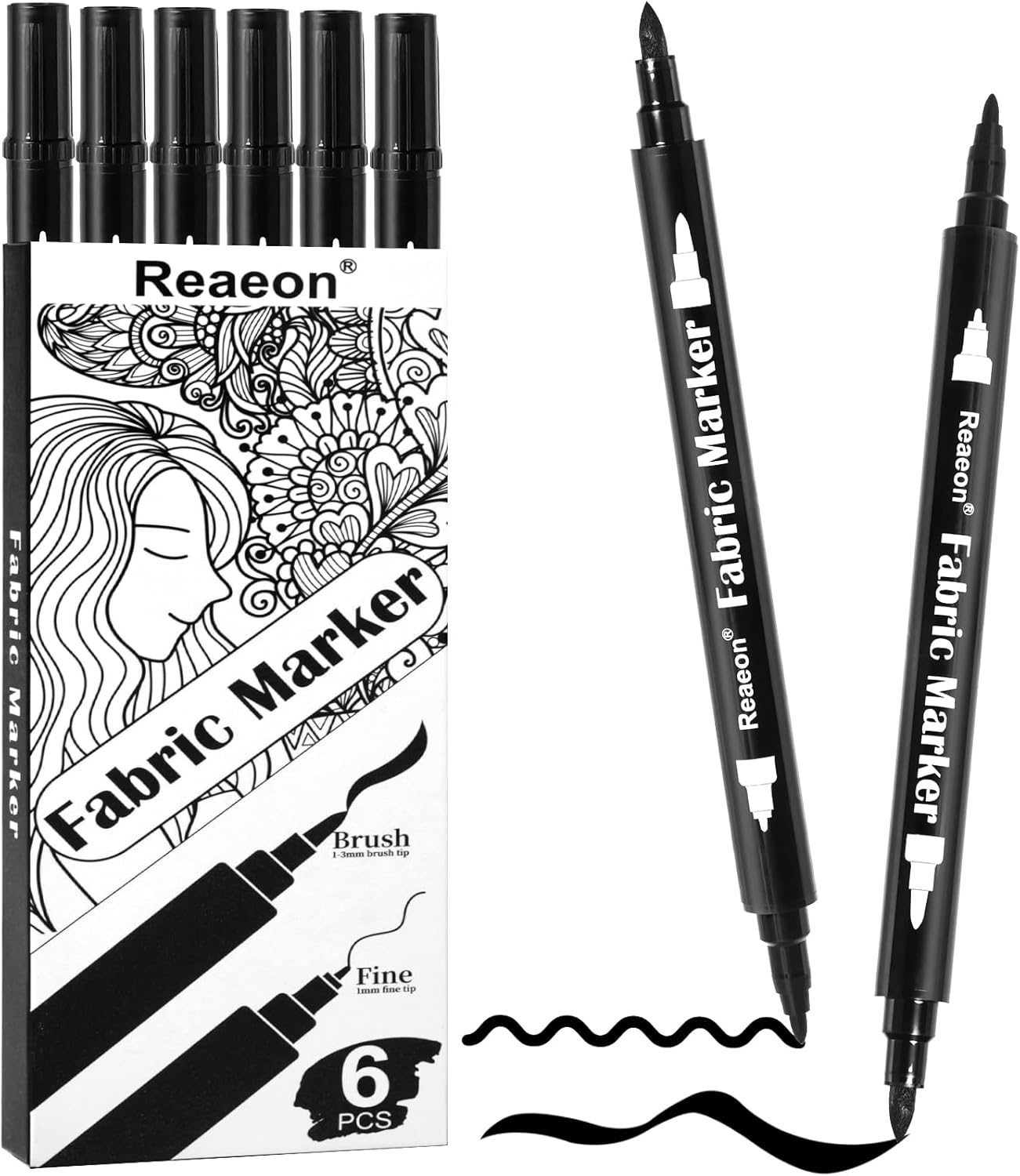 |
Reaeon Black Fabric Markers | Includes a 1mm fine tip for precision work and a 1–3mm brush tip for filling, shading, and bold strokes. Quick-drying, fade-proof, and waterproof to ensure designs remain vibrant and long-lasting. Maximum adhesion with minimal bleeding keeps artwork sharp and detailed. Allow designs to dry for 24 hours; wash in cold water with mild detergent. |
Check Price |
 |
Zenacolor 20 Fabric Markers with Dual Tips | Smooth, consistent ink flow works effortlessly on fabrics with no smudges or bleeding. Fine tip for precision detailing and chisel tip for bold strokes, shading, and gradients. Excellent adhesion on cotton, canvas, shoes, accessories, and home décor projects. |
Check Price |
 |
sunioine 12 Pcs Disappearing Ink Pen Water | Includes 12 pens in Blue and Purple. Markings fade naturally within 1–7 days or can be wiped away instantly with water or a damp cloth. Ideal for fabric marking, cross stitch, embroidery, patchwork, needlework, shoe labeling, and DIY projects. |
Check Price |
 |
JusArt 3 Pack White Permanent Markers | Fine point allows for intricate detailing, outlining, and lettering without clogging or flooding. Ensures clean application and long-lasting results across projects. Perfect for decorating, labeling, crafting, and DIY projects across multiple mediums. |
Check Price |
What to Check Before Drawing a Single Line
The fastest way to ruin confidence in a marking tool is to test it for the first time in the middle of a finished garment or carefully cut panel. Fabric fiber, dye, finish, weave, and even color can change how a marker looks and how easily it comes out. A few minutes of testing on a scrap is far more useful than assuming a product will behave identically on every cloth.
Removal method
Start with the question you will ask at the end of the project: how does this mark leave the fabric? Water-soluble ink requires moisture. Heat-erasable ink requires controlled heat. Permanent textile and acrylic markers are designed to remain, so there may be no reliable removal method once they cure.
If you plan to wash the finished piece immediately, water-soluble marking can fit naturally into your workflow. If you are working on something you do not want to soak, heat removal may be more convenient, provided the fabric can safely handle the required heat.
Fabric color and opacity
On pale fabric, blue, purple, or black marking is easy to see. On indigo, black can vanish into the cloth and white becomes far more useful. Opaque white acrylic can create strong contrast, but because it is permanent it demands more planning than a removable white mark would.
The marker should be visible without forcing you to draw heavily. Repeated passes can make lines wider, deposit more ink, and increase the chance that the mark affects the fabric surface.
Precision at the point
For detailed sashiko, a fine point usually gives better control than a broad chisel or brush tip. A fine nib can follow a ruler edge, trace a small template opening, or place dots at regular intervals without creating oversized marks.
Dual-tip markers are versatile because they offer more than one line width, but versatility should not be confused with suitability. If both tips use permanent ink, the marker is still permanent regardless of how precise the fine end feels.
How the ink behaves before it sets
A line that feathers through loose weave can become wider than expected. A line that dries slowly can transfer to your hand, ruler, template, or another layer of fabric. Quick drying is useful, but it does not eliminate the need to let freshly marked fabric rest before stacking or stitching it.
For any new fabric-and-marker combination, draw several short lines, wait the full recommended setting or drying time, then test removal or washing exactly as you intend to treat the finished piece.
Project duration
A small coaster may be stitched in one sitting. A jacket panel, curtain, bag, or large decorative cloth may stay in progress for weeks. Water-soluble ink that also fades naturally can be wonderful for quick work and frustrating for slow work.
Before choosing a marker, estimate how long the guide needs to survive. A temporary mark should disappear when you want it to, not simply whenever the ink decides to fade.
Situations Where a Marker Needs Extra Thought
A marker is not automatically the safest marking choice simply because it is sold for fabric. Heat-sensitive synthetics, heavily textured cloth, open weaves, coated fabrics, and valuable finished garments all deserve more testing than a plain cotton practice square.
Permanent ink also deserves special caution in repair work. If you are using sashiko to mend jeans, a jacket, or another item you already wear, any exposed permanent line can become part of the garment. That may be acceptable if you want a graphic effect, but it is very different from a clean disappearing guide.
If the fabric is irreplaceable, test the exact marker on a hidden scrap or seam allowance first. Check not only whether the line is visible, but whether it disappears, whether the fabric color changes around it, and whether heat or water affects the cloth.
JR.WHITE Fabric Markers Permanent for T Shirts Clothes — Better for Visible Textile Details Than Temporary Guides
JR.WHITE’s 24-color fabric marker set is built around permanent textile decoration rather than temporary sewing transfer. The set uses fine-point markers and is marketed for fabric projects such as clothing, canvas items, and other craft surfaces. The ink is intended to become permanent after roughly 24 hours, which makes the set useful for artwork that should stay but much less forgiving for construction lines that need to vanish.
That distinction matters a great deal in sashiko. On a light-colored cloth, a fine colorful line can be easy to follow, but it can also remain visible forever between stitches. For a beginner who is still adjusting stitch spacing, that creates unnecessary pressure. You have to place the thread precisely enough to cover or visually integrate the line.
Fine points give good drawing control
The fine-point format is the strongest sashiko-related feature here. It is easier to trace narrow curves, build a regular grid, or place measured dots with a fine nib than with a broad marker. On stable cotton or canvas, the line can be controlled with light pressure rather than repeatedly retraced.
The 24-color selection also gives you contrast options on pale and medium-toned fabrics. A color that is visible but not harsh can sometimes be easier to work over than a deep black line. Still, the color choice does not change the permanent nature of the ink.
Permanent after curing
The listed guidance says the ink becomes permanent after about 24 hours. It is also described as fade-resistant and waterproof once set. Those are useful qualities for textile illustration, labeling, visible accent lines, or projects where the drawn element is part of the design.
For ordinary sashiko pattern transfer, however, permanence is the central limitation. Do not assume these marks will wash out after stitching. If you use the set for a sashiko project, work on a scrap first and decide deliberately whether the ink will be hidden or intentionally retained.
Where it makes sense in sashiko work
This set can make sense for experimental sashiko where stitching and drawn color are combined, for marking areas that will be completely covered, or for decorative planning marks you deliberately want to keep. It can also be useful away from the stitch path for labels or project notes on a test cloth.
It is less suitable for a full visible grid on a finished piece. A complex hitomezashi design can leave many small spaces between stitches, and permanent color in those spaces can distract from the thread pattern.
- Fine points make measured lines and small details easier to control. The 24-color selection offers plenty of contrast choices on light and medium fabrics. The ink is designed to remain durable after curing, which suits intentional textile decoration. Quick-drying behavior reduces the chance of smearing compared with very slow wet media.
- The permanent ink is a poor match for sashiko guide lines that you expect to remove after stitching.
Who It’s Best For
JR.WHITE suits crafters who want permanent color to become part of the finished textile, or who are confident that every marked line will be fully covered by stitching.
Not Ideal For
It is not the best fit for traditional removable pattern transfer, especially on open sashiko designs where the drawn line could remain visible between stitches.
Lange & König Heat Erasable Fabric Marking Pens — A Practical Choice for Temporary Sashiko Layout
Lange & König’s heat-erasable set is much closer to what most sashiko stitchers need from a pattern-transfer tool. Current listings describe a four-pen set in white, purple, pink, and black with eight refills. The marks are designed to disappear when heat is applied, giving you time to draw, stitch, and then remove the visible framework.
For sashiko, that workflow is naturally useful. A line can stay in place while you work across a grid, and you are not relying on a permanent textile pigment to hide beneath every stitch. Multiple ink colors also help you choose contrast for different fabrics instead of forcing a single shade onto every project.
Heat removal fits long stitching sessions
Unlike air-disappearing ink, a heat-erasable line is not intended to vanish simply because several days have passed. That can be helpful when you are working through a large panel slowly. You can mark the entire pattern, stitch in sections, and remove the remaining guide after the sewing is complete.
The current set includes two refills per pen, which extends its usefulness for large grids and repeated projects. That is a practical benefit if you mark long parallel lines or repeat the same geometric template over a wide surface.
Multiple colors help with light and dark cloth
The four listed colors give the set more flexibility than a single blue water-soluble pen. White is especially useful for dark indigo, navy, charcoal, and black cloth where a dark line would disappear visually. Darker colors can be easier to see on pale cotton.
Visibility should still be tested before you draw an entire motif. Different fabrics absorb and display the ink differently, and very textured cloth can make any fine line harder to read.
Heat is both the benefit and the limitation
A hot iron can clear the mark quickly, but heat is not appropriate for every fabric, coating, or finished object. Before using the pen on a synthetic blend or a cloth with an uncertain finish, test both the marker and the heat-removal step on a scrap.
There is another practical reason to test: heat-sensitive marking chemistry can behave differently depending on temperature and fabric. Do not use a heat-removable line on a valuable piece until you have confirmed the full mark-and-remove cycle on the same material.
- Heat removal lets the pattern remain visible until you deliberately erase it. Four ink colors provide useful contrast choices for both light and dark cloth. The set includes eight refills, which is helpful for large sashiko grids and repeated projects. The pen format avoids the loose dust and broad edges associated with some dry marking methods.
- It is not a good choice for fabric that cannot safely tolerate the heat needed to remove the marks.
Who It’s Best For
Lange & König is a strong fit for sashiko stitchers who want a temporary guide that can stay visible through a long project and disappear at the finishing stage.
Not Ideal For
Skip it when your fabric is heat-sensitive, laminated, heavily coated, or otherwise unsuitable for ironing.
Reaeon Black Fabric Markers — Precise Permanent Lines for Light Fabric
Reaeon’s six-pack contains black permanent fabric markers with two different tips: a 1mm fine point and a 1–3mm brush tip. The ink is described as quick-drying, waterproof, fade-resistant, and designed to remain through washing after it has dried. The brand’s listed instructions call for at least 24 hours of drying before washing in cold water with mild detergent.
For sashiko, the fine point is the relevant end. A 1mm line is narrow enough to trace measured geometry more cleanly than a broad brush stroke. On cream, white, natural cotton, or light denim, black provides strong visibility. The problem is not seeing the line; it is getting rid of it afterward.
Dual tips are useful, but not equally useful for pattern transfer
The fine tip can draw straight paths, small curves, and reference dots. The brush tip is better for filling, lettering, or visible decoration. For sashiko guide work, the brush end is generally broader than necessary and increases the amount of permanent ink placed on the cloth.
If you decide to use Reaeon for sashiko, the fine point should be the default and the pressure should stay light. A narrow permanent line is easier to hide than a thick permanent stroke.
No heat setting simplifies use
Current product information says no ironing or heat setting is needed. You let the ink dry before washing. That makes the markers convenient for permanent fabric drawing, especially on items that you do not want to press simply to cure the ink.
But this convenience should not be confused with removability. Once the line dries, it is intended to remain. A permanent black guide on pale fabric can be extremely obvious if the stitches drift even slightly away from the drawing.
Best used with intentional permanence
Reaeon can work for sashiko-inspired textile art where black drawing and stitching are both visible design elements. It can also make sense for lines that will be completely enclosed beneath dense stitched areas.
For a standard removable grid, it adds risk without much benefit. Temporary ink gives you the same visual guidance with a cleaner finishing path.
- The 1mm fine tip offers controlled line work for measured patterns. The six-marker pack provides repeated black pens rather than a mixed set where only one color is useful. Quick-drying pigment reduces waiting before handling the cloth. No heat setting is required for the ink to become a durable fabric mark.
- Because the black ink is permanent, any uncovered guide line can remain visible on the finished sashiko.
Who It’s Best For
Reaeon is better for sashiko-inspired pieces that intentionally combine black permanent drawing with stitching, or for marks you know will be completely concealed.
Not Ideal For
It is not a sensible first choice for temporary grids, practice lines, or patterns where clean unmarked fabric should remain visible around the stitches.
Zenacolor 20 Fabric Markers with Dual Tips — Versatile for Permanent Textile Design
Zenacolor’s 20-marker dual-tip set combines a fine tip for detail with a chisel tip for broader strokes and fills. The brand describes the ink as permanent, fade-resistant, non-toxic, suitable for cotton and canvas, and machine washable in cold water once the design is set. The dual-tip construction gives the set genuine versatility for general fabric art.
For sashiko, however, the same permanence issue applies. The fine tip can trace geometry cleanly, yet the ink is designed to stay on the textile. If you are expecting the marked pattern to disappear after the last stitch, this set is not designed for that task.
Fine and chisel tips serve different purposes
The fine tip can handle lettering, narrow outlines, dots, and small drawn details. In sashiko planning, it is the end that gives you the most control. The chisel end is useful for broad graphic marks and filling shapes, but it is usually wider than necessary for a stitch path.
Having both tips in every color does make the set more flexible for mixed-media textile projects. You can build a permanent colored motif, then add sashiko stitching on top or around it. That is a creative use case where the marker is not pretending to be temporary.
Good adhesion on cotton changes the risk calculation
Zenacolor specifically lists cotton and canvas among the intended surfaces. Strong adhesion is positive for a decorative fabric marker because it helps a finished drawing survive wear and washing. For a sashiko transfer line, strong adhesion is exactly what you do not need.
This is a good example of why the word “fabric” on a marker package is not enough. A marker can be excellent on fabric and still be the wrong tool for a removable stitching guide.
Cold-wash durability favors permanent art
The ink is described as machine washable in cold water. That makes it useful on clothing, bags, and home-decor textiles where the color should remain part of the finished surface. It also means washing the sashiko after stitching is not a dependable strategy for removing the line.
If you use the set with sashiko, choose a color that fits the intended finished design and treat it as a visible element rather than a disposable construction mark.
- Each marker provides both a fine detail tip and a chisel tip for broader textile work. Twenty colors make it easier to coordinate permanent drawing with thread and fabric. The ink is formulated to adhere to cotton and canvas and remain after cold washing. Smooth flow and fade-resistant color suit permanent mixed-media textile designs.
- The permanent ink means it is poorly suited to sashiko construction lines that should disappear after stitching.
Who It’s Best For
Zenacolor suits people combining sashiko with permanent illustration, lettering, colorful textile accents, or deliberately visible drawn geometry.
Not Ideal For
It is not ideal for a traditional temporary transfer grid, particularly on a finished garment where stray color would be difficult to hide.
sunioine 12 Pcs Disappearing Ink Pen Water — Convenient for Wash-Away Sashiko Lines
The sunioine set is a 12-piece collection of water-based fabric marking pens in blue and purple. Current listings describe the marks as disappearing naturally within roughly one to seven days or being removable sooner with water or a damp cloth. The pens are intended for sewing, embroidery, patchwork, cross stitch, and other temporary fabric marking jobs.
That makes this set one of the most directly useful sashiko options here. The marks are supposed to leave the cloth rather than become part of it. On pale and medium fabrics where blue or purple is easy to see, the workflow is straightforward: mark the pattern, stitch while the guide remains visible, then remove any remaining lines with water.
Fine water-based lines suit measured patterns
The pens are listed with a fine point and water-based ink. Fine lines are helpful for sashiko because they reduce uncertainty at stitch entry and exit points. A narrow grid also keeps the fabric from looking visually crowded while you work.
The 12-piece pack is useful if you mark large areas or simply prefer to have spare pens available. Because the set uses blue and purple rather than many decorative colors, most of the pack is focused on visible temporary marking rather than textile illustration.
Natural fading can be helpful or inconvenient
The one-to-seven-day fading window is the feature that deserves the most thought. For a small sampler, visible mending patch, or short practice piece, the disappearing behavior can be convenient. If you forget to wash the lines out immediately, they may fade on their own.
For a large sashiko panel, the same behavior can become a limitation. You may not finish the last section before the earliest lines start weakening. If your project will take more than a few days, consider marking in sections rather than drawing the entire design at once.
Water removal is gentle for many cotton projects
A damp cloth or rinse can remove the line without requiring high heat. That is useful for cotton pieces you are comfortable getting wet, and it avoids relying on an iron as the erasing mechanism.
Even so, you should test first. Dyes and finishes differ, and water can move ink through fibers before it fully leaves. Use the same removal method on your test scrap that you plan to use on the final piece.
- The water-soluble ink is designed for temporary sewing and embroidery marks rather than permanent decoration. Fine lines work well for measured sashiko grids and detailed motifs. Twelve pens provide useful backup for larger projects and frequent marking. Marks can be removed with water instead of requiring heat.
- Because the ink can fade naturally within days, lines may disappear too early on a slow or very large sashiko project.
Who It’s Best For
sunioine suits light-to-medium fabrics, short-to-medium sashiko projects, practice grids, and stitchers who prefer water removal over ironing.
Not Ideal For
It is less convenient for deep indigo where blue and purple are hard to see, or for long projects that need one complete marked grid to remain clear for weeks.
JusArt 3 Pack White Permanent Markers — Opaque Contrast for Dark Fabric, With a Permanent Finish
JusArt’s three-pack uses white water-based acrylic paint ink and a 0.7mm fine point. The manufacturer lists the pens for many surfaces, including fabric, and emphasizes opaque coverage, quick drying, and water resistance. The fine white line is naturally attractive for dark sashiko cloth because it provides the contrast that blue or black ink cannot.
The important limitation is again permanence. These are acrylic paint markers, not temporary sewing pens. White acrylic can sit visibly on the surface of indigo or black fabric, so a line that misses the stitch path may remain obvious after the project is complete.
The 0.7mm point is genuinely useful for detail
A 0.7mm nib can create narrow outlines, small dots, and lettering without the broad footprint of a standard paint marker. For tracing a geometric motif on dark cloth, that precision is valuable. It also lets you keep the amount of acrylic deposited on the textile relatively low.
Because the ink is opaque, you may not need several passes to make the line visible. Fewer passes mean less paint on the fabric, which matters if you plan to stitch directly through or very close to the mark.
White acrylic solves visibility, not removability
On dark indigo, visibility is often the hardest part of pattern transfer. JusArt solves that problem very effectively: white stands out. But an easy-to-see line is only half of the requirement for a traditional sashiko guide. You also need a finishing plan.
If you want a completely clean cloth after stitching, permanent acrylic is a risky choice. If you intentionally want a white drawn line integrated with the thread, or if dense stitching will cover the mark, the permanence can be acceptable.
Paint-marker behavior is different from dye-style fabric ink
Acrylic paint tends to sit more on the surface than a thin disappearing sewing ink. That can change how the fabric feels where the marker is applied, especially if you press hard or retrace the same area several times.
Use the lightest pressure that creates a visible line and allow the mark to dry before stitching. Test whether you are comfortable pushing a needle through the marked area before covering a large panel with acrylic lines.
- The opaque white ink gives strong visibility on navy, indigo, black, and other dark fabrics. A 0.7mm fine point supports precise curves, grids, and small reference marks. Water-based acrylic ink is quick-drying and easy to prime for general craft use. The three-pack provides backups without forcing you to buy a large mixed-color set.
- The white acrylic is permanent and can remain visibly on the fabric wherever the stitching does not cover it.
Who It’s Best For
JusArt is most useful for dark-fabric sashiko-inspired art where the white drawn line is intentional, or for dense work where the line will be fully concealed.
Not Ideal For
It is not the best choice for a traditional removable white guide on dark cloth.
Comparing the Six Markers
The six options divide naturally into two groups: temporary marking pens and permanent textile markers. That difference should drive the buying decision before tip shape, color count, or pack size.
For a removable sashiko pattern
Lange & König and sunioine are the clearest fits. Lange & König lets you keep a line until you deliberately apply heat, which is useful for large or slow projects. sunioine uses water-soluble disappearing ink, making it convenient for cotton work that can be dampened or washed after stitching.
If you expect a project to last several weeks, the heat-erasable set has the advantage because sunioine’s marks may fade on their own within days. If you do not want to apply heat, sunioine has the simpler removal method.
For dark indigo or navy
Lange & König has the strongest balance because the set includes white heat-erasable ink as well as darker colors. It gives you contrast on dark cloth without committing to a permanent white line.
JusArt also produces a highly visible white mark, but it is acrylic and permanent. Choose it only if you want the white drawing to remain or know the stitches will fully cover it.
For pale cotton
sunioine’s blue and purple marks are easy to see on light cloth and can be removed with water. That combination is well suited to practice samplers, visible mending patches, and geometric grids on natural cotton.
Reaeon’s black fine tip can also be very clear on pale cloth, but the line is permanent. The decision therefore comes down to whether the mark is temporary construction information or part of the finished design.
For permanent mixed-media textile work
JR.WHITE, Reaeon, Zenacolor, and JusArt all make more sense when the drawing is meant to stay. JR.WHITE offers many colors with fine points. Reaeon gives you repeated black dual-tip markers. Zenacolor combines 20 colors with fine and chisel tips. JusArt provides opaque white acrylic for dark surfaces.
For ordinary sashiko pattern transfer, permanence is not a bonus. For textile art that deliberately combines ink and stitching, it can be exactly what you want.
For the longest working time
A heat-erasable line that stays until you apply heat is easier to manage on a large panel than an air-disappearing line. If you are planning a detailed project that may sit unfinished for a while, mark stability matters as much as removability.
If you prefer water removal, consider marking one working section at a time so disappearing lines do not outrun your stitching progress.
How to Mark a Sashiko Pattern Cleanly
A good marker cannot compensate for a shifting template or an untested fabric. The most reliable results come from a simple preparation routine that keeps the cloth flat, the line narrow, and the removal method predictable.
1. Prewash and press the fabric when appropriate
If the finished textile will eventually be washed, prewashing helps remove sizing and allows the fabric to shrink before you measure the pattern. Let it dry completely, then press it flat so the marker can move across a stable surface.
Avoid marking over deep wrinkles. A line drawn across a fold changes position when the fabric is flattened and can distort a geometric sashiko repeat.
2. Test the exact marker on a scrap
Draw several lines using the pressure you expect to use on the real project. Let temporary ink sit for a realistic amount of time, then remove it using water or heat exactly as directed. For permanent markers, let the ink cure and check whether it changes the hand of the fabric or bleeds through.
Do not skip the removal test simply because a pen is labeled erasable. Fabric dyes, finishes, coatings, and fiber blends can change the result.
3. Stabilize the pattern and cloth
Keep the fabric flat and prevent the ruler, template, or paper pattern from shifting. A small movement at the beginning of a long geometric repeat can create a visible alignment problem several rows later.
Work from a consistent reference edge and check measurements periodically rather than assuming every repeated mark is still square.
4. Use the finest practical line
Draw with light pressure and avoid going back over the same path unless the mark is genuinely too faint to see. A narrow guide is easier to stitch accurately and easier to hide if a small amount remains after finishing.
On dark cloth, give white or light-colored ink time to develop before retracing it. Some marking inks become more visible after a short drying period.
5. Mark only as much as your schedule can support
With a line that can fade naturally, divide a large project into manageable sections. Mark the area you expect to stitch soon, complete it, then move to the next part.
For heat-erasable lines, you can usually plan a larger area because the guide stays until you remove it, but testing is still essential.
6. Let fresh marks dry before handling
Even quick-drying ink can transfer if you immediately fold, stack, or rub the fabric. Leave the marked piece flat until the surface is dry. This is especially important with permanent ink because a transferred smudge may be impossible to remove.
7. Stitch beside the center of the line consistently
Choose a consistent relationship between the needle and the guide. Some stitchers place the stitch directly over the line; others use the line as a center reference. What matters is consistency across the repeat.
If a permanent mark is being deliberately covered, accurate placement becomes even more important because any wandering line may remain visible.
8. Remove temporary marks before final finishing
Once the stitching is complete, follow the tested removal method. Use only enough water or heat to clear the marks and protect the fabric and thread. After removal, inspect the cloth in good light before pressing, framing, gifting, or wearing it.
Keeping Markers and Marked Fabric in Good Condition
Fabric markers often fail because of storage rather than because the ink formula is poor. Replace caps firmly after every use and store pens according to the maker’s instructions. A fine tip that dries out can begin skipping, encouraging you to press too hard and damage the point.
Refill-based pens are worth keeping organized by color. Mixing white, black, pink, and purple refills can be surprisingly easy when several slim cartridges are stored loose in the same sewing box.
Marked fabric also deserves care. Keep a water-soluble project away from accidental splashes and high humidity. Keep a heat-erasable project away from unplanned heat sources. Do not fold fresh permanent marker lines against clean fabric until the ink has fully dried.
For long sashiko projects, store the work flat or gently rolled when possible. Repeated hard folds can distort drawn grids and make it more difficult to maintain even stitch spacing.
Where Sashiko Marking Goes Wrong
Drawing the whole design before testing removal
The line looks perfect, so it is tempting to cover the entire panel immediately. The problem appears at the end if the mark does not leave the cloth as expected. Test a scrap first, including the full removal method, and only then commit to a large transfer.
Choosing permanent ink because it looks crisp
Permanent markers often produce strong, easy-to-read lines. That makes them feel reassuring during stitching, but clarity during construction does not compensate for a line that remains visible afterward. Use permanent ink only when permanence is part of the plan.
Pressing too hard with a fine nib
Heavy pressure can spread ink through the weave, widen the guide, or damage the tip. Let the ink do the work. A light, narrow mark is easier to follow accurately than a dark channel several times wider than the intended stitch path.
Assuming dark fabric always needs permanent white paint
Dark indigo does need contrast, but contrast does not require permanent acrylic. Heat-erasable white marking can give you visibility while preserving the option to remove the construction lines.
Letting disappearing ink outrun the stitching
A full grid may take hours to draw, yet naturally fading ink can begin weakening before a slow project is finished. For large work, mark in zones that match your realistic stitching pace.
Removing marks without considering the fabric
Water and heat are both useful removal methods, but neither is harmless to every textile. Check care instructions, test the fabric, and use the gentlest effective method. The mark should disappear without introducing shrinkage, shine, dye movement, or surface damage.
Heat, Ink, and Fabric Safety
Heat-removable marking should only be used on fabric that can tolerate the necessary temperature. Test the iron setting on a scrap or hidden area first, and protect delicate surfaces from direct high heat when the textile’s care instructions require it.
Permanent and acrylic markers should be used in a ventilated crafting area and kept capped when not in use. Avoid treating a general craft marker as suitable for skin contact or for areas where the finished textile will be chewed or mouthed unless the manufacturer explicitly approves that use.
Keep all marking tools away from young children unless the product is specifically intended for their age and they are appropriately supervised. Fine marker caps and replaceable refills can also present small-part concerns.
The safest sashiko workflow is simple: test the fabric, use the minimum amount of ink needed, and follow the marker’s stated drying or removal method.
Frequently Asked Questions
Should sashiko marking lines be permanent?
Usually, no. In most sashiko, the drawn pattern is construction information that guides the stitches and is removed afterward. Permanent lines can work in mixed-media textile art or where every line will be covered, but they create more risk on a traditional open pattern.
Is water-soluble ink better than heat-erasable ink?
Neither is automatically better. Water-soluble ink is convenient when the fabric can be dampened or washed, while heat-erasable ink can stay visible longer and disappear without soaking the piece. Choose based on fabric care, project duration, and the removal method you are comfortable using.
What marker color works best on indigo fabric?
White is usually the easiest color to see on dark indigo. The important distinction is whether the white mark is temporary or permanent. A removable white line is generally more forgiving for sashiko transfer than permanent white acrylic.
Can I use a permanent black fabric marker on white cotton?
You can, but the line is expected to remain. That makes it suitable only if the black drawing is part of the finished design or will be completely concealed. For a normal removable grid, a temporary pen is the safer option.
How fine should a sashiko marking line be?
Use the narrowest line you can see comfortably. Fine lines make it easier to place the needle consistently and reduce the amount of marking that must be hidden or removed. Very broad lines are better for filling and decoration than for stitch-path transfer.
Why did my disappearing line fade before I finished stitching?
Some disappearing inks are designed to fade naturally over time. Warmth, humidity, and fabric behavior can also affect visibility. On a long project, mark smaller sections rather than transferring the entire pattern at once.
Do I need to prewash fabric before marking it?
If the finished piece will be washed, prewashing is usually sensible because it removes sizing and allows shrinkage to happen before the pattern is measured. Let the cloth dry and press it flat before drawing the grid.
Can I iron directly over every sashiko marker?
No. Heat is a removal method for heat-erasable ink, but permanent textile and acrylic markers follow different curing instructions. Always check the instructions for the specific marker and the care limits of the fabric before applying heat.
Choose the Mark for the Stitching You Want to See
The best fabric markers for sashiko are not simply the ones that draw the darkest line. A useful marker gives you enough contrast and precision to stitch accurately without leaving an unwanted second design behind when the threadwork is finished.
For removable pattern transfer, the strongest choices in this group are the temporary options: Lange & König when you want lines that stay until heat removal, and sunioine when water-soluble marking suits the fabric and your project timeline. The permanent JR.WHITE, Reaeon, Zenacolor, and JusArt markers make more sense when ink is intentionally part of the finished textile or can be completely covered.
I’d choose based on three things before anything else: fabric color, how long the pattern needs to remain visible, and exactly how you want the line to disappear. Once those decisions are clear, the marker becomes a quiet guide rather than a problem you have to solve after the last stitch.