
A door is one of those surfaces that looks simple until wet paint is on it. Flat sections show brush marks under side light, recessed panels collect too much paint in the corners, and narrow edges make a long handle feel clumsy. Even a good paint can dry with ridges or heavy lines if the applicator is wrong for the part of the door you are working on.
That is why the best paint brushes for doors are not all the same shape. A short angled brush can make cutting around hinges and panel edges easier, a flexible-neck brush can reach awkward trim, and a small foam roller can cover flat sections with less visible texture.
Some of the products in the original Upcyclely post are complete roller kits rather than conventional brushes, so I have kept them in the article exactly as supplied while explaining what each one actually does well.
The most important choice is not brush versus roller in isolation. It is matching the tool to the part of the door, the paint you are using, and the finish you want. A paneled interior door may benefit from both a controlled brush and a compact roller, while an ornate door may demand much more brush work around profiles and recesses.
Why Door Painting Puts More Pressure on the Applicator
Doors are handled, viewed up close, and often lit from the side. That combination makes small surface defects more obvious than they would be on a textured wall. A faint ridge that disappears on drywall can stand out on a semi-gloss door every time daylight moves across it.
Flat Areas Reward a Consistent Wet Edge
Large flat sections are where brush marks become easiest to see. If you paint a wide stile or panel with a narrow brush, you create many overlapping passes. Each overlap gives the paint another chance to start setting before the next stroke reaches it.
A wider brush or a small finishing roller reduces the number of joins. The goal is not simply speed. It is to lay down a consistent film and leave it alone before it becomes tacky.
Once door paint begins to set, repeated brushing usually makes the surface worse rather than smoother. This is why loading the applicator properly and working in a sensible order matters so much.
Recessed Panels Need More Control Than Broad Coverage
Raised-panel and molded doors contain corners, bevels, grooves, and narrow transitions. A broad flat brush can cover a lot of surface, but it may push excess paint into those recesses. That can lead to runs that appear after you have already moved to another part of the door.
An angled brush or small trim brush gives you a more precise edge. Specialty tools such as the ROLLINGDOG triangular and square brushes go even further by concentrating the brush head into compact shapes that are easier to steer along corners and trim.
Door Edges Change the Way You Hold a Brush
The latch edge and hinge edge of a door are narrow surfaces. A conventional long paintbrush handle can bump into the frame, hinge hardware, or your own wrist position. Short-handle brushes such as the Wooster Shortcut are useful here because the hand sits close to the ferrule and the tool can be turned without a long handle swinging into the surrounding area.
The same idea applies to small foam rollers. A 4-inch roller is easier to control on a door than a full wall roller, particularly when you are painting narrow rails or flat inset panels.
Gloss and Semi-Gloss Finishes Expose Texture
Many doors are finished in satin, semi-gloss, gloss, or another durable coating because those finishes tolerate cleaning and frequent contact. The trade-off is that higher sheen can reveal texture.
A dense synthetic brush can help level modern water-based coatings, while a fine foam roller can leave a lower-profile texture on flat areas. Natural-bristle brushes have their own place, especially with compatible oil-based coatings and decorative finishes, but they should not be treated as the automatic choice for every modern door paint.
The Brush Has to Match the Paint
Modern door paints vary widely. Water-based acrylic enamels and trim paints are common, but oil-based products and specialty coatings are still used. Synthetic filaments are generally a safe match for water-based paints because they do not absorb water and go limp in the way natural bristles can.
Natural bristles can work well with oil-based coatings, stains, waxes, and compatible finishing products. The two-brush natural-bristle set in this article is therefore a more specialized option than the synthetic Wooster, Richard, ROLLINGDOG, U.S. Art Supply, and PinStone brushes.
Always follow the paint maker’s instructions for the applicator and cleanup method. The product label is more important than a broad rule about what people traditionally used on doors.
| Product Image | Product Name | Features | Price |
|---|---|---|---|
 |
Wooster Brush Q3211-2 Shortcut Angle Sash Paintbrush | Flexible Shergrip Handle Dual-Fiber Bristles Brass-Plated Steel Ferrule Brush Thickness |
Check Price |
 |
Chalk Paint Brushes Set, Pack of 2 Wax Brush | Dual Brush Sizes for Versatility Premium Natural Bristles Multi-Medium Compatibility Rust-resistant and securely crimped to prevent shedding |
Check Price |
 |
Pro Grade Paint Roller Kit, Brush & Roller, | Paint Brushes for Walls & Detail Work 9-Inch Paint Rollers Durable materials allow for multiple uses |
Check Price |
 |
Mister Rui Foam Paint Roller | Includes 5 high-density foam roller covers Designed for smooth, even finishes on flat surfaces Works with water-based and oil-based paints |
Check Price |
 |
U.S. Art Supply 3 Pack of Variety Size Synthetic Bristle Paint | Includes 1-inch, 2-inch, and 3-inch wide brushes Designed for a smoother finish Comfortable grip with a natural finish |
Check Price |
 |
Richard 80833 Goose Neck Angular Paint Brush | 2.5-Inch Brush Width Flagged Synthetic Bristles Angled Filaments for Accuracy Handle bends to any shape Works with latex and oil-based paints |
Check Price |
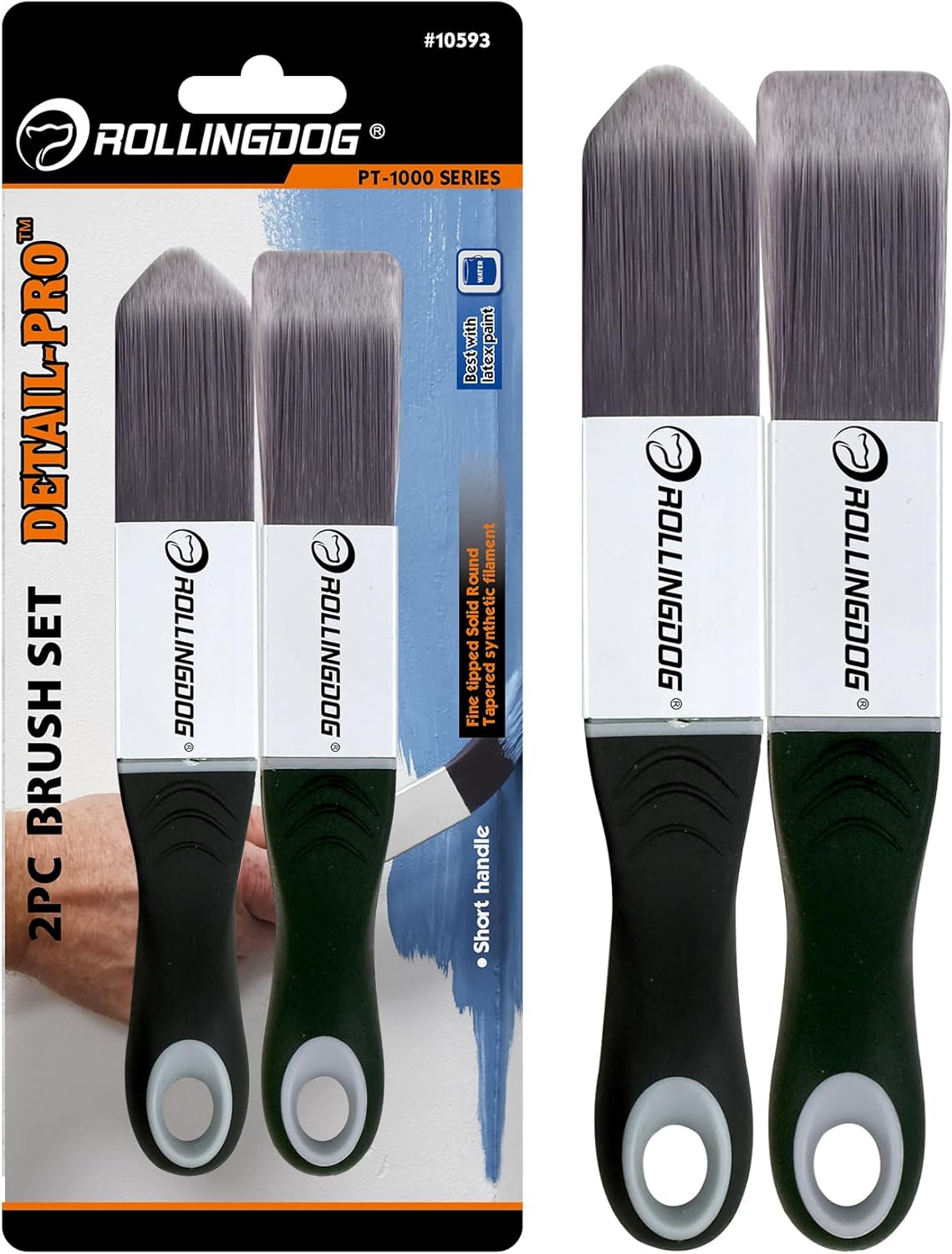 |
ROLLINGDOG Paint Brush | Solid Round Tapered Filaments Durable, rust-resistant ferrules Perfect for edging around doors Works well with latex, oil-based, and specialty paints |
Check Price |
 |
Paint Roller -Small Paint Tray Set with High-Density Foam Mini Roller | Complete 12-Piece Kit 4-Inch Roller Width Professional & Domestic Use Sturdy Roller Frame |
Check Price |
 |
PinStone 3 Pack Professional Paint Brushes Set | Versatile Size Assortment Premium Synthetic Bristles Pressure-Relief Rubber Handles Stainless Steel Ferrules Nail-free design for easy cleaning |
Check Price |
What to Check Before Choosing a Brush or Roller for a Door
The quickest way to make a bad choice is to buy by package size alone. A ten-piece kit can be useful, but the useful part may be only one or two items for a particular door. Start with the door and paint, then decide what kind of applicator makes sense.
Decide How Much of the Door Is Flat
A slab door with large uninterrupted faces is a strong candidate for a small smooth-finish roller plus a brush for the edges. A six-panel door needs more brush work because each panel has recesses and molded transitions.
If most of the surface is flat, the Mister Rui or NANJA foam roller kits become more relevant. If the door has detailed moldings, the Wooster, Richard, or ROLLINGDOG brushes may do more of the work.
Choose a Brush Width You Can Control
A two-inch angled brush is a practical size for many door tasks because it is broad enough to make progress but narrow enough to follow edges. Wooster’s Q3211 is a two-inch angle brush, while Richard’s 80833 is wider at 2½ inches.
The U.S. Art Supply set gives you 1-inch, 2-inch, and 3-inch utility brushes, and PinStone supplies 1-inch, 1½-inch, and 2-inch brushes. Those multi-size sets are useful if you expect to switch between hinges, panel edges, and broader trim.
Think About Handle Length Before Bristle Marketing
The handle controls leverage. A long wooden handle can feel natural on a broad surface, but it can become awkward around hinge mortises, narrow jamb gaps, and panel corners.
Wooster’s flexible Shergrip Shortcut handle is designed for compact spaces. Richard takes a different approach with a flexible adjustable handle that can be bent and attached to an extension pole. PinStone uses rubberized handles with thumb-friendly grip areas, while ROLLINGDOG uses compact rubber grips intended for close edge work.
If you are painting a door in place, handle shape can matter almost as much as the bristles. The frame, hinges, floor, and adjacent wall all restrict how you can move your hand.
Look at Bristle Shape and Density
An angled sash brush creates a longer leading edge that is helpful for cutting a clean line. Square or triangular specialty heads make sense around tight corners and molding. Flat utility brushes spread paint quickly but do not guide themselves along a corner as naturally as an angle brush.
Dense, flagged synthetic filaments can carry paint and release it smoothly. Wooster’s current catalog describes the Q3211 as a soft polyester blend. PinStone listings describe high-density synthetic bristles with flagged tips, and ROLLINGDOG’s set uses solid round tapered filaments that come to angular tips.
Treat Foam Rollers as Finishing Tools, Not Universal Replacements
Foam rollers are useful on smooth flat surfaces because they can spread a thin, even film with little lint. Mister Rui specifically markets its high-density foam covers for doors, cabinets, trim, and furniture. NANJA’s current listing also identifies its 4-inch foam kit for doors and cabinets.
The limitation is access. A roller will not reach a deep molded corner, the edge behind hardware, or a narrow bevel cleanly. You still need a brush for those areas.
Consider Whether You Need a Complete Kit or One Good Tool
The Pro Grade kit and the NANJA kit give you trays, frames, and roller covers in addition to a brush or roller system. That is convenient if you are starting with little equipment.
A dedicated brush such as the Wooster or Richard makes more sense if you already own trays and rollers and want a better tool for detail. The PinStone and U.S. Art Supply multi-brush packs sit between those extremes.
Be Careful With Natural Bristle on Water-Based Paint
The natural-bristle chalk-and-wax set is included because it appears in the original article, but its strongest documented uses are furniture painting, waxing, refinishing, chalk paint, and similar coatings. Natural animal bristles can absorb water and soften in water-based paint.
That does not make the set useless for doors. It means you should choose it when the coating suits the bristle, not simply because the brush is large and soft. For ordinary water-based door enamel, a quality synthetic brush is usually the safer starting point.
When a Brush Is Only Part of the Door-Painting Setup
A brush cannot make poorly prepared paint level properly. If the old coating is glossy, greasy, chipped, or rough, the new coat may show defects no matter how good the applicator is.
Cleaning, sanding, repairing damage, and using the primer recommended for the surface and paint system all matter. Metal doors may need a compatible primer on exposed metal. Previously painted wood may only need cleaning, deglossing, and spot priming if the existing finish is sound. PVC and other plastics require coatings specifically made to adhere to them.
A smooth door finish also depends on dust control. Sanding dust caught under a glossy coat can look like tiny bumps across the whole surface. After sanding, remove dust thoroughly and keep the work area as clean as practical.
Do not expect a brush to compensate for paint that is too thick, a contaminated surface, or a second coat applied before the first has cured enough. The applicator controls placement and texture, but it cannot repair a weak paint system.
Wooster Brush Q3211-2 Shortcut Angle Sash Paintbrush – Compact Control for Edges and Panels
The Wooster Q3211 is one of the most purpose-built door brushes in this group. Wooster’s current 2026 catalog lists it as a 2-inch angled Shortcut brush with a soft polyester blend for all paints and a flexible Shergrip handle. The short format is intended for compact spaces, which lines up well with the awkward hand positions that appear around hinges, narrow door edges, and recessed panels.
A conventional long brush can be excellent on trim, but there are moments on a door where the handle becomes the problem. The Q3211 brings your hand closer to the brush head. That reduces the amount of handle swinging behind your wrist and can make it easier to turn the brush around corners.
The angled profile is also useful when you need to cut a clean boundary along a panel or beside hardware. You can load the wider part of the brush with paint while using the longer angled tip as a guide.
Features
Wooster describes the Q3211 with a soft polyester blend and states that it is suitable for all paints. Polyester is a sensible material for modern water-based trim paints because it maintains its shape without absorbing water like natural bristle.
The 2-inch width is a practical middle ground. It can cover a narrow rail or door edge without feeling oversized, yet it has enough capacity to paint faster than a one-inch detail brush.
The Shergrip handle is soft and flexible. The manufacturer specifically promotes the Shortcut line for small, narrow spaces and says the flexible handle adds control and reduces fatigue. On a door, that matters around the jamb, the latch edge, and molded panel transitions.
The angled brush head gives you a defined leading tip for cutting in. Instead of trying to steer the full width of a square brush along a corner, you can place the long edge first and then let the rest of the brush follow.
- The short flexible handle gives unusually good control when a long brush handle would bump into the door frame, floor, or nearby hardware.
- The 2-inch angled head is versatile enough for panel edges, rails, stiles, hinge-side touch-ups, and general cutting-in around a door.
- Wooster’s current catalog confirms a soft polyester blend for all paints, making the brush straightforward to match with many common door coatings.
- The compact design reduces hand travel and can make detailed brush work feel more direct, especially when the door remains installed while you paint it.
- The short handle is excellent for close work but provides less reach and leverage than a traditional long sash brush on broad uninterrupted surfaces.
Who It’s Best For
This brush suits homeowners and DIY painters working on paneled doors, trim, edges, and tight spaces where close control matters more than reach. It is particularly useful if you prefer to paint a door in place rather than removing it from the hinges.
Not Ideal For
It is not the most efficient single tool for a large flat slab door. On broad faces, pairing it with a small smooth-finish roller can reduce the number of brush strokes and help maintain a more uniform film.
Chalk and Wax Paint Brushes for Furniture, 2 Pack Natural Bristles – A Specialized Pair for Compatible Coatings
This two-brush set is different from the synthetic door brushes around it. Current listings identify natural bristles and round-and-oval designs intended mainly for furniture painting, waxing, refinishing, chalk paint, milk paint, and compatible oil-based or decorative coatings.
That makes the set more specialized for door work. If you are refinishing an older wooden door with a compatible furniture-style coating, applying wax over a decorative finish, or deliberately creating a hand-brushed look, the soft natural bristles can be useful. If you are applying a modern water-based acrylic enamel, a synthetic brush is usually a more predictable choice.
The value of the pair is the difference in scale. The larger brush can work across broader molded areas, while the smaller round brush can reach corners and profiles.
Features
The set combines two natural-bristle brushes in different shapes rather than giving you two identical tools. Current product descriptions specify a larger oval brush and a smaller round brush, which gives you one tool for broader coverage and another for detailed recesses.
Natural bristles can carry oil-based coatings and wax effectively. Their split ends and soft feel help load and release thicker finishing products, which is why this style is common in furniture refinishing.
Listings describe wooden handles and stainless-steel ferrules. A secure ferrule matters because a loose natural bristle caught in wet paint is difficult to remove without leaving a mark.
The rounded brush shapes are better for working paint or wax into carved detail than for cutting a razor-straight edge. That makes the pair better suited to decorative doors, textured wood, and furniture-style finishing than to crisp modern trim work.
- Two different brush shapes give you a broader tool for coverage and a smaller round brush for recesses, corners, and decorative profiles.
- Natural bristles can hold and release compatible oil-based finishes, waxes, chalk-style coatings, and furniture refinishing products effectively.
- The rounded forms are useful on molded or carved door details where a conventional flat sash brush may not reach evenly.
- Wood handles and metal ferrules give the brushes a traditional, repair-project feel that suits slower decorative finishing work.
- Natural bristles are not the safest choice for ordinary water-based door paints because they can absorb water and lose some of their useful spring.
Who It’s Best For
This pair suits decorative furniture-style door refinishing, compatible oil-based coatings, chalk-style finishes, wax application, and textured or carved wood where working material into recesses matters.
Not Ideal For
It is not ideal as a first choice for a smooth modern water-based enamel on a flat interior door. A synthetic angle brush such as the Wooster or Richard will generally give more predictable control with that kind of paint.
Pro Grade Paint Roller Kit – A Full Setup for Broad Door Faces and General Painting
The Pro Grade set is not a single paintbrush. The current listing describes a 10-piece painting kit built around 4-inch and 9-inch roller covers, two frames, a tray, and brush components for interior and exterior work. It is included here because it was one of the nine products in the original article, and its relevance to doors comes mainly from the small roller and included brush rather than the full wall-painting portion of the kit.
For a person starting with almost no equipment, this is convenient. You can use the brush for edges and panel recesses, then move to the smaller roller for flat door sections. The 9-inch roller is more useful for walls and other large surfaces, so it is not the part I would choose specifically for a door.
The broader kit approach also means you are buying flexibility rather than one refined specialty tool. That can be useful during a whole-room repaint where the door is only one part of the job.
Features
The kit includes both full-size and mini roller equipment. A 4-inch roller is useful on doors because it can move across flat panels and stiles without feeling oversized, while a 9-inch roller is more at home on walls.
A tray is included, so you do not need to purchase a separate loading surface before starting. That matters for a first-time project because poor roller loading from an improvised container can create uneven paint distribution.
The current listing describes the set as reusable and suitable for different surface textures. Reusability depends on thorough cleaning, especially with the roller covers, which can hold more paint than they appear to.
Because it is a kit rather than a single premium brush, its strength is coverage of several jobs. It can handle door flats, nearby walls, trim, and general touch-up without requiring a separate purchase for every applicator.
- The 4-inch roller size is well suited to broad flat sections of doors and can help reduce visible brush texture on smooth surfaces.
- The included brush-and-roller combination lets you handle recesses and edges first, then switch to rolling without building a separate tool kit.
- A tray and multiple frames make the set practical for someone beginning a room or whole-house painting project with limited equipment.
- The 9-inch components remain useful for walls and ceilings, so the kit has value beyond the door itself.
- Much of the package is aimed at general wall painting, so it is more equipment than you need if your only job is one door and you already own rollers and trays.
Who It’s Best For
The Pro Grade set suits a homeowner painting a room, hallway, or several surfaces at once and wanting one package that covers walls, trim, and doors.
Not Ideal For
It is not ideal for someone who already owns roller equipment and only wants a higher-quality detail brush. In that situation, a dedicated Wooster or Richard brush is a more focused purchase.
Mister Rui 4 Inch Foam Paint Roller Kit – Smooth Coverage for Flat Door Sections
Mister Rui’s 4-inch foam kit is one of the more directly relevant roller products for doors. The current manufacturer page lists five high-density foam covers, a 4-inch tray, a tray liner, and a roller frame. Mister Rui also describes the foam covers as suitable for oil- and water-based paints and specifically names doors, cabinets, cupboards, tables, and other flat surfaces.
The appeal is simple: foam lays down paint differently from a bristle brush. On a smooth door face, a good foam roller can leave a fine, consistent texture with no loose fibers. It also covers a larger area quickly while keeping the paint film relatively thin.
You still need a brush for corners and detailed molding. The roller should be viewed as the flat-surface part of the door-painting system rather than a complete replacement for a brush.
Features
The roller covers are 4 inches wide and made from high-density foam. That size is small enough for door panels and narrow stiles but wide enough to reduce the number of passes compared with a brush.
Mister Rui states that the foam can be used with both oil- and water-based paints. Even so, check the exact coating instructions because some specialty paints recommend a particular roller material or nap.
The kit includes five foam covers. Having replacements is useful if one cover becomes damaged or if you are using different coatings and do not want to risk cross-contamination between them.
A tray, liner, and frame are included. The liner simplifies cleanup and lets you keep the main tray cleaner, while the compact frame is easier to maneuver around a door than a large wall roller.
- High-density foam is well suited to smooth flat door sections because it applies paint without leaving lint from a woven roller cover.
- The 4-inch width is compact enough for raised panels and narrow stiles while still covering much faster than a small trim brush.
- Five replaceable covers make the kit useful for multi-coat work, different colors, or several doors without relying on one roller sleeve for every stage.
- The included frame, tray, and liner make it a self-contained setup for someone who does not already own mini-roller equipment.
- Foam cannot reach deep panel corners or cut cleanly around hinges and hardware, so a separate brush is still necessary on most doors.
Who It’s Best For
This kit suits smooth slab doors, flat panels, cabinets, and other projects where a fine roller texture is preferable to broad visible brush marks.
Not Ideal For
It is not ideal as the only applicator for ornate or deeply paneled doors. On those surfaces, the roller will leave too many inaccessible corners that still need careful brushing.
U.S. Art Supply 3 Pack Synthetic Bristle Utility Paint Brushes – Three Widths for Straightforward Coverage
The U.S. Art Supply set is a simple three-brush package intended for paint, stains, varnishes, glues, gesso, and similar materials. The linked Amazon page identifies synthetic bristles and three different brush widths, which gives you an easy way to match the tool to narrow edges or wider sections.
These are utility-style flat brushes rather than refined angled sash brushes. That distinction matters on a door. A flat edge spreads material efficiently, but it does not guide itself into a cut line the way an angled tip does.
The set can still be practical for broad door edges, primer, stain, varnish, or less demanding paint work where you want several sizes and do not need a specialized ergonomic handle.
Features
The pack uses three different brush widths. The linked product is commonly sold as a 1-inch, 2-inch, and 3-inch assortment, giving you a small brush for narrow edges and larger brushes for wider woodwork.
Synthetic bristles make the set more adaptable to water-based materials than a natural-bristle utility brush. The product is also marketed for paint, stain, varnish, glue, and gesso, so it is intentionally general-purpose rather than tied to one coating.
Flat brush heads can spread a wider ribbon of finish with each pass. On a door edge or broad wooden rail, that can be efficient if you are comfortable keeping the edge straight by hand.
The design is uncomplicated. There is no flexible neck or unusual grip to learn, which may appeal to someone who prefers a traditional flat utility brush.
- Three widths let you switch between narrow door edges, medium rails, and wider areas without forcing one brush to handle every part of the job.
- Synthetic bristles make the set suitable for a broad range of common paints and finishing materials, including many water-based products.
- The flat head is useful for primer, stain, varnish, and straightforward paint coverage on broad woodwork where a sharp angled cut is not the main concern.
- A simple three-brush pack is easy to divide by purpose, such as keeping one brush for primer and another for finish paint.
- The straight flat heads offer less cutting-in guidance than an angled sash brush when you need a crisp line around molding, glass, or adjacent trim.
Who It’s Best For
This set suits general DIY door work, priming, staining, varnishing, and straightforward painting where having three useful widths matters more than a specialized brush shape.
Not Ideal For
It is not ideal for someone whose main goal is precise freehand cutting around intricate panels. An angled brush gives better directional control in those areas.
Richard 80833 Goose Neck Angular Paint Brush – Flexible Reach for Awkward Door and Trim Areas
Richard’s 80833 is the most unusual conventional brush in the group. The manufacturer’s current page identifies it as a 2½-inch angular brush with polyester-nylon filaments, a rubberized adjustable handle, precise cutting-in capability, and a fitting that works with an extension pole.
The flexible neck means you can change the relationship between your hand and the brush head. That is useful when a normal straight handle forces your wrist into an awkward angle, particularly near the top of tall doors, transoms, high trim, stairway doors, or frames close to a wall.
For ordinary waist-height work, you may not need that flexibility. But when reach and angle are the problem, the 80833 solves something a standard brush cannot.
Features
The brush is 2½ inches wide and angular. That gives it enough width to cover trim efficiently while preserving a long leading edge for cutting in.
Richard describes the filaments as polyester-nylon and says the brush can be used with all paints. The blend is designed to provide a smooth finish while retaining enough shape for controlled edge work.
The rubberized handle can be bent and adjusted. Once you set the angle, you can approach a surface from a position that would be uncomfortable with a rigid handle.
The handle also fits an extension pole. That is more relevant to high door frames and trim than to the face of a normal door, but it can reduce the need to stretch or work from an awkward ladder position.
- The adjustable handle lets you change the brush angle to suit tight spaces, high trim, and awkward approaches around a door frame.
- A 2½-inch angled head combines reasonable coverage with the precision needed for panel edges, frames, and cutting-in.
- The current manufacturer page confirms polyester filaments, good paint pickup, precise cutting-in, and compatibility with all paints.
- Extension-pole compatibility gives the brush a second role for tall doors, transoms, stair areas, and high casing where reach is the main problem.
- The flexible-handle design is unnecessary for simple flat door work and can feel more complex than a normal rigid sash brush if you never need the extra reach.
Who It’s Best For
This brush suits painters working on tall doors, awkward frames, stairwell trim, or locations where a rigid handle forces an uncomfortable wrist angle.
Not Ideal For
It is not ideal if you only want a compact, close-control brush for a standard interior door. The Wooster Shortcut is simpler for that kind of work.
ROLLINGDOG 2-Piece Detail Paint Brush Set – Shaped Heads for Corners and Trim
ROLLINGDOG’s linked set contains two compact specialty brushes: one triangular and one square. Current product information identifies solid round tapered filaments, angular tips, rubberized handles, and a design aimed at trim, cut-ins, corners, and sash painting.
These are not brushes for coating an entire door face. They are edge tools. Their value appears around square recesses, narrow trim lines, panel corners, skirting-like edges, and places where a conventional rectangular brush head feels larger than the area you are trying to control.
The different head shapes let you choose how much brush edge contacts the surface. The triangular brush naturally presents a point toward a corner, while the square head gives you four controlled sides.
Features
The set includes a three-sided triangular brush and a four-sided square brush. Current listings describe the triangular sides at about 24 mm and the square sides at about 22 mm, so both heads are compact.
ROLLINGDOG uses solid round tapered filaments that come to angular tips. Tapered filaments help the brush form a more controlled edge rather than ending in a blunt block.
The handles are short, rubberized, and textured. That puts your fingers close to the bristles, which is useful when you are steering paint through a narrow groove or around a panel corner.
A hanging hole is built into the handles for drying and storage. That is a small detail, but proper drying helps a cleaned brush keep its shape.
- The triangular and square heads give you two genuinely different ways to approach corners, narrow trim, and recessed panel details.
- Short rubberized handles keep the hand close to the work and are easier to maneuver in confined spaces than long traditional paintbrush handles.
- Solid round tapered filaments and angular tips are designed for controlled edging rather than broad, imprecise coverage.
- The two-piece set complements a roller or wider brush well because it handles the small areas those tools cannot reach cleanly
- Both brushes are detail tools, so they are inefficient for broad door faces and should be paired with a larger brush or roller.
Who It’s Best For
This set suits paneled doors, detailed trim, molding, corner work, and painters who struggle to steer a full-size sash brush through small recesses.
Not Ideal For
It is not ideal as a stand-alone door-painting set. If you buy it, expect to use another applicator for the main flat areas.
NANJA 4-Inch Foam Paint Roller Kit – Plenty of Refills for Repeated Door Projects
The linked product behind the original generic roller description now resolves to the NANJA 4-inch foam paint roller kit. Its current title identifies a mini roller with a tray, frame, and 12 foam refills intended for cabinets, doors, furniture, and painting projects.
Compared with the Mister Rui kit, the basic idea is similar: a small foam roller for smooth flat surfaces. NANJA’s distinguishing feature is the large number of replacement covers in the linked package.
That can be useful if you are painting many doors, changing colors, or using a primer and topcoat that you prefer not to run through the same foam sleeve.
Features
The roller is 4 inches wide, which is a useful size for door panels, stiles, rails, cabinet fronts, and similar narrow flat surfaces.
The kit includes a tray and frame, so it is ready to use without buying the basic mini-roller hardware separately. The compact tray also requires less paint to reach a practical loading depth than a large wall tray.
Twelve foam refills give you plenty of replacements. Foam sleeves are easy to damage by aggressive cleaning or dried paint, so having spares reduces the temptation to keep using a cover that has lost its smooth surface.
The current product title specifically names doors and cabinets among the intended uses. That is a stronger fit for this article than treating it as a generic wall roller.
- Twelve foam refills make the kit practical for several doors, multiple colors, or separate primer and finish stages.
- The 4-inch width is small enough to stay inside many flat door panels while still covering far more efficiently than a narrow brush.
- A tray and frame are included, so someone without mini-roller equipment can start with one package.
- High-density foam is suited to smooth surfaces and avoids the loose fibers that can appear with some woven roller covers.
- A foam roller still cannot paint deep molding, panel corners, hinge recesses, or crisp edges without help from a brush.
Who It’s Best For
This kit suits homeowners painting several smooth doors, cabinets, furniture fronts, or other flat surfaces where replacement roller covers will be used over multiple sessions.
Not Ideal For
It is not ideal for a single ornate door where most of the work is in recesses and profiles. In that situation, many of the refills may go unused while a good angle brush does most of the work.
PinStone 3 Pack Professional Paint Brushes Set – Three Synthetic Sizes With Rubber Grips
The PinStone set gives you three synthetic brushes in 1-inch, 1½-inch, and 2-inch widths. Current listings describe high-density flagged synthetic bristles, easy-grip rubber handles with thumb grooves, stainless-steel ferrules, and compatibility with latex, chalk, oil-based, and other paints.
For door work, the three sizes are practical. The 1-inch brush can get into narrow edges, the 1½-inch brush works around detailed panels, and the 2-inch brush can handle broader rails and trim.
The rubberized handle is the main difference from a traditional wood-handled utility brush. It gives the fingers a more cushioned surface and can be easier to grip if your hands are damp from cleaning or if you are working through a long sequence of doors.
Features
The three brush widths are meaningfully different. A 1-inch brush is narrow enough for tight door details, while the 2-inch brush is large enough for ordinary cutting-in and smaller flat sections.
Listings describe dense synthetic bristles with flagged tips. Flagged ends help the bristle bundle carry and release paint more gradually instead of leaving a harsh comb-like texture.
The rubber handles are shaped with grip areas and thumb grooves. This can reduce the squeezing force needed to keep the brush steady, particularly during detailed work.
Stainless-steel ferrules are used to secure the brush heads. Current product descriptions emphasize welded or nail-free style construction and easy cleaning, reducing small crevices where paint can collect around traditional fasteners.
- Three useful widths cover a broad range of door tasks without forcing one brush to handle narrow corners and wider trim equally poorly.
- Synthetic flagged bristles are a practical match for many modern door paints and are designed to release paint smoothly.
- Rubberized handles with thumb grooves provide a secure grip during long cutting-in sessions or repeated door projects.
- Stainless-steel ferrules resist rust and support repeated cleaning better than a poorly finished mild-steel ferrule.
- The set is broader than a single premium sash brush but none of the three heads is as specialized for very tight corner work as the ROLLINGDOG shapes.
Who It’s Best For
PinStone suits a DIY painter who wants a small set of reusable synthetic brushes for doors, cabinets, furniture, trim, and general household painting.
Not Ideal For
It is not ideal if you already own several standard synthetic brushes and only need a specialty tool for an awkward reach or a very small recess.
Comparing the Nine Options for Different Door-Painting Priorities
The nine products do not compete on one simple scale. Some are brushes, some are mini rollers, and some are full kits. The useful comparison is therefore about the part of the job each product makes easier.
For Cutting Around Panels, Hinges, and Edges
The Wooster Q3211-2 is the most straightforward choice when you want a conventional angled head with an unusually compact handle. It is easy to understand, easy to maneuver, and sized well for the detail work found on many interior doors.
The PinStone set gives you more widths, so it is better if your door has both narrow and medium-size areas and you like having separate brushes for different tasks.
For Awkward Reach and High Trim
The Richard 80833 Goose Neck has the clearest advantage when access is the problem. Its flexible handle and extension-pole compatibility let the brush reach places that would otherwise force an uncomfortable wrist or ladder position.
That flexibility is less important on a door lying flat on trestles, but it becomes useful on installed doors, tall frames, transoms, and stairwell locations.
For Tight Corners and Recessed Detail
The ROLLINGDOG two-piece set is the most specialized. The triangular and square brush heads give you compact contact points around corners and grooves. It makes sense as a companion to another applicator rather than as the only tool on the job.
The 1-inch brush in the PinStone set is a simpler alternative if you want a conventional shape rather than a specialty triangular or square head.
For Smooth Flat Door Faces
The Mister Rui 4-inch foam kit and NANJA 4-inch foam kit both make sense on smooth slab doors and flat panels. Foam keeps the applied texture fine and does not shed woven fibers.
Mister Rui’s kit is compact and comes with five covers, while the NANJA kit stands out for its twelve refills. The NANJA package therefore makes more sense if you expect to paint many doors or use several coatings.
For a Whole Room Rather Than One Door
The Pro Grade 10-piece kit is the broadest setup. Its 9-inch equipment is not especially useful on a door, but it becomes valuable if the project also includes walls and ceilings. In a room repaint, that extra equipment is an advantage rather than clutter.
For General Flat-Brush Work
The U.S. Art Supply three-pack is a straightforward utility option. Three widths make it useful for primer, stain, varnish, and paint, though the flat heads are less specialized for precise cutting-in than Wooster’s angle or Richard’s angular profile.
For Decorative or Furniture-Style Door Finishes
The natural-bristle chalk-and-wax pair occupies its own niche. It suits compatible oil-based, wax, milk-paint, chalk-style, and furniture-refinishing work rather than being a default brush for modern water-based door enamel.
If you are using ordinary water-based trim paint, start with a synthetic brush or foam roller and choose the natural-bristle pair only when the coating specifically suits it.
How to Paint a Door With Fewer Brush Marks
A good applicator helps, but technique decides whether its advantages show up in the final finish. The exact paint instructions should always take priority, especially for drying time, recoating, thinning, and primer use.
1. Remove or Protect Hardware
Take off knobs, levers, strike plates, and other removable hardware when practical. Removing hardware is cleaner than painting around it because you avoid ridges where paint meets tape or metal.
If a piece cannot be removed, mask it carefully and press the tape edge down firmly. Do not paint over hinges unless the hardware is specifically meant to be coated. Paint buildup can interfere with movement and makes future repair harder.
2. Clean the Door Thoroughly
Doors collect oils from hands, cleaning products, airborne grease, and dust. Wash the surface with a cleaner appropriate for the existing finish and new paint system, then allow it to dry.
Pay special attention around the handle area and lower edge. Those spots often carry more contamination than the middle of the door.
3. Sand or Degloss as Required
If the existing finish is glossy, lightly sand or use the preparation method recommended by the paint manufacturer. Sanding also levels chips, small runs, and rough repairs.
Remove all sanding dust before painting. Dust trapped under semi-gloss paint becomes part of the visible finish.
4. Prime Where Needed
Bare wood, repaired areas, exposed metal, stained surfaces, and major color changes may need primer. Use the primer recommended for the material and topcoat.
A primer is not simply extra white paint. It has a different job: adhesion, stain blocking, corrosion resistance, or creating a uniform base.
5. Paint Recesses and Details First
On paneled doors, begin with the recesses, molded edges, and detailed areas using a controlled brush. The Wooster, Richard, ROLLINGDOG, or smaller PinStone brushes are useful here.
Work the paint into the detail, then remove excess from corners before it can sag. A small buildup in a panel corner can turn into a visible run several minutes after you have moved on.
6. Move to Rails and Stiles
Paint the horizontal and vertical structural sections in a logical order, keeping a wet edge where sections meet. Use long strokes that follow the shape of the door rather than repeatedly scrubbing back and forth.
If the paint levels well, the last light finishing stroke should be enough. Avoid returning to the same area after it begins to tack.
7. Roll Broad Flat Sections if Appropriate
On a smooth slab door or broad flat panels, load a 4-inch foam roller evenly and remove excess paint in the tray. Roll a thin coat across the surface without pressing hard enough to squeeze paint from the sides.
Some painters lightly tip off a rolled surface with a quality brush, while others rely on the roller texture alone. Follow the coating manufacturer’s guidance and test the combination on a less visible area if you are unsure.
8. Check Edges for Runs
Before walking away, inspect the lower panel edges, hinge side, latch side, and corners. Paint can collect there even when the main face looks smooth.
Correct a run while the coating is still workable. Once it begins to set, aggressive brushing can create a larger defect than the original sag.
9. Let the Paint Dry Properly
Dry-to-touch time is not the same as recoat time, and recoat time is not full cure. Follow the product label rather than guessing from how the surface feels.
Keep the door from closing against fresh paint until the coating is ready. New paint that feels dry can still stick to weatherstripping or the jamb under pressure.
Cleaning and Storing Brushes and Mini Rollers
A good brush can last through many doors if paint is removed before it hardens near the ferrule. The cleaning method depends on the paint.
Water-Based Paint
Rinse the brush with the cleaner recommended by the paint maker, usually water for standard water-based coatings. Work paint gently out of the bristles from ferrule to tip rather than grinding the brush into the sink.
Continue until water runs clean. Reshape the bristles and allow the brush to dry with the head supported so the tip is not bent against a surface.
Oil-Based and Solvent-Based Paint
Use only the solvent recommended on the paint label. Work in a ventilated area and follow the solvent’s safety instructions for storage and disposal.
Do not leave a brush soaking by the bristles for long periods. Extended soaking can damage adhesives, swell handle materials, or distort the brush head.
Foam Roller Covers
If the cover is intended to be reused, rinse it immediately after the job using the correct cleaner. Foam can tear if squeezed or twisted aggressively.
For low-cost covers, replacement may be more practical than trying to restore a damaged sleeve. The Mister Rui and NANJA kits include multiple covers for exactly this kind of repeated work.
Keep the Ferrule Clean
Paint that dries deep in the heel of a brush spreads the bristles apart and makes the head stiffer. During painting, avoid dipping so deeply that paint floods the ferrule.
Load the lower part of the bristles, not the entire brush head up to the metal. You will get enough paint for the stroke while making cleanup much easier.
Small Habits That Spoil an Otherwise Good Door Finish
Loading Too Much Paint Into Corners
Deep panel corners do not need a pool of paint. A heavily loaded brush can leave a bead that looks harmless at first and becomes a sag later.
Load moderately, spread the paint through the recess, and inspect the lowest points before moving on.
Brushing Across Paint That Has Started to Set
Fresh paint often looks slightly textured immediately after application and then levels as it sits. If you keep brushing because it does not look perfectly flat within the first few seconds, you may disturb that leveling process.
Give the coating a chance to do its job. Follow the manufacturer’s open-time guidance and stop brushing once resistance starts to increase.
Using the Same Tool for Every Part of a Paneled Door
A wide roller is efficient on flat areas but clumsy in recesses. A one-inch detail brush is precise in corners but painfully slow on a broad face.
Use the brush where control matters and the roller where broad consistency matters. Switching tools is usually faster than forcing one applicator to do everything.
Choosing Natural Bristle Without Checking the Paint
Natural bristle is not automatically superior. In water-based paint, animal bristles can absorb moisture and become soft.
Choose natural bristle for coatings that suit it, and synthetic bristle for modern water-based trim paints unless the product maker says otherwise.
Closing the Door Too Soon
A newly painted door may feel dry before the film has hardened enough to press against the jamb. Closing it tightly can create sticking, dents, or peeled edges.
Check the paint’s cure guidance and leave enough clearance for the coating to harden without pressure.
Forgetting the Door Edges
The latch edge and hinge edge are easy to overlook until the door is open. Decide in advance which edges should be painted based on your design and the existing finish.
If you paint an edge, apply a thin controlled film so the added thickness does not interfere with closing.
Safety Notes for Door Painting
Paint and cleaning products can create fumes, skin irritation, and fire risk depending on their chemistry. Read the label and safety data supplied by the manufacturer.
Ventilate the work area well. Solvent-based products may require stronger ventilation than water-based paint, and some cleaning solvents must be kept away from sparks, pilot lights, and other ignition sources.
Wear eye protection when sanding overhead or using cleaners that can splash. Use a suitable dust mask or respirator where the preparation product or coating instructions call for one.
Keep paint, solvents, loaded brushes, and wet roller covers away from children and pets. Do not leave solvent-soaked rags piled together; some oil-containing materials can create a fire hazard if stored or discarded incorrectly. Follow local disposal guidance.
If you use the Richard brush on an extension pole, keep your footing stable and avoid overreaching. A tool that increases reach should reduce risky stretching, not encourage it.
Frequently Asked Questions
Is a brush or foam roller better for painting a door?
Both can be useful. A brush is better for panel recesses, molding, edges, and cutting around hardware, while a fine foam roller is efficient on smooth flat sections. Many doors look best when the two tools are used together rather than forcing one to handle the entire surface.
What size brush works well on an interior door?
A 2-inch to 2½-inch angled brush is a practical size for many doors because it balances coverage and control. Smaller brushes help with tight detail, while larger flat brushes can cover broad sections faster.
Can I use the Wooster Shortcut for an entire door?
You can, especially on a paneled door, but it will take longer on large flat surfaces than a small roller. The short handle is most valuable around edges, panels, and confined spaces.
Are foam rollers good for semi-gloss door paint?
A high-density foam roller can produce a fine, even texture on smooth surfaces and is commonly used on doors and cabinets. Check the paint manufacturer’s applicator recommendation, because some coatings are formulated to level better with a specific roller or brush type.
Should I remove a door before painting it?
Removing the door gives easier access to edges and lets you work horizontally if you have a safe support setup. Painting in place is also possible and avoids rehanging the door, but you need to protect hinges, floors, and surrounding trim carefully.
How do I avoid brush marks on a door?
Use a suitable paint, load the brush evenly, apply thin consistent coats, keep a wet edge, and stop working the paint once it begins to set. Surface preparation and drying conditions matter just as much as the brush.
Can natural-bristle brushes be used on doors?
Yes, when the coating is compatible. Natural bristles are useful with many oil-based finishes, waxes, and decorative furniture coatings, but they are generally less suitable for ordinary water-based paint because they can absorb water and lose stiffness.
Which of these products is most useful for a very detailed paneled door?
A compact angle brush such as the Wooster Q3211 is a strong general option, while the ROLLINGDOG triangular and square brushes can help with very small corners and grooves. A wider roller becomes less important as the door surface becomes more ornate.
Choosing the Right Tool for a Cleaner Door Finish
The best paint brushes for doors are the ones that make the particular parts of your door easier to control. A short angled brush is useful around panels and edges, a bendable brush helps when access is awkward, and a small foam roller makes sense when most of the door is flat.
Among the nine products here, there is no reason to pretend a roller kit and a specialty trim brush do the same job. The Wooster and Richard brushes focus on controlled cutting, ROLLINGDOG focuses on compact detail, Mister Rui and NANJA focus on smooth flat coverage, and the multi-piece sets give you flexibility when the project extends beyond one door.
Start with the paint instructions and the shape of the door, then choose the applicator that lets you work in thin, controlled sections without repeatedly disturbing wet paint. That approach matters more than chasing a long list of features, and it gives you a much better chance of ending with a door that looks smooth from across the room and up close.