
Cabinet doors are small compared with walls, but they are far less forgiving. A slightly heavy pass can leave a run along a rail, a spray fan that is too wide can waste coating beyond the edges, and a rough atomized finish is much easier to notice at eye level than it is on drywall. That is why choosing the best airless paint sprayer for cabinets is less about buying the machine with the biggest pressure number and more about getting useful control over paint flow, tip choice, material delivery, and cleanup.
I know it is tempting to assume that any airless unit capable of spraying house paint will automatically be ideal for cabinetry. It does not work that way. A machine built to move paint quickly across siding can still be used on doors and drawer fronts, but only if its pressure, tip system, and technique let you tame that output. Smaller handheld units solve the opposite problem: they are easy to carry and quick to set up, but their paint supply may interrupt a large kitchen more often.
For an Upcyclely-style project, that practical balance matters. Refinishing existing cabinets can keep a lot of usable material out of the waste stream, but a rushed finish can shorten the life of the makeover. I would rather match the sprayer to the actual kitchen, coating, and future projects than chase a dramatic specification that never helps on a cabinet door.
Why Cabinet Spraying Is More About Control Than Raw Pressure
Airless sprayers use a pump to pressurize coating and force it through a small spray-tip opening. The tip shapes that pressurized material into a fan. There is no turbine air stream doing the atomizing, as there is with an HVLP turbine system. That difference is why airless machines can move relatively thick coatings quickly and why they can cover large surfaces efficiently.
Cabinets, though, change the priorities. You are not trying to flood a large wall as quickly as possible. You are trying to place a controlled, even film on narrow rails, recessed profiles, drawer fronts, face frames, and flat doors without building too much coating at edges. A good cabinet setup therefore depends on the machine and the spray tip working together.
Pressure should be adjustable enough to find a clean spray pattern
Pressure has to be high enough to atomize the coating cleanly. Too low, and the fan can develop heavier edges or visible fingers. Too high, and you can increase overspray, bounce-back, and paint waste without improving the finish.
That is why an adjustable pressure system is useful on a stand-style airless sprayer. You can start lower, test on cardboard or scrap, and increase only until the fan becomes even. The goal is not to run the machine at its maximum rating. The goal is to use the lowest pressure that produces a consistent pattern with the selected coating and tip.
Handheld models such as the Graco TrueCoat 360 Dual Speed take a simpler approach. Instead of a full variable-pressure dial, that model gives you low and high speed settings. Low is the more relevant starting point for detailed work, while high is intended for larger surfaces where faster output matters.
Tip size has a direct effect on cabinet control
A spray tip determines both the width of the fan and how much material can pass through the opening. The stock 515 tips supplied with several larger sprayers are useful for general painting, but a ten-inch fan is often wider and heavier than you want for a narrow cabinet rail or small drawer front.
Fine-finish work commonly calls for a narrower fan and an orifice matched to the coating. The important word is matched. A tip that is too small for a thick enamel can struggle to atomize it, while a tip that is too large can apply more material than a cabinet surface can comfortably hold. Always check the coating maker’s recommended airless tip range and the sprayer maker’s compatible tip system before buying extra tips.
I don’t treat a fine-finish tip as an optional afterthought. On cabinets, the tip can change the character of the machine more than many headline specifications do. A powerful stand sprayer with a suitable fine-finish tip and carefully reduced pressure can behave very differently from the same sprayer running its included wall-oriented tip at a high setting.
Paint delivery changes how often you have to stop
Stand-style sprayers such as the Graco X5, X7, Project Painter Plus, MaXpray M1, and Titan ControlMax 1700 draw coating from a separate container. That is convenient when you have many doors to spray because you are not repeatedly refilling a small cup.
The Wagner Control Pro 130 takes a different route. It uses a 1.5-gallon gravity-fed tank. You pour coating into the machine rather than placing a suction tube in a separate bucket. That can make priming straightforward and keeps the setup contained, but you still need to clean the tank thoroughly when the job is finished.
The TrueCoat 360 Dual Speed is the most compact system here. Its FlexLiner paint bags sit in the handheld cup. That makes it appealing for a handful of doors, a bathroom vanity, trim, furniture, or touch-up work, but a full kitchen can mean more frequent refills than a stand machine pulling from a larger container.
Airless speed can be useful, but preparation still decides the finish
Airless spraying can save application time, yet cabinet refinishing is still prep-heavy. Grease, silicone residue, loose old finish, dust, poorly sanded edges, or an incompatible primer can ruin adhesion regardless of which sprayer is used.
A good sprayer gives you a more consistent way to apply primer and paint. It does not make cleaning, scuff sanding, masking, drying, and curing disappear. That distinction is important if you are comparing machines mainly because one promises faster coverage. On cabinetry, the smoothest-looking result usually comes from controlled thin coats and patience between them, not from moving the most paint per minute.
| Product Image | Product Name | Features | Price |
|---|---|---|---|
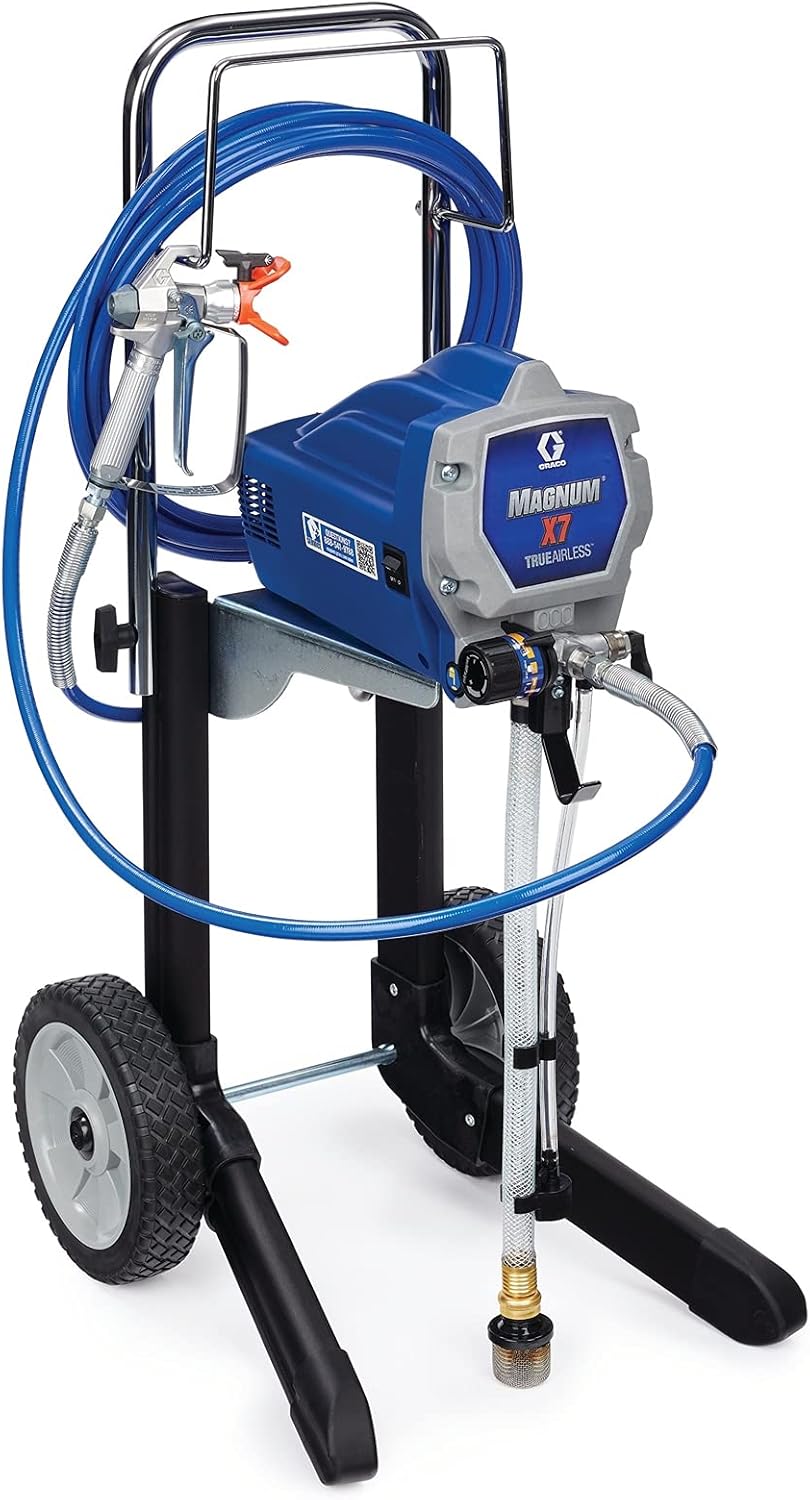 |
Graco Magnum X7 | Great for bigger DIY projects. Strong Graco brand trust. Good option for full kitchen cabinet refinishing. Works directly from paint buckets. |
Check Price |
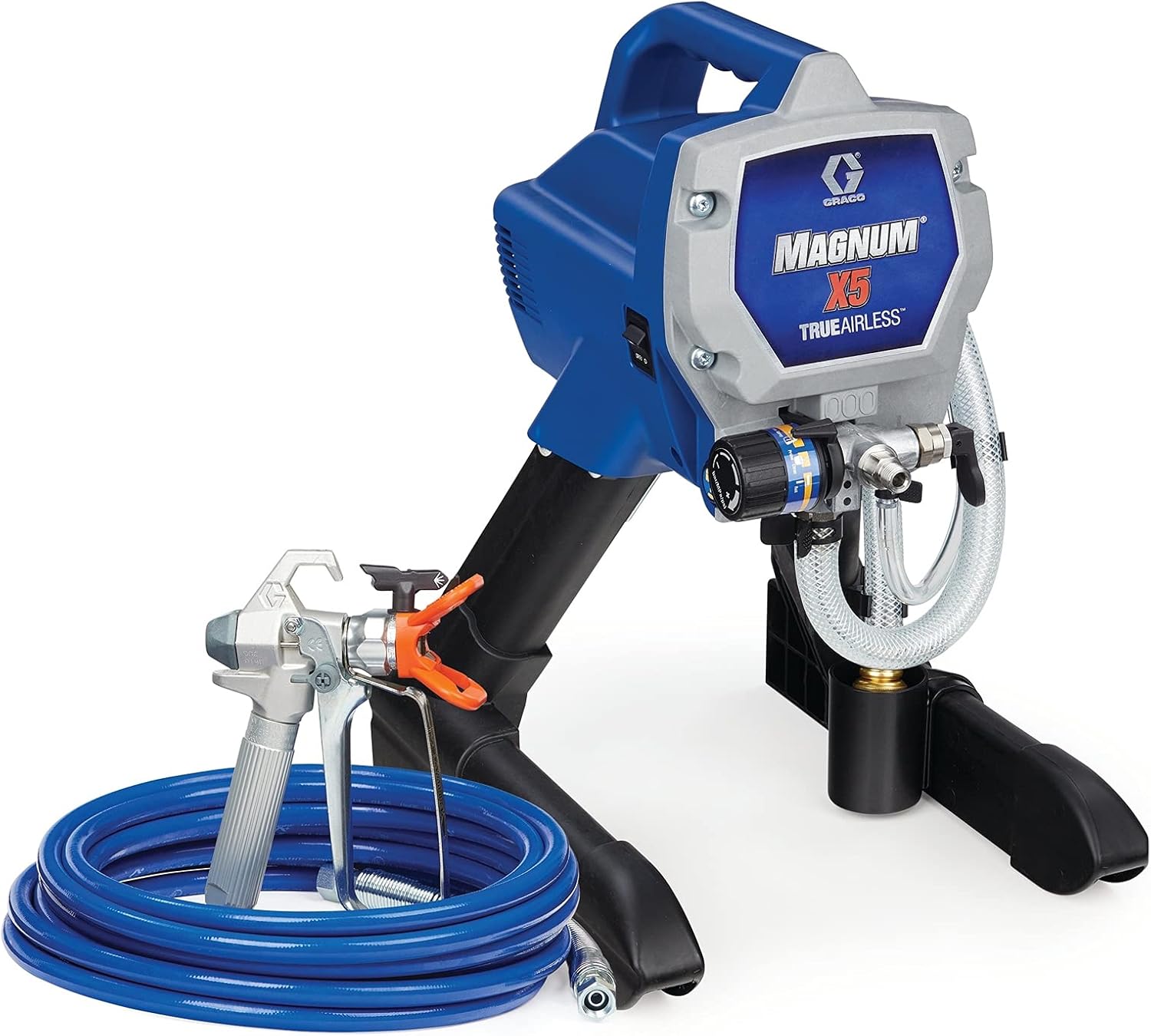 |
Graco Magnum X5 | Good for cabinets, doors, walls, trim, and fences. More manageable than the X7 for many homeowners. Reaches up to 3000 PSI. Strong option for medium-size home projects. |
Check Price |
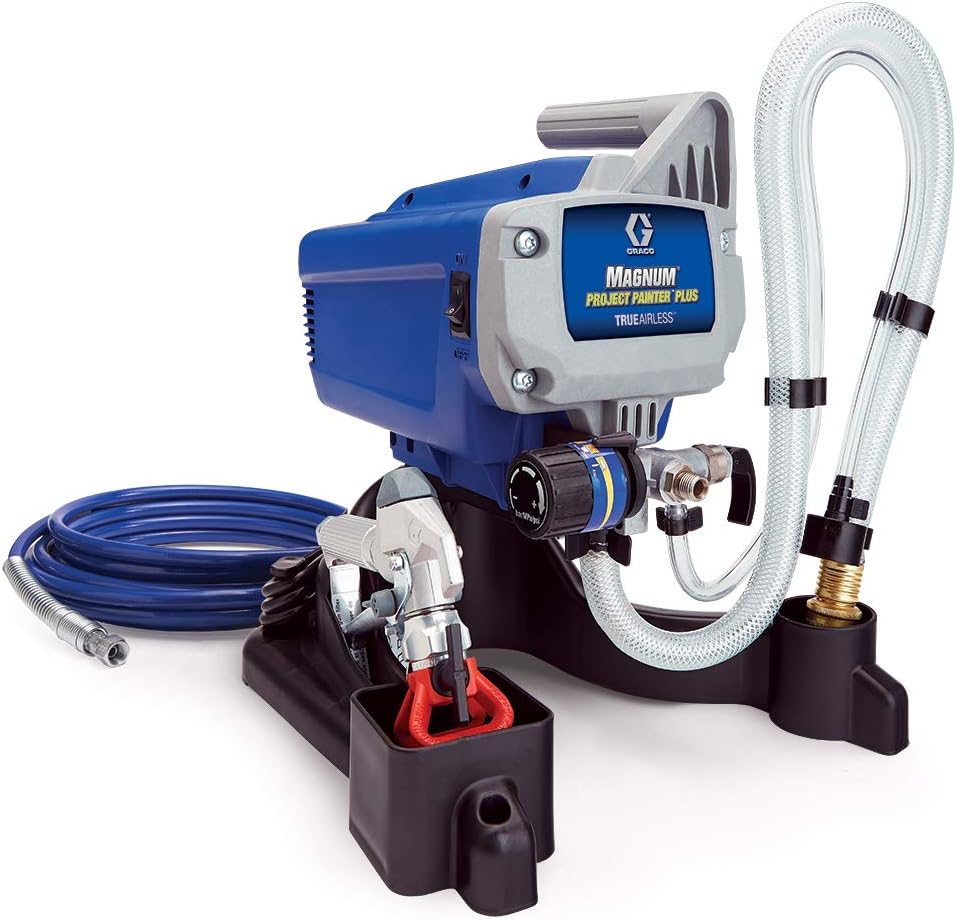 |
Graco Magnum Project Painter | Lower price than X5 and X7. Adjustable pressure control. Good entry point into Graco airless sprayers. Practical for small cabinet and home projects. Useful for budget-conscious DIYers. |
Check Price |
 |
MaXpray M1 | Lower price than many Graco models. Beginner-friendly positioning. Useful for DIYers who want value first. Comes with helpful accessories. Good alternative for simple home projects. |
Check Price |
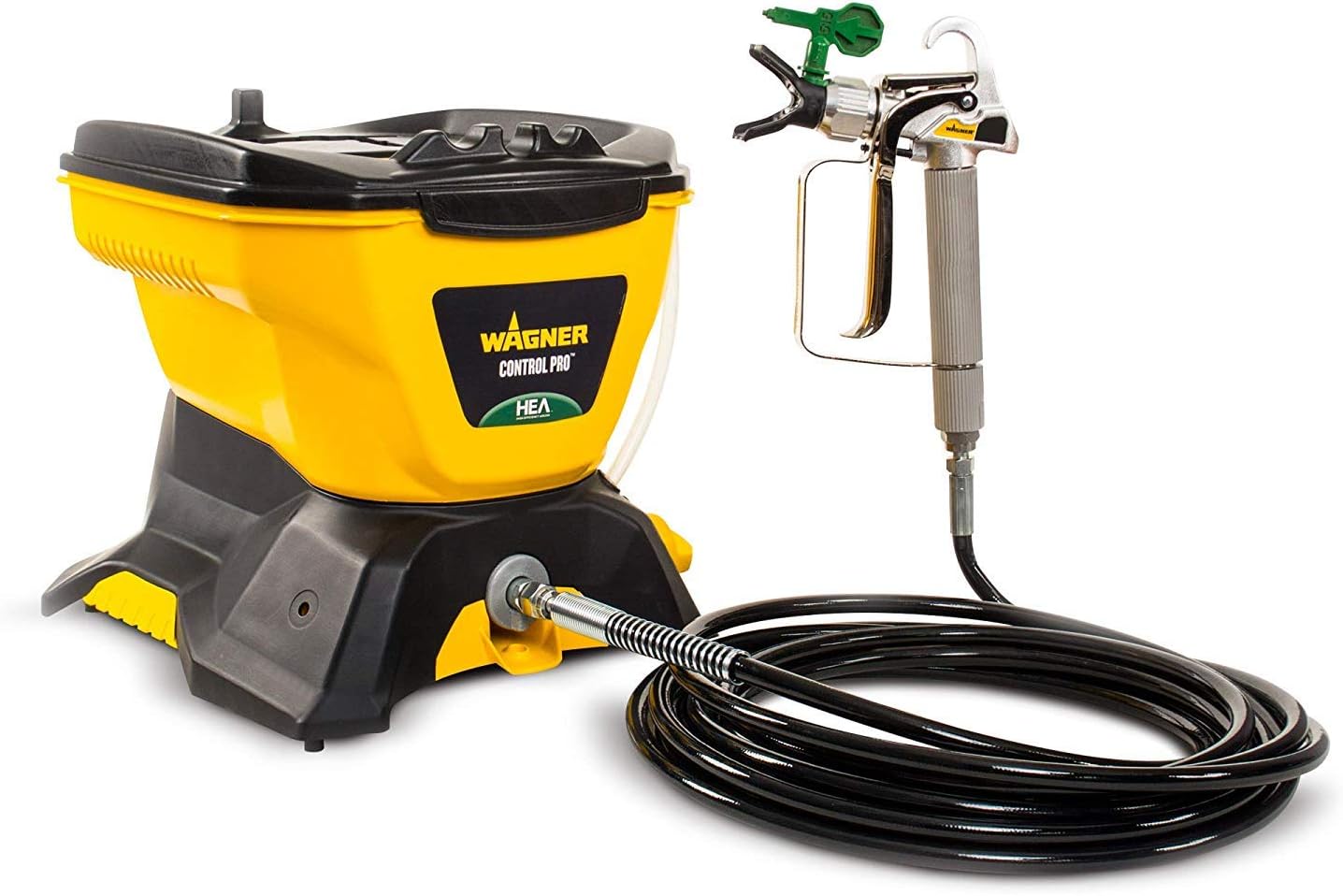 |
Wagner Control Pro | Lower overspray focus Softer spray pattern. Simple tank-style design. Useful for beginners who fear messy spraying. Good choice for controlled DIY painting. |
Check Price |
 |
Graco TrueCoat 360 Dual Speed | Compact handheld design Good for smaller projects. No thinning required. Easier to store than stand/cart sprayers. Nice option for touch-ups and small cabinet sets. |
Check Price |
What to Look For Before You Buy an Airless Sprayer for Cabinets
The seven machines in this guide range from a compact handheld tool to cart and stand systems meant for substantially larger projects. Before choosing between them, I would focus on how the sprayer will fit the work you actually plan to do.
Start with the size of the cabinet project
A small vanity, built-in, or several replacement doors does not demand the same paint-delivery system as a full kitchen with twenty or thirty fronts. A handheld unit can make the smaller job simpler because setup is compact and there is no long suction tube or large bucket to manage.
A full kitchen changes that calculation. Continuous paint supply becomes more valuable, especially when you are spraying multiple doors laid out on racks. The Graco X5, X7, Project Painter Plus, MaXpray M1, and Titan ControlMax 1700 can all work from a separate coating container, while the Wagner’s 1.5-gallon tank provides another form of continuous supply.
Check the maximum supported tip, then check the tip family you actually need
Maximum tip size tells you what the pump can support. It does not tell you which tip is ideal for cabinets. The Graco Project Painter Plus and X5 support tips up to 0.015 inch, while the X7 supports up to 0.017 inch. Titan lists a 0.017-inch maximum for the ControlMax 1700. Those ceilings matter if you also plan to spray heavier coatings elsewhere.
For cabinet work, the more practical question is whether the machine accepts a fine-finish tip that matches your enamel or primer. Check the sprayer maker’s current compatibility information rather than assuming every tip guard and tip family crosses between brands. Titan’s ControlMax system, for example, is designed around ControlMax-compatible tips, hoses, and guns.
Think about pressure control as a finishing tool
The Graco X5, X7, and Project Painter Plus use adjustable pressure control, which gives you room to tune the fan rather than simply accepting one output level. The Titan ControlMax 1700 also uses adjustable pressure within its HEA system. MaXpray M1 is likewise built around adjustable pressure for DIY work.
The Wagner Control Pro 130 is simpler. The current T2 version is presented as a single-speed HEA sprayer. That simplicity can be friendly for broad projects, but cabinet painters should pay extra attention to tip selection and practice because you have less pressure adjustment to work with.
Decide whether lower overspray is a priority
Overspray is not just wasted paint. Indoors, it also increases the masking burden. Cabinet doors are often sprayed in a garage, temporary booth, or controlled work area precisely because atomized paint can travel farther than expected.
Wagner and Titan both use High Efficiency Airless technology designed to create a softer-edged fan and reduce overspray compared with traditional airless spraying. Wagner states up to 55 percent less overspray for the Control Pro 130, and Titan makes the same up-to-55-percent comparison for the ControlMax HEA system. Those are manufacturer comparisons, not a promise that masking becomes optional. You still need to isolate the work area properly.
Hose length matters more on whole-room projects than on a door rack
The Project Painter Plus supports up to 50 feet of hose, the X5 up to 75 feet, and the X7 up to 100 feet. Titan lists the ControlMax 1700 with a 30-foot hose in the package and support for longer ControlMax hose setups within its published limit.
For detached cabinet doors arranged near the sprayer, extremely long hose capacity is not a major advantage. For a renovation where you also plan to spray walls, ceilings, fences, or exterior surfaces, the extra reach becomes more useful. Longer hose also means more material in the line and more cleaning, so it is not automatically better for a one-room cabinet project.
Consider how you will clean and store the machine
Cleanup is part of the ownership experience. Graco’s X5, X7, and Project Painter Plus include a Power Flush connection designed to attach to a garden hose for water-based material cleanup. MaXpray uses a Flush-Ease connection. Wagner’s gravity-fed tank is designed for rinse-and-flush cleanup. Titan requires its own cleaning and pressure-relief process through the suction, return, hose, and gun system.
Handheld cleanup is different. The TrueCoat uses disposable-or-reusable FlexLiner bags and a compact fluid path. That can be more convenient for small batches, but you still need to clean the tip, inlet filter, and wetted components correctly.
Buy for the work you will repeat, not the biggest job you can imagine
The X7 and Titan ControlMax 1700 make sense when cabinets are one part of a larger renovation plan. The X5 sits in a useful middle ground for homeowners who want direct-from-container spraying without moving to the larger X7 cart. Project Painter Plus lowers the scale another step.
The TrueCoat 360 Dual Speed makes more sense when portability and short setup matter more than uninterrupted paint supply. Wagner’s tank system suits people who like an integrated paint reservoir, while MaXpray M1 appeals to buyers who value an accessory-rich DIY package.
That is the decision I would make first. Once the project size is honest, the specifications become much easier to interpret.
Graco Magnum X7 262805 – Built for a Full Kitchen and Larger Projects Beyond It
The Graco Magnum X7 is the largest Graco DIY stand/cart machine in this group. It uses a built-in cart, draws coating through a flexible suction hose from a 1- or 5-gallon container, and has adjustable pressure control. Graco rates it for a maximum 0.017-inch tip, up to 0.31 gallon per minute, and up to 100 feet of hose.
Those numbers matter less for a cabinet door than they do for the projects that may come after it. The X7’s real advantage is headroom. If you are refinishing a full kitchen now and expect to spray interior walls, exterior siding, fences, or decks later, the X7 gives you a larger tip ceiling and hose capacity than the X5.
For cabinet work, that extra capacity has to be restrained. The included 515 TrueAirless tip is a general-purpose tip, not automatically the tip I would choose for every cabinet enamel. Pairing the X7 with a Graco fine-finish tip that suits the coating and dialing pressure down until the pattern is clean is more important than exploiting the machine’s maximum output.
Key features translated into practical benefits
The hardened stainless-steel piston pump is designed to spray unthinned architectural coatings at high pressure. For a homeowner, the useful part is not the material name itself; it is that the pump is built for direct airless delivery rather than a small-cup system that depends on frequent refilling.
The flexible suction hose lets the machine feed from a 1- or 5-gallon container. On a full kitchen, that keeps your spraying rhythm more consistent because you can prepare a larger batch of strained, mixed coating and work through many doors without stopping every few minutes.
The cart is helpful when the X7 is used around a house or moved with a five-gallon container. In a dedicated cabinet-spraying corner it occupies more floor space than the X5 or Project Painter Plus, so the cart is valuable mainly if this sprayer will serve more than one kind of project.
The X7 supports up to 100 feet of hose and a maximum 0.017-inch tip. That expands its usefulness for larger coatings and longer-reach projects. It does not mean you should use the maximum hose or tip for cabinet doors. A shorter practical hose run and a suitable fine-finish tip keep a cabinet setup easier to manage.
The Power Flush adapter can connect to a garden hose for cleaning water-based coatings. That is useful after a large job, but it still does not eliminate the need to clean the gun, filters, tip, suction components, and any paint remaining in the system.
- Adjustable pressure, direct-from-container paint delivery, and support for a broad Graco tip system give the X7 enough flexibility to move from cabinet refinishing to much larger household painting jobs.
- Its 0.017-inch maximum tip size, 0.31 GPM rating, and 100-foot maximum hose support provide more project headroom than the smaller Graco machines here, which is useful if cabinets will not be your only use.
- The built-in cart makes a heavy paint container easier to move around a larger work area and keeps the pump at a convenient working height.
- Power Flush support is practical for owners who regularly spray water-based materials and want a more direct cleanup route than manually moving rinse water through every part of a long system.
- The cart, hose capacity, and higher output are more machine than a few cabinet doors require, so a small one-time job can mean unnecessary setup and cleanup.
- Its included 515 tip is aimed at broader general painting, so cabinet-focused buyers should budget attention for a coating-appropriate fine-finish tip rather than assuming the stock setup is ideal.
Who It’s Best For
The X7 suits a homeowner who is refinishing a full kitchen and expects the sprayer to earn its space on future wall, fence, deck, or exterior projects. It is especially sensible if long hose reach and the ability to handle a wider range of coatings matter beyond the cabinet job.
Not Ideal For
It is not the most sensible choice for a bathroom vanity, several doors, or occasional furniture touch-ups. In those cases, a smaller stand sprayer or handheld machine is easier to store, prime, and clean.
Graco Magnum X5 262800 – A More Manageable Stand Sprayer for Serious DIY Cabinet Work
The Magnum X5 sits one step below the X7 in Graco’s DIY range, and that position makes sense for cabinet refinishing. It still draws from 1- or 5-gallon containers, still provides adjustable pressure, and still uses a hardened stainless-steel piston pump, but its frame is compact rather than cart-based.
Graco lists the X5 at up to 3,000 PSI, 0.27 gallon per minute, a maximum 0.015-inch tip, and up to 75 feet of hose. Those limits are ample for a homeowner’s cabinet project and many other interior or exterior jobs. More importantly, the adjustable pressure gives you a useful way to tame the spray for smaller surfaces.
The X5 is not a dedicated fine-finish cabinet machine. It is a versatile airless sprayer that can be configured for finer work. That distinction keeps expectations realistic: the quality of your cabinet finish still depends on the correct tip, properly prepared coating, clean filtration, test spraying, distance, overlap, and coat thickness.
Key features translated into practical benefits
The X5’s flexible suction tube feeds directly from a paint container. For a full kitchen, this is much more convenient than filling a small cup repeatedly. It also lets you keep a consistent mixed batch, which can reduce small viscosity changes caused by topping up a cup at different times.
Adjustable pressure is one of its strongest cabinet-related features. You can begin at a lower setting and raise pressure only until the fan atomizes evenly. That helps limit unnecessary bounce-back and overspray around small parts.
The maximum 0.015-inch tip is lower than the X7’s 0.017-inch limit, but it is still enough for the range of materials most homeowners would reasonably put through a cabinet-focused DIY setup. Always match the actual tip to the coating instructions rather than selecting by maximum size.
The X5 includes an SG2 metal spray gun, 515 tip, and 25-foot hose, while supporting up to 75 feet of hose. The included length is already enough for a typical door rack or kitchen work zone. The longer limit becomes useful if the machine later moves into larger rooms or exterior work.
- The X5 combines adjustable pressure, direct suction from larger paint containers, and a compact stand frame, giving a full-kitchen DIYer useful capacity without the X7’s cart footprint.
- Its 0.27 GPM rating and 75-foot maximum hose support leave enough capacity for broader home projects after the cabinets are finished.
- Graco’s Power Flush connection simplifies the first stage of water-based cleanup, which is valuable because a long fluid path can otherwise make an airless system feel tedious after a full day of spraying.
- The machine’s 0.015-inch maximum tip size is well aligned with common DIY architectural coatings while still allowing the user to choose narrower fine-finish tips for detailed work when compatible.
- The included 515 tip is broader than many cabinet jobs need, so the machine’s cabinet performance depends heavily on choosing a more appropriate fine-finish setup.
- It still requires a hose, suction tube, bucket, priming routine, and thorough flushing, which is more cleanup than a handheld sprayer demands on a tiny project.
Who It’s Best For
The X5 is a strong fit for a homeowner repainting a complete kitchen who wants one sprayer that can also handle doors, trim, walls, fences, or future renovations. It makes the most sense when direct-from-bucket spraying is valuable but the X7’s larger cart and tip capacity are unnecessary.
Not Ideal For
It is not ideal for someone who wants the shortest possible setup for two or three cabinet fronts. A compact handheld unit is easier to bring out, fill, and put away for that scale of work.
Graco Magnum Project Painter Plus 257025 – A Smaller Graco Stand System for Occasional Projects
The Magnum Project Painter Plus is Graco’s lighter-duty stand option in this group. Graco currently lists it with adjustable pressure, direct suction from 1- or 5-gallon containers, a maximum 0.015-inch tip, 0.24 gallon-per-minute flow, and support for up to 50 feet of hose.
For cabinets, the important thing is that you still get the basic architecture of a full airless stand sprayer without stepping up to X5 or X7 output. It can work well for a homeowner who wants to spray a kitchen and expects only occasional painting projects after that.
Its lower flow and shorter maximum hose are not meaningful disadvantages on a door rack. They matter only if you plan to grow into larger exterior work or very long hose runs. In fact, keeping the setup modest can be a benefit if the machine is stored between projects.
Key features translated into practical benefits
The stainless-steel pump and adjustable pressure control let the Project Painter Plus spray unthinned architectural coatings while still giving you control over flow. For cabinet work, the ability to reduce pressure and test the fan is more useful than simply having high maximum pressure.
The machine draws directly from 1- or 5-gallon paint containers. That keeps it suitable for a full kitchen even though the machine itself is smaller than the X5 and X7. You can work through a larger batch without continually interrupting the spray pattern to refill a handheld cup.
Graco includes an SG2 gun, 515 tip, and 25-foot hose. The machine supports compatible tips from 0.009 through 0.015 inch according to the current specification page. That gives useful room for smaller-orifice applications, provided the chosen tip is appropriate for the cabinet coating.
The 50-foot maximum hose limit is more than enough for most cabinet layouts. It is lower than the X5 and X7, so homeowners who want one sprayer for a large property should think about whether that future reach matters.
- It provides Graco’s adjustable-pressure, direct-from-container airless format in a smaller stand machine, which is a practical combination for occasional kitchen refinishing.
- The 0.009- to 0.015-inch compatible tip range gives useful flexibility for different coatings without pushing the machine toward the heavier-output role of the X7.
- A 25-foot included hose keeps a cabinet setup straightforward, while the 50-foot maximum still leaves room for larger rooms when needed.
- Power Flush compatibility helps make water-based cleanup less cumbersome after a long spray session.
- Its lower flow and shorter hose ceiling give it less room to grow than the X5 or X7 if future projects become much larger.
- Like the other stand sprayers, it requires full hose and pump cleanup even when the actual cabinet job is fairly small.
Who It’s Best For
This model suits a DIYer who wants a recognized stand-style airless system for a kitchen, several rooms, or periodic home projects but does not need the capacity of the X5 or X7.
Not Ideal For
It is not ideal for someone who expects frequent large exterior jobs, very long hose runs, or heavier coatings that benefit from a larger supported tip.
MaXpray M1 – An Accessory-Rich DIY Setup With Direct Paint Supply
The MaXpray M1 is positioned by InoKraft as a DIY airless system for projects up to about 10 gallons. It uses a stand-style pump, a 25-foot paint hose, an AtoMax 515 reversible tip, and an InoFlex spray gun with a swivel joint. The current package also includes a 12-inch tip extension, protective goggles, cleaning accessories, and tools for assembly.
That bundle is part of the M1’s appeal. Someone buying a first airless sprayer may not already own the small accessories that make setup and cleanup less awkward. Including them reduces the number of separate purchases needed to get started.
For cabinets, however, I would not let the number of included accessories distract from the core setup. The stock 515 tip is still a general painting tip. Cabinet enamel usually rewards a smaller, coating-matched fine-finish setup, so check which compatible tips are available before assuming the included tip is the one you will use on doors and drawer fronts.
Key features translated into practical benefits
InoKraft describes the M1 as capable of spraying without pre-thinning for many common DIY coatings. That can save preparation time, but it is still important to strain paint and follow the coating maker’s airless instructions. “No thinning needed” does not mean every enamel behaves identically at every temperature or through every tip.
The InoFlex gun includes a 360-degree swivel joint. A swivel can make hose handling less tiring because the hose does not fight your wrist as strongly when you turn around a rack or reposition between doors. That is a small feature, but on a long cabinet session it can matter more than a dramatic pressure claim.
The Flush-Ease connection is designed to speed cleaning by connecting the machine to a water source. Cabinet refinishing usually involves primer and finish coats on different days, so a cleanup system that encourages thorough flushing is genuinely useful.
The 12-inch tip extension is more relevant for ceilings, walls, or hard-to-reach surfaces than for cabinet doors on a rack. Still, it broadens the machine’s future use. The included goggles are also sensible because airless atomization and high-pressure material require proper eye protection.
- The package includes the hose, spray gun, reversible tip, extension, goggles, cleaning tools, and setup hardware, giving a first-time owner a more complete starting kit than a bare machine.
- The swivel-joint gun can reduce hose twist and make it easier to keep the gun square to cabinet doors as you move across a rack.
- Direct paint supply and a 25-foot hose make the M1 better suited to a full kitchen than a tiny handheld cup system that needs constant refilling.
- Its cleaning connection and detailed support materials are useful for a new airless owner because poor cleanup is one of the fastest ways to create future clogging and priming problems.
- The included 515 tip is aimed at broader general painting, so cabinet work may require an additional compatible fine-finish tip.
- Its brand ecosystem is smaller than Graco’s, so buyers who care heavily about long-term local parts availability should check support in their area before committing.
Who It’s Best For
The MaXpray M1 fits a DIYer who wants a complete airless starter package for a kitchen plus other home projects and values included accessories more than a long-established contractor-oriented parts network.
Not Ideal For
It is not ideal for someone who already owns airless accessories and wants the deepest possible selection of locally stocked guns, tips, filters, and service parts.
Wagner Control Pro 130 – A Gravity-Fed HEA System for Softer Spray Behavior
The Wagner Control Pro 130 is different from the bucket-fed stand machines above. It uses a 1.5-gallon gravity-fed tank built into the sprayer, a 25-foot hose, and High Efficiency Airless technology. Wagner says the HEA system reduces overspray by up to 55 percent compared with traditional airless spraying and produces a softer-edged fan.
For cabinet work, that softer behavior is attractive because overspray and bounce-back are two of the biggest practical annoyances in a temporary spray area. The machine still needs masking and ventilation, but a more controlled fan can make the spraying process feel less aggressive than a conventional high-pressure setup.
The current Control Pro 130 configuration is single-speed, so control comes more from the HEA tip system, your material choice, gun movement, and distance than from a broad variable-pressure range. That makes technique and tip selection especially important on small cabinet parts.
Key features translated into practical benefits
The 1.5-gallon hopper keeps paint supply integrated with the machine. You do not need to place a suction tube in a separate bucket, and the gravity feed helps with priming. For a kitchen-sized project, the tank is large enough to reduce frequent refills while remaining more compact than working around a five-gallon pail.
Wagner includes a 515 HEA tip with a roughly 10-inch spray pattern. That is useful for walls and broad surfaces, but ten inches can be wider than you want for narrow cabinet rails. Before spraying cabinetry, check Wagner’s current smaller-tip compatibility and match the tip to the enamel or primer.
The 25-foot hose gives enough reach for a typical door rack or garage spraying area. Because the paint sits in the tank rather than a remote bucket, the entire unit is best positioned where you can keep the hose relaxed and avoid pulling the machine as you work.
The T2 version uses a lightweight reinforced-polymer spray gun with an integrated filter and swivel hose connection. Less gun weight can help during repetitive spraying, especially when you are coating door after door.
- Wagner’s HEA system is designed to produce a softer fan with up to 55 percent less overspray than traditional airless spraying, which is useful in a carefully masked cabinet work area.
- The 1.5-gallon gravity-fed tank keeps paint supply self-contained and can make priming less fussy than a suction tube sitting in a separate pail.
- The 25-foot hose and lightweight gun provide enough reach for most cabinet setups without turning the job into a long-hose cleanup exercise.
- The integrated tank is convenient for users who prefer pouring a controlled batch into the machine rather than managing a full paint bucket beside the sprayer.
- The single-speed design offers less direct pressure tuning than the variable-pressure stand sprayers, so cabinet control depends more heavily on tip choice and technique.
- The supplied 515 HEA tip is broad for many cabinet parts and may not be the tip you ultimately use for fine-finish enamel work.
Who It’s Best For
The Control Pro 130 suits a homeowner who values a self-contained tank, a softer HEA spray pattern, and straightforward setup for a kitchen or other medium-sized painting jobs.
Not Ideal For
It is not ideal for a user who wants fine pressure adjustment from the machine itself or who prefers drawing directly from the original paint container throughout a large project.
Graco TrueCoat 360 Dual Speed 26D281 – Compact Handheld Control for Smaller Cabinet Jobs
The TrueCoat 360 Dual Speed is the most compact sprayer here. It is a corded handheld airless unit designed by Graco for paint and stain projects of about two gallons or less. It uses FlexLiner paint bags, can spray in different orientations without losing prime, and provides two speed settings: low for more detailed work and high for larger surfaces.
That project-size guidance matters. A handheld tool can feel ideal when you are refinishing a vanity, a built-in cabinet, several doors, or a furniture piece. The same cup-based system becomes less convenient when dozens of kitchen doors require repeated refilling.
The TrueCoat also differs from the stand machines because the weight of the paint supply is in your hand. A 32-ounce cup is manageable, but it adds to the tool weight while spraying. For short sessions that is a fair trade for portability. For hours of continuous cabinet work, a remote pump and lightweight gun can feel easier.
Key features translated into practical benefits
The dual-speed system gives a simple form of output control. Low speed is the sensible starting point for narrow cabinet pieces and detail work, while high speed is useful when you move to larger panels or unrelated projects.
Graco’s FlexLiner system allows the sprayer to operate in different orientations, including positions that would make a rigid gravity cup lose feed. That is helpful around cabinet edges, furniture shapes, and awkward angles, although the best finish still comes from keeping the spray fan square to the surface whenever possible.
The current 26D281 package includes narrow and wide paint tips plus narrow and wide stain tips. Having multiple tips in the box gives the handheld more flexibility than a one-tip package. You still need to confirm that the paint tip and coating combination is appropriate for the enamel you plan to spray.
No pre-thinning is required for supported materials according to Graco’s current product guidance. That keeps setup simple, but filtering and correct viscosity still matter. If a coating maker gives specific airless requirements, those instructions should take priority.
- The handheld format eliminates a separate stand, long suction tube, and remote paint bucket, making it quick to set up for vanities, furniture, doors, and smaller cabinet batches.
- Low and high speed settings give simple control without requiring a full pressure dial, and low speed is useful for detail-oriented work.
- The FlexLiner system supports multi-angle spraying and makes paint-bag cleanup more compact than flushing a long stand-sprayer hose.
- Multiple included paint and stain tips make the package adaptable to more small projects without immediately buying a complete tip set.
- The small paint supply means more refilling during a full kitchen, which can interrupt a long cabinet spraying session.
- You carry both sprayer and paint in your hand, so the setup can become more tiring than a remote-pump gun when many doors need multiple coats.
Who It’s Best For
The TrueCoat 360 Dual Speed is best for smaller cabinet projects, bathroom vanities, built-ins, furniture, doors, and users who place compact storage and quick setup ahead of continuous paint supply.
Not Ideal For
It is not ideal for a large kitchen where uninterrupted spraying matters more than portability. A stand machine drawing from a larger container will usually make that workflow smoother.
Titan ControlMax 1700 0580009 – Higher-Flow HEA Spraying With Adjustable Pressure

The Titan ControlMax 1700 is a stationary HEA sprayer with a 0.60-horsepower motor, 0.33 gallon-per-minute flow rating, 1,500 PSI maximum operating pressure, and support for up to a 0.017-inch tip. The package uses a 30-foot hose and draws paint through a suction system rather than an onboard cup or hopper.
Titan’s HEA design is intended to reduce overspray by up to 55 percent compared with traditional airless systems while producing a softer spray pattern. That makes the 1700 interesting for cabinet work because it combines the continuous supply and pressure adjustment of a stand machine with a lower-pressure HEA approach.
Its published output is higher than the smaller ControlMax 1500 and higher than the Graco X5’s flow rating, but cabinet painters should not interpret that as permission to move faster. On doors, the machine still needs a suitable smaller tip, restrained pressure, and a deliberate overlap pattern.
Key features translated into practical benefits
The ControlMax 1700 supports a maximum 0.017-inch tip, giving it room to handle a range of architectural coatings. Cabinet finishing normally uses much smaller openings than that ceiling, but the capacity is useful if the machine will later handle walls, fences, or exterior materials.
The included 30-foot hose is a comfortable length for a door rack and gives more reach than the 25-foot hoses bundled with several competing machines. Titan publishes support for longer compatible hose setups as well, which broadens the sprayer’s future use.
Adjustable pressure works with the HEA tip system to let you tune output for the coating. Start low and increase only until the fan becomes clean. That approach is especially important on cabinet faces where a heavy wet pass can sag at edges.
Titan specifies ControlMax-compatible guns, hoses, and tips for this system. That is worth knowing before buying accessories. Do not assume a standard airless part from another brand will fit or perform correctly just because the thread or visual shape looks similar.
- The combination of adjustable pressure and HEA spray behavior gives the 1700 a useful balance of continuous airless output and softer fan control for a carefully set up cabinet job.
- Its 0.33 GPM flow, 0.017-inch maximum tip, and longer-hose support leave substantial capacity for larger household painting after the kitchen is finished.
- The 30-foot included hose gives generous reach around a spray area without forcing an immediate hose upgrade.
- Direct suction from a paint container reduces refill interruptions on a full set of doors and drawer fronts.
- ControlMax uses its own compatible tip, hose, and gun system, so accessory shopping requires more attention than simply grabbing any generic airless part.
- Its capacity is unnecessary for a few small doors, where the priming and flushing routine can outweigh the benefit of continuous paint supply.
Who It’s Best For
The ControlMax 1700 suits a homeowner or serious DIYer who wants an HEA stand sprayer for a full cabinet project plus larger future work and values adjustable pressure with a softer spray pattern.
Not Ideal For
It is not ideal for someone seeking the smallest possible machine or the quickest cleanup after short touch-up sessions.
How the Seven Sprayers Differ in Actual Cabinet Use
The seven products look more similar on a shopping page than they feel in a workspace. The most useful comparison is not which one has the highest pressure. It is how each setup changes paint supply, gun handling, cleanup, and the amount of control available at the door surface.
For a full kitchen with more projects planned later
The Graco X5, X7, and Titan ControlMax 1700 are the strongest fits if you want one machine for cabinets and larger jobs. All three give continuous paint supply and enough hose flexibility to work across a sizeable area.
Choose the X7 when future large projects and maximum hose reach matter most. Choose the X5 when you want a more compact stand and do not need the X7’s extra tip and hose capacity. Choose the Titan when HEA spray behavior and lower conventional-airless pressure are especially appealing.
For a full kitchen without much interest in oversized future work
The Project Painter Plus is easier to justify if the cabinet project is substantial but your future use will stay moderate. It gives direct paint supply, adjustable pressure, and a useful compatible tip range without the X7’s larger-project emphasis.
The MaXpray M1 also makes sense here if the included accessories and DIY-focused support package appeal to you. Its swivel gun and cleaning connection are practical, but check compatible fine-finish tip availability before buying.
For people especially worried about overspray
The Wagner Control Pro 130 and Titan ControlMax 1700 both use HEA systems designed to reduce overspray relative to traditional airless spraying. Titan gives you a bucket-fed stand with adjustable pressure, while Wagner gives you a gravity-fed 1.5-gallon tank and simpler single-speed operation.
Neither one removes the need for masking. Cabinet overspray is fine and mobile, and even a reduced-overspray system can coat nearby surfaces if the work zone is not isolated.
For a vanity, built-in, or small set of doors
The Graco TrueCoat 360 Dual Speed is the clear small-job specialist. It stores compactly, carries its paint supply in the handheld cup, and avoids long-hose cleanup. Its trade-off is refill frequency and hand weight.
For a small project, that trade makes sense. For thirty cabinet fronts, the convenience can reverse because repeated filling becomes the thing slowing you down.
How to Set Up an Airless Sprayer for a Cleaner Cabinet Finish
Airless spraying rewards routine. The machine may differ, but the order of preparation matters across all seven products. Do the boring work first, then let the sprayer do the fast part.
1. Remove doors, drawer fronts, hardware, and hinges
Label every door and hinge position before moving anything. Cabinet boxes can be sprayed in place if the room is masked correctly, but doors and drawer fronts are easier to finish when laid flat or mounted on a proper rack.
Bag screws by location. Small organizational steps prevent a freshly painted kitchen from turning into a hinge-matching puzzle during reassembly.
2. Degrease before sanding
Kitchen cabinets collect cooking oils, hand residue, cleaner films, and airborne grease. Sanding a dirty surface can grind contamination into the old finish instead of removing it.
Use a cleaner appropriate for the existing cabinet surface and follow its rinse instructions. Let the surface dry fully before moving to abrasion.
3. Scuff the existing finish and repair defects
The goal is usually to dull the old surface and create a uniform bonding profile, not to sand all the way to bare wood. Repair dents, open seams, loose veneer, or damaged edges before primer.
Vacuum thoroughly after sanding. Fine dust left in corners will travel into wet coating and become visible exactly where you wanted a smooth finish.
4. Mask the room more aggressively than you think you need
Airless paint can travel beyond the obvious spray fan. Cover floors, walls, counters, appliances, openings, and anything else that should not receive atomized coating.
If you are spraying in a garage or temporary booth, plan airflow without directing dust onto the work. Overspray control and ventilation need to work together.
5. Strain and mix the coating consistently
Stir primer or enamel thoroughly, then strain it if the sprayer or coating instructions call for it. Small dried particles are enough to clog a fine tip or create a defect on a cabinet face.
If you have multiple cans of the same color, boxing them together can reduce small color variation. Keep the coating covered when you are not actively filling or feeding the sprayer.
6. Install a tip that matches both the coating and the part size
Read the coating maker’s airless tip recommendation first. Then confirm the selected tip is supported by the sprayer and guard you own.
A narrow cabinet rail and a wide slab door do not need identical fan widths. If your system lets you change tip size easily, use that flexibility rather than forcing one broad wall tip onto every part.
7. Prime the sprayer and test on scrap
Follow the machine’s exact priming procedure. Bucket-fed sprayers, hopper systems, and handheld FlexLiner tools all prime differently, and skipping steps can introduce air, delay pressure build, or create an erratic first spray.
Once primed, spray cardboard or scrap material. Look for an even fan without heavy edges. On adjustable-pressure machines, start lower and increase pressure gradually until the pattern is clean.
8. Keep the gun square and move before triggering
Hold the gun perpendicular to the surface rather than swinging your wrist in an arc. A curved wrist movement puts more coating in the center and less at the edges.
Begin moving, pull the trigger, maintain a steady distance, release the trigger, and then stop the pass. Overlap consistently. That rhythm reduces heavy spots at the start and end of each stroke.
9. Spray edges deliberately instead of flooding them
Cabinet edges collect paint quickly because overspray from the face can wrap around them. Use controlled passes and avoid repeatedly hitting the same edge from multiple directions while the coating is already wet.
Recessed profiles need the same restraint. A lighter first pass into details followed by controlled face passes is safer than trying to fill everything at once.
10. Let coats flash, dry, and cure according to the coating instructions
More paint is not a shortcut to a smoother finish. Heavy coats can sag, stay soft, or cure unevenly. Follow the recoat window for the actual primer or enamel you are using.
After the final coat, give doors enough cure time before stacking, hanging, or tightening hardware. Dry-to-touch and ready-for-normal-use are not the same thing.
Keeping an Airless Sprayer Reliable Between Projects
A neglected airless sprayer can turn a simple second project into a frustrating afternoon of clogged tips and weak priming. Maintenance is not complicated, but it has to happen before material dries inside the fluid path.
Relieve pressure before touching the tip or fluid system
Airless equipment can inject coating through skin at pressures that do not look dramatic from the outside. Follow the manufacturer’s pressure-relief procedure before clearing a clog, removing a tip, disconnecting a hose, or servicing the gun.
Never use your finger to test whether a tip is clogged. Treat any suspected injection injury as a medical emergency and tell medical staff that high-pressure injection is involved.
Flush the coating before it can dry
Water-based products are easier to clean while they are still wet. Use the maker’s recommended flushing process and continue until the discharged cleaning fluid is clear enough for the procedure being followed.
Solvent-based materials require the cleaning fluid specified by the coating and sprayer manufacturers. Do not improvise with flammable solvents that the sprayer is not designed to handle.
Clean filters and tips separately
A machine can appear clean while a small gun filter or inlet screen is still loaded with pigment. Remove and clean serviceable filters according to the manual.
Reversible tips are designed to help clear a clog during spraying, but reversing a tip is not a substitute for cleaning it at the end of the job. Dried coating changes the spray pattern and can permanently damage a worn tip.
Use storage fluid when the manufacturer calls for it
Several of these sprayers include or recommend pump-protection fluid for storage. Follow the exact storage procedure for the machine rather than leaving plain water in the pump.
Store hoses without tight kinks, protect the spray gun from impact, and keep tips labeled if you own several sizes. A small parts box for guards, seals, and filters can save time the next time the sprayer comes out.
Spraying Habits That Quietly Ruin Cabinet Finishes
A cabinet finish often goes wrong because of one small choice repeated across twenty doors. These problems are easier to prevent than to sand out later.
Using the included 515 tip simply because it came in the box
Several machines here ship with a 515 tip because it is useful for general architectural painting. That does not automatically make it the right cabinet tip. A broad fan can waste material past narrow parts and an oversized orifice can lay down a heavy film.
Check the enamel’s recommended tip range and select a compatible fine-finish tip for the actual part width. Test before starting the first door.
Turning pressure up instead of diagnosing the fan
When a spray pattern looks uneven, it is easy to keep increasing pressure. Sometimes that is necessary, but a dirty filter, worn tip, thick material, or incompatible tip can create the same symptom.
Raise pressure only after checking the simple causes. Excess pressure increases overspray and can make a small cabinet part harder to control.
Spraying the doors before learning the machine on scrap
Every sprayer has a different trigger feel, hose pull, and pressure response. Practice on cardboard until you can start and stop a pass cleanly and keep a consistent distance.
Then test on a scrap board finished with the same primer and paint system if possible. A few minutes of practice is cheaper than sanding a run from the center of a drawer front.
Moving the gun in an arc
Your wrist naturally wants to pivot. That changes the gun-to-surface distance across each stroke and creates uneven film thickness.
Move your whole arm so the gun remains square and parallel. This feels less casual at first, but the resulting fan is much more predictable.
Trying to cover in one wet coat
Cabinet doors show runs, sags, edge buildup, and solvent entrapment quickly. Multiple controlled coats are safer than one heavy coat meant to hide everything.
Let the coating build according to its instructions. If coverage is weak, solve the preparation, primer, color, or coat-count problem rather than drowning the surface.
Ignoring temperature, airflow, and dry spray
A warm, fast-moving spray area can make droplets begin drying before they land, producing a rough surface. A cold or stagnant space can lengthen dry times and encourage sagging.
Stay within the coating maker’s application conditions and adjust airflow so it removes mist without blasting dust across wet doors.
Reinstalling doors as soon as the surface feels dry
Fresh enamel can feel dry and still be soft underneath. Hinges, bumpers, stacked doors, and hardware can imprint a finish that has not cured enough.
Give the coating the cure time its manufacturer recommends before returning the kitchen to normal use. Patience here protects all the work that came before it.
Safety Notes for Airless Cabinet Spraying
Airless spraying deserves more respect than a roller because the coating is pressurized enough to cause injection injury. Never point the gun at yourself or another person, keep the trigger lock engaged when the gun is not in use, and follow the pressure-relief procedure before servicing any pressurized part.
Ventilation matters too. Read the primer and paint safety data and application instructions. Use respiratory protection appropriate to the coating and work environment, protect eyes and skin, and keep ignition sources away from materials that can produce flammable vapors.
Masking protects the room, but it can also reduce airflow if you seal a work area carelessly. Plan safe ventilation before spraying begins. Keep children and pets completely outside the spray zone and away from wet coatings, hoses, cords, and tools.
Electrical safety is equally important. Use grounded outlets and extension cords that meet the sprayer manufacturer’s gauge and length requirements. Do not operate electrical spray equipment in wet conditions or use damaged cords.
Finally, treat the hose as a high-pressure component, not a normal garden hose. Inspect it for cuts, kinks, bulges, or damaged fittings. Replace a damaged high-pressure hose rather than attempting a makeshift repair.
Frequently Asked Questions About the Best Airless Paint Sprayer for Cabinets
Is an airless sprayer actually suitable for kitchen cabinets?
Yes, an airless sprayer can produce a very good cabinet finish when it is paired with a coating-appropriate fine-finish tip and used at controlled pressure. The machine is only part of the result; surface preparation, filtration, distance, overlap, and coat thickness matter just as much.
Which of these seven is easiest for a small cabinet project?
The Graco TrueCoat 360 Dual Speed is the most compact choice because it is handheld and designed for smaller projects. Its FlexLiner paint supply and short fluid path reduce setup, but the small cup means more refilling if the job grows into a full kitchen.
Which is better for a full kitchen, the Graco X5 or X7?
The X5 is sufficient for many full-kitchen DIY projects and takes up less space. The X7 makes more sense if you also want longer hose capability, a larger maximum tip, a cart, and more headroom for future exterior or high-volume painting.
Does lower maximum pressure mean the Titan or Wagner cannot spray cabinets well?
No. Maximum pressure by itself is not a cabinet-finish score. Titan and Wagner use HEA systems designed around lower pressure and softer spray behavior. The important question is whether the machine, compatible tip, and coating can produce a clean fan at a controllable output.
Do cabinet paints need to be thinned for these sprayers?
Many modern airless sprayers are designed to spray supported architectural coatings without pre-thinning, but the coating manufacturer’s instructions should decide this. Some products specify a tip range, filtration method, or maximum allowed thinning. Never thin solely because a generic tutorial tells you to.
What tip size should I use for cabinet doors?
There is no single tip size that is correct for every cabinet enamel. Start with the coating maker’s airless recommendation, then choose a fan width that suits the part. Narrow rails may need a narrower fan than a slab door. Confirm compatibility with the sprayer’s tip system before buying.
Is HEA better than conventional airless for cabinets?
HEA can be appealing because its softer spray pattern and reduced-overspray design make control easier in some indoor or semi-enclosed setups. Conventional adjustable-pressure airless machines can also work very well when pressure and fine-finish tip choice are handled carefully. The better system is the one you can configure correctly for your coating and project size.
How much masking do I need if the sprayer claims lower overspray?
A lot. Lower overspray is not zero overspray. Atomized paint can drift through doorways, settle on floors, and find uncovered hardware. Mask beyond the obvious spray target and isolate the work area before you pressurize the machine.
Choosing a Sprayer That Fits the Kitchen You Are Actually Refinishing
The best airless paint sprayer for cabinets is not automatically the most powerful machine in the group. A full kitchen with future exterior work points toward the Graco X5, X7, or Titan ControlMax 1700.
A moderate DIY workload can make the Project Painter Plus or MaXpray M1 more sensible. The Wagner Control Pro 130 is attractive if you value a gravity-fed tank and HEA spray behavior, while the TrueCoat 360 Dual Speed is the easiest fit for smaller cabinet sets and compact storage.
What matters most is how the sprayer behaves with the coating you plan to use. Check tip compatibility, choose a fan width suited to cabinet parts, test at the lowest pressure or speed that gives a clean pattern, and keep each coat controlled. Then give the finish enough time to cure before the doors go back into service.
A cabinet repaint already extends the useful life of something you own. Choosing a sprayer that matches that real project – rather than buying capacity you will never use – keeps the makeover practical too.
Compare the seven options against the size of your kitchen, the paint system, your cleanup tolerance, and the other projects you genuinely expect to tackle, then check the current product details before deciding.