Scandinavian design looks simple at first, but the rooms that feel genuinely convincing are rarely just white walls with pale furniture. What makes the style work is the balance between clarity and comfort: clean lines without harshness, natural materials without rustic clutter, practical storage without making the home feel like a showroom, and enough softness to make the space comfortable on an ordinary day.
The part of Scandinavian design I find most useful is that it gives everyday objects a clear role. A wooden table can stay because it is useful and honest, a wool throw can add warmth without becoming decoration for decoration’s sake, and a second-hand cabinet can work beautifully if its proportions, finish, and function suit the room. That makes the style surprisingly friendly to thoughtful reuse and slow decorating.
The easiest way to create the look is to work with what each room needs rather than forcing the same formula everywhere. A living room needs comfort and conversation, a bedroom needs rest, a kitchen needs efficiency, an entryway needs order, a home office needs focus, and a reading corner needs intimacy. The design language can remain consistent while each space still feels personal and genuinely useful.
Before You Start
Before buying anything, spend a little time looking at your home in daylight. Scandinavian interiors rely heavily on light, so notice where the room feels bright, where shadows collect, and which furniture blocks the natural flow. You may find that moving one bulky piece away from a window improves the room more than a new paint colour ever could.
Then look at the items already in the room. I don’t think Scandinavian design requires replacing everything with brand-new pale oak furniture. A sturdy table, plain dresser, vintage chair, woven basket, ceramic lamp, or old wool blanket may already fit the design language once the surrounding clutter is reduced. This is where reusing and repurposing become especially useful: the goal is not to erase character, but to keep the pieces that contribute to function, texture, and calm.
Scale matters more than people expect. A Scandinavian room can be beautifully styled and still feel wrong if the rug is too small, the coffee table is too bulky, the curtains stop awkwardly above the floor, or the desk takes over the entire wall. Measure the room, note the walking paths, and make sure each large piece has enough breathing space around it. Clean design depends on proportion as much as colour.
The palette should also come from the room rather than from a rigid list of approved colours. White, warm grey, soft beige, muted taupe, pale stone, gentle green, and natural wood all work well, but the important part is how they relate to the available light. A cool white that looks crisp in a sunny room can feel stark in a north-facing space, while a warmer off-white may make the same room feel much more settled.
Texture is what keeps the neutral palette from feeling flat. Look for linen-like curtains, wool or cotton throws, woven rugs, matte ceramics, cane, rattan, light-grained wood, brushed metal, and soft upholstery. You do not need every texture at once. Two or three well-chosen materials repeated around the room usually create a more coherent result than a large collection of small decorative objects.
Finally, decide what should remain visible and what should be stored. Scandinavian interiors often look calm because storage is doing quiet work in the background. Closed cabinets, drawers, baskets, peg rails, and simple shelves help daily objects stay accessible without covering every surface. I know it can feel tempting to style every shelf, but empty space is part of the design too.
Create an Airy Scandinavian Living Room With Soft Neutrals and Natural Texture
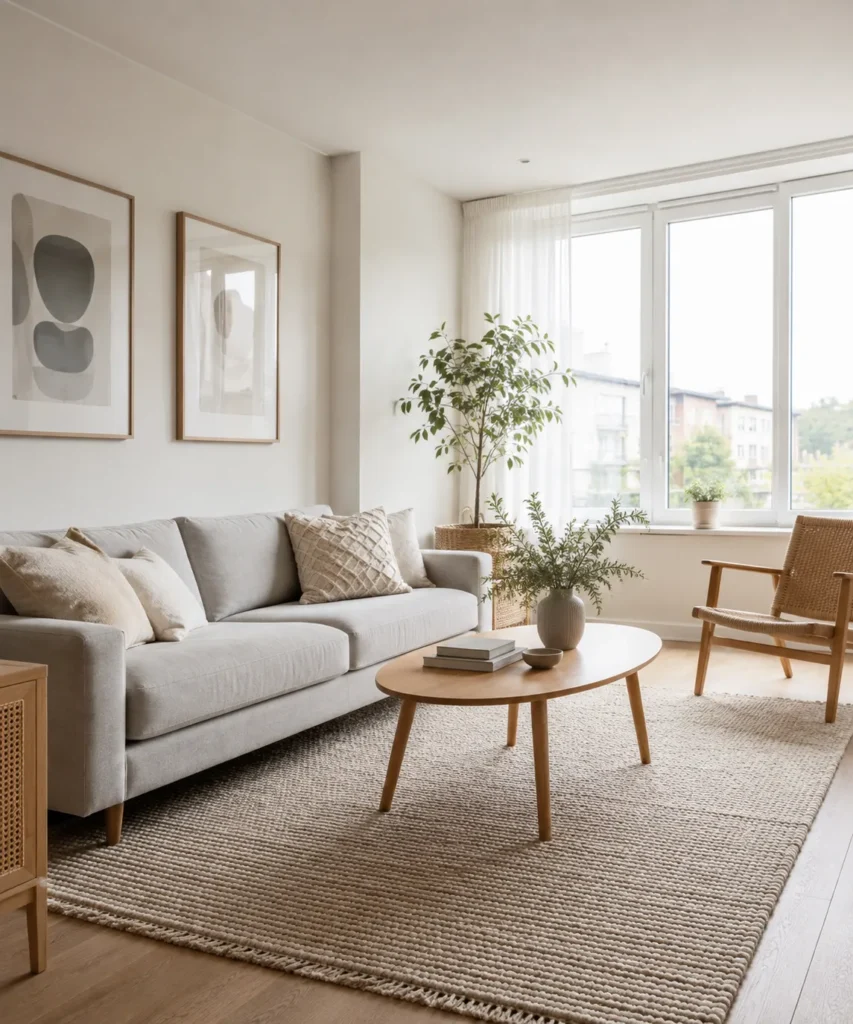
The living room is often the easiest place to understand what Scandinavian design is really doing. The furniture is simple, but the room does not feel empty because the comfort is built through proportion and texture. A pale sofa provides a calm visual base, the large woven rug softens the floor, and the light wood coffee table brings warmth into the centre without dominating the seating area.
What makes this arrangement especially effective is the amount of open space around the furniture. The sofa is substantial, but the low table, narrow chair frame, and uncluttered window area prevent the room from feeling heavy. That sense of breathing room is important. If every wall is filled and every corner contains another small table or decorative stand, the Scandinavian calm disappears even if the colours are correct.
The rug does more work than it first appears to. It visually connects the sofa, coffee table, and chair while adding a tactile layer that keeps the pale palette from looking cold. In a similar room, I would choose a rug large enough for at least the front legs of the main seating pieces to rest on it. A tiny rug floating beneath the coffee table can make the whole seating arrangement look disconnected.
Natural wood gives the space another layer of warmth. You do not need every wooden item to match exactly. In fact, a light oak table, a slightly deeper wood frame, and a woven chair can look more relaxed together than a perfectly matched set. The key is keeping the undertones reasonably compatible and avoiding so many finishes that the room starts to look accidental.
The greenery helps because it introduces movement and natural colour without demanding attention. A taller plant near a window can soften the hard line between wall and glass, while a smaller branch arrangement on a table adds height and shape. If you do not have the light or routine for many houseplants, one healthy plant is better than several struggling ones.
Artwork in a Scandinavian living room usually works best when it supports rather than leads the palette. Muted abstract shapes, monochrome photography, landscapes, line drawings, or simple graphic prints can all work. I would keep the frames restrained and give the art enough wall space around it so the room does not become a gallery wall unless that is genuinely part of your personal style.
Evening lighting deserves as much thought as daylight. A room can look perfect at noon and feel surprisingly flat after sunset if the only light comes from a bright ceiling fixture. A floor lamp near the chair, a table lamp on a side cabinet, or a small wall light can create pools of softer illumination and make the room feel much more comfortable at night.
Materials and Tools
· A simple sofa in a pale or neutral fabric.
· A large textured rug that visually connects the main seating.
· A light-wood coffee table or well-proportioned second-hand table.
· One accent chair with a simple timber, cane, or upholstered frame.
· Neutral cushions and a tactile throw.
· Minimal wall art in light or simple frames.
· One or two healthy indoor plants or leafy branches.
· A floor or table lamp for softer evening light.
A Practical Way to Recreate the Look
1. Edit the room before adding anything new. Remove small decorative pieces, spare furniture, and storage that no longer serves a purpose. Then look at the room from the doorway and identify the main visual anchor, which will usually be the sofa or the strongest window wall.
2. Build the seating arrangement around proportion. Place the sofa first, then position the rug so it connects the seating instead of floating alone. Add the coffee table at a comfortable distance and introduce only the extra chair or side table that the room genuinely needs.
3. Layer texture through larger surfaces. Use the rug, sofa fabric, cushions, throw, and wood grain to create depth. Then repeat one or two textures elsewhere in the room so the design feels connected rather than like a collection of unrelated neutral objects.
4. Add lighting, greenery, and art with restraint. Choose one plant or branch arrangement, one or two art pieces, and a secondary lamp that supports evening use. Step back after each addition, because this is one of those rooms where removing the last unnecessary object often improves the final result.
5. Check how the room works in real life. Sit on every seat, walk through the main paths, reach for the table, and look at the room after dark. Scandinavian design should feel easy to live with, so adjust anything that looks good but makes daily movement or comfort awkward.
For me, the rug matters more than extra decoration
A substantial rug gives the room softness, proportion, and visual structure all at once. I would spend more time finding the right size and texture than adding another vase or cushion, because the rug has a much bigger effect on how calm the whole room feels.
Variations and Alternatives
· Keep an existing wooden coffee table and sand or refinish it if the shape works but the surface looks tired.
· Use a vintage wooden chair instead of buying a matching lounge chair; a simple silhouette often fits the style well.
· Add a darker floor lamp or black picture frame when the room needs sharper contrast.
· Choose washable cotton or flatwoven textiles in a family home where pale wool feels too precious.
Style a Scandinavian Bedroom That Feels Light, Layered, and Restful
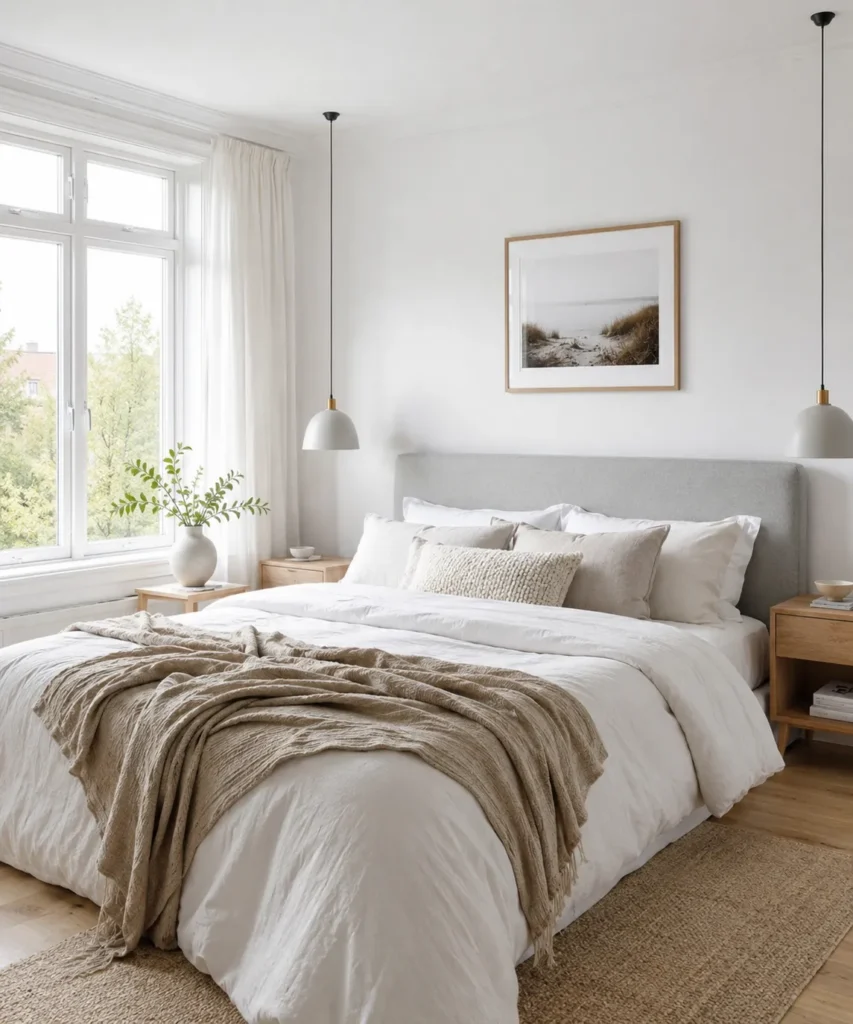
A Scandinavian bedroom should look restful before it looks decorated. The bed is the obvious focal point, so the strongest design choices are concentrated there: a simple upholstered headboard, generous white bedding, soft neutral cushions, and a loosely draped throw. The effect feels layered, but it is still quiet because the colours remain closely related.
The easiest mistake to make in a neutral bedroom is adding too many small textures and patterns in an attempt to make the room interesting. You rarely need five different cushions, several throws, and multiple patterned rugs. One smooth duvet, one textured lumbar cushion, and one knitted or woven throw already create enough contrast to keep the bed from looking flat.
The bedside tables help ground the pale bedding. Light wood works naturally with Scandinavian design, but an older painted bedside table can also work if the shape is simple and the finish is calm. If you are reusing unmatched tables, keep their height and visual weight reasonably similar, then connect them with matching or related lamps rather than trying to make the furniture identical.
Pendant lights are useful because they free the bedside surfaces and create a cleaner line around the bed. Wall lights or small lamps can achieve the same effect if rewiring is not practical. What matters is the light level and position: the light should support reading and winding down without creating glare directly at eye level.
Curtains are another quiet but important part of the room. Soft, full-length curtains in white, cream, or pale neutral fabric filter daylight and make the window feel finished without adding visual heaviness. If blackout is needed for sleep, a layered solution with a discreet blind behind the curtain can preserve the soft appearance during the day.
The artwork above the bed should be proportional to the headboard and wall. One larger framed landscape or abstract print can make the room feel calmer than several small pieces scattered across the wall. I would leave enough negative space around the frame so the bed remains the focus rather than turning the wall into the main event.
Storage is where the room either keeps its calm or loses it. Open clothing piles, charging cables, overflowing bedside drawers, and too many objects on the dresser can make even the most neutral bedroom feel busy. Use closed storage where possible, keep only a few daily items visible, and give laundry a real home rather than letting it become part of the room’s styling.
Materials and Tools
· A simple bed frame or upholstered headboard.
· White, cream, or pale neutral bedding.
· A small mix of tactile cushions rather than many decorative pillows.
· A knitted, quilted, or woven throw.
· Simple bedside tables in wood or a compatible reused finish.
· Pendant, wall, or table lights for soft bedside illumination.
· Full-length curtains or a light window treatment.
· A large rug or two bedside rugs for warmth underfoot.
· One restrained piece of wall art.
A Practical Way to Recreate the Look
1. Reduce visual noise around the bed. Clear the bedside surfaces and remove extra cushions, throws, or furniture that make the room feel crowded. Decide what genuinely needs to stay within reach at night and move the rest into drawers or closed storage.
2. Build the bed with simple layers. Use a light duvet or cover as the main surface, then add a small number of pillows and one tactile throw. Keep the arrangement relaxed rather than hotel-perfect, because a little softness and natural draping make the room feel more lived in.
3. Balance the bedside area. Choose tables of similar height and add lighting that feels visually related on both sides. Then keep the styling minimal – perhaps a book, small dish, or vessel – so the surfaces remain useful.
4. Soften the room with curtains, rug, and art. Use full-length window fabric where it suits the room, place a rug so it extends beyond the bed, and hang one well-proportioned artwork. These larger elements create more atmosphere than several small decorative pieces.
5. Test the room at night. Turn off the main ceiling light and use the bedside lamps alone. The room should still feel comfortable and functional, and any harsh glare, awkward shadows, or cluttered charging area is worth fixing before adding more styling.
One detail I would not skip is layered bedding
The bed carries most of the softness in this room, so the materials matter more than ornament. A mix of smooth cotton, linen-like texture, and one knitted layer can make the room feel complete without needing bright colour or lots of decorative objects.
Variations and Alternatives
· Use a vintage wooden headboard if you prefer a slightly warmer, more traditional Scandinavian look.
· Keep mismatched bedside tables and connect them through similar lamps, handles, or paint tone.
· Use a washable cotton throw instead of wool if the room needs easy-care textiles.
· Introduce one muted accent colour – dusty blue, moss green, soft clay, or charcoal – through a single cushion or blanket.
Design a Scandinavian Kitchen With Clean Surfaces and Warm Wood
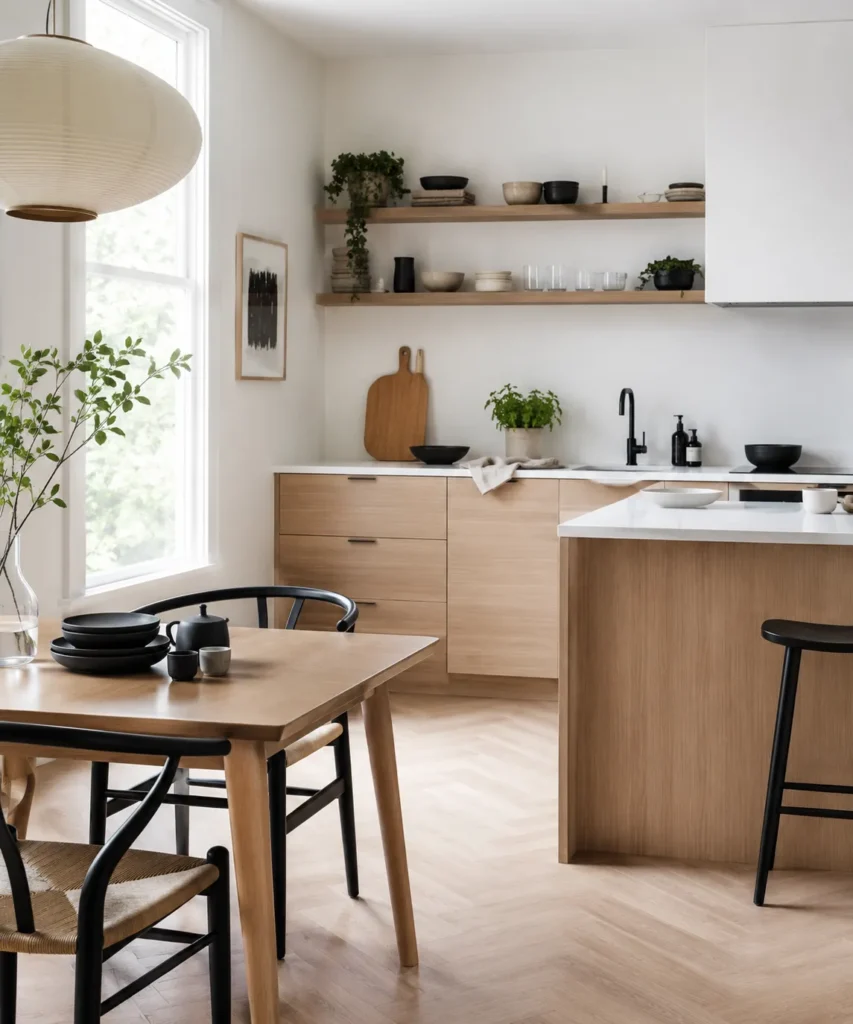
A Scandinavian kitchen should look calm because it is organised, not because nobody uses it. That distinction matters. The strongest kitchens keep the working surfaces relatively clear, store everyday tools where they are easy to reach, and allow only a small number of useful objects to remain visible. The result feels functional first and styled second.
Light wood cabinetry is an obvious feature here, but the look can also be created with existing cabinets if their shape is simple. Painting dark or dated doors in a soft neutral, replacing overly ornate handles with something quieter, or refinishing a sound wooden table may bring the room much closer to Scandinavian design without a full remodel. I would always work with the parts that are structurally good before replacing them.
The white worktops and walls help reflect daylight, while the black chairs, tap, and ceramics create definition. This is a useful lesson for neutral rooms: contrast does not need to come from bright colour. A few dark lines can sharpen pale wood and white surfaces, making the whole room feel more deliberate.
Open shelving works well because the displayed objects are restrained. Bowls, drinking glasses, plates, and a trailing plant create visual interest, but there is still empty space between groups. If you want to use open shelves, think of them as practical display storage rather than a place for every kitchen item you own.
The dining table makes the kitchen feel social. A simple wood table with black or woven chairs connects the cooking area to everyday meals without requiring a formal dining room. The table does not need a permanent centrepiece. A small vessel, bowl, or branch arrangement can be enough, especially when the room already has shelves and plants nearby.
Lighting should support both working and eating. Good task light around food preparation is important, while a pendant above the table creates a softer visual zone for meals. If the room has only one central ceiling fixture, adding a table pendant or under-shelf task lighting can change the atmosphere significantly without changing the furniture.
Practical storage is the final layer. Keep frequently used items in the easiest drawers, use trays or inserts to stop small tools becoming a jumble, and move rarely used appliances away from the main work surface. Scandinavian design feels serene partly because the room is not asking the eye to process every object at once.
Materials and Tools
· Existing or new cabinetry with simple lines and a light or neutral finish.
· White or pale work surfaces and walls.
· Open shelves used selectively for everyday dishes.
· A simple wooden dining table, including a refinished second-hand option.
· Comfortable dining chairs in wood, black, or woven finishes.
· Ceramic tableware in a restrained palette.
· A pendant light over the dining table or nearby focal area.
· Potted herbs or a trailing plant.
· Baskets, trays, or drawer organisers for hidden storage.
A Practical Way to Recreate the Look
1. Clear the work surfaces and sort what you actually use. Move rarely used appliances, duplicate utensils, and visual clutter away from the main work zone. Keep a small number of everyday objects visible only when they are genuinely practical or contribute to the room.
2. Simplify the palette before replacing furniture. Look at the cabinets, walls, counters, and flooring together. If the overall room is too dark or visually busy, consider paint, refinishing, or simpler hardware before assuming the whole kitchen needs replacing.
3. Edit open shelving into useful groups. Place plates together, bowls together, and glasses together, then leave space between the groups. Add one plant or small decorative object if it helps soften the shelf, but keep the majority of the space practical.
4. Create a clear dining zone. Position the table so it does not obstruct the working triangle or main walking route. Add comfortable chairs and a pendant or nearby light source, then keep the tabletop mostly free for actual meals.
5. Refine the storage and lighting. Use drawers, baskets, and internal organisers to reduce countertop clutter, then check whether the task lighting is strong enough for cooking. A calm kitchen still has to work safely and efficiently every day.
I would keep one thing in mind here
Open shelving can look effortless, but only when the edit is firm. If every shelf becomes overflow storage, the kitchen loses the clarity that makes this style appealing. I would rather display twelve useful pieces well than forty pieces simply because the shelves are there.
Variations and Alternatives
· Refinish an existing wooden dining table instead of replacing it.
· Paint sound cabinet doors rather than undertaking a full remodel when the layout already works.
· Use closed cabinets above the worktop if open shelving feels difficult to maintain.
· Introduce black accents through handles and lighting rather than buying a whole new set of dark furniture.
Make a Scandinavian Entryway Feel Calm, Tidy, and Welcoming
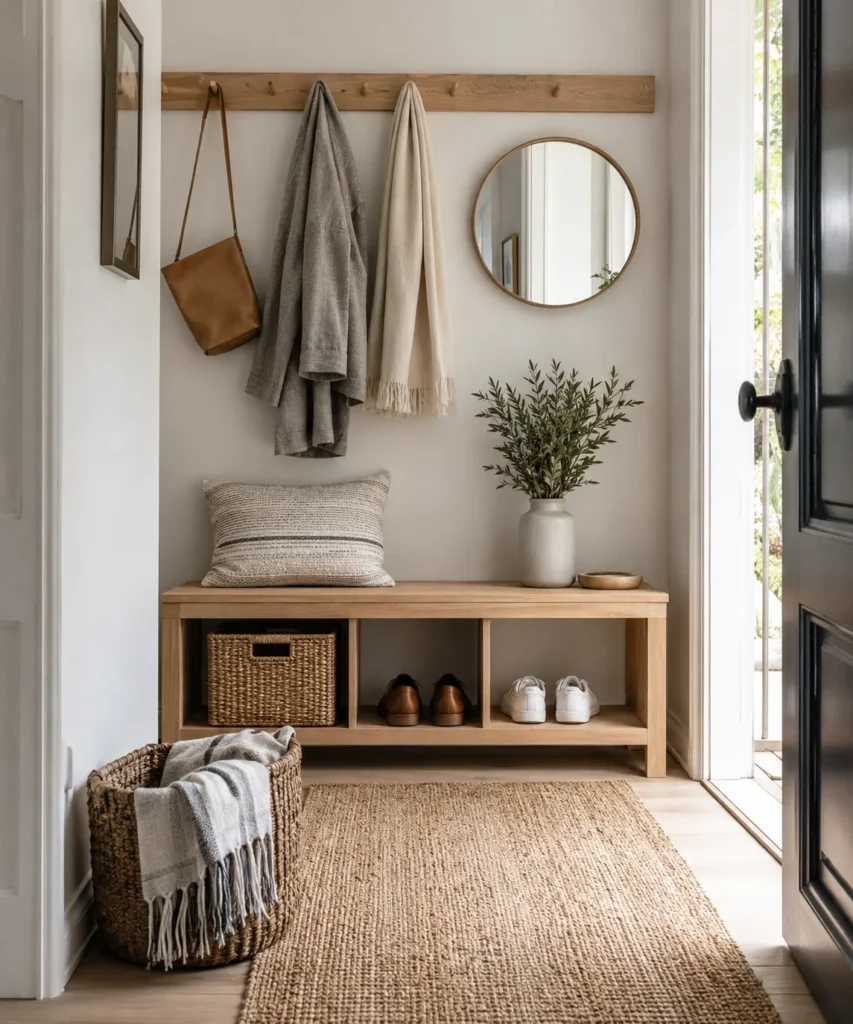
An entryway is one of the best places to use Scandinavian design principles because the room has a clear practical job. Shoes, bags, coats, keys, scarves, and everyday clutter all arrive here first. If the storage is not obvious and easy to use, the space becomes messy quickly no matter how attractive the furniture is.
The long wooden bench creates a strong base because it combines seating with open cubbies. Shoes are visible enough to find, but they are not scattered across the floor. A basket fills one compartment for smaller or softer items, which is useful because mixed storage types prevent the entryway from looking like a row of identical boxes.
The peg rail is another practical feature. Instead of using several unrelated hooks, one continuous piece of wood gives the wall a simple rhythm and allows coats, scarves, and bags to hang in a flexible way. If you already have a narrow wooden board, it can be repurposed into a peg rail with suitable hooks, provided it is securely fixed to the wall.
The round mirror softens the many straight lines in the bench, rail, doorway, and rug. It also reflects light, which can be particularly helpful in a narrow hallway. A mirror does not need a heavy decorative frame here; a thin wood or metal edge keeps the shape clear without adding unnecessary weight.
The woven textures do an important job too. The floor runner, storage basket, and larger basket in the foreground make the room feel warmer and more tactile. Because entryways contain a lot of hard surfaces – doors, walls, flooring, bench, shoes – a natural fibre rug can make the whole area feel less echoing and more comfortable.
Styling should stay restrained because this space will collect real objects every day. A cushion on the bench, one vase with greenery, and a small tray can be enough. If you decorate every corner, there will be nowhere for the actual daily items to land, and the entryway will begin to feel untidy almost immediately.
The best test is the five-second rule: can you enter, hang a bag, remove your shoes, and put away keys without moving anything decorative first? If the answer is no, the styling is getting in the way of function. Scandinavian design is strongest when the practical routine feels natural.
Materials and Tools
· A narrow wooden bench or storage bench.
· A peg rail or wall hooks fixed securely.
· Woven baskets or open cubby storage.
· A round or softly shaped mirror.
· A durable natural-fibre runner or washable rug.
· One cushion or small textile accent.
· A small tray or bowl for keys.
· A simple vase with greenery if there is space.
A Practical Way to Recreate the Look
1. List what normally lands in the entryway. Think about shoes, bags, coats, post, keys, umbrellas, and seasonal accessories. Give the most common items a specific storage place before adding decorative elements.
2. Create one strong horizontal storage zone. Use a bench, narrow console, or reused low cabinet to anchor the room. Add baskets or cubbies underneath so shoes and smaller items can be stored without taking over the floor.
3. Use the wall for flexible storage. Install a peg rail or hooks at a comfortable height and make sure the fixing is appropriate for the wall type and expected weight. Keep some hooks empty so the system can handle guests or busier days.
4. Add softness through a runner and one textile. Choose a rug that suits the amount of foot traffic and will be easy to maintain. Then add one cushion, throw, or basket to soften the wood and wall surfaces without turning the area into a decorative display.
5. Finish with a mirror and a landing place for small items. Use a mirror to reflect light and a small tray or bowl for keys. Then remove anything that has no practical or visual purpose, because the entryway needs spare capacity more than it needs extra ornaments.
The part I would check carefully is visual clutter
Entryways fill up faster than almost any other part of the home. The simplest way to keep this one feeling Scandinavian is not stricter styling but better storage: every daily object should have somewhere obvious to return to.
Variations and Alternatives
· Repurpose a low bookcase or sturdy sideboard as an entry bench when the height and structure are suitable.
· Use a washable flatwoven runner in homes with children, pets, or wet weather.
· Paint an existing peg rail the same tone as the wall for a softer, more minimal look.
· Add a lidded basket when you need to hide hats, gloves, dog leads, or other small items.
Set Up a Scandinavian Home Office That Feels Focused and Peaceful
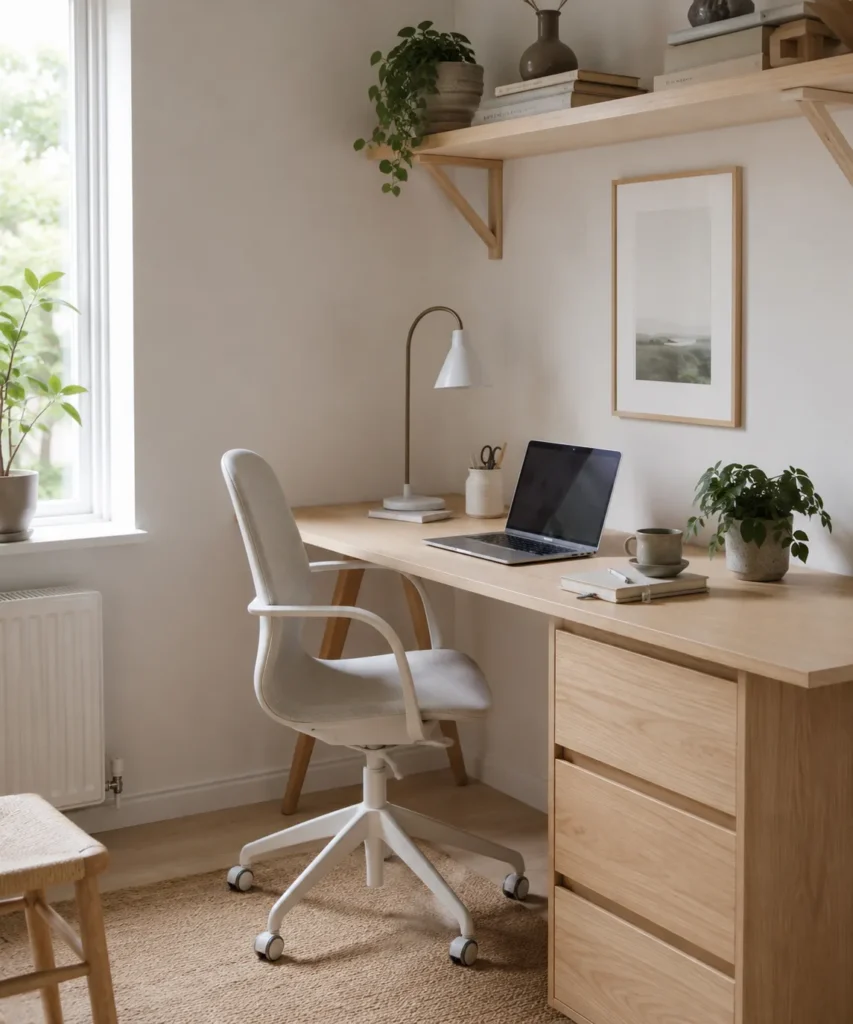
A Scandinavian home office needs to support concentration before it supports styling. The desk here is broad enough to work comfortably, but the surface remains mostly clear. A laptop, lamp, notebook, cup, and small tool container are enough to make the workspace useful without forcing the eye to process piles of extra objects.
The light wood desk connects naturally with the floor and wall shelf, which gives the room continuity. If your existing desk has a good shape but the finish feels too dark or glossy, refinishing may be a useful option. A solid second-hand desk can often be sanded, repainted, or paired with lighter storage rather than replaced entirely.
The chair deserves real attention. Scandinavian interiors value appearance, but a home office should not sacrifice physical comfort for a minimal silhouette. Choose a chair that supports the way you actually work. If an ergonomic chair has more visible mechanisms than the rest of the room, that is still better than using an uncomfortable decorative chair for hours each day.
The wall shelf is useful because it moves some storage upward while leaving the desk clear. The shelf itself remains edited, with books, a plant, and a few objects arranged with space between them. I know it can feel tempting to fill every centimetre once a shelf is installed, but the empty areas are what keep the room from feeling visually top-heavy.
Natural light helps the office feel open, but the desk position should avoid glare on the screen. If possible, place the desk so daylight comes from the side rather than directly behind or in front of the monitor. Then use a task lamp for focused light on darker days and evenings.
Cables can quietly undermine an otherwise calm workspace. Use a simple cable tray, clips, or a box under the desk to keep chargers and extension leads controlled. The solution does not need to be invisible, but it should prevent the floor and desktop from becoming tangled with loose wires.
The plant and framed print make the office feel connected to the home rather than like a corporate cubicle. One or two personal objects can do the same thing. The important part is choosing pieces that support the calm mood rather than creating another surface that needs constant tidying.
Materials and Tools
· A simple desk in wood or a compatible reused finish.
· A genuinely comfortable task chair.
· A focused desk lamp.
· A wall shelf or closed storage for books and supplies.
· A small set of desktop essentials only.
· Cable management clips, tray, or box.
· One or two small plants.
· A simple framed print or photograph.
· A rug if the room needs extra warmth or acoustic softness.
A Practical Way to Recreate the Look
1. Place the desk for comfort and light. Choose a position with good daylight while avoiding direct screen glare. Make sure the chair can move freely and the desk does not block the main walking route or make the room feel cramped.
2. Edit the desktop to the true essentials. Keep only the items you reach for frequently and give paperwork, chargers, and spare stationery a specific storage place. A clear desk should make work easier, not create a daily ritual of moving decorative objects out of the way.
3. Add task lighting and control the cables. Use a lamp that puts light where you actually work, then route cables underneath or behind the desk. This small step makes a surprising visual difference because loose cords create clutter even when the desktop is tidy.
4. Use vertical storage sparingly. Add one shelf or a compact cabinet for books and supplies, then leave visible gaps between objects. Keep the heaviest visual items lower or grouped together so the wall does not feel crowded.
5. Add one or two personal elements and stop. A plant, framed print, or handmade ceramic piece can make the workspace feel warmer. Then sit at the desk and check the view from working height; if your eye keeps landing on clutter, fix that before adding anything else.
One detail I would not skip is surface editing
A Scandinavian office depends on mental quiet as much as visual quiet. If the desk is crowded before the workday starts, the room is already asking for attention. I would rather keep a few useful tools within reach and let the rest disappear into drawers or boxes.
Variations and Alternatives
· Refinish a second-hand wooden desk rather than buying a new one.
· Use closed wall cabinets instead of open shelving if paperwork tends to accumulate.
· Add a neutral pinboard above the desk when notes must stay visible.
· Use a narrow desk with drawers in a small room so the storage is built into the footprint.
Bring Hygge Into Scandinavian Design With a Cozy Reading Corner

A reading corner shows why Scandinavian design should never be reduced to minimalism alone. The chair, throw, side table, lamp, books, and plants all contribute to comfort, but the arrangement still feels light because the number of objects is controlled and each one has a clear purpose.
The chair is the heart of the setup. It has a simple rounded shape and wooden legs, which keeps the silhouette clean, but the upholstery is soft enough for a long reading session. This is where function has to win. A visually perfect chair that you do not enjoy sitting in will never create hygge, no matter how well the rest of the corner is styled.
The chunky throw provides the strongest texture in the whole area. Because the surrounding colours are pale and quiet, the knitted surface adds depth without needing a strong colour. If you already own a wool blanket, crocheted throw, or textured cotton cover, this is an easy place to reuse it rather than buying something specifically labelled Scandinavian.
The floor lamp creates a focused pool of light. Its dark frame also adds contrast against the pale wall and chair, giving the corner definition. A wall-mounted reading light can work just as well in a tighter space, especially if the floor around the chair needs to stay clear.
The side table is small but essential. It holds a mug, books, and a small vessel without taking over the corner. A stool, old bedside table, or refinished plant stand can be repurposed here if the height works beside the chair. The best table is the one you can reach comfortably without twisting or leaning far forward.
Plants around the window soften the hard edges and make the corner feel more connected to daylight. You do not need a collection. One medium plant near the chair and one smaller plant on the sill can create enough natural movement, particularly when the rest of the styling is restrained.
The rug makes the nook feel anchored. Even if the larger room has hard flooring, a small textile zone around the chair can make the reading area feel separate without using a physical divider. The effect is subtle, but it helps the corner read as a destination rather than a spare chair placed beside a window.
What makes the space feel hygge is not any single object. It is the combination of comfort, warm light, tactile materials, and the sense that everything you need for a quiet hour is within reach. That is a useful design test: could you sit down here immediately without rearranging anything first?
Materials and Tools
· A genuinely comfortable armchair with a simple silhouette.
· A tactile throw blanket you already own or can reuse.
· One supportive cushion.
· A small side table, stool, or repurposed bedside table.
· A floor or wall reading lamp.
· A few books within easy reach.
· One or two houseplants.
· A small rug or surrounding textile layer.
· One restrained framed print if the wall needs balance.
A Practical Way to Recreate the Look
1. Choose the corner based on comfort, not leftover space. Look for daylight, enough room for the chair, and a position that feels slightly protected from the main traffic route. The best reading nook is somewhere you will naturally want to sit, not simply the only empty corner in the room.
2. Place the chair and test it before styling. Sit in the chair for a few minutes and check the back support, arm height, and orientation toward the window or room. Then add one cushion or throw only if it genuinely improves comfort.
3. Add the practical companions. Position the lamp where the light reaches the page without shining directly into your eyes, then add a side table within easy reach. Keep the tabletop mostly clear so there is still space for a book and drink.
4. Use texture and greenery to soften the nook. Add the throw, rug, and one or two plants to build warmth. Repeat only a small number of textures so the corner feels coherent rather than packed with every cozy material you own.
5. Edit until the space feels restful. Sit down again and look around from the chair. Remove anything that feels visually demanding, and keep only the pieces that support comfort, light, and a quiet sense of enclosure.
I know it can feel tempting to add more, but
A reading corner becomes more inviting when it has some empty space around it. One good chair, one throw, one small table, and a lamp can create stronger hygge than a corner filled with cushions, candles, baskets, and decorative signs competing for attention.
Variations and Alternatives
· Reuse a favourite old armchair and recover only the cushion or seat if the frame is sound.
· Use a stool or vintage side table instead of buying a dedicated reading table.
· Swap the floor lamp for a plug-in wall light in a tight corner.
· Use a small flatwoven rug if a thick rug makes the chair unstable.
Scandinavian Styling Mistakes That Make a Room Feel Flat or Forced
The first mistake is treating Scandinavian design as a shopping list. Buying a pale sofa, a light wood table, a woven basket, and a black lamp does not automatically make a room feel Scandinavian if the layout is awkward or the objects do not suit the home. Start with function, proportion, and light, then choose materials that support those decisions.
Another mistake is removing so much that the room loses warmth. Minimal does not mean empty. If the space has hard flooring, bare windows, a plain sofa, and no textiles, it may feel cold even if the colours are technically correct. Add softness through larger surfaces such as rugs, curtains, upholstery, throws, and bedding rather than covering every tabletop with accessories.
Using too many different wood tones can also weaken the calm effect. Scandinavian interiors can absolutely mix timber, but the finishes should feel related. If you have a yellow-toned oak table, reddish sideboard, grey-washed shelf, dark walnut chair, and orange pine cabinet all competing in one small room, the palette may feel busier than intended. Refinish one or two pieces, repeat a dominant wood tone, or separate strongly different finishes across rooms.
A rug that is too small is another common problem. In a living room, the rug should help hold the seating together. In a bedroom, it should extend beyond the bed enough to be seen and felt. In an entryway, it should fit the walking path rather than float like a decorative mat. The correct scale usually makes the room feel calmer immediately.
Poor lighting can undo the effect of the entire room. A single bright ceiling fixture tends to flatten textures and make pale surfaces feel clinical. Use several smaller sources when the room allows: a reading lamp, bedside light, pendant, wall light, or table lamp. The goal is not dimness, but a softer distribution of light that supports how the space is used.
Overstyling open shelves is another easy trap. Scandinavian shelving often looks relaxed because objects are grouped and there is space between them. If every gap is filled with books, jars, signs, plants, candles, and decorative objects, the shelf becomes the loudest part of the room. Keep useful items first, then add only a few supporting pieces.
Do not make every object pale. Contrast gives the room structure. Black lamp stems, charcoal cushions, dark ceramics, bronze hardware, or a deeper wood frame can all sharpen a neutral palette. The contrast should be deliberate and repeated lightly rather than appearing as one isolated dark object.
Finally, avoid designing for photographs instead of daily life. A chair that is uncomfortable, a table too small for meals, a bench without enough shoe storage, or a desk positioned in glare may look attractive but will frustrate you. Scandinavian design is persuasive because it connects beauty with usefulness. If the room becomes harder to live in, the design has missed the point.
Frequently Asked Questions
Can I create Scandinavian design without replacing all my furniture?
Yes. Begin by editing the layout, reducing clutter, and identifying which existing pieces already have simple shapes or natural materials. A sturdy second-hand table, plain dresser, woven basket, or wooden chair can often be refinished or restyled instead of replaced.
Do Scandinavian rooms have to be white?
No. White is common because it reflects light, but warm off-white, pale grey, soft beige, muted taupe, stone, and gentle natural colours also work well. The room should feel calm and cohesive rather than locked into one exact shade.
How do I make a neutral Scandinavian room feel warmer?
Use texture and layered lighting. Wool, cotton, linen-like fabrics, wood, woven fibres, matte ceramics, and soft upholstery give the eye more to read without adding clutter. Lamps and warm pools of evening light are just as important as the daytime palette.
Can I mix vintage furniture with Scandinavian design?
Yes, especially when the piece has simple proportions or an honest material such as wood, leather, cane, or wool. You may need to refinish, repaint, or reupholster it so the colour and condition sit comfortably with the rest of the room, but a little age can make a Scandinavian interior feel more personal.
What colours work well as accents?
Muted blue, moss green, charcoal, dusty clay, warm brown, and black can all work as accents. Use them in small amounts through cushions, art, ceramics, lighting, or hardware so the room keeps its quiet base.
How much décor should I use?
Enough to make the room feel personal, but not enough to compete with the furniture and function. Start with art, a plant, a few books, and one or two useful objects on each surface. If a room feels busy, remove items before buying new storage for them.
Is Scandinavian design suitable for small homes?
Very much so. The focus on light, proportion, simple furniture, and useful storage suits compact rooms well. Choose pieces that match the scale of the space, leave clear walking paths, and avoid filling every wall simply because storage is available.
What is the difference between Scandinavian design and hygge?
Scandinavian design describes the broader visual and functional approach, while hygge is more about the feeling of comfort, ease, and everyday coziness. A room can look Scandinavian without feeling especially hygge, but layered textiles, warm light, comfortable seating, and small daily rituals often bring the two together.
Do black accents belong in Scandinavian interiors?
Yes. Black or very dark accents can give pale rooms structure and help define lighting, furniture frames, hardware, or artwork. The trick is to repeat the dark tone in a few controlled places rather than letting one heavy object dominate the room.
Where should I begin if my home currently feels cluttered?
Start with one room and remove anything that is broken, unused, duplicated, or visually distracting. Then organise what remains into clear storage zones. Once the room functions better, it becomes much easier to see which colours, textiles, lighting, or furniture changes are actually needed.
Bring Scandinavian Design Home One Thoughtful Room at a Time
The most useful lesson in how to Scandinavian design is that the style is not created by copying a catalogue room. It comes from making practical choices feel calm and considered: furniture that fits the space, storage that reduces daily clutter, materials that feel pleasant to touch, and lighting that supports the way the room is actually used.
I would always begin with one room rather than trying to redesign the whole home at once. A living room can become calmer through a better rug and simpler layout. A bedroom may only need softer lighting and more restrained bedding. An entryway may improve once shoes, coats, and keys have obvious places to go. Small functional changes often create the visual calm people associate with Scandinavian interiors.
Reusing what you already own can be part of that process. A worn wood table can be refinished, an old chair can be reupholstered, baskets can move from decorative storage to useful storage, and a plain cabinet can be repainted instead of discarded. Those choices keep the home personal and stop the style from feeling like a matching furniture set.
If you have been wondering how to Scandinavian design in a way that still feels like your own home, start with light, function, and comfort. Keep the pieces that work, simplify what feels noisy, add texture where the room feels flat, and leave enough empty space for daily life to happen. That balance is where Scandinavian design feels most natural.