Plastic can make a paint marker look better than it really is. A pen may lay down a rich, clean line on paper or wood, then skid, bead, or scratch away once it meets a smooth plastic surface.
The difference is not always the amount of pigment in the marker. Plastic gives paint very little texture to grip, and some molded surfaces also carry oils, release agents, or glossy finishes that make adhesion harder.
That is why choosing paint pens for plastic takes a little more thought than choosing ordinary craft markers. Tip shape affects how easily you can draw on curved objects. Paint flow matters because excess liquid tends to sit on top of plastic instead of soaking in.
Drying time matters because a line that feels dry can still be soft underneath. Most importantly, the plastic itself matters: polypropylene, polyethylene, acrylic sheet, ABS, resin-like craft pieces, and coated plastic items do not all accept paint in exactly the same way.
The best paint pens for plastic painting give you controllable paint flow, a tip suited to your design, and a formula that has a realistic chance of staying put once the surface has been cleaned and prepared.
Why Plastic Is Harder to Paint Than It Looks
A flat plastic ornament, storage bin, toy part, plant label, model piece, or acrylic blank can look like an easy painting surface because it is smooth. That smoothness is exactly what causes trouble. Paint needs enough contact with the surface to form a stable film, and very slick plastic gives it fewer microscopic places to hold.
Smooth Surfaces Give Paint Less to Grip
Paper, unfinished wood, and unglazed ceramic have tiny pores and fibers that accept liquid. Plastic is usually far less absorbent. A water-based acrylic marker therefore has to dry mostly on top of the surface instead of partly soaking in.
That is not automatically a problem. Acrylic paint can sit well on many prepared plastics. The important part is that the surface must be clean and the paint must be allowed to cure. If the plastic is greasy, dusty, flexible, or highly polished, the dried paint may lift more easily when scratched or bent.
A marker that says it works on plastic still cannot make every plastic behave the same way. A hidden test patch is one of the most useful steps you can take before decorating an item you care about.
Hard Plastic and Flexible Plastic Need Different Expectations
A rigid acrylic blank or hard plastic ornament changes very little while you handle it. Once paint has adhered and cured, the surface stays fairly stable.
Flexible plastic moves. A soft pouch, bendable sheet, flexible toy part, or squeeze bottle may flex more than the paint film can tolerate. Acrylic paint can crack or release if the substrate bends repeatedly. The marker may work well for decorative details but still be a poor match for an item that is constantly twisted, folded, or squeezed.
For that reason, I would separate “can mark the surface” from “will remain intact through repeated use.” Those are different standards.
Tip Design Changes How the Pen Behaves on Curves
Plastic craft pieces are often curved. Ornaments, eggs, tumblers, storage containers, toy parts, and model components rarely give you a large flat area.
A fine rigid tip is useful for outlines, lettering, small eyes, borders, and line art because it gives the hand a clear contact point. A medium tip covers more area and is more forgiving if the surface has small molded ridges. A brush tip can sweep across curved plastic smoothly, but it also changes width as the tip bends. A dot or broad round tip can fill small areas quickly and create repeated circles without a separate tool.
Choose the tip for the marks you make most often, not for the largest number printed on the box. A 60-color set is not automatically more useful than a 12-color set if the nib does not suit your work.
Water-Based Acrylic Paint Needs Time, Not Just Air-Drying
Most of the products in this article use water-based acrylic paint. The water portion evaporates first, leaving the acrylic binder and pigment behind. The surface can therefore feel dry before the paint film has reached its strongest state.
If you immediately rub, stack, tape, or seal the painted plastic, you can disturb a layer that has not fully hardened. Thin lines usually become touch-dry sooner than heavy dots or broad filled areas. Multiple layers also extend the process.
I know it is tempting to judge the result after a few minutes, especially when the marker is advertised as quick drying. For plastic, patience is part of the technique. Follow the maker’s drying guidance where it is supplied and give extra time before heavy handling.
Surface Preparation Often Matters More Than a Second Coat
If the first coat beads or pulls away from the plastic, adding more paint on top rarely fixes the underlying problem. Clean the item first. Mild soap and water can remove ordinary dirt; isopropyl alcohol is sometimes used for final degreasing on compatible plastics, but it should always be tested because some clear plastics and coatings can haze or react.
A very light scuff with an appropriate fine abrasive can help on some rigid plastics, but that is not suitable for every item. Glossy transparent pieces, printed plastics, thin molded parts, and collectible surfaces may be damaged by sanding.
Never roughen or solvent-clean plastic blindly. Test first, because the preparation step can permanently change the surface.
A Sealer Helps Only If the Paint Underneath Is Sound
A clear topcoat can protect a finished design from handling, moisture, and light wear, but it cannot rescue paint that never bonded properly. If the marker layer peels from the plastic, a sealer may simply peel with it.
Compatibility matters too. Some solvent-heavy clear coats can wrinkle, dissolve, or soften certain marker paints or plastics. A water-based clear finish is not automatically safe either. The sensible method is to test the full sequence – preparation, marker, drying, and sealer – on a spare piece or hidden area.
| Product Image | Product Name | Features | Price |
|---|---|---|---|
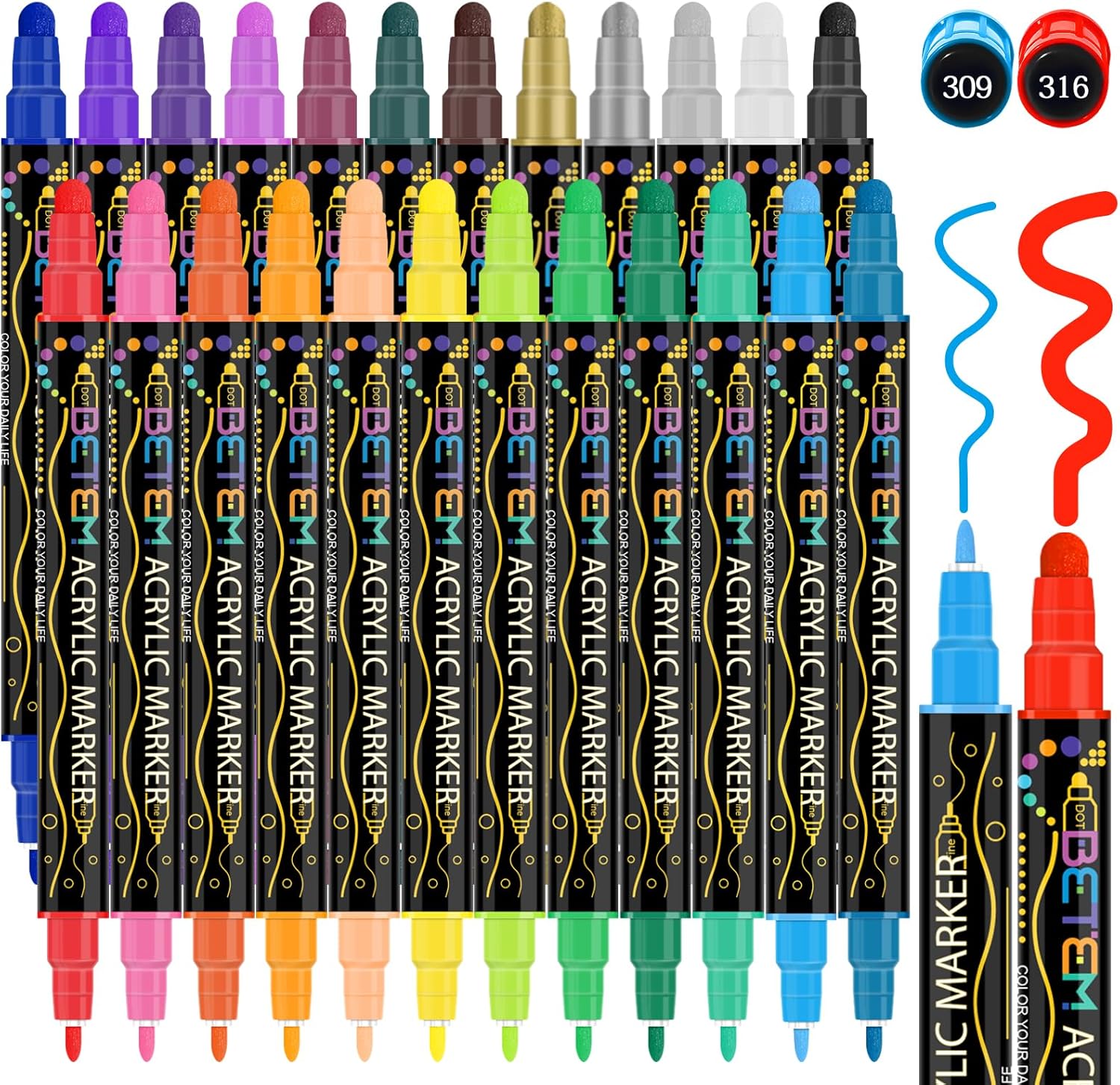 |
Betem 24 Colors Dual Tip Acrylic Paint Pens Markers | 1mm fine nib for precision outlining and detail work Cotton Nib Innovation Fast-drying & mess-free 24 Rich, Blendable Colors |
Check Price |
 |
Sharpie Creative Markers | Bright pigments that pop on both light and dark surfaces No-Bleed, Water-Based Ink Build depth and dimension with smooth layering |
Check Price |
 |
NAWOD 35 Premium Acrylic Paint Marker Pens | Includes 20 extra fine tip pens for precision work Double-boxed for durability and long-term use Ideal for both smooth and porous surfaces |
Check Price |
 |
Acrylic Paint Markers Dual Tip (12 Pack) | Works beautifully on wood, fabric, canvas, glass, plastic, and more Water-based & non-toxic ink Easy cleanup while wet, permanent when dry |
Check Price |
 |
Paint Pens Acrylic Markers |
Filled with 50% more highly pigmented acrylic ink Mix colors easily for custom shades Smooth ink flow with excellent coverage |
Check Price |
 |
JKC 48 Colors Acrylic Paint Markers Set | Includes 36 classic colors and 12 shimmering metallics High-Quality Water-Based Ink Adjust pressure for fine detailing or bold strokes |
Check Price |
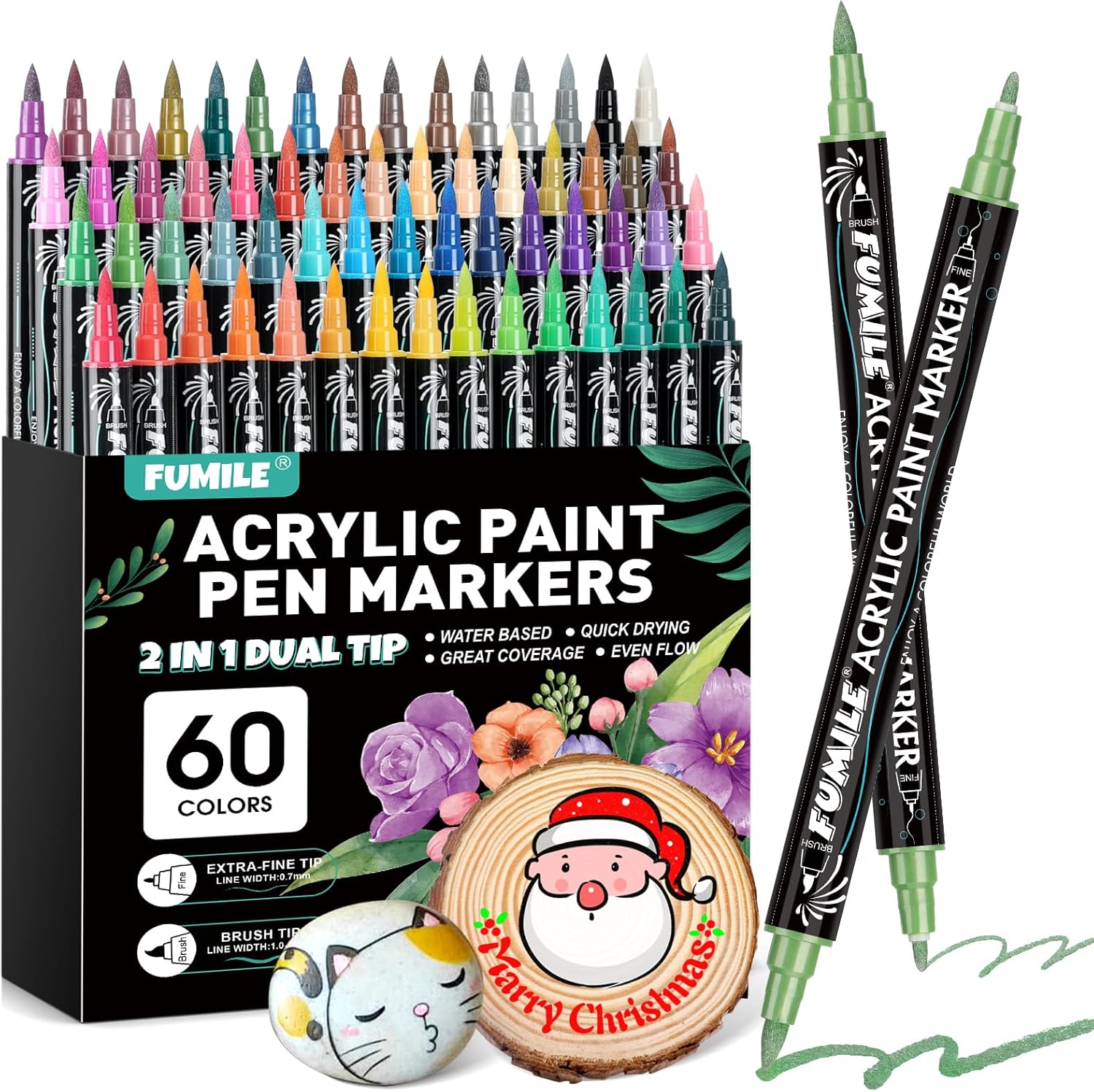 |
FUMILE 60 Colors Acrylic Paint Markers Dual Tip | Quick-drying, vivid ink for both porous and non-porous surfaces Cotton nibs allow direct use 0.7mm extra fine tip for outlining and detail work |
Check Price |
What to Check Before Choosing Paint Pens for Plastic
Color range is easy to compare because the number is printed on the package. The more important differences are usually less obvious: nib size, paint delivery, whether the maker actually names plastic as a supported surface, and how much control you have over the paint once it reaches the tip.
Confirm That Plastic Is Actually Named
For this topic, I would start with the manufacturer’s or current product listing’s surface recommendations. Betem, NAWOD, Chalky Crown, ZSCM, and FUMILE currently name plastic among their intended surfaces. JKC is also sold for plastic craft work, including plastic eggs, through current product listings.
Sharpie Creative Markers require a more careful description. Sharpie’s current official page names paper, metal, wood, ceramic, glass, rock, and canvas, but it does not specifically name plastic. That does not prove the marker will fail on every plastic; it means plastic is not part of the manufacturer’s current stated surface list for this exact brush-tip set.
When the maker does not specifically name plastic, treat a small adhesion test as essential rather than optional.
Fine Tips Favor Detail; Medium Tips Favor Everyday Crafting
Betem gives you two ends, including a 1 mm fine tip and a broader end listed in the 1-5 mm range. FUMILE also combines an extra-fine 0.7 mm end with a broader 1-5 mm brush tip. These dual-tip systems are useful when one project mixes outlines with larger filled areas.
NAWOD solves the same problem differently by putting extra-fine and medium pens in one 35-piece set. ZSCM and JKC stay closer to a medium-tip approach. Sharpie uses a brush tip, which can produce both narrow and wider strokes through angle and pressure. Chalky Crown pairs a fine tip with a dot tip.
If you mostly label plant pots or write names on ornaments, a fine or medium tip is easier to control. If you paint petals, broad lettering, or color blocks, a flexible brush or broad round tip saves time.
Ready-to-Use Cotton Nibs Reduce Setup
Betem and FUMILE use cotton-nib designs that are marketed as ready to use without the repeated pump-to-prime routine common to valve-action paint markers. That makes them convenient for casual crafting and for switching among colors quickly.
Other acrylic marker systems use a valve that must be activated. Valve pens are not difficult, but they reward restraint. Shake according to the instructions, press the nib on scrap material, and stop as soon as paint has reached the tip. Constant pumping can flood the nib and create a puddle on slick plastic.
The important point is not that one system is universally better. It is how much control you want and whether you are willing to prime each marker before use.
Large Color Sets Are Useful Only If You Need the Range
The products here run from 12 colors to 60. A larger set helps when you paint flowers, characters, landscapes, holiday motifs, gradients, or coordinated decorative pieces. It reduces the need to mix shades on a palette.
A smaller set is easier to store and may be all you need for labels, outlines, simple ornaments, signs, or children’s crafts. It also lets you learn how the paint behaves before committing to a large box.
Metallic colors can be especially useful on plastic because they create contrast on dark ornaments and smooth molded pieces. JKC and FUMILE include metallic shades in their larger assortments, while ZSCM’s linked 12-color version is a simpler set even though other ZSCM variants exist.
Opacity Matters on Dark and Transparent Plastic
Acrylic paint markers are often chosen because they can produce an opaque paint-like mark. That does not mean every color covers in one pass. White, yellow, pastel, metallic, and fluorescent-looking shades can behave differently from black or deep blue.
On dark plastic, plan for thin controlled layers rather than one heavy layer. Let the first coat dry, then add another if needed. On transparent plastic, remember that light passes through the material, so the finished appearance may change depending on what sits behind it.
Two thin coats usually give you more control than one flooded coat.
Think About the Item After It Is Painted
A decorative ornament that hangs on a tree has an easy life compared with a phone case, water bottle, storage lid, toy, or garden marker that is handled every day. The more rubbing, moisture, heat, or flexing an item receives, the more demanding the job becomes.
Paint markers are excellent for decorative projects, signs, craft blanks, and display pieces. Frequently washed food-contact items, flexible objects, and heavily handled surfaces need more caution. The paint may also be unsuitable for areas that touch food or the mouth unless the manufacturer specifically states otherwise.
When a Paint Pen Is Not the Whole Solution
A marker is an application tool. It cannot correct a plastic that is chemically difficult to coat, a surface covered in mold-release residue, or an object that flexes constantly.
If a project needs a full solid background, ordinary acrylic paint applied with a brush or sponge may be faster than coloring the whole area with marker strokes. You can then use the paint pens for line work, lettering, dots, highlights, and small shapes. This is often more economical than emptying a marker into a large flat area.
Primer can also matter. Some plastics accept acrylic paint better after a plastic-compatible primer. I would not make primer an automatic step for every craft, because it adds thickness and can change the surface appearance, but it is useful when adhesion is more important than keeping the original plastic finish visible.
For outdoor projects or pieces handled often, the final protective finish deserves as much attention as the marker. Good results come from the whole system: clean plastic, suitable paint, enough drying time, and a compatible topcoat when the project needs one.
Betem 24 Colors Dual Tip Acrylic Paint Pens – Two Tip Sizes for Mixed Plastic Crafting
Betem’s 24-color set is built around versatility rather than one fixed stroke width. The current linked Amazon listing identifies the markers as water-based acrylic paint pens with two ends: a 1 mm fine tip for outlines and narrow work, plus a broader end in the 1-5 mm range for coloring and more substantial strokes.
Plastic is specifically named in Betem’s current surface list, alongside paper, metal, wood, canvas, fabric, ceramic, and other craft materials. That makes the set easier to recommend for this topic than a marker whose manufacturer only discusses porous surfaces.
The other important design choice is the cotton nib. Betem describes these markers as directly usable rather than the traditional push-to-prime type. For a project involving many colors, that can make the workflow noticeably simpler because you are not repeatedly activating a valve every time you change pens.
Features
The fine end is the useful side for lettering, outlines, eyes, borders, small geometric shapes, and controlled line work. A 1 mm point is narrow enough for details on ornaments, acrylic blanks, plastic tags, and model pieces without feeling like a technical pen that can barely fill an area.
The broader end gives the same marker a second job. Betem lists a 1-5 mm range, so you can use it for petals, bolder lettering, small filled shapes, and areas that would take too long with the fine end. On curved plastic, the broader contact area can also feel smoother than a very small rigid point.
The 24-color palette is large enough for ordinary craft work without becoming difficult to organize. It gives you more ready-made shades than a 12-color box while still fitting into a compact set. This is useful for holiday ornaments, character details, color-coded labels, decorative storage pieces, and mixed-media craft blanks.
The water-based acrylic paint is described as opaque, odorless, and acid-free. Betem also names plastic directly among its surfaces. That direct plastic claim matters, but it still does not replace a hidden adhesion test on the exact item you plan to paint.
The cotton nibs are intended to work without pumping. That reduces the chance of over-priming, but storage becomes important. Betem advises closing the cap securely and storing the markers horizontally when not in use so the two ends remain balanced.
- Two tip sizes let one marker handle fine outlines and broader coloring without switching to a second set.
- Plastic is specifically included in the current surface recommendations, which makes the intended use clearer than with markers that do not name it.
- Twenty-four colors give enough range for decorative crafts, signs, ornaments, and layered designs without requiring a very large case.
- The cotton-nib design is ready to use without repeated valve priming, which is convenient when changing colors often.
- The broader end is useful for small fills, but a marker is still inefficient for covering large plastic panels or full backgrounds.
Who It’s Best For
This set suits crafters who regularly move between outlines and filled shapes on rigid plastic items. It is especially practical for ornaments, acrylic blanks, labels, small storage pieces, decorative tags, and mixed-surface DIY work.
Not Ideal For
It is not the strongest choice for someone who only does ultra-fine miniature work or needs to cover large areas quickly. Very flexible plastics also deserve extra testing because the dried acrylic layer may not move with the substrate.
Sharpie Creative Markers – Brush-Tip Control With an Important Plastic Caveat
Sharpie Creative Markers are different from the valve-action oil paint markers many people associate with the Sharpie name. The linked product is the 12-count brush-tip Creative Marker set, and Sharpie’s current official page describes it as water-based acrylic with paint-like ink.
The appeal is immediate usability. Sharpie says there is no priming required: uncap the marker and use it. The brush tip also gives the hand more stroke variation than a fixed medium nib, so it can make narrow lines at the tip and broader marks when more of the brush touches the surface.
There is one important limitation for this article. Sharpie’s current official surface list for this exact set includes paper, metal, wood, ceramic, glass, rock, and canvas, but it does not specifically include plastic. Because the original Upcyclely post already featured this product, it stays in the fixed seven-product list, but I would not present plastic compatibility as a manufacturer-confirmed feature.
Features
The brush tip is the strongest reason to consider this set. It can change line width through angle and pressure, which is useful for hand lettering, leaves, petals, expressive borders, and decorative strokes. A fixed bullet tip cannot create that variation as naturally.
The paint is water based and designed to create vivid marks on both light and dark surfaces. Sharpie also says the colors layer well, which helps when building highlights, shadows, and overlapping details after the first layer has dried.
The 12-color assortment is compact. You get enough color for straightforward craft designs without buying a large 48- or 60-piece case. For someone who mainly wants a familiar marker feel and a flexible brush nib, that simplicity may be more useful than a huge palette.
No priming is required. This is particularly pleasant on a project that uses many colors because you can move from one marker to another without pressing each nib repeatedly on scrap material.
The missing plastic claim is the detail I would pay closest attention to. A marker may still make a visible mark on some plastic, but adhesion and durability are separate questions. If you use this set on plastic, test a hidden area and judge the cured result before committing to the full design.
- The flexible brush tip supports both narrow and wider strokes, making it useful for lettering and decorative freehand work.
- The markers are ready to use without shaking or valve priming, which keeps color changes quick and clean.
- Water-based acrylic paint gives a familiar, low-fuss craft experience and can be layered after the previous color has dried.
- The 12-color set is compact and easy to organize for small decorative projects.
- Sharpie’s current official page does not specifically list plastic among the recommended surfaces for this exact brush-tip set, so plastic use requires more testing than the other clearly labeled options here.
Who It’s Best For
This set makes the most sense for someone who values brush-tip control and wants to experiment on rigid plastic craft pieces after a successful test. It is also useful if the same markers will be used frequently on paper, metal, wood, ceramic, glass, rock, or canvas.
Not Ideal For
It is not the most reassuring choice if you want a marker with an explicit current manufacturer claim for plastic. It is also less suited to tiny technical details than an extra-fine rigid tip.
NAWOD 35 Premium Acrylic Paint Marker Pens – Separate Fine and Medium Pens in One Set
NAWOD takes a different route from dual-tip markers. Instead of putting two ends on each barrel, the 35-piece set combines 20 extra-fine markers with 15 medium-tip markers. That gives you two working widths while keeping each pen simple and single-ended.
The current Amazon-linked information names plastic directly among the supported surfaces. It also describes the paint as water based and opaque, with quick-drying characteristics and cleanup while still wet. For someone painting plastic craft pieces, the combination of detail pens and broader markers is useful because the same project often needs both.
The transparent barrel is another practical detail. NAWOD says it allows you to see paint uniformity and remaining volume, which is helpful with a valve-action paint pen because you can tell whether a marker is nearly empty or whether the pigment needs more mixing.
Features
The extra-fine group is the main advantage for detailed plastic work. Small lettering, thin borders, facial features, line patterns, tiny flowers, and model accents are easier to control with a narrow tip than with a general-purpose medium marker.
The medium pens handle the opposite problem. They fill small shapes faster, create bolder lettering, and lay down visible bands of color without requiring many overlapping hairline strokes. This two-width approach is especially useful on ornaments and craft blanks that combine a broad central design with fine finishing details.
NAWOD’s current product information describes 35 colors and a double pack containing 20 extra-fine and 15 medium pens. It also names both smooth and porous surfaces, including plastic. That gives the set a broad intended use beyond one material.
The markers use water-based opaque acrylic paint and a priming process. Shake the marker as directed, press the nib gently until paint reaches it, and test the flow before touching the project. On slick plastic, over-priming is easy to see because excess paint sits on the surface rather than soaking away.
The clear barrel helps you monitor the paint. This sounds minor, but it can save frustration during a long project because you can identify a low marker before starting a large section in that color.
NAWOD also makes strong durability claims for the dried paint, but for plastic I would still judge performance by a cured test patch and use a compatible sealer if the finished object will be handled frequently.
- Twenty extra-fine pens and fifteen medium pens provide two useful stroke widths without requiring reversible dual-tip barrels.
- Plastic is specifically included in the current surface list, along with many other craft materials.
- The clear barrel makes it easier to see remaining paint and check whether the contents look evenly mixed.
- A 35-color assortment gives more ready-made shade choices than smaller 12- or 24-color sets.
- Managing two separate tip groups takes more storage space and makes the set less compact than a dual-tip design that puts both widths on one barrel.
Who It’s Best For
NAWOD suits crafters who want a substantial color selection and regularly switch between detailed outlines and medium-width fills. It is a good fit for decorated plastic eggs, ornaments, signs, acrylic blanks, model pieces, and other projects where fine finishing work matters.
Not Ideal For
It is less convenient if you prefer a ready-to-use cotton nib with no priming step or want one marker to provide both stroke widths. Large background areas are still better handled with a brush and ordinary acrylic paint.
Chalky Crown Acrylic Paint Markers Dual Tip 12 Pack – Fine Lines and Dot Work in a Compact Set
Chalky Crown’s 12-pack is a smaller dual-tip set aimed at craft work rather than a large color library. The company’s current product page describes a fine tip at one end and a dot tip at the other, with water-based acrylic paint intended for surfaces that include plastic, wood, fabric, canvas, and glass.
That pairing is particularly useful for decorative plastic projects. Fine lines and round dots are common in ornament painting, mandala-style patterns, seasonal crafts, name tags, eggs, toy decoration, and small signs. You can switch between them by turning the marker around rather than changing tools.
The set is also less intimidating than a 48- or 60-color case. Twelve colors are enough for many simple designs, and a smaller collection makes it easier to learn how the paint behaves on your chosen plastic.
Features
The fine tip is useful for outlines and writing. It gives you the control needed for short names, simple icons, small borders, and detail around a broader design. On curved plastic, keeping the line narrow also reduces the amount of wet paint sitting on the surface at one time.
The dot tip is the distinctive feature. It can create repeated circles, flower centers, decorative spots, and broader rounded marks without a separate dotting tool. It can also cover small areas more efficiently than the fine end.
Chalky Crown describes the paint as water based and non-toxic, and the current product information explicitly references plastic. The company’s own page also positions the set for multiple craft surfaces rather than one specialized medium.
Because the set has 12 colors, color planning matters more than it does with a 60-piece box. You may need to layer, combine the markers with ordinary acrylic paint, or accept a simpler palette. For many DIY projects, that is not a serious limitation.
The dot tip can put down more paint than a fine nib, so give heavier dots and filled areas extra drying time before touching or sealing the plastic.
- The fine-and-dot pairing covers two common decorative techniques without requiring a separate dotting tool.
- Plastic is specifically named among the surfaces supported by the current product information.
- The 12-marker set is compact, easy to store, and straightforward for occasional craft projects.
- Water-based acrylic paint is practical for indoor crafting and cleanup while the paint is still wet.
- Twelve colors provide less ready-made shade variety than the larger NAWOD, JKC, or FUMILE sets.
Who It’s Best For
This set suits ornament makers, dot-art crafters, families, and anyone decorating small rigid plastic items with simple shapes, lines, lettering, and repeated dots. It also makes sense for someone who wants to try dual-tip acrylic markers without buying a large case.
Not Ideal For
It is less suitable for artists who need many subtle color variations or ultra-fine technical line work. Very large projects will also use the paint quickly.
ZSCM 12 Colors Paint Markers – Medium Tips With a Clear Barrel
The current Amazon page linked from the original article identifies this product as a ZSCM 12-color paint-marker set. The markers use a medium 2-3 mm tip and water-based acrylic paint, and the listing directly names plastic among the intended surfaces.
ZSCM emphasizes a larger paint capacity and uses a clear barrel so you can see the remaining ink. The current listing also describes the dried result as opaque and glossy and positions the medium tip for writing, touch-up work, and larger details.
This is a more traditional single-tip paint-marker setup than Betem or FUMILE. You do not get a fine end and broad end on the same pen. Instead, the medium point is expected to handle most general-purpose craft strokes.
Features
The 2-3 mm tip is an everyday working size. It is broad enough for visible lettering, borders, touch-ups, simple icons, and small filled areas, but it is not so broad that it becomes awkward on palm-sized plastic pieces.
The clear barrel is genuinely useful on paint markers. You can see how much paint remains and whether the pigment appears evenly mixed. That helps avoid starting a large section with a nearly empty pen.
ZSCM’s current Amazon listing specifically includes plastic and describes the paint as water based, quick drying, and highly pigmented. It also names many other craft surfaces, making the set useful beyond plastic work.
The linked option contains 12 colors. That keeps the set simple but limits ready-made shade variation. ZSCM sells other variants, but those are not substitutes for the fixed product in the original article, so this section stays focused on the linked 12-color version.
The medium tip also means you can work faster than with a 0.7 or 1 mm detail pen when filling modest shapes. For tiny lettering or miniature model details, however, a 2-3 mm nib can feel much larger than the design allows.
- The medium 2-3 mm tip is a practical size for ordinary lettering, borders, touch-ups, and small filled shapes.
- Plastic is specifically named in the current Amazon surface list for the linked product.
- The clear barrel makes it easy to monitor remaining paint and check the mixture before starting a section.
- The water-based acrylic formula is designed for opaque coverage across a broad range of craft surfaces.
- A single medium tip gives less stroke flexibility than dual-tip sets and is too broad for very small detailed line work.
Who It’s Best For
ZSCM is a sensible choice for general plastic craft projects that need medium-width lines rather than miniature detail. Think ornaments, signs, labels, simple decorative motifs, touch-ups, and seasonal pieces.
Not Ideal For
It is not ideal if your work depends on hairline outlines, detailed miniatures, or broad brush-style strokes. The 12-color palette is also modest compared with the largest sets here.
JKC 48 Colors Acrylic Paint Markers – A Large Palette With a Medium Tip
JKC’s 48-color set takes the opposite approach from a compact dual-tip box: it gives you a large palette while keeping the nib style simple. Current product listings describe a medium point in roughly the 1.8-3 mm range and a 48-color assortment that includes standard and metallic shades.
The linked product is sold for a wide range of craft surfaces, including plastic eggs as well as wood, paper, glass, ceramic, fabric, and other materials. The medium tip makes the set most useful for ordinary craft drawing rather than extremely fine technical work.
For plastic projects, the 48-color range is the main attraction. You can move among closely related colors without stopping to mix paint, which is useful for characters, florals, seasonal designs, layered motifs, and batches of coordinated decorations.
Features
The 48-color assortment offers significantly more choice than a 12- or 24-color set. Current listings describe a mix of classic and metallic colors. Metallic shades are particularly useful on dark plastic or holiday pieces because they create contrast without needing a separate paint type.
The medium tip sits in a flexible everyday range. It can outline, write, color small sections, and create medium-width decorative strokes. It is less specialized than an extra-fine tip but easier to use for general craft work.
Current listings describe the ink as water-based acrylic and sell the markers for multiple surfaces that include plastic craft items. Because JKC has less first-party technical information readily available than Sharpie or Chalky Crown, I would keep claims conservative and rely on a test patch rather than assume identical performance across all plastics.
A large palette also changes organization. With 48 pens, a color chart or swatch card is worth making before you start. Cap colors do not always show exactly how paint will look on the final plastic, especially on transparent, black, or brightly colored substrates.
Swatch the colors on the same type and color of plastic whenever possible. The substrate can change how opaque, bright, or metallic a shade appears.
- Forty-eight colors give plenty of ready-made choices for complex designs, coordinated crafts, and projects that use many shades.
- The medium tip is versatile enough for everyday outlining, lettering, and modest filled areas.
- Metallic shades expand the set’s usefulness on dark plastic, ornaments, and decorative holiday projects.
- The markers are sold for multi-surface crafting that includes plastic items, so the set is not limited to paper or canvas work.
- A medium-only tip is less precise for tiny detail than extra-fine options and less efficient for broad fills than a brush or wide round tip.
Who It’s Best For
JKC suits crafters who care more about color variety than having multiple nib styles. It is a good match for decorative plastic eggs, ornaments, signs, storage labels, craft blanks, and projects where color selection is part of the design.
Not Ideal For
It is not the strongest option for miniature detail, calligraphy-style brush strokes, or someone who wants the simplest possible small set. The larger box also requires more organization.
FUMILE 60 Colors Acrylic Paint Markers Dual Tip – Extra-Fine Detail and Brush Coverage
FUMILE is the largest set in this group and combines that color range with two distinct nibs. The current linked Amazon listing describes 60 markers in 48 classic colors and 12 metallic colors, with a 0.7 mm extra-fine tip at one end and a 1-5 mm brush tip at the other.
Plastic is explicitly included in the current surface list. The markers also use cotton nibs that are designed to work without shaking or pressing, which makes this set closer to Betem’s ready-to-use approach than to a traditional valve marker.
For someone who paints detailed plastic crafts, the combination is appealing: the fine end handles outlines and tiny details, while the brush end covers larger strokes and can change width through pressure and angle. The 60-color palette means you are unlikely to run out of shade choices before you run out of design ideas.
Features
The 0.7 mm end is the finest clearly specified tip among the products here. It suits tiny lettering, outlines, facial features, miniature patterns, small highlights, and detailed model or ornament work. On a smooth rigid plastic surface, the narrow point can produce crisp lines if the paint is flowing evenly.
The brush end is listed in the 1-5 mm range. It can create broader bands, variable-width lettering, petals, leaves, small backgrounds, and faster fills. That gives the marker a much wider working range than a single 2-3 mm nib.
The color selection includes 48 classic and 12 metallic shades. Metallics are useful on black, dark blue, red, and transparent decorative plastics where an ordinary flat color may not create enough contrast.
FUMILE’s current Amazon information names plastic, glass, ceramic, metal, wood, canvas, and other surfaces. It also describes the paint as quick drying with strong coverage.
The cotton nibs are intended to work directly without pumping. This is convenient with 60 colors, because priming every pen individually would otherwise become a substantial part of the setup. Store them as directed and cap both ends firmly so one side does not dry out.
A 60-color box is only an advantage if you will actually use the range. If most of your projects rely on six or eight colors, a smaller set is easier to manage and replace.
- The 0.7 mm fine tip and 1-5 mm brush tip cover a wide range of detail, lettering, decorative strokes, and small fills.
- Sixty colors, including metallic shades, provide the broadest ready-made palette among the seven products in this article.
- Plastic is specifically named among the surfaces in the current product information.
- The cotton-nib design is ready to use without repeated shaking and valve priming, which is particularly convenient in a large set.
- The large 60-marker case is more than many occasional crafters need and takes more time to organize, swatch, and store.
Who It’s Best For
FUMILE suits frequent crafters who want both detail and broad brush control without buying separate marker sets. It is especially useful for complex ornaments, character art, decorative acrylic blanks, layered motifs, and projects that benefit from metallic colors.
Not Ideal For
It is unnecessary for someone who only paints simple labels, basic signs, or occasional crafts in a small palette. A single-tip medium marker may be quicker to choose and easier to keep organized for those jobs.
Comparing the Seven Paint Pens for Plastic
All seven products can put paint-like color onto craft surfaces, but they do not solve the same problem in the same way. The most useful comparison is therefore not “which box has the most colors?” It is which tip system, paint delivery method, and level of plastic-specific support fit the project in front of you.
For the Clearest Plastic-Specific Product Claims
Betem, NAWOD, Chalky Crown, ZSCM, and FUMILE currently name plastic directly in their product information. JKC is also sold for plastic craft items, including plastic eggs, through current listings.
Sharpie is the exception. The Creative Marker brush-tip product is well documented by Sharpie, but the official surface list does not specifically include plastic. If explicit manufacturer support for plastic is your first filter, the other products are easier choices.
For Fine Details and Small Lettering
FUMILE has the narrowest clearly stated nib here at 0.7 mm, while Betem includes a 1 mm fine end. NAWOD adds a dedicated group of extra-fine markers in addition to medium pens.
These are the sets I would look at first for miniature motifs, small text, fine borders, and detailed plastic ornaments. A narrow tip is also helpful on curved plastic because it keeps the wet paint footprint small.
For Brush-Like Strokes
Sharpie and FUMILE are the most obvious brush-tip options. Sharpie’s entire linked set is built around a flexible brush tip, while FUMILE pairs a brush end with a separate extra-fine end.
Betem’s broader end also covers a wider range than a fixed medium tip, but its main advantage is the combination with a 1 mm fine end. If you enjoy lettering, leaves, petals, and expressive stroke width, a flexible tip is worth prioritizing.
For Dot Patterns and Repeated Circles
Chalky Crown stands apart because its second end is a dot tip rather than a brush tip. That makes it especially convenient for repeated circles, flower centers, decorative spots, and simple mandala-like patterns.
You can make dots with other markers, of course, but a dedicated rounded dot end makes size and placement easier to repeat.
For a Simple Medium-Tip Workflow
ZSCM and JKC keep things straightforward with medium tips. You do not need to decide which end to use or sort separate fine and broad groups.
ZSCM is the smaller 12-color choice and adds a clear barrel. JKC is the color-heavy choice with 48 shades. Both make more sense for general craft lettering, ordinary outlines, and modest fills than for ultra-fine miniature work.
For the Largest Color Selection
FUMILE leads with 60 colors, followed by JKC with 48 and NAWOD with 35. Betem sits in the middle at 24, while Sharpie, Chalky Crown, and the linked ZSCM version use 12-color palettes.
More colors are useful when color itself is the project – florals, characters, landscapes, coordinated ornaments, or decorative batches. For simple labels and line art, the additional markers can become clutter rather than value.
For the Least Priming Fuss
Betem and FUMILE use ready-to-use cotton nib designs, and Sharpie Creative Markers also do not require priming. These are convenient when a project uses many colors in quick succession.
Valve-action pens such as NAWOD and traditional paint-marker designs require a little more setup, but they are still easy to use once you learn to stop pumping as soon as the nib is wet.
How to Use Paint Pens on Plastic Without Fighting the Surface
Plastic rewards preparation and light layers. The exact instructions for the marker should always come first, but the following sequence works as a sensible general method for rigid craft plastics.
1. Identify the Plastic and Decide How Much Risk the Project Can Take
If the item is valuable, collectible, transparent, flexible, food-related, or frequently handled, do not start with the front surface. Find a hidden area or use a spare piece of the same material.
Some plastics react badly to solvents or sanding. Others simply resist paint. A test piece tells you more than a generic claim on a marker box.
2. Clean the Surface Thoroughly
Wash ordinary craft plastic with mild soap and water to remove dust and handling oils, then let it dry completely. If you plan to use isopropyl alcohol as a final degreaser, first confirm that the plastic and any existing coating tolerate it.
Avoid touching the prepared painting area with greasy fingertips afterward. Hold the object by an unpainted edge or wear clean gloves if the surface is especially glossy.
3. Decide Whether the Surface Needs Extra Preparation
Many rigid craft plastics can be tested without sanding. If the paint beads or scratches away easily after curing, a plastic-compatible primer or very light surface scuff may improve adhesion on a suitable object.
Do not sand clear acrylic, printed pieces, thin plastic, or delicate finishes unless you are willing to change the surface permanently. A primer also changes the appearance and may hide transparency.
4. Prepare the Marker According to Its Design
Ready-to-use markers can usually be uncapped and tested. Valve-action markers need shaking and priming according to the maker’s directions.
Prime on scrap material, not on the project. Press until paint reaches the nib, draw a test line, then stop. If the nib starts pooling, wipe excess paint according to the product instructions and let the flow settle.
5. Build Thin Layers
Start with a light controlled pass. On plastic, a thick wet line is more likely to spread, wrinkle, or stay soft underneath.
Let the first layer dry before adding another color or second coat. Pale colors over dark plastic may need more than one layer. Do not scrub back and forth with the nib while the first coat is still soft; you can lift the paint you just applied.
6. Rotate Curved Objects Instead of Twisting Your Wrist
When painting an ornament, plastic egg, tumbler-shaped craft blank, or curved model part, turn the object as you draw. This keeps the hand in a comfortable position and helps the nib meet the surface at a consistent angle.
A small stand, rolled towel, or non-slip mat can keep the piece from rolling away while you work on one section.
7. Allow the Design to Cure Before Heavy Handling
Touch-dry is not the same as fully hardened. Keep the finished piece away from stacking, rubbing, tape, water, and tight packaging until the paint has had enough time to cure.
Follow the marker maker’s guidance when it provides a specific drying or curing period. If it does not, err on the side of more time rather than less.
8. Seal Only When the Project Needs It
A display-only acrylic blank may not need a topcoat. A garden marker, ornament handled every year, storage label, or frequently touched decorative item may benefit from protection.
Test the sealer over a sample of the dried marker first. Apply light coats rather than soaking the surface. Make sure the topcoat is compatible with both the paint and the plastic.
Care and Storage That Helps Paint Markers Stay Usable
Paint markers fail quickly when the caps are left loose. Acrylic paint dries by losing water, so a partially sealed nib can harden even if there is plenty of paint left in the barrel.
Store markers according to the manufacturer’s instructions. Betem, Sharpie, and FUMILE specifically favor horizontal storage for their designs. Dual-ended markers especially benefit from flat storage because it helps keep paint distribution more balanced between the two ends.
Wipe excess paint from around the tip before replacing the cap. A thick ring of dried acrylic can prevent the cap from sealing properly. Do not scrape a nib aggressively with a blade or pin; that can damage the tip or valve.
Keep the set away from high heat and direct sun. If a marker has been sitting for a long time, test it on scrap material before returning to the project. For valve pens, remix and reprime gently. For ready-to-use cotton nibs, a few normal test strokes may be enough to restore even flow.
Never store a wet, uncapped paint marker beside finished work. One accidental roll can ruin a cured surface faster than any technique problem.
Habits That Lead to Peeling, Smears, and Weak Coverage
Painting Over Finger Oils
A plastic item can look perfectly clean while still carrying invisible skin oils. Those oils reduce adhesion exactly where your fingers have been holding the piece.
Clean first, then avoid touching the painting zone. If a design peels only in a few oddly shaped spots, handling contamination is one of the first things I would suspect.
Pressing Too Hard on a Valve Tip
More pressure does not create better coverage. Once a valve nib has enough paint, further pumping can flood the tip and leave a thick puddle on the plastic.
Prime on scrap material and stop as soon as the paint flows. If you need stronger color, use a second dry layer rather than one oversized wet layer.
Adding the Next Color Too Soon
A new marker tip can drag through the previous layer and pick up pigment. This muddies the nib and leaves a rough patch on the project.
Let adjacent or overlapping colors dry before continuing. If you are impatient, work on another part of the object while the first section sets.
Assuming Every Plastic Needs the Same Preparation
Aggressive sanding may help one rigid utility piece and ruin a transparent ornament. Alcohol may degrease one plastic safely and haze another.
The better habit is to test the preparation itself. Do not damage the plastic in an attempt to make the paint more durable.
Using a Fine Marker to Fill a Large Background
It is possible, but it is inefficient. Long rows of marker strokes can look streaky and use a great deal of paint.
For a full background, use ordinary acrylic paint or another compatible coating first, then bring the paint pens back for detail. This is faster and usually produces a more even field of color.
Sealing Before the Marker Has Hardened
A topcoat can trap moisture or disturb soft paint. Heavy spray coats can also make a water-based marker run or wrinkle if the products are incompatible.
Let the marker cure, test the sealer separately, and apply light coats. Protection works best when the paint underneath is already stable.
Safety Notes for Plastic Painting Projects
Paint markers are craft tools, but the surface and finishing materials can introduce additional risks. Read the label for the specific marker and sealer you use, especially regarding ventilation, age recommendations, and skin contact.
If you sand plastic, control the dust and protect your eyes and lungs appropriately. Do not heat plastic to “set” paint unless both the plastic item and the paint manufacturer explicitly support that process. Many plastics can soften, deform, or release unpleasant fumes when heated.
Keep paint markers and small caps away from very young children. Water-based and non-toxic claims do not mean the paint is food-safe or suitable for mouths. Avoid painting areas that contact food or lips unless the product is explicitly approved for that use.
For reusable drinkware, toys, pet items, and anything handled by children, keep decorative paint away from contact surfaces and follow the manufacturer’s safety guidance.
Frequently Asked Questions
Do acrylic paint pens really stay on plastic?
They can stay well on many rigid plastics when the surface is clean, the paint is compatible, and the design is allowed to cure. Some plastics are naturally difficult to coat, and flexible pieces can cause the dried paint to crack or lift. Test the exact item before relying on the result.
Do I need to sand plastic before using a paint pen?
Not always. Many decorative plastics can be painted after thorough cleaning, while other slick surfaces benefit from light scuffing or primer. Sanding can permanently haze or scratch clear and delicate plastic, so it should never be an automatic step.
Which tip is easiest for writing on plastic?
A fine or medium rigid tip is usually easiest for ordinary lettering because the stroke width stays predictable. Betem’s 1 mm fine end, NAWOD’s extra-fine pens, and FUMILE’s 0.7 mm end are useful for smaller writing, while ZSCM and JKC suit larger lettering.
Are brush-tip paint markers good on plastic?
They can be, particularly for broad lettering, petals, leaves, and varied strokes. The flexible tip follows curves well, but line width changes with pressure. On very small items, a rigid fine tip may be easier to control.
Why does paint bead up on my plastic?
The surface may be too slick, oily, or incompatible with the paint. Clean it, let it dry, and test again. If the paint still pulls into droplets, a plastic-compatible primer or different paint system may be more appropriate than adding thicker coats.
Should I seal paint-marker designs on plastic?
Sealers are useful for items that will be handled, exposed to moisture, or displayed outdoors. They are not necessary for every decorative piece. Always test the clear coat because some sealers can react with acrylic marker paint or the plastic itself.
Can I use Sharpie Creative Markers on plastic?
Sharpie’s current official page for the brush-tip Creative Markers lists paper, metal, wood, ceramic, glass, rock, and canvas, but it does not specifically list plastic. If you already own them and want to try them on a plastic craft item, use a hidden test patch and judge adhesion after the paint has cured.
Are more colors always better?
No. A 48- or 60-color set is valuable for complex artwork and coordinated palettes, but it also costs more space and takes longer to organize. For simple labels, ornaments, and basic designs, 12 or 24 colors may be easier to use.
Choosing Paint Pens That Match the Plastic Project
The biggest lesson with paint pens for plastic is that the marker and the surface have to work together. A large color range cannot compensate for poor adhesion, and an excellent fine tip cannot make flexible plastic behave like rigid acrylic. Start with the object, decide how it will be used, then choose the tip system and paint set that match that job.
Betem and FUMILE are the most flexible dual-tip choices in this group, while NAWOD gives you separate fine and medium pens. Chalky Crown is particularly useful for fine-line and dot work.
ZSCM and JKC keep the workflow simple with medium tips, and JKC offers a much larger palette. Sharpie Creative Markers have a very appealing brush-tip design, but their current official page does not specifically name plastic, so testing is especially important for that product.
For any of the seven, preparation matters. Clean the plastic, use controlled layers, give the paint enough time to harden, and add a compatible protective finish only when the project actually needs one. That approach will do more for the final result than chasing the largest color count or the boldest product claim.
If you are comparing the best paint pens for plastic painting, choose the set whose nibs, color range, and verified surface guidance match the piece you want to decorate, then test one small area before committing to the full design.